


Healthcare Software Buying in India 2026: Cost, Market Trends + Vendor Selection Framework
Indian healthcare software buying guide — categories, real pricing across CMS / PMS / Practice MS / HMS, market sizing, the ICG 5-step vendor selection framework, and 2026 trend analysis. From ICG's clinic deployments.
No pitch. Written root-cause diagnosis. AI-powered, healthcare only.
Direct answer
Indian healthcare software buying guide — categories, real pricing across CMS / PMS / Practice MS / HMS, market sizing, the ICG 5-step vendor selection framework, and 2026 trend analysis. From ICG's clinic deployments.
TL;DR
Most Indian clinics, hospitals and multi-location chains shopping for healthcare software in 2026 make one of three mistakes: overpaying enterprise vendors by 5-50×, buying a category that doesn't fit their actual workflow, or defaulting to whatever a competitor uses. This guide consolidates everything ICG has learned across its clinic deployments — what to buy, how much to pay, where the market is going, and the specific framework we use to evaluate vendors.
This is the long-form companion to our Clinic Management System Buying Guide with cost data, market projections, and direct category comparisons.
The healthcare software landscape in India — what categories actually exist
Most decision-makers conflate categories that solve different problems. Before talking pricing or vendors, you need to know exactly what you're buying. There are four distinct categories every Indian healthcare brand interacts with:
- Clinic Management System (CMS) — Operational layer. Appointments, patient records, billing, inventory, day-to-day workflow. The OS of single + multi-doctor clinics.
- Patient Management System (PMS) — Patient-facing layer. Patient profiles, treatment plans, communications, portals, follow-ups, retention. Whether your clinic comes back next month depends on this.
- Practice Management Software (Practice MS) — Provider-facing layer. Doctor schedules, clinical workflows, prescription management, telemedicine logs. Built around physician productivity.
- Hospital Management System (HMS) — Enterprise layer. IPD-OPD-Lab integration, multi-department, multi-role, NABH-aligned reporting. Built for tertiary care.
For a deeper taxonomy with category-level vendor lists, see our CRM vs PMS vs HMS vs EMR Taxonomy.
The Indian healthcare software market — how big, growing how fast, going where
The Indian healthcare software market sits at USD 2.8 billion in 2026, projected to reach USD 5.5 billion by 2030 — roughly 19% CAGR. The drivers aren't the usual macro stories. They're structural:
- ABDM compliance deadlines rolling through tier-1 → tier-2 → tier-3 hospitals from 2026-2028. Every hospital + ABHA-registered clinic needs ABDM-ready data architecture, which most legacy systems don't have.
- DPDP Act 2023 enforcement in 2026-2027 forcing consent-management upgrades across every clinic that holds patient data.
- Tier-2 and tier-3 city clinic expansion at 18-22% CAGR — most of the volume in the next 5 years comes from outside metros, where local-built software wins.
- Telemedicine consolidation post-NMC Section 6 framework finalisation — clinics need integrated telemedicine + EMR + prescription e-sign + audit trail.
- Indian healthcare-specific SaaS pricing collapse — what global enterprise CRM suites charge enterprise pricing for, Indian-built alternatives now cover at ₹3,999-14,999/month.
The full market sizing breakdown — including per-segment growth rates, regional cuts, and 2034 projections — sits in our Healthcare Software Market Size India 2026 report.
Real software pricing in India — what each category actually costs
Indian healthcare software pricing varies by 50× between bottom-tier and top-tier vendors. Most clinics get sold something three levels above what their actual workflow needs. Here's the honest pricing landscape:
| Category | Bottom tier (₹/month/location) | Mid tier | Enterprise tier |
|---|---|---|---|
| CMS (Clinic Management) | ₹500-2,000 | ₹2,000-15,000 | ₹50K-3L |
| PMS (Patient Management) | ₹1,500-5,000 | ₹5,000-25,000 | ₹50K-2L |
| Practice MS | ₹2,000-10,000 | ₹7,999-50,000 | ₹50K-2L |
| HMS (Hospital) | — | ₹15,000-2L | ₹3L-10L |
| Bundled platform (CMS + PMS + Practice MS + analytics) | — | ₹14,999-50,000 (e.g. HealthApex OS) | ₹3-10L (enterprise CRM and EHR suites) |
The mid-tier bundled category is where most Indian clinics should land — single platform covering 80% of workflow needs at 1/20th of enterprise prices. For the full 10-vendor TCO breakdown (3-year cost including implementation, customization, training), see our Clinic Management System Cost Guide.
Hidden costs to budget for, regardless of vendor:
- Implementation — 30-100% of annual license cost. Enterprise vendors often 100-200%.
- Training — ₹50K-2L typical. Less for productized vendors with good documentation.
- Integration — ₹50K-3L for WhatsApp Business API, payment gateways, third-party labs, EMR migration.
- Annual customization — ₹2-10L for enterprise vendors. Often zero for India-first productized platforms.
- Indirect: trained admin/IT salary — Enterprise CRM suites need a dedicated admin at ₹1-2L/month. India-first platforms typically don't.
How to choose — the ICG vendor selection framework
The pattern most Indian clinics get wrong: they shortlist vendors by feature checklist, not by actual workflow fit. Across ICG's deployments, the framework that actually predicts success is:
Step 1: Define the three workflows that consume 80% of your operational time
Examples:
- Single dermatology clinic: appointment scheduling, billing, patient communication.
- Multi-location IVF chain: lead-to-consultation conversion, treatment plan management, multi-doctor scheduling.
- 5-doctor multi-specialty clinic: doctor schedule consolidation, OP-IP-billing flow, referral tracking.
- NABH-tier hospital: IPD-OPD-Lab integration, NABH reporting, multi-payer billing, multi-department coordination.
Step 2: Match category — not features — to those workflows
- If your workflow is patient-centric (retention, communication, journey, follow-ups) → start with PMS evaluation. Best Patient Management System India covers the top 10 evaluated.
- If your workflow is provider-centric (doctor productivity, prescription, clinical) → start with Practice MS. Best Practice Management Software India covers the leading options.
- If your workflow is hospital-scale → HMS, not CMS or PMS.
- If you need 80%+ coverage across multiple workflows → look at bundled platforms.
Step 3: ABDM + DPDP architectural fit
The single question that disqualifies more vendors than anything else: "Show me where ABHA integration is in your data model, and how Consent Manager works in your audit trail." Most vendors built for US healthcare (enterprise CRM suites, global EHR vendors) handle ABDM as bolt-on customization. India-first platforms (AtomCRM, HealthPro 360, healthcare-built Indian SaaS) have ABDM in the core data model.
For 2026 onwards: DPDP Act consent management is mandatory. Vendors that bundle marketing consent into general terms are non-compliant. Penalty exposure: ₹250 crore per violation.
Step 4: WhatsApp Business API integration
In Indian healthcare, 50-70% of patient interactions happen via WhatsApp. Vendors without native WhatsApp Business API integration cost 2-5× more to deploy because you're paying for middleware (WhatsApp Business platforms and messaging aggregators) plus integration consulting plus ongoing reconciliation.
Step 5: Real pricing transparency
The vendors most Indian clinics get burned by are the ones who quote "starting from ₹X" and leave the actual implementation cost as a discovery item. Get the 3-year total cost of ownership before signing. Healthcare-specific Indian SaaS publishes pricing publicly. Enterprise vendors typically don't.
Where ICG sits in this landscape
ICG's HealthApex OS is the 8-tool integrated platform we built for Indian clinics + multi-location chains. ₹14,999/month covers AtomCRM, HealthPro 360, Phoenix revenue intelligence, Beacon attribution, Hawk lead intelligence, YODA YouTube optimization, Agency OS, and AIO Intel. Built for ABDM. DPDP-compliant. WhatsApp Business API native.
For comparison shopping, our public comparison pages cover specific scenarios:
- AtomCRM vs enterprise CRM suites — for clinics evaluating downgrade from US enterprise.
- HealthPro 360 vs booking-platform clinic software — for clinics evaluating upgrade from light PMS.
- AtomCRM vs general-purpose sales CRMs — for clinics already running a sales CRM.
The ICG perspective on 2026 healthcare software buying
Three trends will define the next 18 months in this market:
1. The category collapse. Vendors that try to be "everything" — CRM + EMR + telemedicine + billing + analytics — will eat the mid-market. Standalone CRMs and standalone PMS tools will get squeezed. Integrated platforms at ₹14,999-50,000/month will dominate.
2. The compliance forcing function. ABDM compliance + DPDP enforcement together act as a market reset. Any clinic still on legacy Excel + paper + non-ABDM CRM will be forced to migrate by 2027. This drives 2.5-3× normal vendor switching volume in 2026-2027.
3. The international squeeze. Indian-built platforms will start absorbing the bottom end of the global enterprise CRM and EHR vendors' Indian market. We expect the global enterprise suites' Indian small + mid-clinic share to drop 40-60% by 2028, replaced by India-first SaaS at 5-50× lower cost.
Next steps
If you're evaluating healthcare software in 2026:
- Define your three highest-priority workflows before talking to any vendor.
- Run the 5-step framework on every vendor on your shortlist.
- Demand 3-year TCO data, not month-1 pricing.
- Check ABDM + DPDP architectural fit before features.
- Insist on WhatsApp Business API native integration.
For a free 48-hour audit of your current stack vs realistic alternatives, book the ICG audit. We tell you what's broken before pitching anything. No proposal, no pitch, just a written diagnosis.
Or chat directly: WhatsApp +91 8130226224 · rohit@ichelonconsulting.com.
Book a free 30-minute Brand & Growth Diagnostic.
It's a working session, not a sales pitch — you leave with a written root-cause analysis you can act on, whether or not you engage ICG.
The three platforms
behind every ICG engagement.
Beacon
CAPI middleware that fixes Event Match Quality, translates CRM statuses to Meta-standard events, dedups across channels.
Agency OS
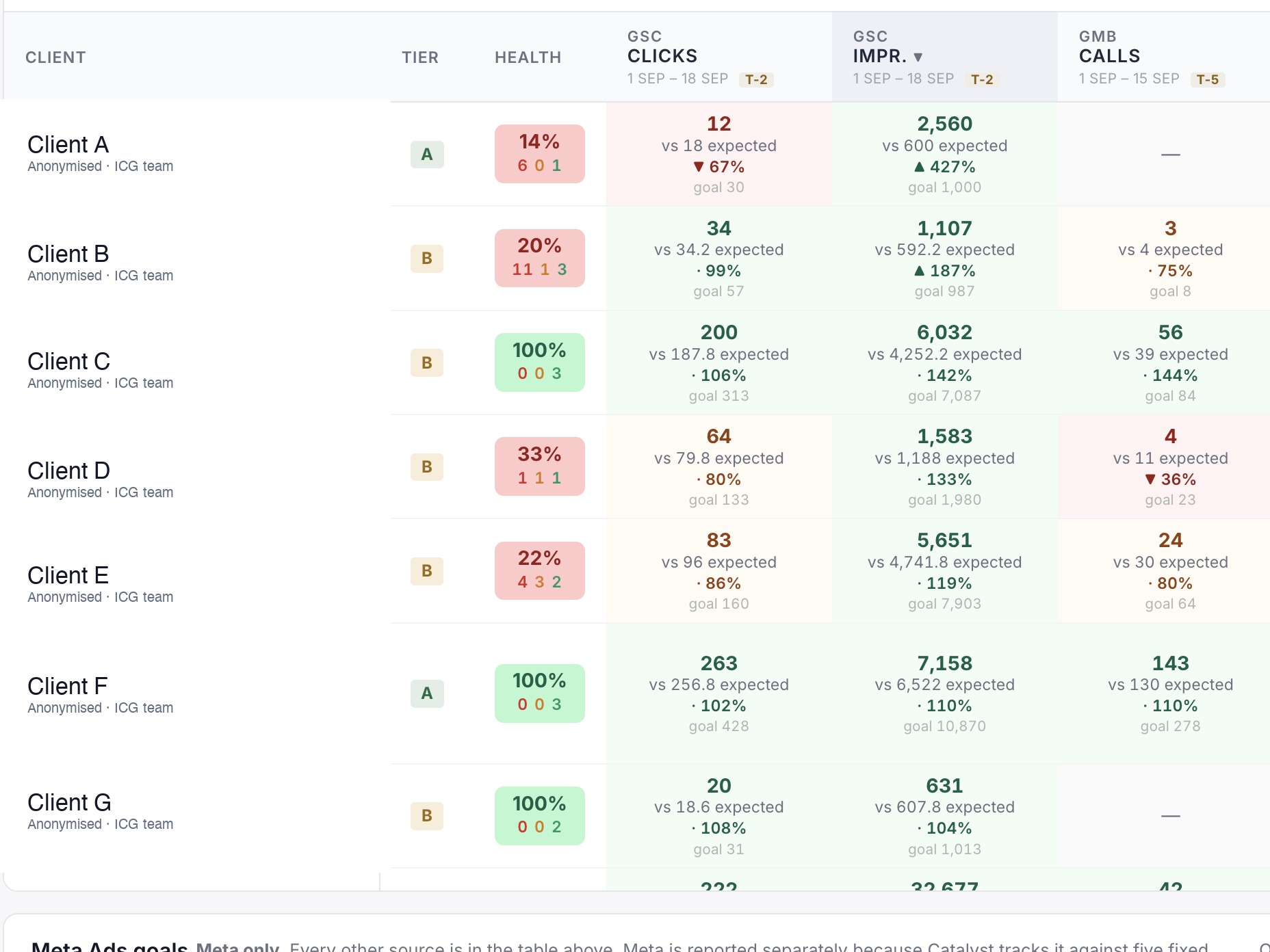
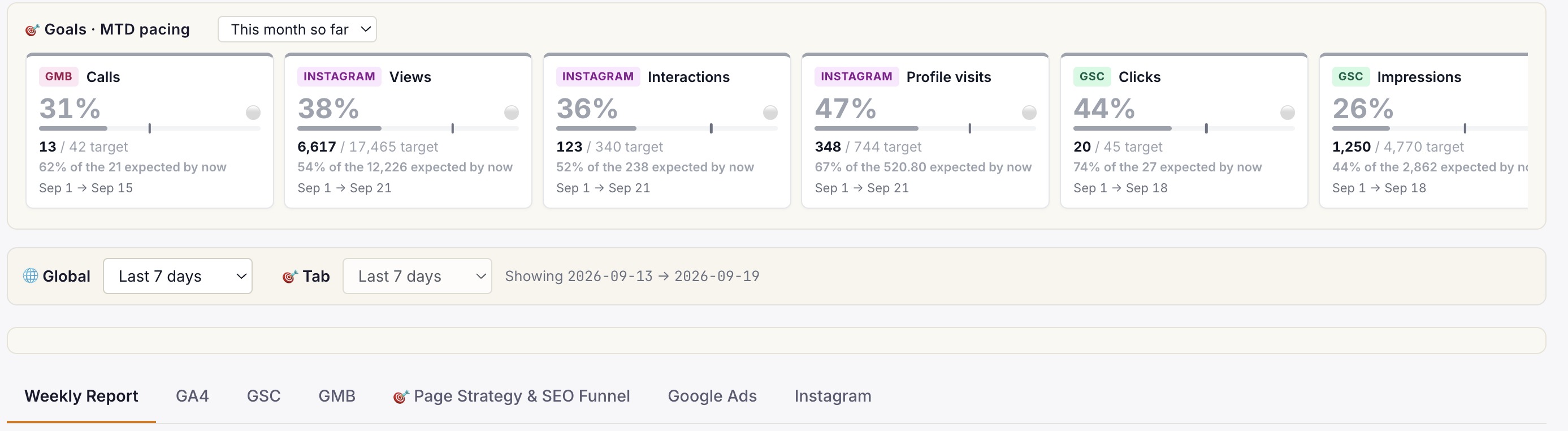
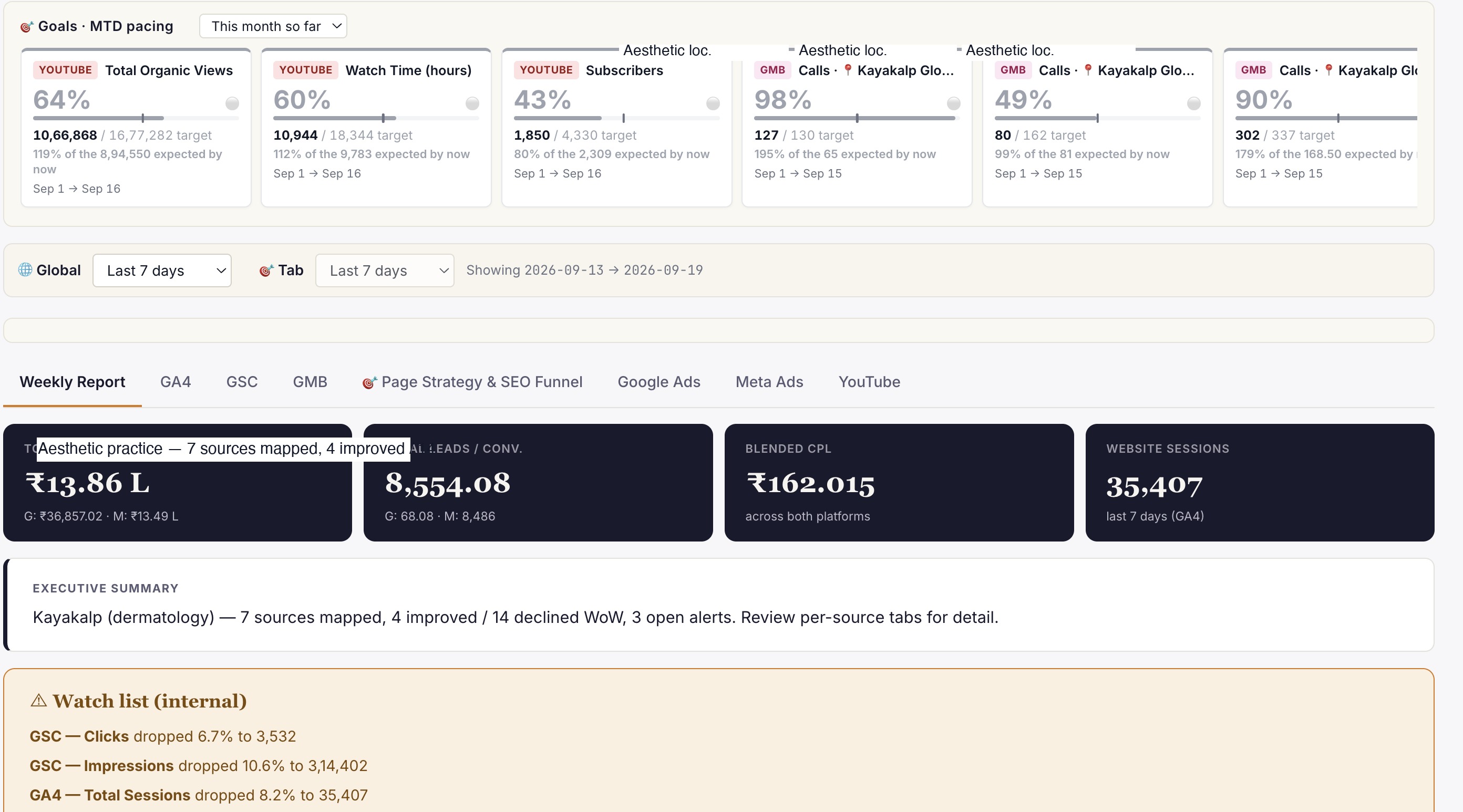
Live client dashboard. GSC, GA4, Google Ads, Meta Ads, IVR calls in one view. Login anytime, not monthly.
Phoenix
Clinic revenue intelligence over your PMS. Daily action queue: Prevent Loss, Maintain & Engage, Grow Revenue. Multi-centre rollout.
Or book a free 30-min audit to see all three in action on your account.
Healthcare brands
that already run on ICG.
A representative slice of the 150+ healthcare brands ICG has delivered for across India. Most engagements remain under NDA.


What ICG clients say · on video.
"Scale up of organic channels and business consulting. ICG has absolute domain authority in their field."
"Working with ICG transformed how we acquire IVF patients in Gurgaon. They understand the fertility journey from inquiry to consult..."
"What Ichelon accomplished — they got all my ideas and worked over 3-4 months to create an amazing, super-customised website."
Need help operationalising this?
Every ICG service is healthcare-only, NMC + DPDP-aware, and built around the patient-research patterns that drive Indian healthcare growth in 2026.
Every practice welcome — packages from ₹20,000/mo.
Goals-Driven engagements · Performance-Linked Payout Models available
More from
ICG.
Five trends shaping Indian healthcare marketing through 2027: AI-first patient research, Conversions API adoption, ABDM discovery, the AEO w...
Healthcare AIO is the discipline of getting your clinic or hospital cited inside Google AI Overviews, ChatGPT and Perplexity answers — not j...
Conversational-search advertising places brand messages inside AI chat answers — ChatGPT, Perplexity, Copilot — rather than beside a results...
Stop guessing.
Book a Diagnostic.
30 minutes. Free. With the AI-powered healthcare-only marketing agency 150+ brands already run on. No slides, no pitch, no hard close.


