


GBP guidelines 2026: what changed for Indian healthcare — AI-content policy, multi-practitioner rules, service-area rules, name guidelines, and category tightening
Google Business Profile guidelines shifted materially through late 2025 and into 2026, and healthcare listings absorbed the biggest impact. This guide covers what changed for Indian clinics and hospitals: the new AI-generated content policy, multi-practitioner rule tightening, service-area business boundaries, name guideline enforcement, and category consolidation — and what healthcare buyers need to change in 2026.
No pitch. Written root-cause diagnosis. AI-powered, healthcare only.
Direct answer
Google Business Profile guidelines shifted materially through late 2025 and into 2026, and healthcare listings absorbed the biggest impact. This guide covers what changed for Indian clinics and hospitals: the new AI-generated content policy, multi-practitioner rule tightening, se...
TL;DR

Google Business Profile guidelines shifted materially through late 2025 and into 2026, and Indian healthcare listings absorbed a disproportionate share of the impact. The changes cluster into five areas: a new AI-generated content policy that affects Posts, descriptions and review replies, a tightening of multi-practitioner rules that has forced hospital chains to consolidate profiles, sharper service-area business boundaries, stricter enforcement of name guidelines, and consolidation in the medical category tree. Every hospital marketing director, clinic owner and healthcare agency in India needs to have absorbed these changes before the next quarterly local SEO review, because non-compliance in 2026 escalates to suspension materially faster than in 2024 or 2025. ICG runs healthcare local SEO for 150+ Indian clinics and hospitals using Angryturtle and rewrites the guardrails inside the platform every time Google updates the guidelines.
The 2026 AI-generated content policy
Google clarified in early 2026 that AI-generated content is acceptable on Google Business Profile provided it is accurate, disclosed where appropriate, and reflects the actual operations of the business. This is materially different from Google Search's Helpful Content stance, which allows AI-generated content freely subject to quality. On Business Profile, Google added a specific accuracy standard: AI-generated content that misrepresents the business (hours, services, location, staff) is a violation, and repeated violations trigger suspension.
Practical implication for healthcare: AI-drafted Google Posts about services the clinic doesn't offer, AI-drafted descriptions that overclaim credentials or specialties, and AI-drafted review replies that reference treatments the patient didn't actually receive are all violations that carry escalating enforcement in 2026.
The compliant use pattern: AI drafts everything (Posts, descriptions, review replies, service descriptions) but a human clinical or marketing reviewer signs off before publishing. Angryturtle's Content Studio operates in exactly this pattern — AI drafts, human reviews, only-then publishes. For solo owners on the self-serve tier, the same review gate is enforced in the UI so that no AI-generated content can auto-publish without an explicit review click.
What this rules out: fully automated posting bots that AI-generate content and push to Google without human review. Several such tools were popular in Indian healthcare through 2024-2025; the 2026 policy has effectively made them a suspension risk.
Multi-practitioner rule tightening
Google's multi-practitioner guidelines have existed for years, but enforcement was inconsistent through 2024. In 2026 Google formalised the rules and began enforcing them systematically, particularly against Indian hospital chains that had proliferated individual profiles for consulting specialists.
The 2026 rules, restated cleanly: one facility profile per physical location; one individual practitioner profile per doctor per primary practice location; the individual profile must use the doctor's real name (not a specialty descriptor); the doctor must be a public-facing practitioner (not support staff); and the doctor must practise at the location as a primary or substantial secondary location (not as an occasional visiting consultant).
What broke for Indian hospital chains in 2026: chains that had created individual profiles for every consulting specialist across every branch (some large multi-city chains had 500+ practitioner profiles) faced mass suspensions. The clean-up required identifying which doctors were primary practitioners at which locations, retiring the profiles for occasional visiting consultants, and consolidating remaining practitioner profiles under a manageable governance framework.
What broke for multi-doctor solo clinics: clinics that had created profiles for every associate doctor, including those who consulted only a few days a week, had to reduce to only the primary practitioners. In many cases this meant reducing from 4-6 doctor profiles down to 1-2.
The proactive move: audit every multi-practitioner setup against the 2026 rules before Google detects the violation. Voluntary consolidation carries no penalty; forced consolidation after a suspension does.
Service-area business rules
Service Area Business (SAB) is the GBP configuration used by businesses that deliver services to customers' locations rather than serving customers at a storefront. In healthcare, this includes home-visit doctors, mobile diagnostic vans, home nursing services, physiotherapy home-visits, and teleconsult-only providers.
The 2026 changes: Google tightened the definition of what qualifies as SAB and formalised the rule that SAB profiles must not display a public storefront address. A profile that operates as SAB but shows a physical address in public search is now a violation, whereas previously this was tolerated in many verticals.
For Indian healthcare specifically, this affects: home-nursing services that had listed a corporate office address publicly (now must hide the address and configure as pure SAB), home-visit doctors who had listed a small consulting room address (now must decide whether the consulting room is a genuine storefront where patients visit, in which case it stays public, or a back-office only, in which case it must be hidden), and telehealth-first clinics that had claimed physical addresses primarily for verification (now must operate as pure SAB with no public address).
See our dedicated service area vs storefront guide for the full configuration playbook. The short version: pick one model per profile and configure it consistently.
Name guideline enforcement
Google's business-name guideline has always required the profile name to match the real-world signage exactly. In 2026 enforcement of this rule sharpened, and the healthcare category has been a particular focus because of long-standing patterns of keyword-stuffing.
What Google now actively flags: city or locality inserted into the name where it is not part of the legal business name ("Sunshine Dental Bengaluru" when the signage says only "Sunshine Dental"), taglines and descriptors added to the name ("Dr Sharma's Cardiology Clinic — Specialist in Heart Care"), specialty keywords stuffed into clinic profile names ("Best IVF and Fertility Clinic Ahmedabad"), founder or lead doctor names embedded in clinic profile names (as opposed to individual practitioner profiles where the doctor's name is expected), and superlatives or trust claims in the name ("Award-Winning Multi-Speciality Hospital").
The compliant pattern: business name matches the physical exterior signage exactly. If the signage says "Apollo Hospital," the profile says "Apollo Hospital" — not "Apollo Hospital Bangalore" and not "Apollo Speciality Hospital Bengaluru" unless those exact wordings appear on the physical signage.
The practical rework required by many Indian clinics in 2026: audit every profile's business name against the current physical signage and update the profile to match the signage, not the marketing preference. This often means giving up hard-won keyword real estate in the business name, which feels painful but eliminates the biggest single suspension trigger.
Category tightening and consolidation
Google's medical category tree was pruned in 2026. Some previously available category options were consolidated or removed, and the primary-versus-secondary category strategy became more consequential as Google shifted more ranking weight to the primary category.
What changed: several redundant categories were consolidated ("Fertility Clinic" absorbed "IVF Clinic" as a primary option in most markets; "Dental Clinic" absorbed several sub-specialty categories that had been available before). New categories were added in a small number of areas (an explicit "Telehealth Provider" category is now available in some markets). And Google tightened enforcement of the rule that primary and secondary categories must match the physical facility's actual operating scope.
The 2026 strategy implication: pick the primary category that matches the highest-volume patient query the clinic wants to rank for. Use 5-8 secondary categories to cover the remaining specialty scope. Do not stuff secondary categories with tangential services the clinic doesn't genuinely offer, because Google now cross-checks category selection against the video verification evidence and the services list.
See our complete healthcare category guide for the full category tree and the primary-versus-secondary decision framework.
Review manipulation enforcement
Google's review manipulation enforcement scaled up materially in 2026, particularly against review-gating (asking positive reviewers to post publicly and steering negative reviewers to private channels) and against velocity-anomaly patterns (a clinic that had been receiving 2 reviews per month suddenly receiving 40 in one week).
What this means operationally: review-request campaigns should ask every patient for public feedback, not just satisfied patients. Bulk review-solicitation drives that produce large velocity spikes should be replaced with steady-cadence campaigns that maintain a natural growth pattern. Incentivised reviews (discounts, gifts, priority appointments in exchange for reviews) remain prohibited and Google detects them through language-pattern analysis.
The compliant review operations pattern in 2026: every patient gets the same feedback request post-visit, phrased around visit experience rather than treatment outcome (also required by NMC's 2026 advertising guidelines for medical listings), reviews accumulate at a natural cadence tied to actual patient volume, and replies acknowledge experience without discussing specific treatment.
Policy change cadence and how to monitor
Google updates Business Profile guidelines multiple times per year, often without high-visibility announcements. The 2026 changes discussed above rolled out incrementally between October 2025 and April 2026, and further changes are likely through the rest of the year.
Practical monitoring approach: subscribe to Google's official Business Profile help centre updates, monitor the Google Business Profile community forum for enforcement pattern signals from other operators, and track the actual policy language via periodic reviews of the guidelines page. For agencies managing 50+ healthcare profiles, this monitoring is a standing workstream.
Angryturtle's policy engine tracks Google's guideline changes and pushes updated guardrails to every managed profile within 48 hours of a detected change. For ICG's managed clients, the response cycle to a Google policy shift is measured in days, not weeks.
What healthcare buyers need to change in 2026
Consolidated action list for a hospital marketing director or clinic owner reviewing their current setup against 2026 guidelines:
- Audit every business name against current physical signage. Correct any mismatches.
- Audit multi-practitioner setup. Retire individual profiles for non-primary practitioners and support staff.
- Audit service-area vs storefront classification. Configure each profile consistently in one model.
- Audit category selection against physical facility scope. Trim tangential secondary categories.
- Audit review-request workflow. Move from targeted positive-reviewer solicitation to universal patient feedback requests.
- Audit AI-content pipelines. Confirm human review gate before every publish.
- Refresh the documentation pack (registrations, licences, signage photos, facility walkthroughs) so any future suspension appeal can be filed quickly.
- Set up ongoing policy monitoring so the next Google update is detected within days rather than months.
For portfolios of 5+ profiles, the audit alone can consume 40-80 hours of dedicated work. For portfolios of 20+, it is materially cheaper to run the audit through a tool that maintains the policy state and enforces the guardrails automatically.
The tool ICG uses to run this at scale: Angryturtle
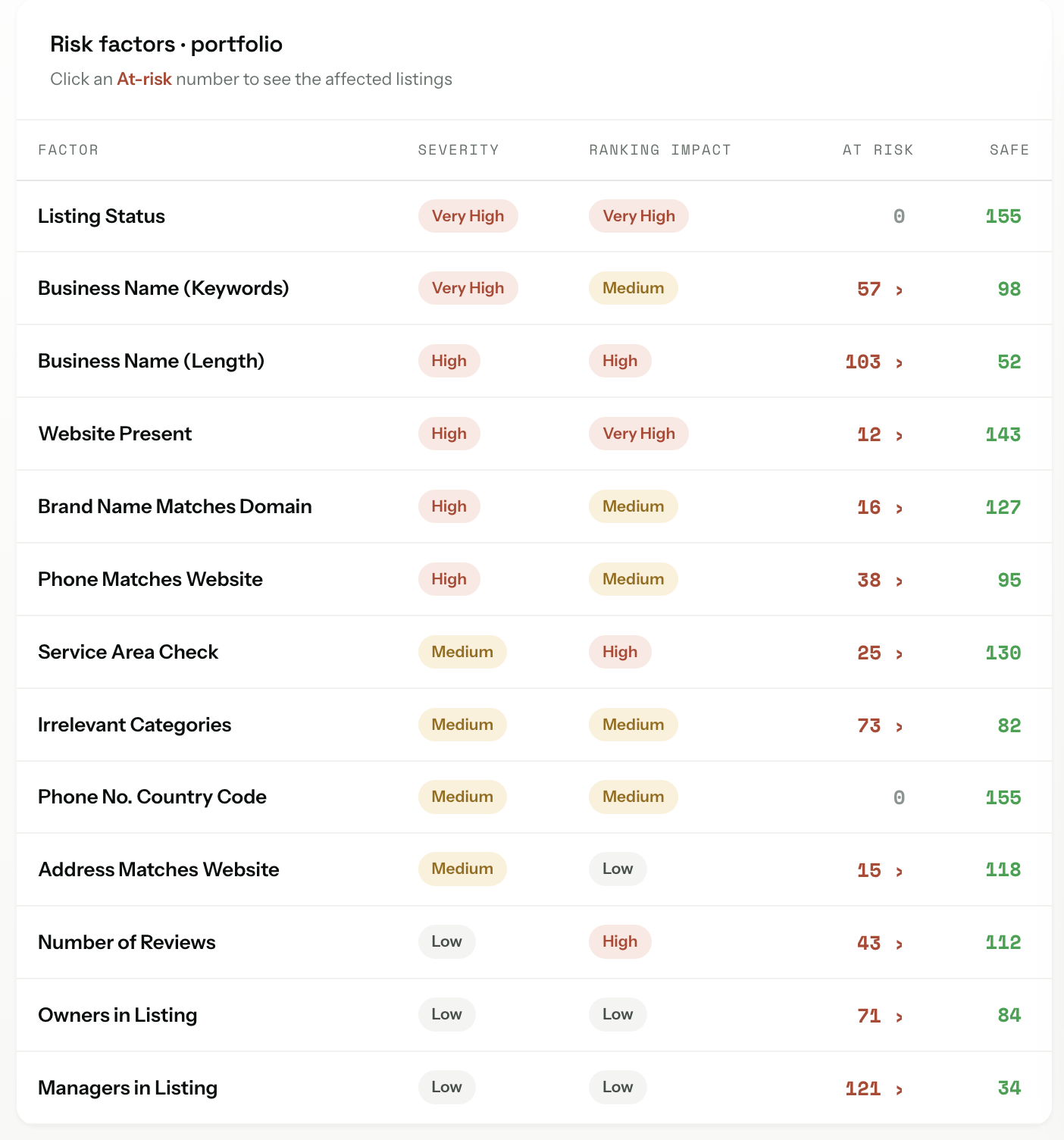
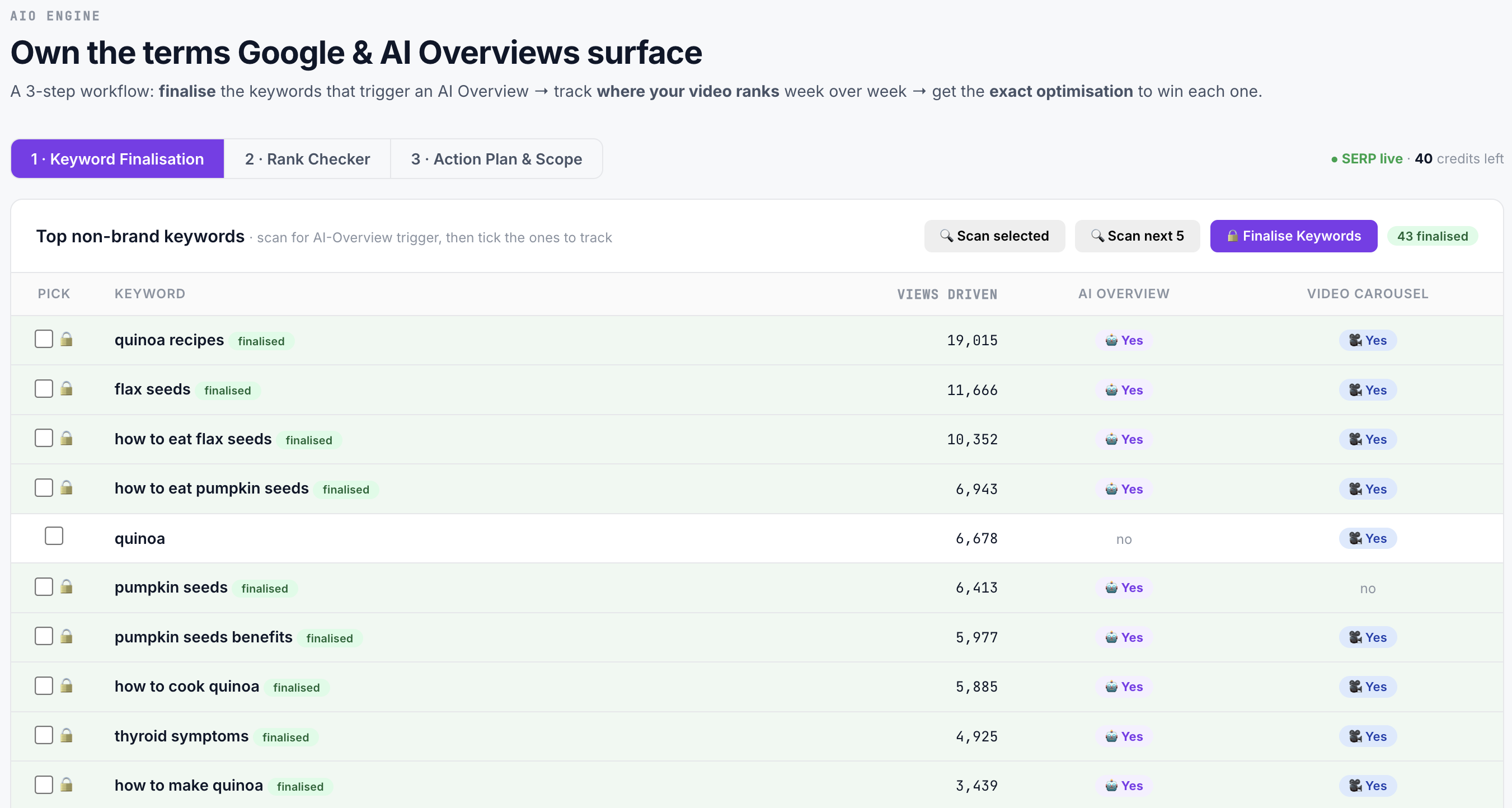
ICG runs local SEO and GBP intelligence for 150+ Indian healthcare brands using Angryturtle — our own AI-native GBP intelligence and management OS. The platform scores every profile 0-100 via a proprietary Rank OS model with five weighted dimensions (Relevance, Review Health, Freshness, Entity Authority, AIO Readiness), publishes edits, Posts, media, and review replies directly to Google, and includes Ask Maps AIO Readiness scoring for Google AI Overviews and ChatGPT visibility.

For policy compliance specifically, Angryturtle's guardrails engine tracks Google's guideline changes and blocks non-compliant edits before they publish — business-name changes that would violate name guidelines are rejected, category selections that don't match verification evidence are flagged, AI-drafted content requires an explicit human review click before publishing, and review-request workflows are configured to universal-patient feedback framing by default. Available in two shapes: self-serve at ₹999/- per month for solo owners with 1-2 profiles, and ICG's managed service from ₹25,000/- per month where our healthcare specialists execute inside the same platform. Both are anchored in the Healthcare Local SEO Agency India pillar page which has full scope, methodology and pricing.
Book a demo on WhatsApp → or start a free trial at angryturtle.ai →
Related reading
- Healthcare local SEO agency India — the pillar service page
- GBP verification methods for healthcare in India (2026)
- GBP suspension recovery for Indian healthcare
- GBP categories for Indian healthcare
- Service area vs storefront for healthcare
FAQ
Does the 2026 AI-content policy mean I can't use AI to draft my Google Posts? You can absolutely use AI to draft. The policy requires that the content is accurate, reflects the actual operations of the business, and has a human review gate before publishing. AI-drafted content that misrepresents the business is a violation; AI-drafted content that a human reviewer confirms as accurate is compliant.
How urgently do I need to audit my multi-practitioner setup? For hospital chains with 20+ individual practitioner profiles, this is a priority-one workstream. Google's 2026 enforcement of the multi-practitioner rules has already suspended several large Indian chains, and the reinstatement path for a chain-wide suspension is materially longer than for a single profile.
Can I still add city or locality to my business name if the signage doesn't include it? No. Google actively flags this in 2026 and the correction should be made proactively rather than waiting for a suspension.
What happens to secondary categories I removed if I don't need them? Removing tangential secondary categories does not affect verification status. It slightly reduces the query surface the profile ranks for, but eliminates a suspension trigger and often improves ranking on the categories the profile is genuinely relevant for (the primary and remaining secondaries).
Does the new SAB rule affect a hospital with a physical facility? No. Hospitals with a physical facility that patients visit remain storefront businesses. The SAB rule only affects healthcare services delivered exclusively to patient locations (home visits, mobile services, teleconsult-only).
How do I know if Google has flagged my profile without suspending it yet? Google's dashboard shows a policy notification when a violation is detected but before a formal suspension. Monitoring the dashboard daily catches these signals early. Angryturtle surfaces them as inbox items so they are not missed.
Are these 2026 changes documented publicly on Google's help centre? Most are. Google publishes updates to the Business Profile guidelines page and to specific help articles. Some enforcement patterns become visible only through community forum reports before the help centre catches up.
Will Google roll back any of the 2026 tightening? Historically, once Google tightens enforcement in a category it does not roll back. Adaptation to the new rules is the working assumption.
Do the 2026 changes apply differently to hospitals vs solo clinics? The core rules apply identically. The practical impact differs — hospitals with large multi-practitioner setups and chain footprints have more to audit than a solo clinic, but the guideline rules are the same.
How often should I re-audit against Google guidelines? Quarterly at minimum for portfolios of 5+ profiles. Monthly for portfolios of 20+. Angryturtle's managed clients get continuous monitoring so the audit cadence becomes ambient rather than a discrete workstream.
Book a free 30-minute Brand & Growth Diagnostic.
It's a working session, not a sales pitch — you leave with a written root-cause analysis you can act on, whether or not you engage ICG.
The three platforms
behind every ICG engagement.
Beacon
CAPI middleware that fixes Event Match Quality, translates CRM statuses to Meta-standard events, dedups across channels.
Agency OS
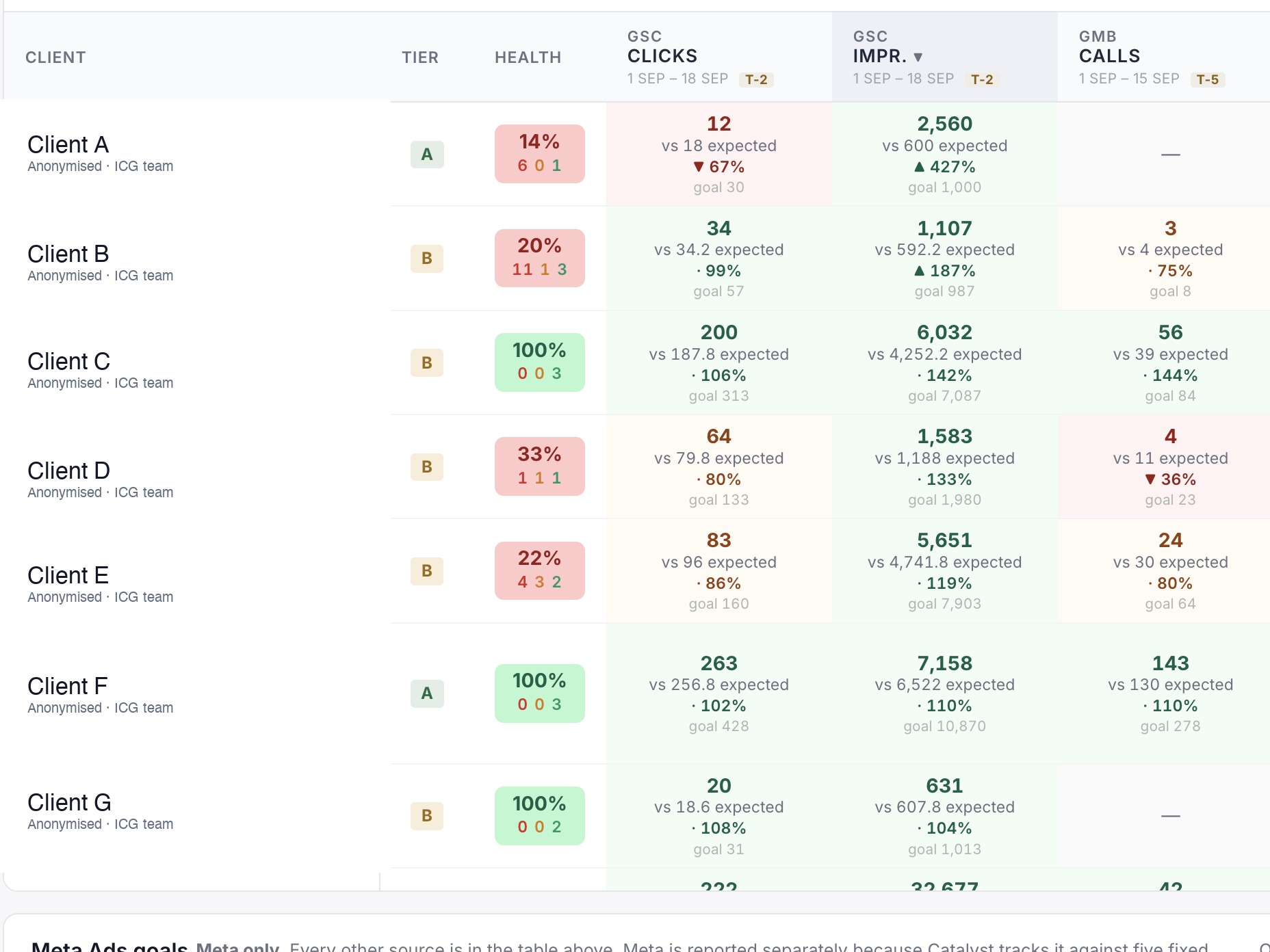
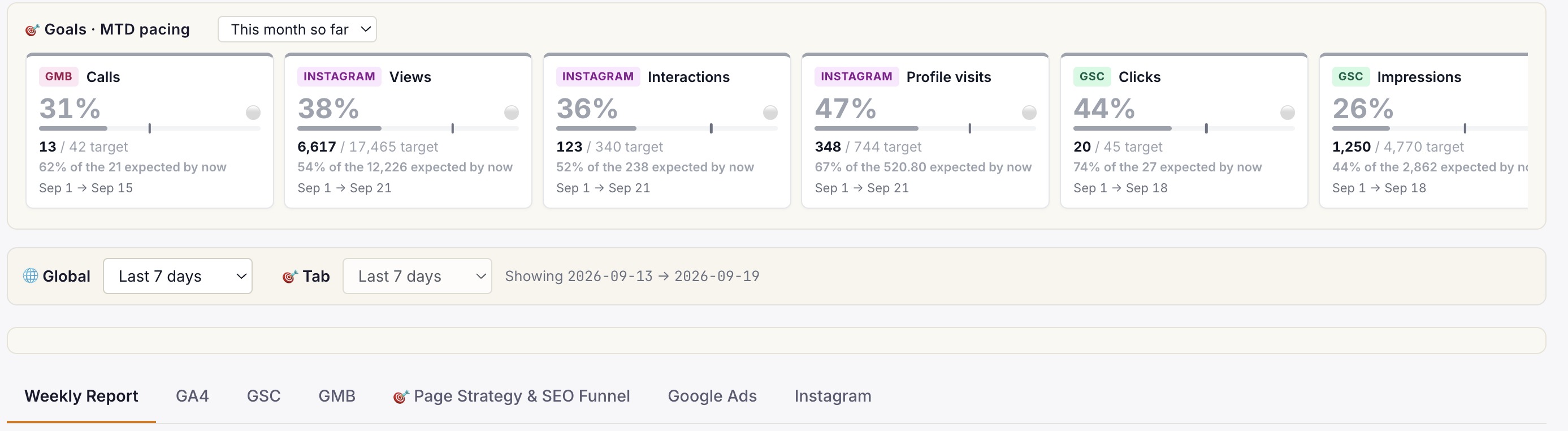
Live client dashboard. GSC, GA4, Google Ads, Meta Ads, IVR calls in one view. Login anytime, not monthly.
Phoenix
Clinic revenue intelligence over your PMS. Daily action queue: Prevent Loss, Maintain & Engage, Grow Revenue. Multi-centre rollout.
Or book a free 30-min audit to see all three in action on your account.
Healthcare brands
that already run on ICG.
A representative slice of the 150+ healthcare brands ICG has delivered for across India. Most engagements remain under NDA.


What ICG clients say · on video.
"Scale up of organic channels and business consulting. ICG has absolute domain authority in their field."
"Working with ICG transformed how we acquire IVF patients in Gurgaon. They understand the fertility journey from inquiry to consult..."
"What Ichelon accomplished — they got all my ideas and worked over 3-4 months to create an amazing, super-customised website."
Need help operationalising this?
Every ICG service is healthcare-only, NMC + DPDP-aware, and built around the patient-research patterns that drive Indian healthcare growth in 2026.
Every practice welcome — packages from ₹20,000/mo.
Goals-Driven engagements · Performance-Linked Payout Models available
More from
ICG.
Five trends shaping Indian healthcare marketing through 2027: AI-first patient research, Conversions API adoption, ABDM discovery, the AEO w...
Healthcare AIO is the discipline of getting your clinic or hospital cited inside Google AI Overviews, ChatGPT and Perplexity answers — not j...
Conversational-search advertising places brand messages inside AI chat answers — ChatGPT, Perplexity, Copilot — rather than beside a results...
Stop guessing.
Book a Diagnostic.
30 minutes. Free. With the AI-powered healthcare-only marketing agency 150+ brands already run on. No slides, no pitch, no hard close.


