


Gastroenterology & Bariatric Surgery Marketing India 2026
Gastroenterology and bariatric surgery share a department in most hospitals but require completely separate marketing approaches. Diagnostic endoscopy (colonoscopy, OGD scopy) is a volume-driven, GP-r
No pitch. Written root-cause diagnosis. AI-powered, healthcare only.
Direct answer
Gastroenterology and bariatric surgery share a department in most hospitals but require completely separate marketing approaches. Diagnostic endoscopy (colonoscopy, OGD scopy) is a volume-driven, GP-r
TL;DR
TL;DR
- Gastroenterology splits into 3 marketing sub-verticals: diagnostic endoscopy (high volume, GP-referred), therapeutic GI (ERCP, colonoscopy polypectomy — specialist-referred), and bariatric surgery (patient self-referred, high-research journey)
- Bariatric surgery is among India's fastest-growing elective surgical segments — 60,000+ procedures annually growing at 18% (Source: Obesity Surgery Society of India, OSSI)
- Bariatric marketing is stigma-adjacent: obesity is emotionally sensitive; content that judges or moralises drives avoidance
- GERD and IBS content clusters generate the highest GI organic traffic with the lowest content competition
- CAC benchmarks: endoscopy packages ₹800–₹2,200; bariatric surgery ₹12,000–₹55,000
Gastroenterology and bariatric surgery share a department in most hospitals but require completely separate marketing approaches. Diagnostic endoscopy (colonoscopy, OGD scopy) is a volume-driven, GP-referred service where package pricing and accessibility marketing dominate. Bariatric surgery — sleeve gastrectomy, RYGB, mini-gastric bypass — is a high-consideration elective procedure where the patient's 6–18 month decision journey begins with emotional vulnerability and ends with significant financial commitment.
The 3 GI marketing sub-verticals
Sub-vertical 1: Diagnostic endoscopy Colonoscopy and OGD scopy are predominantly GP-referred for symptoms (reflux, change in bowel habits, rectal bleeding) or screening (colorectal cancer screening, H. pylori testing). Marketing is largely B2B (GP outreach for referrals) supplemented by health check package B2C campaigns ("complete gut health check").
Volume-driver: health check package marketing, particularly for corporates and insurance-covered check-ups. Package pricing transparency (₹1,800–₹4,500 for colonoscopy package) is a key conversion lever.
Sub-vertical 2: Therapeutic and advanced GI procedures ERCP (for bile duct stones and strictures), endoscopic mucosal resection, haemorrhoid banding, hepatology (NAFLD, cirrhosis, hepatitis B/C management) — these are specialist-referred, clinically complex, and not primarily acquired through patient-facing digital marketing. Gastroenterologist-to-gastroenterologist referral and hepatologist community building are the marketing channels here.
Sub-vertical 3: Bariatric surgery Entirely patient self-initiated. No GP or physician refers a patient for bariatric surgery — the patient decides, researches, and self-refers to a bariatric surgeon's consultation. The digital marketing opportunity is therefore 100% patient-facing and research-stage focused.
Bariatric surgery — the self-directed research patient
The bariatric surgery patient journey in India typically spans 6–18 months from first Google search to surgical consultation booking. Journey stages:
Stage 1 (Research — months 1–9): Patient searches "how to lose weight without surgery," "weight loss surgery India," "bariatric surgery cost India." They are not yet committed to surgery — they are comparing non-surgical and surgical options. Content targeting this stage: "weight loss surgery vs diet: which is right for me," "who is eligible for bariatric surgery in India."
Stage 2 (Consideration — months 3–15): Patient has narrowed to surgical options. They are researching specific procedures. Content targeting this stage: "sleeve gastrectomy vs gastric bypass India," "bariatric surgery risks and outcomes," "bariatric surgery cost complete guide India 2026."
Stage 3 (Decision — months 6–18): Patient is actively evaluating specific surgeons and hospitals. Content targeting this stage: surgeon profile pages, patient experience content (NMC-compliant — experience, not outcome), Google reviews, doctor-directory presence, hospital visit.
ICG builds the full 3-stage content architecture for bariatric clients — not just decision-stage PPC.
Stigma management in bariatric marketing — the non-negotiable
Obesity is stigmatised in India in ways that significantly affect bariatric marketing. Content that implicitly or explicitly moralises about weight, creates shame, or uses language that triggers self-blame drives avoidance behaviours, not consultation bookings.
What to avoid:
- "Finally win your battle with obesity" — "battle" framing implies failure
- "Stop letting your weight hold you back" — blame framing
- Before/after imagery that centres weight change as transformation (vs health improvement)
- "Are you obese?" as an ad hook — triggers shame, not action
What works:
- Empathetic condition education: "Understanding why losing weight is harder for some people — a medical perspective"
- Health-first framing: "Managing Type 2 diabetes and hypertension through bariatric surgery"
- Anonymised experience content: "What to expect at your first bariatric consultation"
- Clinical eligibility framing: "Who qualifies for bariatric surgery — BMI, comorbidities, and what matters"
The hospitals and surgeons whose bariatric programmes grow fastest are those whose content framework is empathetic rather than motivational.
GERD and IBS — the highest-traffic, lowest-competition GI content clusters
GERD (gastroesophageal reflux disease) and IBS (irritable bowel syndrome) are among India's most prevalent GI conditions — and generate massive organic search volume with surprisingly low content competition from specialist gastroenterology centres.
Why this is an opportunity: Most gastroenterology department pages in India cover: "our gastroenterology department offers endoscopy, colonoscopy, and hepatology services." They do not produce condition-specific content. This means queries like "GERD treatment without surgery India," "difference between IBS and IBD," "H. pylori treatment India 2026," and "colonoscopy preparation guide" are ranking opportunities with limited specialist competition.
ICG builds GERD/IBS/IBD/hepatology content clusters for gastroenterology clients as standard — these drive organic traffic that converts to diagnostic package bookings and specialist consultation enquiries.
Bariatric surgery marketing budget benchmarks
| Practice type | Monthly investment | Primary allocation |
|---|---|---|
| Solo bariatric surgeon | ₹45,000–₹1.5L | SEO content + Google Ads + GBP |
| Bariatric centre within hospital | ₹1.2L–₹3.5L | Full-stage content + PPC + social + ORM |
| Dedicated weight loss centre | ₹2.5L–₹8L | Awareness + consideration + decision stage + analytics |
Case snapshot
A dedicated bariatric centre in Delhi NCR — 2 bariatric surgeons, 400 surgeries/year — engaged ICG with heavy PPC dependency (₹3.8L/month ad spend, CPL ₹18,500). ICG's 12-month programme: stage-1 and stage-2 content architecture (42 pieces — GERD, IBS, obesity comorbidities, procedure comparison, eligibility guides), Google Ads restructure (stage-3 queries only, reduced spend to ₹1.4L/month), stigma-aware creative audit. Month 12: organic traffic +320%, CPL from organic ₹4,200, blended CPL (organic + paid) ₹7,800 vs ₹18,500 pre-engagement (ICG internal data, 2026).
Related reading
- For medical weight management and GLP-1 campaigns, see weight loss clinic marketing in 2026.
FAQ
Q1: What content works best for bariatric surgery patient acquisition? Stage 1: eligibility and comparison content ("who qualifies for bariatric surgery," "surgery vs non-surgical options"). Stage 2: procedure comparison and cost guides. Stage 3: surgeon profile and patient experience content. All three stages need separate content architecture.
Q2: What is the acquisition cost for bariatric surgery patients in India? ₹12,000–₹55,000 per bariatric surgery patient via digital marketing, depending on channel mix and city tier. Given procedure revenue of ₹2.5L–₹6L, this is commercially sound.
Q3: How should bariatric marketing handle the stigma of obesity? Health-first and clinical framing — not motivational or shame-based. "Managing diabetes through bariatric surgery" outperforms "win your weight battle" in both conversion rate and patient quality.
Q4: What is the most underutilised SEO opportunity in gastroenterology? GERD, IBS, IBD, and H. pylori content clusters — high search volume, low specialist content competition. Most gastroenterology departments produce no condition-specific content.
Q5: How long is the bariatric surgery patient decision journey? 6–18 months in India. Marketing must address all three stages (research, consideration, decision) — PPC-only strategies that target only decision-stage queries miss the majority of the funnel.
Q6: Are endoscopy packages good for digital marketing? Yes — colonoscopy and OGD scopy packages at transparent price points perform well on Google Search and in health check corporate campaigns. Combine with GP outreach for maximum referral volume.
Internal links
- Doctor marketing agency India
- Hospital marketing agency India
- Orthopaedic surgery marketing India 2026
- NMC ethics code 2026 marketing rules doctors
- Book a strategy call
External sources
- OSSI (Obesity Surgery Society of India) — bariatric surgery volume statistics
- MoHFW — NCD burden report (GERD, obesity statistics)
- ASCI healthcare advertising guidelines
- NMC — nmc.org.in
- WHO — obesity and metabolic surgery guidelines
Compliance note. Before/after weight loss imagery in bariatric marketing must comply with NMC's 2026 advertising guidelines and ASCI guidelines. Success rate claims must reference published population-level outcomes. Bariatric eligibility content must note that individual suitability is determined at clinical consultation. This article is informational only.
Book a free 30-minute Brand & Growth Diagnostic.
It's a working session, not a sales pitch — you leave with a written root-cause analysis you can act on, whether or not you engage ICG.
The three platforms
behind every ICG engagement.
Beacon
CAPI middleware that fixes Event Match Quality, translates CRM statuses to Meta-standard events, dedups across channels.
Agency OS
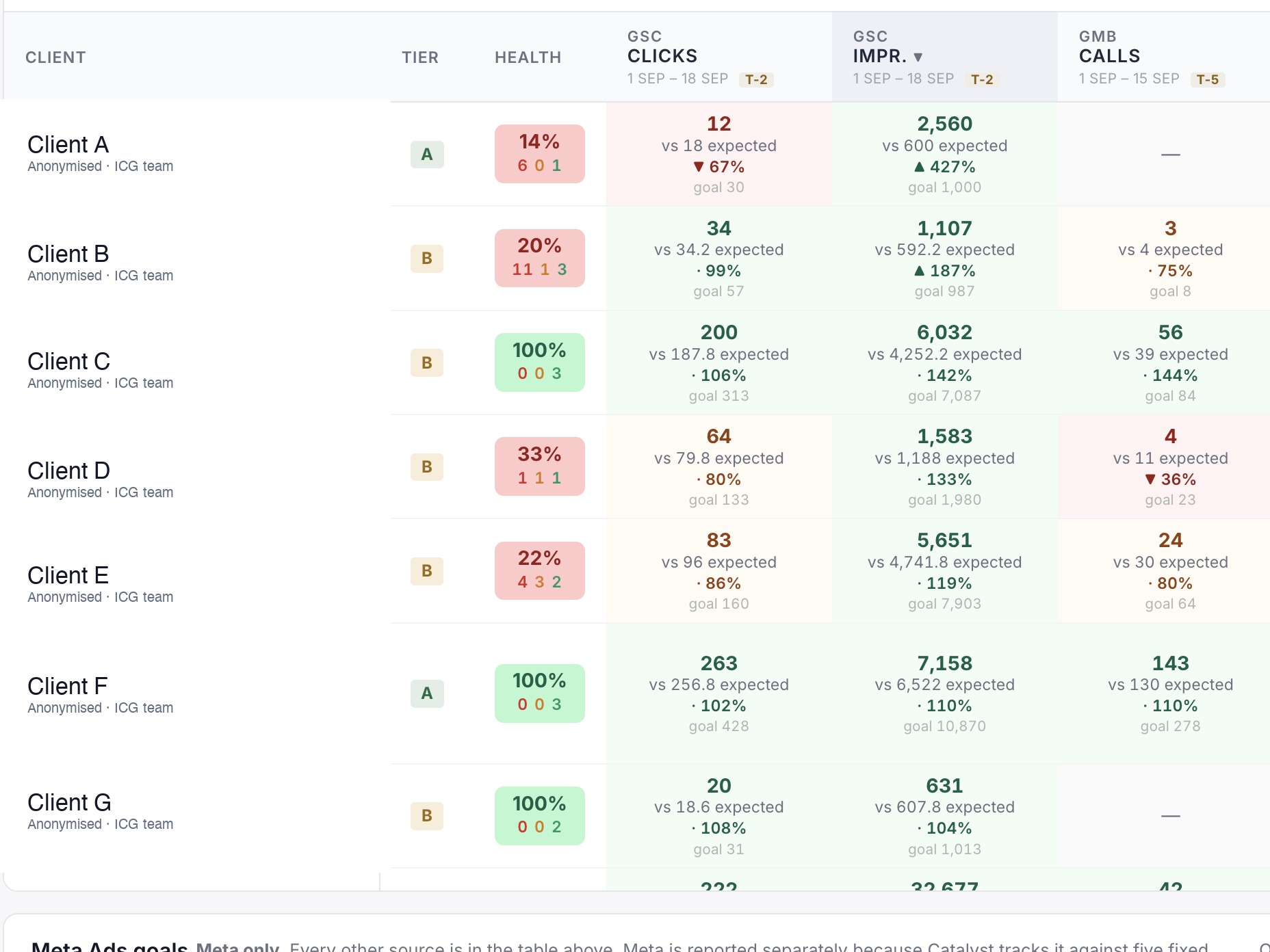
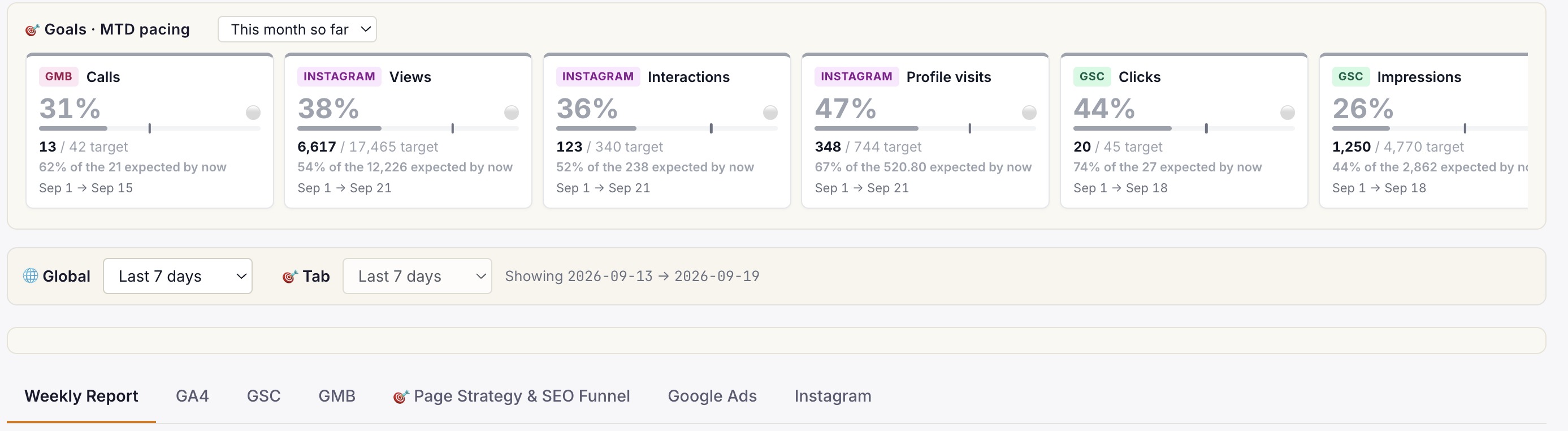
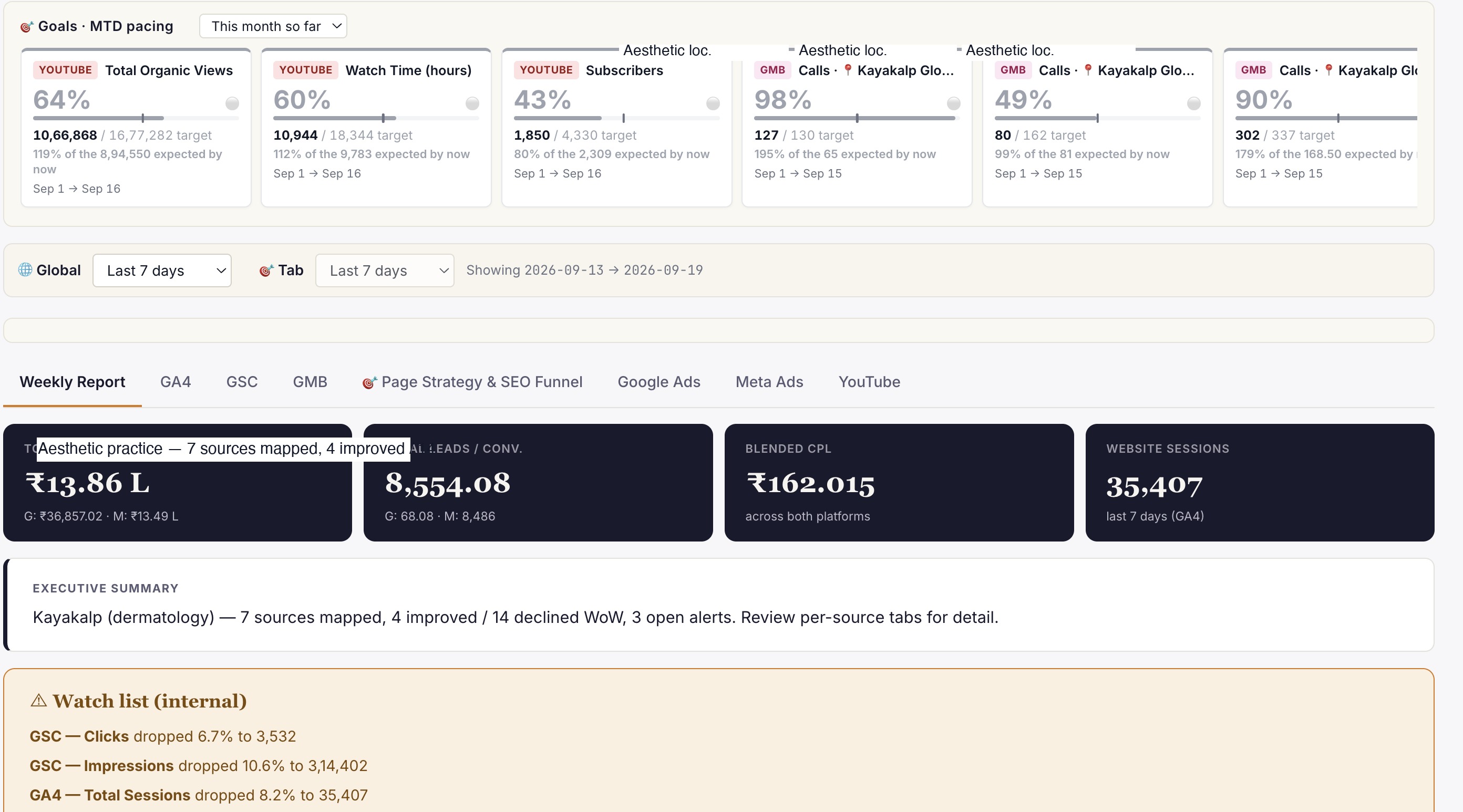
Live client dashboard. GSC, GA4, Google Ads, Meta Ads, IVR calls in one view. Login anytime, not monthly.
Phoenix
Clinic revenue intelligence over your PMS. Daily action queue: Prevent Loss, Maintain & Engage, Grow Revenue. Multi-centre rollout.
Or book a free 30-min audit to see all three in action on your account.
Healthcare brands
that already run on ICG.
A representative slice of the 150+ healthcare brands ICG has delivered for across India. Most engagements remain under NDA.


What ICG clients say · on video.
"Bariatric surgery patients need a long consideration cycle. ICG built a content + paid system that respects that timeline."
"Scale up of organic channels and business consulting. ICG has absolute domain authority in their field."
"Working with ICG transformed how we acquire IVF patients in Gurgaon. They understand the fertility journey from inquiry to consult..."
Need help operationalising this?
Every ICG service is healthcare-only, NMC + DPDP-aware, and built around the patient-research patterns that drive Indian healthcare growth in 2026.
Every practice welcome — packages from ₹20,000/mo.
Goals-Driven engagements · Performance-Linked Payout Models available
More from
ICG.
Five trends shaping Indian healthcare marketing through 2027: AI-first patient research, Conversions API adoption, ABDM discovery, the AEO w...
Healthcare AIO is the discipline of getting your clinic or hospital cited inside Google AI Overviews, ChatGPT and Perplexity answers — not j...
Conversational-search advertising places brand messages inside AI chat answers — ChatGPT, Perplexity, Copilot — rather than beside a results...
Stop guessing.
Book a Diagnostic.
30 minutes. Free. With the AI-powered healthcare-only marketing agency 150+ brands already run on. No slides, no pitch, no hard close.


