


Social media for diagnostic labs: a content plan that drives bookings
Diagnostic labs win bookings on social media by answering pre-booking questions: preparation, turnaround, home collection and how to book. This plan covers content pillars, platform choice, a monthly calendar, India's data and advertising rules, and the metrics that link posts to booked collections.
No pitch. Written root-cause diagnosis. AI-powered, healthcare only.
Direct answer
Diagnostic labs win bookings on social media by answering pre-booking questions: preparation, turnaround, home collection and how to book. This plan covers content pillars, platform choice, a monthly calendar, India's data and advertising rules, and the metrics that link posts to...
TL;DR
A diagnostic lab gets bookings from social media when its content answers the questions people have just before they book a test: what to prepare, when the report arrives, whether home collection is available and whom to message. The plan that works is a steady mix of preparation explainers, turnaround and service proof, doctor-facing education, and one clear booking path, usually WhatsApp or a short form. Reach without a booking path rarely turns into revenue.
This guide is for owners and marketing heads of standalone labs, pathology chains in Tier-1 and Tier-2 cities, and imaging centres. It covers what to post, which platforms matter, how to stay inside Indian advertising and data rules, and how to measure whether social media is actually filling collection slots.
What should a diagnostic lab do in social media marketing?
A diagnostic lab should use social media to remove friction before a booking. That means explaining test preparation, showing how collection and reporting work, proving reliability with process content, and making booking a one-tap action. Brand awareness posts matter less than content that answers a booking question and then points to a booking channel.
Most lab social accounts we audit fall into one of two traps. Some post festival greetings and discount banners and little else. Others post dense medical information that nobody saves or shares. Neither earns bookings. The labs that do better treat each post as a step in a decision: do I need this test, how do I prepare, where do I book, and when will I get the result?
The four jobs of lab social media
- Prepare. Fasting, timing, medicines to mention to the doctor, what to carry. Practical content that patients save and forward to family.
- Reassure. Sample handling, quality controls, how reports are verified, who signs them. Process content builds trust without making claims.
- Convert. Home collection areas, timings, how to book on WhatsApp, which centre is nearest. Every week needs some of this.
- Retain and refer. Reminders for repeat monitoring that a doctor has advised, content for referring doctors, and corporate or society health-camp updates.
If you want to see how social fits with the wider lab growth model, including doctor referrals and B2B accounts, read our guide to diagnostic lab marketing in India for B2B and B2C.
Which content pillars drive lab bookings?
Five content pillars cover almost everything a lab needs: preparation guides, service and access information, process and quality transparency, doctor and corporate education, and community or camp updates. Each pillar should map to a booking question. If a post does not answer one, it probably belongs in a different channel or should not be made.
| Pillar | Example posts | Booking question it answers | Best format |
|---|---|---|---|
| Preparation guides | "Fasting before a lipid profile: what counts as fasting"; "What to carry for a thyroid test" | How do I prepare? | Carousel, short Reel, WhatsApp status |
| Service and access | Home collection pin codes, Sunday timings, new centre opening, report on WhatsApp | Can I book easily and when? | Static post, Stories with link, Google Business Profile post |
| Process transparency | Sample journey from home to analyser, how reports are verified, cold-chain handling | Can I trust the result? | Reel, behind-the-scenes video |
| Doctor and corporate education | New test added to the menu, turnaround times by test category, pickup service for clinics | Should I refer to or partner with this lab? | LinkedIn post, PDF menu, WhatsApp broadcast to opted-in doctors |
| Community and camps | Society camp schedule, corporate wellness drive, awareness days | Is this lab near me and active locally? | Event post, Stories, Facebook groups where allowed |
What to stop posting
- Price-slash banners with countdowns. They attract one-time bargain hunters and can conflict with advertising guidance on inducements.
- Disease-scare content ("Are you ignoring these warning signs?"). It erodes trust and edges into claims territory.
- Stock images of microscopes. They say nothing about your lab.
- Any patient report, name, face or sample label, even blurred. More on that below.
Which platforms matter for a lab in India?
For most Indian labs, Instagram and Facebook carry the consumer content, WhatsApp carries the conversion, Google Business Profile carries local discovery, YouTube holds evergreen preparation videos, and LinkedIn reaches doctors and corporate HR teams. You do not need all of them at full intensity. Pick two to run well and keep the rest tidy.
| Platform | Main role for a lab | Who it reaches | Effort level |
|---|---|---|---|
| Preparation Reels, process videos, local awareness | Urban adults booking for themselves or parents | High: needs regular video | |
| Community reach, camp announcements, older audiences | Family decision-makers, Tier-2 audiences | Medium: can reuse Instagram content | |
| Booking, report delivery, reminders to opted-in contacts | Existing and enquiring patients, referring doctors | Medium: needs fast replies and consent records | |
| Google Business Profile | Local discovery, timings, collection centre details, reviews | People searching "lab near me" or a test name | Low to medium: weekly posts and review replies |
| YouTube | Evergreen preparation explainers that rank in search | People researching a test before booking | Medium: a small library goes a long way |
| Doctor referral and corporate wellness relationships | Clinicians, HR and admin heads | Low: a few strong posts a month |
Google Business Profile is not usually called social media, but for a lab it behaves like one: posts, photos, questions and reviews all influence whether a nearby searcher calls. If you run several collection centres, each needs its own accurate profile. Our Google Business Profile management service covers this for multi-location labs.
What does a monthly content calendar look like?
A workable monthly calendar for a single-city lab mixes preparation content each week, one process or quality piece, one access or service update, one doctor-facing post, and a camp or community post when there is one. Plan it around seasonal demand, such as monsoon fever testing or year-end corporate health checks.
The calendar below is a starting template, not a rule. Adjust it to your test mix, your cities and how fast your team can actually reply to messages.
| Week | Instagram and Facebook | WhatsApp (opted-in only) | Google Business Profile | |
|---|---|---|---|---|
| Week 1 | Preparation carousel for a high-volume test; process Reel | Monthly service update: timings, new centres | Post on home collection areas | New test or turnaround update for doctors |
| Week 2 | Preparation Reel; "how to book on WhatsApp" Story | None, unless a reminder was requested | Photo update of a centre | — |
| Week 3 | Seasonal testing explainer, framed around preparation and access, not fear | Camp schedule for societies that opted in | Event post for camp | Corporate wellness drive recap (no employee data) |
| Week 4 | Behind-the-scenes on report verification; FAQ Story answering real questions from DMs | None | Answer questions on the profile; reply to reviews | — |
Where the topics come from
The best source of topics is your own front desk. Ask call-centre and WhatsApp staff to log the questions they hear every day for two weeks. Those questions become your posts, your YouTube scripts and your website FAQs. They also tend to match what people type into Google and ask ChatGPT, which helps the same content get picked up in AI answers.
Which types of digital marketing are there, and where does social fit?
The main types of digital marketing are search engine optimisation, paid search, social media (organic and paid), messaging such as WhatsApp and email, content marketing, local listings, and online reputation management. For a lab, social media builds familiarity and trust, but search and local listings usually capture the person who is ready to book today.
That is why social should not be planned alone. A Reel on fasting rules works harder when the same answer sits on a website page that ranks, and when the Google Business Profile shows the nearest centre is open. The table below shows how each channel tends to contribute.
| Channel | Typical role in a lab funnel | Time to see effect |
|---|---|---|
| SEO (test pages, location pages) | Captures people searching a test name plus city | Months; compounds over time |
| Google Ads | Immediate demand for home collection and specific tests | Days |
| Organic social | Trust, familiarity, saves and shares | Weeks to months |
| Paid social (Meta) | Local awareness, camp promotion, retargeting site visitors | Days to weeks |
| Conversion, reports, reminders | Immediate once set up | |
| Doctor and B2B outreach | Steady referred volume | Months; relationship-driven |
For a broader view of how labs, clinics and hospitals combine these channels, and how to judge the agencies that run them, see our guide to healthcare marketing companies in India. Our diagnostic labs industry page shows how ICG structures this work for labs specifically.
What rules apply to lab content and ads in India?
Lab marketing in India has to respect patient-data law, advertising law and professional ethics. In practice: never post patient data, get recorded consent before WhatsApp marketing, avoid prohibited disease claims, keep offers factual, and make sure any pathologist or radiologist content follows the National Medical Commission's advertising guidance. Confirm specifics with your counsel.
Patient data and consent
The Digital Personal Data Protection Act, 2023 treats a person's health information as personal data that needs a lawful basis, usually consent given for a specific purpose. The Act's Rules are being phased in, so confirm with counsel which obligations already apply to you as of October 2026. For a lab, three practical habits follow:
- Do not use report images, sample photos with labels, or patient names in posts, even with "permission" given casually at the counter.
- Keep marketing consent separate from consent to receive reports. A person who gave their number for a report has not agreed to promotional broadcasts.
- Let people opt out of WhatsApp promotions easily, and honour it.
Advertising and professional rules
- The Drugs and Magic Remedies (Objectionable Advertisements) Act, 1954 prohibits advertisements of drugs and remedies for the diagnosis, cure, mitigation, treatment or prevention of the diseases and conditions listed in its Schedule. A test package is not a drug, but keep its promotion free of any suggestion that it treats or prevents anything.
- Pathologists and radiologists are registered medical practitioners. The National Medical Commission's 6 October 2026 Guidelines on Ethical Advertising and Public Communication, read with the 2002 Regulations, allow establishments to publish factual, verifiable information. They restrict testimonials, inducements and "best" or top-ranking claims in promotion. Check yours with an NMC compliance audit.
- The ASCI code for healthcare advertising expects claims to be truthful and substantiated. "Most accurate lab in the city" is a claim you would need to prove.
We describe these rules at a high level only. They change, and how they apply depends on your structure, so confirm the current position with your legal adviser.
How do you measure whether social media is driving bookings?
Measure bookings, not likes. Track how many WhatsApp conversations and form enquiries start from social, how many become booked collections, and what each booking costs where you pay for reach. Use tagged links, a separate WhatsApp entry message per channel, and a simple "how did you hear about us" field at booking.
| Metric | Definition | Why it matters |
|---|---|---|
| Social-sourced conversations | WhatsApp chats or DMs opened from a social link or post | Shows whether content creates intent |
| Booking rate | Booked collections divided by social-sourced conversations | Exposes slow replies or unclear pricing at the desk |
| Cost per booking (paid) | Ad spend divided by bookings from that campaign | Lets you compare Meta against Google Ads fairly |
| Saves and shares | Times a post is saved or forwarded | Best organic signal that preparation content is useful |
| Repeat bookings | Returning patients for advised monitoring | Shows whether retention content is working |
One habit makes a big difference: review the WhatsApp response time every week. Labs often generate enough interest and then lose it because a message sits unanswered for hours. For context on lead costs, ICG's public dataset puts our median cost per qualified healthcare lead at ₹1,220 against a ₹2,100 market median; those are cross-specialty figures, not a promise for any single lab.
Should a lab run this in-house or with an agency?
A lab can run organic social in-house if it has someone who understands both the tests and the camera, plus a desk that replies quickly. An agency adds value when you need consistent video production, paid campaigns, multi-centre listings and measurement that connects social to bookings. Many labs split it: content ideas in-house, production and ads outside.
If you do bring in a partner, ask how they will tie posts to bookings, who writes the medical content, how they handle consent and what they will stop doing if it does not work. ICG works only in healthcare and has done since 2018, with retainers starting at ₹20,000 per month and scoped to the work. You can book a call to walk through your current accounts.
Book a free social media audit.
Akanksha Tyagi reviews your channels for NMC/DPDP compliance, creative velocity, and whether the effort is actually driving enquiries.
Questions readers ask
about this topic.
The three platforms
behind every ICG engagement.
Beacon
CAPI middleware that fixes Event Match Quality, translates CRM statuses to Meta-standard events, dedups across channels.
Agency OS
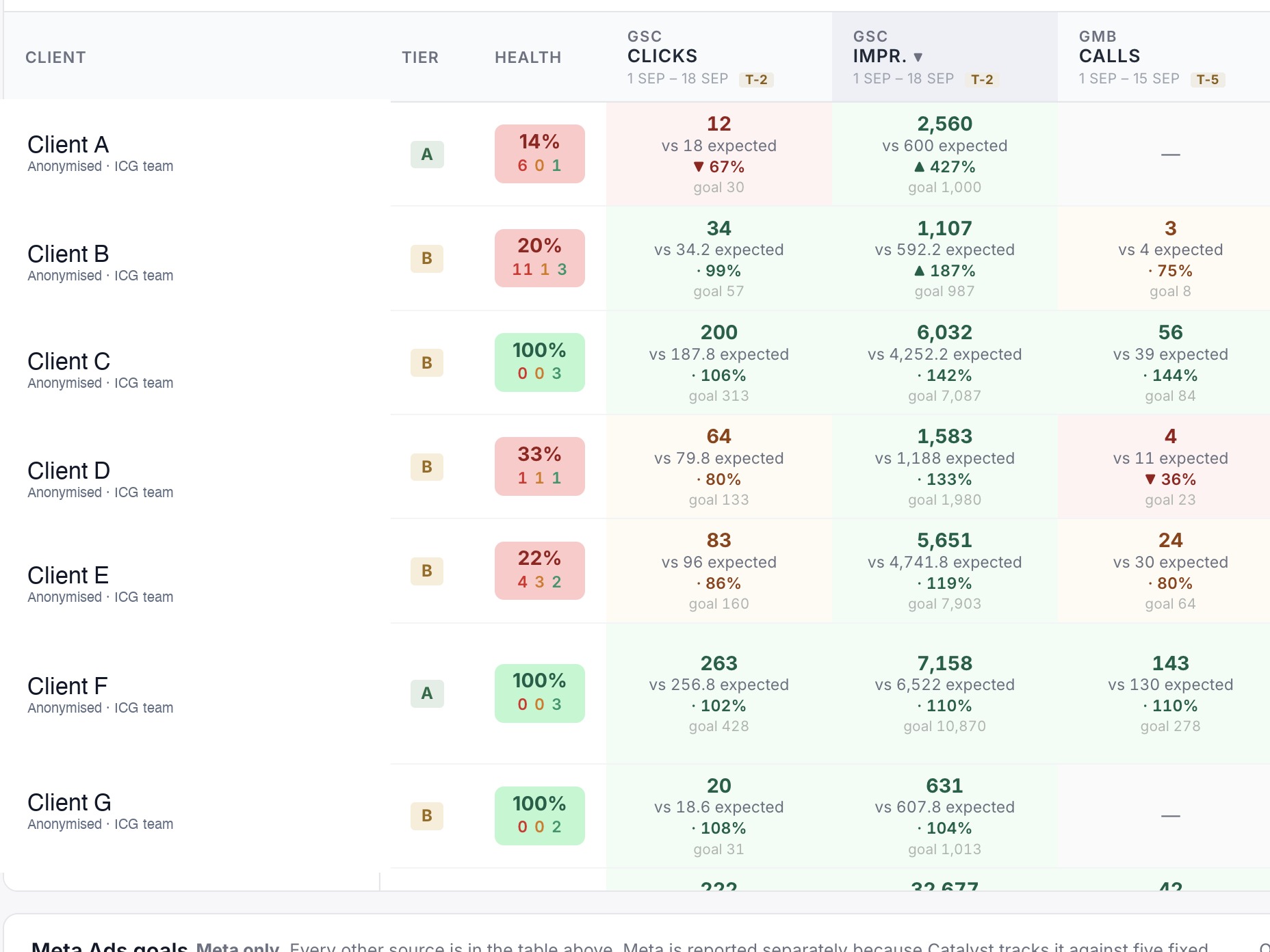
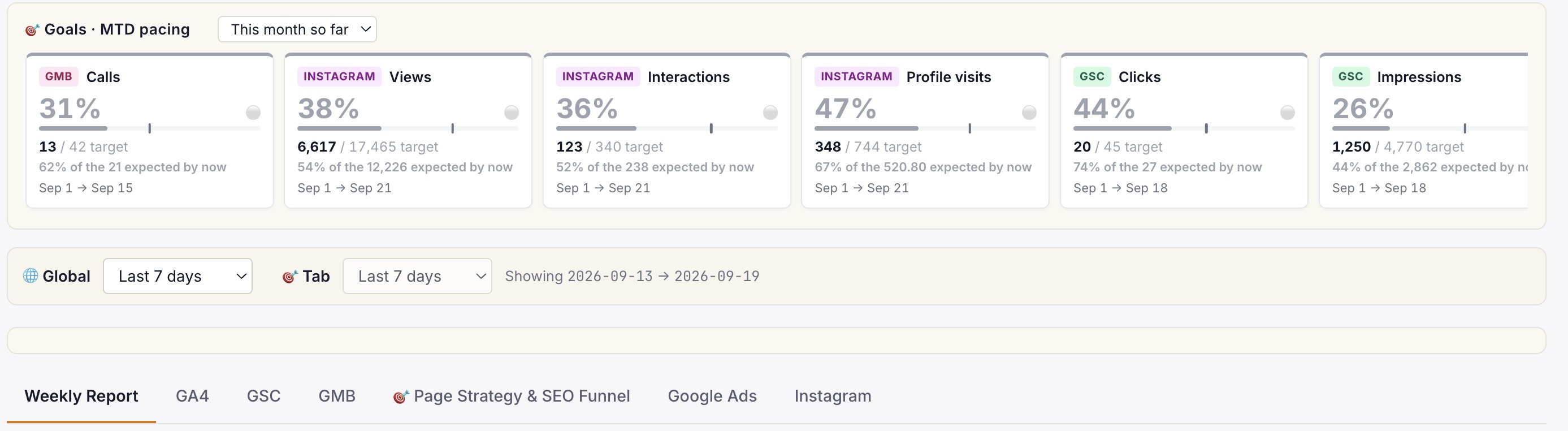
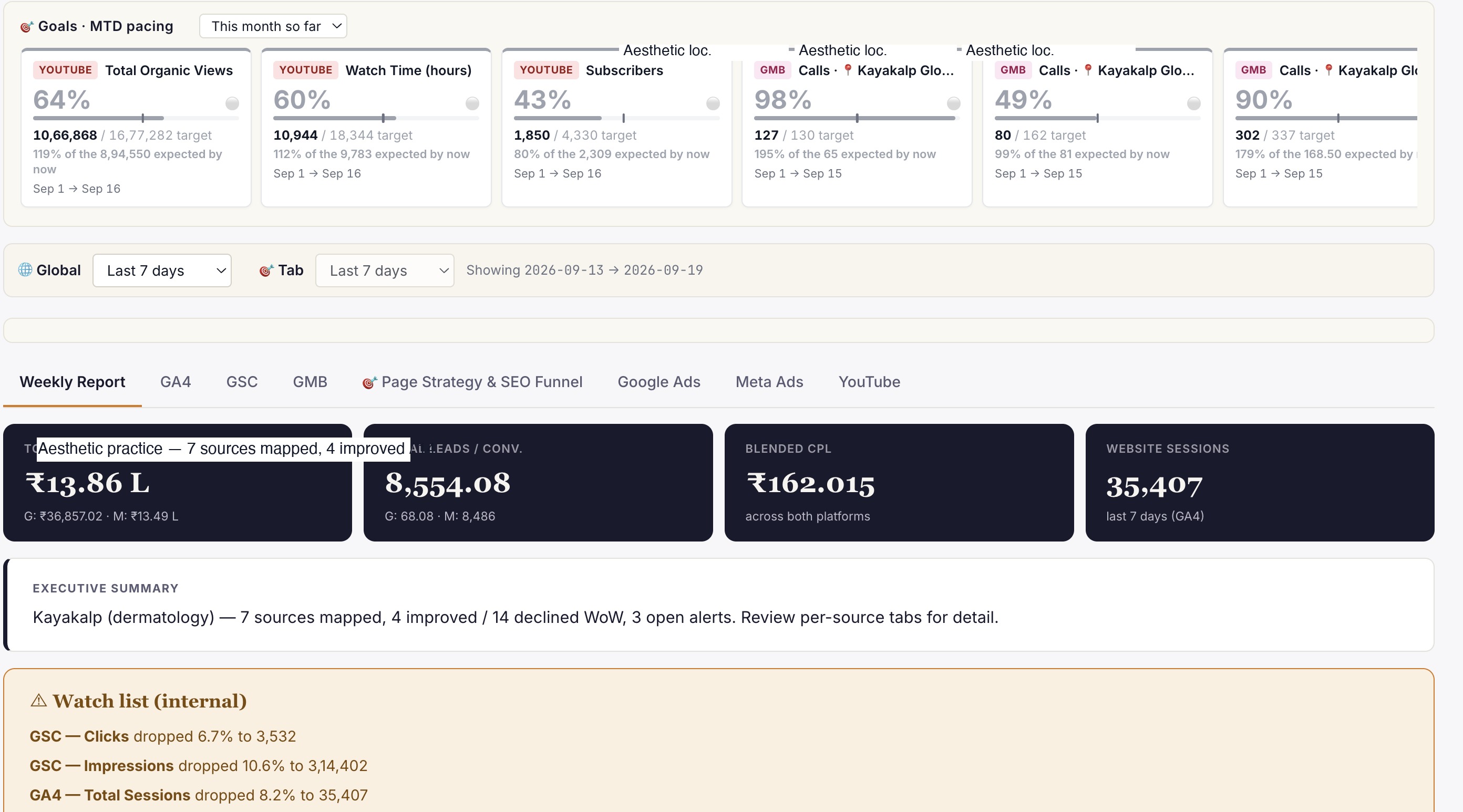
Live client dashboard. GSC, GA4, Google Ads, Meta Ads, IVR calls in one view. Login anytime, not monthly.
Phoenix
Clinic revenue intelligence over your PMS. Daily action queue: Prevent Loss, Maintain & Engage, Grow Revenue. Multi-centre rollout.
Or book a free 30-min audit to see all three in action on your account.
Healthcare brands
that already run on ICG.
A representative slice of the 150+ healthcare brands ICG has delivered for across India. Most engagements remain under NDA.


What ICG clients say · on video.
"Scale up of organic channels and business consulting. ICG has absolute domain authority in their field."
"Working with ICG transformed how we acquire IVF patients in Gurgaon. They understand the fertility journey from inquiry to consult..."
"What Ichelon accomplished — they got all my ideas and worked over 3-4 months to create an amazing, super-customised website."
Need help operationalising this?
Every ICG service is healthcare-only, NMC + DPDP-aware, and built around the patient-research patterns that drive Indian healthcare growth in 2026.
Every practice welcome — packages from ₹20,000/mo.
Goals-Driven engagements · Performance-Linked Payout Models available
More from
ICG.
Hindi and regional-language SEO means publishing proper pages in the languages your patients search in, on their own URLs and linked with hr...
A new pharma brand in India should start digital work before launch, built around who it may legally address. This six-month plan covers pro...
Hospitals and clinics in India can still advertise after the NMC's 6 October 2026 guidelines, but only with factual, verifiable information....
Stop guessing.
Book a Diagnostic.
30 minutes. Free. With the AI-powered healthcare-only marketing agency 150+ brands already run on. No slides, no pitch, no hard close.


