


Dental Chain GMB Management: Multi-Location Playbook 2026
Multi-location dental chain GMB playbook: naming rules, review velocity benchmarks, franchise governance and geo-grid tactics that rank in 2026. Talk to ICG.
No pitch. Written root-cause diagnosis. AI-powered, healthcare only.
Direct answer
Multi-location dental chain GMB playbook: naming rules, review velocity benchmarks, franchise governance and geo-grid tactics that rank in 2026. Talk to ICG.
TL;DR
TL;DR
- Dental chains are the most common multi-location healthcare GBP management use case in India — and the most frequently mismanaged, with inconsistent naming, uneven review responses, and per-location suspension risk that accumulates unnoticed
- The dental chain naming taxonomy is the foundation: "Brand Name — Locality" or just "Brand Name" — keyword additions, specialty descriptors, and award claims in the name field are the single biggest suspension risk across dental portfolios
- General dentistry has a different keyword and GBP strategy than specialty dental (implants, orthodontics, cosmetic dentistry) — most dental chains mix both and need to address them differently
- Review velocity targets for dental chains are higher than most other healthcare verticals because dental patients visit more frequently (biannual check-ups, orthodontic patients over 12–24 months) — this is the highest available review generation opportunity in healthcare
- Franchise dental chains need central brand control with franchisee GBP autonomy — the governance model determines whether a 30-location chain has 30 consistent brand ambassadors or 30 independent liabilities
Dental chains are India's most common multi-location healthcare brand structure. From local 5-location groups to national 50+ location franchise networks, dental chains represent the single largest segment of ICG's multi-location GBP management portfolio.
 angryturtle/17-auto-review-uploader.png" alt="Angryturtle Auto Review Uploader — NMC-compliant review acquisition + response workflow at scale" loading="lazy" decoding="async" style="width:100%;height:auto;display:block;">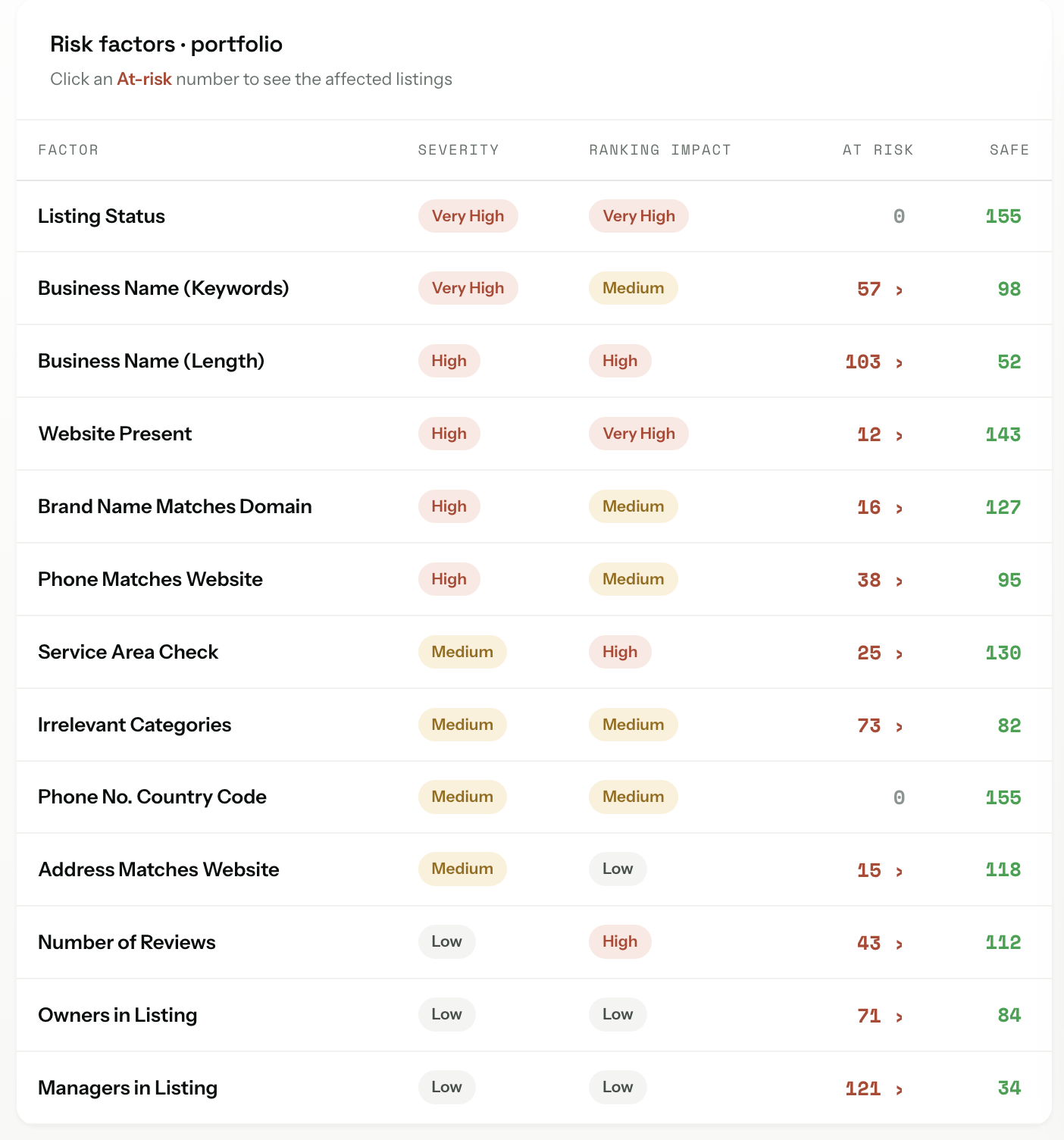
They are also the most frequently mismanaged local SEO asset in Indian healthcare — for a consistent reason: the chain expanded faster than the brand management infrastructure. Location 1 was well-managed. Location 5 was set up quickly. Locations 10–20 were managed by individual franchisees. By location 25, the chain has 8 different naming formats, 3 different category sets, 15 locations with zero review responses, and 4 with active suspension risk factors.
This is the starting point for almost every dental chain ICG onboards.
Section 1 — The dental chain naming taxonomy
Google's guidelines require that GBP business names match real-world names as they appear on signage and legal documents. For dental chains, this creates a naming taxonomy challenge: the chain has a brand name, but individual locations may have local names, tradenames, or historical names from pre-acquisition.
The naming taxonomy framework:
Option A — Pure brand (recommended for chains with strong brand recognition): All locations use the chain's exact brand name only.
- "SmileCare Dental" in Delhi
- "SmileCare Dental" in Mumbai
- "SmileCare Dental" in Bangalore Advantage: every review and every GBP listing builds the master brand. Disadvantage: no geographic differentiation in listing titles.
Option B — Brand + locality (recommended for most chains): "[Brand Name] — [Locality]" or "[Brand Name] [Locality]"
- "SmileCare Dental — Andheri West"
- "SmileCare Dental — Indiranagar" Advantage: geographic differentiation helps patients identify the right location. Compliant: locality identifiers are permitted (they are factual, not promotional). Not compliant: "SmileCare Dental — Best Implant Clinic Andheri West" — the specialty/quality descriptor is prohibited.
Option C — Legacy local names (acquired chains): Where acquired locations had strong local brand equity, an endorsed architecture may make sense: "Sharma Dental Care — A SmileCare Clinic." ICG evaluates this case-by-case based on the legacy brand's local search equity.
Common naming violations in dental chain GBPs (ICG audit findings):
- "SmileCare Dental — No. 1 Dental Clinic Koramangala" — Prohibited: superiority claim
- "SmileCare Dental Implant Centre Bandra — Affordable Implants" — Prohibited: keyword stuffing + promotional descriptor
- "Dr Mehta's SmileCare Dental — 20 Years Experience" — Prohibited: promotional descriptor in name field
Section 2 — General dentistry vs specialty dental — different GBP strategies
Most dental chains offer a mix of general dentistry (check-ups, fillings, extractions, root canals) and specialty services (implants, orthodontics, cosmetic dentistry, oral surgery). These two service lines have structurally different keyword and GBP strategies.
2.1 General dentistry
Query profile: High volume, proximity-dominant. "Dentist near me," "dental clinic [locality]," "teeth cleaning [city]" — these are primarily proximity-driven queries where the nearest available dental clinic wins.
GBP strategy for general dentistry:
- Primary category: "Dentist" (not "Dental Clinic" — Google's specific category is "Dentist")
- Services: check-up, cleaning (scale and polish), fillings, extraction, root canal treatment — these are the high-volume appointment types
- Hours: accuracy is critical — "walk-ins welcome" vs "appointment required" distinction matters for "open now" queries
- Review velocity: general dentistry patients return biannually — systematic review generation at every visit is the highest-volume opportunity in healthcare
2.2 Dental implants
Query profile: High value, extended consideration cycle (3–6 months), cost-sensitive. "Dental implant cost India," "full mouth dental implants [city]," "single tooth implant [locality]."
GBP strategy for implants:
- Secondary category: "Dental implants periodontist" or "Oral and maxillofacial surgeon" where applicable
- Services: list implant types explicitly (single tooth, implant-supported bridge, all-on-4, all-on-6, zygomatic implants)
- Google Posts: cost transparency posts ("What affects dental implant cost in India") drive consideration-stage engagement
- Q&A: seed common implant questions ("How long do dental implants last?" "Am I a candidate for implants?")
- Review content: implant patients write detailed reviews — the review generation ask at 6-month post-implant review appointment is the highest-value review opportunity
2.3 Orthodontics
Query profile: Long cycle (12–24 months of treatment), high repeat engagement. "Braces near me," "Invisalign in [city]," "orthodontist for kids [locality]."
GBP strategy for orthodontics:
- Secondary category: "Orthodontist"
- Services: metal braces, ceramic braces, Invisalign/clear aligners, retainers — list all
- Google Posts: Invisalign case (NMC-compliant — experience-focused, not outcome-claiming) drives high engagement with consideration-stage patients
- Review opportunity: orthodontic patients visit monthly or bimonthly over 12–24 months — multiple review generation opportunities per patient during treatment
2.4 Cosmetic dentistry
Query profile: Aspirational, Instagram-influenced, often researched on social media before Google. "Teeth whitening near me," "smile makeover [city]," "veneers cost India."
GBP strategy for cosmetic dentistry:
- NMC compliance note: cosmetic dentistry GBP content must avoid outcome-promise language. "Transform your smile with veneers" (aspirational but not a clinical outcome promise — borderline) vs "Guaranteed perfect smile" (prohibited outcome promise).
- Photos: cosmetic dentistry is the one dental category where portfolio photography (with patient consent, and "results may vary" context) has the most GBP relevance — patients explicitly want to see the quality of cosmetic work
- Google Posts: educational content on veneer types, whitening options, smile assessment performs well for consideration-stage cosmetic patients
Section 3 — Review velocity — the dental chain's superpower
Dental chains have a structural advantage over almost every other healthcare specialty in review generation: patients return regularly.
A dentist who sees 25 patients per day has:
- 25 opportunities per day for satisfaction checks
- Post-treatment review generation potential from each patient
- Recall patients (6-month check-up) as a second review generation opportunity 6 months later
- Orthodontic patients who visit monthly — 12–24 opportunities per patient over treatment
This compounds. A well-managed dental chain with systematic review generation can reach the competitive floor for their zone significantly faster than a specialist clinic with less frequent patient contact.
ICG's review generation SOP for dental chains:
- WhatsApp satisfaction check sent within 2 hours of appointment completion (dental patients are often available immediately post-visit)
- 4–5/5 respondents receive Google review link and doctor-directory review link (separate messages)
- One follow-up at 24 hours
- At check-up booking confirmation (6-month recall): include a review reminder if the patient has not yet reviewed ("Your last review really helped other patients find us — thank you. Would you consider updating it?")
Monthly new review targets for dental chains:
| Zone | Target per location per month |
|---|---|
| South Delhi / Bandra / Indiranagar | 22–35/month |
| North Delhi / Andheri / HSR Layout | 18–28/month |
| Tier-2 cities | 12–20/month |
| Tier-3 towns | 8–14/month |
Section 4 — Franchise GBP governance
Dental franchise chains face a specific GBP governance challenge: franchisees have legitimate operational authority over their location but their GBP decisions affect the master brand.
ICG's dental franchise governance model:
Franchisor controls (via central GBP access):
- Business name (per taxonomy — no franchisee can add keywords to the name)
- Primary and secondary categories
- Brand description template (franchisees cannot edit the first paragraph)
- Compliance review on Google Posts before publishing
Franchisee manages (with central visibility):
- Business hours (including holiday hours — franchisees know their local operating schedule)
- Location-specific photos (the franchise location's actual interior, team)
- Review responses (within the compliance guide ICG provides per franchise network)
- Location-specific Google Posts (new equipment, local events, team additions)
ICG manages on behalf of the chain:
- Health score monitoring across all locations
- NAP consistency audit across directories
- Suspension risk monitoring — critical because a franchisee who changes their category or name without notification creates immediate suspension risk
- Portfolio-level reporting sent to franchisor monthly + per-location report to each franchisee
Section 5 — Geo-grid for dental chains
Dental's catchment radius is one of the shortest in healthcare — patients rarely travel more than 3–4km for routine dental care. This means dental chain geo-grids should be set tightly:

- Urban high-density zones (Mumbai western suburbs, South Delhi, Indiranagar): 5×5 grid at 500m–750m spacing
- Urban mid-density zones: 5×5 grid at 750m–1km spacing
- Suburban / tier-2 city locations: 5×5 grid at 1km–1.5km spacing
For implant and orthodontic services (wider catchment than general dentistry), ICG runs a secondary geo-grid at 1km–1.5km to assess the extended catchment for specialty dental queries.
Frequently asked questions
Q1: What is the right naming format for a dental chain GBP? "[Brand Name]" for pure brand chains. "[Brand Name] — [Locality]" for chains where location differentiation is needed. The name field must never contain keywords, specialty descriptors, award claims, or promotional language. Every non-compliant element is a suspension risk. ICG audits naming taxonomy across all locations as the first action in every dental chain engagement.
Q2: Should each dental franchise have its own GBP? Yes — one GBP per physical location. The franchisor should retain owner-level access to all location GBPs (not just manager access) so that critical fields cannot be changed without franchisor visibility. Individual franchisees should have manager access for operational updates.
Q3: How many Google reviews should a dental clinic have to be competitive? Zone-dependent. South Delhi, Bandra, Indiranagar: 80+ reviews at 4.4★ is the competitive floor; 150+ at 4.5★ for top-3. North Delhi, Andheri: 60–100 reviews at 4.3★. Tier-2 cities: 40–60 at 4.2★. Dental's high patient frequency makes reaching these benchmarks faster than in low-frequency specialties.
Q4: Can dental chains use before/after photos on their GBP? With NMC compliance care. Before/after photos for clinical procedures (implants, orthodontics, cosmetic dentistry) must have documented patient consent for marketing use. They should not appear in paid promotion contexts (Meta or Google Ads restrictions apply in addition to NMC). For organic GBP photos, the NMC position is that images that implicitly promise clinical outcomes carry risk — ICG recommends using portfolio photography with "results may vary" context and ensuring the images are clearly framed as illustrative rather than outcome-guaranteeing.
Q5: What is the most common GBP compliance issue ICG finds in dental chains? Keyword-stuffed business names. "SmileCare Dental — Best Implant Clinic Koramangala" is the pattern — a chain that added the specialty descriptor to the name in an attempt to rank for implant queries and instead created a suspension risk that Turtle flagged on the first scan. This affects 40–60% of dental chain listings at ICG intake.
Q6: How long does it take for a dental chain GBP programme to show ranking improvement? 30–45 days for naming and category corrections to reflect in ranking. 60–90 days for citation clean-up and NAP consistency work to improve prominence signals. 90–180 days for review velocity acceleration to materially move rating and review count to competitive benchmarks. For chains starting below the competitive floor in their zone, 6–9 months of consistent managed work to reach top-3 position for primary dental queries.
Sources:
- Google Business Profile guidelines — support.google.com/business
- NMC Ethics Code 2026 — nmc.org.in
- IDA (Indian Dental Association) professional guidelines
- ICG dental chain GBP management data, 2024–2026
Internal links:
- Multi-Location GMB Management
- NMC-Safe GBP Content for Doctors
- GBP Suspension — Real Causes and Prevention
- Google Business Profile Management Services
- Geo-Grid Rank Tracking
BLOG 3 of 3
Section 6 — Multi-location dental chain GMB benchmarks and the six mistakes that flatten rankings
Most dental chain founders discover their GMB problem the wrong way: a new outlet in a Tier-2 catchment opens, the flagship suddenly slides from map-pack rank 2 to rank 7, and nobody can explain why. The answer is almost always one of six governance mistakes — and the fix is a set of benchmarks every location manager can hold themselves to. This section is the operating card Angryturtle uses inside every multi-location dental engagement.
Multi-location dental chain GMB benchmarks (2026)
| Signal | Weak location | Healthy chain outlet | Category leader |
|---|---|---|---|
| Reviews added per month | 0–3 | 18–25 | 40+ |
| Owner reply rate (30d) | Under 40% | 85–95% | 100% within 48h |
| Photos uploaded per month | 0–2 | 12–20 | 30+ with geo-EXIF |
| Weekly Google Posts | 0 | 1–2 | 3 (offer + service + educational) |
| Q&A seeded by brand | None | 8–12 per outlet | Refreshed quarterly |
| Geo-grid share of local voice | Under 15% | 35–55% | 65%+ across 5km radius |
The six mistakes that flatten dental chain rankings
- Cloning the flagship name across outlets — treated as a duplicate cluster; solve it with the naming taxonomy in Section 1.
- Centralising all reviews to a single Gmail — trips Google's authenticity checks; each outlet needs its own owner-verified manager.
- Copy-paste service descriptions — trains Google that every outlet is the same entity; localise every service snippet with landmark, pin-code and doctor name.
- No review-response SLA — an outlet with 200 unanswered reviews signals abandonment; enforce a 48-hour reply rule and audit it monthly with Prism Spy-style competitor sweeps.
- Photos uploaded from HQ IP address — Google devalues them; deploy the geo-EXIF workflow we cover in the GBP photo strategy playbook.
- No governance layer above location managers — the fix is the franchise GBP RACI model in Section 4, run by a central marketing pod or through the Client Elevation Programme.
Chains that hit the middle column across all six signals typically move from map-pack rank 5–7 to rank 2–3 inside 90 days. Groups that hit the right column own the pack — and the paid-media cost per booked consultation drops 30–45% because branded search finally converts.
Book a free 30-minute Brand & Growth Diagnostic.
It's a working session, not a sales pitch — you leave with a written root-cause analysis you can act on, whether or not you engage ICG.
Questions readers ask
about this topic.
The three platforms
behind every ICG engagement.
Beacon
CAPI middleware that fixes Event Match Quality, translates CRM statuses to Meta-standard events, dedups across channels.
Agency OS
Live client dashboard. GSC, GA4, Google Ads, Meta Ads, IVR calls in one view. Login anytime, not monthly.
Phoenix
Clinic revenue intelligence over your PMS. Daily action queue: Prevent Loss, Maintain & Engage, Grow Revenue. Multi-centre rollout.
Or book a free 30-min audit to see all three in action on your account.
Healthcare brands
that already run on ICG.
A representative slice of the 150+ healthcare brands ICG has delivered for across India. Most engagements remain under NDA.


What ICG clients say · on video.
"Dental marketing in Delhi is brutally competitive. ICG's local SEO + Google Ads stack moved the needle steadily."
"Scale up of organic channels and business consulting. ICG has absolute domain authority in their field."
The intelligence stack behind this playbook.
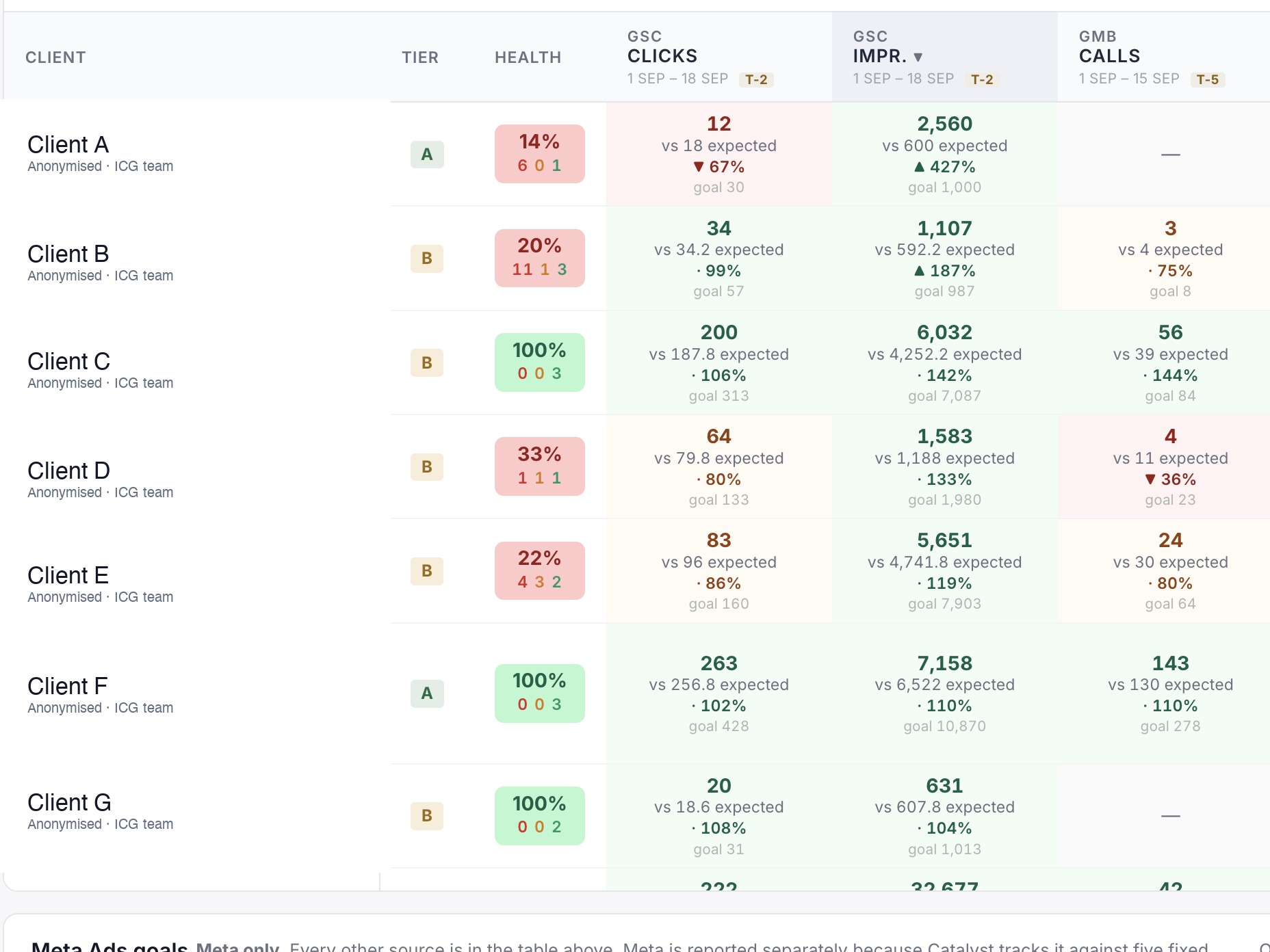
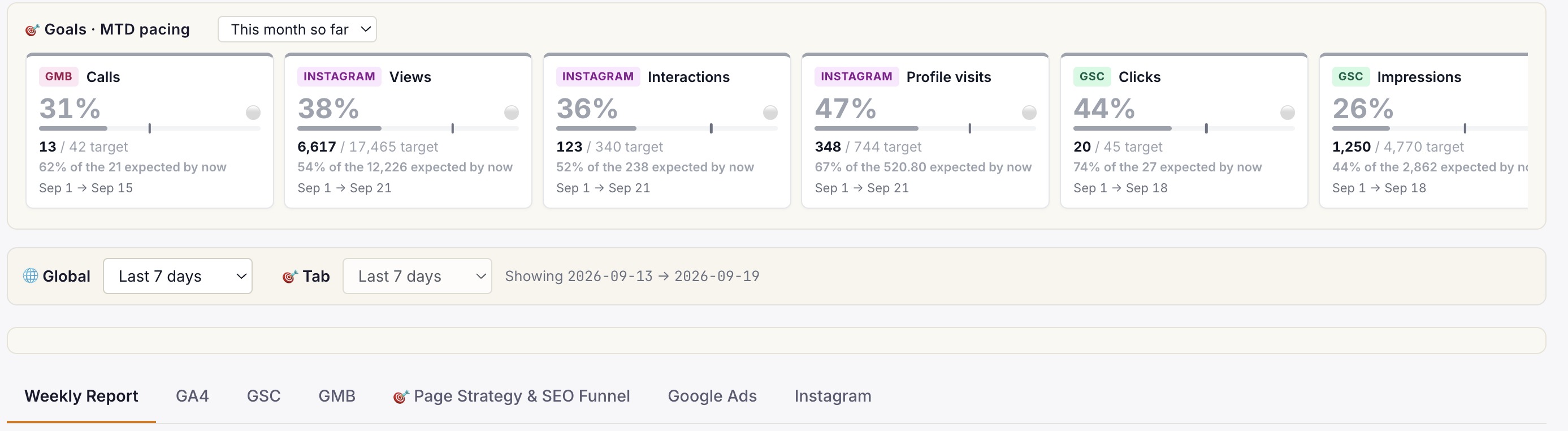
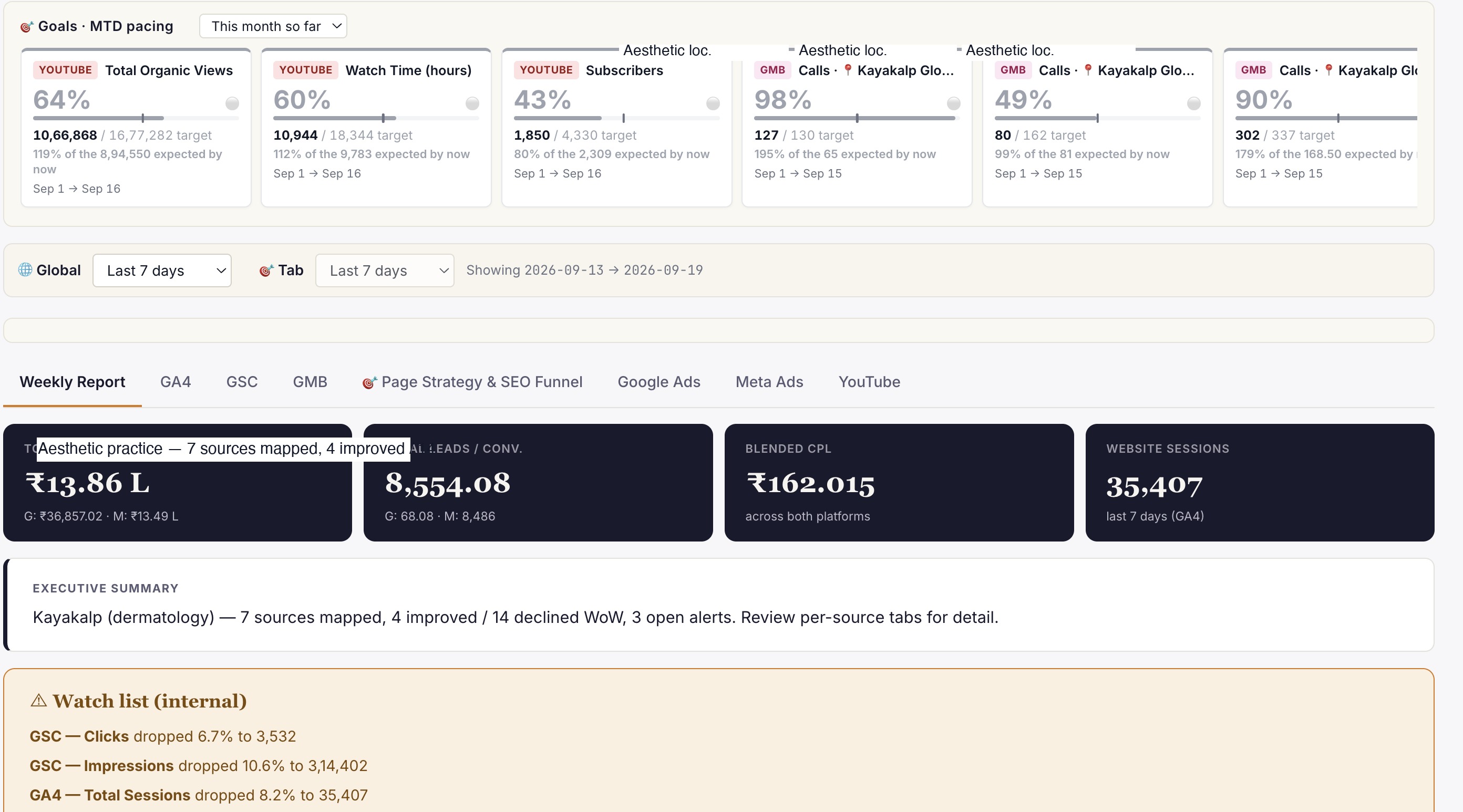
Every ICG engagement runs on the Search Intelligence Trifecta — Angryturtle for GMB, SIE for search and AI Overview, YODA for YouTube. Live product screens below.
Need help operationalising this?
Every ICG service is healthcare-only, NMC + DPDP-aware, and built around the patient-research patterns that drive Indian healthcare growth in 2026.
Every practice welcome — packages from ₹20,000/mo.
Goals-Driven engagements · Performance-Linked Payout Models available
More from
ICG.
Five trends shaping Indian healthcare marketing through 2027: AI-first patient research, Conversions API adoption, ABDM discovery, the AEO w...
Healthcare AIO is the discipline of getting your clinic or hospital cited inside Google AI Overviews, ChatGPT and Perplexity answers — not j...
Conversational-search advertising places brand messages inside AI chat answers — ChatGPT, Perplexity, Copilot — rather than beside a results...
Stop guessing.
Book a Diagnostic.
30 minutes. Free. With the AI-powered healthcare-only marketing agency 150+ brands already run on. No slides, no pitch, no hard close.


