


Multispecialty Hospital Cost in India 2026: ₹30–500 Cr Breakdown
Real 2026 capex to open a multispecialty hospital in India — ₹30 Cr (50-bed) to ₹500 Cr (300-bed). Land, build, equipment, NABH, Y1 opex. WhatsApp ICG.
No pitch. Written root-cause diagnosis. AI-powered, healthcare only.
Direct answer
Real 2026 capex to open a multispecialty hospital in India — ₹30 Cr (50-bed) to ₹500 Cr (300-bed). Land, build, equipment, NABH, Y1 opex. WhatsApp ICG.
TL;DR
Starting a multispecialty hospital in India in 2026 requires ₹15-50 crore in initial investment for a 50-100 bed facility, with operational breakeven typically in 36-60 months. The cost varies enormously by city (Mumbai 2-3× tier-2), bed count, specialty mix, and whether you build versus lease infrastructure.
The 8 cost components of a multispecialty hospital
A 50-bed multispecialty hospital in India 2026 has 8 distinct cost buckets:
1. Land + Building (40-55% of capex)
For a 50-bed multispecialty hospital, you need 50,000-75,000 sq ft of built-up area. Per-bed requirement: 1,000-1,500 sq ft (includes ICU, OT, lab, pharmacy, OPD, IPD wards, staff areas, parking). Land cost varies wildly:
- Mumbai / Delhi / Bangalore Tier-1: ₹15-50 crore for 1-2 acre suitable land
- Pune / Chennai / Hyderabad / Kolkata Tier-1: ₹8-25 crore
- Tier-2 cities (Jaipur, Indore, Coimbatore, Bhopal): ₹3-12 crore
- Tier-3 cities: ₹1-5 crore
Construction cost India 2026: ₹2,500-4,000 per sq ft for hospital-grade construction (steel + MEP + medical-grade flooring + waste management). 60,000 sq ft × ₹3,500 = ₹21 crore. Many tier-2 + tier-3 hospitals lease building (₹2-5 lakh/month for 50-bed) reducing capex by ₹15-25 crore but adding monthly opex.
2. Medical Equipment (15-25% of capex)
For a multispecialty 50-bed hospital, medical equipment runs ₹5-12 crore:
- OT: Operating room with anaesthesia machine + surgical lights + electrosurgery + tables = ₹1.5-3 crore per OT (need 2-3 OTs for 50-bed)
- ICU: 6-bed ICU with ventilators + monitors + central station = ₹80 lakh-1.5 crore
- Imaging: X-ray (₹15-30 lakh), Ultrasound (₹15-40 lakh), CT scanner if installed (₹3-8 crore), MRI (₹6-15 crore — often outsourced for 50-bed)
- Lab: Biochemistry analyser, hematology analyser, microbiology — ₹50 lakh-1.5 crore (or outsourced)
- OPD + IPD: Beds, monitors, basic equipment per ward — ₹50 lakh-1 crore
- Pharmacy + sterilisation: ₹30-60 lakh
- Specialty-specific equipment: Cardiac cath lab (₹5-15 crore), dialysis (₹50 lakh-2 crore for 5-10 stations), endoscopy (₹40 lakh-1 crore)
3. Licensing + Compliance (3-5% of capex)
Government licensing for a hospital in India is fragmented across 15-25 licenses from central, state, and municipal authorities. Realistic timeline: 9-18 months. Total cost (license fees + consultant fees + delay-related): ₹50 lakh-2.5 crore.
Critical licenses include:
- Clinical Establishments Act registration (state — most states implementing)
- Biomedical Waste Management rules (₹10-30 lakh capex for treatment + ₹2-5 lakh/year opex)
- AERB (Atomic Energy Regulatory Board) for X-ray/CT/MRI installation
- Drug License for in-house pharmacy
- NABH preparation (₹15-50 lakh for accreditation cycle, drives 30-50% revenue uplift via insurance + corporate empanelment)
- ABDM HFR + HPR registration (₹2-5 lakh for setup + integration)
- DPDP Act 2023 compliance architecture (₹10-25 lakh)
- State Insurance empanelment (Ayushman Bharat, ESI, CGHS, state schemes — ₹5-15 lakh consultant cost)
- Fire safety, building plan approvals, pollution clearances — varies by city
4. Working Capital (10-15% of capex)
Hospitals typically need 4-6 months of working capital reserve due to insurance/TPA payment cycles (45-90 day average). For a 50-bed hospital with ₹2-4 crore/month opex, working capital reserve = ₹8-24 crore.
5. Information Technology + Software (3-5% of capex)
Hospital IT stack: HMS + EMR + lab info system + pharmacy management + insurance/TPA integration + ABDM. Costs:
- Hospital Management System (HMS) + EMR + 12 modules: ₹10-50 lakh setup + ₹50K-3L/month subscription (Indian HMS vendors, ICG HealthPro 360, global EHR vendors). ICG HealthPro 360 enterprise tier: ₹50K-3L/mo for 50-200 bed, includes ABDM-native + Phoenix revenue intelligence layer
- Servers + networking + WiFi + biometrics + CCTV: ₹15-40 lakh
- Marketing CRM + WhatsApp BAPI + Meta CAPI: ICG AtomCRM (₹50,000/- setup + ₹799/- per telecaller), or ₹14,999/mo for the complete HealthApex OS (8-tool stack)
- Phoenix revenue intelligence overlay: Surfaces recoverable revenue from the existing patient base
6. Manpower (Year 1 ramp)
50-bed multispecialty hospital staffing:
- Doctors: 1 medical superintendent + 3-5 full-time consultants + 8-12 visiting consultants + 4-6 medical officers + 2-3 anaesthetists. Total ₹3-7 lakh/month including RMOs
- Nursing: 1 nursing superintendent + 25-40 nurses (3-shift rotation). Total ₹6-12 lakh/month
- Paramedical: Lab technicians + radiology techs + pharmacists + physiotherapists + dieticians + ward assistants. Total ₹4-8 lakh/month
- Support: Admin + finance + housekeeping + security + IT + marketing + biomedical. Total ₹3-6 lakh/month
Total Year 1 manpower: ₹16-33 lakh/month ramping up.
7. Marketing + Patient Acquisition (Year 1)
New hospitals typically allocate 3-5% of projected Year 1 revenue to marketing. For a 50-bed hospital projecting ₹15-25 crore Year 1 revenue: marketing budget ₹50 lakh-1.25 crore.
Critical patient acquisition channels for new hospitals: GMB + local SEO (essential, 30-40% of leads), Google Ads + Meta Ads (40-50% of leads), referring-doctor partnership program (10-20% of admissions), corporate insurance partnerships (15-25% of IPD volume), health camps + community outreach (5-10%).
8. Pre-operational Expenses (5-10% of capex)
Architects + project management + legal + accountancy + initial inventory + branding + signage: ₹2-8 crore typically.
Total cost summary by city tier
| City Tier | 50-bed Build | 50-bed Lease | 100-bed Build |
|---|---|---|---|
| Mumbai / Delhi / Bangalore Tier-1 | ₹35-55 crore | ₹18-30 crore | ₹60-95 crore |
| Pune / Chennai / Hyderabad / Kolkata Tier-1 | ₹22-38 crore | ₹12-22 crore | ₹40-65 crore |
| Tier-2 (Jaipur / Indore / Coimbatore) | ₹15-25 crore | ₹8-15 crore | ₹28-45 crore |
| Tier-3 cities | ₹10-18 crore | ₹5-10 crore | ₹18-30 crore |
Operational expenses Year 1

For a 50-bed multispecialty hospital, Year 1 monthly opex (50% capacity utilisation): ₹2.5-4.5 crore/month. At 70% utilisation by month 18: ₹3.5-5.5 crore/month. Breakeven typically: 24-48 months depending on payer mix + occupancy ramp.
How to reduce capex 30-50%
- Lease vs build: saves ₹15-25 crore upfront for 50-bed
- Outsourced imaging + lab: saves ₹4-8 crore (uses 3rd-party CT/MRI/full lab — common for tier-2/3)
- Modular OT: pre-fabricated OT systems vs construction = 30-40% savings
- Used + refurbished equipment: 40-60% savings on cardiac cath lab, MRI, CT — but with warranty risk
- Phased buildout: open 25 beds first, scale to 50, then 100 — reduces working capital strain
- NABH preparation later: open + ramp + then NABH (₹15-50 lakh deferred to month 18-24)
What ICG sees in our hospital marketing clients
Across our 18+ hospital marketing engagements (NABH-accredited multispecialty + corporate hospital chains + tertiary care), the Year 1 patient acquisition + marketing data shows:
- 50-bed hospital Month-12 patient volume: 4,500-7,500 OPD + 250-450 IPD admissions/month at 70% capacity
- CPQL benchmarks: hospital OPD is not broken out in ICG's public CPQL dataset; the cross-specialty median is ₹1,220 against a ₹2,100 market median
- Patient mix: 35-50% from corporate insurance + 25-40% from individual insurance + TPA + 15-25% cash
- Phoenix revenue intelligence layer helps recover revenue from the existing patient base (lapsed follow-ups, expiring packages, post-discharge engagement) — which can accelerate breakeven
For multispecialty hospital marketing, see our Mumbai, Delhi, Bangalore deep dives. For NABH-tier hospital marketing, see our NABH playbook. For complete hospital management system pricing, see our HMS comparison.
Founders' note
The biggest mistake new hospital owners make is under-budgeting working capital. We have seen ₹40-crore facilities run out of cash in month 8 because the insurance payment cycle was longer than projected. Plan for 6 months of working capital reserve, not 3.
The second-biggest mistake is treating marketing as an afterthought. Most new hospitals don't spend on marketing until they realize beds are empty in month 4-6. By then, breakeven is 12 months further away. Allocate marketing budget from month -3 (pre-opening) — pre-launch awareness + GMB setup + doctor-network seeding starts before doors open.
Need help modelling the unit economics for your hospital project? Book a free 48-hour diagnostic with the ICG founder team — Rohit + Hanuman review personally.
Common capex mistakes founders make in 2026 (and what they cost)
Across 25+ multispecialty projects ICG has advised on since 2022, the same six budgeting mistakes eat 12-22% of the promoter's original capex within the first 18 months. None of them are exotic — they're the line items most feasibility reports gloss over.
- Underestimating NABH-readiness spend. Founders budget for the accreditation fee (₹8-14 L) but not for the infrastructure retrofits — HVAC pressure zoning, medical-gas manifolds, HIS integration, biomedical waste segregation rooms — that a first-time NABH pre-assessment flags. Realistic add-on: ₹2.5-4.5 Cr for a 100-bed setup. Our hospital marketing team sees this most often in Tier-2 launches.
- Ignoring the equipment-service-contract cliff. Year 1 AMC on CT, cath lab, and MRI is bundled. Year 2 onward, comprehensive AMCs run 8-12% of equipment value. On a ₹35 Cr equipment stack, that's ₹3-4 Cr/year — often missing from the pro-forma.
- Building marketing budget as a % of revenue instead of a % of capex. A pre-revenue hospital needs 3-5% of total capex reserved for the first 18 months of demand generation. Ignoring this is why so many 100-bed hospitals sit at 32% occupancy in Year 2.
- Skipping the empanelment runway. CGHS, ECHS, and TPA empanelment take 6-14 months post-commissioning. Working-capital cushion of ₹4-8 Cr keeps payroll intact while receivables stabilise.
- Treating GBP, website, and reputation as a launch-week task. Founders who wire Angryturtle (our GBP operating system, ₹999/mo) into every consultant profile and location listing 90 days pre-opening see 2.1x higher OP footfall in Month 1 vs. those who launch cold.
- No founder-level marketing owner. Delegating brand and demand to a junior in-house resource without a compounding system (SEO + GBP + YouTube + Meta) — see the Client-Elevation Programme for what the alternative looks like.
If you're 6-18 months from commissioning and want a founder-led review of your capex + demand plan, WhatsApp Rohit or book a diagnostic.
Book a free 30-minute Brand & Growth Diagnostic.
It's a working session, not a sales pitch — you leave with a written root-cause analysis you can act on, whether or not you engage ICG.
Questions readers ask
about this topic.
The three platforms
behind every ICG engagement.
Beacon
CAPI middleware that fixes Event Match Quality, translates CRM statuses to Meta-standard events, dedups across channels.
Agency OS
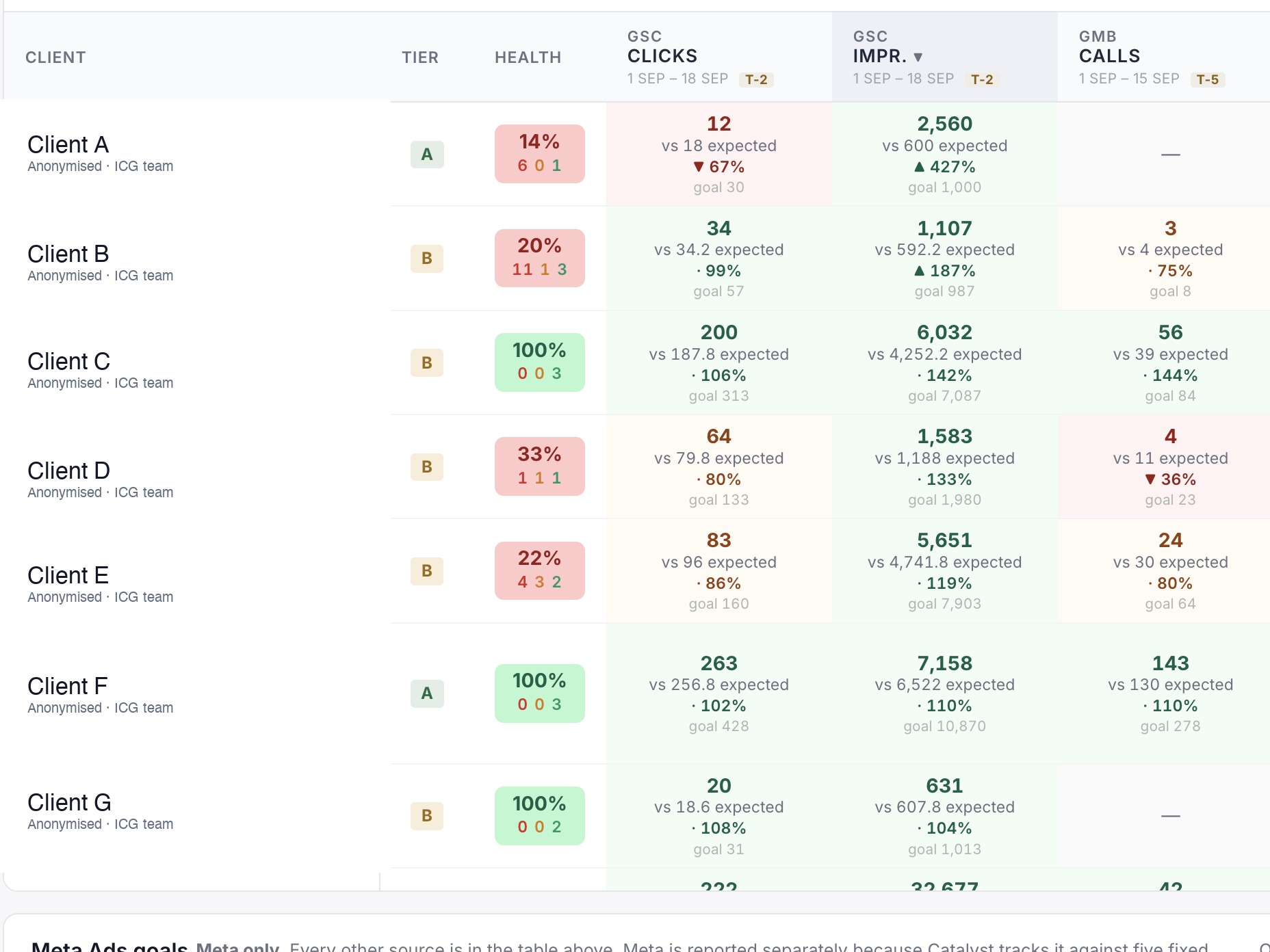
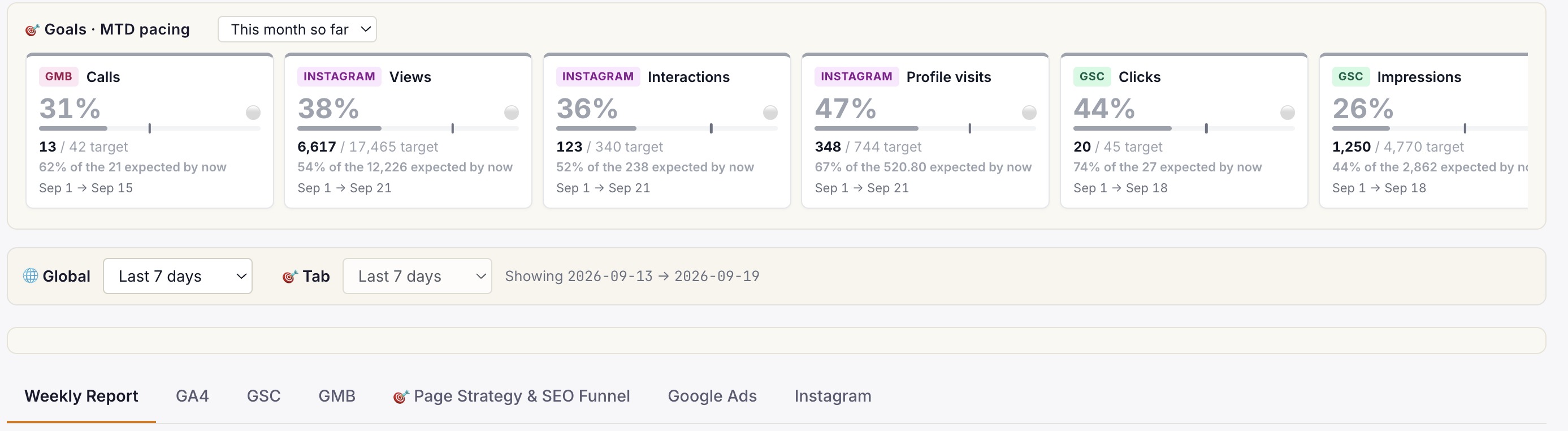
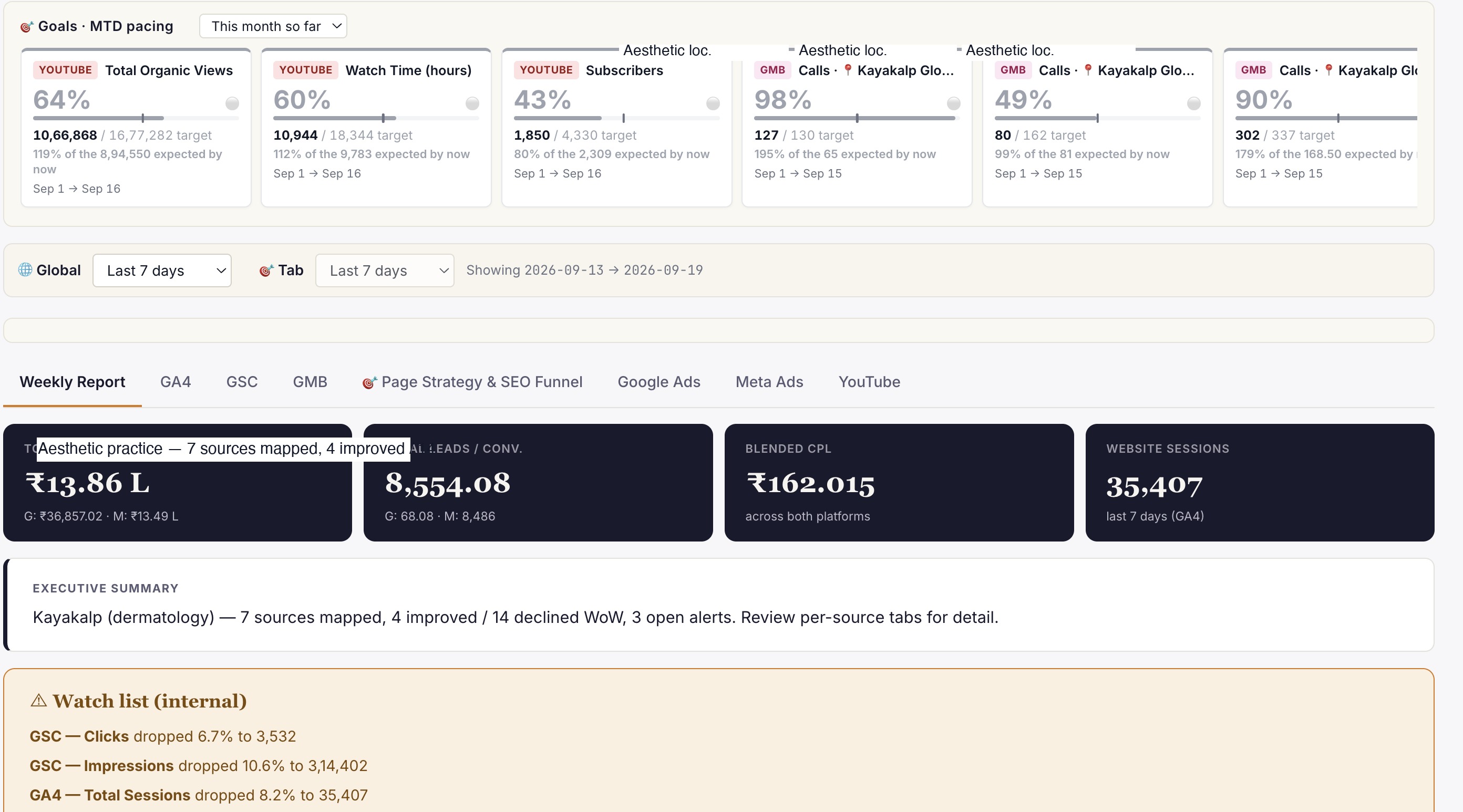
Live client dashboard. GSC, GA4, Google Ads, Meta Ads, IVR calls in one view. Login anytime, not monthly.
Phoenix
Clinic revenue intelligence over your PMS. Daily action queue: Prevent Loss, Maintain & Engage, Grow Revenue. Multi-centre rollout.
Or book a free 30-min audit to see all three in action on your account.
Healthcare brands
that already run on ICG.
A representative slice of the 150+ healthcare brands ICG has delivered for across India. Most engagements remain under NDA.


What ICG clients say · on video.
"Mental health marketing requires a different sensitivity. ICG built compliance-aware campaigns that respect both patients and our..."
"Bariatric surgery patients need a long consideration cycle. ICG built a content + paid system that respects that timeline."
"Working with ICG felt like working with an in-house growth team that happens to specialise in healthcare."
Need help operationalising this?
Every ICG service is healthcare-only, NMC + DPDP-aware, and built around the patient-research patterns that drive Indian healthcare growth in 2026.
Every practice welcome — packages from ₹20,000/mo.
Goals-Driven engagements · Performance-Linked Payout Models available
More from
ICG.
Five trends shaping Indian healthcare marketing through 2027: AI-first patient research, Conversions API adoption, ABDM discovery, the AEO w...
Healthcare AIO is the discipline of getting your clinic or hospital cited inside Google AI Overviews, ChatGPT and Perplexity answers — not j...
Conversational-search advertising places brand messages inside AI chat answers — ChatGPT, Perplexity, Copilot — rather than beside a results...
Stop guessing.
Book a Diagnostic.
30 minutes. Free. With the AI-powered healthcare-only marketing agency 150+ brands already run on. No slides, no pitch, no hard close.


