


Angryturtle compliance workflows explained: NMC, ASCI, DPDP, ART Act, PC-PNDT built into every content operation
Compliance workflows are the invisible layer of Angryturtle that no generic local SEO tool has — the compliance-aware AI framings, review filters, and approval gates that prevent healthcare businesses from publishing content that violates Indian
No pitch. Written root-cause diagnosis. AI-powered, healthcare only.
Direct answer
Compliance workflows are the invisible layer of Angryturtle that no generic local SEO tool has — the compliance-aware AI framings, review filters, and approval gates that prevent healthcare businesses from publishing content that violates Indian
TL;DR

Compliance workflows are the invisible layer of Angryturtle that no generic local SEO tool has — the compliance-aware AI framings, review filters, and approval gates that prevent healthcare businesses from publishing content that violates Indian regulatory frameworks. Every content asset the tool drafts (Google Post, review reply, business description, service description, FAQ answer) passes through compliance checks aligned to NMC's 2026 advertising guidelines, ASCI Guidelines 2022, DPDP Act 2023, ART Act 2021 for fertility contexts, PC-PNDT for gynaecology contexts, and platform-specific policies (Google Healthcare Advertising, Meta Health Policy). Compliance-in-the-loop rather than compliance-after-the-fact is what separates healthcare-safe execution from the ethics-complaint patterns that generic tools produce.
Why compliance workflows matter more than most healthcare agencies think
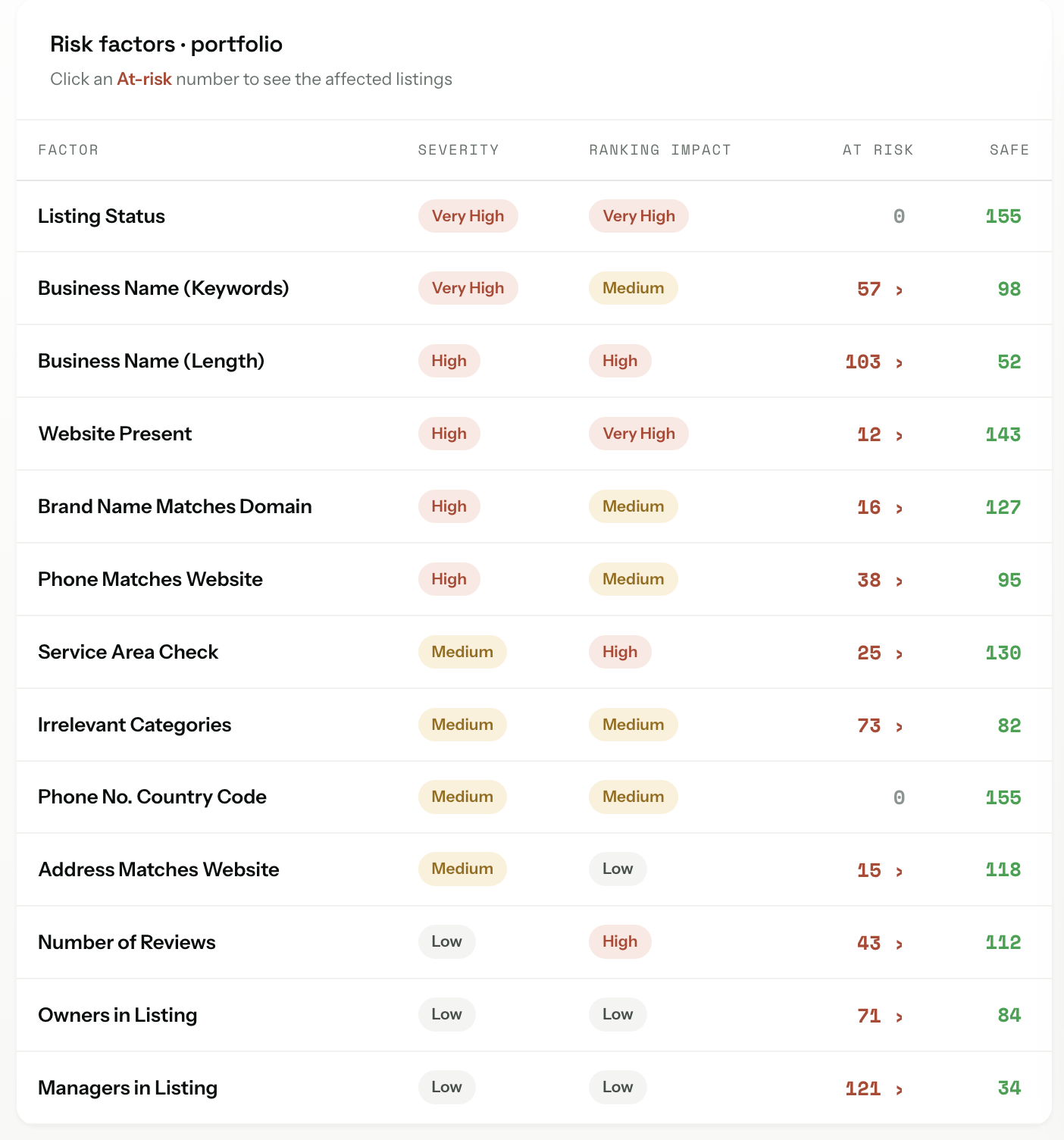
Every healthcare business in India operates inside multiple overlapping regulatory frameworks. Individual medical practitioners operate under NMC's 2026 advertising guidelines restrictions on personal solicitation, testimonials framed as clinical evidence, comparative claims, and outcome guarantees. Advertisers of medical services operate under ASCI Guidelines 2022 restrictions on comparative advertising, unsubstantiated superlative claims, and misleading imagery. All businesses handling patient data operate under DPDP Act 2023 requirements for consent, purpose limitation, and opt-out. Specific specialties layer additional restrictions — ART Act 2021 for fertility, PC-PNDT for gynaecology and prenatal, Drugs and Cosmetics Act for pharma-adjacent content.
Generic local SEO tools operate as if none of these frameworks exist. They draft review replies, Google Posts, and business descriptions using the same content patterns they'd produce for restaurants or retailers. The output is usually not compliant with Indian healthcare regulation.
Common compliance failures generic tools produce:
- Review replies that confirm specific patient treatment outcomes (violates NMC Section 6)
- Google Posts making comparative superlative claims ("best cardiologist in [city]" without ASCI-substantiable evidence)
- Business descriptions promising specific outcomes ("guaranteed hair growth with our treatment")
- Review-request templates that don't include DPDP-required consent framing
- Content for fertility clinics mentioning success rates (ART Act restricted)
- Content for oncology centres mentioning cure claims (NMC absolute prohibition)
- Aesthetic dermatology content with identifiable patient before-and-after imagery (NMC restriction)
Any single failure risks NMC ethics complaints, ASCI notices, DPDP contraventions, or platform advertising suspensions. Systematically producing these failures across a client portfolio destroys the marketing operation.
Angryturtle's compliance workflows exist to prevent these failures at the tool level rather than relying on human compliance review to catch them after generation.
The three layers of compliance in Angryturtle
Compliance-aware AI drafting. The AI models that draft content (Post text, review replies, business descriptions, service descriptions, FAQ answers) are prompted with healthcare compliance context including the specific frameworks applying to the client's specialty. A cardiology-tagged profile's AI drafts avoid survival-rate claims, comparative outcome claims, and treatment-guarantee language by construction. A fertility-tagged profile's AI drafts avoid success-rate claims, sex-determination-adjacent language, and ART Act violations by construction. Drafts arrive in the operator queue already compliance-safe rather than needing external compliance review.
Compliance filters on draft output. After AI drafts content, filters scan the output for specific compliance-red-flag patterns before presenting to the operator. Detected patterns get flagged for revision or automatically rewritten to compliance-safe alternatives. Filters include: outcome-claim detection ("cure," "success rate," "guaranteed"), comparative-superlative detection ("best," "leading," "top-rated" without substantiation), patient-identification detection (content that could identify specific patients), specialty-inappropriate-content detection (specialty-specific restricted content patterns).
Approval gates before publishing. No content publishes automatically. Every drafted Post, every AI-drafted review reply, every profile edit requires operator review-and-approve before publishing to Google. This gate prevents fully-automated compliance failures. For healthcare businesses with internal compliance-review workflows, the gate accommodates the internal review step — content sits in Angryturtle's queue awaiting the compliance-reviewer's approval before publishing.
Framework-specific compliance handling
NMC's 2026 advertising guidelines — the most broadly-applied framework for individual medical practitioners. Angryturtle's NMC-compliance layer: - Blocks review replies that confirm specific treatment outcomes - Blocks Google Posts using personal testimonials framed as clinical evidence - Blocks business descriptions promising specific patient outcomes - Blocks comparative claims against other practitioners - Blocks personal solicitation language
ASCI Guidelines 2022 — advertising claims restrictions. Angryturtle's ASCI-compliance layer: - Blocks comparative superlatives without substantiation ("best," "leading," "top" claims) - Blocks misleading imagery framings - Blocks unsupported outcome claims
DPDP Act 2023 — patient data protection. Angryturtle's DPDP-compliance layer: - Includes explicit consent framing in review-request messaging - Adds legitimate-use statements in patient data collection contexts - Supports opt-out functionality in patient-messaging workflows - Handles patient data minimisation in profile content
ART Act 2021 — fertility-specific. Angryturtle's ART-compliance layer for fertility-tagged profiles: - Blocks success-rate claims for IVF procedures - Blocks pregnancy-rate or live-birth-rate claims - Blocks sex-determination-adjacent language - Blocks donor-service advertising violations
PC-PNDT — gynaecology and prenatal specific. Angryturtle's PC-PNDT-compliance layer: - Blocks sex-determination-adjacent language - Blocks any prenatal-diagnostic-related content that could be interpreted as sex-selection
Google Healthcare Advertising Policy — Google Ads and GBP-adjacent. Angryturtle's Google-compliance layer: - Blocks restricted health condition targeting - Blocks unsupported treatment claims - Blocks non-approved product references
Meta Health Policy — Meta ads-adjacent. Angryturtle's Meta-compliance layer: - Blocks restricted before-and-after imagery for aesthetic content - Blocks personal-attribute targeting related to health - Blocks unsupported health condition claims
Where compliance failures typically happen (and how Angryturtle prevents them)

Failure pattern 1: Review reply confirms specific treatment outcome. Patient writes "Dr. X cured my chronic back pain." Generic tool's AI draft: "So glad Dr. X could cure your back pain!" NMC violation — confirms specific clinical outcome for individual practitioner. Angryturtle's compliance filter blocks this framing. Angryturtle's alternative: "Thank you for sharing your experience. We're glad our team could support you. Wishing you continued good health."
Failure pattern 2: Google Post makes comparative superlative claim. Practice's marketing coordinator drafts: "The best cardiologist in Mumbai is now offering weekend consultations." Generic scheduler publishes as-is. ASCI violation — unsubstantiated superlative claim. Angryturtle's compliance filter flags the "best" claim, prompts rewriting to specific factual differentiation: "Weekend cardiology consultations now available with our team of 4 fellowship-trained cardiologists."
Failure pattern 3: Fertility clinic Google Post mentions success rate. Practice's team drafts: "Our IVF success rate is 65% for women under 35." Generic scheduler publishes. ART Act violation — restricted IVF advertising claim. Angryturtle's fertility-specific compliance filter blocks the success-rate claim, prompts rewriting to compliant content: "Our fertility team includes 3 reproductive endocrinologists and specialist embryology support. Book a consultation to discuss your specific treatment journey."
Failure pattern 4: Review-request WhatsApp missing DPDP consent framing. Practice sends: "Hi [patient name], please review our clinic on Google." Generic tool sends as-is. DPDP violation — no consent framing, no opt-out, patient-data usage not documented. Angryturtle's DPDP-compliant template: "Hi [patient name], thank you for visiting us. If you'd like to share feedback on your visit experience, you can review us here: [link]. Reply STOP to opt out of future messages. Your feedback helps us improve our care."
Failure pattern 5: Oncology centre Post claims survival advantage. Practice's marketing team drafts: "Our advanced radiation therapy achieves 85% survival rate for early-stage lung cancer." Generic scheduler publishes. Multiple violations — NMC (specific outcome claim), ASCI (unsubstantiated superlative), oncology-specific content perimeter. Angryturtle's oncology-specific compliance filter blocks the survival-rate framing entirely, prompts rewriting to compliant content focusing on capabilities: "Our radiation oncology team uses IGRT and IMRT technology for precise tumor targeting. Multidisciplinary tumor board reviews every case with 8 oncology specialists."
How ICG uses Angryturtle's compliance workflows
Every ICG healthcare client benefits from compliance-in-the-loop by default. ICG's healthcare-specialist team members serve as the compliance-reviewers in the approval gate — every drafted piece of content passes through named team members with specialty-specific compliance expertise before publishing.
For clients with internal compliance-review workflows (hospital medical affairs teams, corporate compliance departments), Angryturtle accommodates the internal review — content sits in the queue awaiting the client-side compliance-reviewer's approval before ICG publishes.
Documentation of compliance-review decisions is maintained per client for regulatory audit purposes. If a client faces regulatory inquiry, the documentation shows the review-and-approval trail on every published content asset.
What compliance workflows don't cover
Not a substitute for medical affairs review of clinical claims. Any content making clinical claims (treatment protocols, drug information, procedure recommendations) needs medical-affairs review beyond marketing-compliance review. Angryturtle handles marketing-compliance framings; medical-affairs review handles clinical accuracy.
Not a substitute for legal review of specific regulatory questions. Complex regulatory questions (new drug launch advertising, novel treatment marketing, cross-border healthcare advertising) benefit from qualified pharmaceutical/healthcare legal counsel beyond tool-level compliance workflows.
Not a substitute for platform-specific policy expertise. Google's healthcare advertising policy and Meta's health policy evolve continuously; specific policy questions benefit from platform-specific expertise beyond Angryturtle's default filters. ICG maintains ongoing platform-policy expertise as part of the healthcare-specialist team.
Related reading
- Healthcare local SEO agency India — pillar service page powered by Angryturtle
- Angryturtle Content Studio explained — content operations with compliance built in
- Angryturtle Rank OS explained — the scoring model
- Angryturtle vs BrightLocal for healthcare — comparison of compliance-workflow depth
FAQ
What compliance frameworks does Angryturtle respect? NMC's 2026 advertising guidelines (medical practitioner conduct), ASCI Guidelines 2022 (advertising claims), DPDP Act 2023 (patient data protection), ART Act 2021 (assisted reproduction for fertility profiles), PC-PNDT (pre-conception and pre-natal for gynaecology), Google Healthcare Advertising Policy, Meta Health Policy, and Drugs and Cosmetics Act adjacent content restrictions.
Does Angryturtle publish anything automatically? No. Every draft requires operator review-and-approve before publishing. Approval gate prevents automated compliance failures.
Can Angryturtle's compliance layer be turned off? No. Compliance-in-the-loop is fundamental to the tool's design for healthcare markets. Non-healthcare buyers using Angryturtle for other verticals see different (vertical-appropriate) compliance defaults.
How does the specialty-specific compliance work? Profile tagging by specialty determines which compliance frameworks apply. A cardiology-tagged profile sees cardiology-appropriate defaults; a fertility-tagged profile sees fertility-appropriate defaults including ART Act. Sub-specialty tagging refines further.
What if a compliance filter blocks content the operator wants to publish? Operator can request revision (AI generates a compliance-safe alternative) or manual override (operator writes the content themselves, taking responsibility for compliance). Manual overrides get logged for audit purposes.
Does the compliance workflow slow content operations? Marginally, initially. As operators build muscle memory with compliance-safe patterns, the AI's first-draft compliance-safe framings mean minimal revision needed. Net operations velocity is higher than manual-compliance-review workflows in generic tools.
How does Angryturtle handle updates to regulatory frameworks? ICG's healthcare team monitors regulatory framework updates (NMC code revisions, ASCI guideline changes, DPDP implementation updates) and updates Angryturtle's compliance filters accordingly. Users on Agency and Enterprise tiers see release notes documenting each update.
Does the compliance workflow work for non-Indian markets? Angryturtle's default configuration is India-first. US HIPAA, EU GDPR, UK healthcare advertising frameworks would need custom setup. For pure Indian market operations, defaults are appropriate.
Can Angryturtle document compliance-review decisions for audit purposes? Yes. Approval-and-publish logs are maintained per client. Regulatory audit responses can pull the documentation showing review-and-approval trails on every published content asset.
What happens if a compliance-review decision is wrong? Human error is possible. Regular compliance training for reviewer teams, second-tier review for high-risk content (oncology outcome claims, IVF advertising, aesthetic procedure content), and post-publish compliance audits catch mistakes before they compound.
How does Angryturtle differ from a generic tool with a compliance plugin? Compliance is architectural in Angryturtle — built into the AI drafting layer, the filters, the approval gates, and the review documentation. Generic tools with compliance plugins layer compliance as an add-on that operates alongside non-compliant defaults. Architectural compliance produces materially different outcomes at scale.
Can healthcare buyers rely on Angryturtle's compliance layer without additional review? For most standard content operations, yes. For high-stakes content (major campaign launches, novel treatment marketing, sensitive patient-story content), additional human compliance review is prudent. Angryturtle enables the human review workflow rather than replacing it.
Book a free 30-minute Brand & Growth Diagnostic.
It's a working session, not a sales pitch — you leave with a written root-cause analysis you can act on, whether or not you engage ICG.
The three platforms
behind every ICG engagement.
Beacon
CAPI middleware that fixes Event Match Quality, translates CRM statuses to Meta-standard events, dedups across channels.
Agency OS
Live client dashboard. GSC, GA4, Google Ads, Meta Ads, IVR calls in one view. Login anytime, not monthly.
Phoenix
Clinic revenue intelligence over your PMS. Daily action queue: Prevent Loss, Maintain & Engage, Grow Revenue. Multi-centre rollout.
Or book a free 30-min audit to see all three in action on your account.
Healthcare brands
that already run on ICG.
A representative slice of the 150+ healthcare brands ICG has delivered for across India. Most engagements remain under NDA.


What ICG clients say · on video.
"Scale up of organic channels and business consulting. ICG has absolute domain authority in their field."
"Working with ICG transformed how we acquire IVF patients in Gurgaon. They understand the fertility journey from inquiry to consult..."
"What Ichelon accomplished — they got all my ideas and worked over 3-4 months to create an amazing, super-customised website."
Need help operationalising this?
Every ICG service is healthcare-only, NMC + DPDP-aware, and built around the patient-research patterns that drive Indian healthcare growth in 2026.
Every practice welcome — packages from ₹20,000/mo.
Goals-Driven engagements · Performance-Linked Payout Models available
More from
ICG.
Five trends shaping Indian healthcare marketing through 2027: AI-first patient research, Conversions API adoption, ABDM discovery, the AEO w...
Healthcare AIO is the discipline of getting your clinic or hospital cited inside Google AI Overviews, ChatGPT and Perplexity answers — not j...
Conversational-search advertising places brand messages inside AI chat answers — ChatGPT, Perplexity, Copilot — rather than beside a results...
Stop guessing.
Book a Diagnostic.
30 minutes. Free. With the AI-powered healthcare-only marketing agency 150+ brands already run on. No slides, no pitch, no hard close.


