Corneal & Keratoconus
Marketing Agency in India.
By Rohit Gupta · Business & Growth Lead, Ichelon Consulting Group. SEO review by Hanuman Sihag. Updated September 2026.
Cornea is a two-audience sub-vertical. The first audience is the young keratoconus patient — 17 to 30 years old, contact-lens intolerant, worried about progressive vision loss, actively searching Google and Reddit for treatment options. The second is the referring optometrist and general ophthalmologist who send transplant candidates and complex-cornea cases onward. A cornea marketing programme that speaks to both audiences with the right content and the right referral infrastructure grows durably. One that speaks to only one leaves half the pipeline on the table.



A young-patient,
content-heavy sub-vertical.
Keratoconus is diagnosed most often between the ages of 15 and 25. That means the primary keratoconus patient searching online is a college student, an early-career professional, or a parent of a diagnosed teenager. All three cohorts are digital-first, comparison-heavy, and — critically — anxious. A keratoconus diagnosis is often the first serious medical diagnosis these searchers have received, and the volume of research they do before booking a specialist consult is unusually high.
This shapes the content model. Content should be structured for a scared, intelligent, self-educating reader. Long-form explainers work here in a way they do not for cataract. The definitive keratoconus page on the practice's website — covering what keratoconus is, why it progresses, how corneal topography (Pentacam or similar) is used to stage it, what C3R (corneal collagen crosslinking) does, when contact lenses are the answer, when intracorneal ring segments (Intacs, Keraring) are considered, and when a cornea transplant is on the table — becomes a durable acquisition asset that earns organic ranking on tens of related queries.
The tone that works is calm authority. Not "we cure keratoconus" (non-compliant and inaccurate — C3R halts progression rather than curing) but "keratoconus is a treatable, manageable condition. Modern C3R stops progression in most patients when applied at the right stage. Vision correction options range from spectacles to specialty contact lenses to surgical options." Structured, honest, and reassuring in the way a first-diagnosis reader needs.
Content architecture
for the keratoconus content cluster.
A properly built keratoconus content cluster has a hub page (the definitive keratoconus explainer) and a set of supporting pages each targeting a distinct query family. The supporting pages that consistently earn traffic and refer readers back to the hub:
- C3R (corneal collagen crosslinking): what it is, how it works, epi-on vs epi-off, accelerated vs conventional protocols, recovery, cost range, when it is indicated.
- Corneal topography and Pentacam: what the test measures, how staging works, why serial topography matters for tracking progression.
- Contact lenses for keratoconus: RGP, scleral, hybrid, and piggyback lenses; when each is appropriate.
- Intracorneal ring segments (Intacs, Keraring): mechanism, candidacy, expected outcome band.
- Topography-guided PRK / customised treatment: when it is combined with C3R, what it aims to correct.
- Cornea transplant (DALK, PK): when transplant becomes the option, what the different transplant types are, waiting periods and eye-bank considerations.
Each page is written by the corneal surgeon with a byline and photograph. Cross-linked back to the hub and to sibling pages. This structure ranks well for the keratoconus query set, earns Featured Snippets on the "what is keratoconus" and "what is C3R" queries, and — the more important commercial output — makes the practice the natural referral destination when a general ophthalmologist has a keratoconus patient who needs specialist care.
Eye bank association
and the transplant referral chain.
Cornea transplant (penetrating keratoplasty, DALK, DSAEK, DMEK) is a referral-dominated sub-vertical. The transplant candidate rarely arrives via a direct Google search — they arrive via a referring corneal surgeon or general ophthalmologist who has assessed corneal opacity, corneal dystrophy, post-infection scarring, or endothelial failure and identified transplant as the appropriate next step. That means the transplant marketing model is B2B referral first, patient-facing content second.
Eye bank association matters here. A practice that is affiliated with a recognised eye bank — Ramayamma International Eye Bank (LVPEI), Eye Bank Association of India-recognised centres, and equivalent — carries a marketable trust signal for both referring clinicians and patients. Displaying the eye bank association on the website and in the surgeon's profile, along with the specific transplant types performed (DALK for stromal disease, DSAEK/DMEK for endothelial disease, PK when full-thickness), signals both capability and pipeline access.
Content for the transplant audience should be honest about waiting periods, tissue availability, and the fact that some cases require patience. The trust that earns the referral (and calms the anxious patient family) is built by clarity, not by promising immediate transplant access.
Top-of-funnel content
for the young contact-lens dropout.
Contact-lens intolerance — the young patient who has been wearing soft contact lenses for years, is now developing giant papillary conjunctivitis, corneal dryness, keratitis, or contact-lens-related infection — is a rich top-of-funnel entry point for cornea practices. The searcher is typing "my contact lenses are hurting my eyes", "eye infection from contact lens", "can I still wear contact lenses" — high-intent queries that convert to consultations at healthy rates.
A dedicated content spine on contact-lens complications (allergic conjunctivitis from lens solutions, corneal ulcers, infiltrates, hypoxia-related neovascularisation, Acanthamoeba keratitis) written by the corneal specialist earns organic traffic and positions the practice as the destination for the "should I switch to LASIK" or "should I try scleral lenses" conversation.
This content also earns cross-referral to the LASIK page — a subset of contact-lens-intolerant patients are LASIK candidates, and the transition from cornea-focused content to LASIK evaluation is a natural clinical pathway when the corneal exam and topography clear the candidate.
Continuing education
as a referral engine.
Optometrists are the frontline detectors of keratoconus in India. A trained optometrist sees suspicious corneal astigmatism on refraction, notes Munson's sign or scissoring on retinoscopy, orders a topography, and refers onward when the topography confirms suspicion. The corneal practice that becomes the destination for those referrals is the practice that has invested in optometrist relationships — and the durable way to invest is a continuing-education programme.
A structured optometrist CE calendar — four 90-minute sessions a year, rotating through keratoconus detection, contact-lens fitting for irregular corneas, corneal topography interpretation, and post-surgery co-management — hosted at the practice (or online, with pandemic-era Zoom formats still working well) and open to local optometrists, is the closest thing to a scalable referral engine in cornea. NMC compliance requires that the CE relationship stays educational and clinical, not commercial — no per-referral fees, no revenue share. The compliant model is knowledge partnership.
A referral portal on the website — a simple form that lets an optometrist submit a patient's topography scan and request a specialist review — is the last-mile infrastructure that converts a CE relationship into consistent referrals. The corneal specialist responds within 48 hours with a specialist opinion and, where appropriate, a booked consultation slot returned to the optometrist to hand the patient.
Making the specialty
findable in search.
The specific query "corneal specialist near me" and "keratoconus specialist {city}" is under-served in most Indian city SERPs. A GBP profile that names "Corneal specialist" or "Cornea and refractive surgeon" as a service and carries "C3R", "keratoconus treatment", and "cornea transplant" in the description outranks general-ophthalmology profiles for these specific queries with modest effort — because most general practices do not signal cornea sub-specialty in their profile at all.
Third-party doctor directories carry a small supplementary role for cornea in metro cities where they still hold cataract-and-general-ophthalmology query share. Where a directory presence is used, keep it as a citation and secondary listing rather than a primary channel — a claimed, complete profile with sub-specialty tags, a professional headshot, and a modest review base is worth the modest maintenance effort, no more.
29–51% below the market
median CPQL, specialty by specialty.
Most corneal marketing agency india pitches sell on CPL. ICG sells on CPQL — Cost Per Qualified Lead — the cost of a lead that actually shows up for a consultation. The difference is often 3–4×. Here is what our 150+ healthcare clients actually pay.
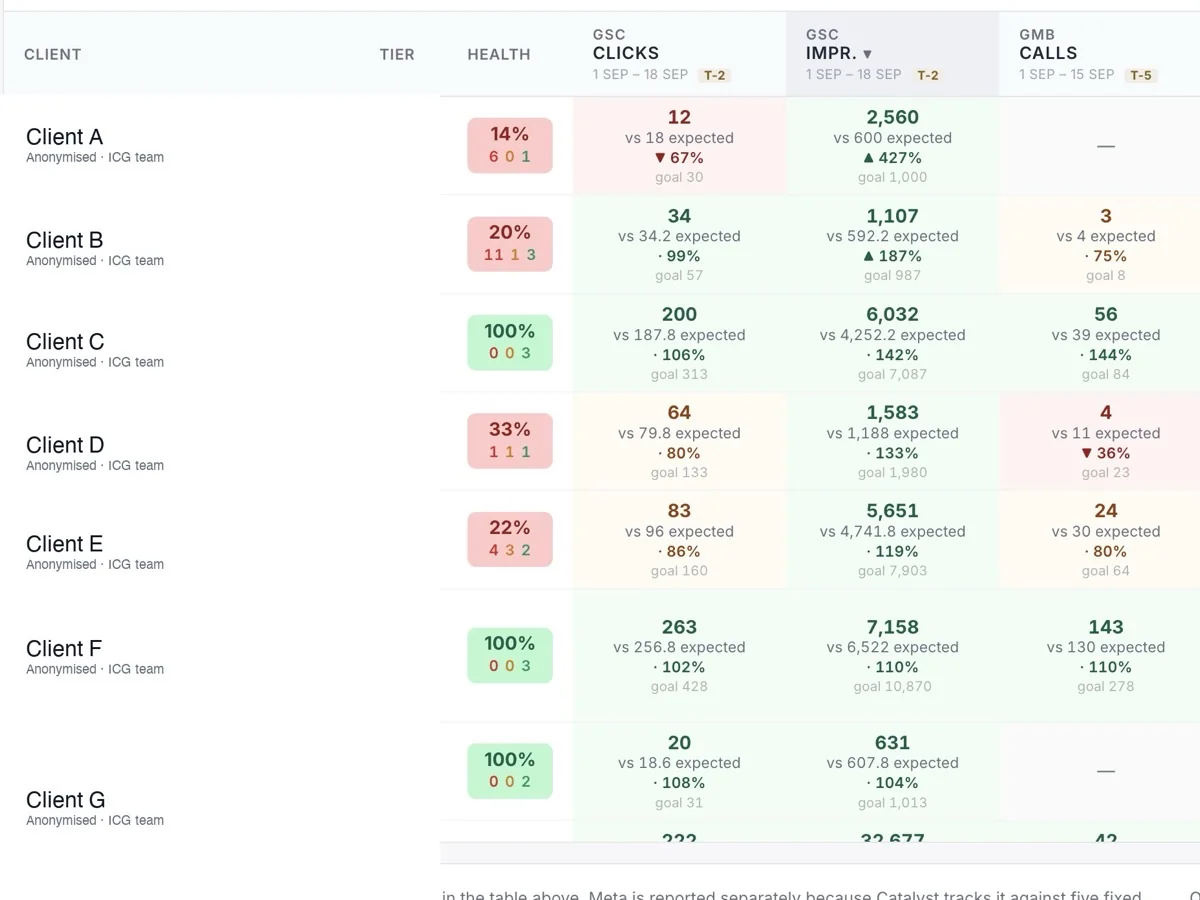
Medians from ICG's public CPQL benchmark dataset (Q2 2026), drawn from ICG's live portfolio across Delhi NCR, Mumbai, Bangalore, Hyderabad, Pune, Chennai, and tier-2 cities. Adjust for city: metro CPQLs run 20–35% higher than tier-2 across all specialties.
HealthApex OS: eight platforms. One intelligence layer.
AtomCRM healthcare lead management · Beacon attribution · Hawk CRM intelligence · Phoenix clinic revenue · HealthPro 360 PMS · YODA YouTube intelligence · Agency OS live reporting · AIO Intel AEO+LLM citation tracking. Built in-house since 2018 — included in every corneal marketing agency india engagement.
Hawk and YODA.
Standalone offers built for specific gaps.
Is your CRM hiding what it should be showing?
Hawk shows where your leads are leaking: which went cold, which were downgraded by automation, which are recoverable. Free Lead-Leak Audit in 48 hours.
Explore Hawk + free audit →Is your YouTube channel generating patients, or just views?
YODA connects YouTube content to consultation bookings. Patient testimonial videos generate 6.9× more consultations per view than condition explainers.
Explore YODA →Most healthcare marketing agencies treat symptoms.
ICG diagnoses root causes.
High CPL. Junk leads. Low ROAS. These are symptoms, not problems. ICG's diagnostic framework — built across 150+ healthcare engagements — maps every symptom to its actual root cause and the specific treatment that fixes it.
Every framework in this table is proprietary to ICG. Calibrated across 150+ live healthcare accounts since 2018. Full ICG methodology → · Glossary →
Read the complete guide
for your category.
Six pillar guides — each 8,000–15,000 words of original ICG methodology, CPQL benchmarks, and live client data. The depth no other Indian healthcare marketing agency publishes.
More insights at ichelonconsulting.com/insights · 250+ articles · all healthcare-only
About corneal marketing
agencies in India.
Keep them as separate pages. The keratoconus searcher and the LASIK searcher are on completely different journeys — one is dealing with a chronic corneal condition, the other is evaluating an elective vision correction. Mixing them on a single page dilutes both intents and hurts ranking on both keyword clusters. Cross-link them where a natural pathway exists (contact-lens intolerance to LASIK evaluation, for instance) but keep the landing pages distinct.
Both, with a meaningful search share. Keratoconus query volume in India has grown steadily as awareness rises. The typical newly-diagnosed patient will run 5 to 15 Google and ChatGPT queries before their first specialist consult, and the practice whose content answers those queries lands on the shortlist. Referrals from optometrists and general ophthalmologists still form the majority of transplant and advanced-case volume, but early-stage keratoconus C3R consultations arrive substantially through direct search.
Yes, and it is under-used. Affiliation with a recognised eye bank (Ramayamma International, EBAI-recognised centres, similar) is a factual, verifiable trust signal for both patients and referring clinicians. Display it on the website, in the surgeon's profile, and in the transplant-service description. The compliance frame is factual capability — 'affiliated with X eye bank; DALK, DSAEK, and PK performed on-site' — not superiority or outcome claims.
One long-form piece per month is realistic and sufficient — cornea is a specialist topic and the content pace should reflect that. The monthly piece rotates across the content spine (C3R protocols, topography interpretation for the interested patient, transplant types explained, contact-lens fitting for irregular corneas, keratoconus staging updates). Consistency of the schedule matters more than volume — a monthly clinician-authored deep-dive that runs for 24 months compounds into a formidable authority asset.
Compliance is where most agencies fail.
Hospital advertising sits at the intersection of NMC (per specialist), NABH (institutional), and IRDAI (insurance claims). Multi-specialty hospitals need per-department compliance workflow.
No comparative "better outcomes than" claims without published outcome data. Insurance-empanelment claims must match live TPA lists.
NABH accreditation suspension + insurance-empanelment revocation
Every ad + landing page + email routed through a compliance checkpoint before publishing. Zero enforcement actions across 150+ healthcare clients since 2018.
NMC Guidelines on Ethical Advertising and Public Communication (2026) · DPDP Act 2023 · ART (Regulation) Act 2021 · NABH 6th Edition · Dental Council of India · Schedule J (drug advertising) · UCPMP 2024 · ASCI Healthcare Guidelines
Compliance interpretations current as of October 2026. Enforcement bulletins tracked weekly by ICG's compliance research desk. See our editorial standards for how we source and update these.
Ready to build a
corneal marketing engine?
Start with a complimentary 30-minute Corneal Growth Diagnostic from ICG. Corneal super-specialists, keratoconus centres, and cornea-transplant practices across India.
We cover every stage, from first search to repeat visit
- 0Foundations
- 1Demand gen
- 2Capture
- 3Lead quality
- 4Lead mgmt
- 5Scheduling
- 6Show-up
- 7Conversion
- 8Retention
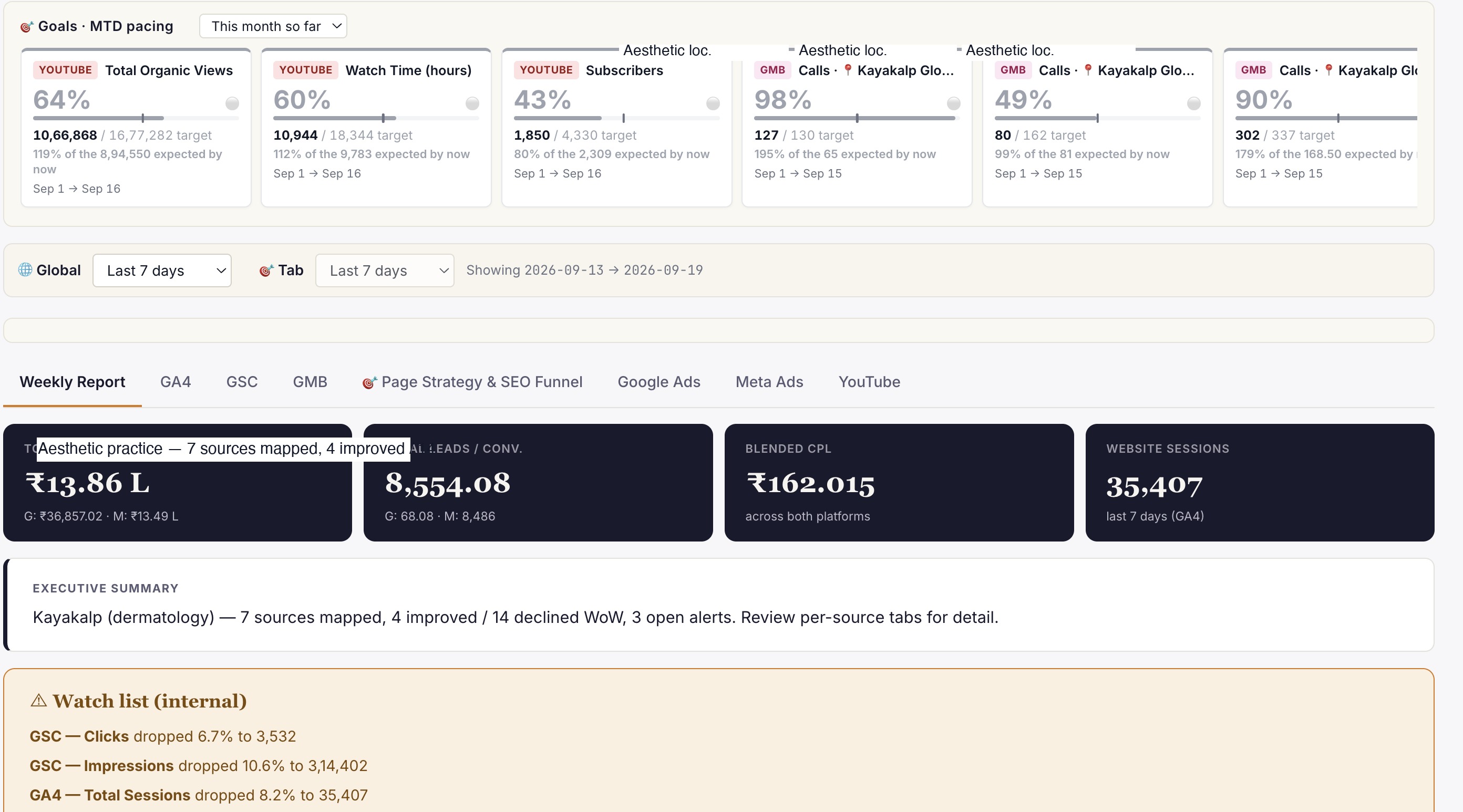
We work across all nine stages, from foundations to past patients, and fix the stage that leaks first. Our own software runs the work, and every stage is reported against a monthly target on Ichelon Agency OS.
See all nine stages and the tool behind each one →