


The Complete YouTube Guide for Indian Doctors
YouTube is the highest-ROI long-term patient acquisition channel for specialist doctors in India — and the most under-utilised. Most doctors know they should be on YouTube. Almost none of them understand how it works at the level of detail required to make it generate consultatio...
No pitch. Written root-cause diagnosis. AI-powered, healthcare only.
Direct answer
YouTube is the highest-ROI long-term patient acquisition channel for specialist doctors in India — and the most under-utilised. Most doctors know they should be on YouTube. Almost none of them understand how it works at the level of detail required to make it generate consultatio...
TL;DR
YouTube is the highest-ROI long-term patient acquisition channel for specialist doctors in India — and the most under-utilised. Most doctors know they should be on YouTube. Almost none of them understand how it works at the level of detail required to make it generate consultations rather than just views.
This guide is that level of detail: topic research, production, NMC compliance, YouTube SEO, and the attribution chain that connects a YouTube view six months ago to a consultation booking today.
Why YouTube specifically (and not just video)
YouTube is not just a video platform. In 2026 it is:
India's second-largest search engine by query volume. Patients search YouTube differently from Google — they search for procedure explanations, doctor credentials, "what to expect" content, and patient stories. These are exactly the content types that build consultation trust.
A compounding asset. A video published in Year 1 continues generating views — and consultation enquiries — in Year 3, at zero incremental media cost. Unlike paid ads that stop generating the moment you stop paying, YouTube content accumulates. ICG's YODA attribution data shows that 23% of YouTube-sourced consultation enquiries come from videos published more than 12 months earlier.
The pre-consultation trust accelerator. ICG's YODA platform data shows that patients who watch 3 or more videos from one doctor's channel before enquiring have a 6.9× higher consultation-booking rate than patients who make a first enquiry without prior video engagement. The patient who arrives from YouTube has already decided to trust you — the consultation is a confirmation, not a persuasion. Individual results vary.
A named-surgeon brand builder. Specialist surgeons (liver transplant, cardiac, orthopaedic arthroplasty, plastic surgery) are chosen primarily for their personal credentials rather than their hospital brand. YouTube is the channel where a surgeon's expertise is most credibly and scalably demonstrated — through educational content that reaches patients across India and internationally.
Reference: Dr Arvinder Soin, Liver Transplant and Hepatobiliary Surgery, Medanta Gurgaon — 0 to 22,400 YouTube subscribers over 18 months of ICG's YODA YouTube programme. 14-18 consultation bookings attributable to YouTube per month at month 18, at zero incremental media cost. Individual results vary.
YODA-style topic research: finding the right questions to answer
The most common YouTube mistake: producing content about what the doctor wants to explain, not what patients are actually searching for.
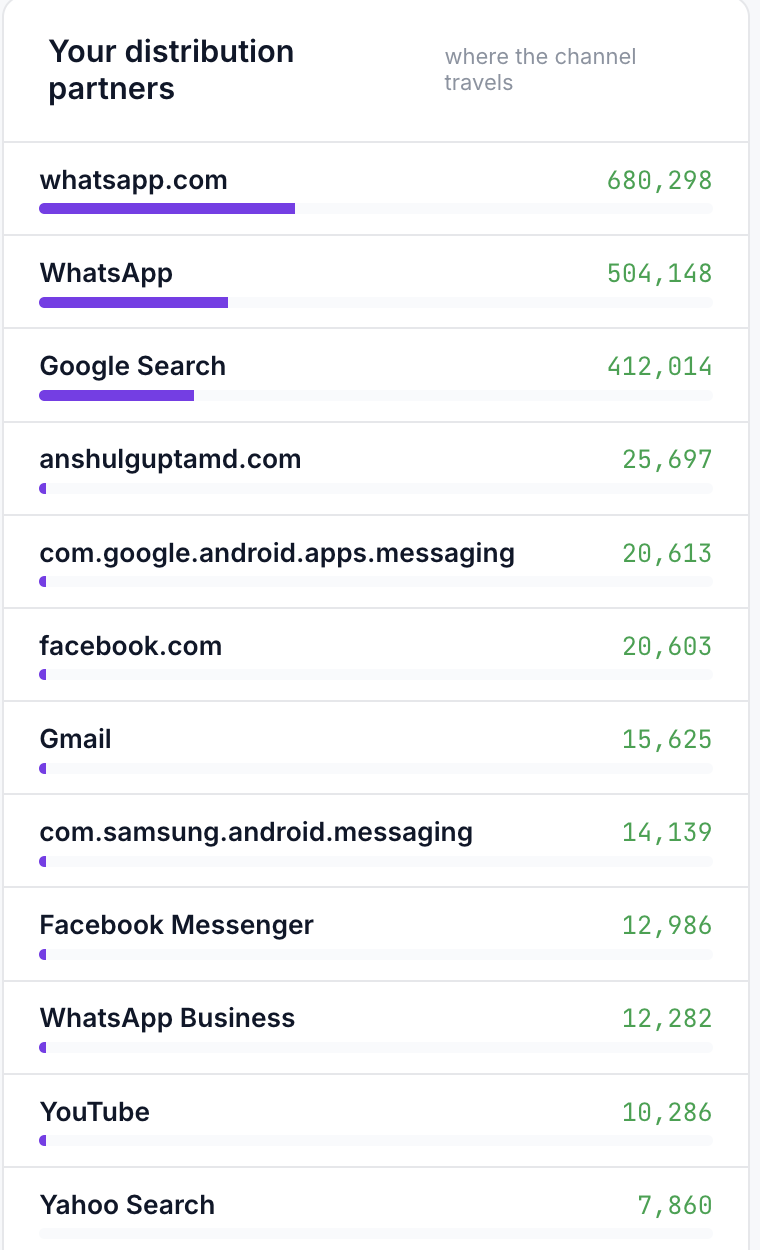
The right approach: mine patient questions from YouTube search data, then produce content that answers the highest-volume, lowest-competition questions in your specialty.
The four-step research process ICG uses:
Step 1: Identify patient intent queries for your specialty. Search YouTube directly for your specialty and city: "IVF Bangalore", "hair transplant Delhi", "rhinoplasty India". Look at the suggested search completions — these are the queries patients are actually searching.
Step 2: Analyse view counts on competitive content. For each query that seems relevant, check what videos already exist. A query with 50,000+ searches but only 3 competitive videos, each with under 10,000 views, is an under-served opportunity. A query with 50,000 searches and 20 videos with 100,000+ views each is a competitive landscape you need to significantly outperform.
Step 3: Weight for consultation-signal strength. Not all views convert to consultation enquiries equally. YODA's data shows consistent patterns across ICG's portfolio:
| Content type | View-to-enquiry conversion signal |
|---|---|
| "How much does [procedure] cost in India" | Very high — decision-stage intent |
| "What happens during [procedure]" | High — consideration-stage intent |
| "Is [procedure] painful / safe" | High — consideration-stage intent |
| "How long does [procedure] result last" | High — decision-stage intent |
| "[Procedure] recovery week by week" | Medium — consideration-stage intent |
| "What is [condition]" | Lower — awareness-stage, many not-yet-patients |
| "Best [specialty] doctor in [city]" | Very high — decision-stage, but may violate NMC if you answer with self-promotion |
Step 4: Prioritise the under-served high-signal queries. The highest-value content targets: high patient search volume + low competitive content density + high consultation-signal strength. These are your first 10 videos.
Production: what you need and what you don't
The minimum viable setup (adequate for the first 12 months):
- Smartphone: iPhone 13+ or Samsung Galaxy S21+ have cameras adequate for YouTube at 1080p. Cost: you likely own one.
- Tripod: ₹2,000-5,000 from any online retailer.
- Lapel (lavalier) microphone plugging into phone: ₹1,500-4,000 (Boya BY-M1 or equivalent). Audio quality matters more than video quality in healthcare YouTube — prioritise this.
- Natural light or a simple ring light: ₹2,000-4,000.
- Total setup: ₹6,000-14,000.
The mid-range setup (for month 6+ when you have a YouTube audience):
- Mirrorless camera (Sony ZV-E10: ₹40,000-45,000 with kit lens)
- Shotgun microphone (Rode VideoMicro: ₹7,000-9,000)
- Simple backdrop (seamless paper or fabric: ₹3,000-5,000)
- Basic softbox lighting set: ₹3,000-6,000
- Total: ₹55,000-70,000
ICG's honest recommendation: authentic, direct-to-camera content on a smartphone outperforms over-produced content in healthcare YouTube at the current stage of the Indian healthcare content landscape. Production quality becomes a meaningful differentiator only at 50,000+ subscribers, where the audience's expectations have risen. Start with what you have.
The 2-hour shoot protocol: ICG produces 5-8 YouTube videos per 2-hour shoot session for doctor clients. The workflow:
- 20 questions scripted in advance (YODA-identified, NMC-reviewed)
- 2-3 minutes of footage per question (enough for a 2-3 minute edited video)
- No retakes for minor flubs — authenticity is more valuable than polish
- Editing by a medical video editor (not a generic video editor): ₹3,000-8,000 per video
NMC compliance for YouTube

The 2026 NMC revision formalises the educational content carve-out. A YouTube video explaining how IVF works, what to expect during LASIK recovery, or how hair transplant graft survival is measured is educational — not advertising.
What is NMC-compliant on YouTube:
- Procedure and condition explainer videos ("how does microneedling work", "what causes hair loss in men under 40")
- What-to-expect content ("your first IVF consultation: what happens")
- Myth-busting ("3 hair transplant myths that are costing you results")
- Research summaries ("what the latest data says about PRP for hair loss")
- Recovery and aftercare guides ("LASIK recovery: day 1 to day 30")
- Q&A formats answering common patient questions
What is not NMC-compliant on YouTube:
- Implying or stating guaranteed outcomes ("90% of my patients achieve X")
- Before-and-after of identifiable patients
- Solicitation through manipulative content ("don't waste time with other surgeons — I am the only one who can do this")
- Superlative claims without specific substantiation ("India's best hair transplant doctor")
- Drug-specific efficacy claims for Schedule J conditions in patient-facing content
ICG reviews every YouTube script against the 4-point NMC compliance check before filming begins. The compliance review takes 10 minutes per script and eliminates the post-production discovery that content needs to be reshot.
YouTube SEO: making your videos discoverable
YouTube is a search engine. Your video's discoverability depends on the signals you give YouTube's algorithm.
Title: Include the primary search query exactly as patients type it. "IVF cost in Bangalore 2026 — what's actually included" outperforms "IVF Costs Explained" because it matches the precise search phrasing.
Description: First 150 characters appear without clicking "show more" — put your most important patient-relevant information here, including your WhatsApp consultation booking link. Then expand with: full topic summary, timestamps for each section, your credentials, and relevant links (your website, related videos).
Tags: Include: primary query, specialty, city, procedure name, related procedure terms, and your name. Tags are secondary to title and description but still relevant.
Thumbnail: For healthcare YouTube, a clean doctor-facing-camera thumbnail with a text overlay (the question your video answers) outperforms lifestyle imagery. The text should be legible on mobile — where 70%+ of Indian YouTube viewing happens.
Chapters (timestamps): Add chapter timestamps in the description for every major section. Chapters improve viewer retention (patients jump to the section they need) and improve YouTube's understanding of your content.
End screen and cards: Every video should end with 20 seconds of end screen featuring: 2 related videos and 1 subscribe CTA. Cards in the video body link viewers to related content at relevant moments.
The consultation attribution chain
The attribution problem: how do you know which YouTube video drove which consultation booking?
ICG's YODA attribution method:
Each YouTube video gets a unique WhatsApp link in the description. The link format:
wa.me/91XXXXXXXXXX?text=Hi, I watched your video on [procedure] and would like to book a consultation
The "procedure" parameter in the pre-filled message identifies which video the patient came from. Beacon logs this as a YouTube-attributed WhatsApp contact with the specific video as the source. Monthly reporting in Agency OS shows:
- Views per video (YouTube Analytics)
- WhatsApp taps per video (Beacon attribution)
- Consultations booked from YouTube source (Beacon attribution chain)
- CPQL for YouTube as a channel (media cost ÷ YouTube-attributed consultations — for organic YouTube, the media cost is ₹0, so the CPQL reflects only production cost)
This attribution chain is what allows ICG to tell a doctor: "Video 4 on hair transplant FUE vs DHI has generated 23 consultation enquiries in the past 90 days at an effective CPQL of ₹1,200 including production cost. Video 7 on scalp PRP has generated 3 enquiries. Stop producing PRP content and produce more FUE vs DHI variants."
The compounding growth model
YouTube growth for doctor channels follows a predictable compound curve:
Month 1-3: Publishing consistently. Each video gets a few hundred views. Little to no consultation attribution. The algorithm is learning your content.
Month 4-6: First meaningful organic search discovery. Videos start appearing in YouTube search results for target queries. Consultation enquiries begin appearing from YouTube source. Typically 2-5 per month at this stage.
Month 7-12: Algorithm compounding. New subscribers discover older videos. Each new video rides on the authority built by previous videos. Consultation enquiries: 8-15 per month.
Month 13-18: First-mover authority established. Your channel is the primary resource for your specialty and city on YouTube. Organic consultation enquiries: 15-25+ per month at zero incremental media cost.
The investment required to reach month 18: 2 videos per month × 18 months = 36 videos. Production cost at ₹5,000/video: ₹1,80,000. If those 36 videos generate 200 organic consultation enquiries over 18 months at your CPQL of ₹1,000+, the ROI is strongly positive — and the videos keep generating enquiries in month 24, 30, and beyond.
Read next on ICG
Book a free 30-minute Brand & Growth Diagnostic.
It's a working session, not a sales pitch — you leave with a written root-cause analysis you can act on, whether or not you engage ICG.
Questions readers ask
about this topic.
The three platforms
behind every ICG engagement.
Beacon
CAPI middleware that fixes Event Match Quality, translates CRM statuses to Meta-standard events, dedups across channels.
Agency OS
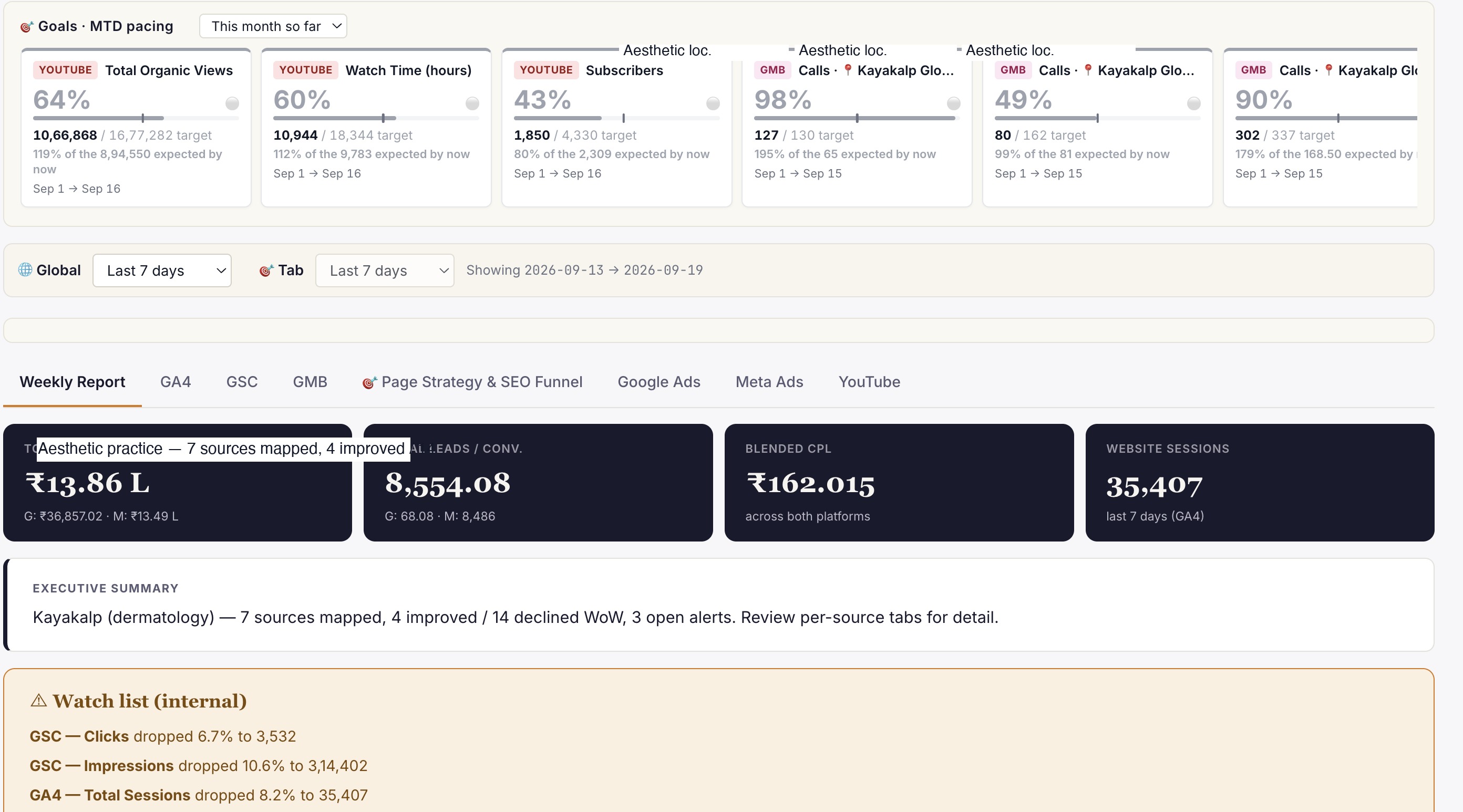
Live client dashboard. GSC, GA4, Google Ads, Meta Ads, IVR calls in one view. Login anytime, not monthly.
Phoenix
Clinic revenue intelligence over your PMS. Daily action queue: Prevent Loss, Maintain & Engage, Grow Revenue. Multi-centre rollout.
Or book a free 30-min audit to see all three in action on your account.
Healthcare brands
that already run on ICG.
A representative slice of the 150+ healthcare brands ICG has delivered for across India. Most engagements remain under NDA.


What ICG clients say · on video.
"Scale up of organic channels and business consulting. ICG has absolute domain authority in their field."
"Working with ICG transformed how we acquire IVF patients in Gurgaon. They understand the fertility journey from inquiry to consult..."
"What Ichelon accomplished — they got all my ideas and worked over 3-4 months to create an amazing, super-customised website."
Need help operationalising this?
Every ICG service is healthcare-only, NMC + DPDP-aware, and built around the patient-research patterns that drive Indian healthcare growth in 2026.
Every practice welcome — packages from ₹20,000/mo.
Goals-Driven engagements · Performance-Linked Payout Models available
More from
ICG.
Five trends shaping Indian healthcare marketing through 2027: AI-first patient research, Conversions API adoption, ABDM discovery, the AEO w...
Healthcare AIO is the discipline of getting your clinic or hospital cited inside Google AI Overviews, ChatGPT and Perplexity answers — not j...
Conversational-search advertising places brand messages inside AI chat answers — ChatGPT, Perplexity, Copilot — rather than beside a results...
Stop guessing.
Book a Diagnostic.
30 minutes. Free. With the AI-powered healthcare-only marketing agency 150+ brands already run on. No slides, no pitch, no hard close.


