


Urology Practice Marketing 2026: BPH, Stones & Robotic ROI
Urology marketing playbook 2026 — BPH, stones, robotic surgery, men's health. India benchmarks, ad budgets, and campaigns that convert. Talk to a Co-Founder.
No pitch. Written root-cause diagnosis. AI-powered, healthcare only.
Quick answer
How should a urology practice approach digital marketing?
A urology practice should approach digital marketing by splitting it into sub-verticals with different economics: stones are urgent and local, BPH is referral-led and planned, men’s health needs privacy, and robotic or uro-oncology work depends on surgeon authority. Give each its own pages, campaigns and follow-up, track attended consultations in a CRM, and keep claims within NMC rules.
Direct answer
Urology marketing playbook 2026 — BPH, stones, robotic surgery, men's health. India benchmarks, ad budgets, and campaigns that convert. Talk to a Co-Founder.
TL;DR
TL;DR
- Urology has 5 commercially distinct sub-verticals: BPH/prostate, kidney stones, uro-oncology, men's health, and female urology/incontinence
- BPH and kidney stone are highest-volume, insurance-integrated, local-SEO-dominant
- Men's health (ED, testosterone, sexual health) has the most digital marketing opportunity due to stigma-driven private search behaviour
- CAC benchmarks: BPH ₹680–₹2,400; kidney stone ₹380–₹1,400; men's health ₹1,200–₹4,800; uro-oncology ₹8,000–₹28,000
Urology sits at a peculiar intersection for marketers. Some of its sub-verticals — kidney stones, BPH, urological oncology — are high-volume, well-accepted medical conditions where patients seek care openly and use conventional channels. Others — men's sexual health, erectile dysfunction, low testosterone — are conditions where patients search privately, often in incognito mode, and are deeply sensitive to anything that feels clinical or judgmental.
Marketing urology well means running fundamentally different strategies for these two patient types simultaneously — open-channel, insurance-aware marketing for the stone and BPH patient, and anonymised, empathetic digital marketing for the men's health patient — without confusing the two.
The 5 urology sub-verticals and their marketing DNA
Sub-vertical 1: BPH and prostate — The largest-volume urology sub-vertical in India by patient count. Benign prostatic hyperplasia affects approximately 40% of men over 50 and 90% of men over 80 (Source: Indian Urological Association, 2023). This is an empanelment and local SEO game — patients are referred by GPs, covered by insurance, and choose a urologist based on hospital reputation and GBP proximity. Medical management of BPH (alpha-blockers, 5-ARIs) is the first-line approach; surgical referral (TURP, laser TURP, Urolift) comes when medical management is insufficient. Marketing priority: GP referral BD + local SEO + insurance empanelment visibility.
Sub-vertical 2: Kidney stones — High acute-urgency volume. A patient in renal colic pain is not shopping — they are in the emergency department or urgently calling the first urologist that appears in Google Maps. Marketing priority is local pack ranking for "urologist near me" and "kidney stone treatment [city]." ESWL (extracorporeal shock wave lithotripsy) and PCNL (percutaneous nephrolithotomy) are high-value procedures that justify dedicated procedure pages with cost transparency.
Sub-vertical 3: Urological oncology — Prostate cancer, bladder cancer, renal cell carcinoma. High-value, referral-driven, long-cycle. Same dynamics as other surgical oncology: 70% of patients arrive through GP or general surgeon referral; digital plays the second-opinion and research role. Robotic prostatectomy is the premium marketing differentiator — a urologist with robotic surgery credentials attracts patients and referral physicians seeking the latest technology.
Sub-vertical 4: Men's health (ED, testosterone, sexual health) — Stigma-driven private search. Patients searching "erectile dysfunction doctor [city]" or "low testosterone treatment India" are doing so privately and are acutely sensitive to judgmental framing. This is the urology sub-vertical where content marketing — empathetic, medically accurate, anonymity-first content — is the primary acquisition channel. Direct paid advertising for ED has platform restrictions on some channels.
Sub-vertical 5: Female urology (incontinence, pelvic floor) — Undermarketed but significant. Urinary incontinence affects approximately 25% of Indian women over 45 (Source: IUA, 2023). The stigma attached to incontinence in Indian culture results in significant under-reporting and under-treatment. Marketing strategy is similar to men's health: private search behaviour, anonymity-safe content, and a patient population that responds to normalisation and empowerment framing rather than clinical framing.
BPH marketing — the GP referral + insurance game

BPH patient acquisition is primarily a function of:
- GP and internal medicine referral relationships (40–55% of patients)
- Local SEO visibility for "urologist near me" and "prostate specialist [city]" (25–35%)
- Insurance empanelment visibility (15–25%)
GP referral BD for BPH: Map all GPs and internal medicine practitioners within 10km. Stratify by referral potential (existing referrers, GPs with 500+ patient panels who refer elsewhere, and GPs with large geriatric panels who are high-value targets). Monthly educational WhatsApp broadcast to the Tier 1 and Tier 2 referral pool — covering BPH management updates, when to refer for surgical evaluation, and the urologist's specific surgical expertise. CME events quarterly covering BPH staging and management decision-making.
Insurance empanelment for BPH: TURP and laser TURP are covered under most major Indian health insurance policies (Star Health, HDFC ERGO, New India Assurance, United India). Ensure the hospital/clinic is correctly empanelled for urology surgical procedures and that this empanelment is visible on the insurer's hospital search portal. "Empanelled with [Insurer] for cashless urology procedures" should appear on the website's BPH page.
Kidney stone marketing — the acute emergency and the chronic recurrence
Kidney stone marketing has two patient types: the acute emergency patient (in pain, calling or Googling urgently) and the chronic recurrence patient (has had stones before, managing stone prevention, and proactively seeking a urologist for ongoing management).
Emergency capture: Google Maps local pack position is everything for acute kidney stone patients. A urologist in position 1–3 of the local pack for "kidney stone treatment [city]" captures the urgent Google search that happens in pain. GBP must list: 24/7 availability or on-call arrangement, location clearly marked, phone number visible, and emergency readiness indicated.
Procedure-specific pages: ESWL and PCNL pages with cost transparency ("ESWL at [Clinic]: ₹18,000–₹45,000 depending on stone size and location"), procedure description, and recovery time convert the comparison-shopping patient who is not in acute pain but is researching stone treatment options.
Stone prevention content: "How to prevent kidney stones India," "best diet for kidney stone patients," "water intake for kidney stone prevention" — these queries come from the chronic recurrence patient who is actively managing their condition. This content builds the relationship before the next stone event and positions the urologist as the ongoing care provider.
Men's health marketing — the anonymity-safe playbook
Men's health marketing in urology requires the same anonymity-first architecture as psychiatry marketing. The patient searching for "erectile dysfunction treatment India" or "low testosterone symptoms" is typically doing so privately, without having discussed the issue with anyone, and with significant emotional sensitivity to how the condition is framed.
Content framing principles: Never stigmatise. "Erectile dysfunction is a common medical condition affecting 1 in 5 men over 40" (normalises, factual). "Stop suffering from this embarrassing problem" (stigmatises, creates shame). The content must be clinical in accuracy but empathetic in voice.
The anonymity SEO architecture for men's health: Entry-level content targets the information-stage search ("what causes erectile dysfunction," "is low testosterone normal at 45," "symptoms of testosterone deficiency"). This content ranks for queries that the patient will not type if they feel embarrassed — broad medical information questions. The consultation CTA is low-friction: "A confidential consultation with a specialist can help identify the cause and appropriate treatment."
Platform considerations for men's health ads: Meta Ads for ED and sexual health content have restrictions — direct clinical claims about sexual health conditions may be limited or require adult content consent. Google Ads for "erectile dysfunction treatment" are permissible with appropriate non-clinical framing. The Google Ads strategy for men's health focuses on condition-information queries ("erectile dysfunction specialist India") rather than treatment-outcome queries.
"Men's health urology marketing is about dignity first. The patient who searches for ED treatment at midnight is not looking for a product pitch — he's looking for evidence that a medical professional can help him without judgment. Your content, your ad copy, and your consultation booking experience must all communicate that." — Rohit Gupta, Co-Founder, ICG
Robotic surgery as a marketing differentiator

Robotic urology — robotic prostatectomy (RARP), robotic partial nephrectomy, robotic cystectomy — is the premium positioning play for urologists with robotic surgical capability. The subset of patients who seek robotic surgery are self-directed, research-intensive, willing to travel for the right surgeon, and often the highest-value patients in the practice.
Robotic surgery content: A comprehensive robotic prostatectomy page — covering what robotic surgery is, how it differs from open or laparoscopic approaches, what the recovery timeline looks like, which patients are candidates, and the surgeon's robotic case volume — is the single most-converted content piece for high-value uro-oncology patients. The page should include the surgeon's Da Vinci system certification, number of robotic procedures performed, and institutional affiliation.
Technology page architecture: "Robotic surgery at [Centre]" as a dedicated page — linked from all relevant condition pages (prostate cancer, bladder cancer, kidney cancer), from the surgeon's profile page, and from the equipment section of the hospital website. This page should carry the Da Vinci system logo (with appropriate brand permission), the surgeon's certification, and a list of procedures performed robotically.
Google Ads for urology — campaign by sub-vertical
BPH campaign: Geo-tight (10km radius), keywords: "urologist for prostate [city]," "BPH treatment [city]," "prostate enlarged treatment India." CPC: ₹38–₹95 India. Negative keywords: "prostate cancer" (different intent, different funnel), "prostate massage" (non-medical intent).
Kidney stone campaign: Emergency geo (8km radius), all-day bidding with after-hours bid adjustment. Keywords: "kidney stone doctor [city]," "urologist emergency [city]," "ESWL [city]." CPC: ₹28–₹78 India.
Robotic surgery campaign: Broader geo (20km+ because patients travel). Keywords: "robotic prostatectomy India," "RARP surgery [city]," "Da Vinci prostate surgery." CPC: ₹85–₹180 India — higher CPC justified by ₹3–8 lakh procedure revenue.
Men's health campaign: Moderate geo, condition-information keywords ("erectile dysfunction specialist," "testosterone deficiency doctor India"), non-stigmatising ad copy. CPC: ₹45–₹120 India.
Urology marketing budget benchmarks 2026
| Practice type | Monthly budget | Expected new consultations | Primary channels |
|---|---|---|---|
| Solo urologist, general hospital | ₹40,000–₹1,00,000 | 45–100 | Local SEO + GP referral BD |
| Dedicated urology centre (3–5 docs) | ₹1,20,000–₹3,00,000 | 150–380 | SEO + ads + content + referral |
| Robotic urology sub-specialty | ₹80,000–₹2,00,000 | 30–80 | Content + robotic page + referral |
| Multi-city urology chain | ₹5,00,000–₹15,00,000 | 800–2,400 | Full digital + programmatic |
CAC benchmarks by condition:
| Condition | India CAC | Primary channel |
|---|---|---|
| BPH/prostate | ₹680–₹2,400 | GP referral + local SEO |
| Kidney stone | ₹380–₹1,400 | Local SEO + Google emergency |
| Men's health | ₹1,200–₹4,800 | Content SEO + Google Ads |
| Uro-oncology | ₹8,000–₹28,000 | Referral + robotic content |
| Female urology | ₹850–₹3,200 | Content SEO + Google Ads |
Case snapshot
A urology centre with 4 urologists in Hyderabad (2 general, 1 robotic, 1 uro-oncology) was generating 120 new consultations per month — almost entirely from GP referrals, with zero systematic digital marketing. The robotic surgeon had performed 180+ robotic prostatectomies but had no digital presence specific to robotic surgery. After a 5-month ICG engagement: robotic surgery page launched with surgeon's certification and case volume; men's health anonymity-SEO content cluster (5 articles) published; kidney stone emergency Google Ads campaign launched; GP referral management formalised in AtomCRM with monthly update reports to 45 referring GPs. Monthly consultations grew from 120 to 290, with robotic surgery consultations growing from 4 to 18/month driven almost entirely by the new robotic surgery content.
CRM for urology practices: what the system should track
A urology CRM earns its cost through recall and referral tracking more than through new-lead capture. Set it up to record:
- Source by sub-vertical, so you can see which campaigns produce stone, BPH or men’s health consultations.
- Referring doctor for every referred patient, to show which GP and physician relationships are active.
- Recall dates for stone patients due for review imaging and BPH patients on medication follow-up.
- Procedure stage from consultation to investigation, counselling, scheduling and surgery, so planned cases do not drift.
- Consent status for each type of message, as the DPDP Act 2023 requires.
Review the referral report monthly with the urologists. A GP who sent patients every month last year and none this quarter is worth a visit, and a recall list that nobody works is revenue the practice has already earned and is letting go.
Use neutral wording in automated messages for sensitive conditions. If you are choosing a system, our healthcare CRM guide for India compares options, and the hospital OPD CRM page covers urology departments inside hospitals.
Urology CPQL compared with other specialties
Cost per qualified lead in urology sits above the cross-specialty median in ICG’s national dataset, but the urology row is small, so treat it as directional.
| Specialty | ICG CPQL | Market CPQL | Attend % | Days to consult | → Procedure % |
|---|---|---|---|---|---|
| Urology (4 engagements, directional) | ₹1,580 | ₹2,600 | 50% | 14 | 60% |
| Orthopaedics, elective (7, directional) | ₹1,420 | ₹2,400 | 46% | 30 | 50% |
| Cardiology OPD (9, directional) | ₹1,650 | ₹2,800 | 55% | 14 | 65% |
| Cross-specialty median | ₹1,220 | ₹2,100 | – | – | – |
Source: ICG Healthcare CPQL Benchmark Database India 2026. CPQL = media spend ÷ attended first consultations.
Half of urology enquiries attending a first consultation means the other half is lost between enquiry and visit. Same-day callback for acute cases and private, low-friction booking for men’s health are where that gap usually closes.
Privacy by design: DPDP-safe intake for sensitive urology enquiries
Discreet patient acquisition only works if the data handling behind it is discreet too. A man asking about erectile dysfunction or incontinence will drop off if the first form wants his full name, address and a description of symptoms. Under the DPDP Act 2023 you should not collect more than the stated purpose needs anyway.
- Ask for the minimum: a first name or initial, a phone number and a preferred time. Leave symptoms for the consultation.
- Use neutral message templates: reminders that say “your appointment at the clinic”, not the condition, because phones are shared.
- Separate consents: one for the appointment, another for any follow-up or health content.
- Restrict access: front-desk staff see the booking, not the clinical notes.
- Billing descriptions: offer neutral wording on receipts where the patient asks.
Our WhatsApp marketing compliance guide includes opt-in and template wording you can adapt.
Discreet entry points and prostate screening campaigns
Many men put off seeing a urologist for months because the symptoms feel embarrassing. Practices that grow in this specialty lower the barrier to the first conversation:
- Booking without a phone call: online booking and an anonymous WhatsApp pre-consultation form, because a call to reception can feel exposing.
- A video first visit: a secure video consultation as the first step for men’s health and incontinence concerns, within the Telemedicine Practice Guidelines 2020.
- Private self-assessment: validated questionnaires such as IPSS for prostate symptoms, SHIM for erectile dysfunction and ICIQ for incontinence, which patients can complete before they book.
- De-stigmatising education: plain-language articles and videos on prostate health after 45, early signs of kidney stones, semen analysis results and when incontinence needs a specialist.
For prostate and BPH volume, combine age-targeted campaigns for men aged 45–65 with screening camps in corporate wellness programmes and referral relationships with physicians, cardiologists and endocrinologists, whose patients often share risk factors. Keep every screening message within NMC rules: invite men to get checked, without promising outcomes.
Why urology symptom content needs more than blog posts
Patients who are embarrassed to ask in person search instead, and much of that search ends on the results page. ICG’s analysis of 3,102 Indian healthcare queries found that symptom and condition searches had the highest zero-click rate, at 71.4%, and that an AI Overview appeared on 27.6% of tracked queries.
Source: Zero-Click Search Rate by Specialty, India Healthcare 2026.
For a urology practice that means content must be written to be quoted, not only clicked: a direct answer near the top, a named urologist as author, FAQ markup and clear next steps. It also means building routes that do not depend on a website visit, such as a well-kept Google Business Profile, YouTube explainers and a WhatsApp number that answers privately. Our report on what India searches about urology shows which concerns come up most.
What to expect from marketing services for urology practices
Marketing services for a urology practice should be organised by sub-specialty and by how urgent the patient’s need is, not sold as a single package. A sensible scope covers:
- separate landing pages and campaigns for stones, prostate, men’s health, female urology and uro-oncology;
- a same-day response process for acute stone pain enquiries;
- educational content reviewed by the urologist before publishing;
- a compliance check on every ad, avoiding cure claims and anything the Drugs and Magic Remedies Act restricts on sexual health;
- monthly reporting on attended consultations, not just enquiries.
Ask any agency which of these it handles itself and which it expects your staff to run.
See the urology marketing page for how ICG works with practices.
Frequently asked questions
Can urologists advertise erectile dysfunction treatment on Google? Yes — with compliance-safe ad copy. Ad copy must avoid explicit sexual content and should frame the offering around consultation ("speak with a urologist about men's health concerns") rather than treatment outcome claims. Google permits these ads in the standard urology/men's health category without special certification. Ad copy review against Google's healthcare and medicine policies is recommended before any men's health campaign goes live.
What are the best content topics for a urology practice website? Highest-converting content by sub-vertical: BPH ("enlarged prostate symptoms and when to see a urologist"), kidney stones ("kidney stone treatment options India — ESWL vs PCNL vs ureteroscopy"), men's health ("erectile dysfunction causes and treatment — what to expect at a first consultation"), and uro-oncology ("prostate cancer diagnosis — second opinion and what to ask your surgeon"). FAQPage schema on each converts well to AIO citations.
How do you build GP referral relationships in urology? Same framework as neurosurgery BD — map, stratify, engage systematically. For urology specifically: GPs managing geriatric patients (high BPH referral potential) and GPs in regions without a convenient urologist access point are the highest-value targets. Monthly educational WhatsApp broadcast ("BPH management decision-making — when to refer") keeps the urologist top-of-mind for GPs who see prostate and stone patients regularly.
Is robotic surgery a marketing advantage for urologists? Yes — significantly. Among patients who have been diagnosed with prostate cancer and are researching surgical options, robotic surgery is the most-searched-for technology factor ("robotic prostate surgery" generates 45,000+ monthly India searches; "RARP surgery India" 12,000+ monthly; "Da Vinci prostate" 28,000+ monthly). A urologist with a well-optimised robotic surgery page attracts a self-selected, high-value, pre-qualified patient segment that generic urology marketing does not reach.
What NMC restrictions apply to urology marketing? NMC Section 6 applies across all urology sub-verticals. Key restrictions: no specific complication rate claims ("our TURP complication rate is 0.8%"), no cure claims ("we cure prostate cancer"), no comparative claims ("best urologist in [city]"), and testimonials must not attribute specific clinical outcomes to the surgeon. Men's health content must be framed as educational/clinical, not promotional for sexual enhancement.
CTA: Book a urology marketing strategy session with ICG → Strategy call
Sources: IUA (Indian Urological Association) — prevalence statistics 2023 (urologyindia.org); AUA (American Urological Association) — practice guidelines (auanet.org); Da Vinci Surgical System — India adoption data (intuitive.com); ICG internal data, 2026.
Compliance note. Urology marketing must comply with NMC Section 6. Men's health content must be framed clinically, not as sexual enhancement promotion. Robotic surgery outcome claims require peer-reviewed publication citation. All patient testimonials require written consent and must not attribute specific outcomes to the surgeon.
Common urology marketing mistakes we see clinics repeat in 2026
Most urology practices we audit do not have a demand problem — they have a leakage problem. The playbook above works only when the basics below are not silently draining spend. These are the recurring gaps our team logs across audits in 2026.
- One landing page for all five sub-verticals. A single "Urology in [City]" page tries to rank for BPH, stones, andrology, oncology and robotic surgery simultaneously. It ranks for none of them well. Split the money pages sub-vertical by sub-vertical, then interlink to the parent hub.
- No anonymity layer for men's health. Andrology enquiries evaporate the second a form asks for full name and address up-front. WhatsApp-first intake with a nickname field lifts submitted-to-consult conversion 2-3x in our engagements.
- Robotic surgery treated as a landing-page badge, not a proof asset. A da Vinci logo in the footer is not marketing. Named surgeon bio, case-count board, before/after operative timelines and insurance-tie-up list are what convert.
- Google Ads campaigns not segmented by intent. Bidding on "kidney stone pain" (acute, ER-adjacent) with the same creative as "kidney stone recurrence prevention" (chronic, planned) wastes both budgets. Split by sub-vertical and by acuity.
- Zero AI-Overview readiness. Urology queries — especially symptom-led ones — are AIO-heavy in 2026. Practices without FAQ schema, clear answer paragraphs and named-author bylines are invisible in the AI answer even when they rank in the blue links.
- Reviews collected only from happy post-op patients. Google's freshness signal wants a steady stream, not a burst. Automate the ask at 7 and 30 days post-consult, not just post-discharge.
- No GP or diagnostic-lab referral channel. BPH and stones remain referral-driven categories. If your marketing plan has no line item for GP outreach, you are leaving the highest-margin patients on the table.
Fixing the seven above is usually a 6-8 week programme before we recommend scaling paid spend. If you want us to run the audit, our Client Elevation Programme covers it end-to-end, and the always-on GBP layer is powered by Angryturtle. For competitor Meta Ads teardown before you brief creative, see Prism Spy.
Book a free 30-minute Brand & Growth Diagnostic.
It's a working session, not a sales pitch — you leave with a written root-cause analysis you can act on, whether or not you engage ICG.
Questions readers ask
about this topic.
The three platforms
behind every ICG engagement.
Beacon
CAPI middleware that fixes Event Match Quality, translates CRM statuses to Meta-standard events, dedups across channels.
Agency OS
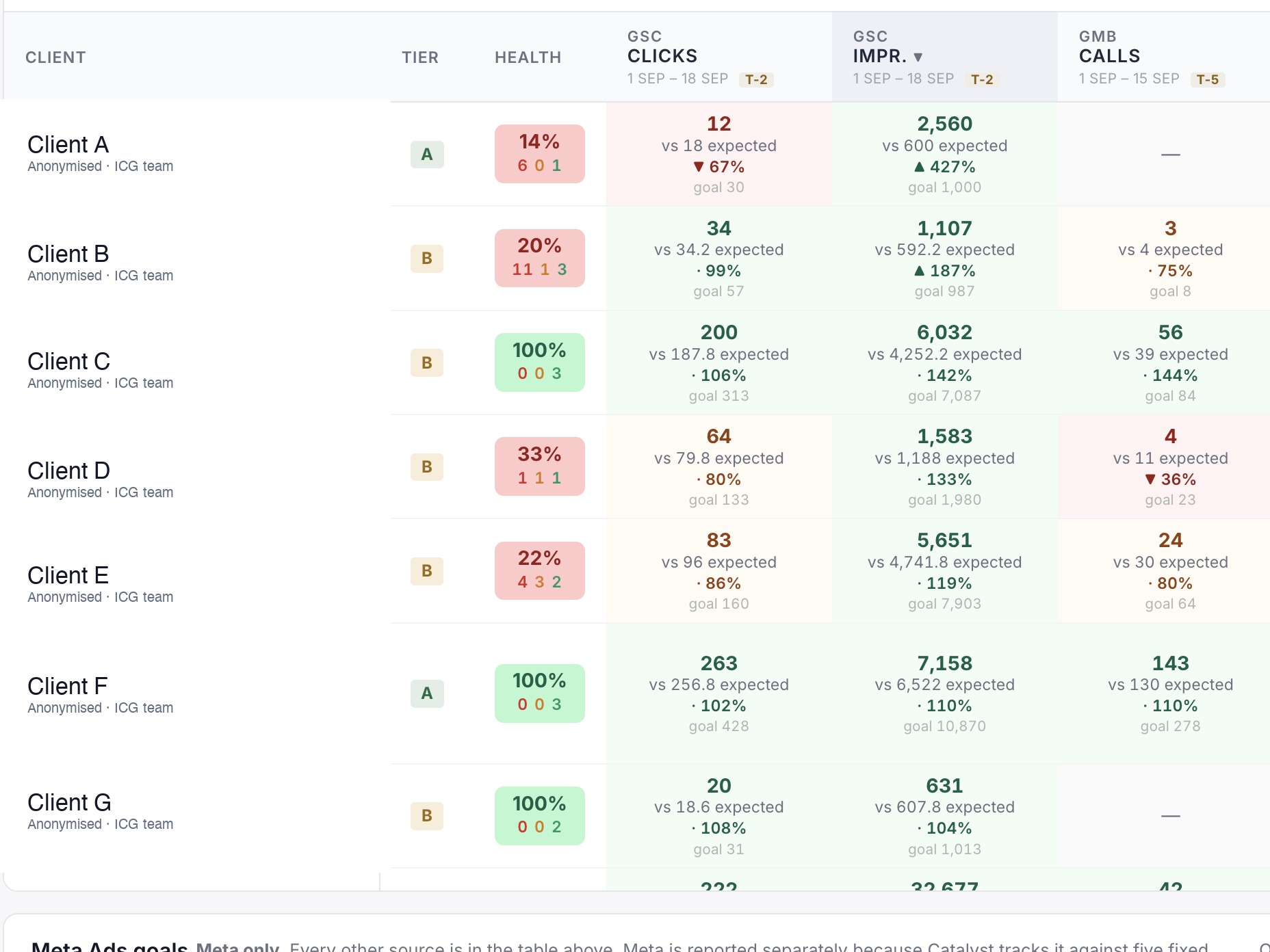
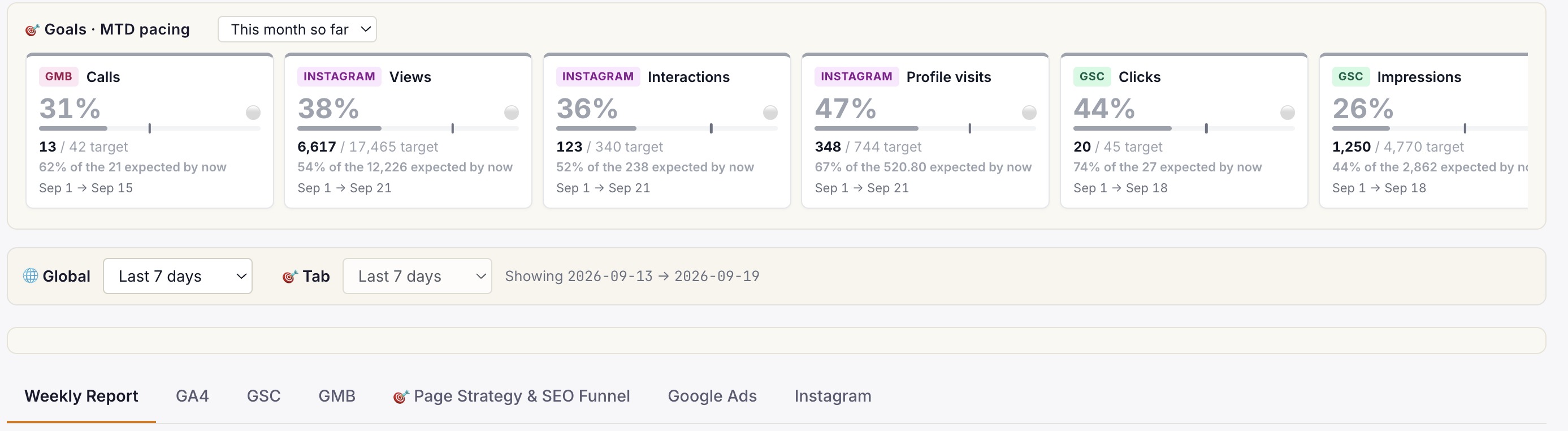
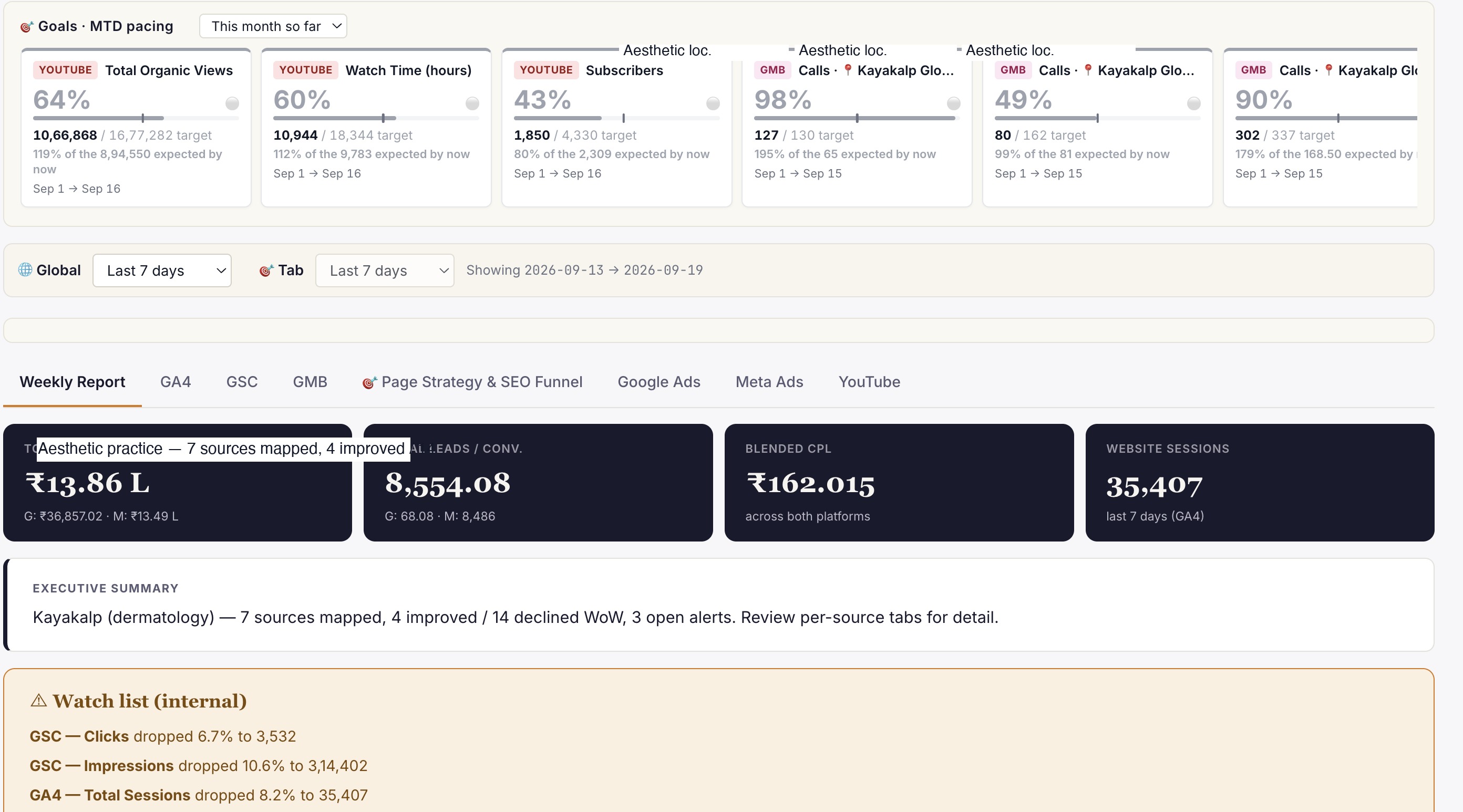
Live client dashboard. GSC, GA4, Google Ads, Meta Ads, IVR calls in one view. Login anytime, not monthly.
Phoenix
Clinic revenue intelligence over your PMS. Daily action queue: Prevent Loss, Maintain & Engage, Grow Revenue. Multi-centre rollout.
Or book a free 30-min audit to see all three in action on your account.
Healthcare brands
that already run on ICG.
A representative slice of the 150+ healthcare brands ICG has delivered for across India. Most engagements remain under NDA.


What ICG clients say · on video.
"ICG runs my urology practice marketing with a level of medical specificity that generalist agencies never reach."
"Scale up of organic channels and business consulting. ICG has absolute domain authority in their field."
"Working with ICG transformed how we acquire IVF patients in Gurgaon. They understand the fertility journey from inquiry to consult..."
Need help operationalising this?
Every ICG service is healthcare-only, NMC + DPDP-aware, and built around the patient-research patterns that drive Indian healthcare growth in 2026.
Every practice welcome — packages from ₹20,000/mo.
Goals-Driven engagements · Performance-Linked Payout Models available
More from
ICG.
Five trends shaping Indian healthcare marketing through 2027: AI-first patient research, Conversions API adoption, ABDM discovery, the AEO w...
Healthcare AIO is the discipline of getting your clinic or hospital cited inside Google AI Overviews, ChatGPT and Perplexity answers — not j...
Conversational-search advertising places brand messages inside AI chat answers — ChatGPT, Perplexity, Copilot — rather than beside a results...
Stop guessing.
Book a Diagnostic.
30 minutes. Free. With the AI-powered healthcare-only marketing agency 150+ brands already run on. No slides, no pitch, no hard close.


