


NABH 6th Edition Standards — Complete Guide to 2026 Changes for Hospitals
The National Accreditation Board for Hospitals & Healthcare Providers (NABH) is India's apex healthcare accreditation body, operating under the Quality Council of India (QCI). Its standards for Health
No pitch. Written root-cause diagnosis. AI-powered, healthcare only.
Direct answer
The National Accreditation Board for Hospitals & Healthcare Providers (NABH) is India's apex healthcare accreditation body, operating under the Quality Council of India (QCI). Its standards for Health
TL;DR
TL;DR
- NABH 6th edition (HCO 6.0) is the current applicable standard for Healthcare Organisation accreditation
- 8 chapters, 450+ objective elements — emphasis on clinical governance, HAI (Healthcare-Associated Infections), medication management, and ABDM digital integration
- Key shift: 6th edition asks "is your policy demonstrably working — with data?" not just "do you have a policy?"
- Hospitals on 5th edition face mandatory migration on renewal; first-time applicants must target 6th edition
- Common gaps: HAI surveillance systems, medication reconciliation SOPs, patient handover protocols, ABHA integration
The National Accreditation Board for Hospitals & Healthcare Providers (NABH) is India's apex healthcare accreditation body, operating under the Quality Council of India (QCI). Its standards for Healthcare Organisations — currently in their 6th edition — define the quality benchmark for Indian hospitals seeking to signal clinical excellence, access insurance panel empanelments, attract corporate contracts, and demonstrate regulatory compliance.
This guide, authored by ICG's NABH Consulting Lead Adrito Basu — who has led 9+ hospital accreditations across HCO, SHCO, and Entry Level standards — provides a complete chapter-by-chapter breakdown of what the 6th edition requires, what changed from the 5th, and what hospitals consistently fail to address in their preparation.
What NABH 6th edition is — the accreditation framework refresh
NABH periodically revises its standards to align with global best practices, Indian regulatory changes, and lessons from hospital surveys. The 6th edition of the Healthcare Organisation standards reflects:
- Post-COVID infection control expectations: HAI surveillance moved from a recommended practice to a mandatory, data-driven requirement
- Digital health integration: ABDM (Ayushman Bharat Digital Mission) alignment — HFR, HPR, and ABHA integration referenced in patient access and identification standards
- Medication safety emphasis: Medication reconciliation loops, high-alert drug double-check protocols, and clinical pharmacist involvement expanded significantly
- Clinical governance maturity: Quality indicators must be trended, analysed, and acted upon — not just collected
- Patient rights expansion: Aligned with DPDP Act 2023 consent principles for patient data handling
The 6th edition standards document is available at NABH's official website (nabh.co). The version applicable to hospital accreditations as of 2026 is HCO 6.0.
Transition timeline — 5th edition to 6th edition
Hospitals currently accredited under NABH 5th edition must transition to 6th edition standards on renewal. Key timeline facts:
- First-time applicants (2024 onwards): Must target 6th edition — 5th edition pathway is closed for new applications
- Renewal applicants (5th edition): Should begin 6th edition gap analysis at least 12 months before renewal date
- Surveillance visit holders: May continue on 5th edition for the current accreditation cycle; must transition on next full renewal
Hospitals that delay 6th edition preparation risk a failed renewal assessment — the most expensive outcome in the NABH journey.
5th edition vs 6th edition — high-level changes
| Area | 5th edition emphasis | 6th edition addition / change |
|---|---|---|
| Patient access | Registration + triage protocols | Digital pre-registration, ABHA ID capture, telemedicine documentation |
| Patient safety | 6 international safety goals | +HAI-specific bundle protocols; Central Line, VAP, CAUTI, SSI bundles mandatory |
| Medication management | High-alert drug identification + storage | Full medication reconciliation loop at admission, transfer, and discharge |
| Quality data | Hospital MIS, indicator collection | Quarterly quality committee review with documented CAPA; benchmarking against external standards |
| Patient rights | Informed consent, privacy | DPDP Act 2023 alignment; right to erasure; data handling policies |
| Digital infrastructure | HIS encouraged | ABDM integration (HFR/HPR registration, ABHA-linked records) referenced |
| HAI | Basic infection control standards | Mandatory HAI surveillance programme: incidence rates tracked, bundles implemented, committee review |
| Facility management | Fire safety, biomedical waste | Disaster management + mass casualty drill documentation |
Chapter 1: Access, Assessment and Continuity of Care (AAC)
The AAC chapter governs how patients enter the hospital system, how they are clinically assessed, and how care continues across transitions.
Key 6th edition changes in AAC:
- Pre-registration and digital front door: Hospitals must demonstrate that patient registration processes can capture basic demographic data digitally. ABHA ID capture at registration is referenced as a quality indicator.
- Triage documentation: Emergency triage must be documented against a validated triage scale (Modified Early Warning Score or similar) with timestamps. In the 5th edition, triage documentation was often narrative; 6th edition requires structured tool completion.
- Transfer documentation: Inter-facility and intra-facility transfer summaries now require a mandatory clinical handover note using a validated tool (SBAR — Situation, Background, Assessment, Recommendation is explicitly referenced in guidance documents).
- Discharge summary standards: Discharge summaries must be provided within 24 hours of discharge (not "on request"). Content requirements expanded: medication reconciliation at discharge is now part of AAC, not just MOM.
Common AAC gaps in 6th edition surveys:
- Triage scales implemented but not validated against Australasian Triage Scale or equivalent
- Discharge summaries completed at 48–72 hours rather than 24 hours
- Transfer notes missing standardised handover tool
- ABHA ID capture not operationalised
Chapter 2: Care of Patients (COP)
COP is the largest chapter in NABH 6th edition, covering everything from clinical assessment to high-risk patient care to end-of-life protocols.
Key 6th edition changes in COP:
- Nutritional assessment: All admitted patients must have a formal nutritional screening within 24 hours of admission using a validated tool (MNA, NRS-2002, or MUST). Nutrition plans documented by a dietitian.
- Pain management protocols: Multi-modal pain management with documented reassessment every 4–8 hours for post-operative patients. Pain assessment tools specified (NRS, Wong-Baker FACES).
- High-risk care protocols: Dedicated SOPs for at least 8 high-risk patient categories: paediatric, obstetric, ICU, dialysis, oncology, elderly, mentally ill, and impaired patients. Each SOP must be implemented with documented evidence.
- Restraint protocols: Physical and chemical restraint now require documented consent, reassessment every 2 hours, and a time-limited protocol. Historically the most commonly cited gap in COP surveys.
- Clinical care plans: Nursing care plans aligned with medical care plans — documented convergence required, not parallel documentation.
Common COP gaps:
- Nutritional screening tool exists but not consistently completed for all admissions
- Pain reassessment documented as "pain reassessed" without structured tool data
- Restraint protocols existing but staff untrained on 2-hour reassessment requirement
Chapter 3: Management of Medications (MOM)
MOM underwent the most significant expansion from 5th to 6th edition. The rationale: medication errors are the leading preventable patient harm event in Indian hospitals.
Key 6th edition changes in MOM:
- Medication reconciliation: This is the most frequently cited gap in 6th edition surveys. Medication reconciliation — the systematic comparison of a patient's medication orders against all medications the patient was taking before admission — must occur at 3 transition points: admission, transfer between units, and discharge.
- High-alert medications (HAMs): HAM list expanded. LASA (Look-Alike Sound-Alike) drug pairs must be identified, stored separately, and double-checked at dispensing. Documentation of LASA segregation required.
- Clinical pharmacist involvement: For hospitals above 50 beds, clinical pharmacist participation in ward rounds and adverse drug reaction (ADR) reporting is assessed. Not having a clinical pharmacist is acceptable in smaller facilities if compensating controls are demonstrated.
- Antibiotic stewardship: The 6th edition introduces antibiotic stewardship programme requirements — a restricted antibiotic list, mandatory ID consultant review for third-generation cephalosporins and carbapenems, and monthly antibiotic consumption tracking.
- ADR reporting: A functioning ADR reporting system linked to the Pharmacovigilance Programme of India (PvPI) is now assessed.
Common MOM gaps (most cited in ICG client surveys):
- Medication reconciliation forms exist but not completed at all 3 transition points
- HAM list out of date or not posted in storage areas
- LASA segregation in pharmacy but not in ward drug trolleys
- Antibiotic stewardship programme exists on paper but ward-level compliance is low
Chapter 4: Patient Rights and Education (PRE)
Key 6th edition changes in PRE:
- DPDP alignment: Patient data handling policies must now reference the Digital Personal Data Protection Act 2023. Specific provisions: purpose limitation (patient data used only for clinical care unless explicit consent for research/quality), right to erasure (process documented for deceased patients and patients who request data deletion), consent for secondary data use.
- Interpreter services: Documented process for providing interpreter services to non-Hindi, non-English speaking patients. In tier-2 cities and border states, this is assessed.
- Advance directives: End-of-life advance directives must be documented in the patient file when discussed. Palliative care consent protocols assessed for hospitals with oncology and ICU departments.
- Patient education documentation: Education provided to patients (disease, medications, follow-up, diet) must be documented with patient acknowledgement. Verbal education without documentation fails the objective element.
Chapter 5: Hospital Infection Control (HIC) — the biggest change
HIC is where the 6th edition diverges most dramatically from the 5th. Under the 5th edition, infection control was primarily policy and process-driven. Under the 6th edition, it is data-driven.
Mandatory HAI surveillance programme:
Hospitals must track and report 4 core HAI metrics:
- CLABSI (Central Line-Associated Bloodstream Infection) rate — per 1,000 central line days
- VAP (Ventilator-Associated Pneumonia) rate — per 1,000 ventilator days
- CAUTI (Catheter-Associated Urinary Tract Infection) rate — per 1,000 catheter days
- SSI (Surgical Site Infection) rate — per 100 procedures (by surgery category)
These rates must be calculated, reported monthly to the ICC (Infection Control Committee), and compared against published benchmarks (NNIS/CDC, Indian reference rates from ICMR). Hospitals without a functioning HAI surveillance system fail this section entirely.
Bundle protocols:
- Central line insertion bundle (5 elements: hand hygiene, maximal barrier, chlorhexidine antisepsis, optimal catheter selection, prompt removal)
- VAP prevention bundle (HOB elevation, oral hygiene, daily sedation vacation, cuff pressure monitoring)
- CAUTI prevention bundle (aseptic insertion, closed drainage system, prompt removal)
- SSI prevention bundle (appropriate antibiotic prophylaxis, hair management, normothermia, glycaemic control)
"The 6th edition is not just an incremental update — it's a philosophical shift. Where 5th edition asked hospitals 'do you have a policy?', 6th edition asks 'is your policy demonstrably working — with data?'. Hospitals that treat this as a document upgrade will fail the survey." — Adrito Basu, NABH Consulting Lead, ICG
Chapter 6: Continuous Quality Improvement (CQI)
Key 6th edition changes in CQI:
- Mandatory quality indicator set: Hospitals must track a defined set of quality indicators covering all clinical departments. The 6th edition specifies minimum indicator categories: clinical (mortality, readmission, fall rates), operational (OT utilisation, bed occupancy), and patient experience (discharge satisfaction scores).
- Quality committee structure: Monthly QI meetings with documented minutes, CAPA tracking, and trend analysis. Committee must include CMO/Medical Director, Nursing Head, Quality Manager, and at least 2 department heads.
- Incident reporting system: An anonymous, non-punitive incident reporting system must be operational with documented near-miss and adverse event analysis.
- Benchmarking: Quality indicators must be benchmarked against published national/international benchmarks — not just tracked internally.
Chapters 7 and 8: ROM and FMS
ROM (Responsibilities of Management):
- Hospital governance documentation including organisational charts, policy approval records, and annual management review
- Staff credential verification — primary source verification for all clinical staff
- Performance appraisal system with documented competency assessment
FMS (Facility Management and Safety):
- Fire safety: All staff must have documented fire drill participation within the past 12 months
- Disaster management: Documented mass casualty incident (MCI) plan with at least one annual drill
- Biomedical waste: Updated SPCB authorisation, training records, manifests
- Medical gas: Piped medical gas system documentation (pressure logs, alarm testing records)
Common gaps hospitals encounter — field data from 9 accreditations
From ICG's NABH consulting engagements, the gaps that cause the most survey failures:
- HAI surveillance not operationalised — form exists, data not collected consistently
- Medication reconciliation at transfer — implemented at admission, missed at inter-unit transfer
- Staff training records — training conducted but attendance sheets not maintained per chapter
- Triage tool validation — tool adopted but not validated or calibrated to local patient population
- Quality indicator benchmarking — data collected but not compared against published benchmarks
- Restraint documentation — 2-hour reassessment requirement frequently not met
- LASA in ward trolleys — pharmacy segregated but ward drug trolleys not compliant
- Antibiotic stewardship compliance — policy exists, ward-level documentation missing
- Disaster drill — completed but no documented debrief or CAPA
- Patient data handling policy — absent or not updated for DPDP Act 2023
Preparation timeline: if your renewal is 12 months away
Month 1–2: Gap analysis Systematic assessment of all 8 chapters against current hospital practices. Document every gap. Prioritise by survey risk (HIC and MOM gaps are highest-risk for survey failure).
Month 3–5: Policy and SOP development Draft and approve all missing policies. Operationalise HAI surveillance programme. Implement medication reconciliation forms. Update LASA lists and storage.
Month 6–9: Implementation and training Staff training across all chapters. Simulate triage tool, restraint protocol, medication reconciliation in live environments. Collect 3 months of quality indicator data.
Month 10–11: Mock assessment ICG conducts a mock survey using actual NABH objective element checklists. Identify residual gaps. Close all critical NCs before actual assessment.
Month 12: NABH assessment
Case snapshot
A 200-bed multi-specialty hospital in Bhopal began 6th edition preparation 14 months before renewal. On ICG's initial gap analysis, 87 objective elements out of 450+ were in non-compliance. Critical gaps: HAI surveillance entirely absent, medication reconciliation at transfer not implemented, discharge summaries averaging 52 hours. ICG's structured programme: HAI surveillance system launched (month 2), medication reconciliation SOP implemented (month 3), discharge summary TAT reduced to 22 hours (month 5 via process change). Final mock assessment: 12 minor NCs. NABH assessment: passed on first survey, 6 minor NCs closed at presentation (ICG NABH consulting engagement, 2026).
FAQ
Q1: When does NABH 6th edition become mandatory for renewals? First-time applicants must target 6th edition now. Renewal applicants should transition to 6th edition on their next renewal cycle — contact NABH's official portal (nabh.co) for specific transition deadlines applicable to your accreditation category.
Q2: Can I still get accredited under NABH 5th edition in 2026? New applications: No — 5th edition pathway is closed for new applicants. Renewals: depends on your current accreditation cycle; confirm with NABH directly at nabh.co.
Q3: What are the biggest changes from NABH 5th to 6th edition? HAI surveillance programme (mandatory, data-driven), medication reconciliation at all 3 transition points, antibiotic stewardship programme, ABDM/ABHA digital integration, and DPDP Act 2023 alignment in patient rights.
Q4: How long does NABH 6th edition preparation typically take? 12–18 months for a hospital starting from scratch with significant gaps. 8–12 months for a hospital with 5th edition experience and functioning quality systems that need updating.
Q5: What are the most common gaps NABH surveyors flag in 6th edition audits? HAI surveillance non-implementation, medication reconciliation at transfer (the most commonly missed of the 3 transition points), staff training record gaps, quality indicator benchmarking absence, and LASA compliance in ward trolleys.
Q6: Is NABH 6th edition harder to achieve than 5th edition? Yes, in terms of evidence requirements. The 6th edition demands data evidence, not just policy evidence. A hospital that had good policies under the 5th edition but no measurement infrastructure will find the 6th edition significantly more demanding.
Q7: Does NABH 6th edition require ABDM integration? ABDM/ABHA integration is referenced as a quality indicator in access and patient identification sections. Full HIP integration is not an absolute mandate for accreditation but is assessed as an indicator of digital maturity.
Q8: How much does NABH 6th edition accreditation cost? See our detailed NABH cost and timeline guide for a full breakdown across consulting fees, NABH board fees, and implementation costs.
Internal links
- NABH accreditation process — step-by-step 2026
- NABH cost and timeline guide 2026
- NABH Entry Level vs SHCO vs HCO — comparison
- ABDM integration for hospitals — HFR, HPR, ABHA guide
- DPDP Act 2023 healthcare compliance checklist
- NABH consulting services — ICG
- Hospital marketing agency India
- Book a NABH consultation with Adrito
External sources
- NABH official standards — nabh.co (HCO 6th edition standards document)
- QCI (Quality Council of India) — qcin.org
- WHO patient safety framework — patientsafety.who.int
- ICMR — Indian HAI reference rates (published surveillance data)
- CDC/NHSN — CLABSI, VAP, CAUTI, SSI benchmark rates
- MoHFW — hospital accreditation policy documents
Compliance note. This article discusses NABH 6th edition standards as interpreted through ICG's consulting engagements. Objective element counts and specific standard requirements should be verified against the official NABH HCO 6th edition document available at nabh.co. NABH standards are subject to update — confirm the current applicable version before preparation begins. ICG (Ichelon Consulting Group) provides marketing and NABH consulting services; this article is not a substitute for a formal gap analysis by a qualified NABH consultant.
Book a free 60-minute NABH readiness diagnostic.
Adrito Basu (15+ years, NABH specialist) walks through your facility's current gaps and the fastest path to certification.
The three platforms
behind every ICG engagement.
Beacon
CAPI middleware that fixes Event Match Quality, translates CRM statuses to Meta-standard events, dedups across channels.
Agency OS
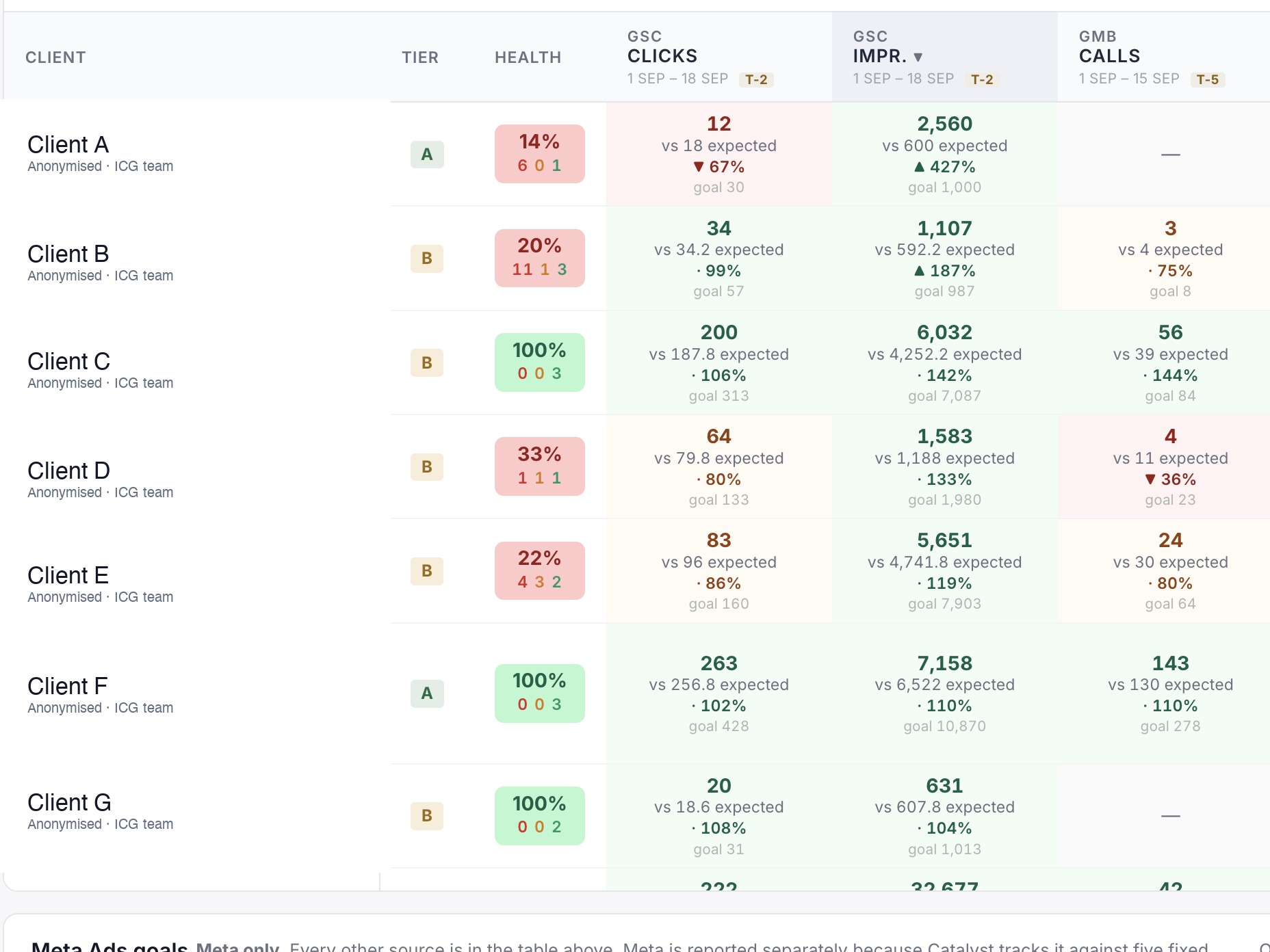
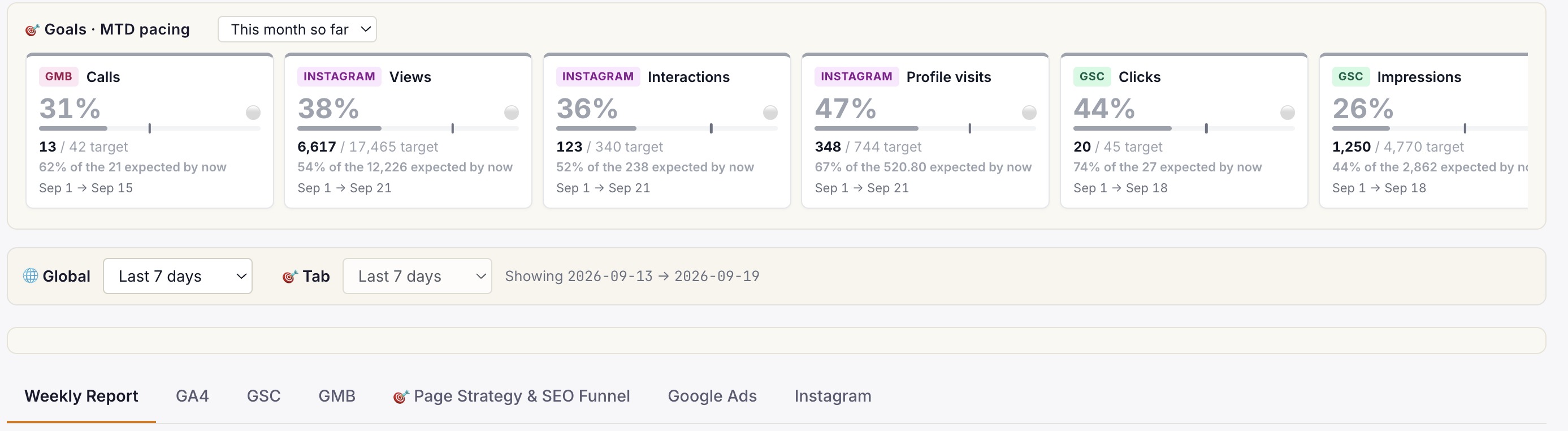
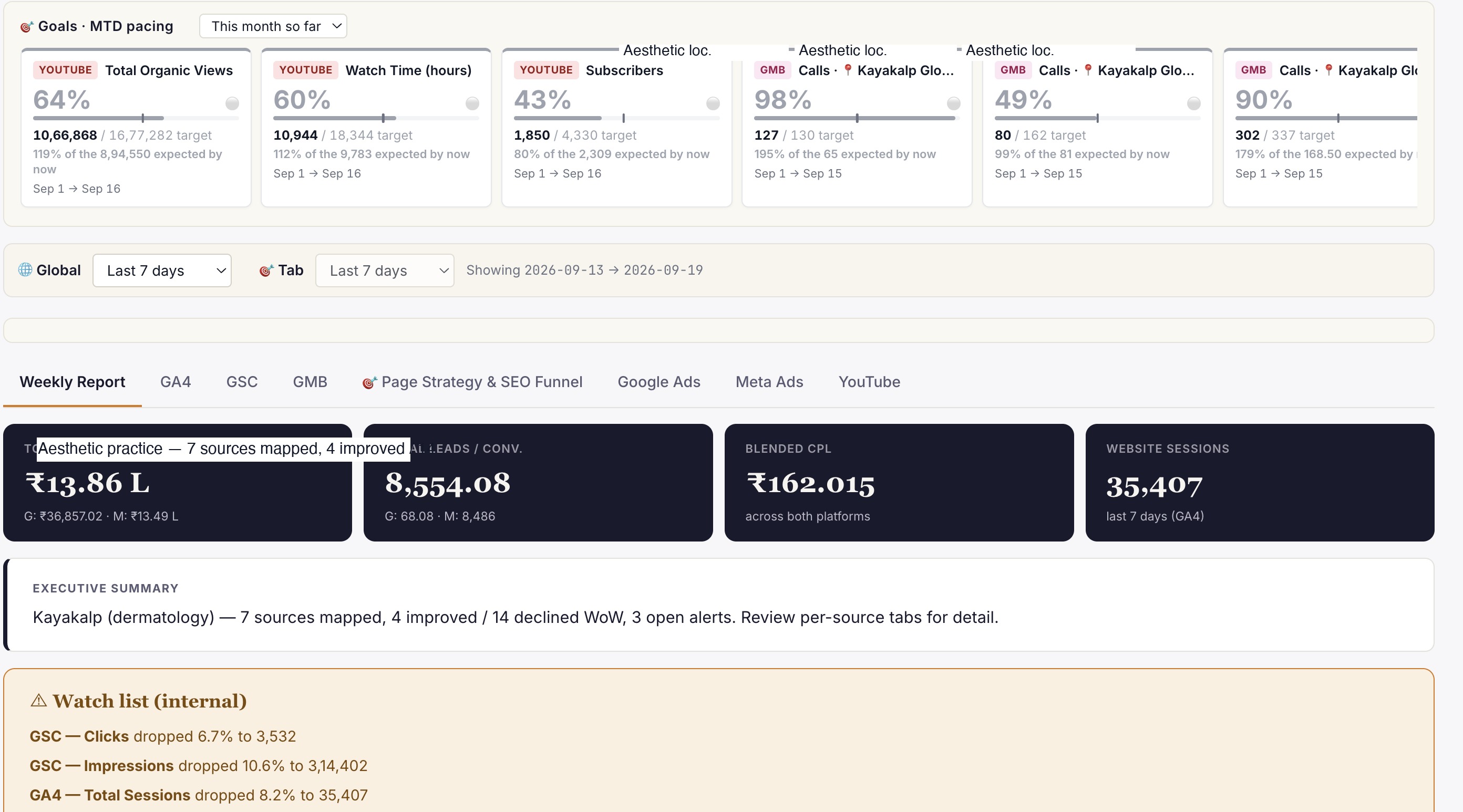
Live client dashboard. GSC, GA4, Google Ads, Meta Ads, IVR calls in one view. Login anytime, not monthly.
Phoenix
Clinic revenue intelligence over your PMS. Daily action queue: Prevent Loss, Maintain & Engage, Grow Revenue. Multi-centre rollout.
Or book a free 30-min audit to see all three in action on your account.
Healthcare brands
that already run on ICG.
A representative slice of the 150+ healthcare brands ICG has delivered for across India. Most engagements remain under NDA.


What ICG clients say · on video.
"Scale up of organic channels and business consulting. ICG has absolute domain authority in their field."
"Working with ICG transformed how we acquire IVF patients in Gurgaon. They understand the fertility journey from inquiry to consult..."
"What Ichelon accomplished — they got all my ideas and worked over 3-4 months to create an amazing, super-customised website."
Need help operationalising this?
Every ICG service is healthcare-only, NMC + DPDP-aware, and built around the patient-research patterns that drive Indian healthcare growth in 2026.
Every practice welcome — packages from ₹20,000/mo.
Goals-Driven engagements · Performance-Linked Payout Models available
More from
ICG.
Five trends shaping Indian healthcare marketing through 2027: AI-first patient research, Conversions API adoption, ABDM discovery, the AEO w...
Healthcare AIO is the discipline of getting your clinic or hospital cited inside Google AI Overviews, ChatGPT and Perplexity answers — not j...
Conversational-search advertising places brand messages inside AI chat answers — ChatGPT, Perplexity, Copilot — rather than beside a results...
Stop guessing.
Book a Diagnostic.
30 minutes. Free. With the AI-powered healthcare-only marketing agency 150+ brands already run on. No slides, no pitch, no hard close.


