


NABH Entry Level vs SHCO vs HCO — Which Accreditation Fits Your Hospital?
One of the most common questions ICG receives from hospital administrators beginning the NABH journey: "Which NABH accreditation do I need?" The answer determines your investment, your timeline, and —
No pitch. Written root-cause diagnosis. AI-powered, healthcare only.
Direct answer
One of the most common questions ICG receives from hospital administrators beginning the NABH journey: "Which NABH accreditation do I need?" The answer determines your investment, your timeline, and —
TL;DR
TL;DR
- NABH has 3 tiers for hospitals: Entry Level (smallest/simplest), SHCO (Small Healthcare Organisation, 30–100 beds), HCO (full standard, any size)
- Entry Level: simplified standards, minimal cost (₹5.6L–₹17L total), best for small clinics and day-care centres
- SHCO: middle path for 30–100 bed facilities, moderate standards, ₹11L–₹34L total
- HCO: gold standard, insurance/CGHS empanelment requires HCO, ₹21L–₹74L total for 100-bed
- Upgrade path: Entry → SHCO → HCO is possible but each step is treated as a new application
One of the most common questions ICG receives from hospital administrators beginning the NABH journey: "Which NABH accreditation do I need?" The answer determines your investment, your timeline, and — critically — which insurance and government scheme empanelments you can access.
This guide compares the three hospital accreditation tiers side by side.
The three NABH accreditation tiers for hospitals
NABH offers three distinct pathways for hospitals and healthcare facilities. Each has different eligibility criteria, standards complexity, costs, and commercial outcomes.
NABH Entry Level
Entry Level accreditation is NABH's simplified pathway designed for small healthcare facilities — solo clinics, specialty day-care centres, small nursing homes. It uses a simplified subset of NABH standards, with fewer objective elements than HCO or SHCO.
Key characteristics:
- Simplified standards document (separate from full HCO standards)
- Focused on basic clinical safety: infection control, patient identification, consent, medication safety, fire safety
- Does not require full quality indicator tracking systems or HAI surveillance at the intensity HCO requires
- No mandatory clinical pharmacist or full antibiotic stewardship programme
- Valid for 2 years; renewable
Best for: Solo specialist clinics, day-care centres, maternity homes, small nursing homes (under 30–50 beds), dental chains, ophthalmology chains, diagnostic centre chains seeking accreditation signalling
NABH SHCO (Small Healthcare Organisation)
SHCO is the middle tier — a separate standards document (SHCO 3rd edition as of 2026) specifically written for small to medium hospitals. It is more demanding than Entry Level but less complex than full HCO.
Key characteristics:
- 7 chapters covering AAC, COP, MOM, PRE, HIC, ROM, FMS (no separate CQI chapter as in HCO — quality is embedded in each chapter)
- HAI surveillance required but at a lighter level than HCO (basic monitoring vs full bundle compliance data)
- Medication reconciliation required at admission and discharge (HCO requires all 3 transition points)
- Valid for 3 years after first renewal
Best for: 30–100 bed hospitals; nursing homes with organised multi-specialty departments; hospitals that want the NABH brand but are not yet ready for full HCO complexity
NABH HCO (Healthcare Organisation)
HCO is the flagship NABH standard — what most people mean when they say "NABH accredited." The HCO standard (currently 6th edition) applies to hospitals of any size and is what insurance companies, CGHS, and corporate empanelments typically require.
Key characteristics:
- 8 full chapters with 450+ objective elements
- Mandatory HAI surveillance programme (CLABSI, VAP, CAUTI, SSI with bundle compliance data)
- Medication reconciliation at all 3 transition points
- Full quality indicator set with benchmarking
- Antibiotic stewardship programme
- ABDM/ABHA integration referenced as quality indicator
- Valid 2-year initial cycle; 3-year renewal cycle
Best for: Hospitals of 50 beds and above; any facility seeking CGHS, insurance TPA empanelment, or corporate health panel access; hospitals positioning for medical tourism
Side-by-side comparison across 12 dimensions
| Parameter | Entry Level | SHCO | HCO |
|---|---|---|---|
| Applicable facility size | Up to 30–50 beds, day-care | 30–100 beds | Any size |
| Standards document | Simplified Entry Level | SHCO 3rd edition | HCO 6th edition |
| Number of chapters | 5–6 | 7 | 8 |
| Objective elements (approx.) | 80–120 | 200–280 | 450+ |
| HAI surveillance required | Basic (hand hygiene, basic IC) | Moderate (device-day tracking) | Full (CLABSI/VAP/CAUTI/SSI bundles + rates) |
| Medication reconciliation | At admission | Admission + discharge | Admission + transfer + discharge |
| Antibiotic stewardship | Not required | Basic restricted list | Full programme with monthly tracking |
| Quality indicators | Minimal set | Moderate set | Full set with external benchmarking |
| CGHS empanelment eligibility | No | Partial (check CGHS criteria) | Yes |
| Insurance TPA empanelment | Limited (some TPAs accept) | Some TPAs accept | Most TPAs require HCO |
| Corporate health panel | Unlikely | Possible (some corporates) | Yes |
| Valid period (initial cycle) | 2 years | 2 years | 2 years |
| Valid period (renewal) | 2 years | 3 years | 3 years |
| First-time total cost | ₹5.6L–₹17L | ₹11L–₹34L | ₹21L–₹74L (100-bed) |
| Timeline to certificate | 6–10 months | 8–14 months | 12–18 months |
Insurance and CGHS acceptance — the deciding factor
For most hospitals, the decision between SHCO and HCO is made not by bed count but by what empanelments they need. This is the most important practical consideration:
CGHS (Central Government Health Scheme): CGHS empanelment requires NABH HCO accreditation. SHCO and Entry Level are not accepted for CGHS. This is a critical commercial consideration — CGHS contracts for 200-bed hospitals are worth ₹1.5Cr–₹6Cr/year.
Insurance TPAs: Most major TPAs (MDIndia, Medi Assist, Health Insurance TPA of India, Paramount, Vidal) now require or strongly prefer NABH HCO accreditation. Some smaller or regional TPAs accept SHCO. Verify TPA-specific empanelment requirements for your target insurers.
ESIC (Employees' State Insurance Corporation): ESIC empanelment considers NABH as a positive quality indicator but does not mandate a specific tier — verify with your regional ESIC office.
Ayushman Bharat PM-JAY: AB PM-JAY empanelment does not require NABH accreditation, but NABH-accredited hospitals often get preference in quality-performance scoring that affects scheme rates.
"The most common NABH tier decision mistake I see: a 75-bed hospital pursuing SHCO because it's cheaper, without realising that CGHS and their 2 largest TPA empanelments require HCO. They end up doing SHCO, realising 6 months later they need HCO, and have to start the process again. The 18-month delay and duplicate cost far exceeded what HCO would have cost upfront." — Adrito Basu, NABH Consulting Lead, ICG
Cost comparison by tier
For detailed cost breakdowns, see our NABH cost and timeline guide. Summary:
| Standard | First-time total cost | Renewal cost | Timeline |
|---|---|---|---|
| Entry Level | ₹5.6L–₹17L | ₹3L–₹8L | 6–10 months |
| SHCO | ₹11L–₹34L | ₹6L–₹15L | 8–14 months |
| HCO (100-bed) | ₹21L–₹74L | ₹10L–₹30L | 12–18 months |
The upgrade path — Entry → SHCO → HCO
Hospitals frequently ask whether they can "start with Entry Level and upgrade later." The answer is yes — but with important caveats:
The upgrade is a new application, not an incremental step. Each tier transition requires:
- New application to NABH for the higher standard
- Fresh gap analysis against the higher standard
- Additional policy and SOP development
- Potentially additional staff training
- New assessment fee
The quality systems built during Entry Level preparation do carry forward — which reduces (but does not eliminate) the effort for SHCO. The systems from SHCO preparation carry forward further for HCO.
Typical upgrade timeline additions:
- Entry Level to SHCO upgrade: 5–8 additional months preparation + 3–5 months to certificate
- SHCO to HCO upgrade: 8–12 additional months preparation + 3–5 months to certificate
ICG's recommendation: If your 5-year plan includes CGHS empanelment or major TPA panels, go directly for HCO even if you currently have 50–75 beds. The cost difference is paid once; the revenue from CGHS/TPA empanelment is annual.
When Entry Level is the right choice
Entry Level makes commercial sense for:
- Solo specialist clinics or small day-care centres with no ambition for insurance empanelment where NABH is primarily a trust signal for patients
- Dental chains and ophthalmology chains that want NABH certification at individual centre level (using the chain's Entry Level accreditation template)
- Pre-HCO stepping stone for hospitals with significant quality gaps that need 12–18 months to build the quality infrastructure before HCO application
- Budget-constrained hospitals in tier-3 cities where the revenue opportunity from CGHS/TPA is limited
When SHCO is the right choice
SHCO makes sense for:
- 30–80 bed hospitals where some TPA relationships are desired but CGHS is not a target
- Hospitals with strong existing quality systems that want accreditation quickly without full HCO preparation
- Secondary care hospitals without ICU-dependent specialties (where HAI surveillance is less complex)
When HCO is the only right choice
HCO is essential for:
- Any hospital targeting CGHS empanelment
- Any hospital targeting major TPA empanelments
- Any hospital with 100+ beds
- Any hospital positioning for medical tourism (international patients)
- Any hospital seeking corporate health panel inclusion
- Any hospital with ICU/OT services where full HAI surveillance is clinically indicated anyway
Case snapshot
A 65-bed multi-specialty hospital in Patna initially planned SHCO accreditation (chosen for cost). ICG's pre-engagement assessment revealed: their top 3 revenue growth opportunities (CGHS, 2 major TPAs) all required HCO. Cost analysis showed: SHCO investment ₹14L + 10-month delay + then HCO investment ₹32L = ₹46L and 22 months to HCO certificate. Direct HCO from start: ₹32L and 14 months. Hospital went directly to HCO. CGHS contract secured 3 months post-accreditation; annual CGHS contract value ₹1.2Cr. Full accreditation investment recovered in under 4 months. (ICG NABH consulting, 2026.)
FAQ
Q1: What is the difference between NABH Entry Level, SHCO, and HCO? Three tiers with increasing standard complexity and commercial unlock. Entry Level: simplified, for small clinics. SHCO: moderate standards, for 30–100 bed hospitals. HCO: full 6th edition standards, required for CGHS and major TPA empanelments.
Q2: Which NABH standard does CGHS require? NABH HCO accreditation. Entry Level and SHCO are not accepted for CGHS empanelment.
Q3: Can I get NABH Entry Level first and upgrade to HCO later? Yes — but each upgrade is a new application with fresh gap analysis, additional preparation, and additional fees. If HCO is your eventual target, going directly to HCO is typically more cost-efficient.
Q4: How long does SHCO accreditation take vs HCO? SHCO: 8–14 months from start to certificate. HCO (first-time, 100-bed): 12–18 months. SHCO is approximately 4–6 months faster.
Q5: Does NABH Entry Level work for insurance empanelment? Limited. Most major TPAs and all CGHS require HCO. Some smaller regional TPAs accept SHCO or Entry Level — verify directly with the TPA before committing to a tier.
Q6: Is SHCO the same as NABH certification for small hospitals? SHCO is a specific NABH standard designed for small hospitals (30–100 beds). It is a legitimate NABH accreditation, distinct from Entry Level and HCO. Some older literature refers to SHCO as "NABH small hospital standard."
Q7: What is the upgrade path from Entry Level to HCO in terms of timeline? Entry Level → SHCO: 5–8 months additional preparation. SHCO → HCO: 8–12 months additional preparation. Direct to HCO from scratch: 12–18 months. The "Entry Level first" path takes 18–28 months total to reach HCO vs 12–18 months direct.
Internal links
- NABH 6th edition standards guide 2026
- NABH accreditation process step-by-step 2026
- NABH cost and timeline guide 2026
- NABH consulting services — ICG
- Hospital marketing agency India
- Talk to Adrito — NABH consultation
External sources
- NABH — nabh.co (Entry Level, SHCO, HCO standards documents)
- CGHS empanelment criteria — mohfw.gov.in
- IRDAI insurance empanelment hospital requirements
- QCI — qcin.org
Compliance note. Insurance acceptance and CGHS empanelment eligibility details are based on ICG's consulting experience and publicly available empanelment guidelines as of 2026. Requirements may change; verify directly with NABH (nabh.co), CGHS (mohfw.gov.in), and individual TPAs before making tier decisions. This article is for informational purposes only.
Book a free 60-minute NABH readiness diagnostic.
Adrito Basu (15+ years, NABH specialist) walks through your facility's current gaps and the fastest path to certification.
The three platforms
behind every ICG engagement.
Beacon
CAPI middleware that fixes Event Match Quality, translates CRM statuses to Meta-standard events, dedups across channels.
Agency OS
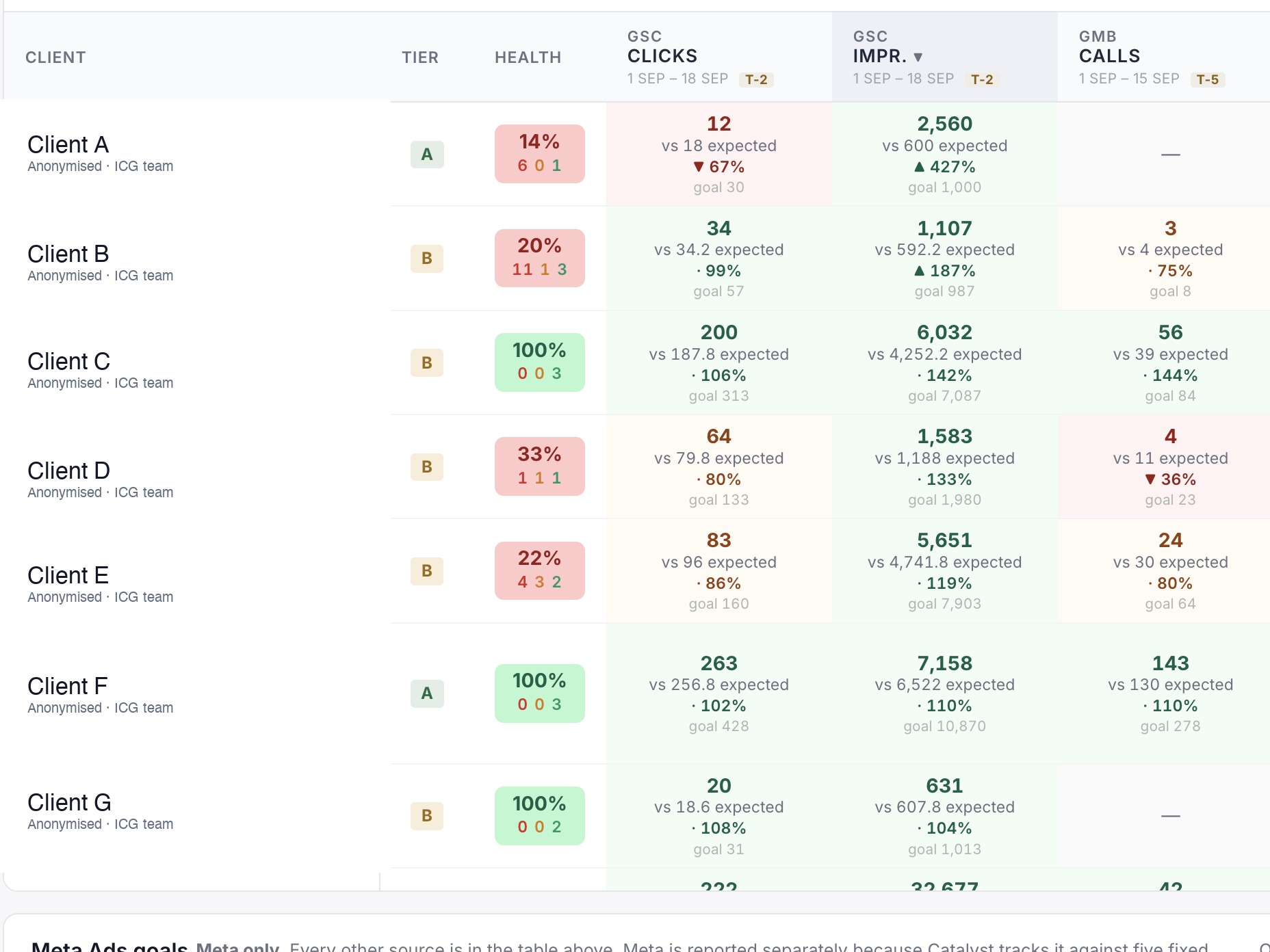
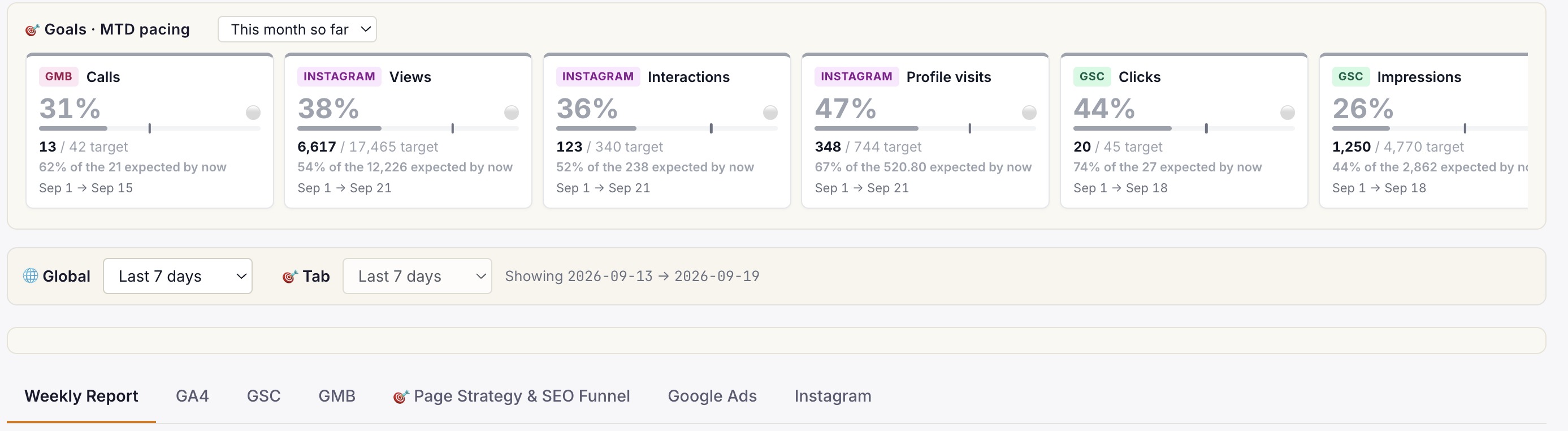
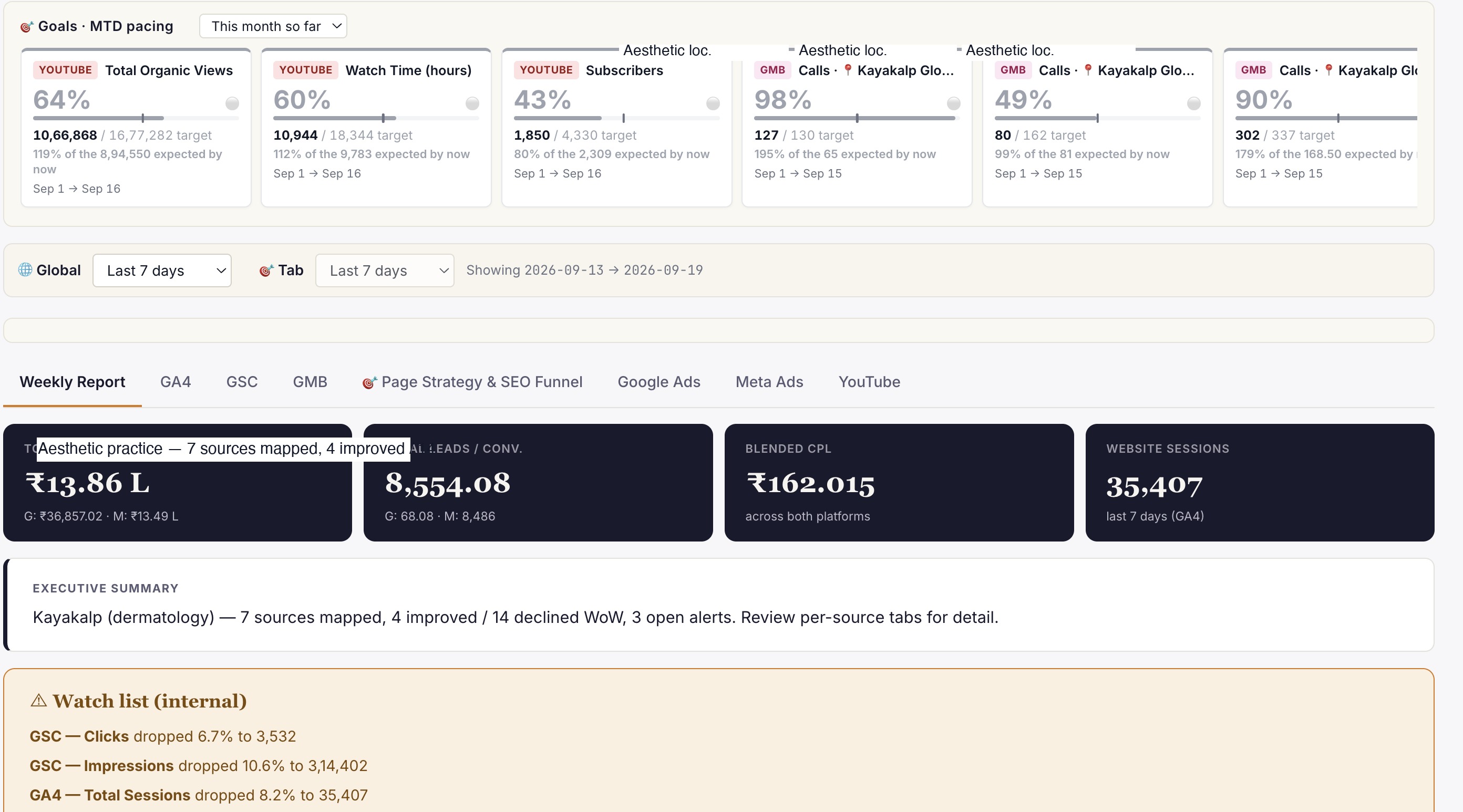
Live client dashboard. GSC, GA4, Google Ads, Meta Ads, IVR calls in one view. Login anytime, not monthly.
Phoenix
Clinic revenue intelligence over your PMS. Daily action queue: Prevent Loss, Maintain & Engage, Grow Revenue. Multi-centre rollout.
Or book a free 30-min audit to see all three in action on your account.
Healthcare brands
that already run on ICG.
A representative slice of the 150+ healthcare brands ICG has delivered for across India. Most engagements remain under NDA.


What ICG clients say · on video.
"Scale up of organic channels and business consulting. ICG has absolute domain authority in their field."
"Working with ICG transformed how we acquire IVF patients in Gurgaon. They understand the fertility journey from inquiry to consult..."
"What Ichelon accomplished — they got all my ideas and worked over 3-4 months to create an amazing, super-customised website."
Need help operationalising this?
Every ICG service is healthcare-only, NMC + DPDP-aware, and built around the patient-research patterns that drive Indian healthcare growth in 2026.
Every practice welcome — packages from ₹20,000/mo.
Goals-Driven engagements · Performance-Linked Payout Models available
More from
ICG.
Five trends shaping Indian healthcare marketing through 2027: AI-first patient research, Conversions API adoption, ABDM discovery, the AEO w...
Healthcare AIO is the discipline of getting your clinic or hospital cited inside Google AI Overviews, ChatGPT and Perplexity answers — not j...
Conversational-search advertising places brand messages inside AI chat answers — ChatGPT, Perplexity, Copilot — rather than beside a results...
Stop guessing.
Book a Diagnostic.
30 minutes. Free. With the AI-powered healthcare-only marketing agency 150+ brands already run on. No slides, no pitch, no hard close.


