


NABH Accreditation Process 2026 — Step-by-Step Guide for Hospitals
Every hospital's NABH accreditation journey is unique, but the process structure is standardised. Whether you are a 30-bed clinic targeting NABH Entry Level, a 150-bed hospital pursuing SHCO, or a 300
No pitch. Written root-cause diagnosis. AI-powered, healthcare only.
Direct answer
Every hospital's NABH accreditation journey is unique, but the process structure is standardised. Whether you are a 30-bed clinic targeting NABH Entry Level, a 150-bed hospital pursuing SHCO, or a 300
TL;DR
TL;DR
- NABH accreditation follows 13 steps from Expression of Interest (EOI) to certificate issuance
- First-time HCO accreditation: 12–18 months from gap analysis start to certificate
- SHCO: 8–14 months; Entry Level: 6–10 months
- The 3 major workload stages: gap analysis (months 1–3), implementation (months 4–12), assessment (months 12–18)
- Staff training is the single most underestimated step — and the most common reason for survey failure
Every hospital's NABH accreditation journey is unique, but the process structure is standardised. Whether you are a 30-bed clinic targeting NABH Entry Level, a 150-bed hospital pursuing SHCO, or a 300-bed multi-specialty pursuing full HCO accreditation, the pathway follows the same 13 steps.
This guide covers each step in detail, with timeline estimates, cost indicators, and the specific implementation failures that ICG has seen repeatedly across 9+ NABH accreditation engagements.
Step 1: Expression of Interest (EOI) to NABH
The journey begins on NABH's official portal (nabh.co). The hospital submits an Expression of Interest, providing:
- Hospital name, address, registration details
- Bed strength and specialties offered
- Type of accreditation sought (Entry Level, SHCO, or HCO)
- Name of the CEO/Medical Director
The EOI is not a formal commitment — it's an entry into the NABH pipeline. NABH assigns an application reference number and sends back the formal application form.
Timeline: 1–2 weeks Cost: No fee at EOI stage
Step 2: Application form submission
The formal application form is significantly more detailed than the EOI. Required information:
- Organogram (management structure)
- List of all clinical departments and services offered
- Bed census (ICU, general, OT beds)
- Key medical and administrative staff list with qualifications
- List of equipment with dates of purchase (relevant for FMS chapter)
- Copy of all statutory licences (clinical establishment, fire, biomedical waste, AERB if applicable)
Common mistake at Step 2: Submitting incomplete licence documentation. NABH reviewers check that all operating licences are current before proceeding. Expired licences (especially Clinical Establishment Act registration) cause immediate application hold.
Timeline: 2–4 weeks to compile and submit Cost: No fee at application stage; fee payable at Step 4
Step 3: Select your NABH preparation approach
This is arguably the most consequential decision in the entire process: consultant-led preparation vs self-directed internal preparation.
Consultant-led preparation (recommended for first-time hospitals):
- An experienced NABH consultant (or consulting firm like ICG) conducts the gap analysis, develops SOPs and policies, trains staff, and conducts the mock assessment
- Timeline advantage: 3–5 months faster than self-directed preparation
- Cost: ₹2.5L–₹12L depending on hospital size and consultant tier (see our NABH cost guide)
- Failure rate at first survey: lower — typically 20–35% with consultant vs 45–60% without
Internal preparation:
- Hospital designates an internal quality manager to own the process
- Effective for hospitals that have prior NABH experience, strong quality departments, or are pursuing Entry Level (simpler standards)
- Risk: longer timeline, higher survey failure probability on first attempt
ICG's NABH consulting service covers all 13 steps from EOI to certificate.
Timeline: Decision made in weeks 1–2
Step 4: Gap analysis against applicable standards
The gap analysis is the foundation of all subsequent preparation. Without a thorough, objective gap analysis, hospitals invest resources in the wrong places.
What a proper gap analysis covers:
For each of the 8 chapters (AAC, COP, MOM, PRE, HIC, CQI, ROM, FMS), every objective element is assessed as:
- Compliant (C): Element is fully implemented with documented evidence
- Partial Compliance (PC): Element is partially addressed; specific gaps identified
- Non-Compliant (NC): Element not implemented
Output of gap analysis:
- Full element-level gap report
- Prioritised remediation list (High/Medium/Low risk for survey failure)
- Implementation timeline with owner and deadline per gap
From ICG's experience across 9 accreditation engagements: hospitals beginning gap analysis typically present 65–85% compliance at the chapter level (misleading — element-level compliance is typically 40–60%), with HIC and MOM chapters being the most gap-intensive in the 6th edition.
Timeline: 3–6 weeks for a thorough gap analysis across all 8 chapters Cost: Included in consulting engagement fee
Step 5: Policy and SOP development (the 60% of the work)
This is where the bulk of NABH preparation effort is spent, and where hospitals consistently underestimate the workload. A full HCO 6th edition compliance policy library requires:
- 40–70 policies (hospital-level: infection control, medication management, patient rights, etc.)
- 120–200 SOPs (department-level and cross-department: medication reconciliation, triage protocols, restraint protocols, etc.)
- 20–35 clinical care protocols (pain management, nutritional assessment, high-risk patient care, etc.)
- Quality indicator definitions and data collection tools for each tracked indicator
Common mistakes:
-
Generic policy downloads: Many hospitals download templates from the internet. NABH surveyors are experienced at identifying generic policies that don't reflect the hospital's actual practice. Policies must be contextualised to the hospital's patient population, bed strength, and services.
-
Policy exists but not implemented: A beautifully written medication reconciliation policy means nothing if nurses on the wards don't know about it. Policy development and training must be parallel activities.
-
Policies not approved: All policies must be approved and signed by the designated authority (typically CMO or CEO). Unsigned draft policies don't count.
Timeline: 2–4 months for a full policy and SOP library development and approval cycle
Step 6: Staff training on standards
Staff training is the most underestimated step in the NABH process. It is also — in ICG's experience across 9 accreditations — the most common proximate cause of survey failure.
Why training fails:
- Coverage gaps: Not all staff are trained. A single untrained nurse on duty during a survey who cannot demonstrate a fire extinguisher procedure or recite the triage protocol will be documented as a gap.
- Training without retention: A one-day training event 6 months before the survey is not sufficient. Staff need repeated, job-specific training close to the survey date.
- No documentation: Training happened but attendance records are missing. NABH surveyors check training logs, not people's memories.
What a compliant training programme looks like:
- All clinical staff: Chapter-specific training on HIC (HAI bundles, hand hygiene, PPE), MOM (medication reconciliation, LASA, HAMs, ADR reporting), COP (pain assessment tools, nutritional screening, restraint protocol)
- All support staff: FMS (fire safety, biomedical waste segregation)
- Documentation: Attendance register per session, pre/post test scores, refresher schedule
Timeline: 3–5 months to design, deliver, and document comprehensive training
"In every NABH survey I've seen fail at the first attempt, the root cause traces back to one of two things: HAI surveillance not operationalised, or staff who couldn't demonstrate a protocol when a surveyor asked them to. The chapter compliance numbers look fine on paper. The moment a surveyor walks into a ward and asks a nurse to show them how they document medication reconciliation at transfer — that's where preparation either holds or falls apart." — Adrito Basu, NABH Consulting Lead, ICG
Step 7: Legal and statutory compliance verification
NABH does not accredit hospitals that are non-compliant with statutory requirements. Before the formal assessment, verify and update:
- Clinical Establishment Act registration (state-specific) — check expiry date
- Biomedical waste management authorisation (SPCB) — current and displayed
- Fire NOC — current (typically annual renewal)
- AERB licence (for hospitals with radiation sources: CT, X-ray, fluoroscopy) — check for all active units
- PC-PNDT registration (for hospitals with ultrasound used for obstetric purposes)
- PSARA licence (if hospital runs its own security)
- Blood bank licence (for hospitals with on-site blood bank)
- CDSCO device registration — for medical devices used clinically
Timeline: 4–8 weeks to compile and renew all licences Cost: Licence renewal fees vary by state and licence type; budget ₹50,000–₹3.5L total
Step 8: Clinical quality indicators — implementation and data collection
Quality indicators must be collected for a minimum of 3 months before the assessment for the data to be meaningful. The 6th edition requires:
- Defined indicator set: Each indicator must have a definition, numerator, denominator, data source, and frequency of collection
- Monthly data compilation: Department-wise indicator data compiled monthly
- Quality committee review: Data reviewed monthly with CAPA documented
Minimum indicator categories:
- Clinical care: mortality rate, 30-day readmission rate, unplanned return to OT
- Patient safety: fall rate, medication error rate, surgical site infection rate
- Patient experience: discharge satisfaction score, complaint resolution time
- Operational: OT utilisation rate, bed occupancy, ALOS (Average Length of Stay)
Timeline: Begin data collection in month 3–4 to have 3 months of data by survey
Step 9: Infection control system deployment
This step is given a separate position in the preparation timeline because HIC is the chapter with the highest gap frequency in 6th edition surveys.
HAI surveillance programme implementation checklist:
- ICC (Infection Control Committee) constituted with minutes template
- ICCN (Infection Control Nurse) designated and trained
- CLABSI surveillance form operational in all ICUs with central lines
- VAP surveillance form operational in all ventilated units
- CAUTI surveillance form operational for all catheterised patients
- SSI surveillance system operational per surgery category
- HAI rate calculation formula implemented (per 1,000 device days)
- Monthly ICC review with HAI data and CAPA
- Bundle compliance checklists operational (CLABSI, VAP, CAUTI, SSI)
- Hand hygiene compliance monitoring with WHO 5 Moments data
Timeline: 3–4 months to implement, collect 3 months of surveillance data, and stabilise
Step 10: Medication management protocols
Medication management implementation checklist:
- Medication reconciliation form at admission (implemented + training done)
- Medication reconciliation at inter-unit transfer (most commonly missed)
- Medication reconciliation at discharge (often missed — discharge reconciliation is different from the discharge medication list)
- HAM list updated to current pharmacopoeia + hospital formulary
- LASA segregation in pharmacy AND in ward drug trolleys
- High-alert medication double-check protocol implemented
- Antibiotic stewardship programme: restricted list, approval process, consumption tracking
- ADR reporting system linked to PvPI operational
- Clinical pharmacist documented participation in ward rounds (if >50 beds)
Step 11: Internal audits and CAPA
Before formal assessment, hospitals must demonstrate that their internal quality system is self-correcting. This requires:
- Internal audit cycle: At least one internal audit per chapter within 6 months of assessment
- CAPA tracker: All internal audit NCs tracked with responsible owner, target date, and closure evidence
- CAPA closure documentation: Closed CAPAs with evidence (not just notation "closed")
Timeline: Internal audit cycle should begin in month 8–10
Step 12: Mock assessment by consultant
ICG conducts a formal mock survey using the actual NABH objective element checklists. This is the most important pre-assessment activity because it:
- Identifies residual gaps that are invisible to internal teams (familiarity blindness)
- Prepares clinical and nursing staff for surveyor interaction
- Generates a prioritised list of critical NCs to close before the formal assessment
- Gives hospital leadership a realistic probability estimate for first-assessment success
Mock assessment outcome categories:
- Critical NC (10% or more of elements in a chapter in NC): Survey failure risk high — defer formal assessment
- Major NC (isolated elements per chapter): Close within 30 days; formal assessment can proceed
- Minor NC (documentation or consistency gaps): Manageable — close before or at assessment presentation
Timeline: Mock assessment in month 10–12; formal application for assessment filed in month 11
Step 13: Formal NABH pre-assessment, assessment, and NC closure
Pre-assessment (Desktop Review): NABH initially conducts a desktop review of submitted documents — policies, licences, quality indicator data. If desktop review passes, the formal on-site assessment is scheduled.
On-site assessment: 2–3 NABH assessors visit the hospital for 1–3 days (depending on hospital size). They:
- Review documents against objective elements
- Observe clinical areas (ICU, OT, pharmacy, wards)
- Interview staff (clinical and non-clinical)
- Verify physical compliance (fire systems, AERB, biomedical waste areas)
NC closure: Post-assessment, NABH issues a formal NC report. Hospitals are given a defined period (typically 60–90 days) to close all major and minor NCs with documentary evidence submitted to NABH.
Certificate issuance: Upon closure verification, NABH issues the accreditation certificate. Initial accreditation: 2-year cycle with 1 surveillance visit at 12 months. Renewal: 3-year cycle after first successful renewal.
Post-accreditation: surveillance and renewal
NABH accreditation is not a one-time achievement. It requires:
- Surveillance visit at 12 months — a lighter version of the assessment, focused on maintenance of standards
- Renewal application before the accreditation expiry date (typically 6 months before)
- Continuous quality monitoring — quality indicators, ICC reviews, internal audits — throughout the accreditation cycle
Hospitals that slip in quality maintenance between the accreditation date and the surveillance visit are at risk of conditional status or withdrawal of accreditation.
Case snapshot
A first-time HCO applicant — 350-bed multi-specialty hospital in Lucknow — engaged ICG at the EOI stage. Gap analysis (month 1): 47% element compliance. Critical gaps: HAI surveillance entirely absent, medication reconciliation not implemented, 3 licences expired. ICG's 14-month programme delivered: HAI programme operational by month 3, full policy library approved by month 5, staff training completed month 9, mock assessment month 12 (8 major NCs identified and closed). Formal NABH assessment month 14: 12 minor NCs, zero major NCs. Certificate issued month 16 after NC closure. (ICG NABH consulting engagement, 2026.)
FAQ
Q1: How long does NABH accreditation take from start to certificate? First-time HCO: 12–18 months. SHCO: 8–14 months. Entry Level: 6–10 months. Hospitals with existing quality systems may compress these timelines by 3–4 months.
Q2: What is the difference between NABH pre-assessment and assessment? The desktop review (pre-assessment) is NABH's review of submitted documents before scheduling the on-site visit. The formal assessment is the 1–3 day on-site survey by NABH assessors who verify physical compliance, interview staff, and review records.
Q3: Can a hospital fail NABH accreditation? Yes. Hospitals can fail at the desktop review stage (incomplete documentation, expired licences), at the assessment stage (critical NCs in survey-critical chapters like HIC or MOM), or post-assessment (inability to close NCs within the given timeline). First-attempt failure rate for hospitals without consultant support: estimated 45–60% (ICG internal estimate, 2026).
Q4: What is the most important step in NABH preparation? Staff training, consistently. Hospitals that invest in comprehensive, documented, repeated training close to the survey date outperform hospitals with perfect paperwork but under-trained staff.
Q5: Is a NABH consultant necessary? For first-time HCO applicants: strongly recommended. The cost of a failed first assessment (rescheduled assessment fees, 60-90 days delay, continued non-accredited status) typically exceeds the consulting fee. For SHCO and Entry Level: depends on hospital's internal quality management maturity.
Q6: How much does NABH accreditation cost in total? See our NABH cost and timeline guide 2026 for a full breakdown. Short answer: ₹35L–₹65L for a 100-bed HCO first-time accreditation (consulting + NABH fees + implementation).
Q7: What happens at a NABH surveillance visit? A surveillance visit occurs at 12 months post-accreditation. It is shorter than the main assessment (typically 1 day for hospitals under 200 beds) and focused on verifying that standards maintained. Surveyors check HAI data trends, quality indicators, and spot-verify chapter compliance. Hospitals that relax after accreditation are at risk at surveillance.
Q8: Can I apply for NABH Entry Level first and then upgrade to HCO? Yes — NABH has an upgrade pathway. However, the upgrade to HCO from Entry Level or SHCO is treated as a fresh application against the higher standard — not an incremental upgrade. The preparation effort is substantial.
Internal links
- NABH 6th edition standards guide 2026
- NABH cost and timeline guide 2026
- NABH Entry Level vs SHCO vs HCO
- ABDM integration hospitals 2026
- NABH consulting services — ICG
- Hospital marketing agency India
- Talk to Adrito about NABH preparation
External sources
- NABH — nabh.co (application portal + standards)
- QCI (Quality Council of India) — qcin.org
- MoHFW — hospital accreditation policy
- ICMR — HAI surveillance reference methodology
- WHO — quality of care standards
- IRDAI — insurance empanelment requirement for NABH accreditation
Compliance note. This article describes NABH accreditation process steps based on ICG's consulting engagements and publicly available NABH guidance. Process steps, timelines, and costs are indicative — verify current requirements at nabh.co before beginning preparation. ICG provides NABH consulting as a service; this article is for informational purposes only and does not constitute a formal consulting engagement.
Book a free 60-minute NABH readiness diagnostic.
Adrito Basu (15+ years, NABH specialist) walks through your facility's current gaps and the fastest path to certification.
The three platforms
behind every ICG engagement.
Beacon
CAPI middleware that fixes Event Match Quality, translates CRM statuses to Meta-standard events, dedups across channels.
Agency OS
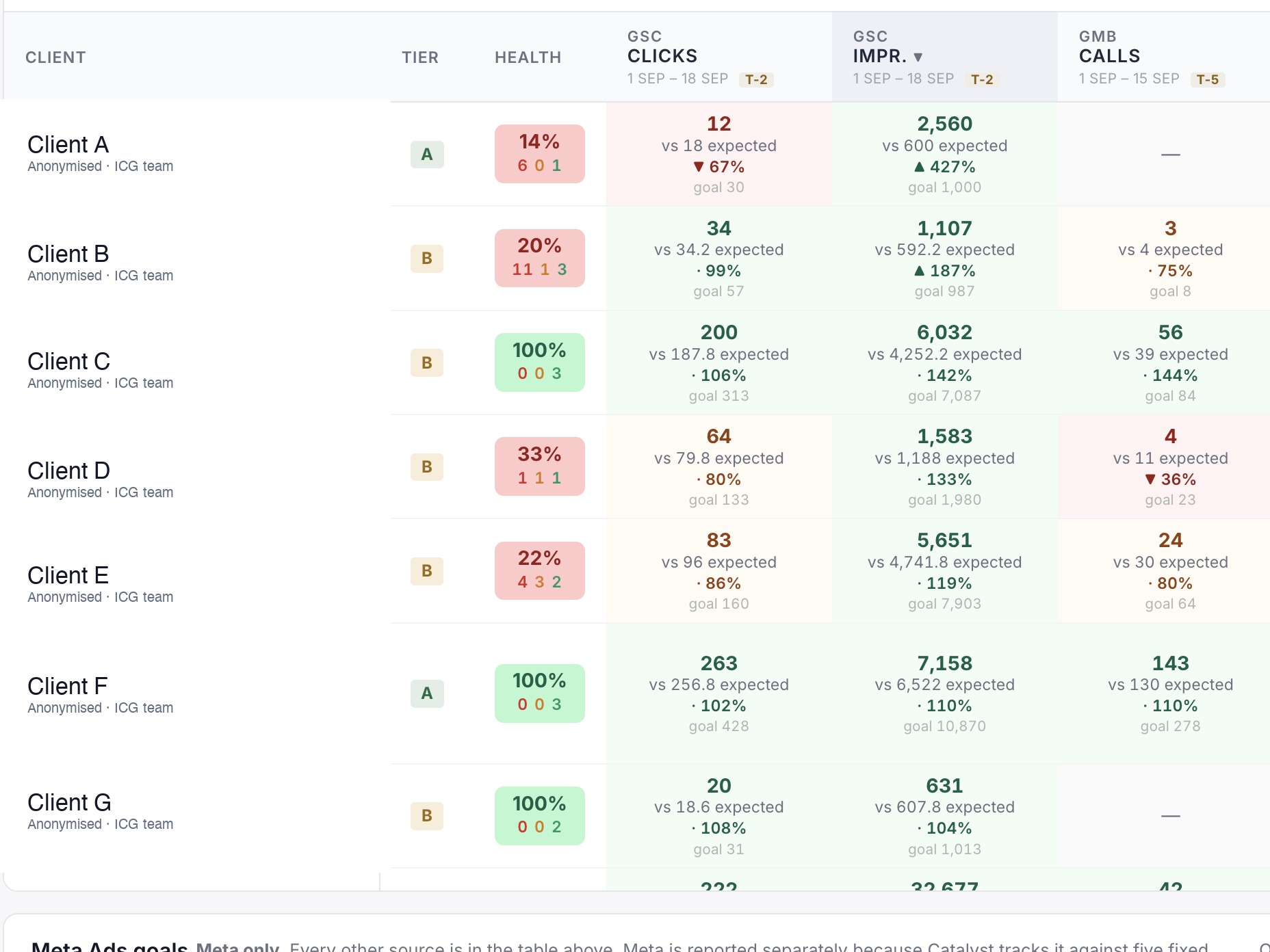
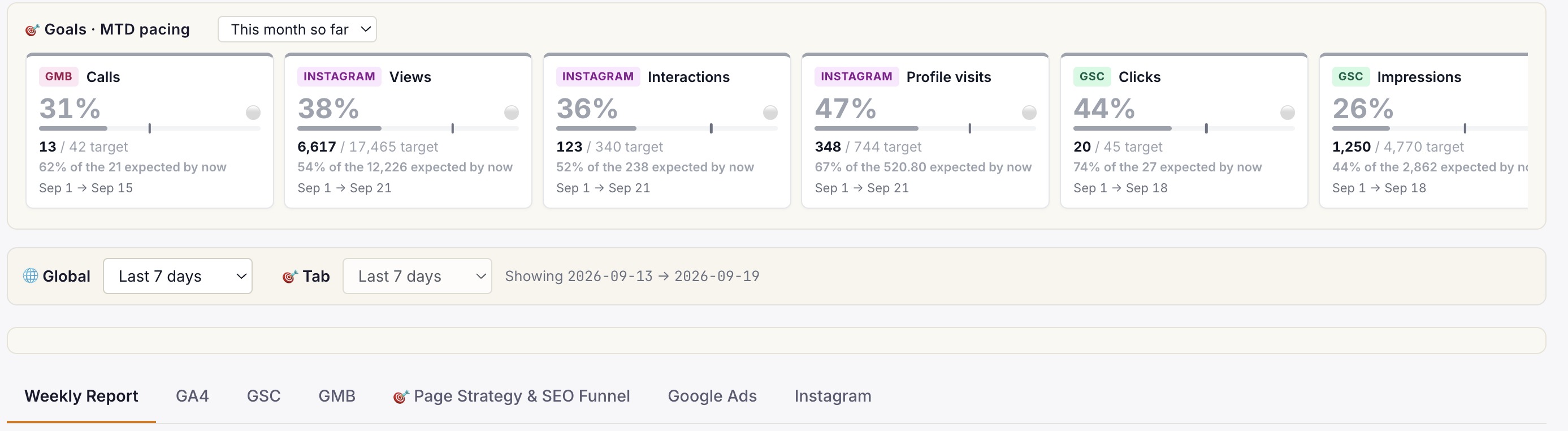
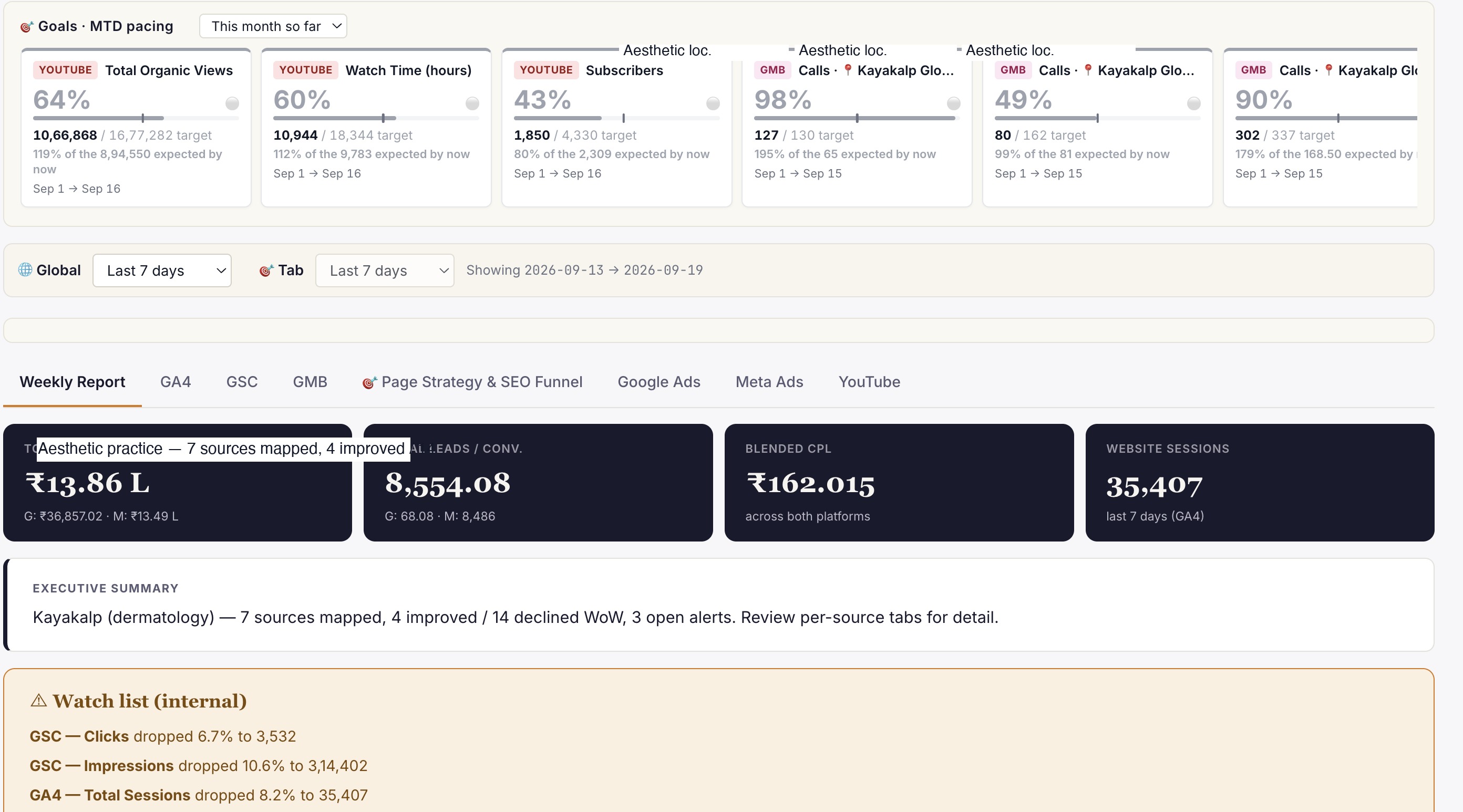
Live client dashboard. GSC, GA4, Google Ads, Meta Ads, IVR calls in one view. Login anytime, not monthly.
Phoenix
Clinic revenue intelligence over your PMS. Daily action queue: Prevent Loss, Maintain & Engage, Grow Revenue. Multi-centre rollout.
Or book a free 30-min audit to see all three in action on your account.
Healthcare brands
that already run on ICG.
A representative slice of the 150+ healthcare brands ICG has delivered for across India. Most engagements remain under NDA.


What ICG clients say · on video.
"Scale up of organic channels and business consulting. ICG has absolute domain authority in their field."
"Working with ICG transformed how we acquire IVF patients in Gurgaon. They understand the fertility journey from inquiry to consult..."
"What Ichelon accomplished — they got all my ideas and worked over 3-4 months to create an amazing, super-customised website."
Need help operationalising this?
Every ICG service is healthcare-only, NMC + DPDP-aware, and built around the patient-research patterns that drive Indian healthcare growth in 2026.
Every practice welcome — packages from ₹20,000/mo.
Goals-Driven engagements · Performance-Linked Payout Models available
More from
ICG.
Five trends shaping Indian healthcare marketing through 2027: AI-first patient research, Conversions API adoption, ABDM discovery, the AEO w...
Healthcare AIO is the discipline of getting your clinic or hospital cited inside Google AI Overviews, ChatGPT and Perplexity answers — not j...
Conversational-search advertising places brand messages inside AI chat answers — ChatGPT, Perplexity, Copilot — rather than beside a results...
Stop guessing.
Book a Diagnostic.
30 minutes. Free. With the AI-powered healthcare-only marketing agency 150+ brands already run on. No slides, no pitch, no hard close.


