


How to reverse-engineer IVF competitor Meta ads in India (a working guide)
How Indian IVF clinics and their agencies actually reverse-engineer competitor Meta ads — offers, hooks, compliance constraints, and the PCPNDT / ART Act signals that shape everything.
No pitch. Written root-cause diagnosis. AI-powered, healthcare only.
Direct answer
How Indian IVF clinics and their agencies actually reverse-engineer competitor Meta ads — offers, hooks, compliance constraints, and the PCPNDT / ART Act signals that shape everything.
TL;DR

Indian IVF Meta advertising is one of the hardest verticals to read from the outside. The regulatory frame is narrow (PCPNDT, ART Act, ASCI), the buying decision is slow (multi-visit, multi-month), the price sensitivity is high, and the emotional register is unlike any other healthcare category. That combination means competitor ads look strange until you know what they are working around. This guide is the reverse-engineering method we use inside ICG when we onboard a new IVF client and need to understand the competitive terrain in the first week.
The workflow assumes you have basic access to Facebook Ad Library. If you also have PrismSpy, most of the mechanical steps are pre-computed and you jump straight to the interpretation moves. Either path is fine — the analysis is what matters.

Step 1: build the competitor set correctly
Most IVF clinics get this step wrong. They list their obvious direct competitors — the national chains, the well-known local brands — and stop. The mistake is missing the second and third tier of advertisers who are quietly running strong campaigns in their city.
Build the set in three passes. First pass, list the national IVF chains active in India — these are almost always advertising. Second pass, list the 3-5 regional chains for your city or region — most large cities and states have a few strong regional fertility brands. Third pass — this is the one people skip — run a keyword search in Ad Library for "IVF" plus your city name, in both English and Hindi. That surfaces the smaller advertisers you did not know were competing for the same intent traffic.
The third-pass advertisers are often the most instructive. A single-clinic IVF centre that is running 6 active ads in your city is not competing on scale — they are competing on positioning, and you can usually read exactly what positioning from their creative in 15 minutes.
Step 2: read the regulatory frame first
IVF ads in India have to work around three specific constraints. Every competitor teardown starts by checking how each ad is handling these:
- PCPNDT constraints. Zero language that could be read as sex selection or gender determination. Watch for how competitors talk about "success" — the compliant phrasing is "pregnancy rate", "live birth rate", "conception rate". Non-compliant phrasing hints at gender outcomes.
- ART Act limits. The ART (Regulation) Act 2021 restricts specific claims about donor programmes, surrogacy, and pre-implantation genetic testing. Well-written IVF ads keep the promise general and route specifics to the consultation.
- ASCI substantiation. Any success-rate claim needs substantiation. Ads claiming "95% success rate" are either substantiated (rare) or a compliance risk. Note which competitors publish specific numbers and how they qualify them ("for women under 35", "per cycle", "per embryo transfer").
Reading the regulatory frame first stops you from misreading a competitor's strategy. When a chain runs vague "start your parenthood journey" hooks instead of specific outcome claims, they are not being lazy — they are protecting themselves against ASCI complaints.
Step 3: sort by run length and split the portfolio
For each competitor in your set, sort their active ads by first-seen date and split into three buckets: long-runners (90+ days), mid-runners (30-90 days), short-runners (under 30 days). In IVF specifically, the long-runner threshold should be pushed to 120+ days because the sales cycle is longer than most healthcare categories — brands hold on to converting ads longer.
Spend 80% of your analysis time on the long-runners. Those are the ads doing the actual conversion work. Short-runners are experiments; you can note the theme but do not weight them heavily.
Step 4: decompose the winning ads
For each long-runner, note four things:
- Hook pattern. IVF hooks cluster into four archetypes — emotional ("you are not alone"), authority ("India's most advanced IVF centre"), outcome ("3,000 successful pregnancies"), and offer ("free fertility consultation this week"). Note which archetype the ad uses.
- Proof point. Doctor by name? Success-story testimonial? Success-rate qualifier? Certification or accreditation reference? Facility image or virtual tour?
- Offer structure. Free consultation is table stakes. The differentiator is what surrounds it — free AMH test, free follicular scan, package pricing, EMI options, priority appointment. Note the surround.
- Landing page match. Click through. Does the landing page repeat the ad promise or route to a generic homepage? Hook-match failure is common in IVF specifically because ad teams and web teams sit in different departments in most chains.
Step 5: build the offer benchmark
The most useful output of the analysis is a simple offer benchmark — the specific offers each major competitor is running, and how they surround the free consultation. This is what a well-built benchmark looks like:
| Competitor tier | Free-consult surround (typical) | Follow-up hook |
|---|---|---|
| National chain, tier-1 city | Free AMH + follicular scan bundle | Success-rate proof + doctor authority |
| National chain, tier-2 city | Free consult + "package pricing available" mention | EMI option + local doctor |
| Regional chain | Free consult + AMH test | Regional-language testimonial |
| Single-clinic tier-2 | Free consult + WhatsApp callback | Individual doctor byline + years of practice |
Once you have your own benchmark filled out, gaps become obvious. If every national chain in your city is bundling a free scan and you are only offering the consultation, that is your first test. If every regional competitor is running WhatsApp CTA and you are running lead-form only, that is your second.
Step 6: translate to your creative brief
The final move is the same as any other competitor analysis — translate the observations into a written brief. Do not copy competitor ads. Copying invites brand confusion and, worse, misses the underlying reason a specific ad worked (which is usually tied to that brand's positioning and trust equity). Extract the pattern, not the creative.
A one-page IVF creative brief should specify: the hook archetype we will test, the proof point we will lead with, the offer we will surround the free consultation with, the CTA (form vs WhatsApp vs call), the landing page we will match to, and the CPQL target we will read against. In IVF specifically, the CPQL target is best set as a range rather than a fixed number, because the range is what the market actually produces. For reference, ICG's public CPQL benchmark dataset (Q2 2026) puts the IVF median at ₹1,180 per attended first consultation for ICG against a market median of ₹2,400; adjust for city and offer.
Where PrismSpy speeds this up
PrismSpy has an IVF-specific service cluster because ICG runs performance marketing for multiple IVF clinics and needed the intelligence for our own client work. That cluster tracks 30+ Indian IVF brands, 400+ active ads at any point in time, has 18+ months of historical data, and flags PCPNDT / ART Act / ASCI signals that would take a human analyst a long time to check manually, ad by ad.
The Meta Catalyst IQ product then handles the campaign-launch layer downstream — briefs to ads to placements to reporting. The tools do the mechanical work; the framework in this guide is the interpretation layer that no tool can automate.
Frequently asked
Want ICG to run competitor intelligence on your top 5 competitors? Book a 20-min call →
Book a free Meta ads account audit.
Raman Soni's team pulls your account, checks CAPI/EMQ, reviews creative for NMC compliance, and shows where CPQL is leaking. 45 minutes, actionable output.
The three platforms
behind every ICG engagement.
Beacon
CAPI middleware that fixes Event Match Quality, translates CRM statuses to Meta-standard events, dedups across channels.
Agency OS
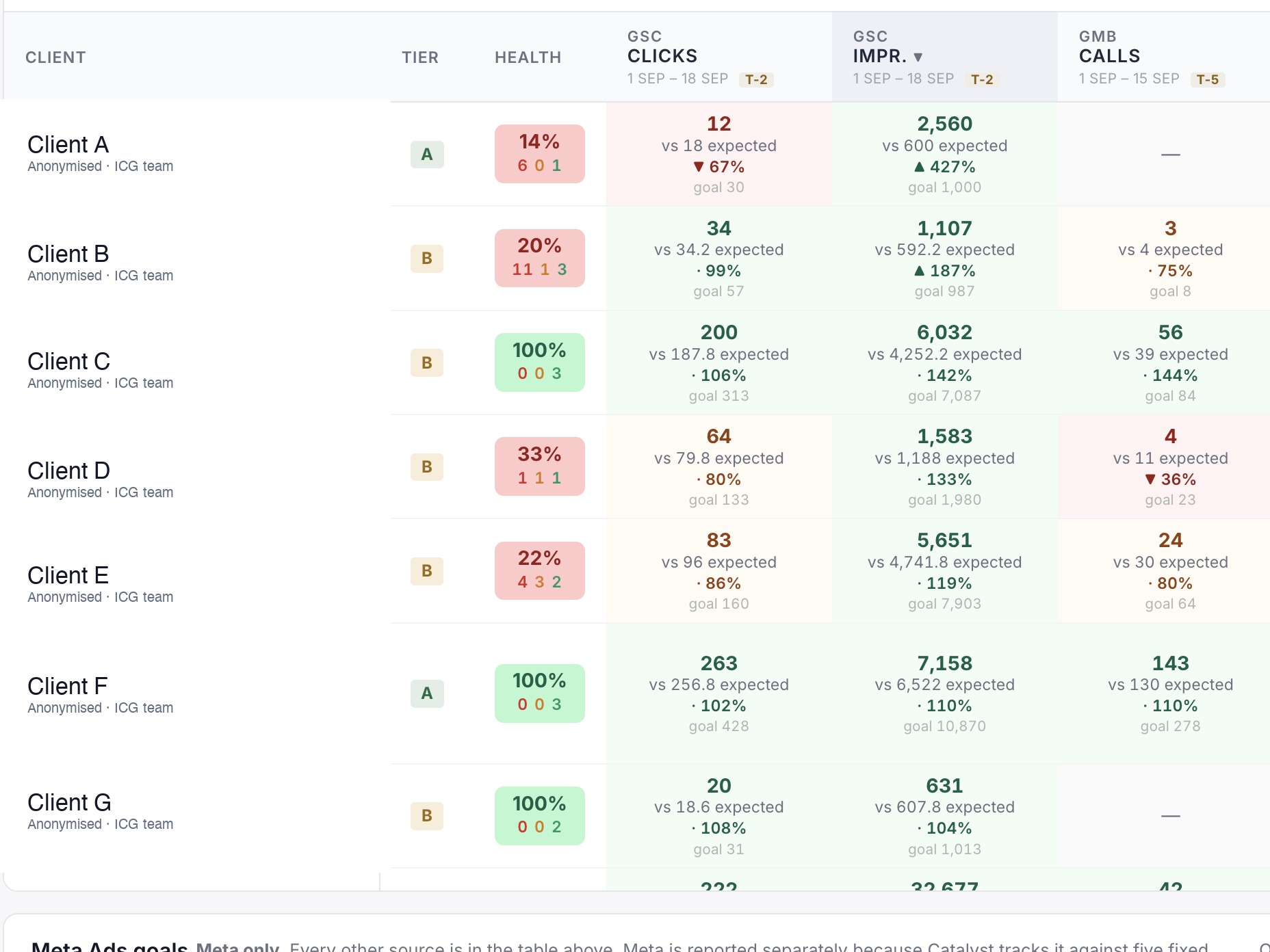
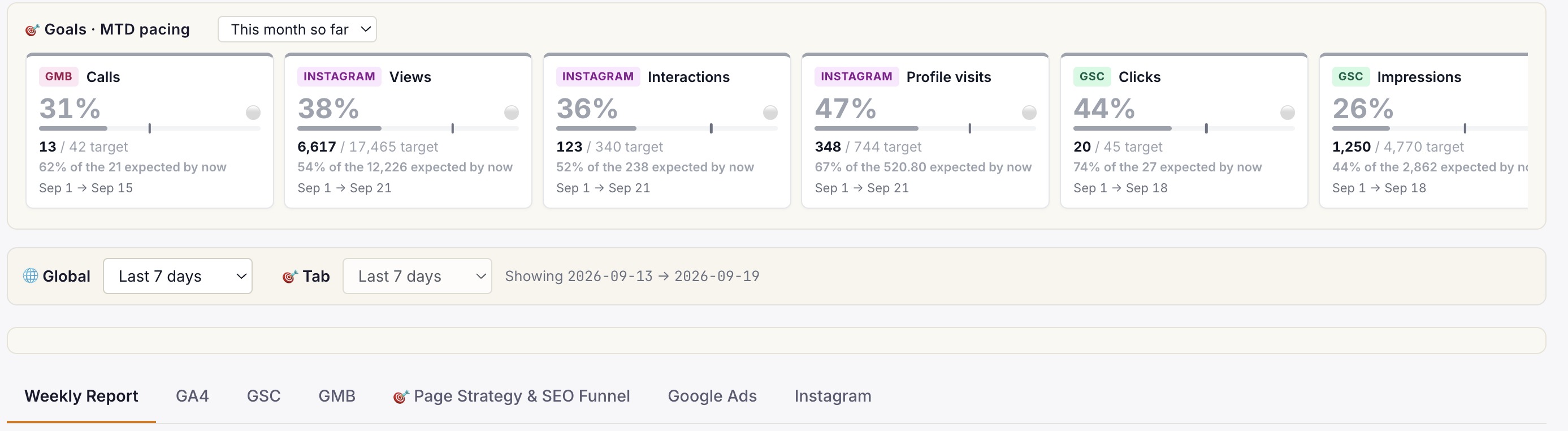
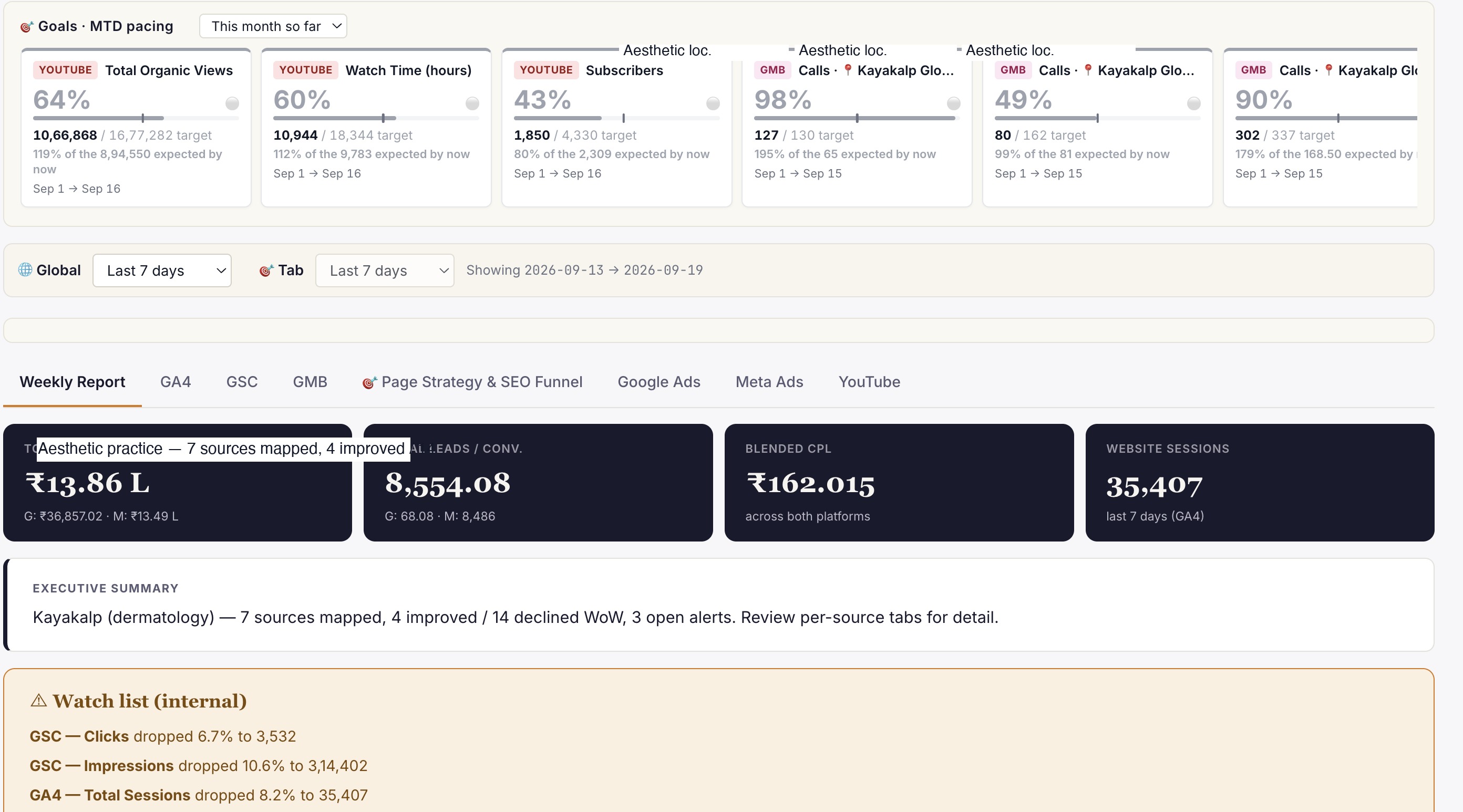
Live client dashboard. GSC, GA4, Google Ads, Meta Ads, IVR calls in one view. Login anytime, not monthly.
Phoenix
Clinic revenue intelligence over your PMS. Daily action queue: Prevent Loss, Maintain & Engage, Grow Revenue. Multi-centre rollout.
Or book a free 30-min audit to see all three in action on your account.
Healthcare brands
that already run on ICG.
A representative slice of the 150+ healthcare brands ICG has delivered for across India. Most engagements remain under NDA.


What ICG clients say · on video.
"Working with ICG transformed how we acquire IVF patients in Gurgaon. They understand the fertility journey from inquiry to consult..."
"ICG built our IVF marketing system from the ground up. The team understands healthcare specifics, not just generic digital marketi..."
Need help operationalising this?
Every ICG service is healthcare-only, NMC + DPDP-aware, and built around the patient-research patterns that drive Indian healthcare growth in 2026.
Every practice welcome — packages from ₹20,000/mo.
Goals-Driven engagements · Performance-Linked Payout Models available
More from
ICG.
Five trends shaping Indian healthcare marketing through 2027: AI-first patient research, Conversions API adoption, ABDM discovery, the AEO w...
Healthcare AIO is the discipline of getting your clinic or hospital cited inside Google AI Overviews, ChatGPT and Perplexity answers — not j...
Conversational-search advertising places brand messages inside AI chat answers — ChatGPT, Perplexity, Copilot — rather than beside a results...
Stop guessing.
Book a Diagnostic.
30 minutes. Free. With the AI-powered healthcare-only marketing agency 150+ brands already run on. No slides, no pitch, no hard close.


