


30 Questions to Ask a Healthcare Meta Ads Agency Before You Sign (India, 2026)
A founder-friendly interrogation script — 30 questions in six clusters, each with a good answer and a bluff answer. Use it in your next agency call and you'll cut a six-month mistake down to a 45-minute conversation.
No pitch. Written root-cause diagnosis. AI-powered, healthcare only.
Direct answer
A founder-friendly interrogation script — 30 questions in six clusters, each with a good answer and a bluff answer. Use it in your next agency call and you'll cut a six-month mistake down to a 45-minute conversation.
TL;DR

Most healthcare founders sign a Meta ads agency after two calls. First call is chemistry. Second call is a proposal walk-through. The contract lands on Friday. By month three the CPL story starts to wobble, and by month six you're either quietly renewing out of inertia or exit-planning in a panic.
There is a better way. Interrogate the agency on the first call. Not politely, not diplomatically — interrogate. If they can answer 25 of the 30 questions below with specifics, they are worth a paid pilot. If they answer 15, they are a general performance shop pretending to do healthcare. If they answer under 10, they will burn your budget. This is our field-tested script — the exact one we wish more clients had used on ICG before signing so both sides could skip the honeymoon and get to the work.
Cluster 1 — Healthcare vertical proof
The first cluster answers one question: has this agency actually run healthcare Meta ads at scale, or are they extrapolating from a jewellery and D2C playbook? Ask these six, in this order.
Q1. What is your current healthcare client mix by specialty? Good answer: they name 4-6 specialties with active client counts (e.g., "11 IVF centres, 6 dermatology chains, 3 dental groups, 2 multi-specialty hospitals"). Bad answer: "we work with clinics across India."
Q2. What is your portfolio-level CPL benchmark by specialty? Good answer: they quote numbers — IVF ₹632, derm ₹520-1,180, dental primary ₹620, dental aligners ₹1,800, aesthetic ₹400-900, hospital cardiac ₹3,200. Bad answer: "depends on many factors."
Q3. How many months have you been running Meta ads for a healthcare vertical continuously? Good answer: they name a client and a start date and describe seasonality they've learned (IVF drops in Diwali fortnight, dental spikes post-appraisal season). Bad answer: any number under 12 months for the specialty you care about.
Q4. What is your best 90-day CPL reduction on a healthcare account? Good answer: a specific reduction, with the starting CPL and ending CPL specified, and the levers named (creative, offer, audience, landing page). Bad answer: unbounded percentages without a starting number.
Q5. What is your worst 90-day outcome on a healthcare account, and what did you do about it? Good answer: they'll tell you a story — a client where CPL stayed flat or worsened, what they learned, when they proactively paused spend. Bad answer: "we don't have any."
Q6. Can you share one anonymised case study document (not a slide) with weekly CPL, spend, and lead counts? Good answer: they send it within 24 hours, redacted of client name. Bad answer: they promise to share, then send a pretty PDF with vanity metrics.
Cluster 2 — Compliance operations
India's healthcare advertising rulebook is not one document. It's NMC's 2026 advertising guidelines, ASCI Guidelines 2022, DPDP Act 2023, PC-PNDT Act 1994 for anything prenatal, ART Act 2021, and layered state medical council rules. If your agency can't rattle off five of those six, they will one day submit a creative that gets your clinic a show-cause notice. That day costs more than any CPL improvement.
Q7. Walk me through your NMC and ASCI review process for every creative. Good answer: a two-stage review — copywriter drafts against a compliance checklist, then a senior reviewer signs off before creative goes to design. Bad answer: "we run everything past our compliance team." (Ask who that is.)
Q8. How do you handle DPDP consent language on lead forms? Good answer: explicit consent copy, purpose limitation, storage limitation, data retention window, DPO email. Bad answer: "we use the standard privacy policy link."
Q9. If I run an IVF campaign, how do you keep it PC-PNDT compliant? Good answer: zero language on sex selection or determination, careful phrasing around "family building" vs "gender preference", explicit exclusion of certain audience keywords. Bad answer: any confusion about what PC-PNDT even is.
Q10. Can I see your disclaimer library for healthcare creatives? Good answer: they'll show a Notion doc or Airtable with 40-60 pre-approved disclaimers by specialty. Bad answer: "we write them per campaign."
Q11. What happens if a creative gets ASCI-flagged? Good answer: named escalation path, 24-hour pause SLA, revision within 72 hours, learning added to disclaimer library. Bad answer: "that has never happened."
Cluster 3 — Measurement
This is where 70% of Indian healthcare Meta ads agencies fail the interview. They will show you CPL. They will not talk about CPQL — cost per qualified lead — because they don't measure it. A lead that never picks up the phone is not a lead. It's a form fill.
Q12. Do you report CPL or CPQL? Good answer: both, with the qualification definition written down (call answered, consultation booked, showed up). Bad answer: only CPL.
Q13. Walk me through your attribution stack. Good answer: Meta Pixel + CAPI + UTM taxonomy + CRM sync + offline conversion upload. Bad answer: "Meta Pixel is enough."
Q14. Have you set up Meta Conversions API for a healthcare client? Good answer: yes, with a specific date and platform (server-side via Segment/Zapier/native). Bad answer: "we can set it up if you want."
Q15. Can you upload offline conversions (walk-ins, surgeries) back to Meta weekly? Good answer: yes, with a workflow (weekly CRM export → CSV → Meta offline event set). Bad answer: unfamiliarity with the term "offline event set."
Q16. How do you attribute WhatsApp conversations to Meta ads? Good answer: Click-to-WhatsApp with UTM parameter passthrough, tag-based labelling in WhatsApp Business, plus a weekly reconciliation with the CRM. Bad answer: "we track WhatsApp opens." (That's meaningless.)
Cluster 4 — Creative process
Meta's auction rewards fresh creative. In 2026, an ad set with the same three creatives running for six weeks is a dead ad set — CPL creeps up 30-50% before you notice. Ask about volume and cadence, not just quality.
Q17. How many new creatives will you produce for my account per week? Good answer: 8-15 for a Growth-tier engagement, with a mix of static / carousel / video / UGC. Bad answer: "as needed."
Q18. Is there a dedicated creator or designer on my account? Good answer: yes, named person with portfolio. Bad answer: shared pool of freelancers.
Q19. What's your typical review-to-live turnaround? Good answer: 48-72 hours from brief to live ad, with an emergency 24-hour path. Bad answer: "usually about a week."
Q20. Do you maintain a brand-safe creative library for me? Good answer: shared Google Drive or Frame.io with version control and disclaimer overlay tracking. Bad answer: "we send creatives via WhatsApp."
Q21. Show me your creative scoring framework. Good answer: they walk you through something like ICG's Meta Catalyst IQ Creative Scoring Matrix — Core Performer, Scalable, Getting Started, Review — with a weekly cadence to kill losers and scale winners. Bad answer: "we look at CTR."

Cluster 5 — Team structure
You are buying humans, not software. Ask about the humans.
Q22. Will I get a dedicated pod, or will I be in a shared roster of 20 clients? Good answer: pod of 3-4 (strategist, media buyer, creator, account manager) capped at 5-7 accounts. Bad answer: an account manager whose calendar is publicly bookable by any client.
Q23. Who is the day-to-day account manager, and what is their tenure? Good answer: named person, 2+ years at the agency, 3+ years in healthcare Meta. Bad answer: "we'll assign someone once we sign."
Q24. How many people on the team hold Meta Blueprint certification? Good answer: named individuals, current certifications. Bad answer: "we have people who are Meta-trained."
Q25. What is the agency's client churn rate over 12 months? Good answer: specific number, and a comment about which specialties churn more (this shows they measure it). Bad answer: "very low." Ask for the number.
Cluster 6 — Exit and data
The most expensive mistake in Indian healthcare Meta advertising is losing the ad account, pixel history, and audience seeds when you switch agencies. A three-year-old pixel with 400,000 events is worth ₹3-6 lakh to rebuild. Some agencies know this and hold your data hostage. Ask the exit questions before signing, not while exiting.
Q26. Who owns the Meta Ads Manager account — me or you? Good answer: you own the Business Manager, they get partner access with admin rights. Bad answer: "we set it up under our BM for convenience."
Q27. Who owns the pixel and its historical event data? Good answer: pixel lives in your Business Manager, they get access. Bad answer: pixel is in their BM.
Q28. If we part ways, what is the data return process? Good answer: a documented offboarding checklist — audience export, pixel handoff, creative library transfer, CRM data return — within 15 days. Bad answer: "we'll figure it out then."
Q29. What is your notice period? Good answer: 30 days, no penalty. Bad answer: 90 days plus a "handover fee."
Q30. Do you offer a 30-day trial or 60-day exit clause? Good answer: yes, with clear performance milestones written into the SoW. Bad answer: 6-month or 12-month lock-in without escape hatch.
How to spot bluff answers
Three tells to listen for. First, hedging — "typically", "usually", "in most cases" — when you asked for a specific number. Second, specialty flattening — the same story adapted for IVF, dental, and cardiology in the same call. Third, tool worship — heavy name-dropping of platforms (customer-data platforms, general-purpose sales CRMs, automation tools) with vague answers on outcomes. A real healthcare specialist gives you numbers with dates attached and admits gaps freely.
One more test: ask them what they'd fire you as a client for. The best agencies have a list — non-compliant creative demands, non-payment history, refusal to send offline conversion data, unrealistic CPL expectations. If they say they'd take any client, they're not selective enough to be good.
How to actually run the 30-question call
Send the list to the agency 48 hours before the call. Any agency that treats a written interview as unusual is not the right agency — the best ones will thank you for the prep time and come armed with case studies mapped to your questions. Split the hour: 15 minutes on Clusters 1 and 2, 15 minutes on Clusters 3 and 4, 15 minutes on Clusters 5 and 6, 15 minutes for your specific specialty and budget questions. Record the call with permission. Score each answer green / yellow / red on a shared doc while the call is happening — this forces specificity in the moment rather than post-hoc rationalisation. Bring one internal team member to co-listen; two ears catch what one misses.
Compare the recorded answers against the case study document the agency sends within 24 hours. Watch for drift — did the CPL number they said on the call match the CPL curve in the case study? Did the account manager they named on the call match the LinkedIn tenure? Small drifts are normal. Big drifts are the pattern you're trying to catch.
Powered by Meta Catalyst IQ — the decision engine behind every Meta ad ICG runs
ICG built Meta Catalyst IQ because most Indian healthcare brands running Meta ads waste 30-50% of budget without knowing it. It is the diagnosis and decision layer above Ads Manager — Hygiene Factors 12-point checklist, Naming Intelligence (surfaces conflicts costing ₹50K-₹2L per account per month), Creative Scoring Matrix (Core Performer, Scalable, Getting Started, Review), 2-Day Comparative, SLC Framework, Money Wastage column in ₹.


- Master Dashboard — 23+ accounts, ₹9.1Cr+ spend/month optimised, ₹1,581 blended CPL vs ~₹3,200 market benchmark.
- Diagnose → Optimise → Grow — daily hygiene checks, weekly creative scoring, monthly money wastage cleanup.
- CPQL Engine — cost per qualified lead (not just cost per lead) at ad-set level. Try the interactive CPQL calculator.
- Portfolio benchmarks — IVF ₹632, derm ₹520-1,180, dental ₹620-1,800, aesthetic ₹400-900, hospital cardiac ₹3,200.
Included free with every ICG Meta ads or Performance Marketing engagement (Starter ₹20,000/-/month tier and above). Not sold standalone. Book a free 48-hour Meta ad diagnostic or WhatsApp us.

Powered by PrismSpy — every competitor Meta ad, watched daily
ICG built PrismSpy because Indian healthcare Meta ad competition is invisible without it. 75+ Indian healthcare brands tracked, 2,150+ active ads catalogued, ₹50Cr+ aggregate ad spend visibility per month. Every competitor ad — creative, offer, hook, run-length — refreshed daily. It runs underneath every Meta ads and performance marketing engagement at ICG.
- Watchlist Dashboard — 30-75 competitors per specialty cluster (IVF / dermatology / dental / hair transplant / aesthetic / hospital), daily refresh.
- Comparative Insights — highest-quality ads, longest-running creatives (proven converters), top hooks, emerging offers.
- Offers Intelligence — 1,197 offers tracked, discount intensity by brand, value tier distribution.
- Service Cluster + Inspirations — 419 services tracked, 4,697 searchable ad inspirations by hook / language / format.
Standalone from ₹4,999/- per specialty vertical, or bundled free inside HealthApex OS (₹14,999/- flat, 9 tools). Book a 30-min PrismSpy walkthrough on WhatsApp — Rohit + Hanuman walk you through your specialty's competitive landscape.


Frequently asked questions
How long should the first agency call be?
45-60 minutes. Any agency that asks you to book a "15-min intro" for a decision this expensive is optimising for their calendar, not your outcome. Send the 30 questions in advance so both sides come prepared.
Should I ask for references?
Yes, but with a twist. Ask for one reference from a client that churned, not just current happy clients. If they can't give you a churned reference, that's a red flag by itself. Every real agency has lost clients — how they handled the exit is more revealing than the wins.
Is a 30-day trial reasonable to ask for?
Yes. Frame it as a paid pilot, not a free one. Pay the setup fee and one month of retainer. Use the 30 days to test creative velocity, review turnaround, reporting quality, and the account manager's responsiveness. If it doesn't work, you've spent ₹20-50K, not ₹6L.
What if the agency refuses to answer questions in Cluster 6?
Walk. The exit questions are the cheapest way to protect ₹2-5L of pixel history and audience seeds. If they're defensive about ad account ownership on the first call, they'll be catastrophic to exit from.
How many agencies should I interview before signing?
Three, minimum. Interview them within a two-week window so the answers stay fresh. Score each one on the 30 questions — good/bad/absent — and compare the totals. The highest total isn't always the winner, but the lowest total is almost always the loser.
Can I use this list for an in-house hire instead?
Mostly, yes — remove Cluster 5 (team structure) and adapt Cluster 4 (creative process) to ask about how they'll build a creator bench. The compliance and measurement clusters transfer cleanly to in-house evaluation.
Related reading
- Healthcare Meta ads agency red flags — 12 warning signs
- How to reduce Meta ads CPL in healthcare
- Meta ads vs Google ads for healthcare in India
- WhatsApp vs form fill for healthcare lead conversion
- DPDP Act compliance for healthcare Meta ads
- Healthcare Meta ads agency — full service page
Reference documents cited in this piece: National Medical Commission Ethics Code and ASCI Guidelines for Advertising of Healthcare Services.
Ready to interrogate ICG using this list? We'd rather answer it on a call than have you sign blind. Book a 48-hour Meta ad diagnostic or WhatsApp Rohit directly with your calendar.
Book a free Meta ads account audit.
Raman Soni's team pulls your account, checks CAPI/EMQ, reviews creative for NMC compliance, and shows where CPQL is leaking. 45 minutes, actionable output.
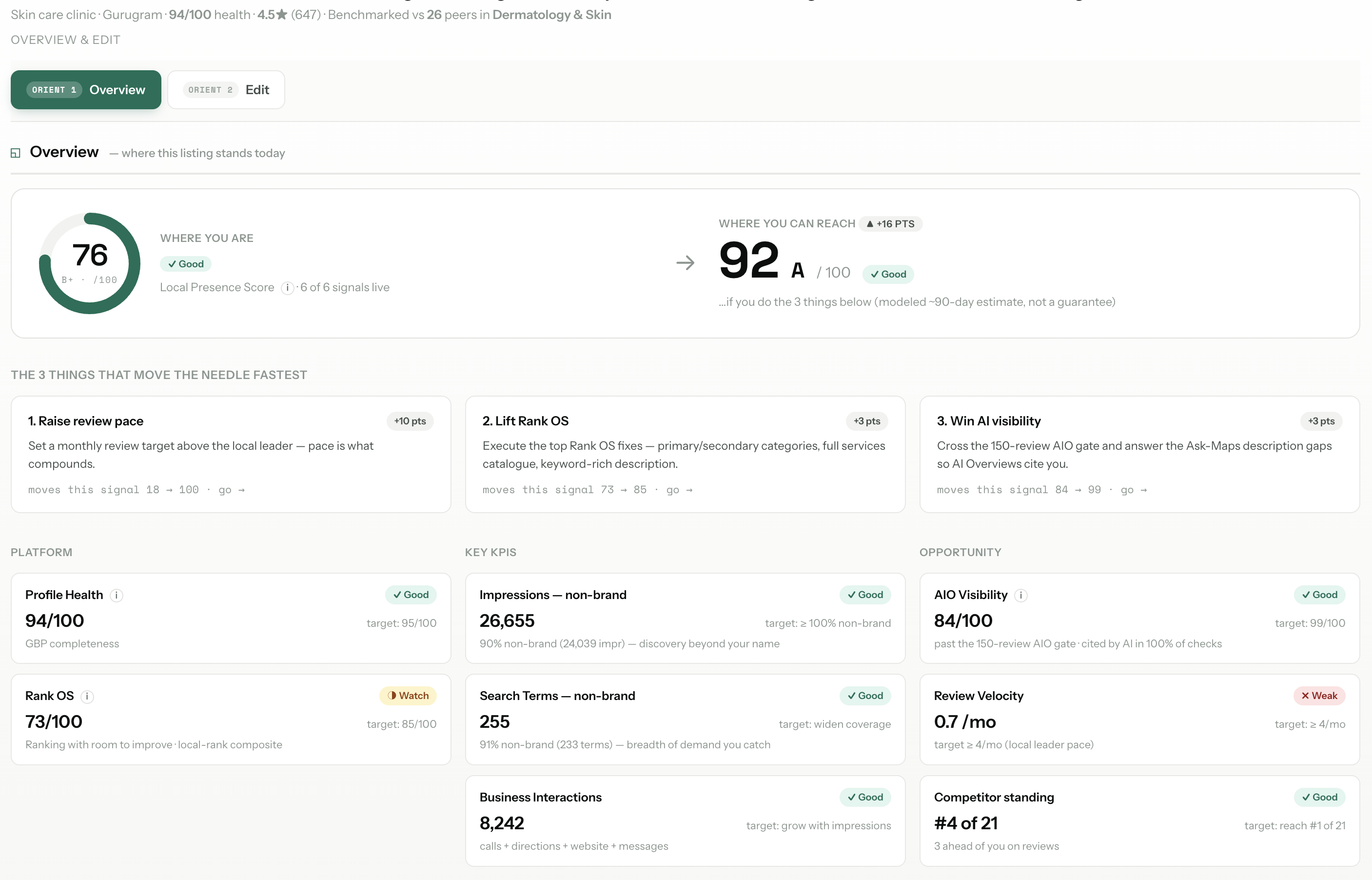
The three platforms
behind every ICG engagement.
Beacon
CAPI middleware that fixes Event Match Quality, translates CRM statuses to Meta-standard events, dedups across channels.
Agency OS
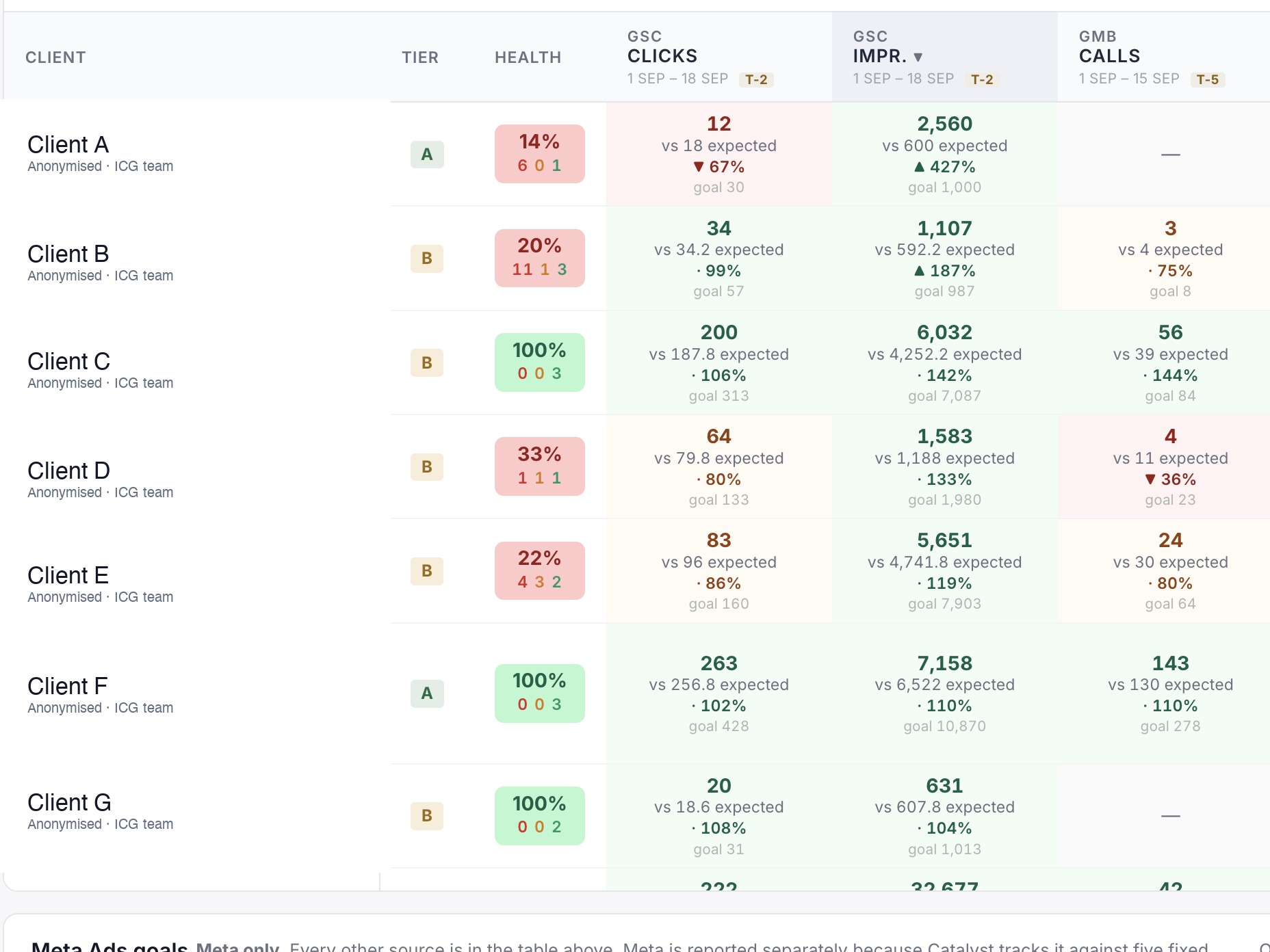
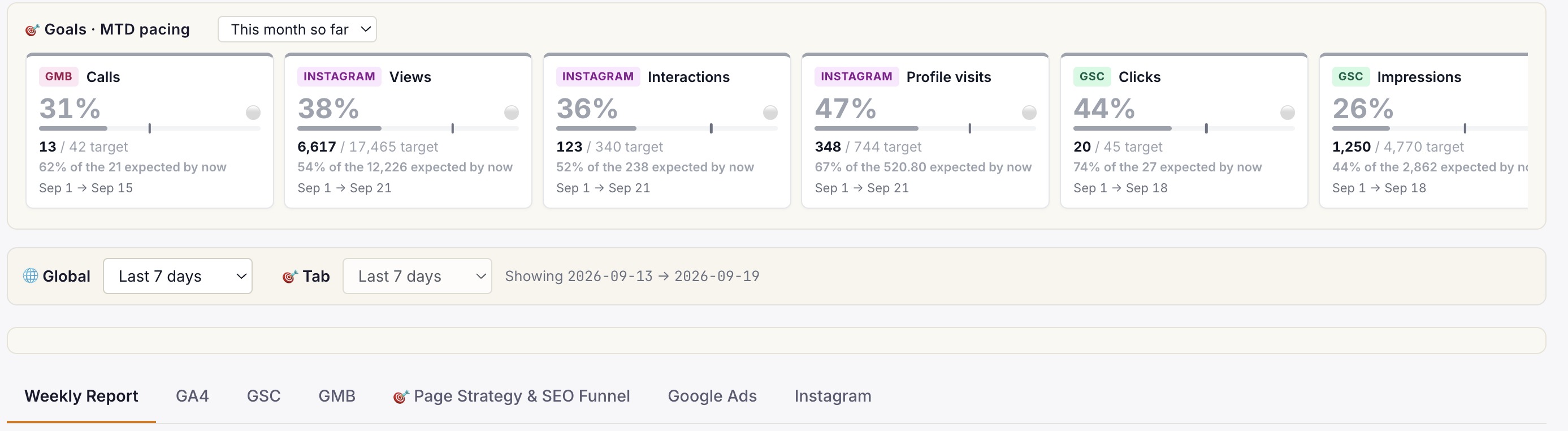
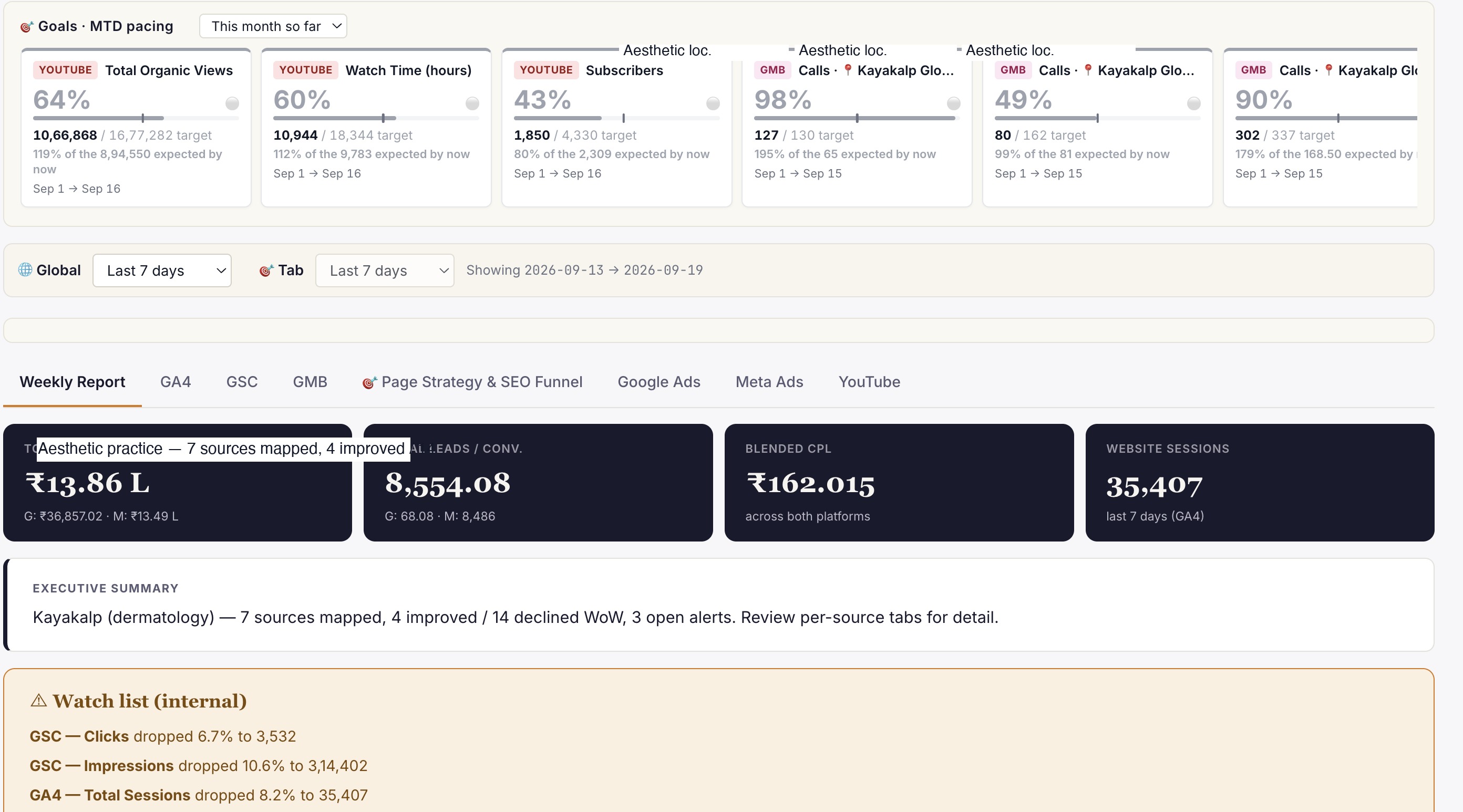
Live client dashboard. GSC, GA4, Google Ads, Meta Ads, IVR calls in one view. Login anytime, not monthly.
Phoenix
Clinic revenue intelligence over your PMS. Daily action queue: Prevent Loss, Maintain & Engage, Grow Revenue. Multi-centre rollout.
Or book a free 30-min audit to see all three in action on your account.
Healthcare brands
that already run on ICG.
A representative slice of the 150+ healthcare brands ICG has delivered for across India. Most engagements remain under NDA.


What ICG clients say · on video.
"Scale up of organic channels and business consulting. ICG has absolute domain authority in their field."
"Working with ICG transformed how we acquire IVF patients in Gurgaon. They understand the fertility journey from inquiry to consult..."
"What Ichelon accomplished — they got all my ideas and worked over 3-4 months to create an amazing, super-customised website."
Need help operationalising this?
Every ICG service is healthcare-only, NMC + DPDP-aware, and built around the patient-research patterns that drive Indian healthcare growth in 2026.
Every practice welcome — packages from ₹20,000/mo.
Goals-Driven engagements · Performance-Linked Payout Models available
More from
ICG.
Five trends shaping Indian healthcare marketing through 2027: AI-first patient research, Conversions API adoption, ABDM discovery, the AEO w...
Healthcare AIO is the discipline of getting your clinic or hospital cited inside Google AI Overviews, ChatGPT and Perplexity answers — not j...
Conversational-search advertising places brand messages inside AI chat answers — ChatGPT, Perplexity, Copilot — rather than beside a results...
Stop guessing.
Book a Diagnostic.
30 minutes. Free. With the AI-powered healthcare-only marketing agency 150+ brands already run on. No slides, no pitch, no hard close.


