


ENT Specialist Salary in India 2026 — Corporate Hospital vs Private Practice Earnings
Ear, Nose, and Throat surgery is one of Indian medicine's most commercially diverse specialties. Unlike most surgical disciplines that earn through a single revenue stream, an ENT specialist earns fro
No pitch. Written root-cause diagnosis. AI-powered, healthcare only.
Direct answer
Ear, Nose, and Throat surgery is one of Indian medicine's most commercially diverse specialties. Unlike most surgical disciplines that earn through a single revenue stream, an ENT specialist earns fro
TL;DR
TL;DR
- Fresh MS ENT salary in top Indian corporate hospitals: ₹14L–₹22L per annum
- Senior ENT consultant (10+ years, sub-specialised): ₹45L–₹95L in corporate; ₹80L–₹2.1Cr in private practice
- ENT private practice is uniquely three-income — consultation fees, surgical volumes, and hearing aid sales
- Hearing aid cross-sell alone contributes ₹12L–₹45L/year for a busy ENT practice
- City variance: Metro Mumbai/Delhi 22–28% premium over Hyderabad/Pune; tier-2 cities 35–45% lower than metro
Ear, Nose, and Throat surgery is one of Indian medicine's most commercially diverse specialties. Unlike most surgical disciplines that earn through a single revenue stream, an ENT specialist earns from three: outpatient consultations for the country's most common ailments — sinusitis, ear infections, allergic rhinitis — a high-volume surgical suite covering tonsillectomies, septoplasties, FESS (Functional Endoscopic Sinus Surgery), and mastoidectomies, and hearing rehabilitation services where a single hearing aid dispensing generates ₹15,000–₹2.5L in revenue.
This trimodal income structure makes ENT one of the most attractive private practice opportunities in Indian healthcare — and one of the most misunderstood in terms of total earning potential. Doctors at the beginning of their careers frequently undervalue ENT because the per-procedure fee appears modest compared to cardiac surgery or orthopaedics. The reality, understood by established ENT practitioners, is that volume × trimodal revenue creates one of the strongest private practice income profiles in any Indian specialty.
What does an ENT specialist earn in India — the quick answer
Fresh MS/DNB ENT in a tier-1 corporate hospital: ₹14L–₹22L per annum Senior consultant ENT (10+ years) in a top-tier corporate: ₹45L–₹95L per annum Established private ENT practitioner with hearing centre: ₹90L–₹2.1Cr per annum
These are 2026 benchmarks based on ICG's engagement data across 150+ healthcare clients and publicly available placement data. Numbers vary significantly by city, sub-specialty, hospital type, and whether the practitioner has built a hearing rehabilitation arm.
Educational path and time investment
The standard path to ENT specialist practice in India:
- MBBS — 5.5 years (4.5 years course + 1 year rotating internship)
- MS ENT or DNB ENT — 3 years postgraduate
- Optional: Fellowship in sub-specialty (rhinology, otology, head and neck oncology, laryngology, sleep medicine) — 1–2 years
Total: 9–12 years from MBBS admission to independent practice. The MS from a recognised government medical college commands a preference premium from large corporate hospital HRs at the fresh graduate level, but this differential narrows significantly at the 3–5 year mark post-qualification.
The ENT specialty attracts a competitive entrance profile — MS ENT ranks among the top 15 most-applied-for postgraduate medical seats in India, reflecting both the variety of the practice and the perceived income ceiling in private practice once the specialty is established.
Corporate hospital ENT salary by seniority
| Seniority | Apollo / Fortis / Max tier | Manipal / Rainbow / Narayana tier | Mid-size private hospital |
|---|---|---|---|
| Fresh MS ENT (0–2 years) | ₹16L–₹22L | ₹14L–₹18L | ₹10L–₹15L |
| Mid-career (3–7 years) | ₹25L–₹45L | ₹22L–₹38L | ₹18L–₹30L |
| Senior consultant (8–15 years) | ₹55L–₹95L | ₹42L–₹70L | ₹30L–₹50L |
| HOD / Director ENT (15+ years) | ₹95L–₹2Cr | ₹65L–₹1.2Cr | ₹45L–₹75L |
These figures include base salary plus performance incentives. Hearing aid sales commissions at corporate hospitals typically accrue to the hospital or department, not the individual consultant.
The most important variable in corporate ENT compensation after seniority is sub-specialty credentialing. A head-and-neck oncology fellowship or cochlear implant certification adds 35–60% to compensation at the same seniority level, because these skills are scarce and directly generate high-value procedure revenue for the hospital.
Private practice ENT income breakdown — the three revenue lines
Private ENT practice economics operate on three simultaneous income streams. Understanding each is essential to projecting private practice income correctly.
Revenue Line 1 — Outpatient consultation
A busy ENT in a tier-1 city private clinic seeing 40–60 patients per day (a volume achievable after 5–7 years of practice building) at ₹500–₹1,500 per consultation generates:
- Monthly: ₹2L–₹9L from consultations alone
- Annual: ₹24L–₹108L from consultation revenue
Consultation volume of 1,500–1,800 patients per month is achievable within 3–5 years for practitioners with strong referral networks and a visible local brand. The recurring nature of ENT conditions — sinusitis, middle ear disease, allergic rhinitis — creates natural patient return rates of 2–4 visits per year per patient, building a stable patient base faster than purely surgical specialties.
Revenue Line 2 — Surgical volume
ENT procedures span a wide fee range:
- Tonsillectomy / adenoidectomy: ₹25,000–₹75,000 surgeon's fee
- Functional Endoscopic Sinus Surgery (FESS): ₹45,000–₹1.2L
- Septoplasty with turbinate reduction: ₹35,000–₹95,000
- Mastoidectomy: ₹55,000–₹1.5L
- DISE (Drug-Induced Sleep Endoscopy) + OSA surgery: ₹65,000–₹1.8L
- Thyroidectomy (if thyroid surgery trained): ₹80,000–₹2.2L
- Cochlear implant: ₹7L–₹14L surgeon's fee per implant
- Skull base endoscopic surgery: ₹3L–₹8L
A private ENT doing 15–25 procedures per month generates ₹8L–₹35L/month in surgical billings depending on case complexity and city. Annual surgical income for a busy senior private ENT: ₹96L–₹4.2Cr depending on case mix.
Revenue Line 3 — Hearing aid dispensing and audiology
No other medical specialty in India has a legal, clinically appropriate, recurring product revenue stream the way ENT does through hearing rehabilitation. The economics:
- Hearing aids retail at ₹15,000–₹2.5L per pair (basic OTC to premium digital BTE/RIC/ITC devices)
- Dispensing margin: 20–40% of selling price for the practice
- Premium pair (₹1.5L–₹2.5L retail): ₹30,000–₹1L contribution per pair
- A clinic selling 5–10 premium pairs per month: ₹1.5L–₹10L/month contribution
- Annual hearing centre contribution at steady state: ₹18L–₹1.2Cr
Supporting services add to hearing centre revenue:
- Pure tone audiometry: ₹800–₹2,500 per test
- Tympanometry: ₹500–₹1,500
- Auditory Brainstem Response (ABR): ₹2,500–₹6,000
- DPOAE: ₹1,500–₹4,000
- Busy audiology practice: ₹45,000–₹2.5L/month in diagnostic revenue
For a well-established ENT practice in a tier-1 city, all three revenue lines combined generate ₹90L–₹2.1Cr per annum.
City-wise ENT specialist salary — senior consultant benchmark
| City | Corporate median | Private practice median |
|---|---|---|
| Mumbai | ₹78L | ₹1.6Cr |
| Delhi NCR | ₹72L | ₹1.5Cr |
| Bangalore | ₹62L | ₹1.2Cr |
| Chennai | ₹58L | ₹1.0Cr |
| Hyderabad | ₹55L | ₹95L |
| Kolkata | ₹50L | ₹82L |
| Pune | ₹52L | ₹85L |
| Ahmedabad | ₹45L | ₹72L |
| Kochi | ₹42L | ₹68L |
| Jaipur | ₹38L | ₹55L |
ENT sub-specialty earning premium
| Sub-specialty | Earning premium over general ENT | Why |
|---|---|---|
| Head and neck oncology | +40–60% | High surgical ticket; cancer volume referrals from oncologists |
| Cochlear implant surgeon | +35–55% | ₹7–₹14L per procedure; shortage of certified surgeons |
| Rhinology (endoscopic skull base) | +25–40% | Complex surgery; exclusive referral position |
| Otology (stapedectomy, mastoidectomy) | +15–30% | High-skill, moderate volume |
| Sleep medicine (DISE, OSA surgery) | +20–35% | Fastest-growing sub-market, 28%/year growth in tier-1 |
| Laryngology / voice surgery | +10–20% | Niche but premium clientele (performers, professionals) |
| Paediatric ENT | Baseline | High volume, moderate ticket |
The fastest-growing ENT sub-specialty in Indian cities in 2025–2026 is sleep medicine. Awareness of obstructive sleep apnoea (OSA) is expanding through corporate health checks and wearable sleep tracking devices, driving demand for DISE evaluation and surgical OSA treatment. ENT surgeons building sleep clinic infrastructure — dedicated DISE suites, CPAP prescription protocols, and surgical-to-medical referral loops — are capturing disproportionate case volumes in this emerging market.
The hearing aid cross-sell — ENT's unique wealth lever
No surgical specialty in India has the commercial structure ENT does through hearing rehabilitation. The critical insight is that this revenue line does not require the ENT surgeon's time after the initial recommendation — a BASLP audiologist manages the dispensing and follow-up. This creates passive income within the practice.
Key structural considerations for building a hearing centre:
- Brand partnerships: Major brands (Signia/Siemens, Phonak, Oticon, Unitron, Starkey, Widex) offer partnership programmes to ENT clinics. Dispensing margin varies by brand and volume tier — negotiate upfront.
- BASLP hire: A Bachelor of Audiology and Speech-Language Pathology graduate costs ₹4L–₹7L/year in tier-1 cities. The hearing centre typically generates 5–8× the audiologist's salary cost within 18 months.
- Digital audiometry: Invest in a calibrated digital audiometry booth (₹3L–₹8L) for accurate thresholds — this differentiates a clinical hearing centre from a hearing aid shop.
- Brand building: Promote the hearing centre as a clinical service, not a sales outlet. Use the ENT's clinical authority to position fitting quality above device price.
"ENT is the only surgical specialty in India where the practitioner earns simultaneously as a surgeon, a physician, and a medical equipment retailer. The hearing aid cross-sell isn't a sideshow — for well-run ENT practices in tier-1 cities, it regularly contributes 25–40% of total practice revenue." — Abhishek Gupta, Financial Strategy Lead, ICG
MS ENT vs DNB ENT — pay parity in 2026?
Historically, MS ENT from a recognised medical university commanded a 10–18% salary premium over DNB ENT at the same hospital. By 2026, this gap has substantially narrowed:
- At fresh graduate level: MS still commands 5–12% premium in top-tier corporate hospitals (Apollo, Fortis, Max) — primarily from brand recognition of the training institution
- At 3–5 year mark: Pay approaches near-parity; skill, case exposure, and sub-specialty credentials matter more than qualification route
- At senior consultant level: Distinction is largely irrelevant — outcomes, case volume, referral base, and sub-specialty skills drive compensation
The NMC's 2023 clarification equating DNB with MD/MS for teaching and specialist practice purposes has accelerated this convergence in both pay and professional opportunity.
International comparison — ENT specialist earnings
| Country | ENT specialist annual earnings | Notes |
|---|---|---|
| India | ₹14L–₹2.1Cr | Wide range — corporate vs private, city-dependent |
| UAE / Saudi Arabia | AED 28L–₹65L (₹62L–₹1.45Cr) | Tax-free; typical 2–4 year contract |
| UK (NHS Consultant) | £90K–£135K (₹95L–₹1.42Cr) | NHS banding; private practice supplement available |
| US (otolaryngologist) | $310K–₹520K (₹2.6Cr–₹4.4Cr) | AAMC data 2024; premium for paediatric and skull base |
| Singapore | SGD 300K–₹650K (₹1.8Cr–₹3.9Cr) | MOH regulated; high cost of living |
The Middle East remains the most popular destination for senior Indian ENT specialists seeking international experience, combining tax-free income with a 2–4 year contract structure that allows return to Indian practice without burning professional networks.
How to grow an ENT private practice — the 6-year financial roadmap
Years 1–2: Build the referral network Prioritise GP, paediatrician, and allergist referral relationships. Target 8–12 GP referral partners per year. Join local IMA chapter for networking. Focus on delivering clinical excellence on referred cases — word-of-mouth within the medical community is the most powerful ENT marketing tool.
Year 2–3: Launch audiology infrastructure Hire a BASLP audiologist, invest in calibrated audiometry, and establish a hearing aid brand partnership. This is the most time-sensitive investment — the hearing centre takes 12–18 months to reach consistent volume, so the earlier it starts, the earlier it contributes.
Year 3–4: Consider sub-specialty investment Depending on case volume and local demand, invest in a sleep medicine module (DISE capability, CPAP prescription) or endoscopic skull base capability. Both require training investment but create referral exclusivity and premium case fees.
Year 4–5: Build cochlear implant programme CI cases require hospital empanelment, BASLP support, MRI facility access, and manufacturer certification. Volume: 1–2 cases per month at ₹7L–₹14L each adds ₹84L–₹3.36Cr/year in surgical billings.
Year 6+: Systematise marketing ICG's ENT and audiology marketing services create systematic patient acquisition beyond referral, including local SEO, Google Ads for hearing tests and ENT consultations, and a reputation management system to maintain 4.7+ Google rating.
Case snapshot
A 39-year-old ENT surgeon in Chennai, 12 years post-MS, left a senior consultant role at a 350-bed corporate hospital (₹62L package). Year 1 in private practice: ₹38L (ramp-up). Year 2: ₹72L. Year 3 (with hearing centre launched, partnership with Signia): ₹1.15Cr. Year 4: ₹1.55Cr. Key drivers: referral network built over 12 corporate years, FESS case reputation, and ICG's ENT marketing programme generating 22 new ENT consultations per month from digital channels within 6 months of engagement. (ICG internal data, 2026.)
Checklist: 10 steps to maximise ENT private practice income

- Establish 10+ GP referral relationships in the first 12 months
- Launch BASLP-staffed audiology service in year 1–2
- Partner with 2–3 hearing aid brands (different price tiers)
- Invest in sleep medicine capabilities (DISE, CPAP prescription) by year 3
- Join cochlear implant manufacturer's certified surgeon programme
- Build Google Business Profile with 50+ reviews in year 1
- Register with all major insurance TPAs for ENT procedure empanelment
- Invest in ICG's ENT marketing programme for systematic patient acquisition
- Establish Ayushman Bharat empanelment for cochlear implant and mastoid surgeries
- Track monthly income by revenue line (consultation / surgery / hearing aids) separately
FAQ
Q1: What is the average ENT specialist salary in India in 2026? Ranges from ₹14L/year (fresh MS ENT at a mid-size hospital) to ₹2.1Cr/year (senior private practitioner with established hearing centre). Corporate senior consultant median: ₹55L–₹78L.
Q2: Is ENT a good specialty for private practice in India? Yes — one of the strongest, because of the trimodal income structure (consultation + surgery + hearing aids). Private practice income typically surpasses corporate compensation within 4–5 years for practitioners with strong referral networks.
Q3: How much does a hearing aid contribute to ENT practice income? Typically 20–40% of total practice revenue for a well-run ENT practice with dedicated audiology infrastructure. Annual contribution: ₹12L–₹1.2Cr depending on volume and device tier.
Q4: What is the MS ENT fresher salary in Apollo/Fortis/Max? ₹16L–₹22L per annum including performance incentives. AIIMS/MAMC/KEM/PGIMER training background allows negotiation toward the upper band.
Q5: How much does an ENT surgeon earn per cochlear implant surgery in India? Surgeon's fee: ₹7L–₹14L per cochlear implant procedure. A practice doing 1–2 per month adds ₹84L–₹3.36Cr/year to surgical billings.
Q6: Which city pays ENT specialists the most in India? Mumbai and Delhi NCR lead, with senior corporate medians of ₹72L–₹78L and private practice medians of ₹1.5Cr–₹1.6Cr.
Q7: What is the fastest-growing ENT sub-specialty in India? Sleep medicine (OSA surgery, DISE, snoring treatment) — growing at approximately 28%/year in tier-1 cities as awareness through corporate health checks and wearable devices increases.
Sources
- Association of Otolaryngologists of India (AOI) — practice census data
- AAMC (US) 2024 otolaryngology compensation survey
- NMC — specialist registration statistics for ENT
- Signia/Siemens Hearing India — hearing aid market data
- National Programme for Prevention and Control of Deafness — MoHFW
Internal links
- Audiology and hearing aid marketing guide 2026
- Doctor marketing agency India — systematic patient acquisition
- Best healthcare CRM India — patient recall automation
- Ophthalmologist salary India 2026
- Neurologist salary India 2026
- Book a strategy call with ICG
Compliance note. Salary figures are ranges based on ICG's engagement with 150+ healthcare clients and publicly available placement data (anonymised). No individual doctor, hospital, or corporate entity is named. Figures are for informational purposes only and do not constitute financial, tax, or employment advice.
Book a free 30-minute Brand & Growth Diagnostic.
It's a working session, not a sales pitch — you leave with a written root-cause analysis you can act on, whether or not you engage ICG.
The three platforms
behind every ICG engagement.
Beacon
CAPI middleware that fixes Event Match Quality, translates CRM statuses to Meta-standard events, dedups across channels.
Agency OS
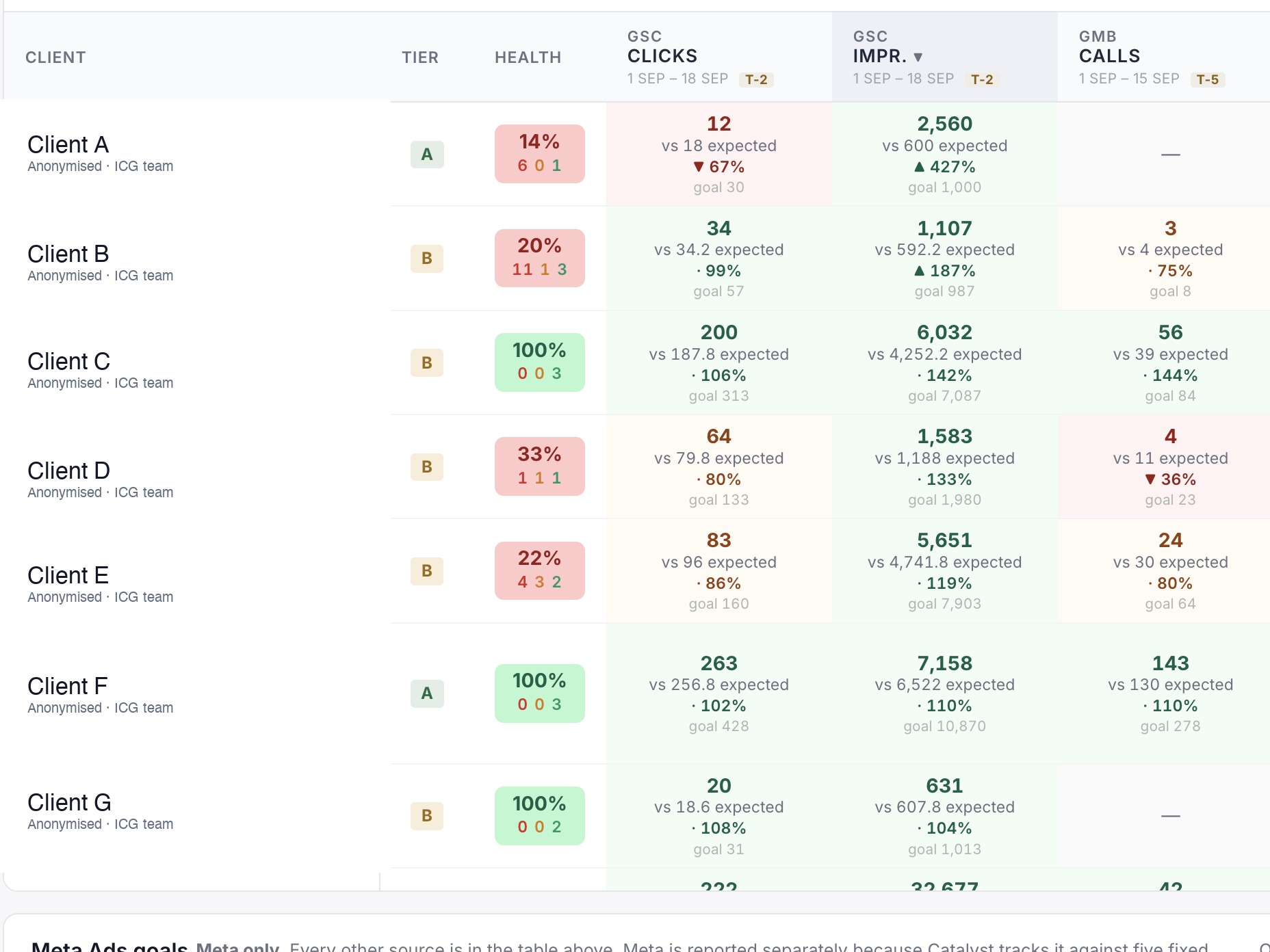
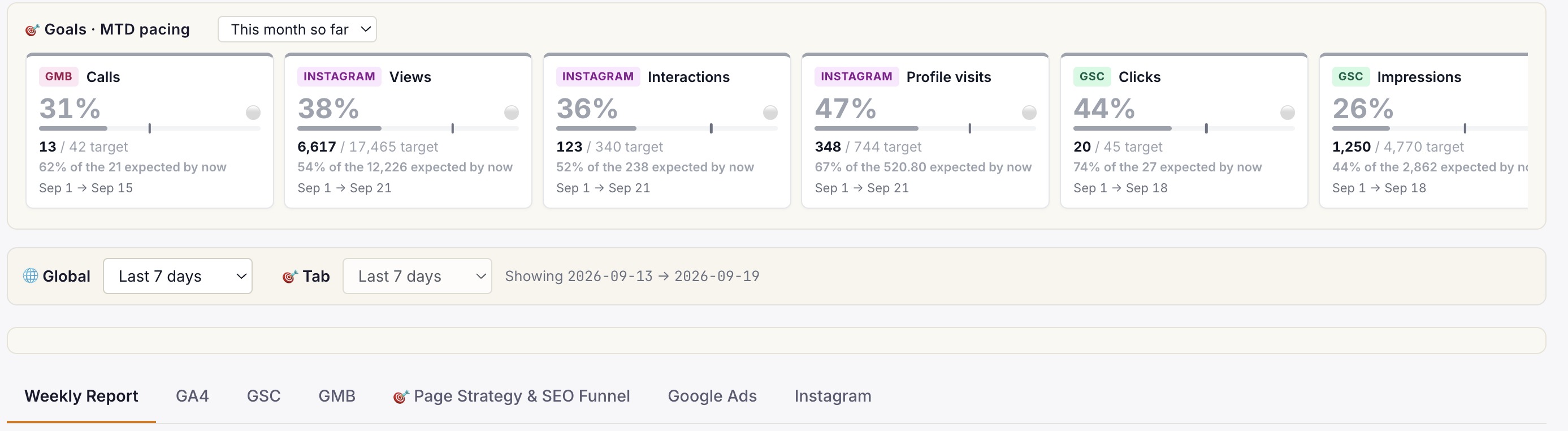
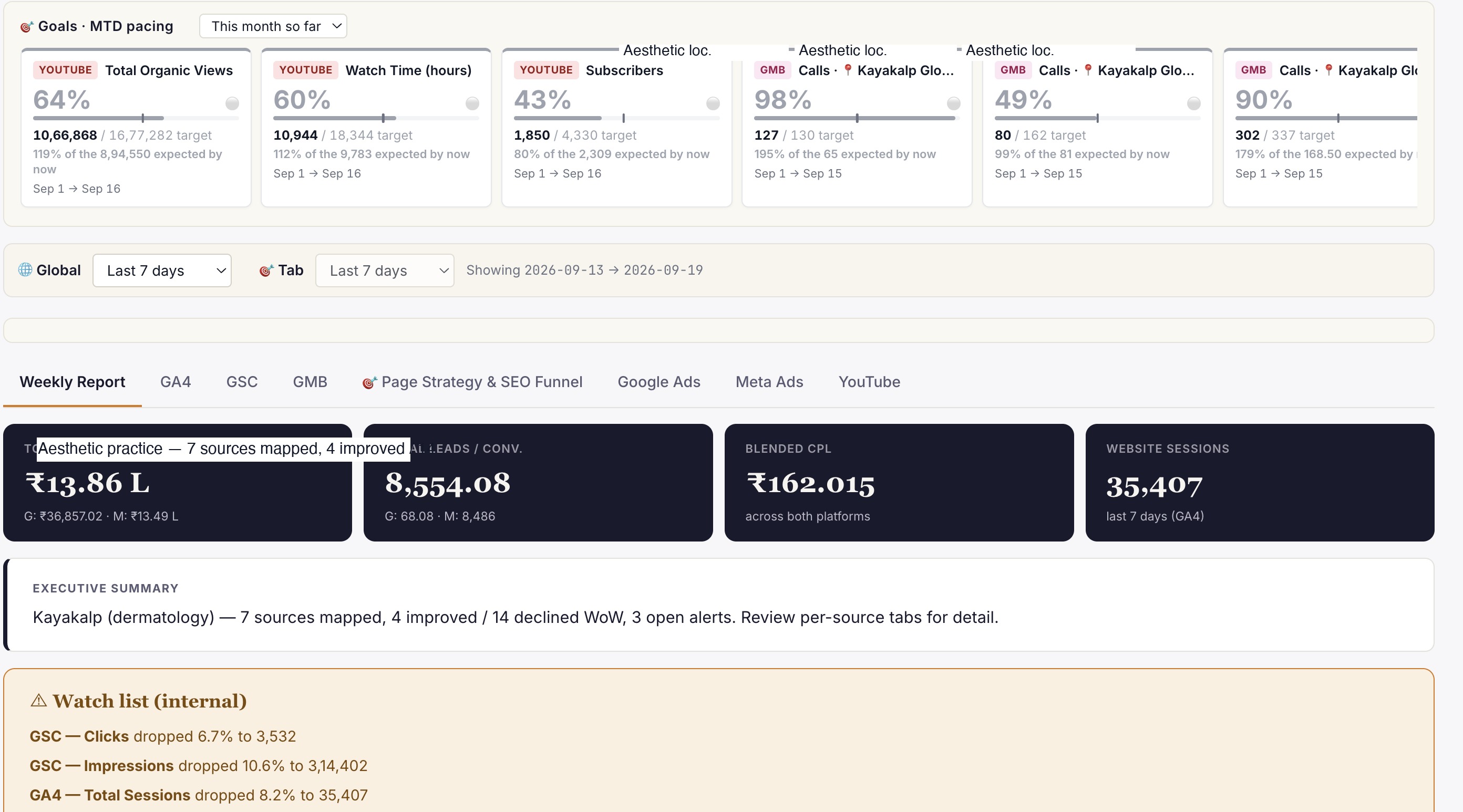
Live client dashboard. GSC, GA4, Google Ads, Meta Ads, IVR calls in one view. Login anytime, not monthly.
Phoenix
Clinic revenue intelligence over your PMS. Daily action queue: Prevent Loss, Maintain & Engage, Grow Revenue. Multi-centre rollout.
Or book a free 30-min audit to see all three in action on your account.
Healthcare brands
that already run on ICG.
A representative slice of the 150+ healthcare brands ICG has delivered for across India. Most engagements remain under NDA.


What ICG clients say · on video.
"Scale up of organic channels and business consulting. ICG has absolute domain authority in their field."
"Working with ICG transformed how we acquire IVF patients in Gurgaon. They understand the fertility journey from inquiry to consult..."
"What Ichelon accomplished — they got all my ideas and worked over 3-4 months to create an amazing, super-customised website."
Need help operationalising this?
Every ICG service is healthcare-only, NMC + DPDP-aware, and built around the patient-research patterns that drive Indian healthcare growth in 2026.
Every practice welcome — packages from ₹20,000/mo.
Goals-Driven engagements · Performance-Linked Payout Models available
More from
ICG.
Five trends shaping Indian healthcare marketing through 2027: AI-first patient research, Conversions API adoption, ABDM discovery, the AEO w...
Healthcare AIO is the discipline of getting your clinic or hospital cited inside Google AI Overviews, ChatGPT and Perplexity answers — not j...
Conversational-search advertising places brand messages inside AI chat answers — ChatGPT, Perplexity, Copilot — rather than beside a results...
Stop guessing.
Book a Diagnostic.
30 minutes. Free. With the AI-powered healthcare-only marketing agency 150+ brands already run on. No slides, no pitch, no hard close.


