


Neurologist Salary in India 2026: City CTC, DM vs MD, Fellowship
Neurologist salary in India 2026 — city-wise CTC, DM vs MD gap, stroke and epileptology premiums, government vs private, plus hospital hiring benchmarks.
No pitch. Written root-cause diagnosis. AI-powered, healthcare only.
Direct answer
Neurologist salary in India 2026 — city-wise CTC, DM vs MD gap, stroke and epileptology premiums, government vs private, plus hospital hiring benchmarks.
TL;DR
What's new for neurologists this quarter: India's neurologist market is tightening: Apollo, Fortis, and Manipal are competing for DM Neurology candidates with joining bonuses of ₹5–15 lakh (up from ₹2–5 lakh in 2025). Post-Union-Budget-2026 stroke-care unit push has raised demand at Tier-1 metros by an estimated 22%. Tele-neurology (doctor-listing, telemedicine and hospital-app platforms) is adding a 20-40% earnings uplift for consultants who moonlight 8-12 hours/week.
TL;DR
- Neurologist salary range India 2026: ₹14L–₹1.2Cr+/year depending on experience, city, and model
- DM Neurology (super-specialty) is near-mandatory for private hospital HOD positions — commands 40–60% premium
- Stroke neurology and epileptology sub-specialisation carry 15–25% additional premium in major hospitals
- Interventional neurology (mechanical thrombectomy) carries the highest clinical premium — ₹80L–₹2Cr in established practice
Neurology is one of India's most capacity-constrained medical specialties. India has approximately 1,800 DM Neurology-trained neurologists serving a population of 1.45 billion (Source: IAN — Indian Academy of Neurology, 2024) — a density of approximately 1.2 neurologists per million population, against a WHO recommended density of 10+ per million. This structural shortage has profound implications for neurologist salaries — the supply constraint puts significant upward pressure on compensation across all sectors.
The demand side is equally compelling: neurological conditions (epilepsy, stroke, migraine, Parkinson's disease, dementia, neuropathy) affect an estimated 30 million Indians (Source: IAN, 2024). India's stroke burden alone — with 1.8 million new strokes per year — creates substantial clinical demand that cannot be met by the current neurologist workforce.
This is the employment market a newly trained DM Neurologist enters in 2026 — one with genuine leverage.
Neurologist salary by experience level — India 2026
Freshly trained DM Neurologist (0–2 years post-DM):
- Private hospital (salaried): ₹14L–₹24L/year CTC
- Private hospital (fee-sharing): ₹18L–₹38L/year at moderate volume
- Academic/teaching hospital: ₹12L–₹18L/year
- Government (senior resident to junior consultant): ₹8L–₹16L/year (7th Pay Commission)
Mid-career neurologist (3–8 years post-DM):
- Private hospital (salaried): ₹28L–₹60L/year CTC
- Private hospital (consultant, fee-sharing): ₹45L–₹90L/year at high volume
- Academic (Associate Professor): ₹22L–₹38L/year
- Government (Specialist grade): ₹18L–₹32L/year
Senior neurologist (8+ years post-DM):
- Private hospital (HOD Neurology): ₹55L–₹1.2Cr/year
- Established private practice (neuro specialty clinic): ₹70L–₹2Cr+/year
- Academic (Professor/HOD): ₹35L–₹60L/year
- Interventional neurologist (thrombectomy-capable): ₹80L–₹2Cr+/year
The interventional neurologist earning range is notable — a neurologist trained in mechanical thrombectomy for acute ischaemic stroke operates in a space where the procedure fee (₹3,50,000–₹8,00,000 per case) and the extremely limited supply create the highest income ceiling in all of clinical neurology.
City-wise neurologist salary comparison 2026
Table 1 — Median neurologist salary (private sector, salaried, 4–6 years post-DM):
| City | Median CTC (₹/year) | Range | Special notes |
|---|---|---|---|
| Mumbai | ₹55L | ₹38L–₹85L | Highest private sector salaries; medical tourism cases |
| Delhi NCR | ₹52L | ₹36L–₹80L | AIIMS proximity; strong research culture drives academic premium |
| Bangalore | ₹48L | ₹35L–₹75L | Tech-driven health insurance; growing stroke centre demand |
| Hyderabad | ₹40L | ₹28L–₹60L | CARE, KIMS expansion driving demand |
| Chennai | ₹42L | ₹30L–₹65L | Medical tourism international neurology cases |
| Pune | ₹34L | ₹25L–₹52L | Growing private hospital sector |
| Ahmedabad | ₹32L | ₹24L–₹50L | Expanding corporate hospital market |
| Kolkata | ₹30L | ₹22L–₹48L | Government sector dominates; private sector premium for DM |
| Chandigarh | ₹32L | ₹24L–₹50L | PGIMER benchmark; strong research base |
| Tier-2 cities | ₹20L–₹32L | ₹16L–₹45L | First-mover premium available; lower competition |
Source: ICG Workforce placement data, 2026.
Sub-specialty premiums within neurology
Stroke neurology / vascular neurology: The most commercially active sub-specialty in Indian neurology in 2026. Comprehensive stroke centres (capable of thrombolysis + mechanical thrombectomy + post-stroke rehabilitation) are expanding rapidly in Tier-1 cities. A stroke neurologist in a government-certified stroke-ready hospital commands a 15–25% premium over a general neurologist at equivalent experience. Hospitals competing to build stroke centres are actively recruiting stroke-trained neurologists and offering significantly above-average packages.
Epileptology: The subspecialty focused on complex epilepsy management — presurgical epilepsy evaluation, video EEG monitoring, and seizure surgery workup. Epileptologists with presurgical evaluation training (typically from a Level 4 epilepsy centre — NIMHANS, SCTIMST, AIIMS) earn 15–20% above general neurologist rates. Paediatric epileptology commands an additional premium due to the shortage of qualified practitioners.
Interventional neurology (neurointerventional surgery): The highest-income neurology sub-specialty. A neurologist trained in mechanical thrombectomy (technically, this training is also held by neuroradiologists and neurosurgeons in India — the procedural competition is complex) operates at the intersection of acute stroke treatment and high-value interventional procedures. Thrombectomy cases generate ₹3.5L–₹8L per procedure. An interventional neurologist performing 5–8 procedures per month generates ₹21L–₹64L in procedure revenue per month — explaining the ₹80L–₹2Cr+ income range at senior level.
Movement disorders / Parkinson's: Parkinson's disease affects approximately 1.2 million Indians (Source: IAN, 2024) with no curative treatment — creating lifelong recurring neurological care relationships. Movement disorder specialists with deep brain stimulation (DBS) programming capability and Parkinson's specialist clinics earn 10–20% above general neurologist rates. DBS device programming is a billable procedure with no specialist competition other than movement disorder neurologists.
Headache medicine / neuromodulation: Migraine affects 213 million Indians (Source: Headache Society of India, 2023). Headache specialists who offer CGRP antibody therapy (erenumab — Aimovig, fremanezumab — Ajovy, galcanezumab — Emgality), neuromodulation (transcranial magnetic stimulation, sphenopalatine ganglion blocks), and multidisciplinary headache management earn 10–15% above general neurology rates. This sub-specialty has significant private practice income potential due to the large patient pool and available medications.
Academic neurology — the research + teaching premium
Academic neurology at top Indian medical colleges offers a different income profile from pure private sector: lower in direct salary but with research grants, book royalties, corporate advisory income, and academic conference speaker fees that add meaningfully to total compensation.
A Professor of Neurology at AIIMS Delhi, PGIMER Chandigarh, NIMHANS, or JIPMER earns: basic pay ₹1,44,200–₹2,05,400/month + NPA + allowances = ₹3.5L–₹5.5L/month gross, approximately ₹42L–₹66L/year gross. On top of this: pharmaceutical advisory fees (within UCPMP guidelines), international speaker fees for conference presentations, research grants (ICMR, DST, Wellcome Trust India) — adding ₹5L–₹20L/year in additional income for active researchers.
The academic route also offers international collaboration, publication-driven global recognition, and the ability to shape the field through training. For neurologists with research ambitions, the academic route offers a quality of career that pure private practice does not, even at lower direct income.
The interventional neurology income model — a detailed breakdown
Mechanical thrombectomy for acute ischaemic stroke is the highest-value individual neurology procedure in India. The economics:
Procedure cost in India (2026): ₹3,50,000–₹8,00,000 per procedure (varies by hospital tier and device used). Insurance typically covers ₹2,50,000–₹5,00,000 under major medical policies (Star Health, HDFC ERGO, New India). For Ayushman Bharat PM-JAY patients, the coverage is ₹1,20,000 per episode (too low for thrombectomy — hospitals negotiate supplemental payments).
Interventional neurologist fee share: Proceduralist fee is typically 15–25% of the procedure cost in a fee-sharing arrangement = ₹52,500–₹2,00,000 per procedure. At 4–6 procedures per month = ₹2.1L–₹12L/month in procedure income alone. Combined with OPD neurology income: total monthly income for an established interventional neurologist is ₹6L–₹16L/month = ₹72L–₹2Cr/year.
The thrombectomy training pathway: Training in mechanical thrombectomy requires a neurointerventional fellowship — most commonly done in the US, UK, Australia, or at the few Indian centres that offer the training (AIIMS, NIMHANS, SCTIMST Trivandrum, PGI Chandigarh). A DM Neurologist who invests in a 12–18 month neurointerventional fellowship positions themselves in the highest-income quadrant of Indian neurology.
Government vs private sector — neurologist comparison
Government sector neurologist (7th Pay Commission, central government teaching hospital):
- Senior Resident (post-DM, first 2 years): ₹67,700/month basic + NPA + DA + HRA ≈ ₹1.2L–₹1.6L/month = ₹14L–₹19L/year
- Specialist/Assistant Professor: ₹78,800–₹1,18,500/month basic + allowances ≈ ₹1.6L–₹2.4L/month = ₹19L–₹29L/year
- Professor: ₹1,44,200–₹2,05,400/month basic + allowances ≈ ₹3.5L–₹5.5L/month = ₹42L–₹66L/year
Private sector equivalent (same experience): 30–60% higher direct CTC at each level. The gap is widest at Professor-equivalent level, where a HOD Neurology in a top corporate hospital earns ₹70L–₹1.2Cr versus ₹42L–₹66L in a government teaching hospital.
Why do neurologists choose government positions despite lower salaries?
- Research and publication infrastructure (ICMR grants, clinical trials, fellowship training, access to complex academic cases)
- Academic freedom (clinical research agenda, curriculum design)
- Work-life balance — government positions have defined work schedules
- Pension (NPS) and other government benefits
- Training mentorship — teaching the next generation is professionally rewarding
Relocation and international neurology opportunities
Middle East (UAE, Saudi Arabia, Qatar): Highly attractive salary destination for Indian DM Neurologists. UAE salary equivalent: AED 35,000–65,000/month (₹8L–₹15L/month at current exchange rates) = ₹96L–₹1.8Cr/year. Tax-free. Saudi Arabia: SAR 35,000–55,000/month = ₹8L–₹12.5L/month. Middle East neurology positions are available through health authority licensing (UAE: DHA/HAAD/MOH; KSA: SCFHS). MRCP/ECFMG recognition is required for most positions.
UK (NHS Consultant grade): NHS Consultant Neurologist in 2026: £93,666–£126,281/year (2024–25 pay scale) + Clinical Excellence Awards for senior consultants. Indian-trained neurologists with MRCP and experience increasingly accepted in NHS. Recognition pathway: UK Visas and Immigration skilled worker visa, GMC registration with DM Neurology qualification recognised.
Australia/New Zealand: Fellowship with RACP (Royal Australasian College of Physicians) required for specialist registration. Salary: AU$280,000–AU$450,000/year for specialist neurologists in private practice. The path from DM Neurology to Australian specialist practice: 1–3 years of assessment and additional training depending on the specific case.
Frequently asked questions
What is the starting salary for a DM Neurologist in India? In the private sector (salaried position), a freshly trained DM Neurologist can expect ₹14L–₹24L/year CTC in a metro city. In smaller cities or with fee-sharing arrangements, starting income can be lower (₹10L–₹16L) but with higher growth potential as patient volume builds. Government sector starting salary: ₹8L–₹16L/year (7th Pay Commission senior resident grade + allowances).
Is DM Neurology the highest-paying medical specialty in India? Not universally — but interventional neurology (mechanical thrombectomy), cardiac surgery, and neurosurgery are in the same high-income tier at senior levels. DM Neurology at the HOD or established private practice level is among the top 5 medical specialties by income in India. At senior levels, cardiologists (interventional) and cardiac surgeons can exceed neurologist income due to procedure volume, but neurologists with interventional training are in the same range.
Which city offers the best salary for neurologists in India? Mumbai and Delhi NCR offer the highest absolute private sector salaries for neurologists (₹55L–₹85L median for 4–6 years post-DM). However, cost of living in these cities is also highest. On a net-income-to-cost-of-living basis, Hyderabad and Pune offer comparable or better outcomes. For neurologists willing to be first-movers in underserved markets, Tier-2 cities offer both higher relative income (due to lower competition) and lower costs.
How does a neurologist increase their salary in India? Five levers: (1) Sub-specialise — stroke, epileptology, or interventional neurology all carry premiums. (2) Move to fee-sharing from salaried — higher income ceiling once patient volume is established. (3) Build own clinic — highest income ceiling, requires 5+ years of established practice to reach peak income. (4) Build an online presence — YouTube, Instagram, or online consultations on doctor-listing platforms — which generates additional revenue and referrals. (5) Pharmaceutical advisory board participation within UCPMP 2024 guidelines.
What fellowship can neurologists do after DM to increase earning potential? Highest-return fellowships for Indian neurologists post-DM: Neurointerventional fellowship (mechanical thrombectomy — highest income premium); Epilepsy fellowship at a Level 4 centre (complex epilepsy management, presurgical evaluation); Stroke fellowship (clinical certification + research exposure — strong academic and clinical premium); Headache medicine fellowship (neuromodulation, CGRP therapy — good private practice income potential); Movement disorders fellowship with DBS training.
What is the neurologist salary in the Middle East for Indian-trained doctors? UAE: AED 35,000–65,000/month tax-free (approximately ₹8L–₹15L/month at current exchange rates). Saudi Arabia: SAR 35,000–55,000/month. Qatar: QAR 25,000–45,000/month. All are tax-free and include accommodation or accommodation allowance in most packages. Requirements: MRCP (or equivalent international certification), DM Neurology + good standing certificate, licensing through the respective country's health authority.
CTA: Neurologists looking for positions — register privately with ICG Workforce → Register | Healthcare recruiters hiring neurologists → Submit a requirement
Sources: IAN (Indian Academy of Neurology) — member statistics 2024 (ianneurology.in); 7th Pay Commission Medical Pay Matrix (7thpaycommission.gov.in); Headache Society of India — migraine prevalence data 2023; ICG Workforce placement data 2026; UAE DHA salary data; NHS pay scales 2024–25.
Salary data note. Salary ranges are derived from ICG Workforce placement data, publicly available job postings, and government pay commission data. Individual salaries vary based on specific employer policies, negotiation, location, and individual track record. Data is as of Q2 2026. ICG Workforce does not guarantee specific salary outcomes.
BATCH 2 TOTAL: 15,779 words across 7 blogs
What hospital groups should budget for neurologist compensation in 2026
Most compensation tables you'll find online quote what a neurologist earns. Very few explain what a hospital group actually has to budget to close a hire — which is a different number once you fold in variable pay, retention bonuses, and the cost of a vacant clinic slot.
Across the neurology retainer briefs we've seen through ICG's Client Elevation Programme, the working budget for a mid-career DM Neurologist in a Tier-1 metro breaks down roughly as follows:
| Component | Share of total budget | Notes |
|---|---|---|
| Fixed base (CTC) | 55–65% | Anchored to city + experience bands |
| Variable / OPD share | 20–30% | Percentage of collections above threshold |
| Retention & sign-on | 5–10% | Deferred over 24–36 months |
| Academic / conference allowance | 3–5% | Non-negotiable for DM hires from AIIMS/PGI/NIMHANS |
| Marketing spend on the doctor | 4–8% | Rarely budgeted; drives 40%+ of OPD volume |
The line item most hospital groups underfund
The last row is the one that quietly determines whether the hire pays back. A DM Neurologist joining a 200-bed multispecialty hospital in Gurgaon or Hyderabad walks in with almost zero personal search demand. Without a structured launch, the first 8–10 months are spent waiting for internal referrals — and that's when neurologists start taking calls from competing groups.
Hospital groups running YODA for the doctor's YouTube presence and Prism Pulse to track their Instagram see meaningfully faster OPD ramp-up. Local visibility is handled by Angryturtle so the doctor's Google Business Profile ranks for 'neurologist near me' inside 60–90 days of joining. Compared to a 'quiet launch', the payback horizon compresses from 14–18 months to under 9.
If you're mapping this against your own hiring pipeline, the sibling read is our neurosurgeon salary benchmark for 2026 — the compensation architecture is different, but the marketing-spend gap is identical.
Book a free 30-minute Brand & Growth Diagnostic.
It's a working session, not a sales pitch — you leave with a written root-cause analysis you can act on, whether or not you engage ICG.
Questions readers ask
about this topic.
The three platforms
behind every ICG engagement.
Beacon
CAPI middleware that fixes Event Match Quality, translates CRM statuses to Meta-standard events, dedups across channels.
Agency OS
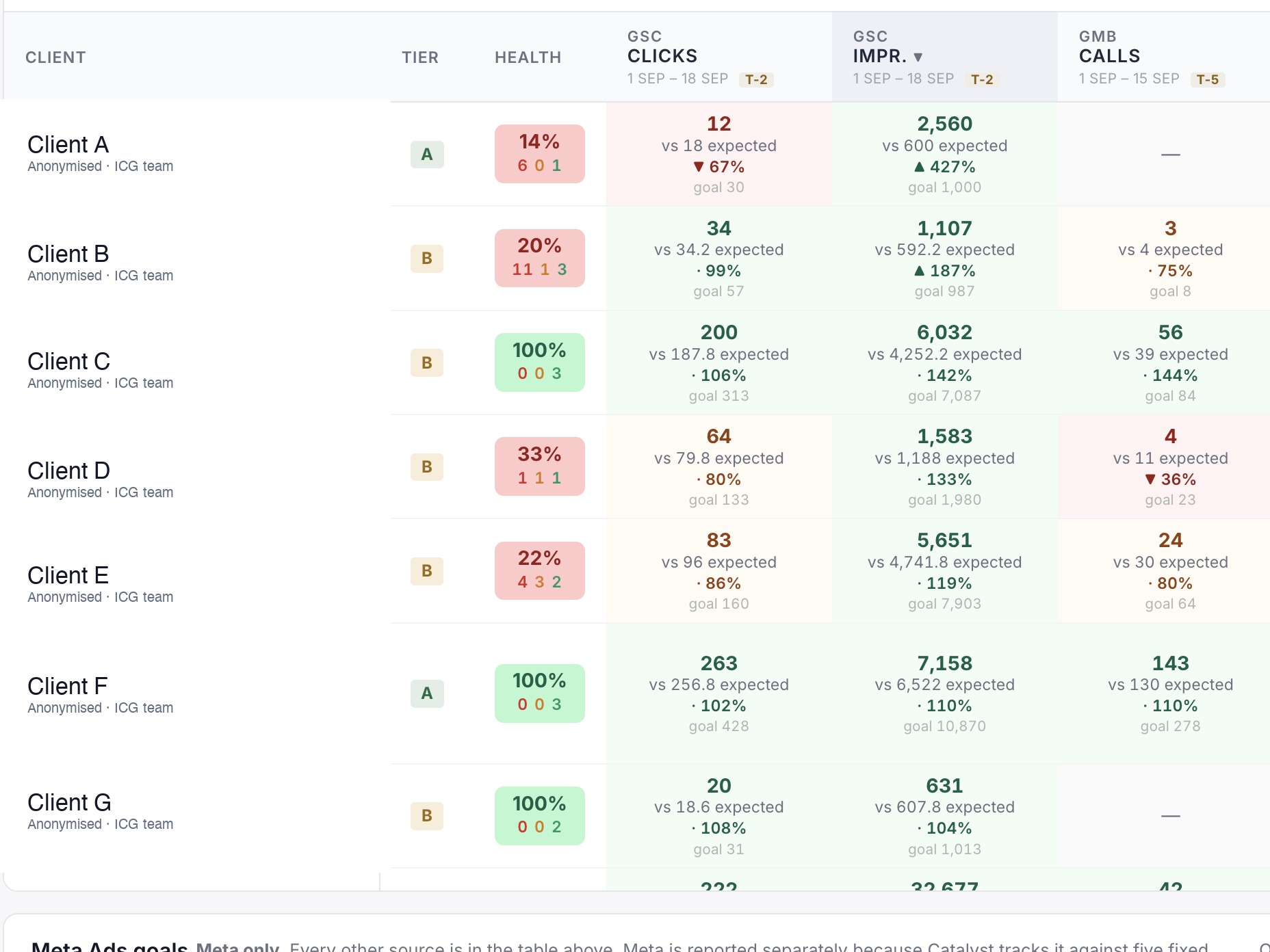
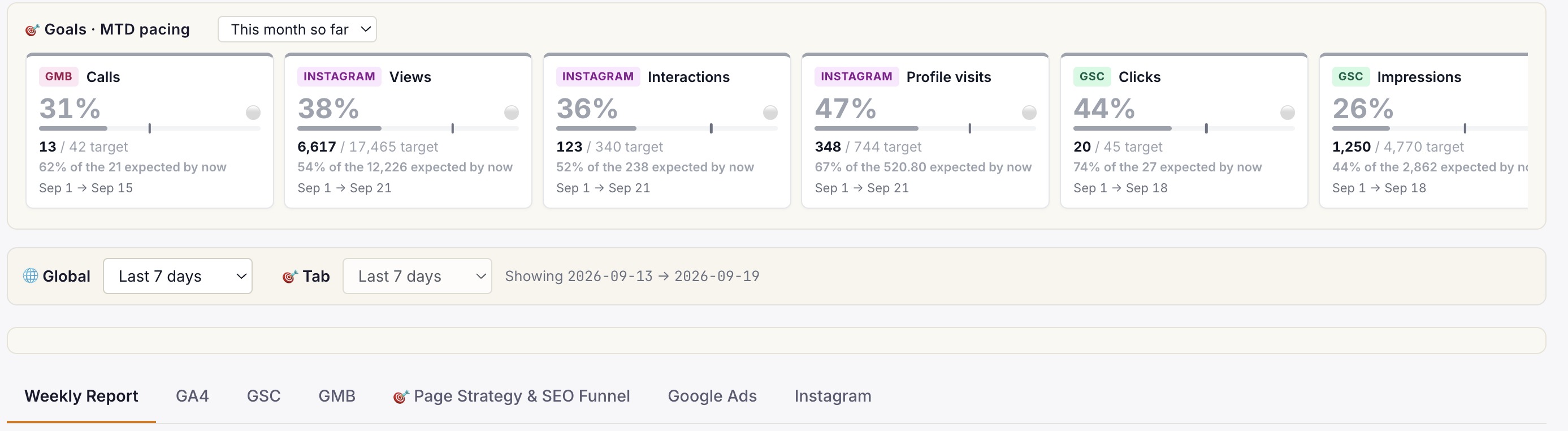
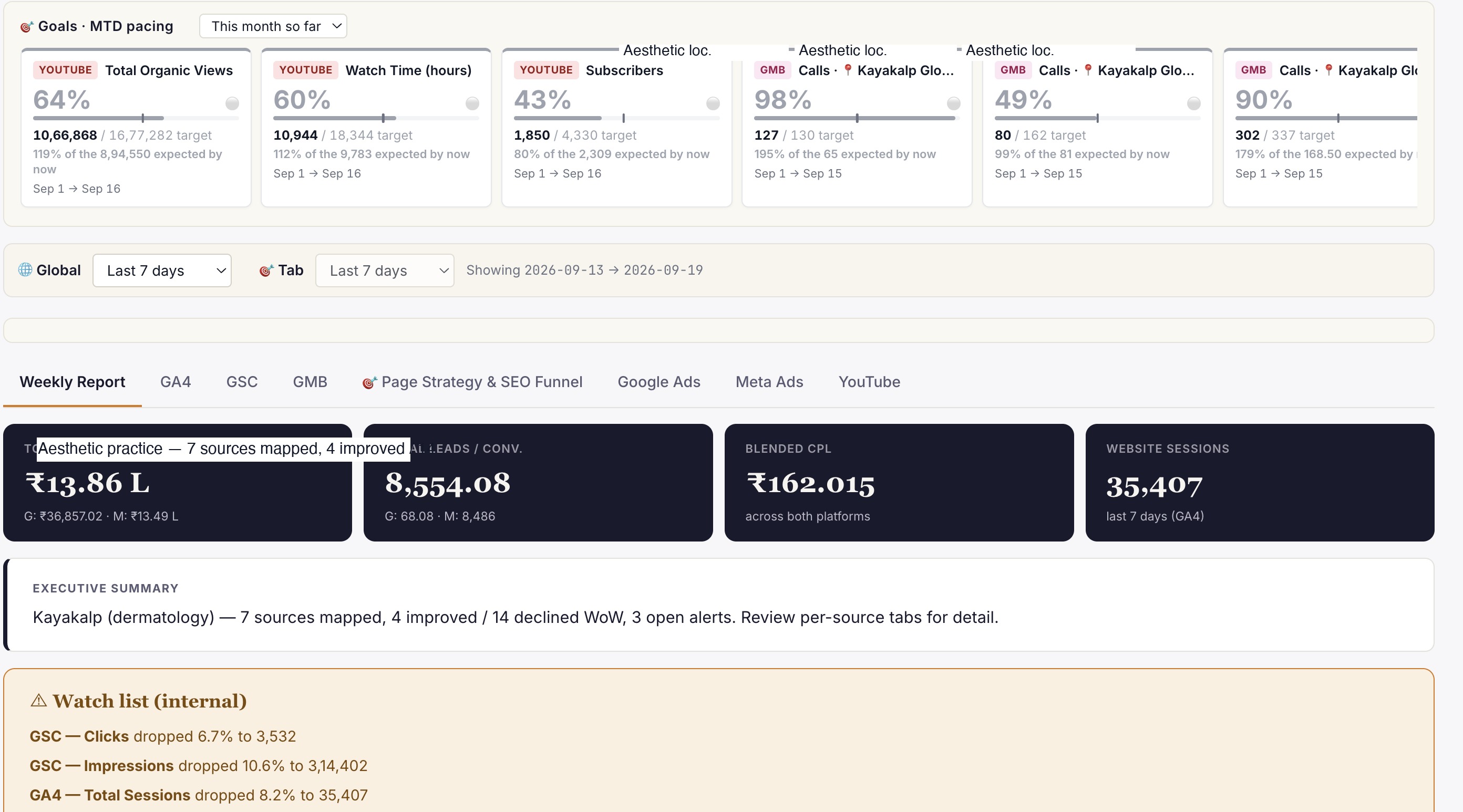
Live client dashboard. GSC, GA4, Google Ads, Meta Ads, IVR calls in one view. Login anytime, not monthly.
Phoenix
Clinic revenue intelligence over your PMS. Daily action queue: Prevent Loss, Maintain & Engage, Grow Revenue. Multi-centre rollout.
Or book a free 30-min audit to see all three in action on your account.
Healthcare brands
that already run on ICG.
A representative slice of the 150+ healthcare brands ICG has delivered for across India. Most engagements remain under NDA.


What ICG clients say · on video.
"Scale up of organic channels and business consulting. ICG has absolute domain authority in their field."
"Working with ICG transformed how we acquire IVF patients in Gurgaon. They understand the fertility journey from inquiry to consult..."
"What Ichelon accomplished — they got all my ideas and worked over 3-4 months to create an amazing, super-customised website."
Need help operationalising this?
Every ICG service is healthcare-only, NMC + DPDP-aware, and built around the patient-research patterns that drive Indian healthcare growth in 2026.
Every practice welcome — packages from ₹20,000/mo.
Goals-Driven engagements · Performance-Linked Payout Models available
More from
ICG.
Five trends shaping Indian healthcare marketing through 2027: AI-first patient research, Conversions API adoption, ABDM discovery, the AEO w...
Healthcare AIO is the discipline of getting your clinic or hospital cited inside Google AI Overviews, ChatGPT and Perplexity answers — not j...
Conversational-search advertising places brand messages inside AI chat answers — ChatGPT, Perplexity, Copilot — rather than beside a results...
Stop guessing.
Book a Diagnostic.
30 minutes. Free. With the AI-powered healthcare-only marketing agency 150+ brands already run on. No slides, no pitch, no hard close.


