


Competitor ad tracking for IVF clinics in India (2026): PC-PNDT Act, ART Act, offer patterns, and how PrismSpy watches 30+ IVF brands daily
IVF Meta ads sit inside PC-PNDT Act 1994, ART Act 2021 and NMC. PrismSpy scans 30+ Indian IVF brands daily — offers, hooks, CPL ₹632 vs ₹650-2,200.
No pitch. Written root-cause diagnosis. AI-powered, healthcare only.
Direct answer
IVF Meta ads sit inside PC-PNDT Act 1994, ART Act 2021 and NMC. PrismSpy scans 30+ Indian IVF brands daily — offers, hooks, CPL ₹632 vs ₹650-2,200.
TL;DR

Competitor ad tracking for IVF clinics in India is a different exercise from tracking dermatology, dental, or aesthetic Meta ads — because IVF advertising in this country sits inside three regulatory perimeters at once: the PC-PNDT Act 1994, the ART Act 2021, and NMC's 2026 advertising guidelines. Thirty-plus Indian IVF brands run Meta ads on any given week, and none of them can legally publish the one number patients actually want to see (a live-birth success rate) or use imagery the law reads as sex-determination advertising. Watching what competitors are doing in this environment is not a luxury; it is how an IVF marketing team keeps its own creative on the safe side of ASCI substantiation and PC-PNDT enforcement while still writing hooks that convert. This piece maps the IVF Meta ad landscape ICG tracks daily through PrismSpy — the compliance line every ad walks, the offer patterns dominating the cluster right now, the package pricing anchors that show up in creative, and the CPL benchmarks that separate portfolio-level performance from the top-quartile spenders.
Why IVF Meta advertising is a compliance-first exercise, not a creative one
For most Indian consumer categories, Meta advertising is a creative-and-offer optimisation game. For IVF, it is a compliance optimisation game with a creative layer on top. Two ads can look almost identical in their promise, hook and offer — and one can pass an ASCI review while the other draws a PC-PNDT complaint. The difference is often a single line of copy or a stock image showing a pregnant belly with a directional caption.
This changes what watching competitors actually means. When an IVF marketing director looks at competitor ads through PrismSpy, the interesting question is not what hook is running, but what hook is running that could have been written more restrictively without losing conversion. The competitor ads that survive 90+ days in market are the ones that found a defensible framing — a testimonial written as a patient's own words rather than a clinic claim, a success-adjacent phrase like family completion journey rather than high pregnancy rates, a free-consultation offer that doesn't hint at any outcome guarantee.
Reading the competitor set through that lens produces a very different creative brief from a generic what-is-working scan. It produces a compliance-safe swipe file — creative your legal review will actually pass.

The PC-PNDT Act 1994 audit every IVF ad has to pass before it goes live

The Pre-Conception and Pre-Natal Diagnostic Techniques Act 1994 is the single most misunderstood piece of Indian law inside IVF marketing teams. Its intent is to prohibit prenatal sex determination and sex-selective abortion, but its practical effect on advertising is broader — any image, wording, or offer that could be construed as promoting sex determination is prohibited, and the reading of "construed" has historically been strict.
What this means for Meta ad creative:
- No imagery that isolates a pregnant woman with directional captions about gender, family completion after one gender, or son/daughter framing.
- No copy that promotes selection of embryo characteristics beyond legally permitted grounds (severe genetic disease under PGD, with proper documentation).
- No implication that IVF cycles can influence gender outcomes, even indirectly through PGT-A framing.
- Consulting-room imagery is safer than pregnancy imagery for the top-of-funnel awareness ad.
PrismSpy's IVF watchlist scores every catalogued creative against a PC-PNDT proximity check. Ads that sit close to the line are flagged even if they haven't been reported yet, because the enforcement lag between a live ad and a complaint can run months, and a competitor's ad breaking these patterns is either testing an edge or carrying a compliance gap your team should not copy.
What the ART Act 2021 removed from Indian IVF ad copy
The Assisted Reproductive Technology (Regulation) Act 2021 came into effect in early 2022 and rewrote what an IVF clinic can and cannot say publicly about success rates. The Act requires clinics to register with the National ART and Surrogacy Board, submit standardised data to the National ART Registry, and — crucially for advertising — restricts the use of success-rate claims in promotional material to what can be substantiated with registry-backed data.
In practical Meta ad terms this has produced three shifts across the tracked IVF competitor set.
Disappearance of headline success percentages. Prior to the ART Act it was common for IVF ads to lead with 70 per cent success rate or specialty variants (highest IVF success rate in Delhi). Post-Act, these headlines have largely vanished from the surviving creative in the PrismSpy IVF watchlist. The exceptions are ads from clinics that appear to be either non-compliant or ignoring enforcement risk.
Shift to testimonial framing. Where a success claim used to live in the clinic's voice, it now appears in a patient testimonial format — a patient talking about her own outcome rather than the clinic claiming an aggregate rate. This is the single biggest creative shift across the IVF Meta ad cluster in the last three years, and the longest-running creatives PrismSpy tracks lean heavily on this format.

Anchor on process and consultation, not outcome. Ads that survive in market now anchor on the IVF journey, expert panel, technology (time-lapse embryoscope, EmbryoScope+), and consultation quality. The offer is a free consultation or a fertility assessment package — never a success guarantee.
The IVF Meta ad watchlist — 30+ Indian brands PrismSpy scans daily
PrismSpy's IVF cluster tracks 30+ Indian IVF brands across the metro and tier-1 markets — the national chains, the regional multi-city groups, and the standalone flagship clinics that spend meaningfully on Meta. The list is calibrated to reflect the competitive set an IVF marketing director in Delhi, Mumbai, Bengaluru, Hyderabad or Chennai actually competes against on the platform, not the full national universe of IVF providers.
What the daily scan produces:
- New ads launched in the last 24 hours across the tracked set.
- Ads killed in the last 24 hours — either the ad was underperforming, or the campaign completed.
- Ads that have been running 60+ days — proven converters worth studying.
- Emerging offer patterns — free assessments, package launches, EMI programme announcements.
- Format mix drift — video share vs image share vs carousel share over the last 90 days.
The point of daily scanning rather than monthly scanning is that IVF Meta ad testing cycles are short. A new hook that catches will be scaled by a competitor within a week; a marketing team that reviews competitor ads monthly is behind by the time they see the pattern. Daily review, five minutes on the PrismSpy dashboard, keeps pattern-detection ahead of the market.
Offer patterns dominating IVF Meta ads right now
Across the tracked IVF cluster in PrismSpy, four offer patterns account for most of the ad volume in 2026.
The free consultation with a specialist. The safest offer in the category — no outcome promise, no discount language, no ART Act exposure. Almost every tracked IVF brand runs a free-consultation ad as a baseline. The variance shows up in who the consultation is with (senior specialist vs junior fellow), how many minutes are offered, and whether a fertility assessment (AMH, semen analysis) is bundled in.
The comprehensive fertility assessment package. A step up from the free consult — usually ₹2,000-₹5,000 for a bundled diagnostic panel (AMH, hormonal profile, ultrasound, semen analysis, consultation). The economics work because the package converts to a full IVF cycle at meaningful rates, and the package price becomes a qualified-lead filter.
The IVF package price anchor. Ads that lead with ₹2.5L, ₹3.5L or ₹4.5L package pricing — usually a single cycle bundled with fertilisation lab work and a defined medication window. Price anchoring is done carefully to avoid promising outcomes; the copy is anchored on transparent pricing or no-hidden-costs framing rather than value-for-money framing that could imply outcome per rupee.
The EMI or financing announcement. A quarter of the tracked IVF ads reference EMI, no-cost EMI, or medical financing partnerships (Bajaj Finserv, ArogyaFin, hospital-partnered lenders). EMI messaging has been rising steadily as IVF becomes a household financial decision rather than a private-savings decision — and Meta ads are where the awareness is being built.
Package pricing benchmarks and how they show up in the ad set
Indian IVF cycle pricing runs across a wide band — ₹1.8L at the low end (basic ICSI with limited add-ons) to ₹6L+ at the premium end (multi-cycle bundle with PGT-A, embryo freezing, and extended medication). The mass of the market sits in the ₹2.5L to ₹4.5L range, and this is the range that shows up in ad-creative price anchors.
PrismSpy's offer tracking catalogues package price mentions across the IVF cluster. What emerges is a fairly clean segmentation: national chain IVF brands anchor around ₹3.5L-₹4.5L with an EMI framing that reduces the mental price; regional multi-city groups anchor around ₹2.8L-₹3.5L with the pricing itself as the differentiator; and standalone flagship clinics rarely mention price in ads at all — they anchor on specialist credentials and outcome adjacency, and let the price conversation happen in the free consult.
The CPL reality — ₹632 portfolio vs ₹650-2,200 top quartile
The IVF CPL number ICG tracks across its own managed accounts through Meta Catalyst IQ sits at ₹632 blended across the IVF portfolio. That is well below the top-quartile market band of ₹650-₹2,200 that the tracked cluster reports through various industry benchmarks and CPL leaks.
Two things drive that gap, and both come from PrismSpy visibility. First, creative that has been de-risked against the compliant winning set — Meta Catalyst IQ starts every IVF campaign with a PrismSpy briefing covering the longest-running compliant creative in the cluster, the offer patterns proven to convert without ART Act exposure, and the hook lines the market has tested and killed. Starting from a de-risked baseline instead of a cold creative brief is worth 40-60 per cent of the CPL delta.
Second, reallocation against emerging competitor spend spikes. When PrismSpy detects a competitor scaling spend in a specific city or specialty within IVF, the Catalyst layer can either match the auction pressure or step out of it for the week — an active decision rather than a passive CPL absorb. Auction discipline calibrated to what competitors are actually doing is the second lever.
The Google Ads Transparency lens for IVF
Meta is where IVF discovery ads live, but Google is where high-intent IVF search demand converts. PrismSpy's Google Ads Transparency layer catalogues the search and display footprint of the same competitor set — a two-platform view of who is playing where between top-of-funnel awareness (Meta) and mid-funnel consultation intent (Google Search).
Powered by PrismSpy — every competitor Meta ad, watched daily
ICG built PrismSpy because Indian healthcare Meta ad competition is invisible without it — and IVF is the specialty where invisibility hurts the most, because a single compliance slip can cost a clinic its ART Act standing and its Meta ad account in the same week. 75+ Indian healthcare brands tracked, 2,150+ active ads catalogued, ₹50Cr+ aggregate ad spend visibility per month. Every competitor ad — creative, offer, hook, run-length — refreshed daily. It runs underneath every Meta ads and performance marketing engagement at ICG.
- Watchlist Dashboard — 30-75 competitors per specialty cluster (IVF / dermatology / dental / hair transplant / aesthetic / hospital), daily refresh.
- Comparative Insights — highest-quality ads, longest-running creatives (proven converters), top hooks, emerging offers.
- Offers Intelligence — 1,197 offers tracked, discount intensity by brand, value tier distribution.
- Service Cluster + Inspirations — 419 services tracked, 4,697 searchable ad inspirations by hook / language / format.
Standalone from ₹4,999/- per specialty vertical, or bundled free inside HealthApex OS (₹14,999/- flat, 9 tools). Book a 30-min PrismSpy walkthrough on WhatsApp — Rohit + Hanuman walk you through your specialty's competitive landscape.


FAQ
Q. Is competitor ad tracking legal for IVF clinics in India?
A. Yes. PrismSpy aggregates only publicly available data from Meta Ad Library and Google Ads Transparency Centre — the same public sources any competitive research analyst can access. No scraping of authenticated data, no DPDP-protected information, no patient identifiers. The legal basis is identical to reading a competitor's public Meta Ad Library page manually, at scale and with daily refresh.
Q. How many IVF brands does PrismSpy track in the Indian cluster?
A. 30+ Indian IVF brands across the metro and tier-1 markets — national chains, regional multi-city groups, and standalone flagship clinics that spend meaningfully on Meta. The watchlist is customisable, and every ICG IVF client can add up to 25 additional brands they specifically compete against in their city.
Q. Does PC-PNDT Act enforcement actually reach Meta ads?
A. Yes, and increasingly so. Complaints filed under the PC-PNDT Act can and do cite Meta ad creative as evidence, and Meta's own healthcare ad policy for India references PC-PNDT compliance. The enforcement lag between a live ad and a filed complaint can run months, which is why PrismSpy flags creative that sits close to the line before a complaint is filed.
Q. What CPL should an IVF clinic in India expect on Meta ads?
A. The IVF Meta ad CPL band across the tracked cluster runs ₹650-₹2,200 depending on city, offer type, targeting discipline and creative fatigue management. ICG's own portfolio through Meta Catalyst IQ blends at ₹632 — below the band because of PrismSpy-informed creative de-risking and auction discipline calibrated to competitor spend movements.
Q. What is the ART Act 2021 restriction on IVF success-rate claims?
A. The ART Act 2021 restricts IVF clinics to success-rate claims that can be substantiated with data reported to the National ART Registry, and prohibits promotional claims that cannot be supported by registry-backed evidence. In practical Meta ad terms, most headline success percentages have disappeared from the tracked cluster's surviving creative — replaced by testimonial framings and consultation-first offers.
Q. How often should an IVF marketing team review competitor ads?
A. Daily, taking about five minutes on the PrismSpy dashboard. IVF Meta ad testing cycles are short — a new hook that works will be scaled by a competitor within a week, and a marketing team that reviews monthly sees the pattern too late. Daily review is what keeps pattern-detection ahead of the market.
Q. Can PrismSpy replace a compliance review for our IVF ad creative?
A. No — PrismSpy is intelligence, not legal review. Every IVF ad still needs a qualified reviewer to pass it against PC-PNDT, ART Act, ASCI, NMC and DPDP obligations before it goes live. What PrismSpy does is show which competitor creative has already survived those filters in market, so your own creative starts from a de-risked baseline rather than a cold brief.
Related reading
- IVF marketing agency in India — pillar guide
- Healthcare Meta Ads agency in India
- Healthcare Meta Ads service page
- Healthcare performance marketing service page
- HealthApex OS — 9-tool healthcare growth stack
- Book a free IVF competitive audit
Authority references: Ministry of Health and Family Welfare · Advertising Standards Council of India · National Medical Commission
Book a free IVF clinic growth diagnostic.
Raman Soni walks through your current channel mix, CPQL vs cost-per-cycle, and where the 90-day patient journey is leaking.
The three platforms
behind every ICG engagement.
Beacon
CAPI middleware that fixes Event Match Quality, translates CRM statuses to Meta-standard events, dedups across channels.
Agency OS
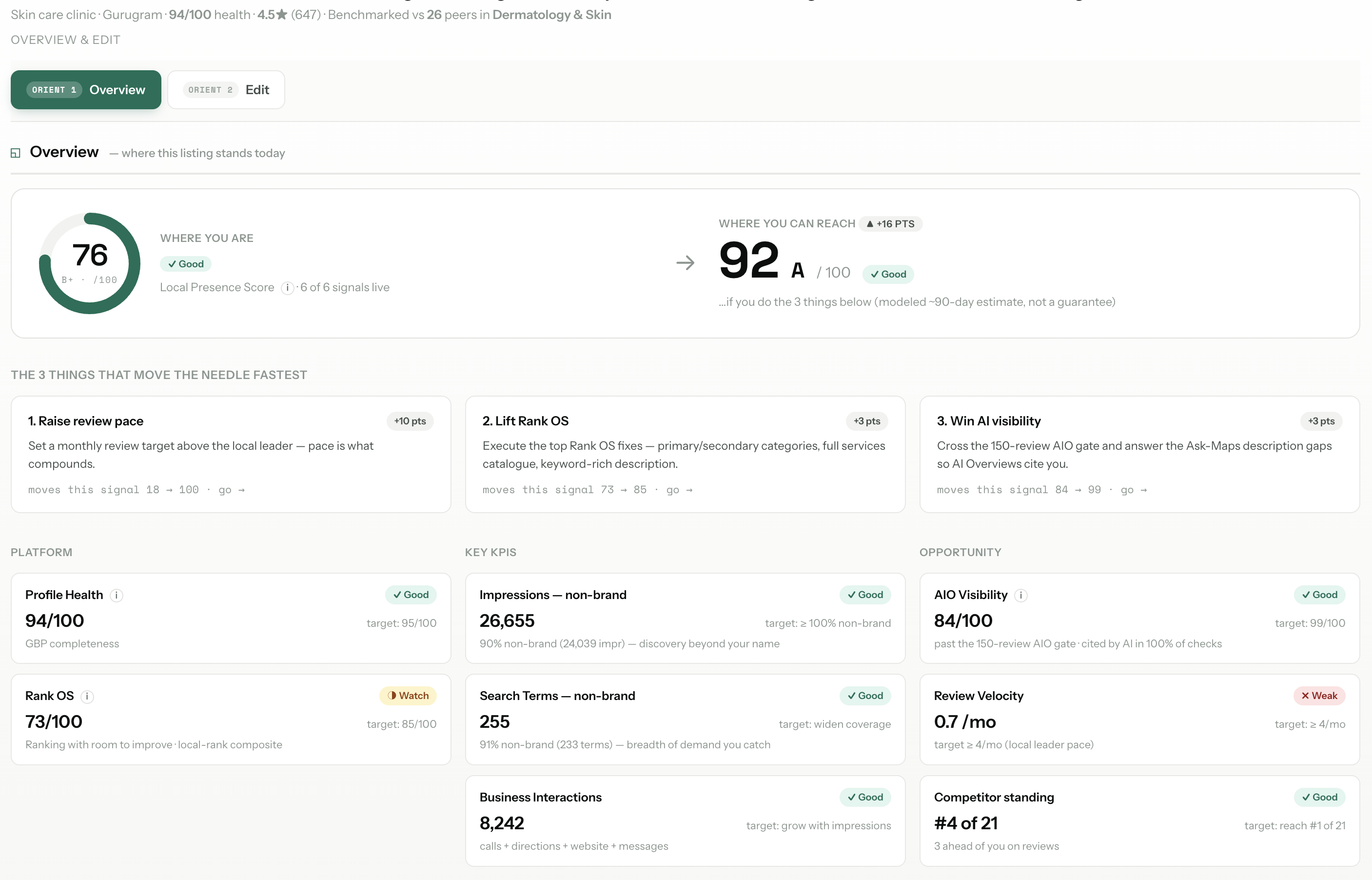
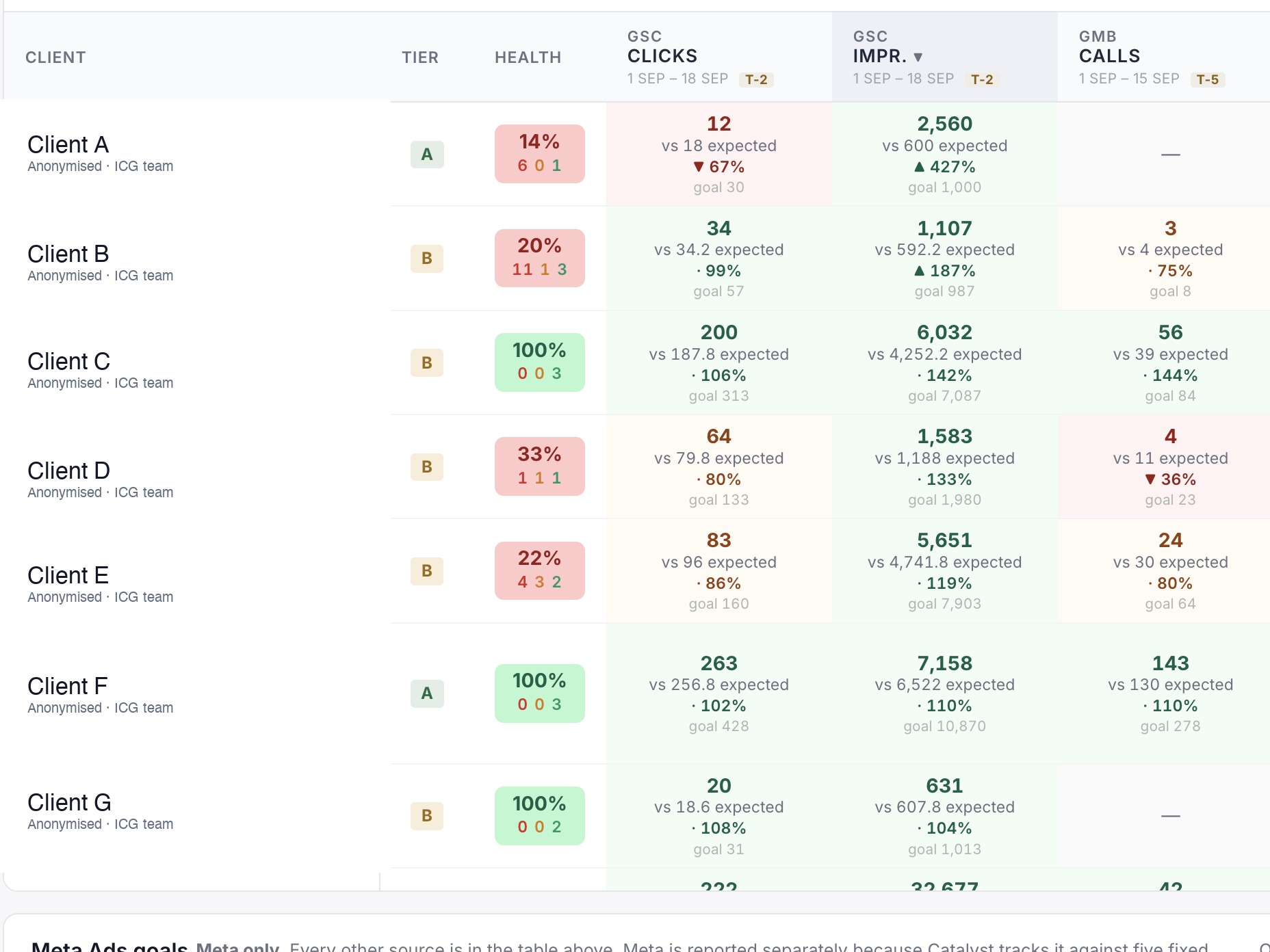
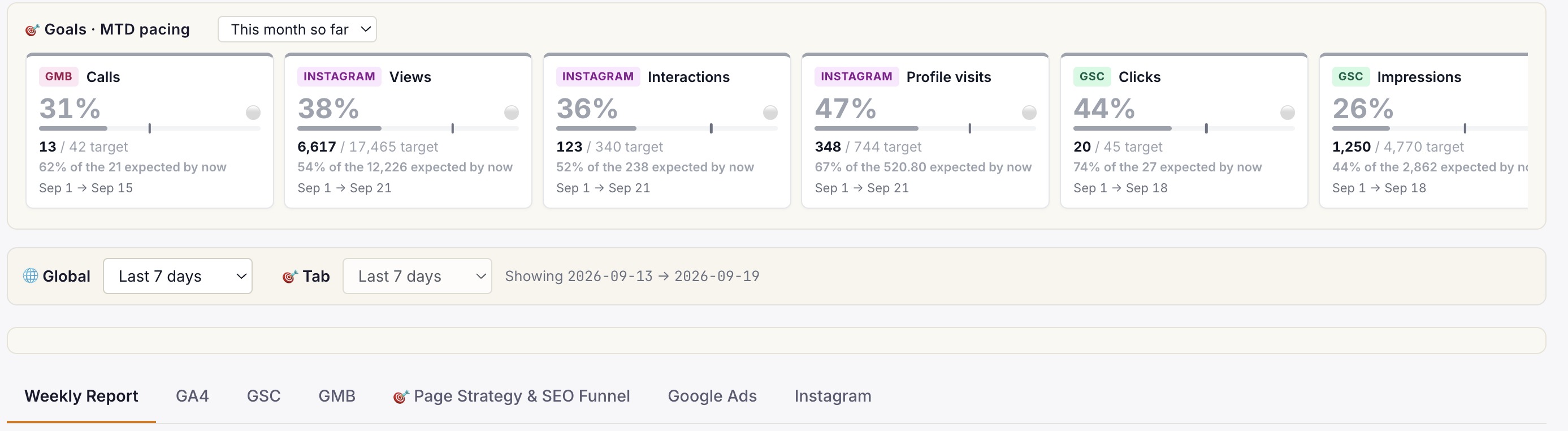
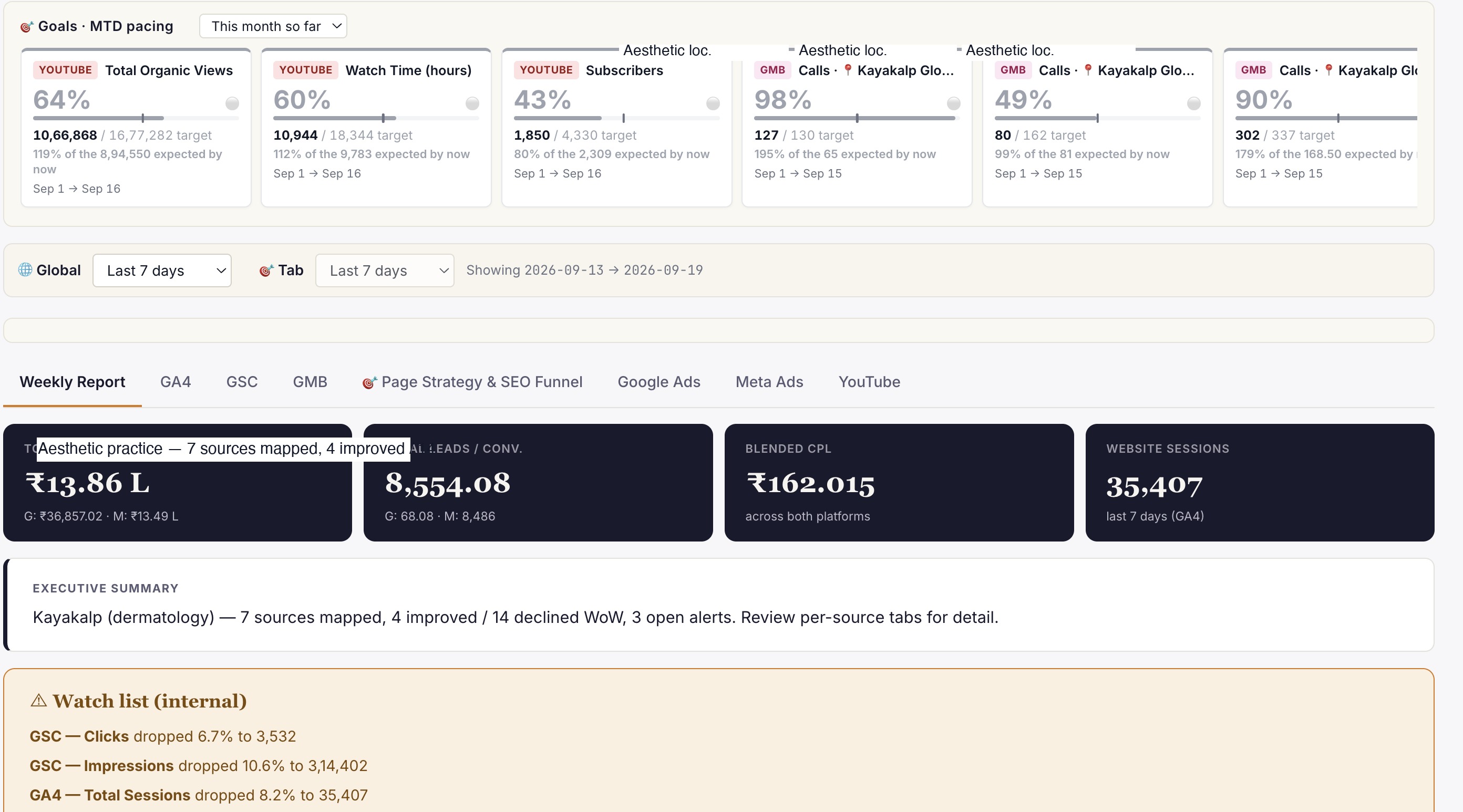
Live client dashboard. GSC, GA4, Google Ads, Meta Ads, IVR calls in one view. Login anytime, not monthly.
Phoenix
Clinic revenue intelligence over your PMS. Daily action queue: Prevent Loss, Maintain & Engage, Grow Revenue. Multi-centre rollout.
Or book a free 30-min audit to see all three in action on your account.
Healthcare brands
that already run on ICG.
A representative slice of the 150+ healthcare brands ICG has delivered for across India. Most engagements remain under NDA.


What ICG clients say · on video.
"Working with ICG transformed how we acquire IVF patients in Gurgaon. They understand the fertility journey from inquiry to consult..."
"ICG built our IVF marketing system from the ground up. The team understands healthcare specifics, not just generic digital marketi..."
Need help operationalising this?
Every ICG service is healthcare-only, NMC + DPDP-aware, and built around the patient-research patterns that drive Indian healthcare growth in 2026.
Every practice welcome — packages from ₹20,000/mo.
Goals-Driven engagements · Performance-Linked Payout Models available
More from
ICG.
Five trends shaping Indian healthcare marketing through 2027: AI-first patient research, Conversions API adoption, ABDM discovery, the AEO w...
Healthcare AIO is the discipline of getting your clinic or hospital cited inside Google AI Overviews, ChatGPT and Perplexity answers — not j...
Conversational-search advertising places brand messages inside AI chat answers — ChatGPT, Perplexity, Copilot — rather than beside a results...
Stop guessing.
Book a Diagnostic.
30 minutes. Free. With the AI-powered healthcare-only marketing agency 150+ brands already run on. No slides, no pitch, no hard close.


