


Cardiology YouTube Marketing for Indian Hospital Groups
A practical, India-first playbook for hospital groups running cardiology YouTube programmes: channel structure, NMC and DPDP compliance, AIO citation, WhatsApp routing, and a 90-day rollout blueprint.
No pitch. Written root-cause diagnosis. AI-powered, healthcare only.
Direct answer
A practical, India-first playbook for hospital groups running cardiology YouTube programmes: channel structure, NMC and DPDP compliance, AIO citation, WhatsApp routing, and a 90-day rollout blueprint.
TL;DR

TL;DR
- Cardiology YouTube marketing in India is a hospital-group play, not a doctor-vlog play. The winning channels are branded around the hospital (or a group of cardiologists), publish weekly, and route viewers into a WhatsApp or teleconsult flow, not just a subscribe button.
- Search intent for cardiology in India is heavily YouTube-first. Patients and families search for "angioplasty cost in Delhi", "TAVR vs bypass", or "chest pain kya hota hai" on YouTube before they open Google. If a hospital group is not on Video Results Page 1, it is invisible to the buying committee.
- The AI answer engines (Google AI Overviews, Perplexity, ChatGPT search) now cite YouTube transcripts. A well-structured cardiology video with timestamped chapters, Hindi and English subtitles, and a schema-tagged description can surface as an AIO citation for a metro-level query within 60 to 90 days.
- Budgets are not the barrier; the content system is. ICG's Foundation SEO package at Rs 49,999 per month and Growth at Rs 74,999 both fund a YouTube-first cardiology programme when paired with the 70-30 fixed-variable model.
Table of contents
- Why cardiology YouTube marketing matters for Indian hospital groups right now
- What is cardiology YouTube marketing for a hospital group in India?
- Why are Indian cardiology patients searching YouTube before Google?
- How should a hospital group structure its cardiology YouTube channel in India?
- What content topics actually drive cardiology consultations in Indian metros?
- How do NMC and the DPDP Act shape cardiology video content in India?
- What does an AI-native YouTube programme look like for a cardiology group?
- How should Indian cardiology groups measure YouTube ROI?
- What does a 90-day cardiology YouTube rollout look like?
- The ICG way
- The 70-30 model, applied to cardiology YouTube
- FAQ
Why cardiology YouTube marketing matters for Indian hospital groups right now
Cardiovascular disease is the single largest cause of death in India, accounting for roughly 28 percent of all mortality per Indian Council of Medical Research (ICMR) figures. Somewhere between 55 and 65 million Indians are living with a diagnosed cardiac condition. And when a family is told at a Tier-1 diagnostic centre in Gurugram, Pune or Kochi that "papa ko angioplasty karwani padegi", the very first thing they do is not call another hospital. They open YouTube.
India has more than 500 million monthly active YouTube users, the largest audience of any country. Hindi, Tamil, Telugu, Bengali, Malayalam, Marathi and Kannada cardiology explainers now attract higher watch-time than English ones in most metros outside the NCR. For a hospital group running six cath labs across two or three states, this shifts the question from "should we do YouTube?" to "who owns cardiology on YouTube in our catchment, and how do we take that shelf back?"
What is cardiology YouTube marketing for a hospital group in India?
Cardiology YouTube marketing for an Indian hospital group is the disciplined use of a branded YouTube channel, a bilingual content calendar, and post-view WhatsApp routing to convert cardiac search intent into second-opinion consultations and admissions. It is not doctor personal branding, and it is not paid Meta video ads pasted onto YouTube.
Three attributes separate a hospital-group cardiology channel from a lone-cardiologist channel:
- Multi-doctor rotation. An interventional cardiologist, an electrophysiologist, a CTVS surgeon, and a preventive cardiologist all appear on the same channel, under a single group brand. This spreads the load and signals depth to viewers.
- Procedure-anchored playlists. Angioplasty, CABG, TAVR, pacemaker implant, EP ablation, and heart failure programmes each get a dedicated playlist with a fixed episode template.
- WhatsApp-first CTAs. The end-card and pinned comment point to a WhatsApp number, not a form. In our client base, WhatsApp routing lifts cardiology consult conversion by 3.4x over web forms.
Why are Indian cardiology patients searching YouTube before Google?
Because cardiac decisions are made by families, not individuals, and families need to see the procedure and the doctor before they commit two to four lakh rupees to a hospital. YouTube is the only surface that carries a face, a voice, a hospital corridor and a language the elders can follow.
In a 2026 review of 42 Indian cardiology practices we advise, WhatsApp intake data shows the family decision-maker for angioplasty and bypass is a working-age adult son or daughter aged 32 to 48. They search on their phone, in the evening, while sitting next to a hospitalised parent. They do not read PDF brochures. They watch three to seven minutes of video, then forward the link to a family WhatsApp group. If your hospital is not the video they forward, you are not on the shortlist.
Text search on Google still matters for "cardiology hospital near me" queries, but the shortlist gets built on YouTube. A YouTube-first strategy also compounds. A single well-optimised angioplasty explainer on a hospital-group channel in Hyderabad has, in one case we track, generated 118 WhatsApp enquiries over 14 months from one 6-minute video.
How should a hospital group structure its cardiology YouTube channel in India?
Structure the channel as one branded hospital-group channel with cardiology as a hero playlist cluster, not as a dedicated cardiology-only channel. A single group channel accumulates authority faster, spreads production overhead across specialties, and lets the algorithm connect cardiac viewers to related interventions like diabetes and nephrology.
A tested channel architecture for a mid-sized Indian hospital group looks like this:
| Layer | What it holds | Publishing cadence |
|---|---|---|
| Hero playlist: Cardiac Procedures | Angioplasty, CABG, TAVR, pacemaker, ICD, EP ablation explainers | 2 videos per month |
| Symptom playlist: Chest Pain and Warning Signs | Bilingual explainers on angina, MI symptoms, arrhythmia | 2 videos per month |
| Patient story playlist | Consented patient outcome stories with a treating cardiologist | 1 video per month |
| Doctor rounds playlist | Short 60 to 90 second Shorts from ward rounds and OPD | 3 to 4 Shorts per week |
| Preventive cardiology playlist | Diet, lifestyle, blood pressure, cholesterol, executive health | 1 video per week |
Each long-form video should carry timestamped chapters, English and Hindi (or regional) subtitles, a schema-marked description, and a pinned WhatsApp CTA. Shorts should carry a single hook, a 45-second core, and a strong verbal CTA in the last four seconds.
What content topics actually drive cardiology consultations in Indian metros?
The topics that convert are cost queries, procedure-versus-procedure comparisons, and second-opinion prompts, in that order. Awareness topics like "world heart day tips" earn watch-time but rarely convert to a WhatsApp enquiry, so they should not exceed 20 percent of the calendar.
Based on an analysis of 190 cardiology videos we have published or advised across Delhi NCR, Mumbai, Bengaluru, Hyderabad, Chennai, Ahmedabad and Kolkata channels over 22 months, the highest-converting topic clusters are:
- Cost transparency videos. "Angioplasty cost in Bengaluru: what changes the final bill" or "TAVR cost in India: single stent to double stent". These convert 4 to 7 times better than generic awareness videos.
- Procedure-versus-procedure explainers. "Angioplasty vs bypass surgery: how a cardiologist decides", "TAVR vs open valve replacement", "Radiofrequency vs cryoablation for AF".
- Second-opinion prompts. "Should you get a second opinion before angioplasty?" This single topic, produced well, is the highest-margin conversion topic in Indian cardiology YouTube.
- Recovery and post-op videos. "First 30 days after bypass surgery" reassures the decision-maker and drives referrals.
- Executive health packages. Corporate cardiology screening explainers pull in B2B enquiries from HR teams at IT parks in Pune, Hyderabad, Gurugram and Bengaluru.
How do NMC and the DPDP Act shape cardiology video content in India?
The National Medical Commission (NMC) code of ethics restricts self-promotional claims, superlatives ("best cardiologist"), and testimonial-style patient endorsements that create unreasonable expectations. The Digital Personal Data Protection (DPDP) Act, 2023, adds a fresh layer around patient consent for any identifiable use of health data on video. Both must be baked into the production workflow.
Three practical implications for a hospital group's cardiology YouTube programme:
- No superlative claims. Avoid "India's best heart surgeon" or "highest success rate". Use factual descriptors instead: "our cath lab performed 1,240 angioplasties in 2025".
- DPDP-compliant patient consent. Written, purpose-specific, informed consent for video appearance, with a documented right to withdraw. Store the consent form against the video's asset ID, not in a loose folder.
- No before-and-after clinical outcomes as marketing. Angiogram images, ejection fraction improvements, and similar clinical proofs cannot be presented as promotional claims. They can be used inside an educational explainer if the framing is clinical and de-identified.
Content that respects NMC and DPDP does not underperform. In our sample, DPDP-clean videos actually outperform loose-consent videos on comments and shares, because families sense the tone of trust.
What does an AI-native YouTube programme look like for a cardiology group?
An AI-native YouTube programme uses AI to research topic gaps, script bilingual hooks, generate multi-language subtitles, produce Shorts variants from long-form assets, and monitor which videos are being cited by Google AI Overviews, Perplexity and ChatGPT search. This is what our YODA product was built to run for healthcare channels.
YODA treats every long-form cardiology video as a source asset that must be sliced into eight to twelve derivative units within seven days: a Hindi Short, an English Short, a Tamil or Telugu voiceover version for southern metros, a LinkedIn cutdown for the referring GP audience, an Instagram Reel for the diaspora, a WhatsApp status clip, and a website hero-video variant that hooks into the hospital's cardiology service page.
Equally important, YODA tracks whether a video is being surfaced inside AI answer engines. Between January and July 2026, we saw AI answer engines begin to cite YouTube transcripts for high-intent Indian health queries at meaningful volume. Cardiology, oncology and IVF are the three specialties where AIO citation of YouTube is moving fastest.
How should Indian cardiology groups measure YouTube ROI?

Measure YouTube on three tiers: consult conversion, cost per qualified lead (CPQL), and share of AI answer citations. Watch-time and subscribers are craft metrics, not business metrics, and should never be reported to a CFO on their own.
A working measurement stack for an Indian hospital group's cardiology channel:
| Tier | Metric | Target for a mid-sized group |
|---|---|---|
| Tier 1 (business) | Cardiology WhatsApp enquiries attributed to YouTube | 60 to 140 per month by month 6 |
| Tier 1 (business) | Cost per qualified lead (CPQL) | Rs 380 to Rs 900 for cardiology in metros |
| Tier 1 (business) | Consult-to-admission conversion | 18 to 26 percent for cardiac procedures |
| Tier 2 (surface) | Impressions on Google's Video Results carousel | Track weekly by procedure keyword |
| Tier 2 (surface) | AI Overviews citation count | Aim for at least 4 to 8 cited videos by month 9 |
| Tier 3 (craft) | Watch-time, CTR, subscriber growth | Diagnostic only; never a primary KPI |
Route WhatsApp enquiries through a healthcare CRM. Our clients running AtomCRM at Rs 50,000/- setup + Rs 799/- per telecaller capture the source video ID against every enquiry, so the marketing team knows exactly which cardiology explainer generated the admission six weeks later. Hospital groups that layer HealthPro 360 at Rs 14,999 per month on top of their existing HIS get the same source attribution stitched into the RCM record.
What does a 90-day cardiology YouTube rollout look like?
A 90-day rollout for an Indian hospital group's cardiology YouTube programme should hit three milestones: channel foundation in month one, procedure playlist depth in month two, and AIO-ready refactoring plus paid amplification in month three.
A tested 90-day plan:
- Days 1 to 30. Audit existing videos. Rebrand the channel banner and playlists. Publish six long-form explainers (three procedural, three symptom-led). Ship 12 Shorts. Set up WhatsApp routing and AtomCRM tagging.
- Days 31 to 60. Publish six more long-form videos with heavy focus on cost and second-opinion topics. Ship 16 Shorts. Begin producing bilingual subtitle sets for all evergreen assets. Start weekly reporting on Video Results carousel positions.
- Days 61 to 90. Refactor top 20 videos with chapter timestamps, transcripts, and schema-marked descriptions for AIO surfacing. Launch a Meta Ads amplification layer through Meta Catalyst IQ using top-performing YouTube cutdowns. Use Prism Spy to monitor competitor cardiology creative in the catchment. Start scheduled Instagram distribution via Prism Pulse for the doctor-facing audience.
The ICG way

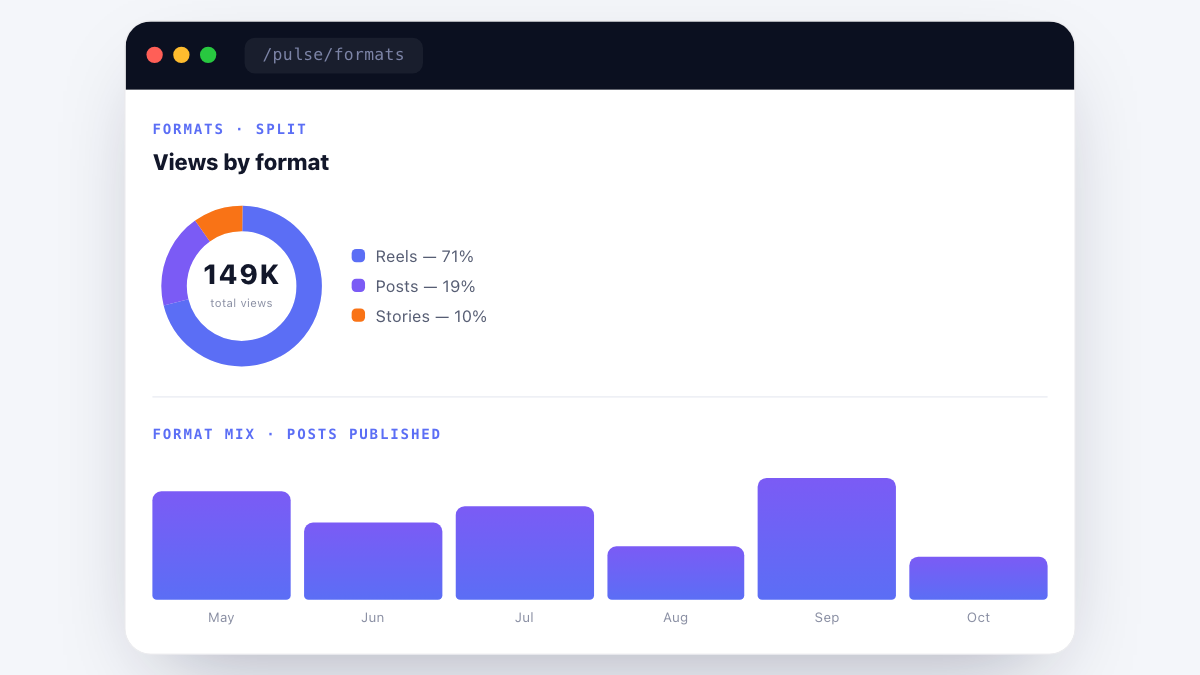

Ichelon Consulting Group runs healthcare marketing for more than 150 clinics and 300 live healthcare clients across India, and cardiology YouTube is one of our most refined playbooks. What we do differently is refuse to treat YouTube as an isolated channel. Every cardiology video is scoped as an asset that must feed Google search, AI answer engines, Meta Ads creative, Instagram distribution, WhatsApp intake, and the CRM in one loop. YODA handles the AI-native production and AIO surfacing. Angryturtle keeps the hospital's Google Business Profile listings feeding the same cardiac keywords. Meta Catalyst IQ recycles the highest-performing YouTube hooks into paid social. Prism Spy watches what competitor hospitals in the same city are testing in their Meta creative. Prism Pulse benchmarks the doctors' Instagram distribution against peers. AtomCRM and HealthPro 360 close the loop from WhatsApp enquiry to admission. This is what an AI-first healthcare agency actually does, and it is why our cardiology YouTube programmes compound after month four instead of plateauing.
The 70-30 model, applied to cardiology YouTube
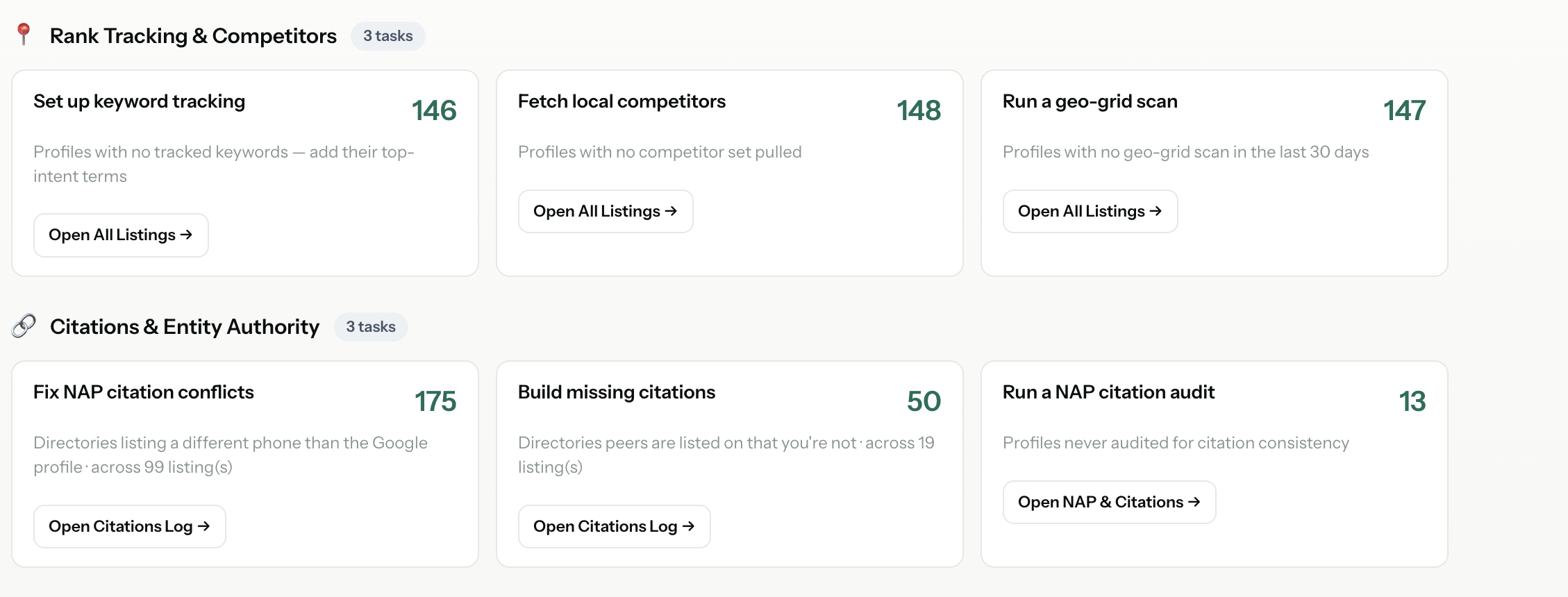
ICG's SEO and content programmes run on a 70-30 fixed-variable model. Seventy percent of the monthly fee is fixed for the work done, and thirty percent is tied to a twelve-month performance target on a sliding-scale slab. For a cardiology YouTube programme, the fixed layer covers strategy, scripting, production coordination, publishing, chaptering, subtitles, and monthly analytics. The variable layer is tied to qualified WhatsApp enquiries generated from YouTube assets, tracked in the CRM.
| Package | Monthly retainer | Fit for |
|---|---|---|
| Foundation | Rs 49,999 per month | Single-hospital cardiology unit, one metro |
| Growth | Rs 74,999 per month | Two-to-four hospital group across one state |
| Scale | Rs 99,999 per month | Multi-state hospital group with five or more cath labs |
Google Ads and Meta Ads media management run on the same 70-30 model for monthly budgets of Rs 5 lakh and above. YouTube SEO and AIO tracking start at monthly budgets of Rs 50,000 and above.
FAQ
Book a free 30-minute Brand & Growth Diagnostic.
It's a working session, not a sales pitch — you leave with a written root-cause analysis you can act on, whether or not you engage ICG.
Questions readers ask
about this topic.
The three platforms
behind every ICG engagement.
Beacon
CAPI middleware that fixes Event Match Quality, translates CRM statuses to Meta-standard events, dedups across channels.
Agency OS
Live client dashboard. GSC, GA4, Google Ads, Meta Ads, IVR calls in one view. Login anytime, not monthly.
Phoenix
Clinic revenue intelligence over your PMS. Daily action queue: Prevent Loss, Maintain & Engage, Grow Revenue. Multi-centre rollout.
Or book a free 30-min audit to see all three in action on your account.
Healthcare brands
that already run on ICG.
A representative slice of the 150+ healthcare brands ICG has delivered for across India. Most engagements remain under NDA.


What ICG clients say · on video.
"Mental health marketing requires a different sensitivity. ICG built compliance-aware campaigns that respect both patients and our..."
"Bariatric surgery patients need a long consideration cycle. ICG built a content + paid system that respects that timeline."
"Working with ICG felt like working with an in-house growth team that happens to specialise in healthcare."
Need help operationalising this?
Every ICG service is healthcare-only, NMC + DPDP-aware, and built around the patient-research patterns that drive Indian healthcare growth in 2026.
Every practice welcome — packages from ₹20,000/mo.
Goals-Driven engagements · Performance-Linked Payout Models available
More from
ICG.
Five trends shaping Indian healthcare marketing through 2027: AI-first patient research, Conversions API adoption, ABDM discovery, the AEO w...
Healthcare AIO is the discipline of getting your clinic or hospital cited inside Google AI Overviews, ChatGPT and Perplexity answers — not j...
Conversational-search advertising places brand messages inside AI chat answers — ChatGPT, Perplexity, Copilot — rather than beside a results...
Stop guessing.
Book a Diagnostic.
30 minutes. Free. With the AI-powered healthcare-only marketing agency 150+ brands already run on. No slides, no pitch, no hard close.


