


Healthcare CRM India 2026 — Compared for Hospitals & Clinics
Compare healthcare CRM options in India for 2026 — recall automation, WhatsApp CRM, DPDP compliance, pricing benchmarks. WhatsApp ICG to plan yours.
No pitch. Written root-cause diagnosis. AI-powered, healthcare only.
Direct answer
Compare healthcare CRM options in India for 2026 — recall automation, WhatsApp CRM, DPDP compliance, pricing benchmarks. WhatsApp ICG to plan yours.
TL;DR
TL;DR
- A healthcare CRM is not the same as a clinic management system — CRM focuses on patient relationship management, retention, and marketing communication; CMS focuses on clinical workflow
- The 3 highest-ROI CRM functions in healthcare: recall automation (bring back lapsed patients), lead pipeline management (convert enquiries to appointments), and CLTV (Customer Lifetime Value) intelligence for treatment plan prioritisation
- DPDP Act 2023 has fundamentally changed healthcare CRM requirements — marketing databases must have documented opt-in consent for every contact
- Monthly cost: WhatsApp-first CRM ₹8,000–₹35,000/month; enterprise healthcare CRM ₹35,000–₹2.5L/month
- ICG's recommendation: build or select a CRM that can be segmented by specialty, payer type, and patient lifecycle stage — generic CRMs (general-purpose sales and marketing CRMs) are viable with healthcare customisation; healthcare-native CRMs are available but fewer
India's healthcare sector loses 35–60% of acquired patients to one-time visits with no recall, no follow-up, and no retention programme. A patient who visited an orthopaedic clinic for knee pain management in March — and hasn't been contacted since — is a lost revenue opportunity and a missed care continuity obligation simultaneously.
A healthcare CRM fixes this. But choosing and implementing the right one for a hospital or clinic is not the same as deploying an enterprise sales CRM for a SaaS company.
Table of contents
- CMS vs CRM — understanding the difference
- The 5 highest-ROI CRM functions in healthcare
- DPDP Act 2023 and healthcare CRM — the compliance reset
- WhatsApp as CRM infrastructure
- CRM comparison — healthcare-ready options in India 2026
- Healthcare CRM implementation — the 4 phases
- Budget benchmarks — healthcare CRM
- Case snapshot
- FAQ
- Internal links
- External sources
CMS vs CRM — understanding the difference
Clinic Management System (CMS): Manages clinical workflow — appointment scheduling, EMR, prescriptions, billing. The patient record is the clinical record.
Healthcare CRM: Manages the patient relationship — acquisition (lead management from digital enquiries), engagement (appointment reminders, health tips, seasonal campaigns), retention (recall automation for lapsed patients), and intelligence (patient lifetime value, specialty funnel analytics).
Many clinics conflate the two and under-invest in CRM. The result: strong clinical workflow management with no patient retention system. CMS and CRM serve different purposes and most large practices need both.
The 5 highest-ROI CRM functions in healthcare
1. Recall automation — the highest-ROI function A recall programme identifies patients who are overdue for a follow-up visit, an annual check-up, or a periodic treatment — and sends an automated, personalised message via WhatsApp or SMS prompting them to book.
Examples:
- Ophthalmology: "Your annual eye check-up is due. Book in 3 minutes → [link]"
- Dental: "It's been 6 months since your last cleaning. Schedule your hygiene appointment → [link]"
- Diabetes clinic: "Your quarterly HbA1c review is due. Book with Dr [name] → [link]"
- Post-surgical: "Your 3-month post-knee-replacement review is due. Book your follow-up → [link]"
ICG's data shows recall automation delivers 18–35% of appointment volume for clinics that implement it — from existing patients, at near-zero acquisition cost (ICG internal data, 2026).
2. Lead pipeline management Every digital enquiry (website form submission, WhatsApp message, doctor-directory enquiry, call) enters the CRM as a lead. The CRM tracks: lead source, specialisation requested, last contact date, current stage (new → contacted → consultation booked → treatment plan → converted/lost). Without this system, 40–60% of digital leads are never followed up adequately.
ICG's AtomCRM (part of HealthApex OS) is built specifically for this function across multi-specialty hospital clients.
3. Patient lifecycle stage segmentation Not all patients are in the same lifecycle stage. A new patient (first visit) needs a different communication than a patient who has been attending for 3 years. A post-surgical patient needs different communication than a chronic disease patient on long-term management.
CRM segmentation by lifecycle stage allows:
- New patient welcome sequence (orientation to clinic services, second appointment prompt)
- Active patient health tips (specialty-specific, builds loyalty)
- Lapsed patient recall (last visit > 90 days)
- High-LTV patient priority queue (top 20% of patients by lifetime revenue — they deserve white-glove service)
4. CLTV (Customer Lifetime Value) intelligence Which treatments, which specialties, and which patient demographics generate the highest lifetime revenue? CLTV intelligence — built from CRM data merged with billing data — tells the clinic where to invest its acquisition budget.
Example: An aesthetic clinic's CRM + billing analysis reveals that HIFU patients have 3.5× the CLTV of basic facial patients. This shifts the marketing budget toward HIFU acquisition, even though HIFU has higher CPL — because the lifetime return justifies it.
5. Post-visit experience management Automated satisfaction survey (2-question WhatsApp message sent 24 hours after visit), Google review request (sent to patients who rate 4–5/5 on the satisfaction survey), complaint escalation (patients who rate 1–2/5 are flagged to the clinic manager for personal follow-up before they write a public review).
This is the CRM function that directly manages online reputation — the most impactful source of new patient acquisition for most Indian healthcare providers.
DPDP Act 2023 and healthcare CRM — the compliance reset
The DPDP Act 2023 has fundamentally changed the requirements for healthcare CRM databases. Every contact in a healthcare CRM used for marketing communication must have documented opt-in consent.
What this means in practice:
- Patient phone numbers captured at OPD registration for appointment reminders (clinical purpose) cannot be used for WhatsApp health tips or promotional messages (marketing purpose) without separate, explicit consent
- CRM contacts acquired before DPDP enforcement require re-consent for marketing use
- Consent records must be stored — not just the consent, but the date and method of consent capture
ICG's patient data compliance audit for one aesthetic chain client (85,000 CRM contacts) identified that 62% had no documented marketing consent — requiring a re-consent campaign before the CRM database could be lawfully used for marketing.
See our DPDP Act healthcare compliance guide for the full framework.
WhatsApp as CRM infrastructure
WhatsApp Business API has become the primary patient communication channel in Indian healthcare. 74% of Indian healthcare patients prefer WhatsApp for appointment reminders vs SMS (ICG survey data, 2026). This makes WhatsApp CRM integration non-negotiable.
WhatsApp CRM capability requirements:
- Template message sending (WABA-approved templates for recall, appointment reminders, health tips)
- Two-way messaging (patient can reply and a staff member can respond)
- Broadcast segmentation (send different recall messages to diabetic patients vs post-surgical patients)
- Opt-out management (patients who opt out of WhatsApp marketing must be flagged and excluded)
- Message delivery and read receipt tracking
WhatsApp CRM options:
- Gupshup (ICG's preferred — used across client implementations)
- Other self-serve WhatsApp Business platforms
- Custom n8n workflow + Gupshup API (ICG's internal approach for clients needing automation logic)
CRM comparison — healthcare-ready options in India 2026
| CRM option | Type | Healthcare suitability | ABDM | Typical price/month | |
|---|---|---|---|---|---|
| ICG AtomCRM (part of HealthApex OS) | Healthcare-native | Built for multi-specialty | Native | Yes | Contact ICG |
| Doctor-listing platform CRMs | Healthcare-native | Best for listing-integrated clinics | Via platform | Partial | ₹8,000–₹25,000 |
| Healthcare-configured sales CRMs | Healthcare-CRM hybrid | Strong lead management | Native | No | ₹15,000–₹65,000 |
| Aesthetic/wellness vertical software | Vertical-specific | Aesthetic, spa, salon | Native | No | ₹25,000–₹1.2L |
| General-purpose SME CRMs (customised) | Generic (customisable) | Good with healthcare configuration | Via vendor messaging add-on | No | ₹5,000–₹25,000 |
| Marketing-automation CRMs (customised) | Generic (customisable) | Requires healthcare customisation | Via integration | No | ₹15,000–₹1.2L |
| Enterprise CRM suites (healthcare editions) | Enterprise | Enterprise hospital chains | Yes | No | ₹80,000–₹5L+ |
Healthcare CRM implementation — the 4 phases
Phase 1: Data audit and consent remediation (weeks 1–4) Audit existing patient database. Identify contacts without marketing consent. Launch consent re-capture campaign (WhatsApp or SMS opt-in request). Clean and segment database into: consented for marketing, consented for clinical communication only, invalid/archived.
Phase 2: CRM configuration and integration (weeks 3–8) Configure CRM with specialty-specific fields, lead stages, patient lifecycle stages. Integrate with WhatsApp Business API. Connect to clinic management system (bidirectional patient record sync where possible). Set up satisfaction survey workflow. Configure Google review request automation.
Phase 3: Staff training and workflow adoption (weeks 6–10) Front desk: lead entry process, WhatsApp enquiry handling, lead stage updating. Clinic manager: recall list management, satisfaction score review, complaint escalation. Marketing team: campaign segmentation, WhatsApp broadcast management, monthly CRM reporting.
Phase 4: Reporting and optimisation (ongoing) Monthly CRM dashboard review: lead-to-appointment conversion rate by source, recall campaign open and click rates, patient satisfaction score trend, lapsed patient recovery rate, CLTV by specialty and treatment type.
Budget benchmarks — healthcare CRM
| Clinic scale | Monthly CRM investment | Primary functions |
|---|---|---|
| Solo clinic | ₹8,000–₹20,000 | WhatsApp recall + lead management + review automation |
| Multi-doctor practice | ₹20,000–₹55,000 | Full recall + lead pipeline + satisfaction + CLTV |
| Hospital (100 beds) | ₹55,000–₹1.8L | Multi-specialty segmentation + full pipeline + analytics |
| Chain (5+ locations) | ₹1.5L–₹5L | Enterprise CRM + multi-location management + WhatsApp at scale |
Case snapshot
A 4-specialty hospital in Hyderabad had 42,000 patient records in their HIS with no CRM layer — appointments booked but no recall system, no post-visit follow-up, no lead tracking from digital channels. ICG's AtomCRM implementation: data migration and consent audit (week 1–3), WhatsApp recall programme launched for lapsed patients >90 days (week 4), satisfaction survey automation live (week 5), Google review request automation triggered by 4–5/5 satisfaction scores (week 5). Month 3 outcomes: 340 lapsed patient recall appointments (₹0 acquisition cost), 28 new Google reviews (rating up from 4.1 to 4.6), digital lead pipeline tracking showing 52% of digital leads were previously being dropped at first contact. Total additional revenue from recall programme alone, month 1–3: ₹8.4L (ICG internal data, 2026).
The tool ICG uses to run this at scale: Angryturtle
ICG runs local SEO and GBP intelligence for 150+ Indian healthcare brands using Angryturtle — our own AI-native GBP intelligence and management OS. The platform scores every profile 0-100 via a proprietary Rank OS model with five weighted dimensions (Relevance, Review Health, Freshness, Entity Authority, AIO Readiness), publishes edits, Posts, media, and review replies directly to Google, and includes Ask Maps AIO Readiness scoring for Google AI Overviews and ChatGPT visibility.
 angryturtle/05-demand-clusters.png" alt="Angryturtle Demand Clusters —
 Available in two shapes: self-serve at ₹999/- per month for solo owners with 1-2 profiles, and ICG's managed service from ₹25,000/- per month where our healthcare specialists execute inside the same platform. Both are anchored in the Healthcare Local SEO Agency India pillar page which has full scope, methodology and pricing.
Book a demo on WhatsApp → or start a free trial at angryturtle.ai →
FAQ
Q1: What is the difference between a healthcare CRM and a clinic management system? CMS manages clinical workflow (EMR, appointments, billing). CRM manages patient relationships (lead pipeline, recall automation, retention, satisfaction). Most practices need both — they serve different functions.
Q2: What is the best healthcare CRM in India? Depends on scale and need: doctor-listing platform CRMs for listing-integrated clinics; healthcare-configured sales CRMs for lead-heavy practices; ICG AtomCRM for multi-specialty hospital chains; aesthetic/wellness vertical software for aesthetic clinics. Generic CRMs (general-purpose sales and marketing CRMs) work with healthcare customisation.
Q3: Is WhatsApp CRM compliant with DPDP Act 2023? Only if patients have explicitly opted in to WhatsApp marketing communication. Clinical appointment reminders (confirmed by the patient at booking) have a different consent basis than promotional WhatsApp campaigns. Keep these functions separate in your CRM configuration.
Q4: What is recall automation in healthcare CRM? Automated identification of patients overdue for a follow-up, check-up, or periodic treatment — and automated WhatsApp/SMS message prompting them to rebook. Delivers 18–35% of appointment volume for implemented practices at near-zero acquisition cost.
Q5: How much does a healthcare CRM cost in India? ₹8,000–₹20,000/month for a solo clinic. ₹55,000–₹1.8L/month for a 100-bed hospital. Enterprise chains: ₹1.5L–₹5L/month. Custom CRM (ICG AtomCRM or bespoke build): pricing varies by scope.
Q6: Does the DPDP Act affect my existing patient CRM database? Yes — all patients in your CRM database used for marketing communication must have documented marketing consent. Contacts without consent must either be re-consented or excluded from marketing use. This applies retroactively to existing databases.
Internal links
- Best clinic management system India
- ABDM integration hospitals 2026
- DPDP Act 2023 healthcare compliance
- Healthcare website development guide 2026
- Hospital marketing agency India
- Book a CRM consultation with ICG
External sources
- DPDP Act 2023 — meity.gov.in (consent requirements for CRM databases)
- WhatsApp Business API documentation — Meta for Developers
- Gupshup — WABA partner documentation
- NATHEALTH Healthcare IT Report 2024
- ICM (Indian CRM Market) — healthcare vertical benchmarks
Compliance note. All patient data in a healthcare CRM is governed by the DPDP Act 2023. Marketing communication databases must have documented opt-in consent. Clinical communication (appointment reminders) has a different consent basis — keep them separate in system configuration. This article is informational only.
Seven mistakes healthcare buyers make when choosing a CRM
After scoping CRM stacks for clinics, single-specialty chains, and 200-bed hospitals, we see the same seven mistakes repeat. Any one of them can burn a two-year investment and force a full replatform. Screen for these before you sign.
- Buying the CRM before defining the funnel. If you can't draw the enquiry-to-consult-to-revisit funnel on one page, no CRM will fix it. Fix the funnel first, then buy the tool that models it.
- Confusing PMS with CRM. A practice-management system runs appointments and billing. A CRM runs relationships — nurture, recall, reactivation. You need both, wired together, not one pretending to be the other.
- Ignoring DPDP consent at ingestion. Retro-fitting consent capture after 50,000 patient rows already live in the CRM is the single most expensive fix we see. Bake purpose-scoped consent into the very first form.
- Choosing on price, not on WhatsApp depth. In India, a healthcare CRM that can't run WhatsApp templates, session-based conversations, and opt-in lifecycles is functionally broken. Test the WhatsApp layer before anything else.
- Skipping the deduplication rules. The same patient enters as walk-in, phone lead, Meta ad, and referral — four rows, four "leads", one human. Deduplication logic (phone + DOB + name-hash) must be defined on day one.
- No owner for the CRM. A CRM without a named internal owner rots inside six months. Someone — usually the front-desk lead or marketing manager — must own hygiene, reporting, and template updates.
- Buying reporting instead of building it. Vendor dashboards flatter; they rarely answer "cost per qualified consult by source by doctor." Plan a lightweight BI layer (Looker Studio or similar) from day one.
If you want a second opinion on which of these you're closest to, our team runs a 30-minute CRM diagnostic — book it through the Client Elevation Programme or WhatsApp a Co-Founder. For the paid-media side of the same funnel, Meta Catalyst IQ plugs directly into the CRM you pick, and Angryturtle handles the Google Business Profile layer that feeds most walk-in leads into it.
How should a healthcare CRM in India be configured for DPDP, ABDM and NMC compliance?
A healthcare CRM in India must capture explicit purpose-bound consent at lead entry, expose a one-click withdrawal path, retain patient PII only as long as the stated purpose demands, and stay strictly outside clinical record-keeping (that stays inside the HMS or EMR). Marketing automation must obey the NMC's advertising guardrails and the DPDP Act 2023's data-fiduciary duties. Miss any of these and a promising CRM turns into a compliance liability the moment scale kicks in.
DPDP Act 2023 — consent, retention and withdrawal, wired into the CRM
The Digital Personal Data Protection Act 2023 treats every hospital, clinic and multi-specialty group as a Data Fiduciary. Penalties for a significant breach can reach ₹250 crore per instance, so CRM configuration is a board-level topic, not a marketing setting.
- Consent capture: Every lead form (website, WhatsApp, IVR, GBP) must log a timestamped, purpose-specific consent string in the CRM — not just a tick-box.
- Retention windows: Cold leads older than 24 months should auto-archive; opted-out contacts must be purgeable in under 72 hours.
- Data principal rights: The CRM needs a workflow for erasure, correction and grievance requests within the 30-day statutory window.
ABDM interoperability — where the CRM stops and the HMS starts
The Ayushman Bharat Digital Mission has issued 70+ crore ABHA IDs. A healthcare CRM should reference the ABHA number as an identifier for repeat patient recognition, but it must not store diagnoses, prescriptions or lab values — those flow through ABDM-registered HMIS or HRP platforms. A clean architecture keeps commercial data (source, campaign, spend, CPQL) inside the CRM and clinical data inside FHIR-compliant systems, connected via a thin API layer.
NMC advertising code — automation guardrails
The National Medical Commission's Registered Medical Practitioner Regulations 2022 (Chapter 6) prohibit self-promotional claims, guarantees of cure, and testimonials from patients under treatment. That directly restricts what CRM sequences can send. Safe automations: appointment confirmations, post-visit feedback (private, not published), pricing packs. Unsafe: cure-rate claims in nurture emails, review-request drips within 48 hours of a procedure.
| Specialty | Typical CRM CPQL (Tier-1 metro) | Primary compliance risk |
|---|---|---|
| IVF & fertility | ₹1,800-3,200 | Success-rate claims in nurture emails |
| Dental chains (Bengaluru, Mumbai) | ₹450-900 | Before/after images without consent trail |
| Multi-specialty hospitals (Chennai, Hyderabad) | ₹600-1,400 | Cross-branch PII sharing without purpose limitation |
| Aesthetic & derma | ₹700-1,600 | Testimonial reuse under NMC Chapter 6 |
ICG configures CRMs under its 70-30 engagement model — 70% fixed on setup, integration, consent architecture and automation build; 30% variable on qualified-lead outcomes. That aligns the compliance work (which is unglamorous but mandatory) with the growth work (which is measurable).
Mini-FAQ
Q. Can our healthcare CRM store patient medical history to personalise marketing?
No. Under DPDP 2023 and NMC guidance, diagnostic and prescription data must sit inside the HMS or EMR. The CRM should reference only commercial signals — enquiry source, package interest, appointment status, consent state — and pull clinical context via API only when a legitimate, consented use-case demands it.
Q. Does ABHA integration in the CRM count as ABDM compliance?
Partially. Reading the ABHA ID for identity resolution is permitted, but the CRM itself does not become ABDM-compliant unless it is registered as a Health Information User or Provider. Most hospitals keep the CRM outside ABDM registration and integrate it with an ABDM-registered HIMS that handles the clinical exchange.
Book a free CRM stack review.
Deep Das walks through your current setup, integration friction with ABDM/DPDP requirements, and whether a build vs buy vs AtomCRM fit works for your scale.
The three platforms
behind every ICG engagement.
Beacon
CAPI middleware that fixes Event Match Quality, translates CRM statuses to Meta-standard events, dedups across channels.
Agency OS
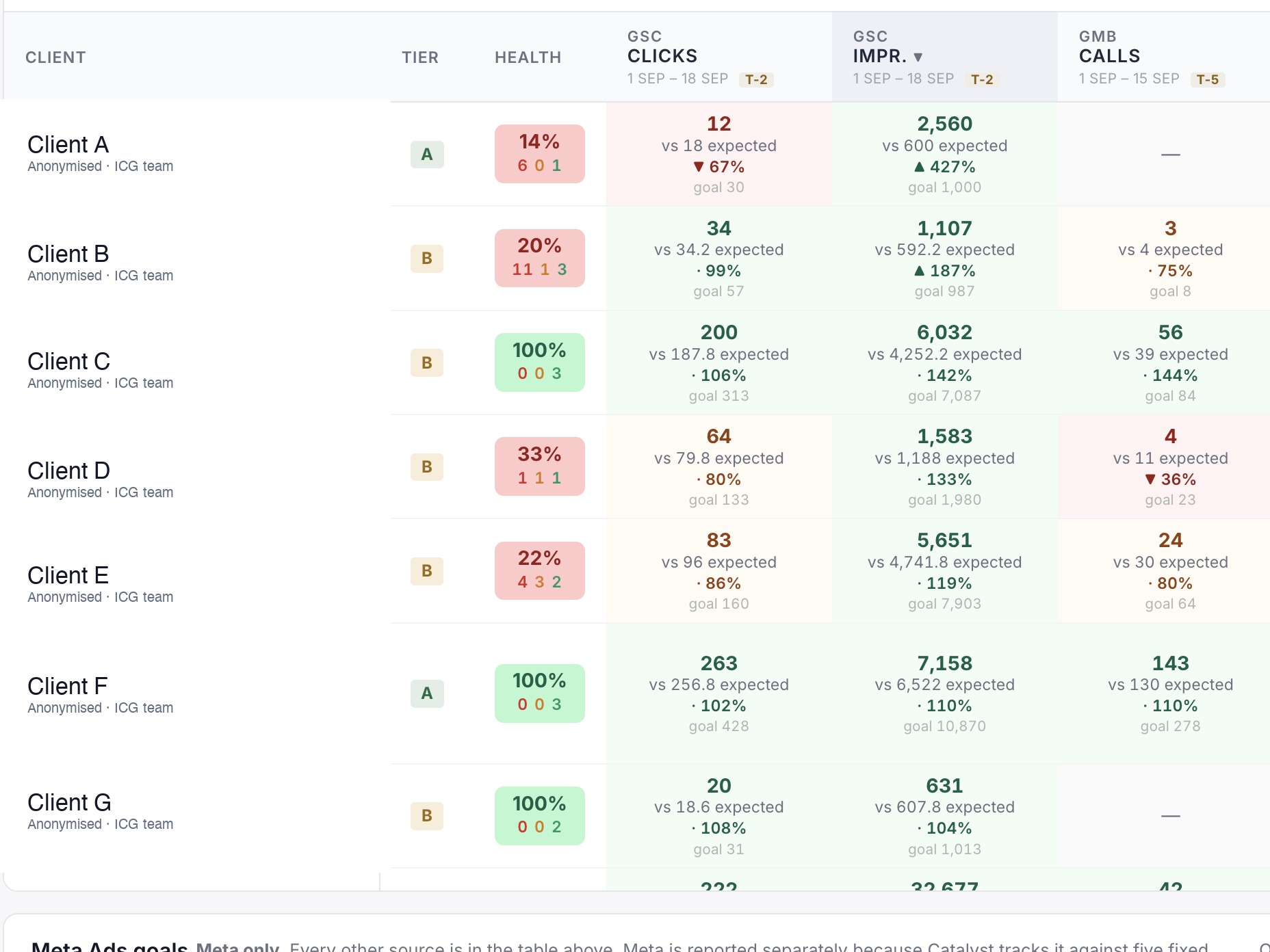
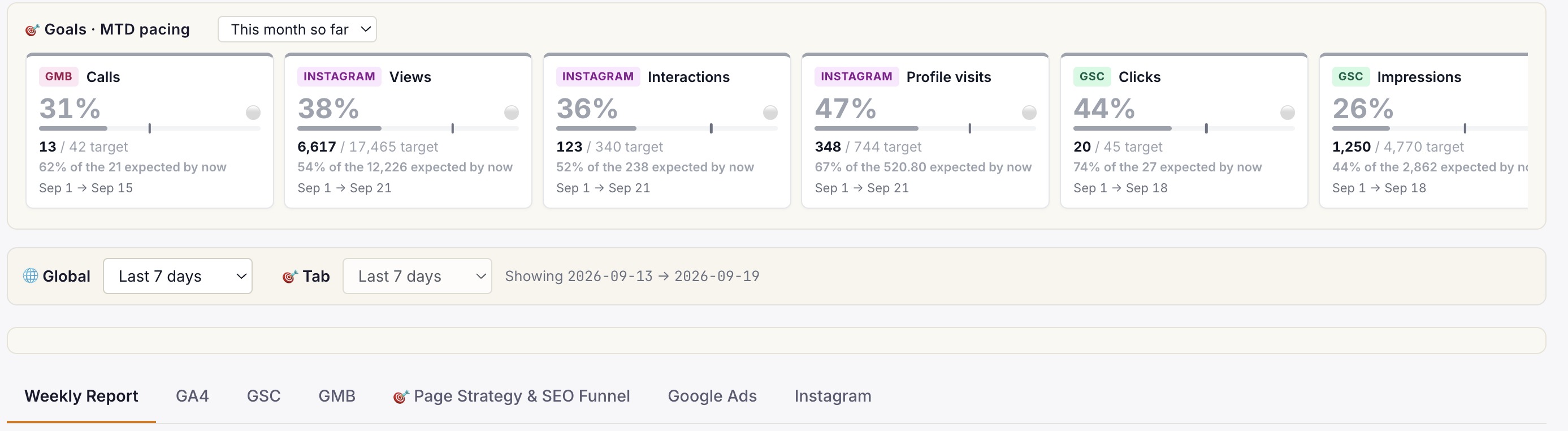
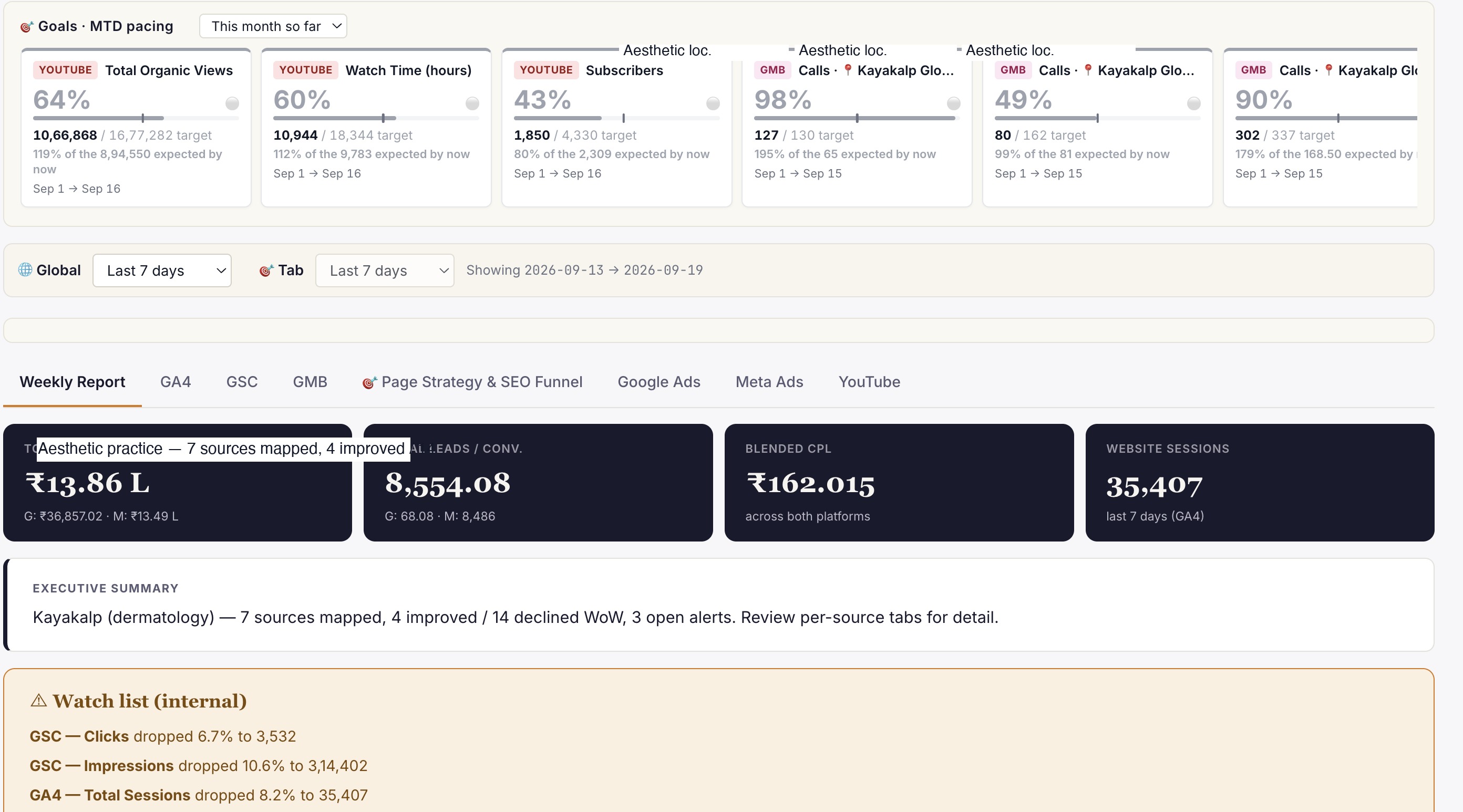
Live client dashboard. GSC, GA4, Google Ads, Meta Ads, IVR calls in one view. Login anytime, not monthly.
Phoenix
Clinic revenue intelligence over your PMS. Daily action queue: Prevent Loss, Maintain & Engage, Grow Revenue. Multi-centre rollout.
Or book a free 30-min audit to see all three in action on your account.
Healthcare brands
that already run on ICG.
A representative slice of the 150+ healthcare brands ICG has delivered for across India. Most engagements remain under NDA.


What ICG clients say · on video.
"Scale up of organic channels and business consulting. ICG has absolute domain authority in their field."
"Working with ICG transformed how we acquire IVF patients in Gurgaon. They understand the fertility journey from inquiry to consult..."
"What Ichelon accomplished — they got all my ideas and worked over 3-4 months to create an amazing, super-customised website."
Need help operationalising this?
Every ICG service is healthcare-only, NMC + DPDP-aware, and built around the patient-research patterns that drive Indian healthcare growth in 2026.
Every practice welcome — packages from ₹20,000/mo.
Goals-Driven engagements · Performance-Linked Payout Models available
More from
ICG.
Five trends shaping Indian healthcare marketing through 2027: AI-first patient research, Conversions API adoption, ABDM discovery, the AEO w...
Healthcare AIO is the discipline of getting your clinic or hospital cited inside Google AI Overviews, ChatGPT and Perplexity answers — not j...
Conversational-search advertising places brand messages inside AI chat answers — ChatGPT, Perplexity, Copilot — rather than beside a results...
Stop guessing.
Book a Diagnostic.
30 minutes. Free. With the AI-powered healthcare-only marketing agency 150+ brands already run on. No slides, no pitch, no hard close.


