Glaucoma Marketing
Agency in India.
By Rohit Gupta · Business & Growth Lead, Ichelon Consulting Group. SEO review by Hanuman Sihag. Updated September 2026.
Glaucoma marketing is not procedure marketing. It is chronic-care marketing — with the highest lifetime-value profile of any ophthalmic sub-vertical in India. A single glaucoma patient managed well delivers Rs.15,000 to Rs.40,000 of clinical revenue per year, retained for a decade or longer, and produces the compound word-of-mouth that a well-run glaucoma clinic quietly builds a reputation on. The marketing model that fits looks nothing like a LASIK or aesthetic-derm model. It looks like a family-doctor-practice model.

Why glaucoma is chronic-care marketing,
not procedure marketing.
The glaucoma patient does not walk in ready to purchase a procedure. They walk in — often referred by a general ophthalmologist or, less often, prompted by a family-history concern — for a lifelong management relationship. The economics of glaucoma marketing therefore reward retention, not acquisition. A newly-diagnosed 55-year-old glaucoma patient at a well-run practice will visit two to four times a year, undergo periodic OCT and visual-field testing, be prescribed and monitored on IOP-lowering drops, and eventually be a candidate for SLT (selective laser trabeculoplasty) or MIGS (minimally invasive glaucoma surgery). Over 15 to 25 years of care, they will contribute Rs.3 to Rs.8 lakh of clinical revenue and — critically — refer family members and friends who have never been screened.
This shapes the marketing model in three ways. First, acquisition CPQL should be measured against LTV, not against per-visit revenue. A CPQL of Rs.1,200 for a glaucoma patient is not a Rs.1,200-against-a-Rs.3,000-consult trade — it is a Rs.1,200-against-a-Rs.3,00,000-lifetime-value trade. Second, retention infrastructure (appointment reminders, medication-refill nudges, annual-review scheduling) matters more than any single ad campaign. Third, family-history education is a durable acquisition surface because glaucoma is meaningfully heritable and the researching adult child of a diagnosed patient is a natural next-patient.
The silent-thief content challenge.
How to communicate urgency without fear.
Glaucoma is symptomless in early stages. This is both the reason regular screening matters and the reason patients under-search for it. Nobody types "glaucoma" into Google when they are asymptomatic; they type it once they, a parent, or a sibling has been diagnosed. So content has to do double duty: it has to educate the diagnosed patient's family (the researcher who arrives after a family member's diagnosis) and it has to prompt at-risk asymptomatic screening (the searcher who typed "glaucoma family history" or "eye pressure test near me").
The tone that works is calm, factual, and non-alarmist. NMC and ASCI both take a dim view of scare-tactic copy in medical marketing. The framing that stays compliant and works: "Glaucoma damages vision without symptoms in the early stages. Early detection through a five-minute IOP check plus optic-nerve imaging preserves the vision that is still healthy. If a parent, sibling, or grandparent has been diagnosed with glaucoma, discuss annual screening with an ophthalmologist." Factual, actionable, no scare imagery.
The content spine that consistently earns organic traffic and builds trust: a glaucoma family-history page, an IOP-and-optic-nerve-imaging explainer, an eye-drops management page (adherence education is a durable content asset because non-adherence is the main reason vision is lost), an SLT explainer, and a MIGS overview. Each written by the glaucoma consultant with a byline and photograph.
Meta interest layers
and educational reach content.
The strongest Meta Ads targeting layer for glaucoma is family-history-adjacent. Interest categories like "eye health", "senior care", "diabetes awareness" (glaucoma is more common in diabetics), and "caregiver" combined with age-band targeting (35 to 60 for the researcher-child cohort, 55 to 75 for direct patients) deliver an audience that engages with awareness content at a meaningfully higher rate than broad ophthalmology targeting.
The ad-and-content pairing that works: a 30-to-45-second educational reel from the glaucoma consultant on "the three questions to ask your ophthalmologist if a parent has glaucoma", pointing to a landing page that offers a family-history screening consult at a promotional rate (compliant if the promotional rate applies to a defined service and is transparent). This creative style keeps the tone educational, the CTA specific, and the compliance frame intact.
CSR camps + acquisition —
the dual-use programme.
World Glaucoma Week (March), community screening days, and RWA-organised eye-camps are legitimate patient-education vehicles and, when structured correctly, meaningful acquisition surfaces. The conversion math: at a well-run IOP screening camp of 200 attendees, expect 15 to 30 to have elevated IOP or suspicious optic-nerve findings that warrant follow-up. Of those, 40 to 60 per cent will book a follow-up consult if the on-site protocol is right, and 25 to 40 per cent of the follow-ups will convert to established-patient status.
On-site protocol that improves the follow-up conversion: same-day report handed to the attendee, WhatsApp appointment booking wired to a dedicated glaucoma coordinator, follow-up SMS at 48 hours and 7 days, and a printed referral card that the attendee can hand to their GP or diabetologist. The camp is a CSR activity that also produces a genuine acquisition pipeline — both objectives served, neither compromised.
Compliance note: camps that screen for free are compliant; camps that offer a "free follow-up consult" are compliant if genuinely free; camps that offer bait-and-switch consultations (a free screening that turns into a paid follow-up on the same day at a higher-than-market rate) fail both NMC and ASCI. The distinction is transparency: the attendee should know before the camp what is free and what is paid.
Annual visit stickiness =
the highest LTV in ophthalmology.
A glaucoma patient retained for 20 years contributes more clinical revenue than four cataract surgeries. That math is what makes retention infrastructure the highest-ROI marketing spend in a glaucoma practice. And retention is largely a software and SOP problem, not a creative problem.
The retention stack that works: an EMR that flags overdue visits (patients past their 6-month or 12-month recall window), a WhatsApp reminder cadence at 30, 14, and 3 days ahead of scheduled visits, an annual-review campaign in November-December for patients who have not booked their yearly OCT and visual-field test, and a medication-refill reminder pathway for patients on chronic drops. Each of these is a marketing asset even though none of them looks like marketing on the surface.
Target retention benchmarks for a mature glaucoma practice: 85 to 92 per cent 12-month return rate for established patients, 75 to 85 per cent 24-month return rate, less than 12 per cent leakage per year. Practices that hit these benchmarks compound patient counts and reputation at a rate that no acquisition channel can match.
Surgical option awareness —
the mid-funnel education layer.
SLT (selective laser trabeculoplasty) is under-explained on most Indian glaucoma-practice websites. It is often a superior first-line intervention to eye drops for the newly-diagnosed patient, and its content earns organic traffic on a rising query base ("SLT for glaucoma", "laser treatment for glaucoma", "alternative to eye drops for glaucoma"). A dedicated SLT page — mechanism, candidacy, procedure experience, recovery, expected re-treatment interval — is a durable asset.
MIGS (minimally invasive glaucoma surgery, including iStent, Hydrus, and XEN Gel Stent among others) is the newer content cluster with room to grow. Rising surgical volume, rising query volume, and few practices yet publishing patient-friendly content on it. A MIGS overview page — with named devices, candidacy criteria written for the researching child, and a stated position on which devices the practice uses — earns both organic ranking and referring-ophthalmologist trust.
29–51% below the market
median CPQL, specialty by specialty.
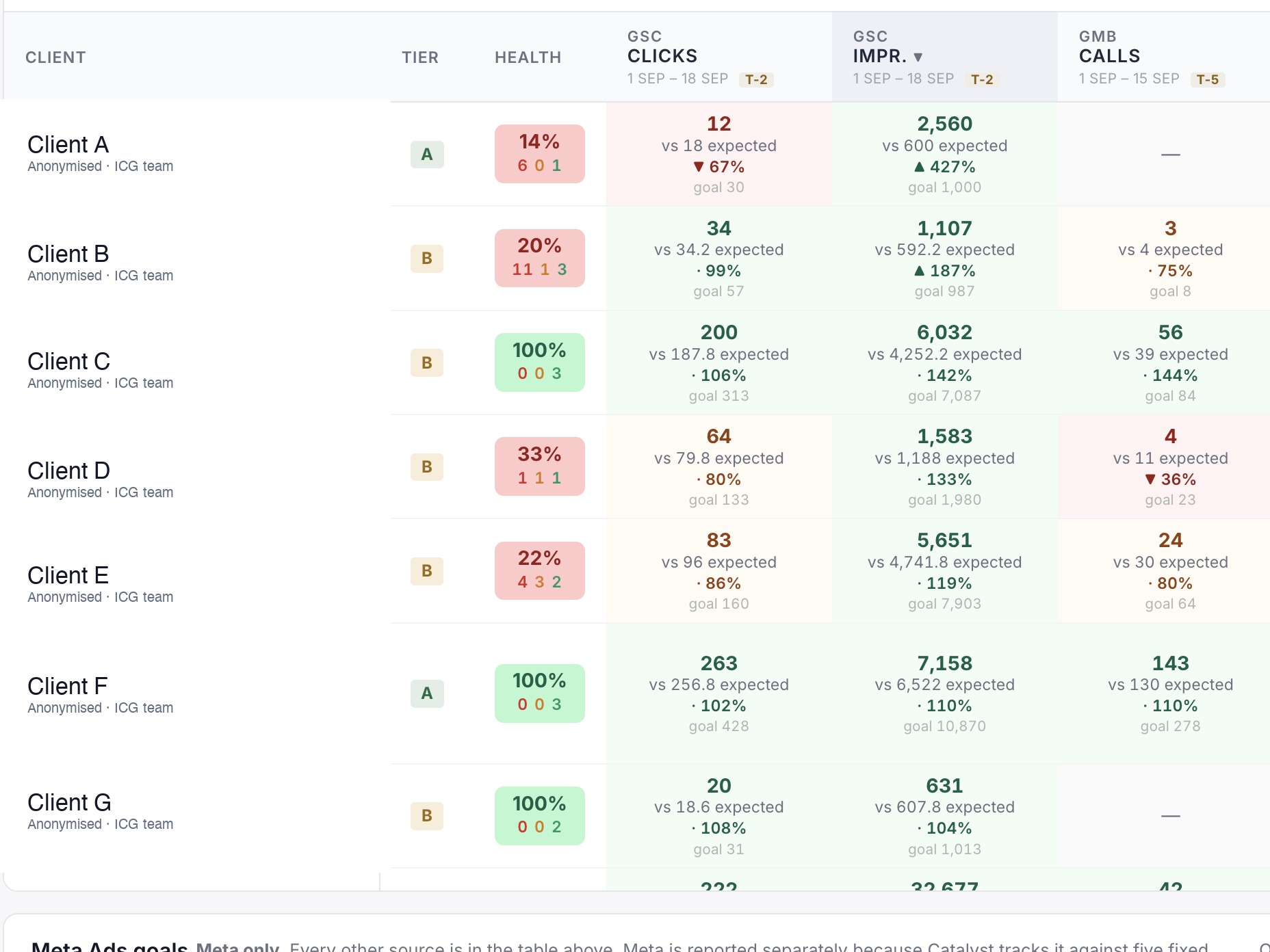
Most glaucoma marketing agency india pitches sell on CPL. ICG sells on CPQL — Cost Per Qualified Lead — the cost of a lead that actually shows up for a consultation. The difference is often 3–4×. Here is what our 150+ healthcare clients actually pay.
Medians from ICG's public CPQL benchmark dataset (Q2 2026), drawn from ICG's live portfolio across Delhi NCR, Mumbai, Bangalore, Hyderabad, Pune, Chennai, and tier-2 cities. Adjust for city: metro CPQLs run 20–35% higher than tier-2 across all specialties.
HealthApex OS: eight platforms. One intelligence layer.
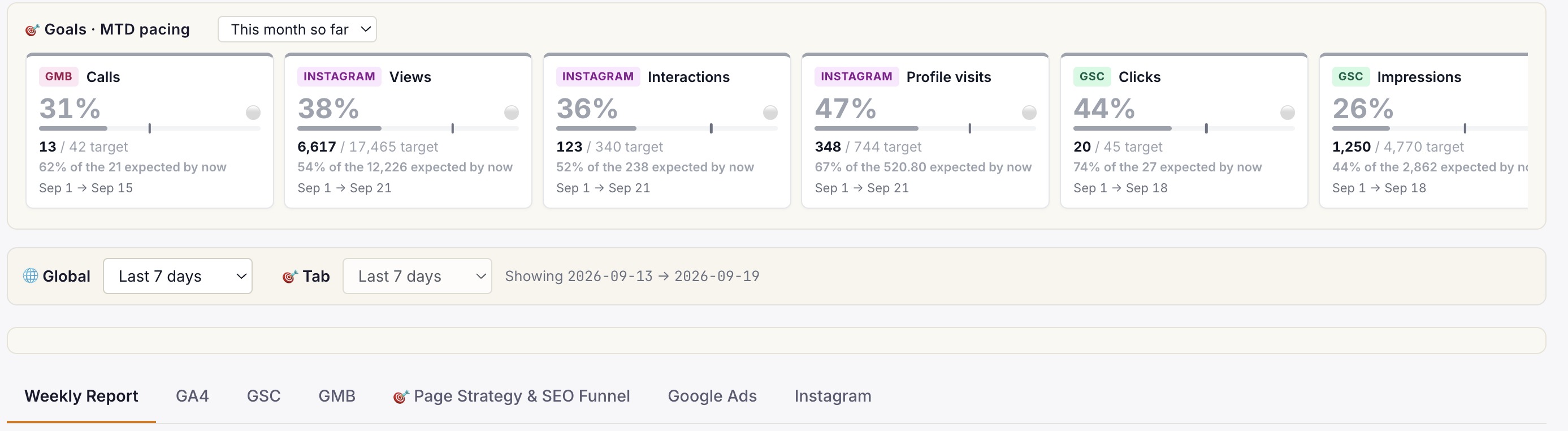
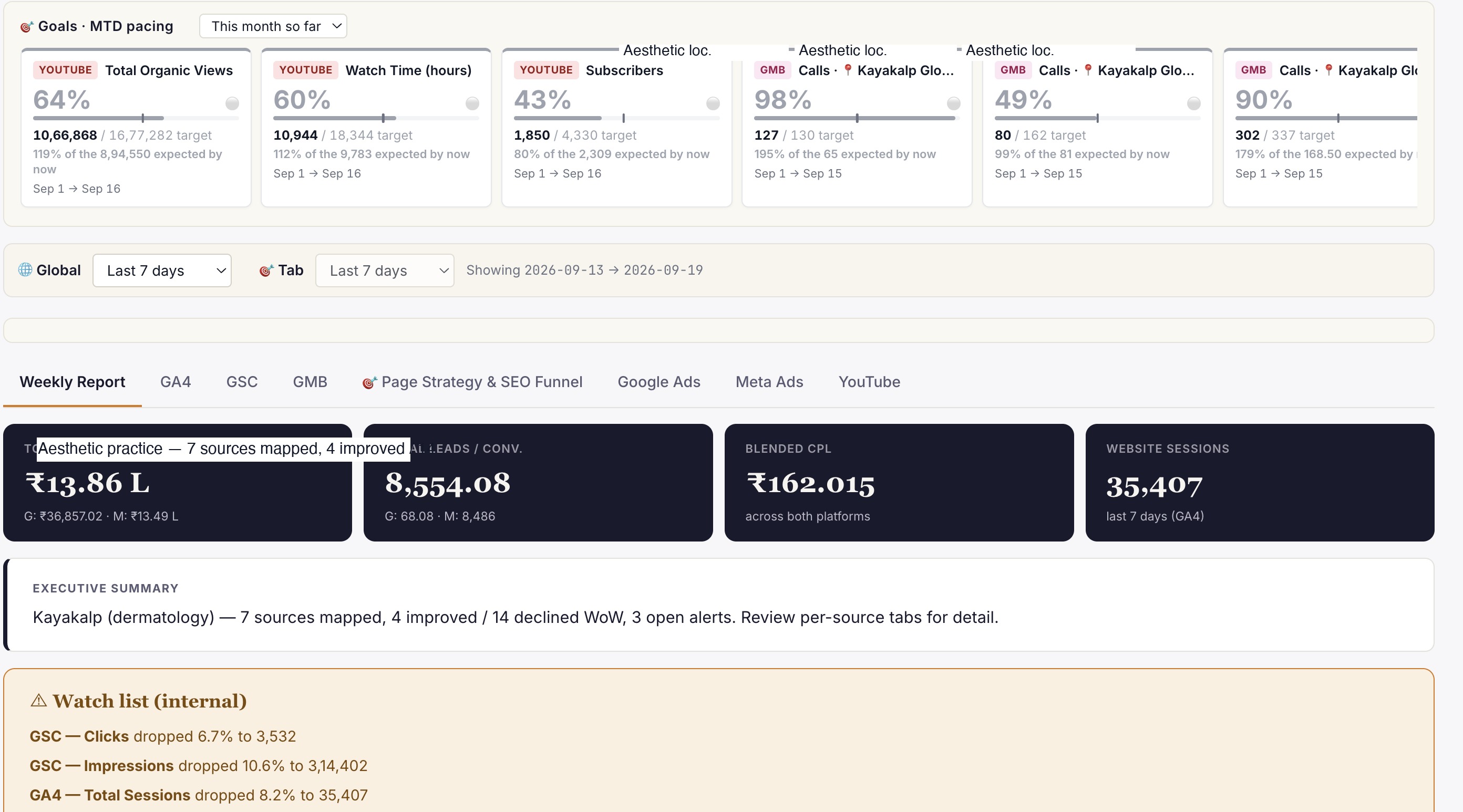
AtomCRM healthcare lead management · Beacon attribution · Hawk CRM intelligence · Phoenix clinic revenue · HealthPro 360 PMS · YODA YouTube intelligence · Agency OS live reporting · AIO Intel AEO+LLM citation tracking. Built in-house since 2018 — included in every glaucoma marketing agency india engagement.
Hawk and YODA.
Standalone offers built for specific gaps.
Is your CRM hiding what it should be showing?
Hawk shows where your leads are leaking: which went cold, which were downgraded by automation, which are recoverable. Free Lead-Leak Audit in 48 hours.
Explore Hawk + free audit →Is your YouTube channel generating patients, or just views?
YODA connects YouTube content to consultation bookings. Patient testimonial videos generate 6.9× more consultations per view than condition explainers.
Explore YODA →Most healthcare marketing agencies treat symptoms.
ICG diagnoses root causes.
High CPL. Junk leads. Low ROAS. These are symptoms, not problems. ICG's diagnostic framework — built across 150+ healthcare engagements — maps every symptom to its actual root cause and the specific treatment that fixes it.
Every framework in this table is proprietary to ICG. Calibrated across 150+ live healthcare accounts since 2018. Full ICG methodology → · Glossary →
Read the complete guide
for your category.
Six pillar guides — each 8,000–15,000 words of original ICG methodology, CPQL benchmarks, and live client data. The depth no other Indian healthcare marketing agency publishes.
More insights at ichelonconsulting.com/insights · 250+ articles · all healthcare-only
About glaucoma marketing
agencies in India.
Tone is factual, actionable, and non-alarmist. The compliant framing: 'Glaucoma damages vision without symptoms in the early stages. Early detection preserves the vision that is still healthy. If a parent or sibling has been diagnosed, discuss annual screening.' Scare-tactic copy fails ASCI review and, more importantly, does not convert — the family-history researcher and the newly-diagnosed patient's adult child both engage more with calm, structured information.
Yes, with the right on-site protocol. A well-run camp of 200 attendees typically identifies 15 to 30 with elevated IOP or suspicious optic-nerve findings. Of those, 40 to 60 per cent book a follow-up if the on-site experience is smooth (same-day report, WhatsApp booking, dedicated coordinator). Of the follow-ups, 25 to 40 per cent convert to established-patient status. That converts to 3 to 12 new long-term glaucoma patients per camp — a real, durable pipeline.
For a mature glaucoma practice: 85 to 92 per cent 12-month return rate for established patients, 75 to 85 per cent 24-month return rate, under 12 per cent annual leakage. The main levers on retention are EMR-driven overdue-visit flags, WhatsApp reminder cadence at 30/14/3 days pre-appointment, an annual-review campaign, and medication-refill nudges.
Yes — MIGS query volume is rising, most Indian glaucoma-practice websites still lack patient-friendly content on it, and the referring-ophthalmologist audience actively searches for practices that have MIGS capability. A single MIGS overview page (covering the named devices your practice uses, candidacy, recovery) plus supporting content on iStent, Hydrus, and XEN is a low-effort, durable content asset that earns both direct organic traffic and referral trust.
Compliance is where most agencies fail.
Hospital advertising sits at the intersection of NMC (per specialist), NABH (institutional), and IRDAI (insurance claims). Multi-specialty hospitals need per-department compliance workflow.
No comparative "better outcomes than" claims without published outcome data. Insurance-empanelment claims must match live TPA lists.
NABH accreditation suspension + insurance-empanelment revocation
Every ad + landing page + email routed through a compliance checkpoint before publishing. Zero enforcement actions across 150+ healthcare clients since 2018.
NMC Guidelines on Ethical Advertising and Public Communication (2026) · DPDP Act 2023 · ART (Regulation) Act 2021 · NABH 6th Edition · Dental Council of India · Schedule J (drug advertising) · UCPMP 2024 · ASCI Healthcare Guidelines
Compliance interpretations current as of October 2026. Enforcement bulletins tracked weekly by ICG's compliance research desk. See our editorial standards for how we source and update these.
Ready to build a
glaucoma marketing engine?
Start with a complimentary 30-minute Glaucoma Growth Diagnostic from ICG. Glaucoma-focused ophthalmology practices, MIGS surgeons, and multi-branch eye hospitals across India.
We cover every stage, from first search to repeat visit
- 0Foundations
- 1Demand gen
- 2Capture
- 3Lead quality
- 4Lead mgmt
- 5Scheduling
- 6Show-up
- 7Conversion
- 8Retention
We work across all nine stages, from foundations to past patients, and fix the stage that leaks first. Our own software runs the work, and every stage is reported against a monthly target on Ichelon Agency OS.
See all nine stages and the tool behind each one →