Cataract Marketing
Agency in India.
By Rohit Gupta · Business & Growth Lead, Ichelon Consulting Group. SEO review by Hanuman Sihag. Updated September 2026.
Cataract marketing looks nothing like LASIK marketing. Where LASIK is a young, digital, price-transparent, brand-comparison sale, cataract is a proximity plus insurance plus family-referral decision made by a 55 to 75-year-old patient with an adult child doing most of the online research. Instagram matters at the edges but not at the centre. Google Ads matters, but not as much as Google Business Profile. And empanelment display — CGHS, ECHS, PMJAY, state schemes — moves more consultations than any single organic keyword.

Cataract is a proximity + insurance decision,
not a brand decision.
The single most important thing to understand about cataract marketing is that it is a two-to-four-kilometre-radius sale for most patients. The 65-year-old who has been recommended cataract surgery by their GP or optometrist will not travel across a city for the operation, will not compare five brands the way a LASIK candidate does, and will make a shortlist of two or three centres primarily based on how close they are, whether their scheme is accepted, and whether their family knows anyone who has been treated there.
This behaviour has three downstream consequences for the marketing model. First, Google Business Profile is the primary conversion surface — the local three-pack for "cataract surgery near me" and "eye hospital near me" drives more first-consultations than every paid ad and every blog post combined. Second, insurance-scheme display is not a compliance chore, it is a marketing asset — an unlisted CGHS empanelment on the GBP profile is a leak of qualified demand. Third, the online research is often done by the patient's adult child on a different device, which changes what the content should say and how the CTA should be worded.
A cataract marketing programme that ignores this reality — that runs a beautiful Instagram feed with no GBP optimisation and no empanelment display — will underperform a much cruder programme that focuses only on the local pack and the empanelment fields. The order of operations for cataract is: GBP first, empanelment second, content third, ads a distant fourth.
The elderly patient
and the adult child researcher.
The elderly patient makes the decision, but the adult child does the research. This split shapes every content decision in a cataract programme. Roughly 60 to 70 per cent of first-consultation enquiries at ICG cataract clients arrive via the adult child's device — the son or daughter Googles from Bangalore or Gurgaon, the parent lives in Kanpur or Coimbatore, the phone number in the enquiry belongs to the child but the appointment is for the parent.
Content should therefore be readable to both buyers. The homepage and cataract landing page should carry a plain-language explanation of the procedure ("Cataract surgery is a 10-to-15-minute daycare procedure. Your natural cloudy lens is replaced with an artificial lens called an IOL. You go home the same day.") that reassures the parent, and a structural detail layer (IOL types, surgeon credentials, empanelment list, family-visit protocol) that satisfies the researcher child. Split the two audiences into different sections; do not try to write a single paragraph that speaks to both.
The WhatsApp CTA on a cataract landing page also needs to acknowledge the two-device reality. A pre-filled WhatsApp message that says "Hi, I would like to enquire about cataract surgery for my parent — city and preferred date below" gets meaningfully higher completion than a generic "I want to book an appointment" opener.
Categories, empanelment attributes,
and the 2 to 4-kilometre geo-grid.
A cataract-primary GBP profile has a specific optimisation pattern that differs from a LASIK-primary or a general-ophthalmology profile. The primary category should be "Eye care center" or "Ophthalmologist" (whichever matches the legal-entity type), never "Cataract surgeon" (not a Google category). Secondary categories should include "Ophthalmology clinic" and, where accurate, "Optometrist" and "Ophthalmology surgeon".
The description field is where empanelment goes. A description that includes "Empanelled with CGHS, ECHS and Ayushman Bharat. Cataract surgery with monofocal, toric, and multifocal IOL options. AERB-licensed operating room." carries more real signal weight than the elegant-but-empty descriptions most cataract hospitals write. Every word in that description is factual, verifiable, and — for a researching adult child — decisive.
Geo-grid scanning at 2 to 4 kilometres reveals the true competitive picture for a cataract centre. A geo-grid tool run monthly shows local-pack position for the target keyword set ("cataract surgery near me", "eye hospital near me", "cataract surgeon", city + cataract combinations) across a grid of grid points around the centre. This map is the diagnostic that tells you whether the problem is on-profile optimisation, review velocity, citation completeness, or a legitimate competitor gap that needs paid support.
GBP posts for a cataract centre should skew heavily toward empanelment reminders (once a scheme confirms), free camp announcements (where genuinely offered), IOL education briefs, and post-op experience shares — never toward promotional discount language.
Monofocal, toric, trifocal, EDOF —
and the upsell content, not sales page.
The IOL is where the majority of realised revenue in a cataract case comes from. The base surgery bill is typically standardised; the IOL choice moves the case value from Rs.25,000 to Rs.80,000 or more depending on lens tier. And IOL choice is the one area where the adult child researcher spends the most time reading. Content architecture matters.
A cataract centre website should carry a dedicated IOL comparison page — not a sales sheet, but a genuine educational comparison of monofocal, toric, multifocal (trifocal or bifocal), and EDOF (extended depth of focus) lenses. Each lens tier explained in one paragraph: what it corrects, what it does not, who it suits, what it costs (range, not a fixed number). No language claiming one is universally better. No language guaranteeing outcome.
This page earns organic traffic on queries the adult child types ("multifocal IOL cost", "trifocal vs monofocal", "toric IOL for astigmatism") and does the pre-consultation education that lets the surgeon spend the actual consultation on candidate-specific counselling instead of Lens Basics 101. Clinics that publish this content routinely report a 15 to 25 per cent lift in premium-IOL uptake at their consultations — not because the content sells, but because the counselling conversation starts further along.
Empanelment display
as a decision lever.
Empanelment display is the highest-leverage single change most Indian cataract hospitals can make. A centre that has active CGHS, ECHS, and Ayushman Bharat empanelment but does not display those attributes on the GBP profile, on the homepage, on the cataract landing page, or in the ad copy is leaking qualified demand every day. The government-scheme patient base for cataract is enormous — CGHS covers 4.4 million beneficiaries, PMJAY covers over 500 million — and empanelment is often the deciding factor for these patients.
The right places to display empanelment: GBP description (a factual sentence), GBP attributes (Google surfaces scheme acceptance under "Payments" and "Insurance accepted" — enable both), homepage hero band ("Empanelled with CGHS, ECHS, Ayushman Bharat"), cataract landing page top-fold trust bar, Google Ads sitelink or callout extension, footer of the website. Every one of these placements earns qualified traffic and improves conversion.
State-scheme empanelment is often overlooked. Karnataka's Suvarna Arogya, Tamil Nadu's CMCHIS, Telangana and Andhra's Aarogyasri, West Bengal's Swasthya Sathi, Maharashtra's MJPJAY, Delhi's DGEHS — each is a marketing lever within its state. A Bangalore cataract centre that displays Suvarna Arogya on GBP will outperform a competitor that does not, all else equal.
The follow-up SOP
that builds a 4.7-star profile.
Cataract patients skew older and — contrary to reputation — often write thoughtful Google reviews when asked in the right way at the right moment. The right moment is the second post-operative follow-up visit (day 7 to day 10), when the patient has experienced restored vision and is speaking about it emotionally. The right ask is a printed card with a QR code linked to the clinic's Google review page, handed by the counsellor with a specific verbal script: "If today's experience felt worth sharing, would you consider a Google review? The QR code takes you straight there."
Volume targets that work: eight to fifteen new reviews per month for a Tier-2 cataract hospital, twelve to twenty for a metro centre. Rating target: 4.5 to 4.7 stars sustained. Below 4.3 the local-pack ranking suffers noticeably; above 4.7 the profile starts to look unnatural to a suspicious searcher. A steady flow at 4.6 to 4.7 is the sweet spot.
The educational sequence
that lifts realised revenue per case.
Premium IOL upsell (moving a patient from monofocal to toric, multifocal, trifocal, or EDOF) is where the biggest gross-margin swings live in cataract. But the temptation to build it as a sales pipeline — landing page, ad, close — is a mistake. The Indian cataract patient does not buy the way an aesthetic patient buys. They buy the way a first-time-flight passenger buys their seat: they educate, they consult, they commit.
The content sequence that works is educational, sequenced across pre-consultation touchpoints. Before the consultation: the IOL comparison page on the website, an emailed pre-consultation FAQ that includes IOL basics, a WhatsApp message with a link to the trifocal vs monofocal explainer. During the consultation: the surgeon or counsellor uses the same explainer as a whiteboard reference, not a fresh pitch. After the consultation: a summary WhatsApp message with the recommended IOL, the reason, and the fully-loaded price.
This sequence lifts premium-IOL uptake by 15 to 25 per cent over a "counsellor pitches premium at the end of the consultation" baseline, because the patient (and the researcher child) have already engaged with the content before the price conversation.
29–51% below the market
median CPQL, specialty by specialty.
Most cataract marketing agency india pitches sell on CPL. ICG sells on CPQL — Cost Per Qualified Lead — the cost of a lead that actually shows up for a consultation. The difference is often 3–4×. Here is what our 150+ healthcare clients actually pay.
Medians from ICG's public CPQL benchmark dataset (Q2 2026), drawn from ICG's live portfolio across Delhi NCR, Mumbai, Bangalore, Hyderabad, Pune, Chennai, and tier-2 cities. Adjust for city: metro CPQLs run 20–35% higher than tier-2 across all specialties.
HealthApex OS: eight platforms. One intelligence layer.
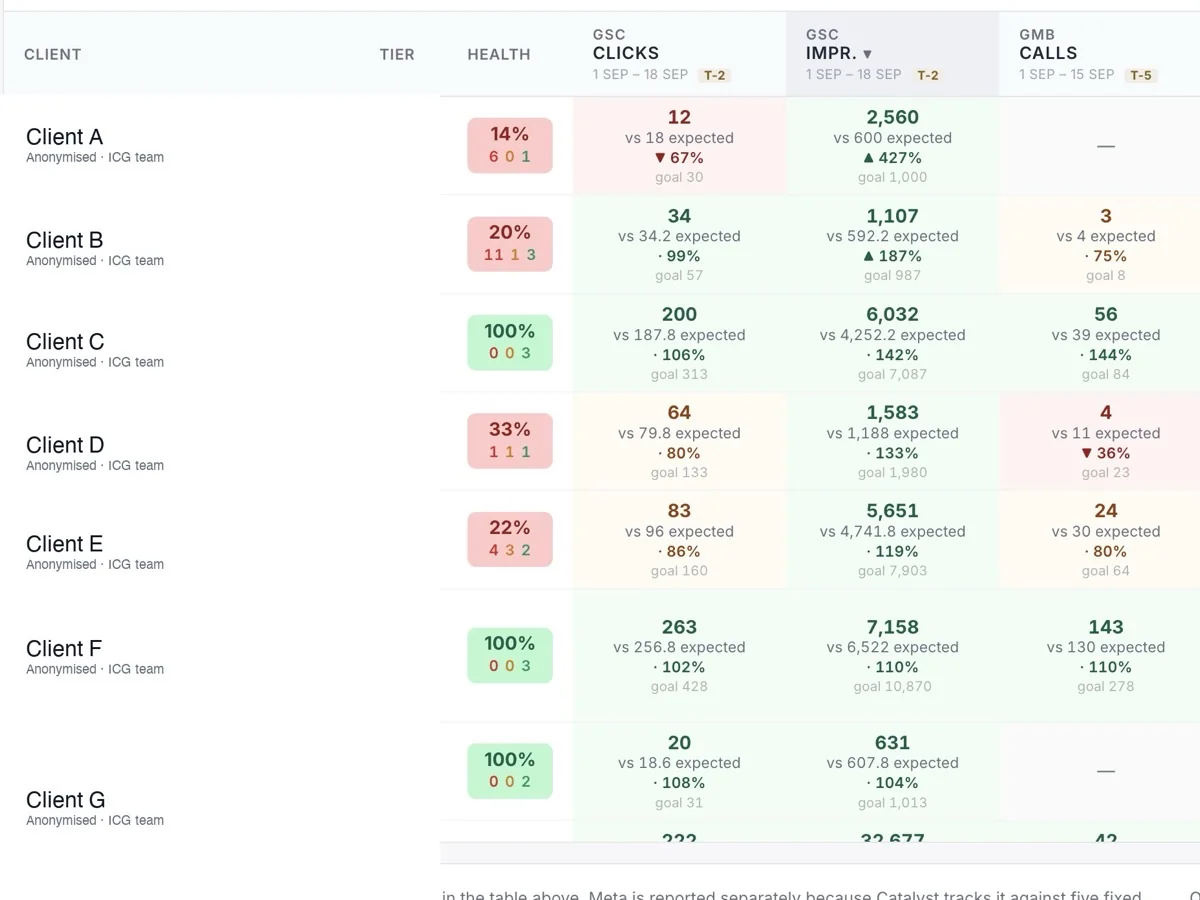
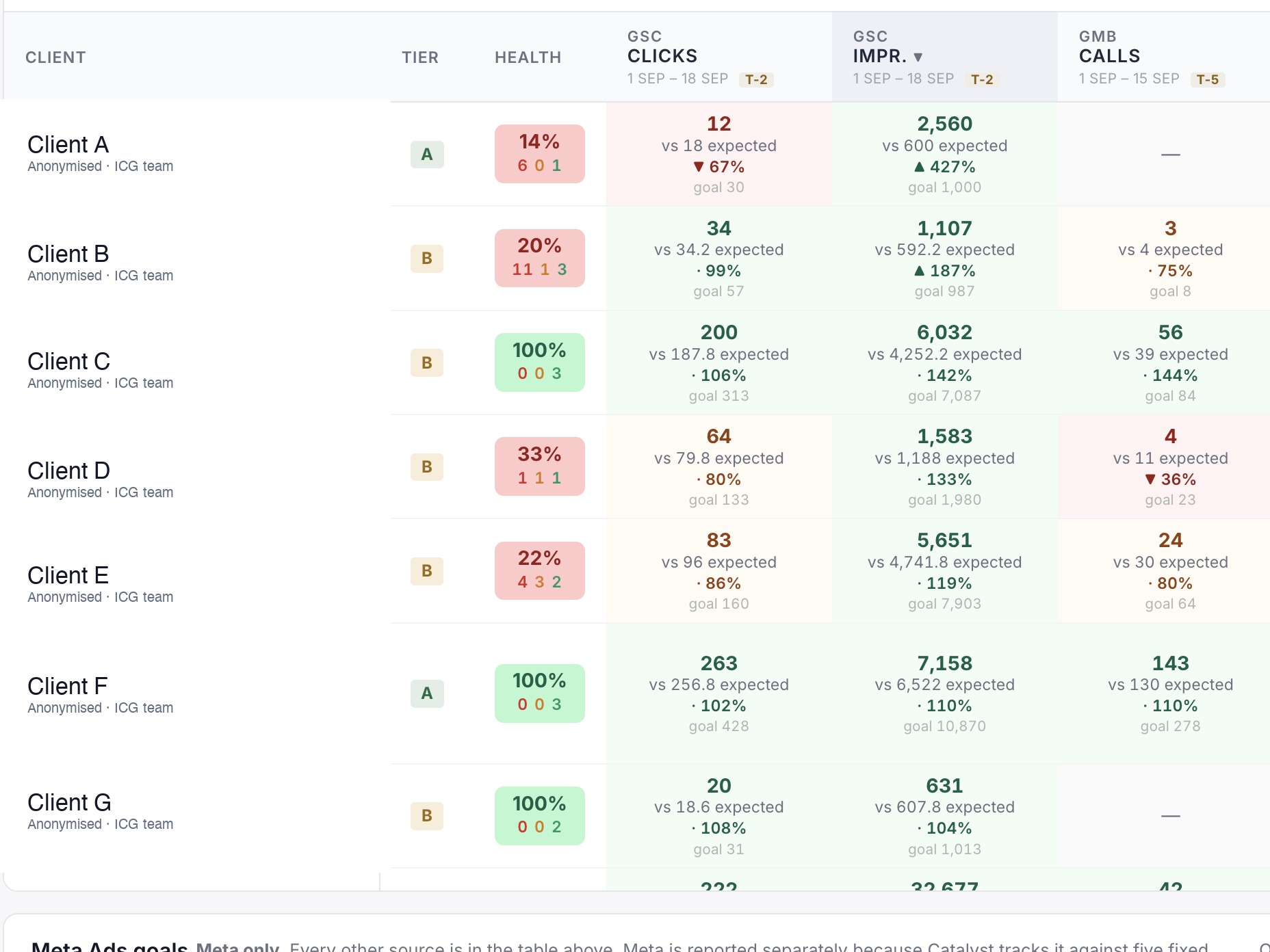
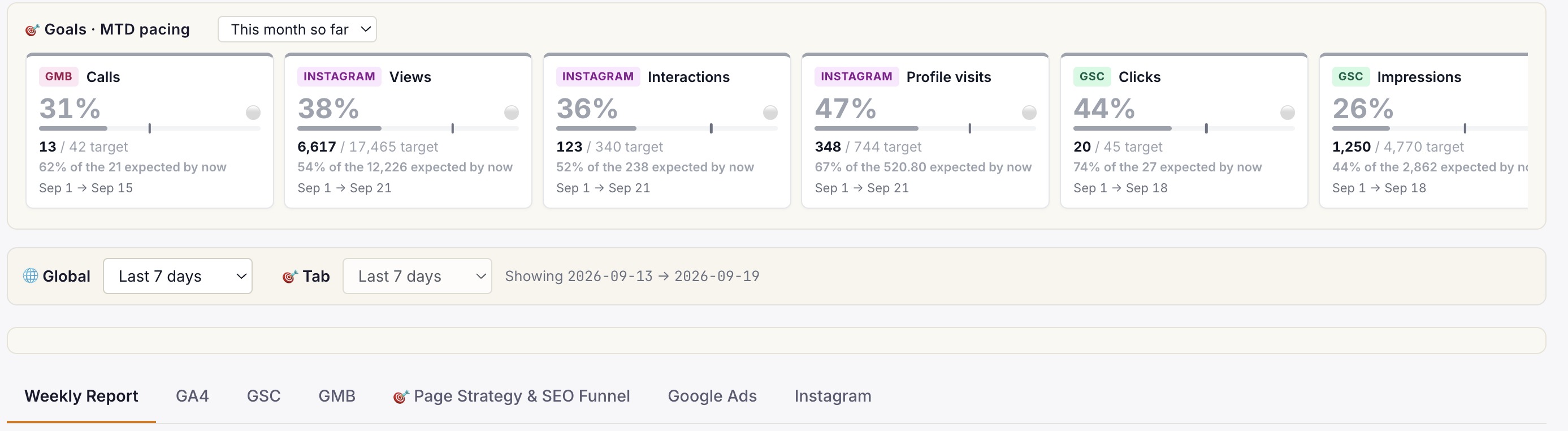
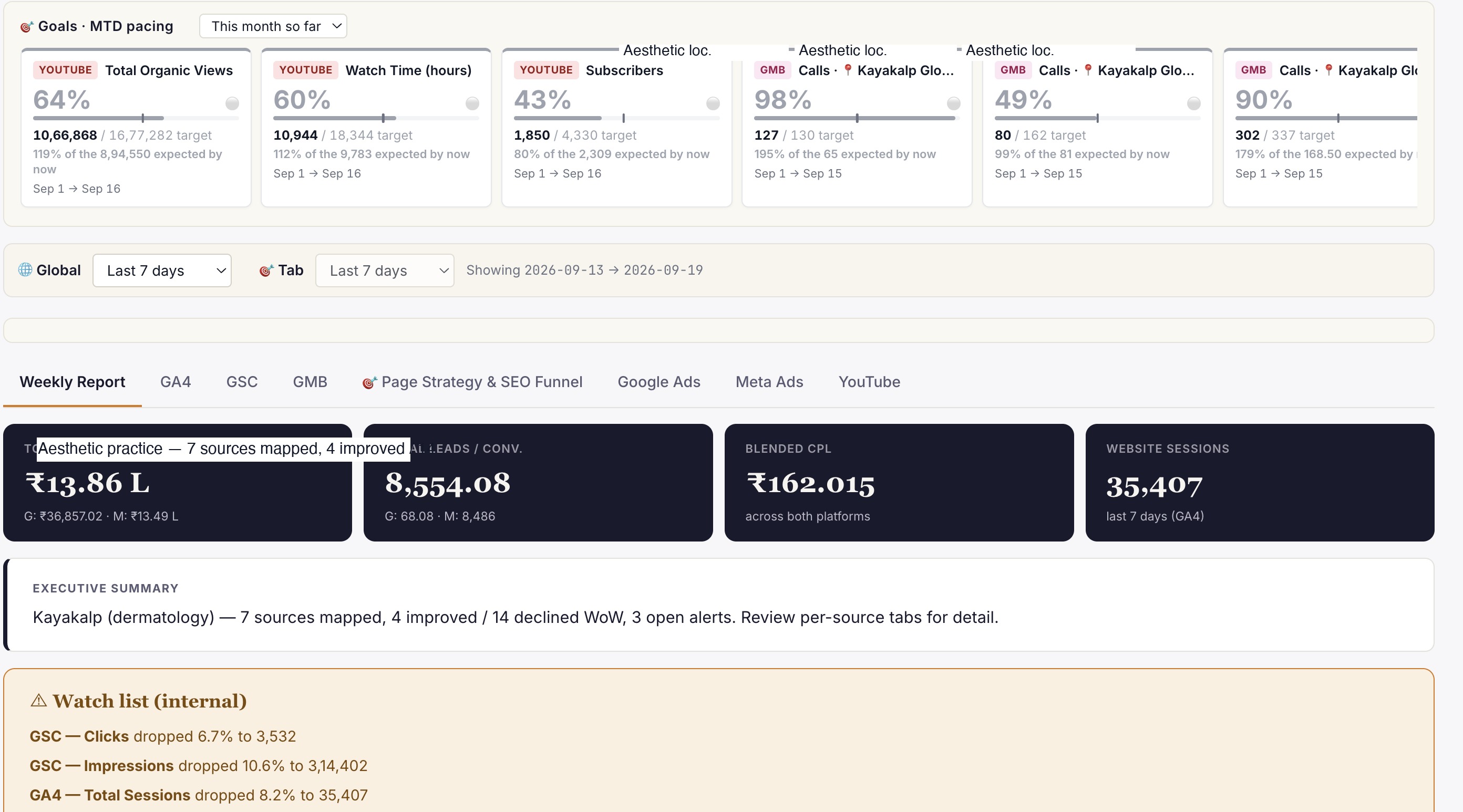
AtomCRM healthcare lead management · Beacon attribution · Hawk CRM intelligence · Phoenix clinic revenue · HealthPro 360 PMS · YODA YouTube intelligence · Agency OS live reporting · AIO Intel AEO+LLM citation tracking. Built in-house since 2018 — included in every cataract marketing agency india engagement.
Hawk and YODA.
Standalone offers built for specific gaps.
Is your CRM hiding what it should be showing?
Hawk shows where your leads are leaking: which went cold, which were downgraded by automation, which are recoverable. Free Lead-Leak Audit in 48 hours.
Explore Hawk + free audit →Is your YouTube channel generating patients, or just views?
YODA connects YouTube content to consultation bookings. Patient testimonial videos generate 6.9× more consultations per view than condition explainers.
Explore YODA →Most healthcare marketing agencies treat symptoms.
ICG diagnoses root causes.
High CPL. Junk leads. Low ROAS. These are symptoms, not problems. ICG's diagnostic framework — built across 150+ healthcare engagements — maps every symptom to its actual root cause and the specific treatment that fixes it.
Every framework in this table is proprietary to ICG. Calibrated across 150+ live healthcare accounts since 2018. Full ICG methodology → · Glossary →
Read the complete guide
for your category.
Six pillar guides — each 8,000–15,000 words of original ICG methodology, CPQL benchmarks, and live client data. The depth no other Indian healthcare marketing agency publishes.
More insights at ichelonconsulting.com/insights · 250+ articles · all healthcare-only
About cataract marketing
agencies in India.
For direct patient acquisition — very limited use. The 55-to-75-year-old cataract patient is not on Instagram. But for the adult-child researcher, an active Instagram account signals a modern, active clinic — so the value is trust-signalling for the researcher, not lead generation. A cataract clinic that posts one Reel per week (surgeon explaining a topic, or a post-op patient story with consent) is doing enough.
Include a factual statement in the GBP description: 'Empanelled with CGHS, ECHS, Ayushman Bharat.' Enable the Insurance Accepted attribute where Google offers it. Add empanelment to the homepage and landing page as factual copy, not promotional. Avoid superlatives — no 'best CGHS cataract hospital in Delhi'; a factual 'CGHS-empanelled cataract centre' is compliant and stronger signal.
Yes, when the camp is genuinely free (as in, screening at no cost, with clear disclosure of what is and is not included), the ad landing page describes the camp accurately, and the language does not imply a free surgery for every attendee. The compliance risk is bait-and-switch messaging — advertising 'free' when the camp is really a lead-capture funnel with a paid procedure at the end. Google will disapprove such ads and NMC treats them as misleading.
Roughly one to three to one to five in favour of organic GBP. A well-optimised GBP profile in a Tier-2 city can deliver qualified enquiries at an imputed cost of Rs.300 to Rs.800 (attribution accounting for on-profile SEO and review-generation effort). Google Ads for the same market typically runs Rs.800 to Rs.2,200. Both channels are needed — GBP for the local-intent base flow, Ads for the top-of-day-one-of-diagnosis intent — but the resource split should favour GBP for cataract.
Compliance is where most agencies fail.
Hospital advertising sits at the intersection of NMC (per specialist), NABH (institutional), and IRDAI (insurance claims). Multi-specialty hospitals need per-department compliance workflow.
No comparative "better outcomes than" claims without published outcome data. Insurance-empanelment claims must match live TPA lists.
NABH accreditation suspension + insurance-empanelment revocation
Every ad + landing page + email routed through a compliance checkpoint before publishing. Zero enforcement actions across 150+ healthcare clients since 2018.
NMC Guidelines on Ethical Advertising and Public Communication (2026) · DPDP Act 2023 · ART (Regulation) Act 2021 · NABH 6th Edition · Dental Council of India · Schedule J (drug advertising) · UCPMP 2024 · ASCI Healthcare Guidelines
Compliance interpretations current as of October 2026. Enforcement bulletins tracked weekly by ICG's compliance research desk. See our editorial standards for how we source and update these.
Ready to build a
cataract marketing engine?
Start with a complimentary 30-minute Cataract Growth Diagnostic from ICG. Eye hospitals, cataract-primary centres, and multi-branch chains across India.
We cover every stage, from first search to repeat visit
- 0Foundations
- 1Demand gen
- 2Capture
- 3Lead quality
- 4Lead mgmt
- 5Scheduling
- 6Show-up
- 7Conversion
- 8Retention
We work across all nine stages, from foundations to past patients, and fix the stage that leaks first. Our own software runs the work, and every stage is reported against a monthly target on Ichelon Agency OS.
See all nine stages and the tool behind each one →