DHI Hair Transplant Marketing
Agency in India.
DHI (Direct Hair Implantation) is India's fastest-growing premium hair-transplant tier. Search volume on DHI-specific queries has grown 30 to 45 per cent year on year for the last three years, the Choi implanter is now a mainstream trust anchor for a premium buyer segment, and the European-lineage brand narrative — carefully framed to survive NMC review — does the trust-building work that price transparency does for FUE. This is the operator's manual for marketing DHI as a premium tier in India: how to educate on the Choi implanter, how to frame the "no-touch" story without breaching NMC, and how to build the destination-city inflow that defines premium DHI economics.
DHI as India's fastest-growing
premium hair-transplant tier.
The DHI category in India sits in an unusual place. It is not new — the Direct Hair Implantation technique has been present in the Indian market for close to a decade — but it has taken until the mid-2020s for the buyer awareness to reach the tipping point where "DHI" is a searched term rather than a technique the surgeon explains at consultation. Search volume on branded and generic DHI queries has grown 30 to 45 per cent year on year for the last three years, and the growth has come almost entirely from a specific buyer segment: the 32 to 45-year-old established professional who is willing to spend 40 to 80 per cent more per graft for a premium execution.
That buyer profile changes the marketing playbook. Price transparency, which is the single biggest conversion lever in FUE, is a secondary consideration in DHI. Credentials, technique differentiation, the Choi implanter narrative and the surgeon's teaching or research profile matter more. Reels that work in FUE (three-per-week cadence, technique explainers, price transparency) work in DHI too but are supplemented by long-form YouTube surgeon-authority content that a premium buyer needs to see before he books a consult.
The economics justify the marketing investment. A typical DHI case in India sits at Rs.1.2 lakh to Rs.5 lakh depending on graft count, city and surgeon credentialling. CPQL Rs.1,800 to Rs.3,800 is materially higher than FUE, but the case value is materially higher too — the cost-per-booked-case ratio is often better than FUE despite the higher CPQL. The clinics that win the DHI category over five years are the clinics whose infrastructure treats DHI as a credibility-first premium tier rather than a repackaged FUE at a higher price.
"No-touch" positioning.
How to write it without NMC breach.
The "no-touch" claim is one of the most-quoted and most-misused phrases in DHI marketing. It refers to a technique detail — the Choi implanter allows a graft to be implanted into the recipient site without prior scoring and without the graft being manually handled between extraction and implantation — but it has been abused into an outcome claim by ad copy that promises "no-touch guarantees your result". The compliant framing separates the technique detail from any implied outcome.
The safe construction is process description, not outcome promise. "The DHI technique uses the Choi implanter to place each graft directly into the recipient site in one step, without prior scoring or forceps handling. This process is often referred to as 'no-touch' because the graft is not manually contacted between extraction and implantation. The intended clinical benefit is reduced out-of-body time for the graft and precise control over angle, depth and direction of each implanted follicle. Whether this translates to a materially different final outcome versus a well-executed FUE is an active clinical discussion — the compliant position is to describe the process, not to guarantee a superior outcome."
That framing does two things. It gives the buyer accurate technique information. And it stays inside NMC Section 6, which prohibits outcome guarantees. The ASCI parallel — no denigration of alternatives, no superiority claim — is also respected. A DHI-primary practice that leads with this framing on every landing page and every Reel eliminates the compliance risk that has caused ASCI notices for several DHI operators in the last three years.
The "no-touch" phrase itself can be used in landing-page copy — descriptively, in inverted commas, with the process explanation that follows. What cannot be used: "no-touch guarantees your result", "no-touch is proven superior to FUE", "no-touch produces higher graft survival than any other technique". Those are outcome and comparative claims that Section 6 explicitly rules out.
Choi implanter education.
Capital-equipment ROI narrative.
The Choi implanter is the physical piece of clinical equipment that defines the DHI technique. It is a specialised implanter pen — variations include CHOI Type A, Choi 0.6mm, 0.7mm, 0.9mm — that holds a single follicular unit and implants it directly into the recipient site in one motion. For the premium DHI buyer, the Choi implanter is the trust anchor that price transparency is for FUE. Understanding its use, its calibration to different graft sizes, and the training the surgeon has received on it is the single biggest driver of consult booking rate in the category.
The content stack that consistently ranks on DHI queries and builds premium-tier trust: a Choi implanter education page (what it is, the different sizes and their indications, the training required, the intended clinical benefit) — authored by a named surgeon with byline and credentials, dateline and dateModified schema. Supporting long-form pieces on angle-depth-direction precision, single-step implantation versus scored-then-placed, and graft out-of-body time as a clinical variable. A "how DHI is different from FUE" comparison page that describes the tradeoff honestly rather than as a superiority pitch.
A frequently overlooked content asset is the "training and certification" page. Where the surgeon trained on the Choi implanter, when, the number of cases performed since certification, and any teaching or fellowship credentials in DHI specifically. This kind of credential transparency is exactly what a premium buyer is searching for during his 30 to 90-day passive research phase, and clinics that publish it earn brand-search enquiries at a rate significantly higher than clinics that hide credentials behind a generic "About Us" page.
Instagram Reels layer on top. Format 1: surgeon-in-frame explainer of what the Choi implanter is and how it works. Format 2: a "what makes DHI different from FUE" honest-tradeoff explainer. Format 3: an angle-depth-direction precision explainer with graphic overlays. Format 4: a "how I trained on the Choi implanter" personal-credential Reel from the surgeon. These formats build trust in a way that price-per-graft advertising cannot in the premium tier.
European-lineage brand claim.
The NMC-safe way to reference technique origin.
The DHI technique has origin credentials in European clinical practice — the Choi implanter itself was developed in Korea, but the DHI protocol and much of the premium-tier positioning traces to European clinical infrastructure. The "European-lineage" narrative is a legitimate brand asset for a DHI-primary practice, provided it is written accurately and does not slip into misleading-origin claims.
The safe construction references training origin, protocol origin or credential origin, not marketing origin. "Dr X trained on the DHI protocol at {institution}, {city}, {country}" is a factual training credential and is safe to publish if verifiable. "The DHI protocol was developed in European clinical practice and refined for {region} anatomies" is a factual technique-origin statement and is safe if accurately sourced. "European hair transplant technique" as a generic brand claim without a specific referent is where ASCI complaints have been filed — the claim reads as origin-implying without substantiation.
The compliance discipline: every European-lineage reference on the landing page and in ad copy is sourced to a specific credential, institution or protocol. Vague brand claims are avoided. The result is a legitimate premium-tier trust anchor that survives an NMC complaint, an ASCI notice or a competitor teardown.
This matters commercially. The premium buyer specifically values the European-lineage credential — the training origin, the protocol origin, the credentialling framework — and a practice that can articulate it accurately earns the premium price the market supports. A practice that leads with vague "European technique" claims without substantiation both fails compliance and loses trust with the buyer, who has typically already researched enough to know when the claim is substantive versus decorative.
Destination-city dynamics.
DHI patients travel further than FUE patients.
A distinctive commercial characteristic of DHI in India is destination-city inflow. The premium buyer will travel materially further for DHI than the volume buyer will for FUE. Delhi is the biggest DHI destination-city, with a pan-India inflow of 30 to 50 per cent of a well-marketed DHI practice's caseload. Mumbai runs 20 to 35 per cent. Bangalore and Hyderabad run 15 to 25 per cent, weighted toward their respective regional catchments.
The city-specific pages therefore need to carry two funnels on one page. The local funnel — patients from the metro's own catchment researching DHI locally, comparing across three to seven local clinics, converting on credentials and consult experience. And the destination-city funnel — patients from outside the metro (often outside the state) researching where in India to book a premium DHI procedure, converting on brand credentials, travel logistics and stay logistics as much as on technique.
The destination-city landing page anatomy: a travel-logistics section (airport-to-clinic transfer, recommended accommodation tiers for the 7 to 10-day post-procedure window, tourism-adjacent framing if appropriate), a "why patients travel to {city} for DHI" credentials section (the surgeon's international training, the clinic's international-patient volume, any city-level infrastructure advantages), and a coordinator-assisted booking flow that handles travel logistics as part of the consult booking.
The coordinator SOP shifts to handle the higher-ATV, longer-consideration-cycle patient. A destination-city DHI enquiry typically involves 4 to 8 WhatsApp exchanges over 3 to 6 weeks before consult booking, versus 2 to 3 exchanges over 1 to 2 weeks for a local FUE enquiry. The coordinator's job is different — travel logistics, virtual consult scheduling, pre-consult brief calibration for the destination patient. Practices that copy an FUE coordinator SOP into DHI lose destination-city enquiries at a meaningful rate.
Premium landing-page copy.
Trust density over price transparency.
Where the FUE landing page leads with price-per-graft transparency, the DHI landing page leads with trust density. Top-fold headline names the technique and the surgeon. Immediately below: a credentials-first surgeon panel with fellowship institution, years since fellowship, teaching or research roles, and — critically — Choi implanter certification and training origin. The price conversation moves further down the page, framed as a range rather than a starting point, and always tied to the scalp-examination process.
The compliant framing on the price section: "DHI hair transplant at {clinic name} — Rs.75 to Rs.180 per graft depending on graft count, session length, technique refinement and specific hair characteristics. Final quote determined at scalp examination based on donor-area assessment, goal density agreement and session planning." That construction acknowledges the premium price band, explains what drives the range, and stays inside ASCI's rules on price advertising.
The trust-density elements matter more than any single copy line. Testimonials in the DHI category are difficult (patients rarely share) so the review-generation SOP is consent-first with first-name-only or initial-only display. Case-volume statistics are declared as ranges rather than exact numbers ("performs 15 to 25 DHI cases per month" rather than "performed 3,247 DHI cases in 2024"). Every credential is verifiable and dated. The result is a landing page that reads as substantive to a researching premium buyer.
A frequently under-invested element is the pre-consult brief on the landing page. A dedicated section explaining what will happen at the consultation, how long it will take, what the surgeon will assess, what the graft-count discussion will look like, and what the patient should prepare. Premium buyers value this transparency and are meaningfully more likely to book after reading it. See the hair transplant marketing pillar for the full technique mix and the FUE hair transplant marketing operator manual for the volume-tier comparison.
90-day activation timeline
and CPQL benchmarks.
Day 0 to Day 30 — Foundation. Publish the DHI operator-manual landing page, the Choi implanter education hub, the "how DHI is different from FUE" honest comparison page, and the European-lineage credentials page (only if genuinely substantiated). Reset the Meta ad account with a clean credentials-first creative library. Google Ads live on DHI-specific exact-match queries with tight negatives against FUE and FUT terms.
Day 30 to Day 60 — Optimisation. First landing-page A/B tests live. Google Ads shifts to Target CPA if conversion volume clears the 30-in-30 threshold. First three surgeon-in-frame Reels published. YouTube long-form monthly cadence begins. Destination-city landing page anatomy tested for pan-India inflow patterns.
Day 60 to Day 90 — Scale. Google Ads expanded to phrase-match research layer. City-specific DHI pages published for cities with active pan-India inflow. Coordinator SOP tightened for the destination-city, longer-consideration-cycle patient.
CPQL benchmarks. ICG DHI CPQL target Rs.1,800 to Rs.3,800. Market average Rs.2,200 to Rs.4,500. The higher CPQL versus FUE is justified by materially higher case values (Rs.1.2 lakh to Rs.5 lakh typical, versus Rs.70,000 to Rs.3.5 lakh for FUE). Cost-per-booked-case is often better than FUE despite the higher CPQL because premium-tier consult-to-case conversion runs 45 to 58 per cent for a well-executed DHI practice, versus 25 to 38 per cent in FUE.
29–51% below the market
median CPQL, specialty by specialty.
Most dhi hair transplant marketing agency india pitches sell on CPL. ICG sells on CPQL — Cost Per Qualified Lead — the cost of a lead that actually shows up for a consultation. The difference is often 3–4×. Here is what our 150+ healthcare clients actually pay.
Medians from ICG's public CPQL benchmark dataset (Q2 2026), drawn from ICG's live portfolio across Delhi NCR, Mumbai, Bangalore, Hyderabad, Pune, Chennai, and tier-2 cities. Adjust for city: metro CPQLs run 20–35% higher than tier-2 across all specialties.
Eight platforms. One intelligence layer.
AtomCRM healthcare lead management · Beacon attribution · Hawk CRM intelligence · Phoenix clinic revenue · HealthPro 360 PMS · YODA YouTube intelligence · Agency OS live reporting · AIO Intel AEO+LLM citation tracking. Built in-house since 2018 — included in every dhi hair transplant marketing agency india engagement.
Hawk and YODA.
Standalone offers built for specific gaps.
Is your CRM hiding what it should be showing?
Hawk shows where your leads are leaking: which went cold, which were downgraded by automation, which are recoverable. Free Lead-Leak Audit in 48 hours.
Explore Hawk + free audit →Is your YouTube channel generating patients, or just views?
YODA connects YouTube content to consultation bookings. Patient testimonial videos generate 6.9× more consultations per view than condition explainers.
Explore YODA →Most healthcare marketing agencies treat symptoms.
ICG diagnoses root causes.
High CPL. Junk leads. Low ROAS. These are symptoms, not problems. ICG's diagnostic framework — built across 150+ healthcare engagements — maps every symptom to its actual root cause and the specific treatment that fixes it.
Every framework in this table is proprietary to ICG. Calibrated across 150+ live healthcare accounts since 2018. Full ICG methodology → · Glossary →
Read the complete guide
for your category.
Six pillar guides — each 8,000–15,000 words of original ICG methodology, CPQL benchmarks, and live client data. The depth no other Indian healthcare marketing agency publishes.
More insights at ichelonconsulting.com/insights · 250+ articles · all healthcare-only
DHI hair transplant marketing
frequently asked questions.
'No-touch' as a descriptive term for the process — 'the Choi implanter places each graft into the recipient site in one step, without prior scoring or forceps handling, a process often referred to as no-touch' — is generally acceptable. 'No-touch guarantees your result', 'no-touch is proven superior to FUE', or 'no-touch produces higher graft survival than any other technique' are outcome and comparative claims that Section 6 explicitly rules out. The compliant discipline is to describe the process detail, in inverted commas, without any implied outcome or superiority claim.
Yes — the premium DHI buyer specifically values the European-lineage credential (training origin, protocol origin, credentialling framework), and a practice that can articulate it accurately earns the premium price the market supports. The safe construction is 'Dr X trained on the DHI protocol at {institution}, {country}' - a factual training credential. Vague brand claims without a specific referent ('European hair transplant technique') read as origin-implying without substantiation and have drawn ASCI notices. Every European-lineage reference on the landing page and in ad copy should be sourced to a specific credential, institution or protocol.
Yes. Search volume on DHI-specific queries has grown 30 to 45 per cent year on year for the last three years, and the buyer segment converting on those queries is materially different from the generic 'hair transplant' buyer. Case values Rs.1.2 lakh to Rs.5 lakh (versus Rs.70,000 to Rs.3.5 lakh for FUE) justify separate campaigns, separate landing pages and a separate coordinator SOP calibrated for the longer-consideration-cycle premium buyer.
DHI runs 40 to 80 per cent higher per graft than FUE at premium-tier clinics — typical DHI Rs.75 to Rs.180 per graft, typical FUE Rs.45 to Rs.85 per graft. The gap is a technique-execution price band, not a technique-superiority price band; the compliant framing describes it as a difference in process, session length and implanter precision, not as a guarantee of superior outcome. Buyers who research seriously understand this and either commit to the premium tier for the reasons that matter to them (single-step implantation, angle-depth-direction control, longer session with premium implanter time) or shift to FUE for the cost-optionality reasons.
Delhi DHI clinics typically run 30 to 50 per cent destination-city inflow. Mumbai 20 to 35 per cent. Bangalore and Hyderabad 15 to 25 per cent. If a DHI practice's destination-city share sits below the metro's typical band, the diagnosis is usually landing-page anatomy (missing travel logistics section, missing pre-consult brief) or coordinator SOP (calibrated for local FUE-style enquiries rather than longer-consideration-cycle destination-city enquiries).
Metro DHI premium flagship: 80-plus reviews at 4.5 stars minimum. Consult book rate 45 to 58 per cent for a well-executed DHI practice, versus 25 to 38 per cent for FUE, mainly because the premium buyer arrives with higher intent after his 30 to 90-day passive research phase. Review velocity is harder than FUE because the premium buyer is more privacy-guarded; the consent-first SOP with first-name-only or initial-only display typically produces 5 to 10 new reviews per month at a mid-size DHI practice.
Cross-references — the hair transplant pillar has the full technique-mix strategy. The FUE hair transplant marketing operator manual covers the volume-tier comparison. Practices building a broader aesthetic footprint should read the plastic surgery marketing pillar.
Ready to build a
DHI hair transplant marketing engine?
Start with a 30-minute DHI growth diagnostic from ICG.
We cover every stage, from first search to repeat visit
- 0Foundations
- 1Demand gen
- 2Capture
- 3Lead quality
- 4Lead mgmt
- 5Scheduling
- 6Show-up
- 7Conversion
- 8Retention
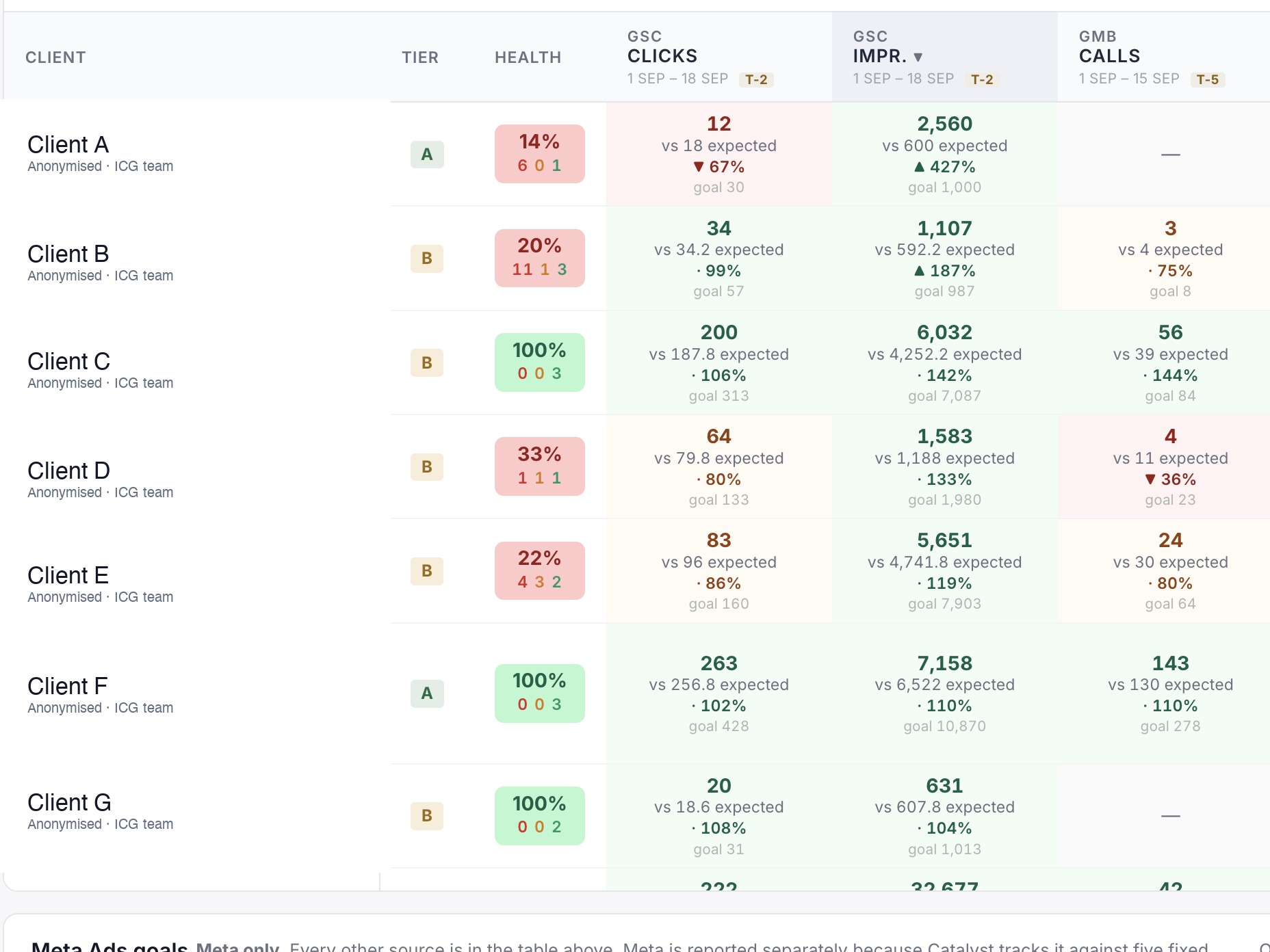
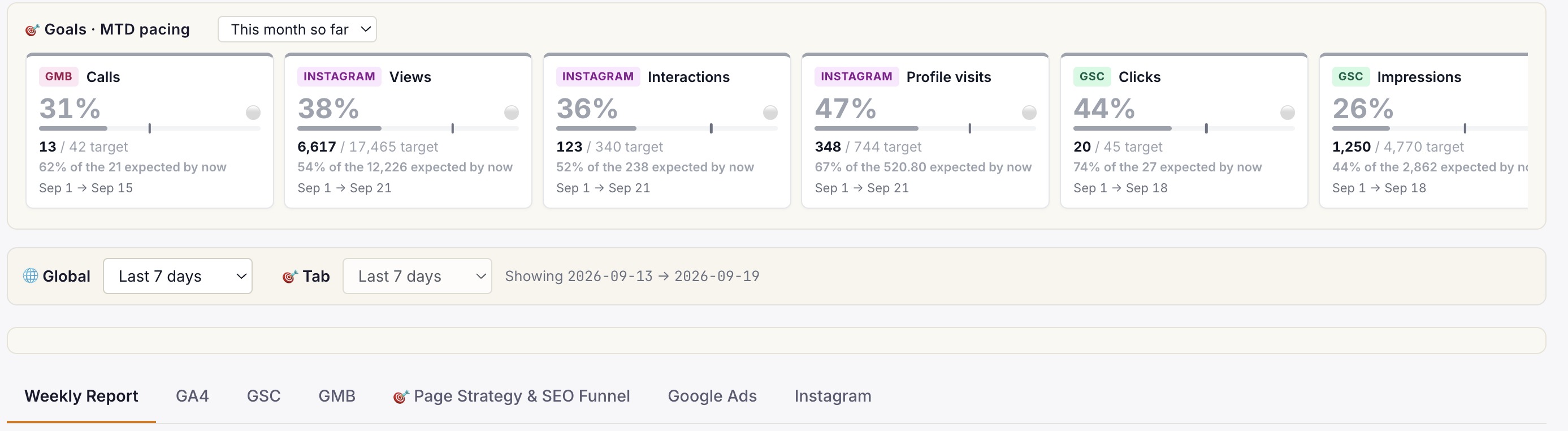
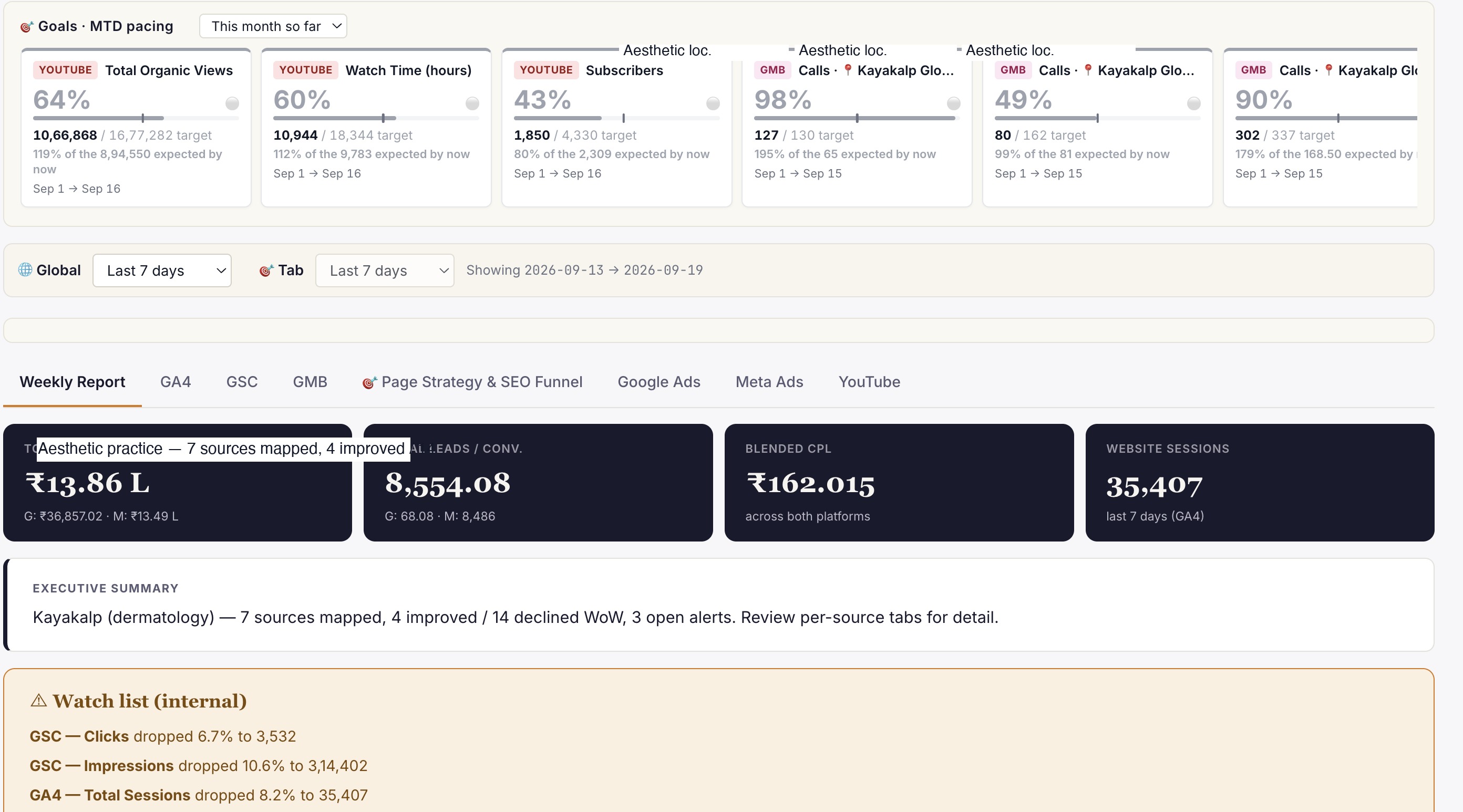
We work across all nine stages, from foundations to past patients, and fix the stage that leaks first. Our own software runs the work, and every stage is reported against a monthly target on Ichelon Agency OS.
See all nine stages and the tool behind each one →