


Nutraceuticals Marketing India 2026: FSSAI + Evidence Playbook
FSSAI-compliant nutraceutical marketing playbook for India: claim rules, KOL programmes, D2C benchmarks, and B2B corporate wellness. Talk to ICG's team.
No pitch. Written root-cause diagnosis. AI-powered, healthcare only.
Direct answer
FSSAI-compliant nutraceutical marketing playbook for India: claim rules, KOL programmes, D2C benchmarks, and B2B corporate wellness. Talk to ICG's team.
TL;DR
India's nutraceutical market — dietary supplements, functional foods, sports nutrition, and wellness products — is estimated at ₹50,000 crore and growing at 18-20% annually. The COVID-19 pandemic accelerated consumer awareness of immunity, metabolic health, and preventive nutrition in ways that have sustained post-pandemic.
The compliance gap in this market is large. A significant proportion of nutraceutical brands — particularly in the D2C and Amazon-native segment — are making claims that are not supported by FSSAI-standard evidence. This creates enforcement risk for brands making unsupported claims and a competitive opportunity for brands that build their authority on genuine evidence.
FSSAI Classification of Nutraceuticals
FSSAI's Food Safety and Standards (Health Supplements, Nutraceuticals, Food for Special Dietary Use, Food for Special Medical Purpose, Functional Food and Novel Food) Regulations, 2022 define the primary categories:
Nutraceuticals: Products with a food base that have additional physiological benefits beyond basic nutritional function. Examples: probiotic capsules, omega-3 supplements, curcumin extract.
Dietary supplements: Concentrated sources of nutrients or substances with nutritional or physiological effect, intended to supplement the diet.
Food for Special Medical Purpose (FSMP): Products intended for exclusive or partial feeding of patients with limited, impaired, or disturbed capacity to take, digest, absorb, metabolise or excrete ordinary foods. This category requires FSSAI specific approval and is closest to pharmaceutical territory.
Novel Foods: Foods or food ingredients that have not been consumed to a significant degree in India before. Requires pre-market approval.
What Claims Can Nutraceutical Brands Make?
FSSAI permits three types of claims for nutraceuticals:
Nutrient content claims: Factual statements about nutrient quantities. "Contains 500 IU Vitamin D3 per capsule." These are permissible if accurate.
Health claims (authorised list): FSSAI maintains an authorised list of permitted health claims. Examples: "Vitamin D contributes to normal absorption of calcium." "Magnesium contributes to normal muscle function." Claims on this authorised list can be used without additional evidence.
Reduction of disease risk claims: Claims that a food or ingredient reduces the risk of a disease or condition. These require specific FSSAI approval based on submitted scientific evidence. The standard of evidence required is high.
Disease cure/treatment claims: Prohibited entirely. A nutraceutical cannot claim to cure, treat, or prevent a specific disease. This is the most common violation in the Indian nutraceutical market.
KOL Endorsement Programmes for Nutraceuticals
Key Opinion Leader (KOL) programmes — engaging doctors, dietitians, and fitness professionals to endorse or recommend a nutraceutical — are widely used in the Indian market. The compliance framework for KOL engagement:
Doctors endorsing nutraceuticals: NMC Section 6 restricts doctors from advertising in ways that solicit patients or imply outcomes. A doctor endorsing a nutraceutical brand should not claim the product cures or treats a specific condition. The permitted model: the doctor as educator — explaining the nutritional role of the ingredient in general wellness terms.
Under UCPMP 2024, a pharma or nutraceutical company engaging a doctor for brand endorsement must ensure the engagement is disclosed, transparent, and not structured as a kickback.
Dietitians and nutritionists: The nutrition profession in India is regulated by the Indian Dietetic Association but with less formal enforcement than NMC. Registered dietitians endorsing nutraceuticals have more flexibility than doctors — but FSSAI claim standards still apply to the content they produce.
Fitness influencers: The largest pool of nutraceutical endorsers in India. ASCI requires disclosure of paid partnerships. ICG recommends all fitness influencer endorsements carry a clear "#ad" or "#sponsored" disclosure. Beyond disclosure, the claims made by influencers in branded posts must comply with FSSAI standards — an influencer claiming a supplement "cures diabetes" is creating FSSAI risk for the brand, regardless of who made the statement.
Corporate Wellness: The B2B Nutraceutical Channel
An underutilised channel for nutraceutical brands in India is corporate wellness programmes. Indian corporates — particularly post-pandemic — have increased investment in employee health, including subsidised supplement programmes, preventive health screenings, and wellness education.
ICG's B2B nutraceutical framework:
- Target: HR Directors, Chief People Officers, and Corporate Wellness Managers at mid-to-large enterprises (500+ employees)
- Offer: evidence-based wellness supplementation programme with nutritional counselling
- Format: corporate MOUs with bulk purchase pricing, employee health tracking integration
- Channel: LinkedIn, direct outreach, HR industry events
This channel generates significantly lower CAC than consumer D2C (B2B relationship-driven) and significantly higher LTV (corporate contract = 12-month commitment minimum). For nutraceutical brands with strong scientific backing, corporate wellness B2B is a high-value channel that competitors often overlook.
ICG's Nutraceutical Marketing Practice
ICG works with nutraceutical brands across FSSAI registration, claim compliance, D2C performance marketing, Amazon optimisation, and corporate wellness B2B. The pharma practice team — brings scientific writing capability to nutraceutical marketing — positioning products on genuine evidence, not unsupported claims.
Read next on ICG
- D2C healthcare marketing agency India
- Pharos Scribe — scientific writing
- Ayurveda marketing — AYUSH compliant
Seven FSSAI compliance mistakes that quietly kill nutraceutical brands
Most nutraceutical launches in India do not fail because the formulation is weak. They fail because a marketing team ships a claim, a label, or an influencer script that a state FDA flags nine months later. By that stage the recall cost, retailer trust loss, and Amazon listing suppression are already baked in. These are the seven patterns we see most often when a founder brings us in for a pre-launch or post-notice diagnostic.
- Treating "natural" as a licence to imply cure. Words like "heals," "reverses," or "treats" move a product from nutraceutical into drug territory under Schedule IV of the FSS Act — even in a reel caption or a doctor testimonial.
- Copy-pasting the front label from a US or EU parent brand. FSSAI mandates specific serving-size, RDA percentage, and warning statements that do not map 1:1 to FDA or EFSA formats.
- Running Meta and Google ads before the label is FSSAI-approved. Ad-copy screenshots are now part of standard notice evidence.
- Paying MBBS-degree KOLs without a disclosed material connection. The MCI code and ASCI guidelines both require disclosure — see our KOL endorsement section above for the compliant structure.
- Skipping stability data before claiming a shelf-life. The claim on pack must match the accelerated stability report on file.
- Publishing user reviews that name a disease. Amazon and Flipkart moderators now flag these automatically, and repeat flags demote the listing.
- Ignoring state-level nutraceutical registration renewals. Central FSSAI approval does not exempt a brand from state-level periodic filings.
We run pre-launch compliance sweeps as part of every nutraceutical engagement inside the Client Elevation Programme, and pair them with Meta Catalyst IQ for compliant paid-media rollout and Prism Spy for a weekly read on which competitor ads are being pulled — so your creative team knows what to avoid before FSSAI does.
How Should Indian Nutraceutical Brands Build a Compliant D2C + Marketplace Funnel?

Short answer: split the funnel into three layers — a marketplace layer for discovery and social proof, a D2C layer for margin and retention, and an influencer layer for demand generation — and gate each one with FSSAI label rules, ASCI 2023 influencer guidance, and DPDP Act 2023 consent. Skip any of the three and the unit economics collapse inside a single quarter.
Marketplace vs D2C: The CPQL and Margin Split
Across the Indian nutraceutical portfolios we run — protein, collagen, weight management, sleep, immunity — marketplace CPQL (cost per first paid order) tends to sit between ₹280 and ₹520 depending on category and city. Bengaluru and Mumbai run 15-20% higher than the national average because of buyer density and category maturity. D2C site CPQL is usually 30-40% lower once you are past ₹8-10 lakh in monthly ad spend, but only if your product page carries the FSSAI licence number, Nutrient Reference Value table, and the mandatory nutraceutical disclaimer. Pages missing any of those three convert at roughly half the rate in our A/B logs.
| Category | Marketplace CPQL | D2C CPQL |
|---|---|---|
| Protein / Whey | ₹320-460 | ₹210-290 |
| Collagen & Beauty | ₹380-520 | ₹240-320 |
| Sleep / Ashwagandha | ₹280-420 | ₹190-260 |
| Immunity / Vitamin | ₹300-440 | ₹200-280 |
ASCI and DPDP: The Two Compliance Rails Most Brands Skip
The ASCI 2023 influencer guidelines require every paid nutraceutical post to carry a #ad or #partnership disclosure, and any health-benefit claim must be backed by a study the brand can produce on request. Doctor-influencers add a second rail: the NMC Professional Conduct Regulations (as amended 2023) bar registered medical practitioners from endorsing commercial products, so brands featuring doctor faces on Instagram or YouTube have to shift to a purely educational format without brand mention in-frame. On the data side, the DPDP Act 2023 makes explicit, purpose-limited consent mandatory before storing marketplace-order data for retargeting. WhatsApp broadcast lists built without that consent are the single biggest compliance exposure we clean up during onboarding audits in Delhi and Hyderabad.
Retention Economics: Subscription and Refill CPQL
Refill CPQL — cost to bring an existing buyer back for order two — should sit below ₹120 across categories. If it does not, your D2C model is quietly subsidising marketplace acquisition instead of the other way around. ICG's 70-30 retainer model maps cleanly here: 70% of monthly effort goes into refill flows, review harvesting, and label-compliant SEO on money pages, and the remaining 30% funds fresh acquisition tests and creative refreshes.
Mini-FAQ
Q: Can we use "clinically proven" on a nutraceutical label or ad in India?
Only if you hold the specific clinical study — published, peer-reviewed, and conducted on your exact formulation — and can produce it within 48 hours of an ASCI or FSSAI query. Generic ingredient-level studies do not qualify.
Q: What ad spend is realistic to hit ₹1 crore monthly GMV for a mid-sized D2C nutra brand?
Roughly ₹18-24 lakh across Meta, Google, and marketplace ads, assuming a blended CPQL near ₹380 and a 2.1x contribution margin. That range holds across the Bengaluru, Pune, and NCR portfolios we track.
Book a free 30-minute Brand & Growth Diagnostic.
It's a working session, not a sales pitch — you leave with a written root-cause analysis you can act on, whether or not you engage ICG.
Questions readers ask
about this topic.
The three platforms
behind every ICG engagement.
Beacon
CAPI middleware that fixes Event Match Quality, translates CRM statuses to Meta-standard events, dedups across channels.
Agency OS
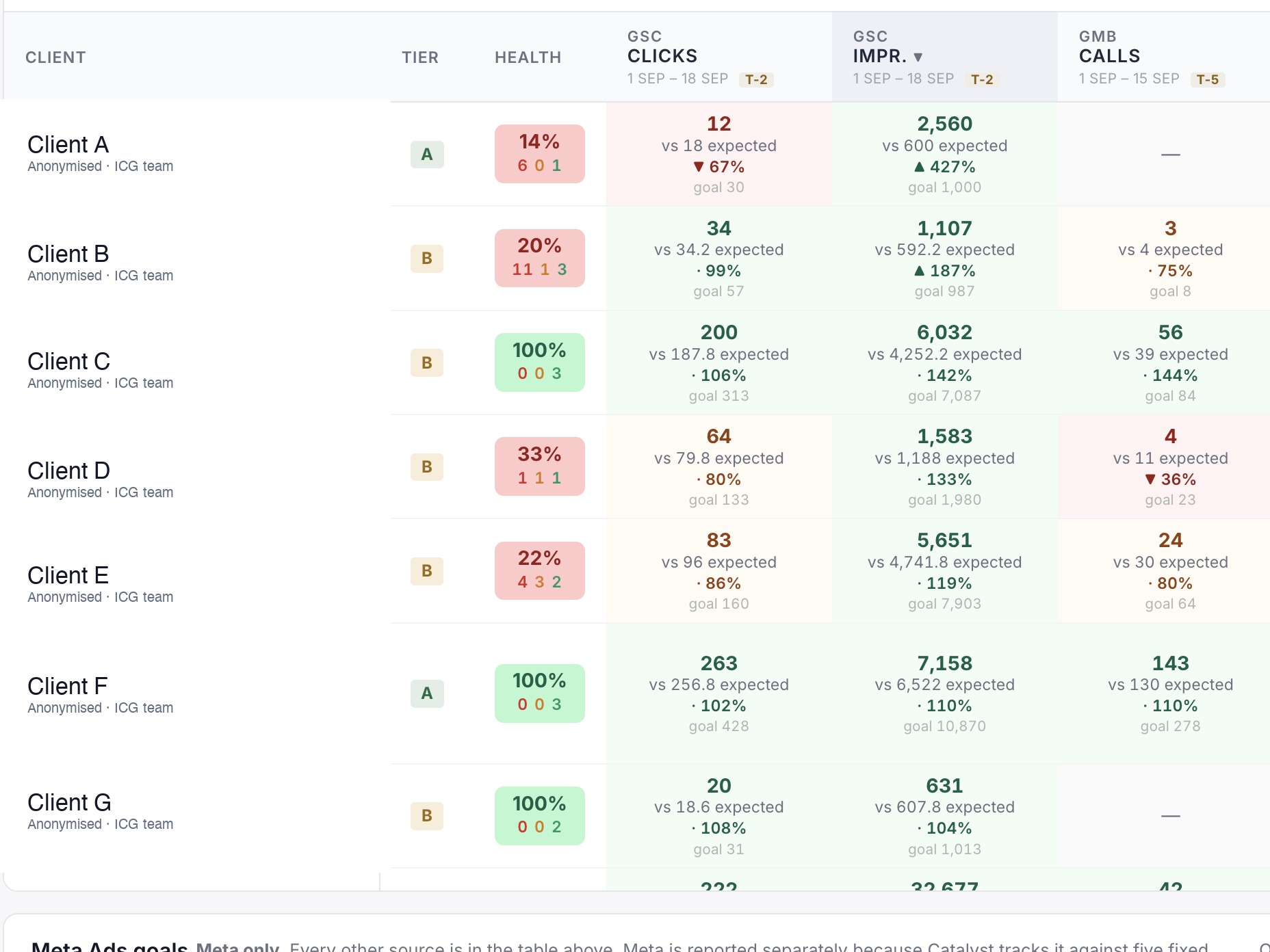
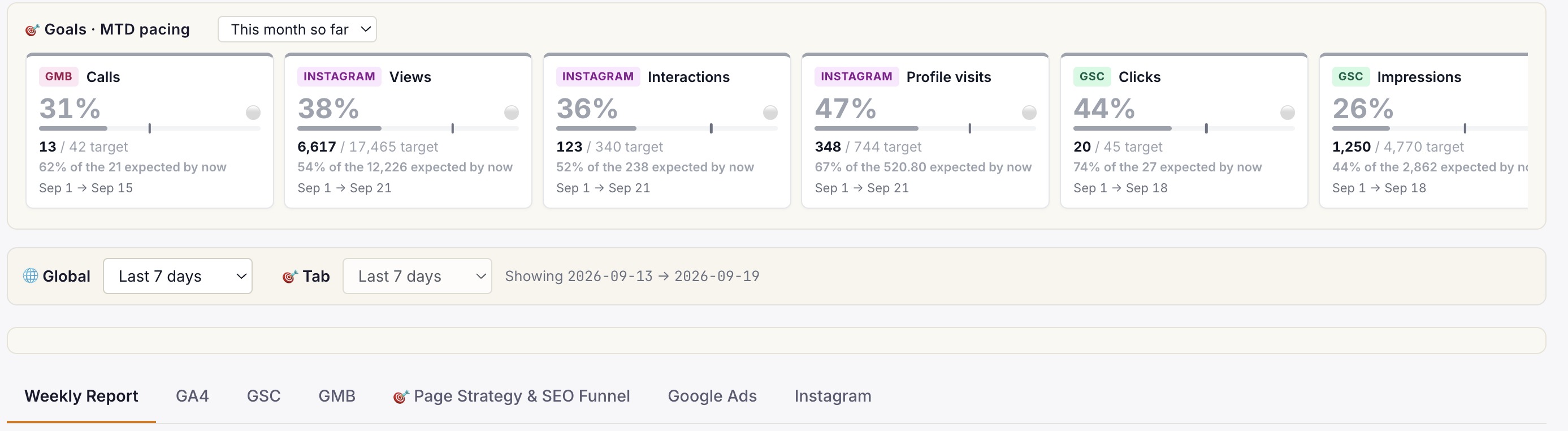
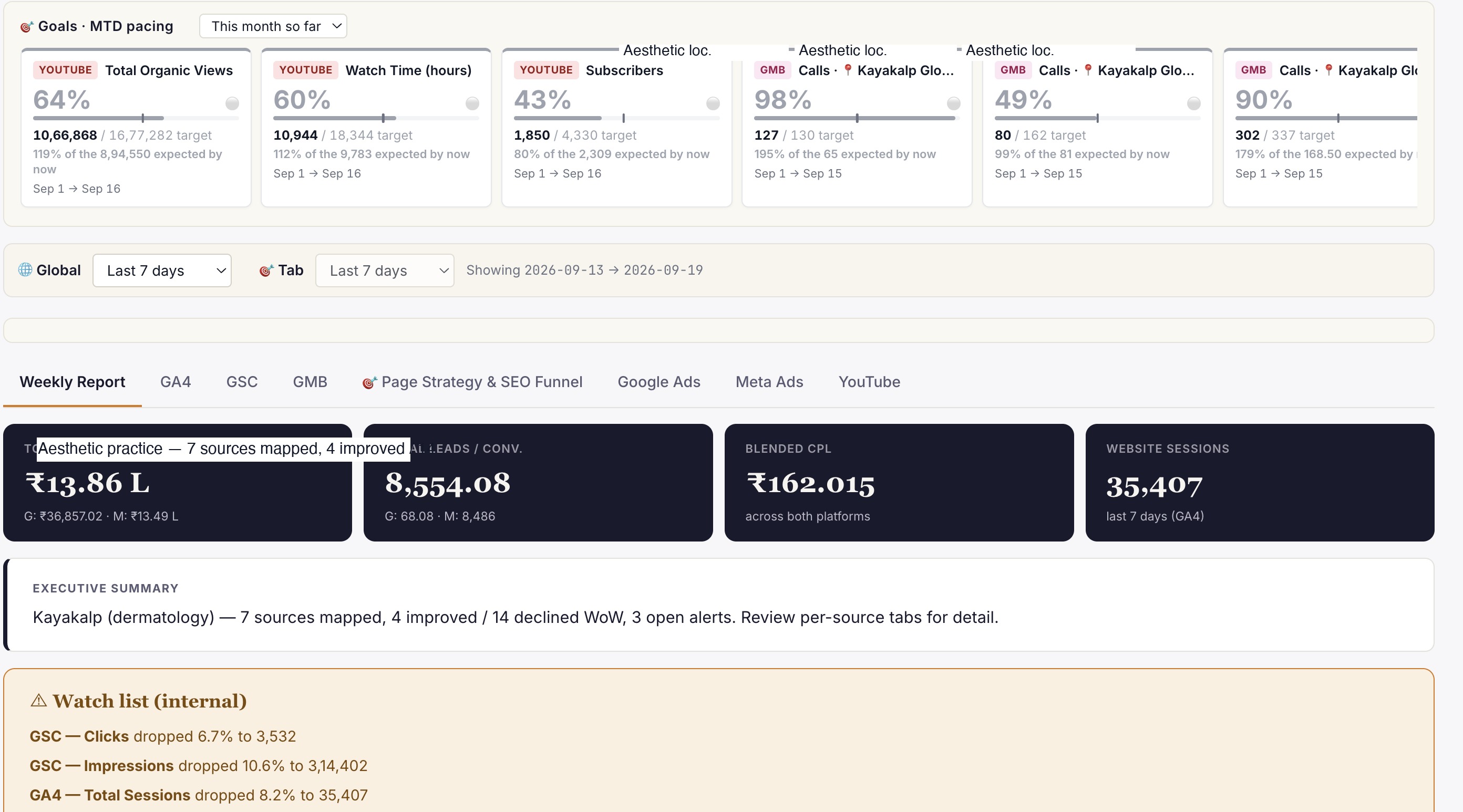
Live client dashboard. GSC, GA4, Google Ads, Meta Ads, IVR calls in one view. Login anytime, not monthly.
Phoenix
Clinic revenue intelligence over your PMS. Daily action queue: Prevent Loss, Maintain & Engage, Grow Revenue. Multi-centre rollout.
Or book a free 30-min audit to see all three in action on your account.
Healthcare brands
that already run on ICG.
A representative slice of the 150+ healthcare brands ICG has delivered for across India. Most engagements remain under NDA.


What ICG clients say · on video.
"Scale up of organic channels and business consulting. ICG has absolute domain authority in their field."
"Working with ICG transformed how we acquire IVF patients in Gurgaon. They understand the fertility journey from inquiry to consult..."
"What Ichelon accomplished — they got all my ideas and worked over 3-4 months to create an amazing, super-customised website."
Need help operationalising this?
Every ICG service is healthcare-only, NMC + DPDP-aware, and built around the patient-research patterns that drive Indian healthcare growth in 2026.
Every practice welcome — packages from ₹20,000/mo.
Goals-Driven engagements · Performance-Linked Payout Models available
More from
ICG.
Five trends shaping Indian healthcare marketing through 2027: AI-first patient research, Conversions API adoption, ABDM discovery, the AEO w...
Healthcare AIO is the discipline of getting your clinic or hospital cited inside Google AI Overviews, ChatGPT and Perplexity answers — not j...
Conversational-search advertising places brand messages inside AI chat answers — ChatGPT, Perplexity, Copilot — rather than beside a results...
Stop guessing.
Book a Diagnostic.
30 minutes. Free. With the AI-powered healthcare-only marketing agency 150+ brands already run on. No slides, no pitch, no hard close.


