


NABH SHCO for Clinics 2026: Cost, Timeline & SOP Checklist
NABH SHCO for clinics under 50 beds — realistic 10-14 month timeline, cost bands, SOP checklist and assessor-visit prep. Talk to ICG's NABH lead today.
No pitch. Written root-cause diagnosis. AI-powered, healthcare only.
Direct answer
NABH SHCO for clinics under 50 beds — realistic 10-14 month timeline, cost bands, SOP checklist and assessor-visit prep. Talk to ICG's NABH lead today.
TL;DR
NABH SHCO — the Small Healthcare Organisation accreditation — is the right accreditation track for the majority of Indian specialty clinics, day-care centres, and multi-specialty polyclinics with fewer than 50 beds. And yet it's poorly understood. Many clinic founders attempt full NABH Hospital and stall for 18 months. Others assume SHCO is "NABH-lite" and treat it as a checklist exercise, which fails at assessment. This guide unpacks SHCO specifically for clinic operators who want to know what SHCO actually is, what it costs, how long it takes, and whether it makes commercial sense for their facility.
NABH SHCO vs NABH Hospital: the key differences explained simply
NABH's Hospital and SHCO tracks share the same underlying quality philosophy but differ meaningfully in scale calibration:
- Facility scope. Hospital is for 50+ bed multi-specialty facilities. SHCO is for facilities with fewer than 50 beds — including clinics, polyclinics, day-care centres, IVF centres, aesthetic dermatology chains, dental practices with surgical facilities, and specialist facilities like dialysis centres.
- Committee structure. Hospital requires multiple standing committees (Quality, Safety, Infection Control, Ethics, Pharmaco-Therapeutic, Blood Transfusion where applicable). SHCO requires the core Quality and Safety committees but does not mandate the full committee stack. Committees can be combined where scale permits.
- Documentation depth. Hospital requires ~80-150 SOPs plus policy manual plus evidence portfolios. SHCO typically requires 25-50 SOPs with equivalent structure but shorter length. The reduction reflects scale, not standard rigour.
- Physical assessment intensity. Hospital assessments run 2-3 days with multiple assessors. SHCO assessments typically run 1-1.5 days with one or two assessors. The scoring criteria are similar but the sample sizes reviewed are proportionately smaller.
- Certificate validity. Both are 3-year cycles with surveillance visits at ~18 months.
Which clinics qualify for NABH SHCO
The eligibility criteria for SHCO are:
- Fewer than 50 inpatient beds (day-care beds count only if patients stay overnight in most cases)
- At least one qualified medical director/superintendent
- Regular OPD/inpatient/procedure service delivery — not sporadic operations
- Minimum 6 months of operational history at the current location (some tracks accept newer facilities on case basis)
- Statutory registrations current — clinical establishment registration, biomedical waste registration, drug licence where applicable, radiation licence where applicable
Facility types commonly pursuing SHCO include: standalone specialty clinics (dermatology, dental, ophthalmology, ENT), IVF centres, day-care surgical facilities, small multi-specialty polyclinics, dialysis centres, aesthetic clinics, and small nursing homes.
SHCO documentation requirements — what you actually need
SHCO documentation follows a similar structure to Hospital NABH but at reduced scale:
- Policy manual. Facility-wide policies covering patient rights, informed consent, medication management, infection control, biomedical waste, staff safety, complaints handling, and quality improvement.
- Procedure manual (SOPs). 25-50 SOPs typically, covering patient journey (registration, appointment, consultation, procedure, discharge), clinical operations (medication, infection control, adverse events), and administration (billing, records, complaints, staff).
- Evidence portfolio. Training records, calibration certificates, committee minutes, incident logs, patient feedback records, staff appraisal records.
- Committee documentation. Quality committee and safety committee minutes, terms of reference, meeting cadence.
The most commonly missed documentation elements for first-time SHCO applicants are: proper training records for all staff (not just clinical), calibration certificates for measuring devices (BP monitors, weighing scales, thermometers), and complaint-handling records including anonymous feedback.
NABH SHCO timeline: realistic expectations
Typical SHCO timelines from ICG's engagement history:
- Facility with strong existing operations, weak documentation: 4-6 months from engagement to assessor visit. This is the common profile for well-run specialty clinics where the doctor-founder has built strong clinical processes intuitively but never formalised them.
- Facility with average operations, no documentation: 6-9 months. This is the majority profile. Both process improvement and documentation work required in parallel.
- Facility with weak operations and no documentation: 9-14 months. Substantial process improvement required before documentation can be produced. Attempting to compress this timeline typically results in assessment failure.
- Multi-location chain pursuing SHCO across all locations: 12-18 months for chain-wide accreditation, using master SOP library + location addenda approach with staggered assessments.
Cost of NABH SHCO accreditation in India 2026
SHCO accreditation cost splits into two components:
- Consulting cost: Full SHCO implementation consulting typically ranges ₹1.5-2.5 lakh. This covers the 3-phase engagement — gap assessment (₹50,000-80,000), system building and documentation (₹80,000-1.2L), and pre-assessment support (₹40,000-60,000). If purchased as a bundled engagement rather than phase-by-phase, the total is typically ₹1.5-2 lakh.
- NABH assessment fees: Paid directly to NABH separately. As of 2026, application fees are typically ₹50,000-80,000 plus assessor fees of ₹50,000-1L depending on facility size and location. Total NABH-side fees typically ₹1-1.8L.
Combined investment: ₹2.5-4 lakh for a well-run SHCO engagement. Payback typically comes within 12-24 months through insurance panel improvements and patient volume growth.
SOP requirements for NABH SHCO
SOPs are the operational documentation that assessors examine most closely during the SHCO assessment. Not because SOPs are the highest weighted item, but because SOPs reveal whether the facility actually operates the way it claims to operate. SHCO SOP requirements cover:
- Patient journey SOPs — registration, appointment scheduling, patient communication, waiting area management, consultation flow, discharge process, follow-up
- Clinical operations SOPs — medication dispensing and storage, sterilisation for procedure rooms, infection control, adverse event reporting, consent documentation
- Administrative SOPs — billing, insurance/TPA handling, medical records management, complaint handling
- Emergency protocol SOPs — code blue, fall management, fire, medical emergency
Assessors evaluate SOPs by asking staff to describe or demonstrate the documented process. If the described process differs from the SOP, the SOP fails — regardless of how well-written the document is. This is why SOPs built from actual workflows, not templates, produce better assessment outcomes.
Is SHCO commercially worth it for your clinic?
Commercial ROI on SHCO accreditation is strongest for facility types where:
- Insurance-referred patient volume is a meaningful share of revenue (typically 20%+ of consultations)
- Elective or semi-elective procedures are a meaningful revenue stream (patients research providers before booking)
- The facility competes in a metro market where patients are aware of accreditation status
- Growth strategy includes multi-location expansion (accreditation supports the trust story)
Commercial ROI is weaker for facilities where insurance patient volume is minimal and patients primarily arrive via doctor personal reputation or family/friend referrals. In those situations, accreditation may still be worth pursuing for operational discipline reasons, but the direct revenue impact will be smaller.
How ICG delivers NABH SHCO consulting
ICG's SHCO engagement follows the same 5-phase structure as Hospital NABH, scaled to SHCO requirements. Every engagement begins with the Phase 1 gap assessment — 3 weeks, ₹50,000-80,000 — that produces a written gap report and realistic timeline before any long-term commitment. Full SHCO implementation consulting typically runs ₹1.5-2.5 lakh over 4-6 months.
ICG delivers SHCO consulting across all 14 cities served by our NABH programme. City-specific factors — insurance panel dynamics, patient awareness, competitive positioning — vary meaningfully and are reflected in each city's engagement approach.
Related reading
- NABH Consulting India — full accreditation programme overview
- Clinic SOP Creation — the operational foundation of SHCO
- NABH Accreditation in India 2026 — The Complete Guide
- NABH + Insurance Empanelment — The Link Indian Clinics Are Missing
- NABH Consulting in Mumbai
- NABH Consulting in Bangalore
The 7 mistakes that fail most first-time NABH SHCO assessments
After walking clinics through the SHCO track for years, the same seven failure patterns come up in almost every pre-assessment we run. Most of them have nothing to do with clinical quality — they are documentation, ownership and evidence gaps that get caught in the desk review long before the assessor visits.
- Copy-pasted SOPs from a template pack. Assessors spot generic language in minutes. SOPs must reference your actual departments, equipment models, drug list and staffing pattern.
- No signed Quality Policy from the medical director. The apex quality document is missing signature, date or version control — an instant non-conformity.
- Incomplete biomedical waste (BMW) records. Colour-coded bin logs, PCB authorisation, and monthly BMW quantification are often missing for the months before the application was filed.
- Sterilisation logs without Bowie-Dick / spore test evidence. Autoclave load records exist, but validation test strips and monthly spore tests are not maintained.
- Staff files with expired credentials. BLS/ACLS certificates, medical council registrations and hepatitis-B vaccination records lapse silently.
- Patient consent forms in English only. SHCO expects consent in a language the patient understands — vernacular versions and interpreter arrangements are mandatory.
- Zero internal audit history. You need at least one full internal audit cycle and one management review meeting on record before the final assessment.
Most of these are fixable in 6-8 weeks with the right handholding. If your clinic is preparing for the assessor visit and you want a second pair of eyes on your evidence file, WhatsApp Rohit or read how our Client Elevation Programme layers NABH-readiness into the growth engagement. For clinics that also want digital demand once the badge is live, Angryturtle handles the Google Business Profile side and Meta Catalyst IQ runs the paid-acquisition motion.
Book a free 60-minute NABH readiness diagnostic.
Adrito Basu (15+ years, NABH specialist) walks through your facility's current gaps and the fastest path to certification.
Questions readers ask
about this topic.
The three platforms
behind every ICG engagement.
Beacon
CAPI middleware that fixes Event Match Quality, translates CRM statuses to Meta-standard events, dedups across channels.
Agency OS
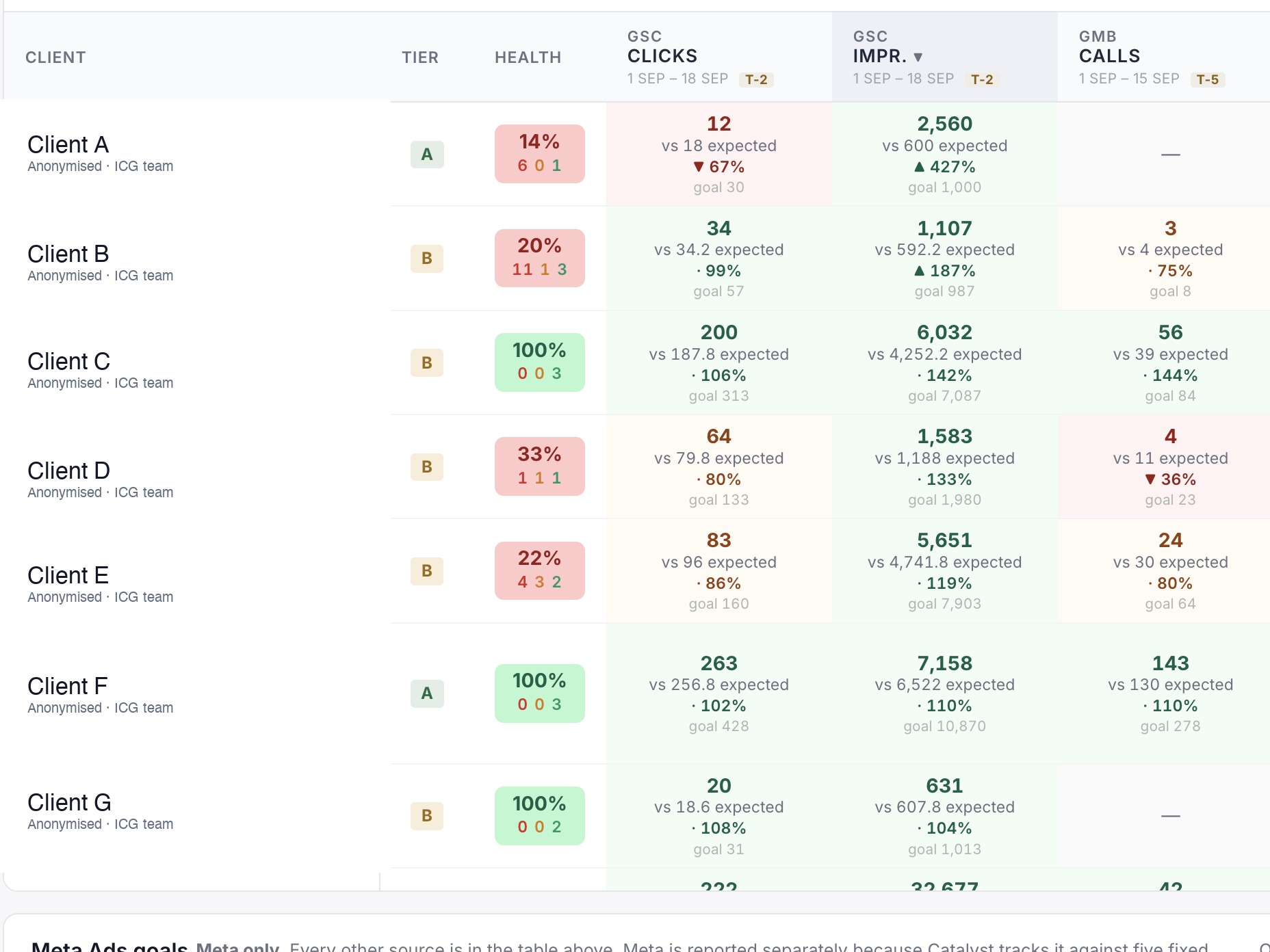
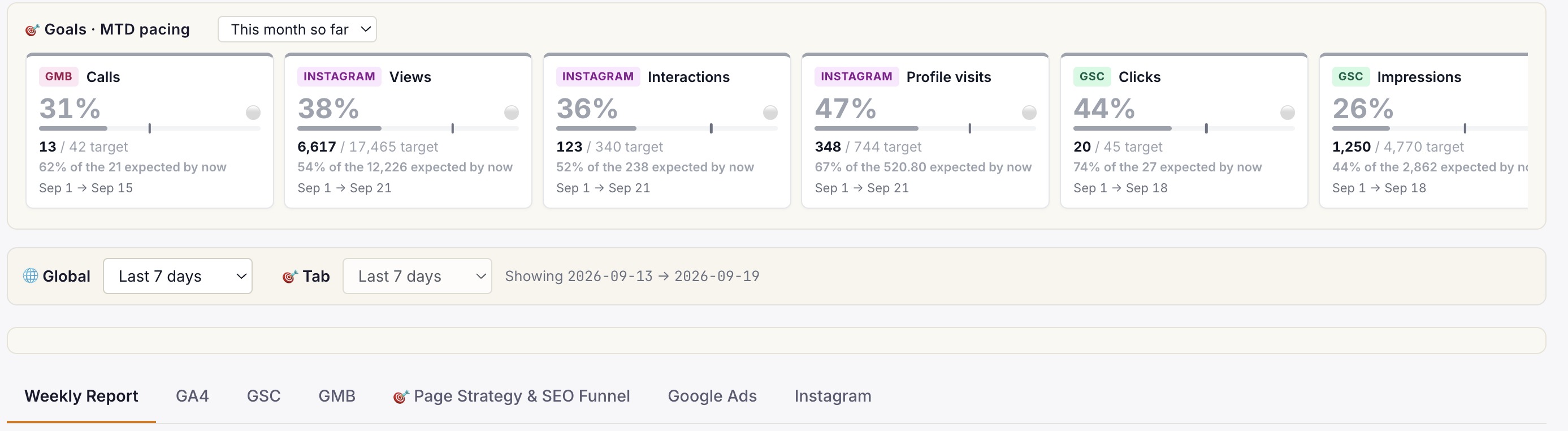
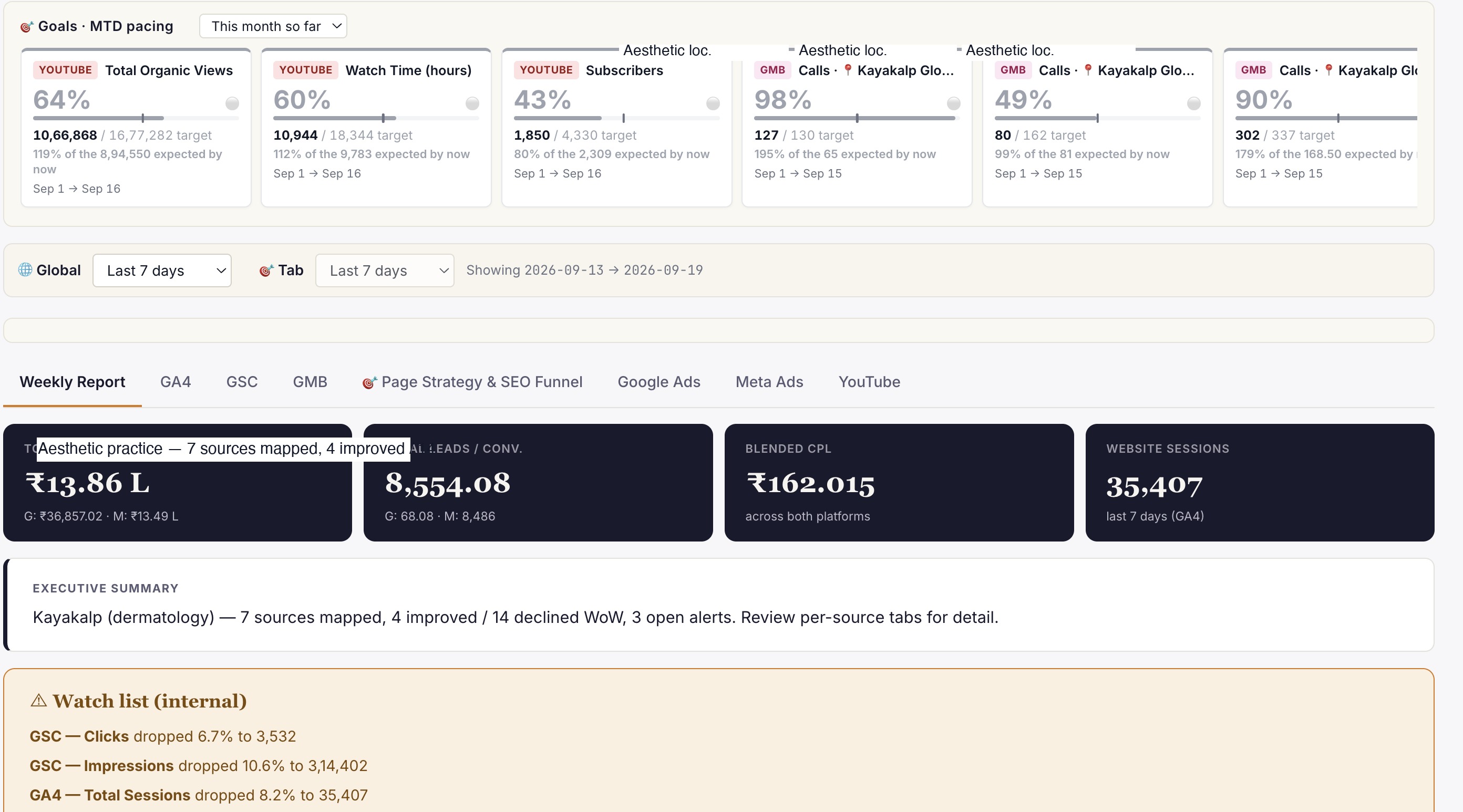
Live client dashboard. GSC, GA4, Google Ads, Meta Ads, IVR calls in one view. Login anytime, not monthly.
Phoenix
Clinic revenue intelligence over your PMS. Daily action queue: Prevent Loss, Maintain & Engage, Grow Revenue. Multi-centre rollout.
Or book a free 30-min audit to see all three in action on your account.
Healthcare brands
that already run on ICG.
A representative slice of the 150+ healthcare brands ICG has delivered for across India. Most engagements remain under NDA.


What ICG clients say · on video.
"Scale up of organic channels and business consulting. ICG has absolute domain authority in their field."
"Working with ICG transformed how we acquire IVF patients in Gurgaon. They understand the fertility journey from inquiry to consult..."
"What Ichelon accomplished — they got all my ideas and worked over 3-4 months to create an amazing, super-customised website."
Need help operationalising this?
Every ICG service is healthcare-only, NMC + DPDP-aware, and built around the patient-research patterns that drive Indian healthcare growth in 2026.
Every practice welcome — packages from ₹20,000/mo.
Goals-Driven engagements · Performance-Linked Payout Models available
More from
ICG.
Five trends shaping Indian healthcare marketing through 2027: AI-first patient research, Conversions API adoption, ABDM discovery, the AEO w...
Healthcare AIO is the discipline of getting your clinic or hospital cited inside Google AI Overviews, ChatGPT and Perplexity answers — not j...
Conversational-search advertising places brand messages inside AI chat answers — ChatGPT, Perplexity, Copilot — rather than beside a results...
Stop guessing.
Book a Diagnostic.
30 minutes. Free. With the AI-powered healthcare-only marketing agency 150+ brands already run on. No slides, no pitch, no hard close.


