


NABH Accreditation India 2026: Cost, Timeline & Failure Reasons
NABH accreditation India 2026: 5-phase process, gap-assessment costs, timeline benchmarks, insurance uplift, and top failure reasons. Talk to ICG.
No pitch. Written root-cause diagnosis. AI-powered, healthcare only.
Direct answer
NABH accreditation India 2026: 5-phase process, gap-assessment costs, timeline benchmarks, insurance uplift, and top failure reasons. Talk to ICG.
TL;DR
NABH accreditation in India has moved from "nice-to-have" to "commercial-necessity" between 2023 and 2026. Insurance panels increasingly weight it. Patients recognise the seal. Corporate empanelment negotiations start with it. And yet — the majority of Indian hospitals that begin the NABH journey either stall for 12+ months or fail their assessment. Not because the standards are unreasonable, but because they treat NABH as a documentation exercise when it is fundamentally a process improvement exercise. This guide unpacks the entire NABH journey as ICG has helped facilities navigate it — from the first gap assessment call to the final assessor sign-off.
What NABH is and why it matters in 2026
The National Accreditation Board for Hospitals & Healthcare Providers (NABH) is the constituent board of the Quality Council of India that sets and monitors quality standards for healthcare facilities. NABH accreditation is a voluntary certification — but in 2026, three commercial forces make it effectively mandatory for facilities above a certain scale:
- Insurance empanelment. Star Health, HDFC Ergo, Bajaj Allianz, and CGHS increasingly require NABH accreditation for higher cashless reimbursement rates or specific procedure approvals. Non-NABH facilities are settling for 15-30% lower package rates for the same procedures.
- Corporate tie-ups. Large employer group insurance schemes (particularly in Bangalore, Gurgaon, Pune tech corridors) filter provider networks by NABH accreditation status. This is a significant volume of insurance-referred patient traffic.
- Patient trust signals. Google Business Profile reviews and healthcare-specific comparison sites now surface NABH status prominently. Urban patients in metro cities check accreditation before booking for elective and semi-elective procedures.
Types of NABH accreditation
NABH runs several accreditation tracks. Choose the right one before beginning the journey — the process, timeline, and cost differ meaningfully:
- NABH Hospital — for multi-specialty hospitals with 50+ inpatient beds. The full accreditation programme with the deepest standards coverage.
- NABH SHCO (Small Healthcare Organisation) — for clinics, polyclinics, day-care centres, and specialty facilities with fewer than 50 beds. Same structural standards but calibrated to smaller scale.
- NABH Entry-Level — a stepping-stone certification designed for facilities not yet ready for full Hospital or SHCO. Best treated as a two-year transition, not a permanent destination.
- NABH Blood Bank — specific to blood banks, aligned with Drug & Cosmetics Act requirements.
- NABH AYUSH — for Ayurveda, Unani, Siddha, Homeopathy hospitals and clinics.
- NABH Diagnostic Centres — for standalone diagnostic labs and imaging centres (distinct from NABL).
The complete NABH accreditation process — 5 phases
Phase 1: Gap Assessment (Weeks 1-3)
The gap assessment is where an experienced NABH consultant physically walks through the facility, interviews staff across clinical and administrative departments, reviews existing documentation, and produces a written gap report. The output includes:
- Which NABH standards are currently met (with evidence)
- Which are partially met and what specifically is missing
- Which have no evidence at all and require ground-up work
- A priority matrix flagging which gaps create the highest assessment risk
- A realistic timeline calibrated to the specific gap severity — not a generic "6 months"
Any accreditation project that skips this phase begins blind. The gap report is what determines whether the eventual accreditation attempt is likely to succeed or likely to fail.
Phase 2: System Building (Months 1-4)
This is where the actual process improvement work happens. Not documentation — process. NABH requires the facility to operate specific committees (Quality, Safety, Infection Control), maintain specific evidence portfolios, follow specific incident-reporting workflows, and implement specific patient-rights frameworks. Documentation becomes the by-product of running these processes correctly. The key deliverables in this phase are:
- NABH-aligned SOPs across patient journey, clinical operations, and administration
- Committee constitution documents, meeting cadence, and minute-keeping systems
- Incident reporting and adverse event tracking system
- Patient rights and consent documentation frameworks
- Medication management policies
- Infection control programme with surveillance data collection
- Hospital-acquired infection (HAI) rate tracking systems
Phase 3: Documentation Compilation (Month 4-5)
All the evidence produced during system-building gets organised for the assessor. This includes:
- The complete policy manual — hospital-wide policies as required by NABH
- The procedure manual containing all SOPs
- The evidence portfolio: filled forms, committee minutes, training records, calibration logs
- A pre-assessment mock audit conducted internally using NABH scoring criteria
- A corrective action plan addressing findings from the mock audit
Phase 4: Pre-Assessment Support (Month 5-6)
The final preparation phase before the actual NABH assessor visit. Staff at all levels are prepared for the interview process — what to expect, how to respond to assessor questions, which records to present when asked. Department heads walk through their departments with the consultant one last time to identify any final gaps. The formal application is submitted through the NABH online portal and the assessment date is coordinated.
Phase 5: Post-Assessment (only if conditional accreditation)
Roughly 30% of first-time NABH applications receive conditional accreditation — meaning the facility is granted accreditation subject to correcting specific findings within 6 months. If this happens:
- A structured corrective action plan is developed with the consultant
- Implementation of corrections is monitored across the 6-month window
- Re-submission documentation is prepared and submitted before the deadline
NABH vs non-NABH: the commercial difference for Indian hospitals in 2026
Beyond quality and process improvement outcomes, NABH accreditation translates into commercially measurable revenue impact. Across ICG's healthcare marketing client base — which includes both NABH-accredited and non-accredited facilities — the observed 2026 commercial deltas are:
- Insurance panel reimbursement rates: NABH-accredited hospitals command 15-30% higher package rates for the same procedures on the same insurer panels. Over a year of insurance-referred procedure volume, this typically pays for the entire accreditation investment several times over.
- Cashless empanelment approvals: Most major insurers require NABH for higher cashless limits (particularly for cardiac, oncology, and complex orthopaedic procedures). Non-NABH facilities either work outside cashless or negotiate lower approved limits, both of which reduce patient conversion.
- Corporate group insurance panel inclusion: Tech company insurance schemes and CGHS-adjacent schemes filter provider directories by NABH. Absence from these directories directly reduces employer-referred patient volume.
- Direct patient trust conversion: On Google Business Profile and healthcare comparison platforms, the NABH badge produces measurably higher click-to-consult conversion — particularly for elective and cosmetic-adjacent procedures where patient discretion is high.
NABH gap assessment: what it covers and what it costs
Gap assessment is the entry point for most facilities. A well-run gap assessment includes:
- Physical walkthrough of the facility across all departments
- Structured interviews with senior clinical, nursing, administrative, and support staff
- Review of all existing documentation (if any)
- Sample verification of records — training records, calibration certificates, committee minutes if they exist
- Written gap report with priority matrix
- Realistic timeline calibrated to observed gap severity
Typical gap assessment investment ranges ₹50,000 to ₹80,000 for a 3-week engagement, depending on facility size and complexity. This is by far the highest-ROI investment in the entire NABH journey — because it prevents the two most common failure modes: starting the journey without knowing what's actually broken, and setting unrealistic timelines that erode staff morale when they slip.
Common reasons NABH accreditations fail
Across the accreditation attempts ICG has observed and supported, the most common failure modes are:
- Documentation-first approach. The facility spends 4 months writing SOPs without changing operations. Assessors walk through and immediately observe that staff don't know or follow the documented processes. Assessment fails.
- Committee theatre. Committees exist on paper — Quality Committee, Safety Committee, Infection Control Committee — but they have never actually met, or minutes are backfilled the week before assessment. Assessors ask department heads to describe how their committee makes decisions and receive vague answers.
- Missing evidence portfolio. The facility has the policies but not the training records, calibration certificates, incident reports, HAI data. NABH requires evidence, not just policy statements.
- Under-prepared staff. The assessment day arrives, senior management is prepared, but the frontline nurses, technicians, and administrative staff have never been briefed on what to expect. The assessor asks a staff nurse to walk through the fall prevention SOP and receives a confused answer.
- Wrong track selection. A 40-bed specialty clinic attempts NABH Hospital when NABH SHCO is the correct track. The standards don't fit the operational scale and the accreditation stalls.
NABH and DPDP Act 2023: the patient data compliance overlap
Since the Digital Personal Data Protection Act 2023 came into force, NABH's patient rights and medical records standards now overlap significantly with DPDP requirements. Any facility pursuing NABH in 2026 should integrate DPDP compliance into the accreditation programme. Specific overlaps include:
- Patient consent frameworks — NABH requires informed consent documentation; DPDP requires explicit consent for personal data collection and processing
- Medical records management — NABH requires secure record storage and retention; DPDP requires data protection controls and defined retention periods
- Patient rights communication — NABH requires visible patient rights posters; DPDP requires transparency about data processing
- Third-party data sharing — NABH requires documented sharing agreements with labs, imaging centres, insurers; DPDP requires explicit patient consent for such sharing
Facilities that treat NABH and DPDP as separate compliance programmes duplicate effort and create inconsistencies. Facilities that integrate them from the start end up with unified consent frameworks, cleaner records management, and better assessor and regulator responses.
Working with ICG on NABH accreditation
ICG's NABH consulting service is co-delivered with vetted clinical quality specialists. ICG leads the SOP creation, documentation architecture, patient communication frameworks, and marketing-adjacent NABH layers. Clinical quality specialists lead the surgical safety checklist implementation, HAI surveillance, and medication error tracking layers. This split is disclosed upfront — no claims about scope that we don't own.
Every engagement begins with the Phase 1 gap assessment (₹50,000-80,000, 3 weeks). Full NABH implementation consulting typically runs ₹2.5-6 lakh over 5-8 months for a specialty clinic or small hospital. Multi-location chains and 100+ bed hospitals are custom-scoped. ICG delivers NABH consulting across 14 Indian cities: Delhi NCR, Mumbai, Bangalore, Chennai, Hyderabad, Pune, Kolkata, Gurgaon, Chandigarh, Ahmedabad, Kochi, Jaipur, Lucknow, Noida.
Find NABH consulting in your city
ICG's 14 city-specific NABH consulting pages cover the healthcare landscape, urgency angle, and city-specific FAQs for each location:
- NABH Consulting Delhi NCR
- NABH Consulting Mumbai
- NABH Consulting Bangalore
- NABH Consulting Chennai
- NABH Consulting Hyderabad
- NABH Consulting Pune
- NABH Consulting Kolkata
- NABH Consulting Gurgaon
- NABH Consulting Chandigarh + Tricity
- NABH Consulting Ahmedabad
- NABH Consulting Kochi
- NABH Consulting Jaipur
- NABH Consulting Lucknow
- NABH Consulting Noida
Related reading
- Clinic SOP Creation — the foundational documentation layer of NABH
- NABH SHCO for Clinics: What Small Healthcare Organisations Need to Know
- NABH Accreditation and Insurance Empanelment: The Link Indian Clinics Are Missing
- Hospital Service Excellence Training — staff training aligned with NABH standards
NABH accreditation cost, timeline and ROI benchmarks (2026)
Most hospitals ask three questions before they commit: how long, how much, and what does it move commercially. Below are the ranges we see in engagements across tier-1 to tier-3 cities in India through 2025 and into 2026. Treat these as directional benchmarks, not quotations — actual numbers depend on bed count, specialty mix, and how much of the SOP work already exists on paper.
| Facility type | Realistic timeline | Consulting + gap-fix cost | Post-accreditation panel/tariff uplift |
|---|---|---|---|
| Small hospital (25-50 beds, single-speciality) | 9-12 months | Rs. 8-15 lakh | 8-15% average realisation lift on TPA panels |
| Mid-size multi-speciality (50-150 beds) | 12-16 months | Rs. 15-30 lakh | 12-20% realisation lift + CGHS/ECHS eligibility |
| Large multi-speciality (150+ beds) | 14-20 months | Rs. 30-60 lakh+ | 15-25% lift + preferred-provider status |
| Entry-level (SHCO / small clinic) | 6-9 months | Rs. 3-6 lakh | Insurance eligibility + patient trust signal |
Mini-case: how a 60-bed multi-speciality closed NABH in 13 months
An anonymised North-India multi-speciality started at roughly 40% SOP-readiness when their gap assessment was done. Three moves compressed the timeline:
- Documentation-first sprint — infection control, patient rights, and medication management SOPs closed in the first 90 days.
- Parallel training — clinical and non-clinical staff trained in fortnightly cohorts, not one big session that gets forgotten.
- Mock assessment before the pre-assessment — internal audit caught 34 minor NCs that would have delayed final assessment by 2-3 months.
Post-accreditation, empanelment additions across three private insurers and CGHS lifted monthly IP realisation by roughly 18% within two quarters. That is what changes NABH from a compliance line-item to a commercial move.
If you want the same operational scaffolding around your NABH journey — SOPs, staff training, mock assessments, and the marketing/empanelment layer that turns the seal into revenue — that is what our Client Elevation Programme is built for. On the visibility side, Angryturtle keeps your Google Business Profile and local presence NABH-signalled, while YODA turns accreditation into content patients and referrers actually see. For hospital-group Instagram reporting during the launch phase, teams use Prism Pulse.
What happens after NABH accreditation? Surveillance audits, re-accreditation and the ABDM overlap
NABH accreditation runs on a 3-year cycle — not a one-time badge. Hospitals face annual surveillance audits, a mid-cycle focused review and a full re-assessment before renewal. Miss the timelines and status can be suspended within 30-45 days, and CGHS/TPA empanelments start slipping in parallel — usually without any public announcement.
NABH surveillance audits: the year-by-year reality in 2026
Year 1 brings a full-scope surveillance visit, typically in months 12-14 post-award. Year 2 is a shorter focused audit on the high-risk chapters — medication safety, hospital infection control, patient rights and DPDP-linked data consent. Year 3 is the full re-assessment. Across ICG's engagements in Delhi, Bengaluru, Chennai and Hyderabad this year, NCRs cluster around three recurring gaps: HR training-hour shortfalls, incomplete DPDP Act 2023 consent trails at OP registration, and thin internal quality-indicator dashboards. A single unresolved major NC now costs ₹8-14 lakh — remediation consulting plus lost empanelment revenue over the following quarter.
Re-accreditation under NABH's 6th edition: what actually changes
The 6th edition — the reference for every 2026 re-assessment — pushes harder on digital documentation, ABHA-linked patient identification, and outcome indicators rather than process compliance alone. Hospitals originally accredited under the 5th edition need to re-map roughly 40% of their SOPs. Budget ₹4-9 lakh for gap-close consulting plus 60-90 days of internal bandwidth. NMC's 2024 clinical establishment norms feed directly into the revised standards on staffing ratios and continuous medical education hours, so HR compliance carries more weight than in earlier cycles.
How NABH status unlocks ABDM, CGHS and TPA rate uplifts
Accredited hospitals get faster Health Facility Registry (HFR) verification under ABDM, priority placement on the NHA's Ayushman Bharat empanelment queue, and 15-25% higher package rates from most private TPAs versus non-accredited peers. CGHS and ESIC empanelment in Tier-1 metros now effectively requires either NABH full or Entry-Level status. On the demand side, ICG's healthcare marketing engagements — structured on our 70-30 model (70% strategy and build in months 1-2, 30% ongoing) — see NABH-accredited multi-speciality clients convert paid-search leads 1.8x better than non-accredited peers at CPQLs of ₹380-₹620 (Bengaluru and Pune benchmarks, 2026).
Mini-FAQ: the NABH lifecycle
Q: What happens if a hospital misses its surveillance audit window?
A: NABH issues a show-cause notice first. Unresolved cases move to suspension within 45-60 days, and CGHS/TPA/insurance empanelments start dropping alongside. Re-instatement typically adds ₹6-12 lakh in cost and 4-6 months of calendar time.
Q: Do standalone units — dialysis, day-care surgery, IVF — follow the same re-accreditation cycle?
A: Yes. NABH Entry-Level and full standards for standalone facilities run on the same 3-year cycle, though surveillance depth is lighter. ABDM's HFR registry still validates accreditation status annually, so lapses show up in patient-facing search results too.
Book a free 60-minute NABH readiness diagnostic.
Adrito Basu (15+ years, NABH specialist) walks through your facility's current gaps and the fastest path to certification.
Questions readers ask
about this topic.
The three platforms
behind every ICG engagement.
Beacon
CAPI middleware that fixes Event Match Quality, translates CRM statuses to Meta-standard events, dedups across channels.
Agency OS
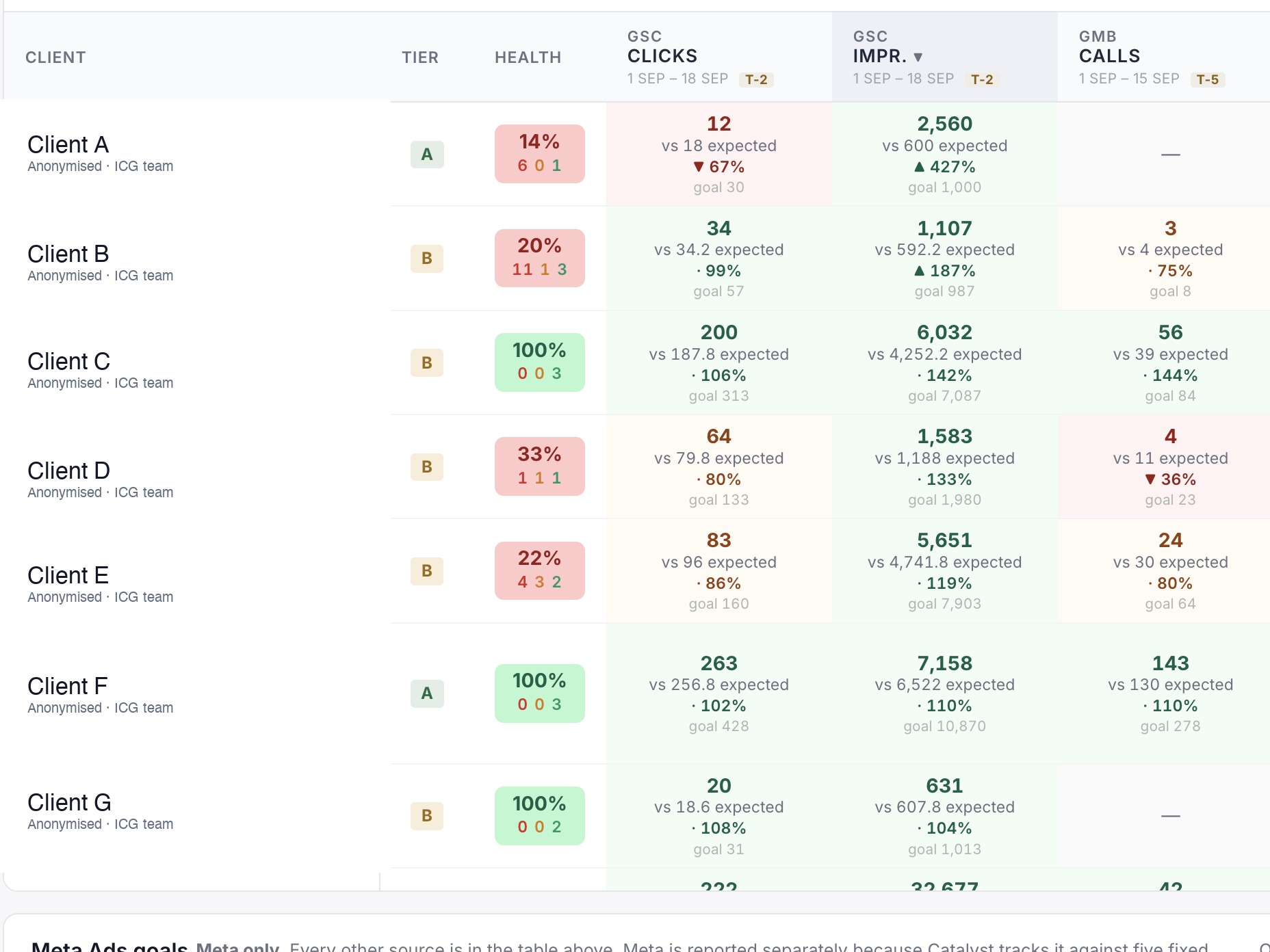
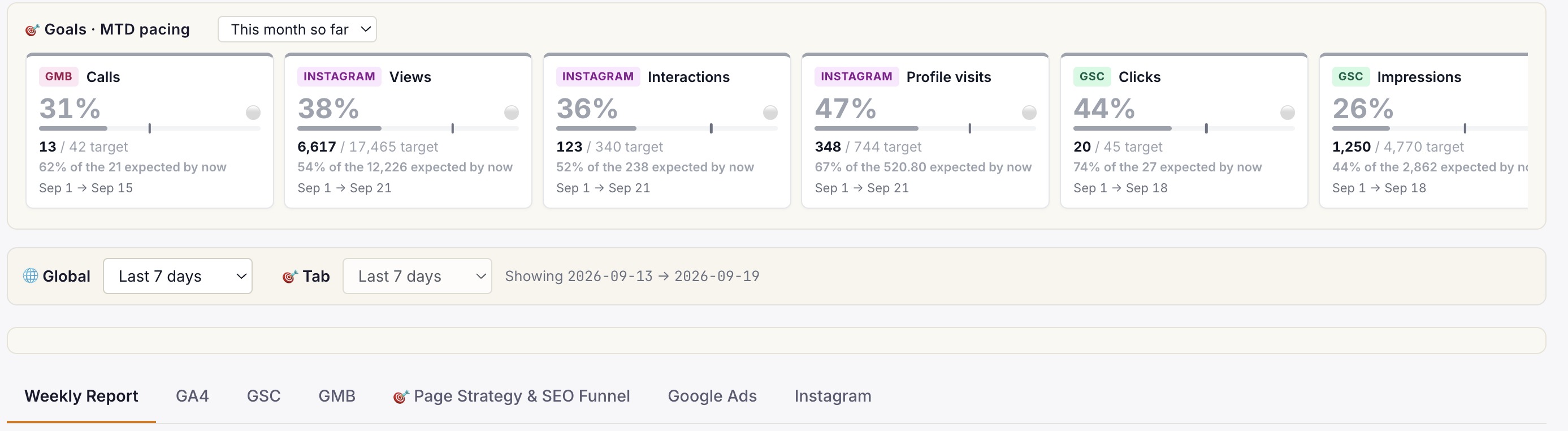
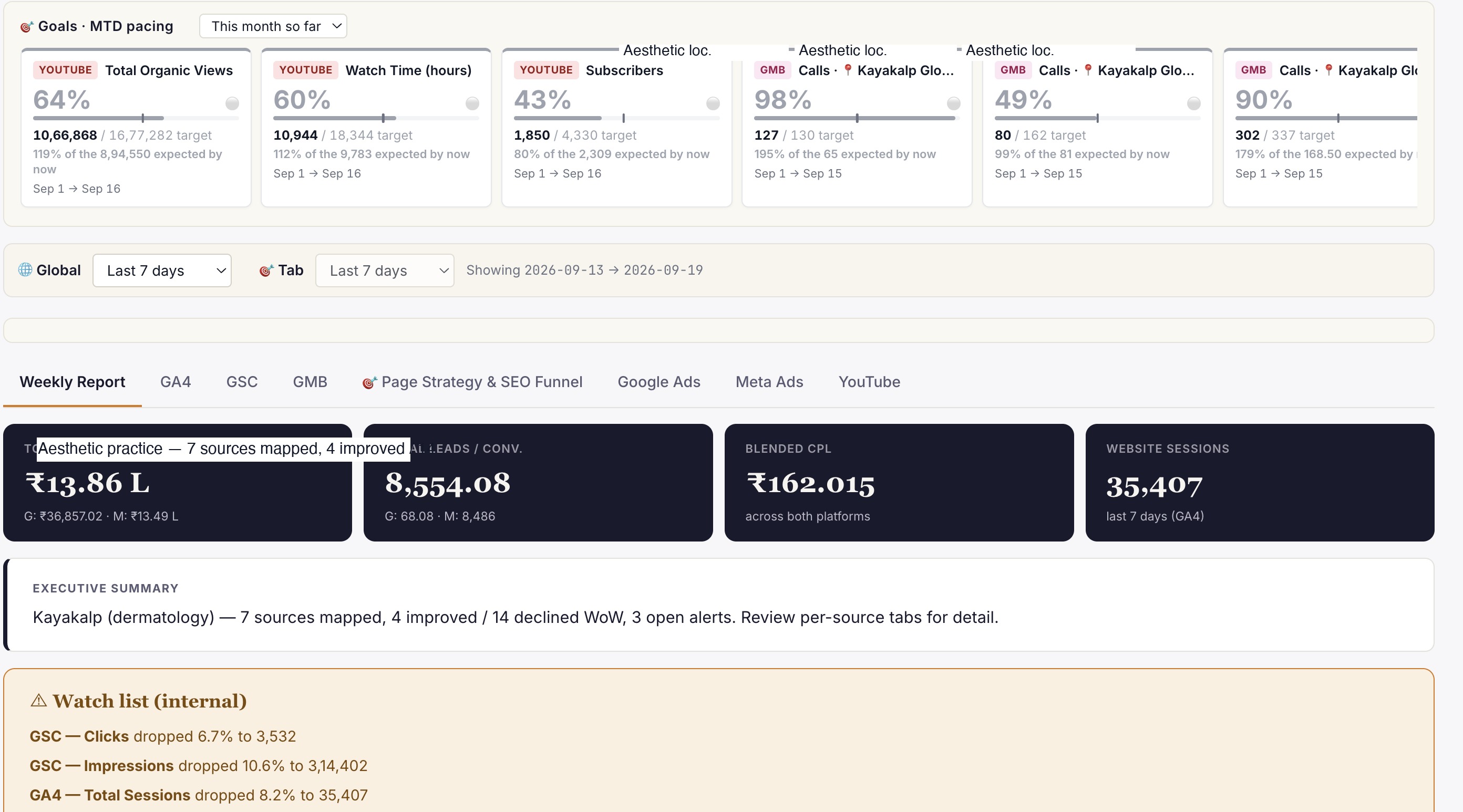
Live client dashboard. GSC, GA4, Google Ads, Meta Ads, IVR calls in one view. Login anytime, not monthly.
Phoenix
Clinic revenue intelligence over your PMS. Daily action queue: Prevent Loss, Maintain & Engage, Grow Revenue. Multi-centre rollout.
Or book a free 30-min audit to see all three in action on your account.
Healthcare brands
that already run on ICG.
A representative slice of the 150+ healthcare brands ICG has delivered for across India. Most engagements remain under NDA.


What ICG clients say · on video.
"Scale up of organic channels and business consulting. ICG has absolute domain authority in their field."
"Working with ICG transformed how we acquire IVF patients in Gurgaon. They understand the fertility journey from inquiry to consult..."
"What Ichelon accomplished — they got all my ideas and worked over 3-4 months to create an amazing, super-customised website."
Need help operationalising this?
Every ICG service is healthcare-only, NMC + DPDP-aware, and built around the patient-research patterns that drive Indian healthcare growth in 2026.
Every practice welcome — packages from ₹20,000/mo.
Goals-Driven engagements · Performance-Linked Payout Models available
More from
ICG.
Five trends shaping Indian healthcare marketing through 2027: AI-first patient research, Conversions API adoption, ABDM discovery, the AEO w...
Healthcare AIO is the discipline of getting your clinic or hospital cited inside Google AI Overviews, ChatGPT and Perplexity answers — not j...
Conversational-search advertising places brand messages inside AI chat answers — ChatGPT, Perplexity, Copilot — rather than beside a results...
Stop guessing.
Book a Diagnostic.
30 minutes. Free. With the AI-powered healthcare-only marketing agency 150+ brands already run on. No slides, no pitch, no hard close.


