


Meta CAPI Setup for Healthcare Clinics India — Step-by-Step Guide | ICG
Author: Abhash Kumar · Co-Founder, ICG · IIT BHU + IIM Bangalore · July 2026 Meta Conversions API (CAPI) is the server-side attribution layer that has become the single most impactful technical intervention in healthcare Meta advertising. T...
No pitch. Written root-cause diagnosis. AI-powered, healthcare only.
Direct answer
Author: Abhash Kumar · Co-Founder, ICG · IIT BHU + IIM Bangalore · July 2026 Meta Conversions API (CAPI) is the server-side attribution layer that has become the single most impactful technical intervention in healthcare Meta advertising. T...
TL;DR
Author: Abhash Kumar · Co-Founder, ICG · IIT BHU + IIM Bangalore · July 2026
Meta Conversions API (CAPI) is the server-side attribution layer that has become the single most impactful technical intervention in healthcare Meta advertising. The impact is consistent and measurable: Meta Event Match Quality (EMQ) improvement from a typical 3.8-4.4 (pixel-only) to 7.5-8.5 (post-CAPI), with a corresponding CPM reduction of 25-38% and CPQL reduction of 30-45%.
This guide explains how to implement CAPI for a healthcare clinic — step-by-step — with the DPDP Act 2023 compliance requirements built into each step.
Why pixel-only attribution fails for healthcare
The Meta pixel fires client-side — from the patient's browser, after the page loads. Browser-side tracking is degraded by:
iOS 17 Link Tracking Protection (LTP): iOS 17 strips URL parameters (including fbclid — Meta's click identifier) from links opened in Safari. Without fbclid, Meta cannot match the click to the conversion — the conversion is invisible to the pixel.
Safari ITP (Intelligent Tracking Prevention): Limits first-party cookie lifespan to 7 days. Patients who first click a Meta ad then convert after 7 days are not captured.
Chrome Privacy Sandbox (progressive): Chrome is progressively limiting third-party data access for advertising pixels.
Ad blockers: A growing proportion of healthcare-researching patients use ad blockers — preventing pixel fires entirely.
The combined effect: 30-42% of Meta conversions are not captured by pixel-only attribution in healthcare accounts targeting Indian metro markets.
CAPI implementation architecture
Option A: Direct API integration (for clinics with developer resources) Your website backend sends conversion events directly to Meta's Conversions API endpoint. Requires PHP/Python/Node.js backend development capability.
Option B: ICG's Beacon platform (for ICG clients) Beacon captures conversion events from your website and CRM through server-side event collection and forwards them to Meta CAPI — no backend development required from the clinic side. ICG deploys Beacon in 5-7 business days for new healthcare accounts.
Option C: Tag Manager server-side container (intermediate) Google Tag Manager's server-side container can forward events to Meta CAPI. Requires server-side GTM configuration — moderate technical complexity.
ICG uses Beacon (Option B) for all healthcare client CAPI deployments. The steps below describe the Beacon implementation process.
Step-by-step: CAPI setup via Beacon for a healthcare clinic
Step 1: Meta Business Manager setup (if not already done)
Ensure the clinic has a verified Meta Business Manager with:
- Business verification completed
- Ad account created and linked to Business Manager
- Healthcare Advertiser Certification completed (if required for your category)
- Pixel created and base code installed on the website
Step 2: Define conversion events for healthcare
Map the key patient journey actions to Meta conversion events. For a typical specialist clinic:
| Patient action | Meta event name | Event value |
|---|---|---|
| WhatsApp click (from website) | Lead (WhatsApp) | ₹0 (low-value event) |
| Consultation booking confirmation | Schedule | ₹1,500-3,500 (procedure CPQL) |
| Consultation attended (from CRM) | Purchase | ₹1,500-3,500 |
| Video view >50% | ViewContent | ₹0 |
| Cost page view | ViewContent | ₹0 |
The most important events for Smart Bidding optimisation: Schedule (consultation booked) and Purchase (consultation attended). These are sent as offline conversion events via Beacon.
Step 3: Beacon data collection setup
Configure Beacon to capture:
- Website events: WhatsApp clicks, video views, page visits, form interactions
- CRM events (via Beacon-CRM integration): consultation booking confirmations, consultation attendance confirmations
Step 4: DPDP-compliant data preparation
Before sending any customer data to Meta CAPI, apply SHA-256 hashing to all identifiers:
- Phone number: format as +91XXXXXXXXXX, then SHA-256 hash
- Email: lowercase, trim whitespace, then SHA-256 hash
- First name, last name: lowercase, trim whitespace, then SHA-256 hash
Hashed data cannot be reversed — Meta uses it only for matching existing Meta users to conversion events. This is the DPDP-compliant data minimisation approach.
Step 5: Event deduplication
If both pixel and CAPI send the same event, Meta counts it twice — inflating conversion data. Implement event deduplication using a consistent event_id that is the same for both pixel and CAPI versions of the same event.
Step 6: Test events and verify
In Meta Events Manager: test events tool shows incoming CAPI events in real-time. Verify: events are being received, event parameters are correctly formatted, deduplication is working (no duplicate events counted), EMQ is improving from baseline.
Step 7: Switch Smart Bidding to CAPI-fed conversions
Once CAPI events are verified and EMQ is above 7.0 (typically 7-14 days after deployment), update all campaign bid strategies to use the CAPI-fed conversion events (Schedule + Purchase) as the Smart Bidding optimisation target.
Expected results after Step 7 (ICG portfolio data):
- EMQ: 7.5-8.5 (from 3.8-4.4 baseline)
- CPM reduction: 25-38% within 30-45 days
- CPQL reduction: 30-45% within 45-60 days
DPDP compliance checklist for Meta CAPI
☑ Patient data is hashed (SHA-256) before transmission to Meta ☑ Only necessary data is sent (phone, email, name — not health condition, not Aadhaar) ☑ Clinic Privacy Notice updated to mention Meta conversion tracking ☑ Patient WhatsApp consent flow includes mention of conversion tracking for appointment scheduling ☑ Beacon data processing agreement covers Meta CAPI data flows ☑ Audit log of CAPI events maintained (for DPDP data processing documentation)
FAQ
Q1: How long does CAPI deployment take for a healthcare clinic? ICG's Beacon CAPI deployment timeline: Day 1-3: Business Manager verification and event mapping. Day 3-7: Beacon integration with website and CRM. Day 7-14: Event testing and EMQ verification. Day 14+: Smart Bidding switch to CAPI-fed conversions. Total: 14-21 days from engagement start to fully operational CAPI.
Q2: Does CAPI require changes to the clinic website? With Beacon: minimal website changes required. A small JavaScript snippet (the Beacon tracker) is added to the website header. No backend development required. ICG's implementation team handles this addition.
Q3: What is the difference between Meta CAPI and Google Enhanced Conversions? Both are server-side attribution tools — Meta CAPI for Meta ads, Google Enhanced Conversions for Google Ads. Both work on the same principle: hashed customer identifiers sent server-side bypass browser tracking restrictions. ICG's Beacon platform deploys both simultaneously — a single implementation serves both platforms.
Q4: Will CAPI affect my ad delivery in the short term while learning? Switching bid strategies to CAPI-fed conversion events triggers a Smart Bidding learning period (typically 1-2 weeks). During learning, delivery may be less efficient. ICG manages the transition by not switching bid strategies until CAPI is providing stable, consistent event data — reducing the learning period disruption.
Compliance note: Meta Conversions API policies, DPDP Act 2023 data minimisation standards.
Book a free 30-minute Brand & Growth Diagnostic.
It's a working session, not a sales pitch — you leave with a written root-cause analysis you can act on, whether or not you engage ICG.
The three platforms
behind every ICG engagement.
Beacon
CAPI middleware that fixes Event Match Quality, translates CRM statuses to Meta-standard events, dedups across channels.
Agency OS
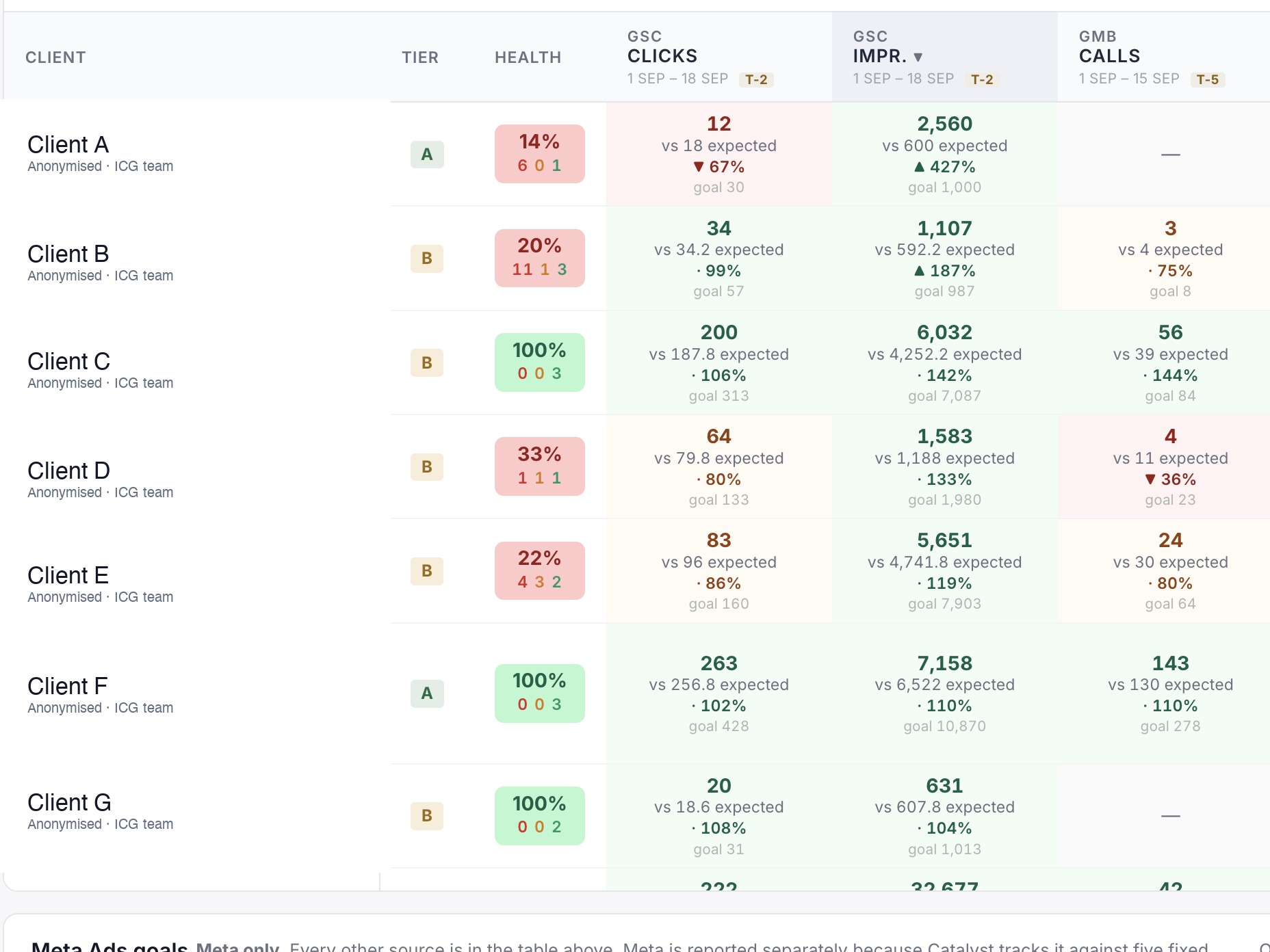
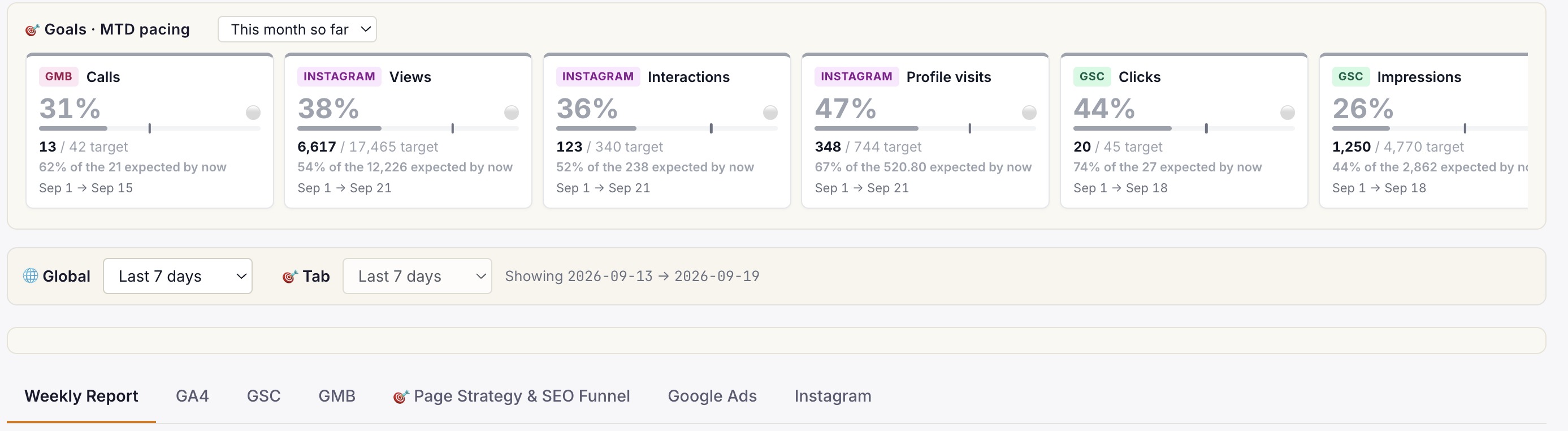
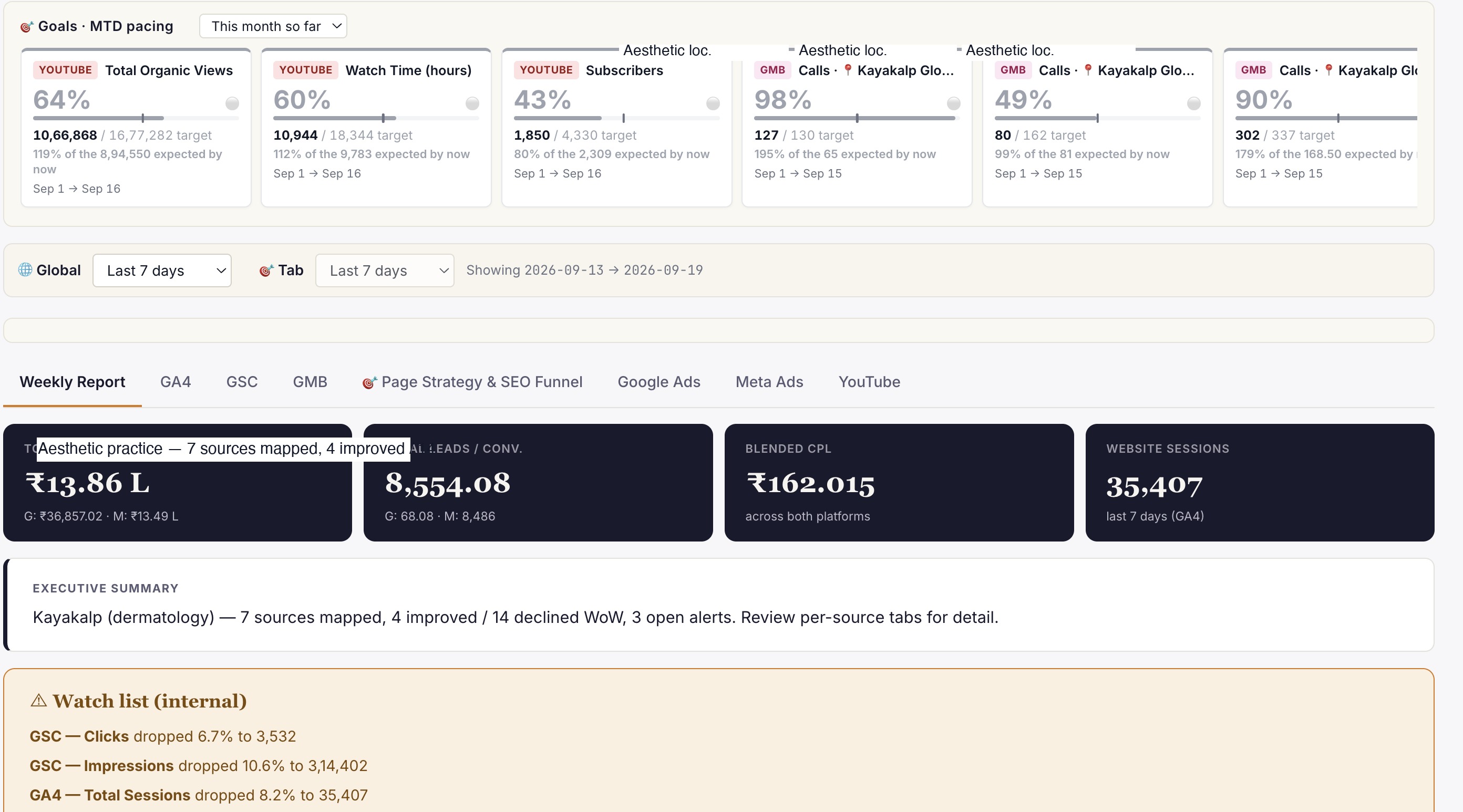
Live client dashboard. GSC, GA4, Google Ads, Meta Ads, IVR calls in one view. Login anytime, not monthly.
Phoenix
Clinic revenue intelligence over your PMS. Daily action queue: Prevent Loss, Maintain & Engage, Grow Revenue. Multi-centre rollout.
Or book a free 30-min audit to see all three in action on your account.
Healthcare brands
that already run on ICG.
A representative slice of the 150+ healthcare brands ICG has delivered for across India. Most engagements remain under NDA.


What ICG clients say · on video.
"Scale up of organic channels and business consulting. ICG has absolute domain authority in their field."
"Working with ICG transformed how we acquire IVF patients in Gurgaon. They understand the fertility journey from inquiry to consult..."
"What Ichelon accomplished — they got all my ideas and worked over 3-4 months to create an amazing, super-customised website."
Need help operationalising this?
Every ICG service is healthcare-only, NMC + DPDP-aware, and built around the patient-research patterns that drive Indian healthcare growth in 2026.
Every practice welcome — packages from ₹20,000/mo.
Goals-Driven engagements · Performance-Linked Payout Models available
More from
ICG.
Five trends shaping Indian healthcare marketing through 2027: AI-first patient research, Conversions API adoption, ABDM discovery, the AEO w...
Healthcare AIO is the discipline of getting your clinic or hospital cited inside Google AI Overviews, ChatGPT and Perplexity answers — not j...
Conversational-search advertising places brand messages inside AI chat answers — ChatGPT, Perplexity, Copilot — rather than beside a results...
Stop guessing.
Book a Diagnostic.
30 minutes. Free. With the AI-powered healthcare-only marketing agency 150+ brands already run on. No slides, no pitch, no hard close.


