


Meta Ads for Dermatology Clinics: Instant Form vs Website in India (2026)
When derm ads should default to Instant Form vs website landing, the cosmetic/medical split rule, CPQL math, DPDP consent, Beacon signal recovery, and the hybrid model.
No pitch. Written root-cause diagnosis. AI-powered, healthcare only.
Direct answer
When derm ads should default to Instant Form vs website landing, the cosmetic/medical split rule, CPQL math, DPDP consent, Beacon signal recovery, and the hybrid model.
TL;DR

Dermatology sits in an awkward middle between quick-decision cosmetic bookings and long-consideration medical enquiries. That awkward middle is exactly why the Instant Form vs website landing question has a different answer for cosmetic and medical inside the same clinic. Cosmetic derm often lands better on Instant Form. Medical derm almost always lands better on website. This piece walks through what changes between the two formats in derm, the CPQL math from the ICG portfolio on Meta Catalyst IQ, the DPDP consent nuance, and the hybrid model six of our fourteen derm clients now run.
What Instant Form does well in derm
Instant Form is Meta's in-platform lead capture — pre-filled with the user's name, email, and phone from her Facebook profile, submitted without leaving the app, delivered to your CRM in under 90 seconds. In derm, this format wins on cosmetic offers where the buyer's decision cycle is short. A HydraFacial, laser hair reduction package, cosmetic Instant Form campaigns land at 16 to 24 percent form-fill rate and CPL of ₹320 to ₹520 in metros. Volume is high, per-lead cost is low, and the ad-to-lead time is under two minutes if a WhatsApp or SMS auto-reply is wired.
Website landing strengths in derm
Website landing wins on three axes in derm. First, self-qualification — a patient who reads a 1,800-word medical dermatology page and still fills a form is much more likely to attend. Second, signal richness — you get scroll depth, time on page, doctor-bio visited, treatment-detail visited, and can fire custom Meta CAPI events for each. Third, retargeting depth — page visitors become a retargeting pool for 180 days, which is where most medical derm consultations actually convert.
Portfolio CPL for medical derm website landing: ₹880 to ₹1,400 in metros, ₹1,050 to ₹1,600 in tier two. Higher than Instant Form. But CPQL sits at ₹2,050 to ₹2,800 for website vs ₹2,600 to ₹3,600 for medical Instant Form. Website wins on cost per outcome.
The rule: cosmetic Instant Form, medical website
The pattern that ships across most derm accounts: cosmetic side runs Instant Form for cold traffic and lookalikes, moves to website landing for retargeting. Medical side runs website landing for everything except retargeting (where WhatsApp CTA takes over). Mixing this — running medical on Instant Form or cosmetic on website — leaves 20 to 35 percent CPL improvement on the table.
The intuition: cosmetic buyers decide fast, so friction removal wins. Medical buyers need to educate themselves before they trust, so friction adds qualification. The website is the qualification filter.
CPQL difference across the portfolio
Cosmetic Instant Form: blended CPL ₹420, blended CPQL ₹1,950. Cosmetic website: blended CPL ₹620, blended CPQL ₹1,800. Medical Instant Form: blended CPL ₹720, blended CPQL ₹3,100. Medical website: blended CPL ₹1,050, blended CPQL ₹2,400. The medical numbers make the case starkly — website landing carries 46 percent higher CPL but 23 percent lower CPQL. Over a month of ₹6 lakh medical derm spend, that is roughly ₹80,000 in saved cost per qualified lead.
Try the interactive CPQL calculator to model your own account.
Compliance and consent
DPDP Act 2023 requires explicit, informed, revocable consent. Instant Form's default consent language is not adequate — every derm account needs custom copy specifying the clinic name as processor, the purpose (consultation booking, follow-up, treatment scheduling), retention period (typically 3 years for medical records), and revocation path.
Website landing gives you full control of the consent flow, cookie banner, and revocation UI. This matters more for medical derm where the data collected is often more sensitive (skin condition images, medical history) than for cosmetic. NMC's 2026 advertising guidelines require patient data collection carry a defined retention and purpose statement — see the DPDP Act reference for the framework.
Beacon signal recovery on website derm
Meta ads for derm on website landing lose 30 to 50 percent of attribution signal to iOS14 and third-party cookie deprecation. Without a Meta CAPI + Beacon server-side event pipeline, website campaigns under-report conversions by 25 to 40 percent and Meta cannot optimise correctly.
Every ICG derm engagement builds the Beacon + CAPI stack in the first 30 days. Once the stack is live, we A/B test website vs Instant Form for 21 days and let the CPQL data pick the winner. For medical derm, website almost always wins. For cosmetic, it splits roughly 60/40 in favour of Instant Form on cold traffic and website on retargeting.
Hybrid model — what six of fourteen derm clients run
The default hybrid: cosmetic top-of-funnel Instant Form (60 percent of cosmetic budget), cosmetic retargeting website landing (30 percent), cosmetic WhatsApp CTA on high-intent audiences (10 percent). Medical top-of-funnel website landing (70 percent), medical retargeting WhatsApp CTA (25 percent), medical Instant Form on urgent-decision offers only (5 percent). Total budget flows across all six ad sets based on daily CPQL from Meta Catalyst IQ's Master Dashboard.

The trap to avoid: running Instant Form and website landing in the same ad set. Meta will collapse the optimisation and one format will starve the other.
Qualifying questions on derm Instant Form
The default Instant Form asks for name, email, and phone. In derm, two custom qualifying questions lift qualified-lead rate materially without collapsing form-fill rate. For cosmetic: "Which treatment interests you?" (dropdown of 4 to 6 clinic offerings) and "Preferred consultation time?" (Morning / Afternoon / Evening / Weekend). For medical: "Which concern brought you here?" (dropdown of 5 common conditions) and "Duration of the concern?" (Under 3 months / 3 to 12 months / Over 1 year).
These two-question filters raise qualified-lead rate from 22 percent of raw leads to 42 percent, and CPQL improves by 25 to 35 percent. More than two questions collapses form-fill rate below 12 percent and defeats the point of Instant Form.
Landing page elements that lift derm website conversion
The elements that ship on every ICG derm landing page: a doctor-led hero video under 20 seconds, a treatment-menu section with plain-language concern-to-treatment mapping, a compliant before-after gallery with disclaimer plates, an FAQ section addressing the top 6 to 8 questions the audience actually asks, a WhatsApp CTA in three positions (hero, mid-page, footer), a booking form with 3 fields, and a DPDP-compliant consent block.
The elements to remove: excessive testimonials without consent, badges that carry no meaning ("India's best" — ASCI risk), overly long "about the clinic" sections that push conversion elements below the fold, and stock imagery of Caucasian patients (trust breaks).
A/B test design for format choice
The clean way to A/B test Instant Form vs website landing in derm: two identical ad sets, same creative, same audience, same budget, same duration (21 days minimum), different destination (form vs website). Track CPL, form-fill or session-start rate, qualified-lead rate, consultation-book rate, and CPQL. Do not judge on CPL alone — the format with the higher CPL often wins on CPQL.
Meta Catalyst IQ's 2-Day Comparative surfaces per-day movement across both ad sets so you can see whether the format is stabilising or drifting. The Money Wastage column shows the ₹ opportunity cost of leaving the losing format live once the winner is clear.

Offer differences across formats
The same offer does not convert equally across formats. A "free 15-minute assessment" offer works on Instant Form for cosmetic but underperforms on website medical. A "book a paid ₹500 consultation, adjusted against treatment" offer works on website landing for medical but underperforms on Instant Form. The offer needs to match the format's friction level.
Every derm engagement at ICG runs a 30-day offer test in the first month, cycling through 3 to 5 offer variants across format and specialty split. The winning offer often lifts CPQL by 20 to 40 percent versus the initial default. This is where the diagnostic layer earns its keep — without it, most clinics run the same offer for months without knowing another version would perform better.
Powered by Meta Catalyst IQ — the decision engine behind every Meta ad ICG runs
ICG built Meta Catalyst IQ because most Indian healthcare brands running Meta ads waste 30–50% of budget without knowing it. It's the diagnosis + decision layer above Ads Manager — Hygiene Factors 12-point checklist, Naming Intelligence (surfaces conflicts costing ₹50K–₹2L/account/month), Creative Scoring Matrix (Core Performer / Scalable / Getting Started / Review), 2-Day Comparative, SLC Framework, Money Wastage column in ₹.


- Master Dashboard — 23+ accounts, ₹9.1Cr+ spend/mo optimised, ₹1,581 blended CPL vs ~₹3,200 market benchmark.
- Diagnose → Optimise → Grow — daily hygiene checks, weekly creative scoring, monthly money wastage cleanup.
- CPQL Engine — cost per qualified lead (not just cost per lead) at ad-set level. Try the interactive CPQL calculator.
- Portfolio benchmarks — IVF ₹632, derm ₹520–1,180, dental ₹620–1,800, aesthetic ₹400–900, hospital cardiac ₹3,200.
Included free with every ICG Meta ads or Performance Marketing engagement (Starter ₹20,000/-/month tier and above). Not sold standalone. Book a free 48-hour Meta ad diagnostic or WhatsApp us.
Cross-check with PrismSpy before shifting formats
Before you shift derm budget between Instant Form and website landing, check PrismSpy. The Derm Watchlist covers 30+ Indian derm clinics with daily refresh, and the format filter lets you see which of your metro competitors have been running website-landing ads vs Instant Form for 60+ days. Long-running competitor ads are a signal about which format the market has been trained to expect.
FAQ
Which format has lower CPL for cosmetic derm?
Instant Form. Roughly ₹320 to ₹520 in metros vs ₹520 to ₹880 for website.
Which format has lower CPQL for medical derm?
Website landing. Roughly ₹2,050 to ₹2,800 vs ₹2,600 to ₹3,600 for Instant Form.
Is the default Meta consent enough for DPDP?
No. You need custom copy specifying processor, purpose, retention, and revocation. Website gives you more control by default.
Does Beacon or CAPI matter for Instant Form?
Less than for website — Instant Form conversions happen inside Meta and are natively attributed. Website needs Beacon and CAPI to recover the 30 to 50 percent signal lost to iOS14.
Can we run both in the same campaign?
Yes, in separate ad sets with separate objectives. Do not run them in the same ad set.
What if our clinic only offers medical dermatology?
Default to website landing with a WhatsApp CTA overlay on the page. Instant Form for medical often produces low-quality leads.
How long does the A/B test take?
21 days minimum for statistical significance at derm-typical spend levels.
Related reading

Book a free Meta ads account audit.
Raman Soni's team pulls your account, checks CAPI/EMQ, reviews creative for NMC compliance, and shows where CPQL is leaking. 45 minutes, actionable output.
The three platforms
behind every ICG engagement.
Beacon
CAPI middleware that fixes Event Match Quality, translates CRM statuses to Meta-standard events, dedups across channels.
Agency OS
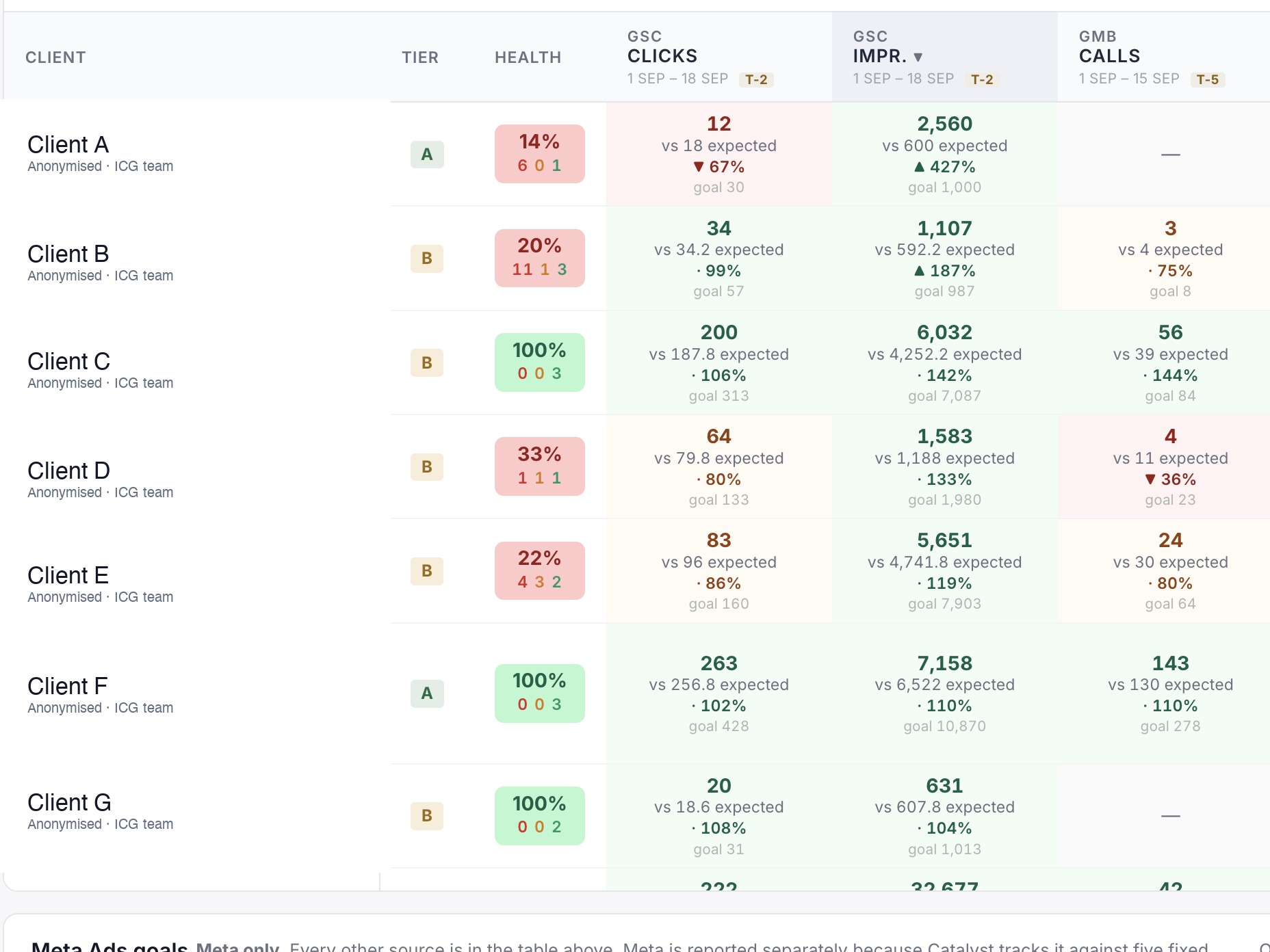
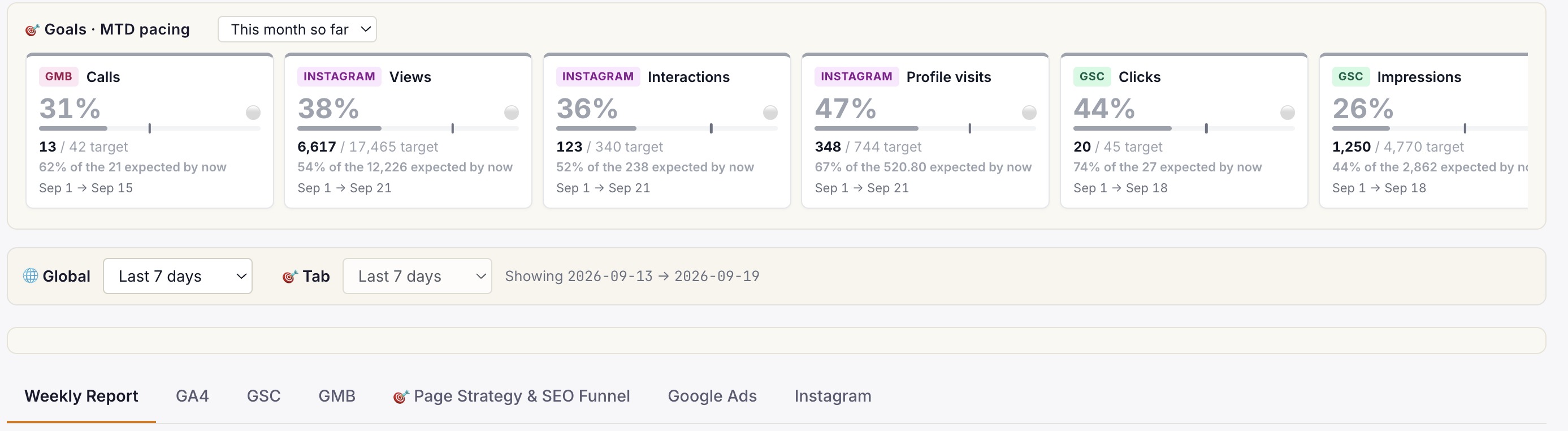
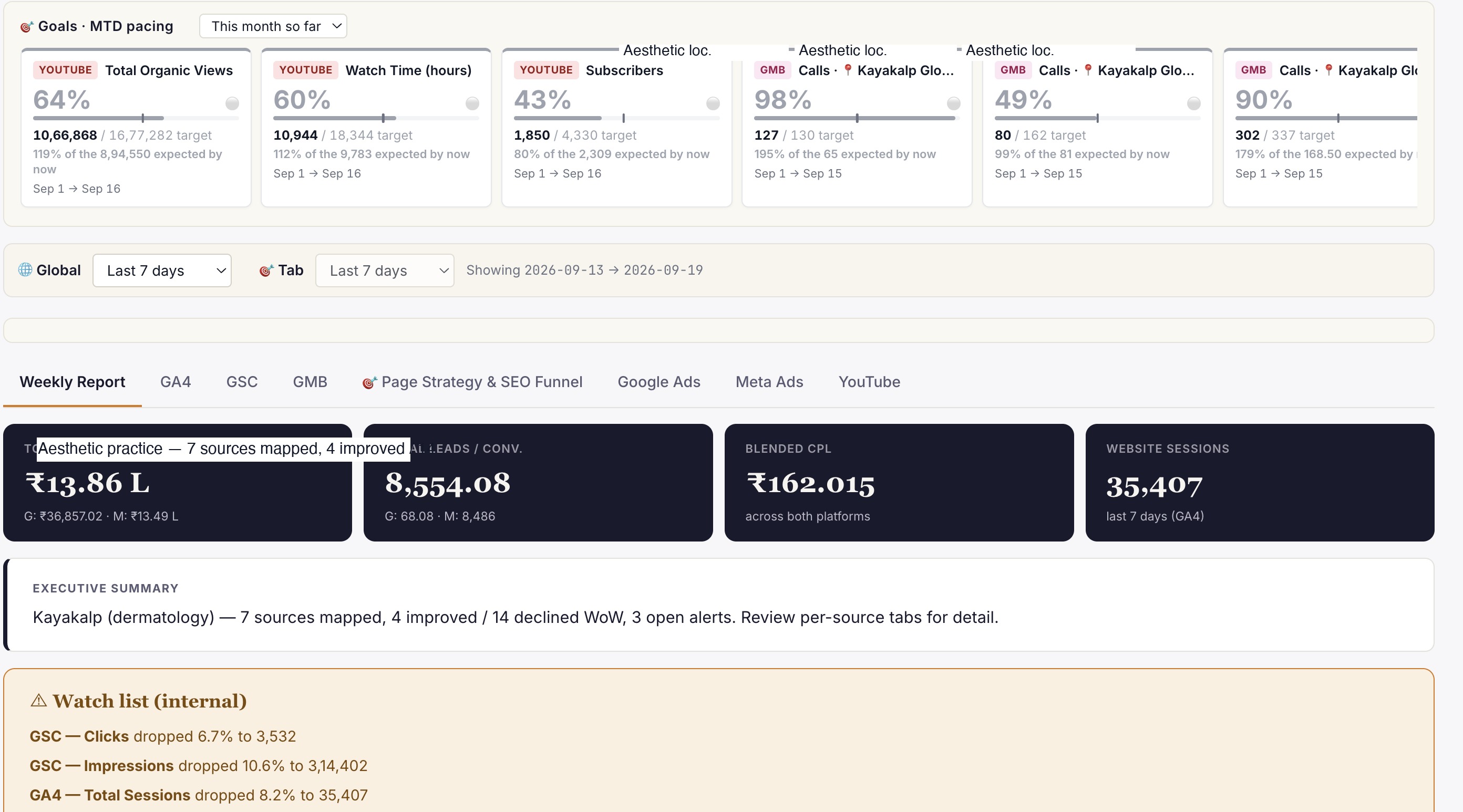
Live client dashboard. GSC, GA4, Google Ads, Meta Ads, IVR calls in one view. Login anytime, not monthly.
Phoenix
Clinic revenue intelligence over your PMS. Daily action queue: Prevent Loss, Maintain & Engage, Grow Revenue. Multi-centre rollout.
Or book a free 30-min audit to see all three in action on your account.
Healthcare brands
that already run on ICG.
A representative slice of the 150+ healthcare brands ICG has delivered for across India. Most engagements remain under NDA.


What ICG clients say · on video.
"Scale up of organic channels and business consulting. ICG has absolute domain authority in their field."
"What Ichelon accomplished — they got all my ideas and worked over 3-4 months to create an amazing, super-customised website."
"Working with ICG felt like working with an in-house growth team that happens to specialise in healthcare."
Need help operationalising this?
Every ICG service is healthcare-only, NMC + DPDP-aware, and built around the patient-research patterns that drive Indian healthcare growth in 2026.
Every practice welcome — packages from ₹20,000/mo.
Goals-Driven engagements · Performance-Linked Payout Models available
More from
ICG.
Five trends shaping Indian healthcare marketing through 2027: AI-first patient research, Conversions API adoption, ABDM discovery, the AEO w...
Healthcare AIO is the discipline of getting your clinic or hospital cited inside Google AI Overviews, ChatGPT and Perplexity answers — not j...
Conversational-search advertising places brand messages inside AI chat answers — ChatGPT, Perplexity, Copilot — rather than beside a results...
Stop guessing.
Book a Diagnostic.
30 minutes. Free. With the AI-powered healthcare-only marketing agency 150+ brands already run on. No slides, no pitch, no hard close.


