


Lead Management for Indian Clinics in 2026: Why Most Funnels Leak 40%+
Across the healthcare clinics ICG has audited, the median funnel leaks 40-60% of qualified leads between Qualified and Consultation Scheduled. Here's why — and the 5-step lead management framework that recovers them.
No pitch. Written root-cause diagnosis. AI-powered, healthcare only.
Direct answer
Across the healthcare clinics ICG has audited, the median funnel leaks 40-60% of qualified leads between Qualified and Consultation Scheduled. Here's why — and the 5-step lead management framework that recovers them.
TL;DR
Across the healthcare clinic deployments ICG has audited, the median lead funnel leaks 40–60% of qualified leads between Qualified and Consultation Scheduled stages. The qualified patient expressed interest, the telecaller flagged them, and then nothing happened. That patient went to a competitor — or just dropped out.
This is not a telecaller motivation problem. It is a systems problem. This article covers the 5-step framework Indian clinics need to plug the funnel.
What "lead management" actually means
The phrase gets misused. In SaaS sales, "lead management" means assigning a lead to a sales rep, scheduling follow-up reminders, and updating stage as the deal progresses. That's pipeline management.
In healthcare, lead management has to handle:
- Asynchronous patient research arcs. An IVF patient researches for 60 days before enquiring. A dental patient enquires the day they break a tooth. Different cycle lengths require different follow-up cadences.
- Multi-touchpoint qualification. Healthcare qualification isn't a single phone call. It's WhatsApp follow-up, document collection, pre-consultation telemedicine, and family-decision conversation.
- Specialty-specific objection handling. "Is IVF safe?" is a different objection from "How much will hair transplant cost?" from "Will my insurance cover knee replacement?" Each specialty has its 6 most common objections.
- Compliance-bounded communication. WhatsApp templates and call scripts must respect ART Act, NMC, DCI, and Drugs & Magic Remedies Act rules.
- Limbo lead re-engagement. The patient who went silent at day 14 needs structured re-engagement at day 21, day 45, and day 90.
The 5-step lead management framework
Step 1: Source-level lead capture standardisation
Every lead enters the CRM with:
- Source (Meta Ad / Google Ad / WhatsApp / IVR / Walk-in / Referral)
- Campaign + ad set + creative (for paid sources)
- First-touch timestamp
- Initial qualification fields (specialty-specific)
- DPDP consent captured + source IP hash
- Cross-system identifier (Meta lead ID, Google GCLID, WhatsApp message ID)
Most clinics fail at this step. They have leads in WhatsApp threads, Excel sheets, Meta lead manager, and a CRM — with no unified record. Beacon consolidates source attribution and feeds it into AtomCRM.
Step 2: First-touch SLA enforcement
Lead-to-first-touch time is the highest-correlation predictor of conversion. ICG's deployment data:
- Lead touched within 2 hours: 28%+ conversion to Qualified
- Lead touched within 24 hours: 18% conversion to Qualified
- Lead touched after 24 hours: <10% conversion to Qualified
- Lead never touched: 0% (sounds obvious but ~12% of leads at the median clinic are never touched)
First-touch SLA enforcement requires:
- Auto-assignment to a telecaller within 5 minutes of lead capture
- Push notification to telecaller's phone with lead details
- Escalation if no touch within 2 hours
- Dashboard visibility for the owner
Step 3: Specialty-specific qualification scripts
Qualification cannot be free-text "called, asked about IVF, will call back." It must capture structured fields specific to the specialty:
- IVF: age, AMH, partner factor, prior cycles, indication, budget range
- Aesthetic: procedure interest, skin type, prior procedures, budget tier
- Orthopaedic: joint affected, severity, age, insurance status, mobility level
- Dental: procedure type, urgency (pain vs cosmetic), insurance, budget
- Cosmetic surgery: procedure interest, prior procedures, photo consent, decision timeline
Each script also covers the 6 most common objections for that specialty with NMC/DCI/ART Act-compliant responses.
Step 4: Stage-wise follow-up cadence
Each funnel stage has a defined follow-up cadence:
Qualified stage:
- Day 0: Call + WhatsApp
- Day 1: WhatsApp reminder
- Day 3: Call again
- Day 7: WhatsApp re-engage
- Day 14: Flag as limbo
Consultation Scheduled stage:
- Day 0: WhatsApp confirmation + clinic details
- Day -1 (day before appointment): WhatsApp + call reminder
- Day 0 of appointment: Call 1 hour before
- Day +1 if no-show: WhatsApp + call reschedule
Consultation Done stage:
- Day 0: WhatsApp thank-you + treatment plan PDF if applicable
- Day 3: WhatsApp follow-up question
- Day 7: Call to discuss treatment plan decision
- Day 14: WhatsApp re-engage if no decision
Treatment Plan Quoted stage:
- Day 0: WhatsApp PDF + payment options
- Day 3: WhatsApp follow-up
- Day 7: Call to discuss
- Day 14: Final re-engage call + WhatsApp
- Day 21: Flag as limbo
The Hawk intelligence layer in AtomCRM surfaces leads sitting at any stage past their SLA window in the telecaller's daily action queue.

Step 5: Limbo lead structured re-engagement
A "limbo lead" is a qualified prospect who has not been touched for 14+ days. Across deployments, the median clinic has 34% of leads in limbo at any time.
ICG's structured re-engagement protocol:
- Day 14 (limbo entry): Personalised WhatsApp from telecaller "Hi {name}, wanted to check if you had any questions..."
- Day 21: Call attempt + WhatsApp with new value-add (e.g. "We have a new consultation slot this Friday")
- Day 45: WhatsApp with relevant content (e.g. article link, cost guide, doctor video)
- Day 90: Final touch — "We're checking in, please let us know if we can still help"
- Day 90+: Move to nurture list (quarterly content WhatsApp)
Recovery rate across this protocol: 18–32% of limbo leads convert to consultation within 60 days of re-engagement. For a clinic with 100 limbo leads, that's 18–32 recovered consultations — typically ₹3–8 lakh in revenue with effectively zero ad spend.
Owner-level dashboards
The clinic owner needs a daily 5-minute view:
- Funnel summary — leads by stage, with change vs last period
- Caller leaderboard — performance per telecaller (touches, qualifications, consultations, conversions)
- Overdue queue — leads past SLA at any stage
- Limbo recovery queue — re-engagement progress
- Source quality — CPQL by source with conversion rate per source
What ICG deploys
The full operational stack:
- AtomCRM — specialty-configured CRM
- Hawk — intelligence layer (limbo detection, caller leaderboard, adherence)
- Beacon — attribution + CAPI + GCLID integration
- Phoenix — revenue intelligence layer above PMS
- Client Alleviation Programme — telecaller + coordinator + owner training
The systems are necessary. The training is what makes them work.
The 5-stage lead flow in an Indian clinic
Understanding the lead flow stages is the prerequisite to identifying where leads are leaking. Most Indian clinics that analyse their lead funnel for the first time discover they are losing 40–60% of ad-generated leads before the first coordinator conversation.
Stage 1: Lead capture. The lead arrives — via Google Ads (form fill or call), Meta Ads (WhatsApp or lead form), organic Google search (call from GBP listing), doctor-directory message, or walk-in enquiry at the front desk. The lead is either captured in a CRM with a timestamp and source tag, or it disappears into a coordinator's WhatsApp or a sticky note. The capture rate (leads captured in the system vs leads lost before capture) at this stage is typically 65–80% without a CRM and 92–98% with a CRM that has multi-channel capture. Stage 2: First contact. The coordinator contacts the lead via WhatsApp or phone. ICG's CRM data across Indian clinic clients: the median time to first contact for uncaptured or manually managed leads is 4.2 hours. For CRM-managed leads with notification-triggered follow-up, the median is 28 minutes. The contact rate difference: leads contacted within 30 minutes convert at 4.1× the rate of leads contacted after 4 hours, based on ICG's clinic data. Stage 3: Qualification. The coordinator identifies whether the lead is a genuine consultation candidate — right specialty, right geography, within the clinic's price range. Qualification failure patterns: coordinators who qualify too broadly (waste capacity on leads that will never convert), coordinators who qualify too narrowly (lose leads with potential by making the first call feel like an interrogation rather than a conversation). Stage 4: Appointment booking. The qualified lead books a consultation. The biggest dropout at this stage: the coordinator says "let me check the doctor's availability and call you back" — 28% of Indian clinic leads who are told to wait for a callback do not answer the callback. Real-time appointment availability in the CRM-PMS integration eliminates this dropout. Stage 5: Attendance and consultation. The booked patient attends the consultation. No-show rate without structured reminder automation: 22–35% for most clinic types. With WhatsApp reminder automation (24-hour + morning-of): 8–14%. See how AtomCRM handles reminder automation →Where Indian clinics leak leads — the 5 most common failure points
Failure point 1: The uncontacted lead.
The ad generates a lead at 7pm. The coordinator's shift ends at 6pm. The lead is not assigned to anyone for the after-hours period. The coordinator sees the lead the next morning, calls, and finds the patient has already booked elsewhere. This is the single most common lead leakage point for Indian clinics with Google Ads or Meta Ads running outside business hours.
Fix: WhatsApp auto-responder for after-hours leads (Template: "Thank you for contacting [Clinic Name]. Our team is currently offline. A coordinator will contact you before [time] tomorrow. For urgent enquiries, please call [number].") + next-morning notification to the coordinator queue. Cost: nil if WhatsApp Business API is already set up.
Failure point 2: The contacted-but-not-followed-up lead.The coordinator has a productive first conversation. The lead says "I'll discuss with my family and call back." The coordinator means to follow up in 3 days. Three weeks pass. The patient booked at a competitor after day 5 when they received a proactive follow-up call. Without a CRM task or queue entry, "I'll follow up" is only as reliable as the coordinator's memory.
Fix: every non-converted conversation must result in a CRM follow-up task with a date and a note. AtomCRM's pending-contact queue surfaces all leads past their follow-up date each morning.
Failure point 3: The WhatsApp conversation that was never entered into the CRM.A patient enquires via the clinic's Instagram DM. The coordinator responds from their personal phone. The conversation happens outside the CRM. The patient asks a question about pricing, the coordinator answers, and the conversation goes quiet. Six weeks later, a different coordinator handles an inbound call from the same patient and has no record of the previous conversation.
Fix: all inbound communication channels — WhatsApp, Instagram DM, GBP chat, directory-platform message — must route to the CRM, not to individual coordinators' devices.
Failure point 4: The no-show that was never recovered.A patient books a consultation and does not attend. The default response in most clinics: the slot is marked as a no-show and the patient record is closed. The correct response: the no-show triggers a recovery sequence — WhatsApp message acknowledging the missed appointment, offering an easy rebook, and asking if the patient needs any assistance. ICG's Hawk intelligence layer flags no-shows and triggers recovery sequences automatically. Explore Hawk → No-show recovery rates with structured follow-up: 28–40% of no-shows rebook within 7 days.
Failure point 5: The post-consultation disconnect.The patient attends a consultation, receives a treatment recommendation, and is given a brochure. No follow-up WhatsApp is sent. No reminder about the next step (starting treatment, booking an investigation, returning for a second opinion). The patient leaves the clinic and enters a decision vacuum. The clinic that follows up with a WhatsApp message 24 hours after the consultation — summarising the doctor's recommendation and offering a direct link to book the next step — converts 25–35% more post-consultation patients than the clinic that does nothing.
CRM options for Indian clinics — honest comparison
ICG AtomCRM: Purpose-built for Indian healthcare. Specialty-configured funnel stages, WhatsApp native integration, CAPI for Meta Ads attribution, Hawk intelligence, Beacon attribution, and HealthPro 360 PMS integration. Deployed with clinics and hospital groups in India. ₹3,999/month starting. Explore AtomCRM → General-purpose sales CRMs: India-native sales CRMs with healthcare configuration available. Strong automation and lead routing. Not healthcare-native — specialty-specific funnel stages require manual configuration. Better suited for hospitals with dedicated CRM administrators than for small clinics. Global marketing-and-sales CRMs: Strong foundational CRM. Not India-native — WhatsApp integration requires third-party connector, rupee billing is secondary, no healthcare-specific funnel stages. Appropriate for large healthcare organisations with existing investment in such a platform. Low-cost general business CRMs: Flexible, cost-effective, configurable. Not healthcare-native. Works for basic lead management in small clinics willing to invest in configuration. Spreadsheet + WhatsApp (no CRM): The default state for 60–70% of Indian specialty clinics. Functional below 20 daily enquiries. Every failure point described in the section above is present at maximum severity.Response-time targets by specialty
| Specialty | First contact target | Why |
|---|---|---|
| IVF / fertility | Under 30 minutes | High emotional urgency; comparing 3–5 clinics simultaneously |
| Aesthetic / dermatology | Under 60 minutes | Impulse-adjacent decision; competitor response speed is high |
| Dental (implants, orthodontics) | Under 60 minutes | High comparison shopping; same-day decision is common |
| Orthopaedic | Under 2 hours | Longer decision cycle; but initial response still critical for slot reservation |
| Cardiac / oncology | Under 2 hours | Emotionally high-stakes; prompt response signals that the patient matters |
| Hospital OPD (general) | Under 4 hours | Lower urgency; but same-day callback is strongly preferred |
Frequently asked questions
How many leads do Indian clinics typically lose before first contact?
ICG's CRM audit data across clinics that have never used a CRM: 20–35% of ad-generated leads are never contacted. Causes: after-hours leads with no assignment, leads captured on coordinator personal devices that are not handed over on shift change, Meta lead form leads that are downloaded once and not acted upon, and phone calls that ring unanswered and are not called back.
What is a good lead-to-consultation conversion rate for an Indian specialty clinic?
Varies significantly by specialty. ICG's benchmarks: IVF 35–55% of qualified leads → attended consultation; aesthetic 40–60%; dental implants 30–50%; cardiac 25–40%; oncology 15–30%. "Qualified lead" means the lead has been contacted, is appropriate for the specialty, and is within the clinic's service geography and price range.
Should a clinic use a CRM or a practice management software for lead management?
These are different tools serving different functions. PMS manages patients who have arrived. CRM manages leads who haven't booked yet. A clinic needs both: PMS for clinical and billing workflow, CRM for patient acquisition and re-engagement. The integration between the two — when a lead converts to a booked consultation, the record should move from CRM to PMS without manual re-entry — is the key architecture question for any clinic building its digital infrastructure.
What is the ROI calculation for a healthcare CRM?
Simple model: if a clinic recovers 15 previously lost leads per month via CRM-managed follow-up, and average consultation revenue is ₹2,000, that is ₹30,000 in recovered monthly revenue. Against a CRM cost of ₹4,000–₹8,000 per month, the payback ratio is 4–8× on the recovered lead revenue alone — before accounting for the improved consultation-to-treatment conversion from better follow-up sequences.
Explore AtomCRM → · Explore Hawk → · Read: What is healthcare CRM India → · Book a free diagnostic →Related reading on ICG
This piece sits inside ICG's broader work on healthcare growth, AI-first marketing systems, and healthcare operations. If this article was useful, these related pieces from ICG's editorial and platform work will help you build on it:
- AtomCRM — healthcare-native lead management
- What is healthcare CRM — India 2026
- GP referral vs digital acquisition — India
- Hawk — Lead-Leak Audit for clinics
- Free 30-min lead-management diagnostic
Or explore the full editorial index at ICG Insights, our healthcare services, or book a free 30-minute diagnostic to discuss your specific context with a Co-Founder.
Book a free 30-minute Brand & Growth Diagnostic.
It's a working session, not a sales pitch — you leave with a written root-cause analysis you can act on, whether or not you engage ICG.
Questions readers ask
about this topic.
The three platforms
behind every ICG engagement.
Beacon
CAPI middleware that fixes Event Match Quality, translates CRM statuses to Meta-standard events, dedups across channels.
Agency OS
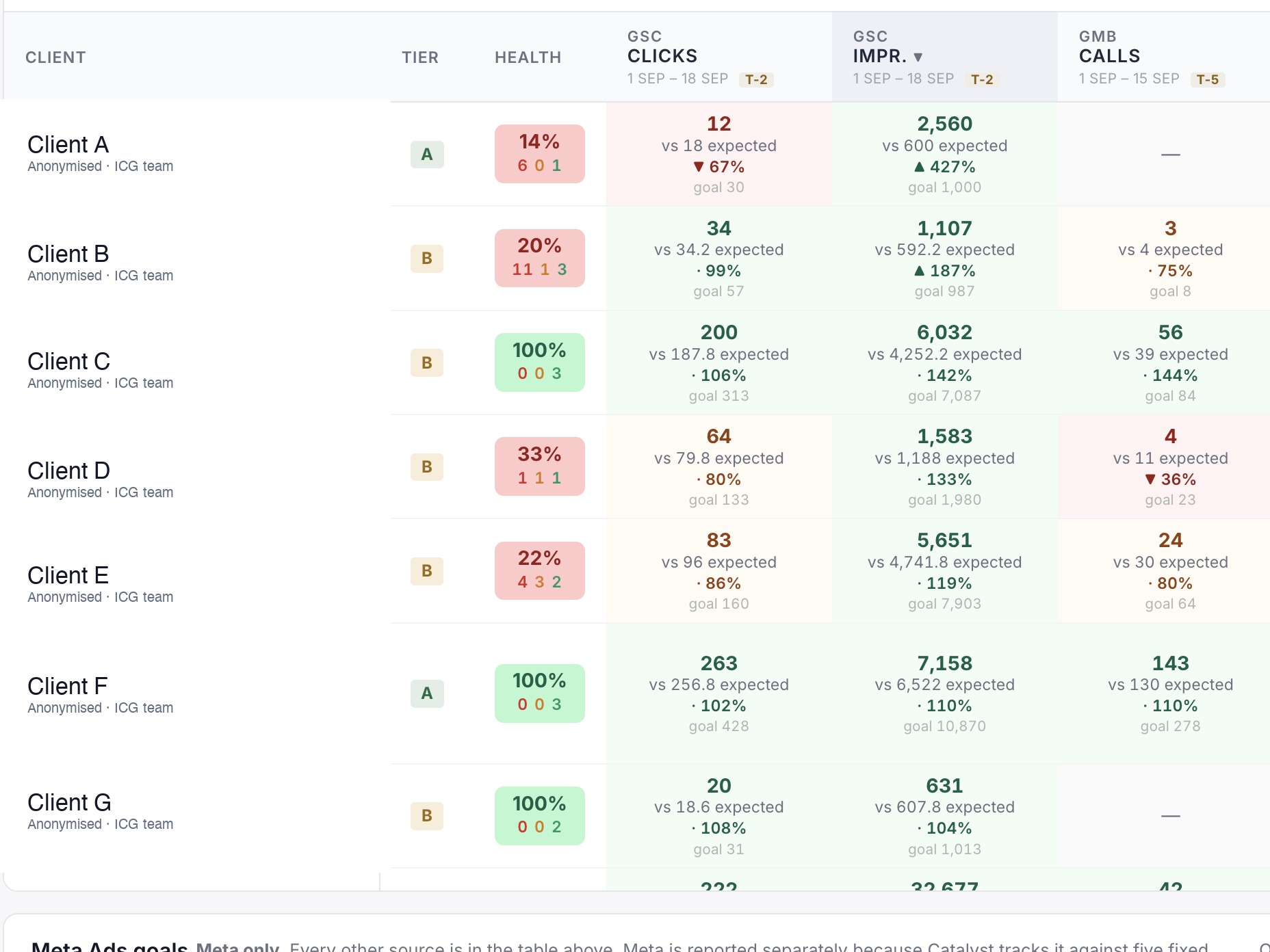
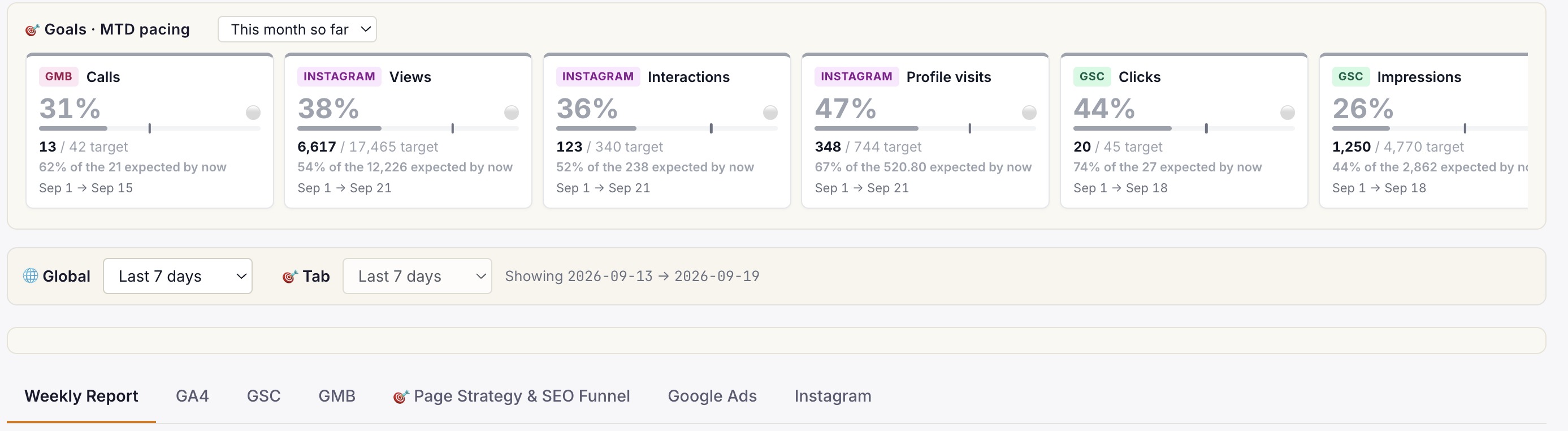
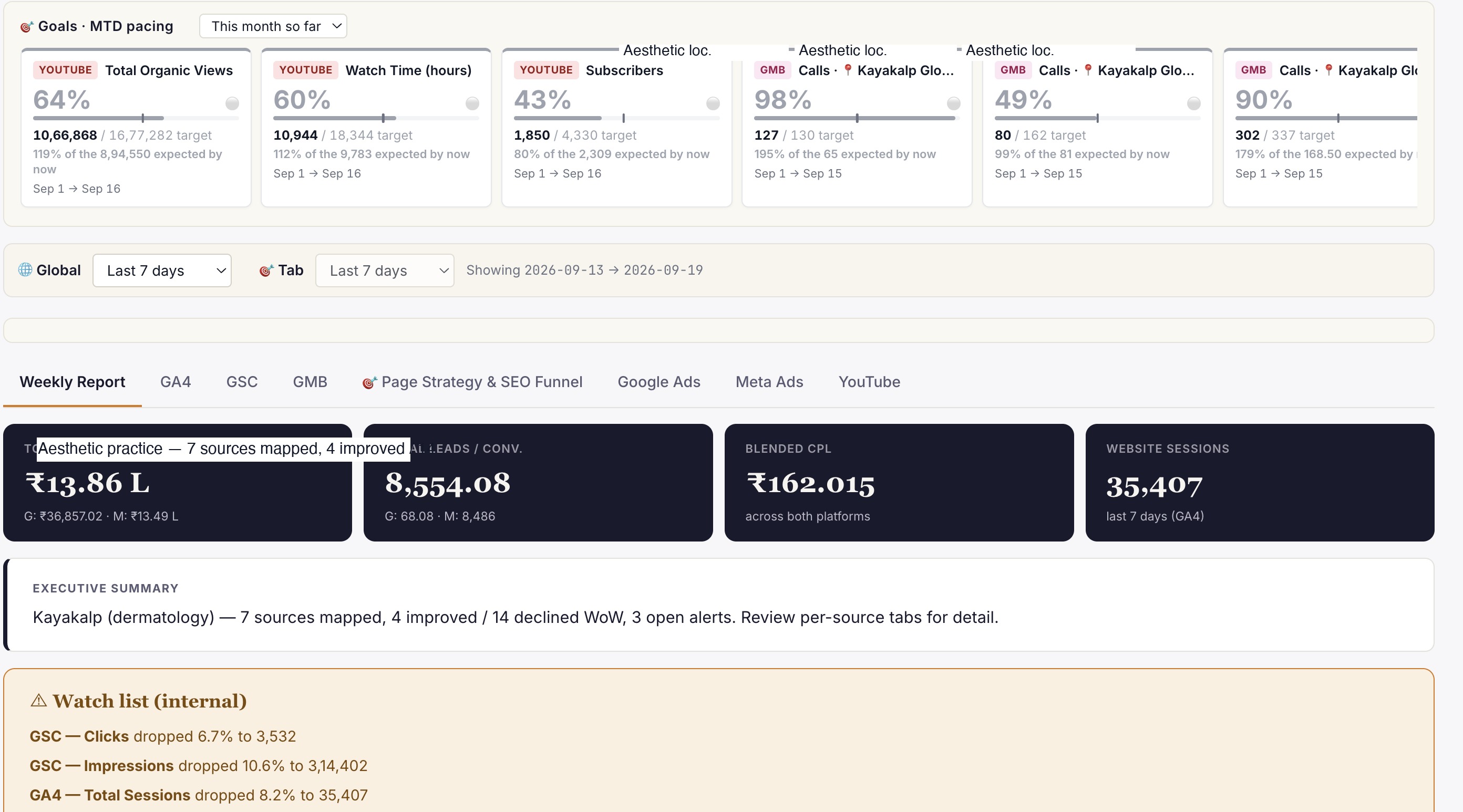
Live client dashboard. GSC, GA4, Google Ads, Meta Ads, IVR calls in one view. Login anytime, not monthly.
Phoenix
Clinic revenue intelligence over your PMS. Daily action queue: Prevent Loss, Maintain & Engage, Grow Revenue. Multi-centre rollout.
Or book a free 30-min audit to see all three in action on your account.
Healthcare brands
that already run on ICG.
A representative slice of the 150+ healthcare brands ICG has delivered for across India. Most engagements remain under NDA.


What ICG clients say · on video.
"Scale up of organic channels and business consulting. ICG has absolute domain authority in their field."
"Working with ICG transformed how we acquire IVF patients in Gurgaon. They understand the fertility journey from inquiry to consult..."
"What Ichelon accomplished — they got all my ideas and worked over 3-4 months to create an amazing, super-customised website."
Need help operationalising this?
Every ICG service is healthcare-only, NMC + DPDP-aware, and built around the patient-research patterns that drive Indian healthcare growth in 2026.
Every practice welcome — packages from ₹20,000/mo.
Goals-Driven engagements · Performance-Linked Payout Models available
More from
ICG.
Five trends shaping Indian healthcare marketing through 2027: AI-first patient research, Conversions API adoption, ABDM discovery, the AEO w...
Healthcare AIO is the discipline of getting your clinic or hospital cited inside Google AI Overviews, ChatGPT and Perplexity answers — not j...
Conversational-search advertising places brand messages inside AI chat answers — ChatGPT, Perplexity, Copilot — rather than beside a results...
Stop guessing.
Book a Diagnostic.
30 minutes. Free. With the AI-powered healthcare-only marketing agency 150+ brands already run on. No slides, no pitch, no hard close.


