


Google Business Profile optimization for multi-specialty hospitals in India: the department-level playbook
A multi-specialty hospital's Google Business Profile is not one profile — it is a single canonical GBP with the operational complexity of managing 10-15 specialty department queries against one profile ID. The optimisation playbook is different from a single-specialty clinic's be
No pitch. Written root-cause diagnosis. AI-powered, healthcare only.
Direct answer
A multi-specialty hospital's Google Business Profile is not one profile — it is a single canonical GBP with the operational complexity of managing 10-15 specialty department queries against one profile ID. The optimisation playbook is different from a single-specialty clinic's be
TL;DR
A multi-specialty hospital's Google Business Profile is not one profile — it is a single canonical GBP with the operational complexity of managing 10-15 specialty department queries against one profile ID. The optimisation playbook is different from a single-specialty clinic's because the primary category can only be one thing, secondary categories max out at nine, and reviews aggregate across all specialties into one rating. ICG's approach (using Angryturtle's Rank OS to score the profile against every specialty query it should rank for) treats the multi-specialty hospital as a portfolio problem inside a single asset. Done right, one hospital GBP ranks in the local pack for 12-18 specialty queries; done wrong, it ranks for one and loses everything else to specialty-focused clinics.
Why a multi-specialty hospital's GBP is a harder problem than most agencies realise
A single-specialty dental clinic optimises its GBP for one query cluster — "dentist," "dental clinic," "orthodontist," "cosmetic dentist." Every field on the profile can be tuned to that cluster. Reviews collected from patients are all dental patients. Photos are of dental facilities. The signal is coherent.
A 200-bed multi-specialty hospital with 12 specialty departments faces a fundamentally different problem. It needs to rank for "cardiology hospital," "IVF centre," "dermatology clinic," "orthopedic surgeon," "paediatric hospital," "oncology centre" and 6-8 other specialty queries — all with one profile. Google's ranking algorithm reads the profile as a single entity; it cannot simultaneously believe the profile is the best cardiology hospital AND the best fertility clinic in the area.
The temptation for agencies is to fragment the profile — create separate GBPs for each department. That is against Google's policies. Only one GBP per physical location is allowed. A multi-specialty hospital gets one profile.
The right approach is portfolio optimisation: choose the primary category based on the specialty with the highest revenue and highest search competition, add the other high-revenue specialties as secondary categories, list every department's services under GBP Services, use department-focused Google Posts to build query-specific signal over time, and structure the linked website to give Google specialty-level authority signals for each department.
Angryturtle's approach: score the hospital's profile against every specialty query cluster the hospital should rank for, showing which specialties the profile ranks well for and which specialties are losing to specialty-focused competitors. The Rank OS Relevance dimension is the diagnostic here — it reads whether the profile is dominant on its primary specialty and whether the secondary specialties are getting the field-level signal they need.
The seven decisions that shape a multi-specialty hospital's GBP performance
1. Primary category choice
The single biggest decision for a multi-specialty hospital's GBP. The primary category becomes the dominant signal Google uses to categorise the business. It cannot be changed frequently without ranking penalty. Choosing wrong at setup and correcting a year later loses months of accrued ranking authority.
The framework: pick the primary category that maps to the specialty with (a) the highest revenue contribution to the hospital, (b) the strongest competitive position of the hospital's specialists, and (c) the highest search demand in the local catchment. When these three point to different specialties, revenue contribution wins.
Common patterns:
A hospital where cardiology drives 40% of admissions typically sets primary to "Cardiology Hospital" or the closest available Google category (which may be "Heart Hospital" or "Cardiologist" depending on Google's category tree). All other specialties go to secondary.
A hospital where IVF is 25% of admissions but competitive density from dedicated IVF centres is high should still set primary to "Fertility Clinic" or "IVF Centre" if the hospital wants to compete for IVF queries; otherwise, IVF specialty-focused competitors will always outrank the multi-specialty hospital for those queries.
A hospital where no single specialty dominates (roughly equal share across 5-6 specialties) can use "Multi-specialty Hospital" as primary, sacrificing some specialty-specific ranking authority for balanced coverage. Google's algorithm reads "Multi-specialty Hospital" as competitive for generic hospital queries but weaker for specialty-specific queries.
2. Secondary categories (up to 9)
The nine secondary category slots are the highest-value real estate in a multi-specialty hospital's GBP after primary. Each secondary category signals to Google that the hospital is a legitimate destination for that specialty's queries.
The specialty-department priorities: fill every specialty that has a dedicated department at the hospital. A hospital with cardiology, IVF, dermatology, orthopedics, paediatrics, oncology, gynaecology, gastroenterology, neurology and endocrinology departments should use nine secondary category slots for the nine highest-revenue departments plus consider swapping in and out based on quarterly performance data.
Angryturtle's Category Picker shows the full Google healthcare category tree — most agencies work from an incomplete list of 15-20 categories they've seen before, missing 100+ specialty-specific categories that Google actually recognises. Categories like "Cardiovascular and Thoracic Surgeon," "Cardiac Rehabilitation Center," "Cardiovascular Diagnostic Center" are all distinct from "Cardiologist" and rank for different queries.
3. Services list (up to 30)
GBP allows a hospital to list up to 30 services, each with a name and a description. Most multi-specialty hospitals use 4-8 services. The remaining 22-26 slots are unused ranking surface.
The right approach: list every discrete procedure and diagnostic the hospital offers, grouped by department. A cardiology department alone might contribute 5-8 services: Angioplasty, Coronary Artery Bypass Grafting (CABG), Cardiac Catheterization, Echocardiography, Holter Monitoring, Pacemaker Implantation, Cardiac Rehabilitation, Preventive Cardiology Consultation.
A multi-specialty hospital with 8 departments contributing 4-6 services each ends up with 32-48 services, which needs pruning to the 30-slot limit. The pruning criteria: keep the services with highest search volume in the catchment, keep the services with highest patient value per booking, remove services that are commoditised (a "general consultation" service is lower value than a "cardiology consultation with a Fellowship-trained cardiologist" service).
Each service listing should have a descriptive service name (not just "Cardiology" but "Interventional Cardiology and Angioplasty") and a service description of 100-200 characters that naturally incorporates related keywords. Angryturtle drafts service descriptions with compliance-aware AI that knows NMC constraints; the ICG team reviews and publishes.
4. Business description (750 characters)
The GBP business description field allows 750 characters of prose describing the business. Most hospitals use 200-300 characters. The remaining 450-550 characters are unused signal.
The right description for a multi-specialty hospital carries: the hospital's name and specialty parent (multi-specialty), the departments/specialties covered, the geographic catchment served (city plus 2-3 major neighbourhoods), the years of operation (age signal), any distinguishing facilities (NABH accreditation, specific technology, emergency services 24/7, insurance panels), and 1-2 keyword variants of the primary specialty. All in natural prose, not keyword-stuffed.
Example structure (adapted per hospital): "[Hospital Name] is a [X-bed] multi-specialty hospital in [City/Neighbourhood], serving patients across [City] and neighbouring areas since [Year]. Departments include [Cardiology, IVF & Fertility, Dermatology, Orthopedics, Paediatrics, Oncology, Gynaecology, Neurology]. The hospital is [NABH-accredited / JCI-accredited if applicable], with 24/7 emergency services, [ICU capability], and empanelled with [Star Health, HDFC ERGO, Care Health, Bajaj Allianz and other major insurers]. [Optional distinguishing capability — Fellowship-trained specialists, specific advanced equipment, specific procedures]."
The 750 characters used properly with natural keyword variation lifts sie" style="color:inherit;text-decoration:underline;text-decoration-color:rgba(42,126,200,.5);text-underline-offset:2px">Rank OS Relevance materially and is the fastest single-edit improvement most multi-specialty hospitals can make.
5. Photos (facility, department-specific, staff, equipment)
GBP allows unlimited photos organised into categories: cover, logo, interior, exterior, at-work, food-and-drink (not applicable for hospitals), team, additional. Each photo is a discrete signal to Google plus a discrete visual asset for patients evaluating the profile.
Multi-specialty hospitals typically underinvest here. The right photo library: exterior shots of the building from multiple angles, interior shots of the reception, waiting areas, and general hospital environment, department-specific shots of each specialty (cardiology cath lab, IVF laboratory, dermatology consultation room, orthopedic theatre, paediatric ward), equipment shots showing the hospital's technology (MRI, CT, cath lab equipment, laboratory), and team shots of senior specialists (with their consent and appropriate compliance framing).
Photos should be updated quarterly. New photos signal freshness. Old photos (dated by Google's photo submission date) hurt freshness signal after 3-6 months of no new uploads.
6. Google Posts (published cadence)
Google Posts are hospital-published content that appears on the GBP profile — announcements, health tips, event notifications, doctor introductions, insurance panel additions. Posts have a 7-day active display period on the profile (though they remain in the profile's history indefinitely).
The right cadence for a multi-specialty hospital: 2-3 posts per week, rotating across departments so each specialty gets Post visibility over a 4-6 week cycle. Post types:
Doctor introductions: a new specialist joining, or an existing specialist's specialty focus highlighted. Boosts specialty-specific ranking signal.
Health awareness: World Diabetes Day post from endocrinology, breast cancer awareness from oncology, heart health from cardiology. Compliance-safe (educational content, not treatment claims), builds topical relevance across specialties.
Facility updates: new equipment installations, new department launches, capability announcements. Signal growth and freshness.
Insurance panel additions: "Now empanelled with [new insurance provider]" posts convert into practical patient-facing utility.
Angryturtle's Content Studio schedules Posts against a per-department calendar, drafts compliance-aware content, and publishes to Google timezone-correctly. The AI-drafted post text passes through NMC review before publish. For a multi-specialty hospital with 8-12 departments, this is the difference between running manual per-department Post scheduling (which no ops team sustains) and a scheduled system that maintains freshness signal automatically.
7. Reviews management (aggregate rating + specialty coverage)
Reviews aggregate across all specialties into one hospital rating. This is a problem because a rare bad experience in one specialty (a billing dispute in cardiology, a delayed procedure in orthopedics) affects the rating for every specialty. The rating is shared even though the specialties are operationally distinct.
The mitigation: proactive review-collection across all specialties, so no single specialty dominates the review corpus. If cardiology generates 15 reviews per month and IVF generates 2, the rating is dominated by cardiology's patient experience. If the two produce equal review flow, the rating reflects the hospital's overall performance.
Angryturtle's review-request kit distributes review requests across specialties in proportion to patient flow, so the review corpus is representative of the whole hospital. The AI reply system drafts replies in the hospital's voice with NMC-safe framing, holds them for hospital review, and publishes on approval.
Negative-review response is more sensitive for multi-specialty hospitals because a reply that mentions specific treatment received (even in defence) can violate NMC. The right pattern: acknowledge the concern generally, invite the patient to a direct conversation offline, avoid any treatment-specific detail in the public reply. Angryturtle's AI drafts negative replies in this pattern by default; the hospital's compliance-reviewer confirms before publish.
How ICG's Angryturtle-powered service handles multi-specialty hospital complexity
The workflow for a multi-specialty hospital engagement:
Onboarding week 1: primary and secondary category audit against revenue and search volume data. Category corrections if the current setup is wrong. Full services list built out to 30 slots. Business description rewritten to 750 characters with department coverage.
Onboarding week 2: photo audit and gap fill. Any missing department-specific photos captured with hospital cooperation. Old photos archived. New photo cycle scheduled.
Onboarding week 3: services list refined based on the initial performance data. Google Posts scheduled for the coming month across all departments. Review-request campaign initiated with department-proportional distribution.
Ongoing (monthly): Rank OS score check across all five dimensions with specialty-query breakdown showing which specialties are ranking well and which need attention. Weekly Post publishing across departments. Review response operations within 24-hour SLA. Monthly geo-grid rank scan across the catchment for the top 3-5 specialty queries per department. Monthly citation building against the healthcare-directory list. Quarterly deep-dive audits per department covering competitive positioning against specialty-focused competitors.
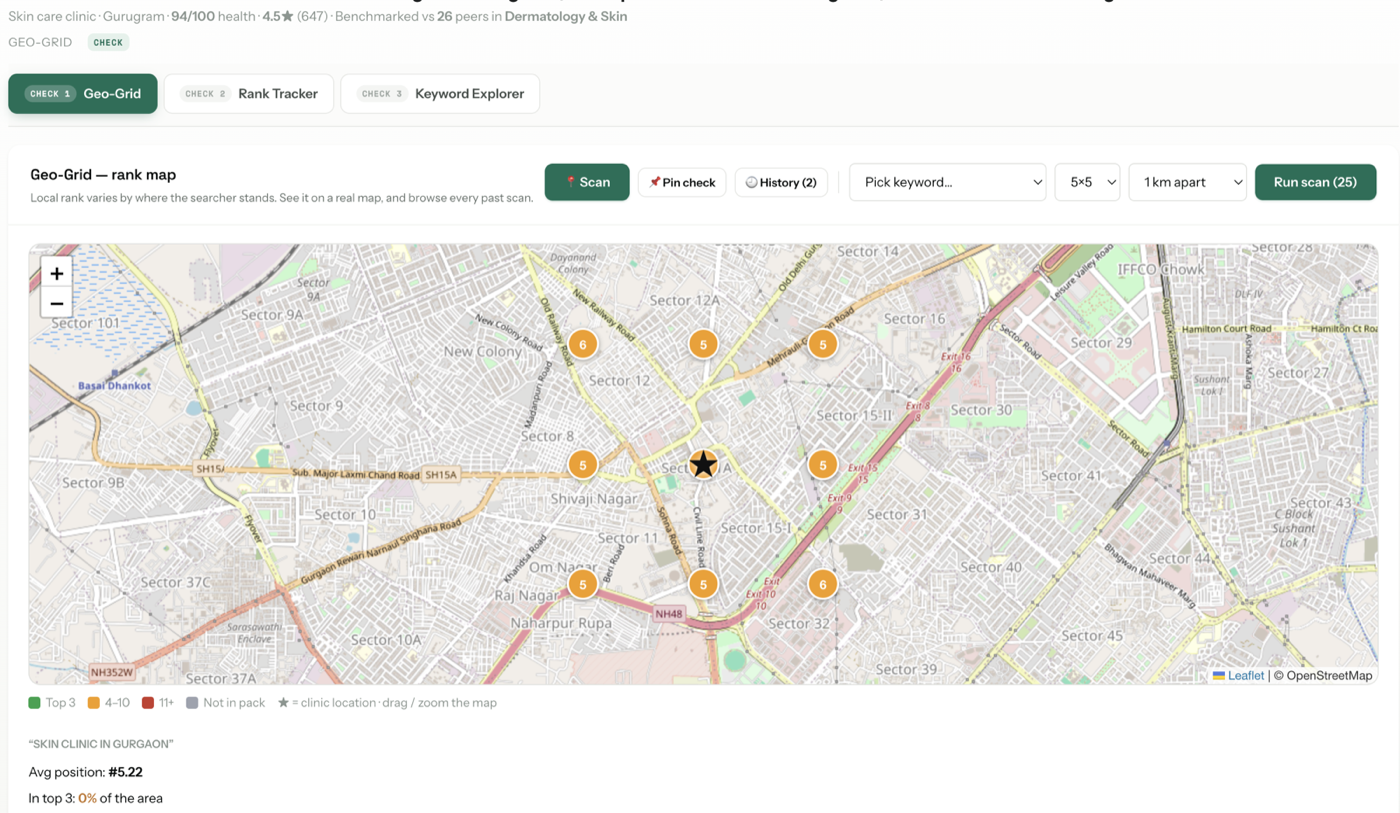
Ongoing (weekly): AIO readiness check for new questions added to Ask Maps, particularly for specialties where Google AI Overviews are appearing more frequently. Compliance review of any content flagged by internal review or by Angryturtle's AI drafting workflow.
 AI Overview readiness scoring on every healthcare query for the listing's specialty × city" loading="lazy" decoding="async" style="width:100%;height:auto;display:block;">
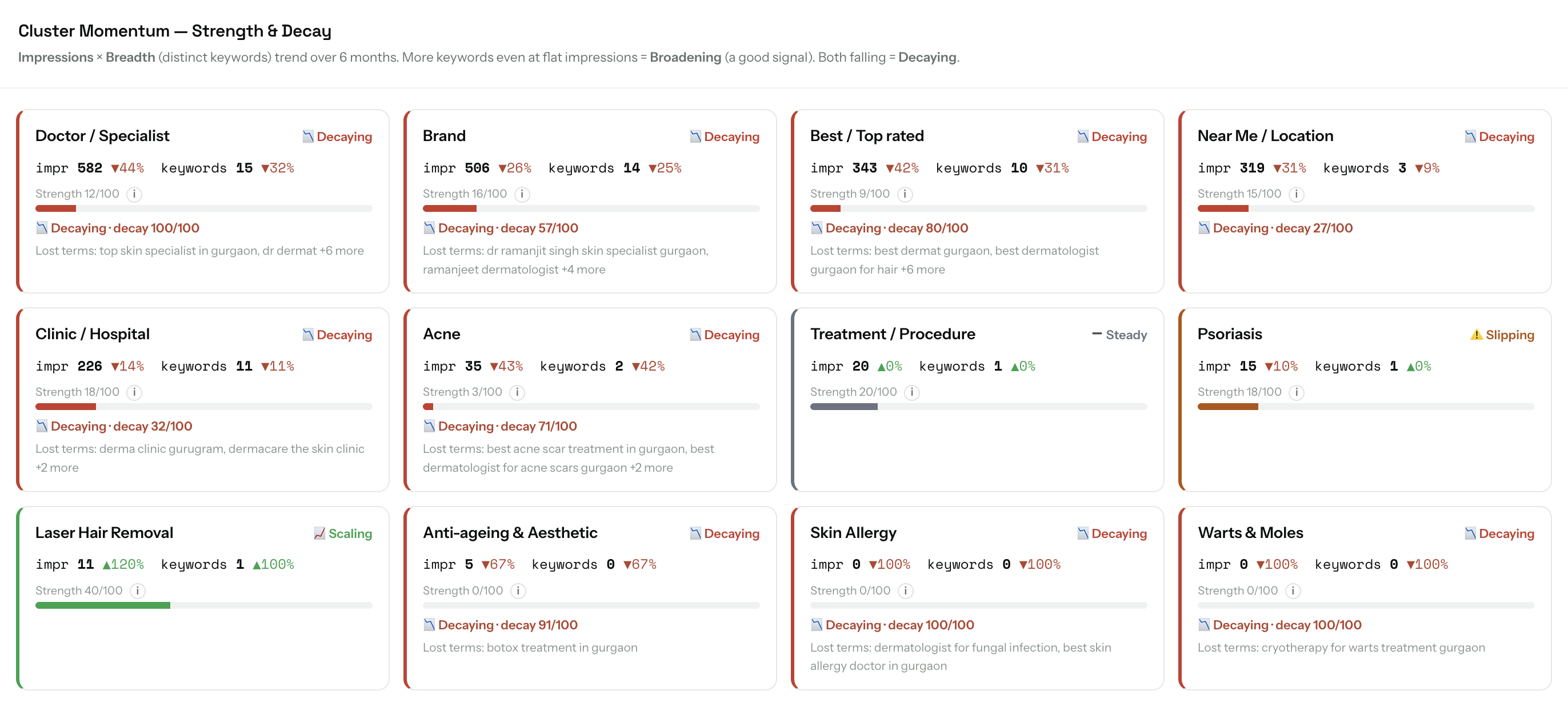
Monthly reporting: Rank OS trajectory across all five dimensions with specialty-level breakdown, geo-grid rank change per specialty, cluster momentum shifts per department, review sentiment analysis with department-level tagging, competitor gap closure per specialty. The report shows the hospital's marketing head exactly which specialties are gaining ranking and which are losing, so investment decisions can be prioritised.
Multi-specialty hospital pricing tier: ₹1.5-4 lakh per month
The ₹1.5L-4L per month Hospital tier of ICG's local SEO service is where multi-specialty hospitals typically land. The wider band reflects the complexity variance: a 100-bed hospital with 8 departments in a single city sits toward the ₹1.5L end; a 250-bed hospital with 12+ departments across 3 locations in a metro sits toward the ₹4L end.
What the tier includes: everything described above — full onboarding audit, per-department services and post management, review response operations, monthly geo-grid rank tracking per specialty, monthly citation building, monthly AIO readiness audit, monthly white-label reporting, dedicated account team with a senior Angryturtle operator plus a healthcare marketing specialist. What's separate: paid Google Ads and Meta Ads (under performance marketing service), website development, technical SEO for the hospital's website beyond schema and NAP consistency checks, and social media management beyond GBP posts.
What ICG-with-Angryturtle produces in the first 90 days for a multi-specialty hospital
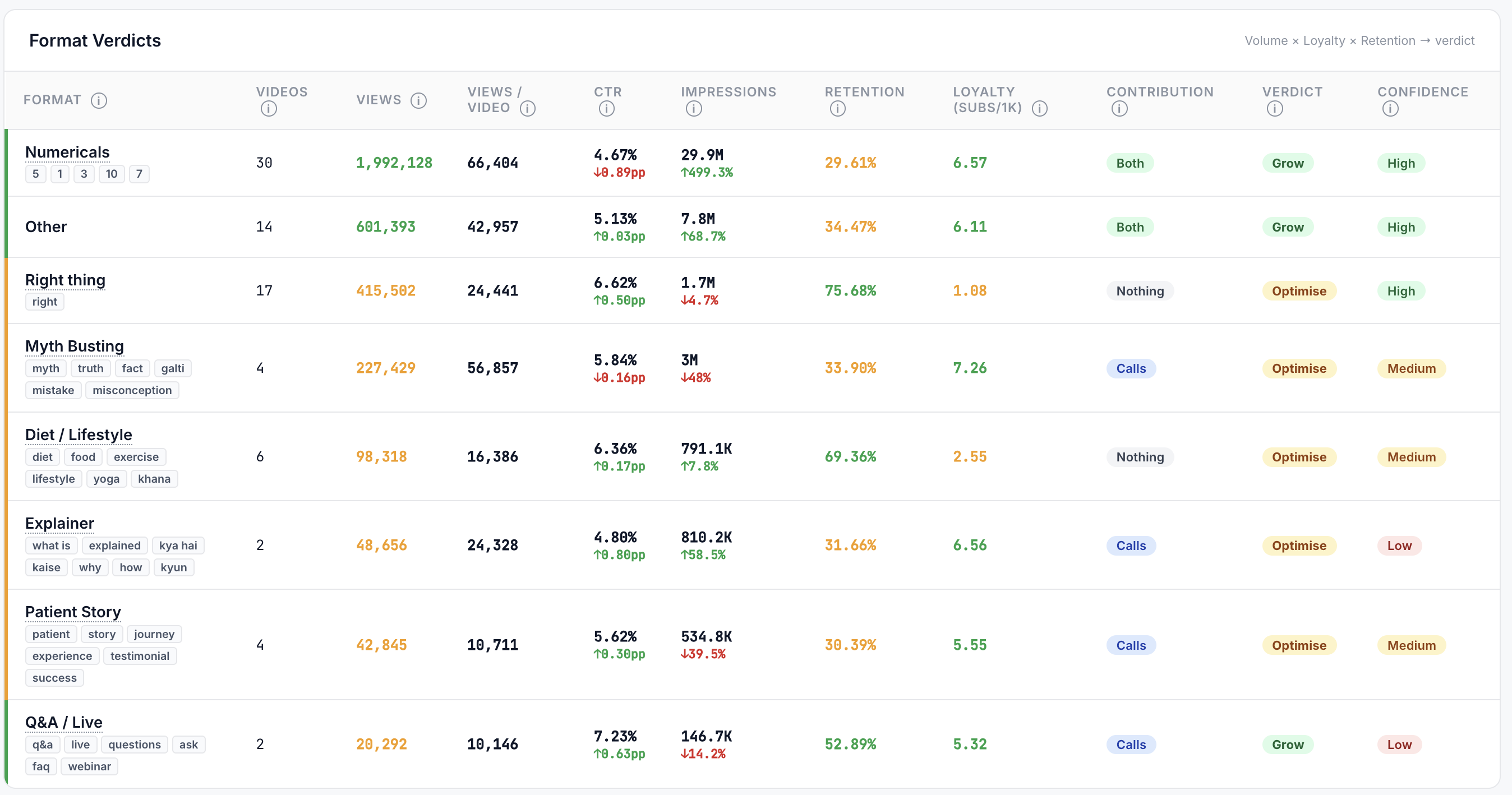
Weeks 1-4: profile brought to Rank OS 75+ from typical starting scores of 45-60 through category corrections, services build-out, description rewrite, initial photo upload, first Post cycle, first review-request wave, first citation batch. First-month reporting shows the specific edits made and the Rank OS trajectory.
Weeks 5-8: initial ranking movement visible in geo-grid scans. Typical pattern: primary specialty ranking improves 1-2 positions in the local pack. Secondary specialties start appearing in queries where they previously didn't rank at all. Review volume growth begins to reflect in aggregate rating direction.
Weeks 9-12: substantive ranking improvement across 3-4 specialties. Aggregate rating trending upward if response rate and new-review flow are on target. Citation coverage substantially improved. AIO readiness score materially improved as Ask Maps questions get answered by profile edits.
The 90-day report shows the hospital's leadership team a concrete before/after: Rank OS score change, specific specialty ranking improvements, review flow growth, citation footprint expansion, AI-answer visibility gains. Every claim traceable to the specific edit or action that produced it.
Related reading
 Meta Catalyst IQ Master Dashboard showing account-level KPIs, spend, CPQL and campaign health for a healthcare Meta Ads account" width="1200" height="675" loading="lazy" decoding="async" style="width:100%;height:auto;display:block;">
- Healthcare local SEO agency India — the pillar page with full ICG service scope, powered by Angryturtle
- How to rank a hospital on Google Maps in India — the six controllable signals in depth
- Digital marketing company for hospitals in India — broader digital marketing scope beyond local SEO
- Schema markup for healthcare SEO — MedicalOrganization, Hospital and Physician schema for hospital websites
FAQ
Can a multi-specialty hospital have multiple GBP profiles? No. Google's policy is one GBP per physical location. A hospital with multiple physical branches gets one GBP per branch, but a single physical hospital with multiple departments gets one shared GBP for that location. Attempts to create separate GBPs per department violate policy and result in profile suspensions.
How does a multi-specialty hospital decide the primary GBP category? Prioritise by revenue contribution first, competitive positioning second, and search demand third. When these point to different specialties, revenue contribution wins. Angryturtle's Category Picker plus revenue and search-volume data helps make this call at engagement kick-off.
How many services should a multi-specialty hospital list on GBP? Up to 30 (the GBP maximum). Most multi-specialty hospitals use 4-8 services and leave 22-26 slots unused. Filling all 30 with specialty-department-level services (Angioplasty, IVF, Laser Hair Reduction, Total Knee Replacement, etc.) is one of the fastest ways to raise Rank OS Relevance.
How does Google's local algorithm handle multi-specialty complexity? The algorithm reads the profile as a single entity with signals distributed across all fields. Primary category is the dominant signal for what the business is; secondary categories, services, description, Posts, reviews and citations contribute to the specialty-specific query matching. The algorithm cannot rank one profile as #1 for both cardiology and IVF simultaneously if specialty-focused competitors exist; portfolio prioritisation is required.
How often should a multi-specialty hospital post on GBP? Two to three Posts per week, rotating across departments so each specialty gets Post visibility on a 4-6 week cycle. Angryturtle's Content Studio schedules the calendar and drafts the Posts; hospital operations approves and publishes.
How does review response work for a multi-specialty hospital? Reviews are responded to within 24 hours (SLA) with AI-drafted replies in the hospital's voice, NMC-compliance-safe framing, and specialty-appropriate content. Negative reviews get careful acknowledgement-plus-offline-invitation replies without treatment-specific detail. All replies pass through hospital compliance-reviewer confirmation before publishing.
Can a hospital transfer its existing GBP to Angryturtle management? Yes. Angryturtle connects to the hospital's existing GBP via OAuth. The hospital retains ownership; Angryturtle acts as a management application. The transition takes 15-30 minutes and does not disrupt current profile status or ranking. Every subsequent edit made through Angryturtle publishes to the hospital's existing GBP.
How is Angryturtle different from Google's own GBP dashboard? GBP's own dashboard is a basic edit interface with limited insights. Angryturtle adds the Rank OS scoring, five-dimension diagnostic, Ask Maps AIO readiness, geo-grid rank tracking, citation discovery and management, AI review reply drafting, Content Studio for Post scheduling, competitor benchmarking, and consolidated white-label reporting. GBP is the endpoint Angryturtle publishes to; Angryturtle is the intelligence and operations layer on top.
What size hospital justifies the ₹1.5-4 lakh per month tier? Multi-specialty hospitals with 80+ beds, 6+ specialty departments, and growth ambition beyond current patient volume typically see positive ROI at the Hospital tier within 6-9 months. Smaller hospitals with fewer specialties are better served at the Chain tier (₹75K-1.5L). Very large hospitals (300+ beds, multi-city chains) sit at the Enterprise tier with custom pricing.
Does ICG's local SEO service handle hospital insurance-panel directory listings? Yes. Insurance-panel directories (Star Health Provider Network, HDFC ERGO Provider Directory, Bajaj Allianz Provider Panel, Care Health Insurance Network) are part of the healthcare-specific citation list Angryturtle discovers and manages. These directories both build entity authority for Google and drive practical patient flow from insurance-covered patient searches.
Book a free 30-minute Brand & Growth Diagnostic.
It's a working session, not a sales pitch — you leave with a written root-cause analysis you can act on, whether or not you engage ICG.
The three platforms
behind every ICG engagement.
Beacon
CAPI middleware that fixes Event Match Quality, translates CRM statuses to Meta-standard events, dedups across channels.
Agency OS
Live client dashboard. GSC, GA4, Google Ads, Meta Ads, IVR calls in one view. Login anytime, not monthly.
Phoenix
Clinic revenue intelligence over your PMS. Daily action queue: Prevent Loss, Maintain & Engage, Grow Revenue. Multi-centre rollout.
Or book a free 30-min audit to see all three in action on your account.
Healthcare brands
that already run on ICG.
A representative slice of the 150+ healthcare brands ICG has delivered for across India. Most engagements remain under NDA.


What ICG clients say · on video.
"Mental health marketing requires a different sensitivity. ICG built compliance-aware campaigns that respect both patients and our..."
"Bariatric surgery patients need a long consideration cycle. ICG built a content + paid system that respects that timeline."
"Working with ICG felt like working with an in-house growth team that happens to specialise in healthcare."
The intelligence stack behind this playbook.
Every ICG engagement runs on the Search Intelligence Trifecta — Angryturtle for GMB, SIE for search and AI Overview, YODA for YouTube. Live product screens below.
Need help operationalising this?
Every ICG service is healthcare-only, NMC + DPDP-aware, and built around the patient-research patterns that drive Indian healthcare growth in 2026.
Every practice welcome — packages from ₹20,000/mo.
Goals-Driven engagements · Performance-Linked Payout Models available



More from
ICG.
Five trends shaping Indian healthcare marketing through 2027: AI-first patient research, Conversions API adoption, ABDM discovery, the AEO w...
Healthcare AIO is the discipline of getting your clinic or hospital cited inside Google AI Overviews, ChatGPT and Perplexity answers — not j...
Conversational-search advertising places brand messages inside AI chat answers — ChatGPT, Perplexity, Copilot — rather than beside a results...
Stop guessing.
Book a Diagnostic.
30 minutes. Free. With the AI-powered healthcare-only marketing agency 150+ brands already run on. No slides, no pitch, no hard close.


