


Dental Marketing India: Single Chair to Group Playbook
Dental marketing in India, scaled by stage: local SEO for single-chair, reviews and ads for 3-5 chair, and brand plus paid for groups. See the playbook.
No pitch. Written root-cause diagnosis. AI-powered, healthcare only.
Direct answer
Dental marketing in India, scaled by stage: local SEO for single-chair, reviews and ads for 3-5 chair, and brand plus paid for groups. See the playbook.
TL;DR
By Hanuman Sihag, Head of Innovation Chamber & SEO Lead at ICG.
The Indian dental market: how marketing changes by clinic size
Dental marketing in India is meaningfully different at different practice scales. A single-chair practice in a residential neighbourhood competes primarily in local search — "dentist near me" and "dental clinic [locality name]" — and the primary growth driver is Google Business Profile quality, not advertising. A multi-location dental group competes for high-value procedure terms ("dental implants Delhi", "Invisalign cost India") and requires paid acquisition, SEO infrastructure, and patient recall systems.
The mistake most dental practices make: applying the same marketing approach regardless of size. A single-chair practice in Sector 14 Gurgaon does not need a ₹1.5 lakh/month Google Ads budget. It needs a fully optimised GBP with 100+ reviews, a 2-page website with MedicalClinic schema, and a WhatsApp enquiry button. Conversely, a 5-location dental group cannot rely on GBP alone — it needs attribution, CPQL tracking, and procedure-specific paid campaigns.
Local SEO for single-chair practices: the highest ROI investment
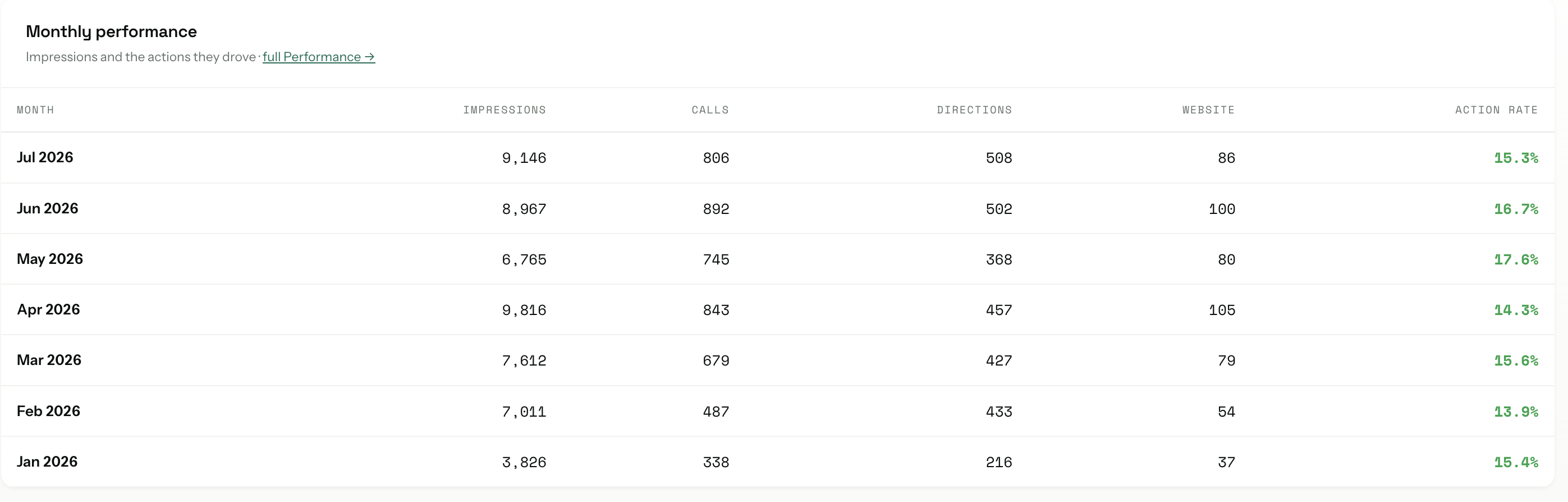
For a single-chair or single-location dental practice, Google Business Profile optimisation is the single highest-ROI marketing investment available. A GBP with: 150+ verified reviews, complete business information (all services listed with descriptions, opening hours current and accurate), weekly posts, photo gallery updated monthly, and active Q&A responses will rank in the Local Pack ("near me" searches) for 80-90% of relevant local queries.
The GBP investment required: 2-3 hours to set up and optimise initially, 30 minutes per week to maintain. ICG estimates that a well-maintained dental GBP generates 30-60% of all new patient enquiries for single-location practices in established residential neighbourhoods — at zero direct cost per lead.
Multi-location SEO for dental groups
A dental group with 3+ locations needs a distinct SEO architecture: one location page per practice (with MedicalClinic schema, local address, specific services, and doctor names), a dental group brand page (with Organization schema and links to each location), and procedure-specific pages at the brand level that rank for generic procedure queries ("best dental implants Delhi") and funnel traffic to the nearest location.
The common failure: dental groups create location pages that are near-identical copies of each other with only the address changed. Google identifies these as thin duplicate content and ranks none of them well. Each location page needs unique content: the specific dentists at that location, the specific services that location specialises in, local patient testimonials, and location-specific FAQs.
Procedure-led content strategy
The highest-value procedures in dental marketing — implants, smile design, Invisalign, full mouth rehabilitation — each require dedicated SEO pages with: procedure-specific content (what it involves, recovery, cost range), MedicalProcedure schema, a FAQ section with AEO-optimised answers (targeting the "best implants dentist near me" AI citation), before/after case documentation (on the website, with compliance-appropriate framing), and a consultation CTA calibrated to the procedure's consideration window.
Dental implants have a consideration window of 4-12 weeks (patients research cost, fear, and procedural details extensively before booking). Smile design has a 2-8 week window. Basic procedures (cleaning, fillings) have a window of days. Paid advertising is appropriate for implants and cosmetic procedures; GBP and local SEO serve basic dental adequately.
Patient retention loops: recall systems
Dental practice revenue is unusually dependent on patient retention: a patient who comes for a cleaning every 6 months is worth ₹2,000-₹5,000/year in maintenance appointments alone, plus any restorative work that is identified at routine visits. Without a systematic recall system, the majority of patients who attend once do not return on schedule.
ICG's recall automation for dental: 6-month post-visit automated WhatsApp message reminding the patient that their next check-up is due, with a one-tap booking link. 3-day prior to appointment reminder. Post-appointment follow-up asking about the visit experience (Clinical Governance AI) and requesting a Google Review. This simple recall system increases 6-month rebook rates by 30-45% for ICG dental clients.
Meta Ads for high-value dental procedures
Meta Ads for dental work at its best for: dental implants (aspirational — patients often want implants but have not yet researched), full-mouth rehabilitation (patient may not know this option exists until shown), and cosmetic dentistry packages (smile design, teeth whitening, veneers — package-based pricing is well-suited to Meta's demand-creation capability).
What does not work on Meta for dental: basic procedures (cleaning, fillings, root canal). These are need-based, not aspiration-based. Patients do not browse Instagram and decide they want a root canal. They search Google when a tooth hurts. Basic dental acquisition belongs in Google Search Ads and GBP — not Meta.
Frequently asked questions
How much does dental marketing cost in India?
Single-chair practice: ₹15,000-₹50,000/month — primarily GBP management, local SEO, and basic social media. Multi-location dental group: ₹1.5 lakh-₹5 lakh/month — paid acquisition for high-value procedures, multi-location SEO, recall system automation, attribution. The biggest mistake: over-spending on advertising before GBP is fully optimised. GBP is free and delivers better ROI than paid for basic dental.
What is the most effective dental marketing channel in India?
For single-location practices: Google Business Profile, without question. 150+ reviews, complete listing, weekly posts, active Q&A. For multi-location groups with high-value procedure focus: Google Search Ads for procedure-intent queries ("dental implants cost Delhi") plus Meta Ads for aspirational cosmetic procedures. YouTube is effective for dental fear content and doctor authority building for surgical procedures.
How do I get more dental patients through Google?
Three steps in order of ROI: (1) optimise your Google Business Profile completely and actively accumulate verified reviews — target 150+; (2) build a 2-page website with MedicalClinic schema, your specific services with MedicalProcedure schema, and a FAQ section with FAQPage schema; (3) launch Google Search Ads for your 3-5 highest-value procedure terms. In that order. Most dental practices skip step 1 and 2 and go straight to step 3.
Should dental clinics use Instagram?
Yes, for organic content — not primarily for paid acquisition for basic procedures. Instagram works for dental practices for: before/after smile design cases (organic posts, with consent), educational content (how implants work, what to expect during Invisalign), and dental fear management content (talking patients through their concerns). Paid Instagram Ads are most effective for high-value cosmetic procedures with longer consideration windows.
How do I get 5-star reviews for my dental clinic?
The most effective system: after each appointment, Clinical Governance AI sends a 3-question satisfaction survey within 4 hours. If the patient rates 4-5 stars, the next message sends a direct Google Review link. If 1-3 stars, it escalates to the practice manager for follow-up. This system produces 15-25 new Google reviews per month for active practices without any front desk effort or awkward in-person review requests.
What is a good CPQL for dental practices?
For cosmetic and high-value dental (implants, smile design): ₹800-₹1,500 CPQL in Delhi NCR is achievable for top-quartile practices. For basic dental through paid advertising: CPQL is often not the right metric — the procedure value is too low for paid acquisition to be ROI-positive. Basic dental acquisition should be driven through GBP and recall, which have near-zero marginal cost per patient.
Dental practice growth benchmarks by stage (2026)

Most single-chair-to-group plans fail because owners borrow benchmarks from the wrong stage. A one-chair practice trying to hit a 300-bed group's cost-per-lead will overspend on ads before local SEO compounds. A 3-chair practice benchmarking itself against a solo neighbourhood clinic will under-invest in reviews and branded search. Below is the working reference set our engagement team uses when we scope the Client Elevation Programme for dental founders.
| Stage | Monthly qualified leads | Blended CPQL (INR) | Primary channel mix |
| Single chair (residential) | 15-30 | 350-900 | Local SEO 70% / Reviews 20% / Meta 10% |
| 2-3 chair (neighbourhood) | 40-90 | 500-1,200 | Local SEO 50% / Meta 30% / Google Ads 20% |
| 4-6 chair (multi-locality) | 120-250 | 700-1,600 | Meta 35% / Google Ads 30% / Local SEO 25% / Brand 10% |
| Dental group (7+ chairs, multi-city) | 300-800 | 900-2,200 | Brand 30% / Google 25% / Meta 25% / Local 20% |
What actually moves each stage
- Single chair: Google Business Profile hygiene plus review velocity. Our team runs this on Angryturtle so posts, replies and Q and A stay live even when the front desk is stretched.
- 2-3 chair: Meta Ads become worth the operational cost. We pull competitor creative angles through Prism Spy before writing new ads so budget does not fund learning that competitors already paid for.
- 4-6 chair: A branded YouTube presence starts protecting cost-per-lead as paid gets crowded. YODA handles the AI-native production pipeline our dental clients use.
- Groups: Instagram credibility across locations matters as much as ads. Prism Pulse gives group marketing heads one dashboard across every clinic handle.
None of these ranges are ceilings. They are the honest floor a well-run engagement should clear inside six months at each stage. If your current numbers sit below the low end, the fix is almost always operational, not creative.
Book a free 30-minute Brand & Growth Diagnostic.
It's a working session, not a sales pitch — you leave with a written root-cause analysis you can act on, whether or not you engage ICG.
Questions readers ask
about this topic.
The three platforms
behind every ICG engagement.
Beacon
CAPI middleware that fixes Event Match Quality, translates CRM statuses to Meta-standard events, dedups across channels.
Agency OS
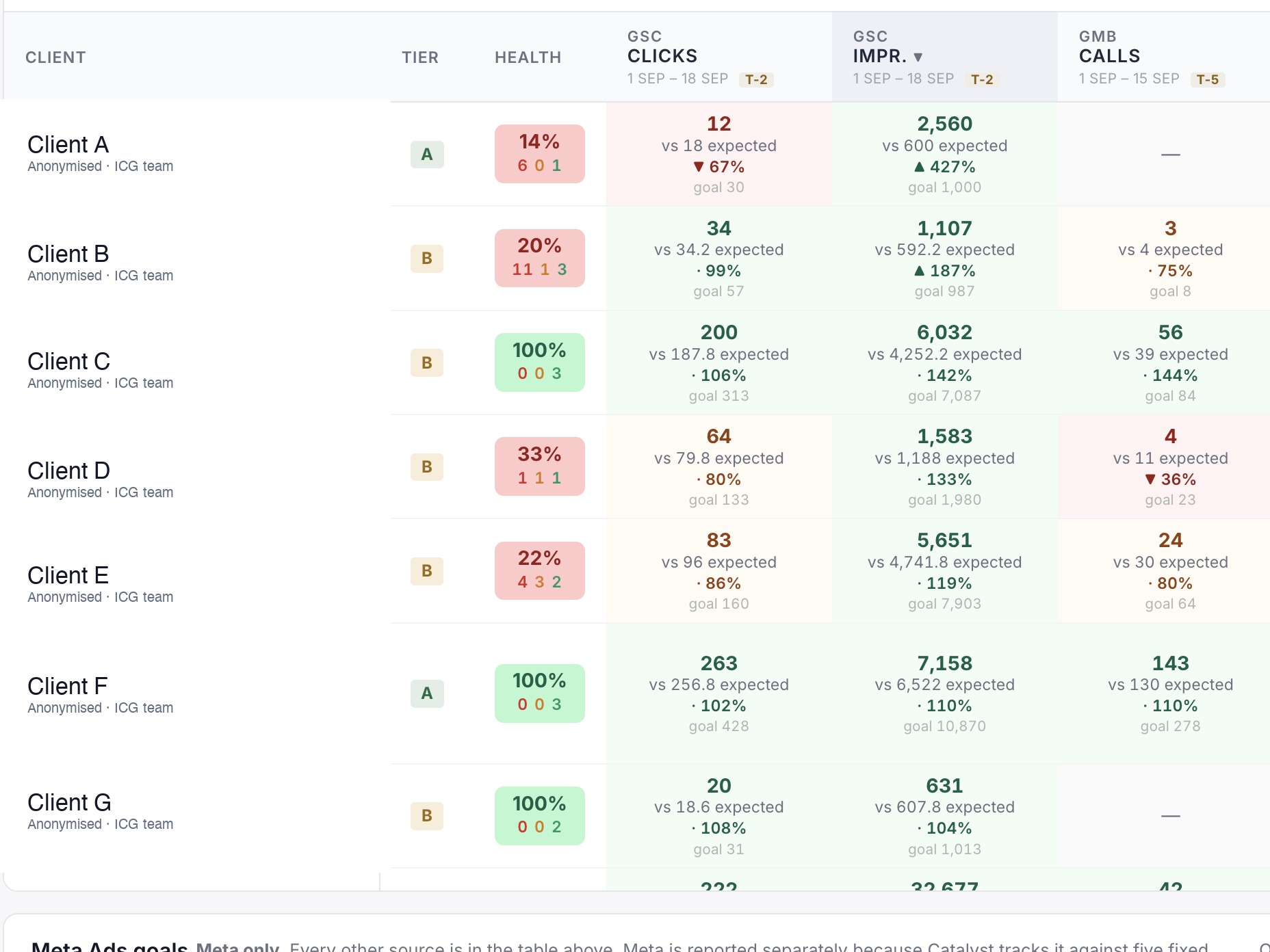
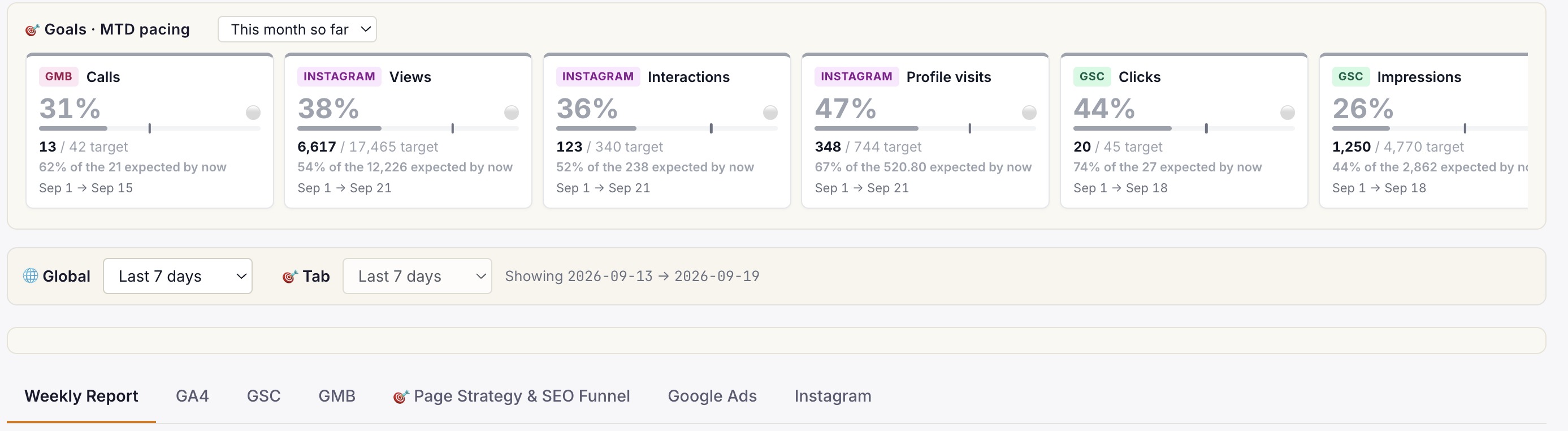
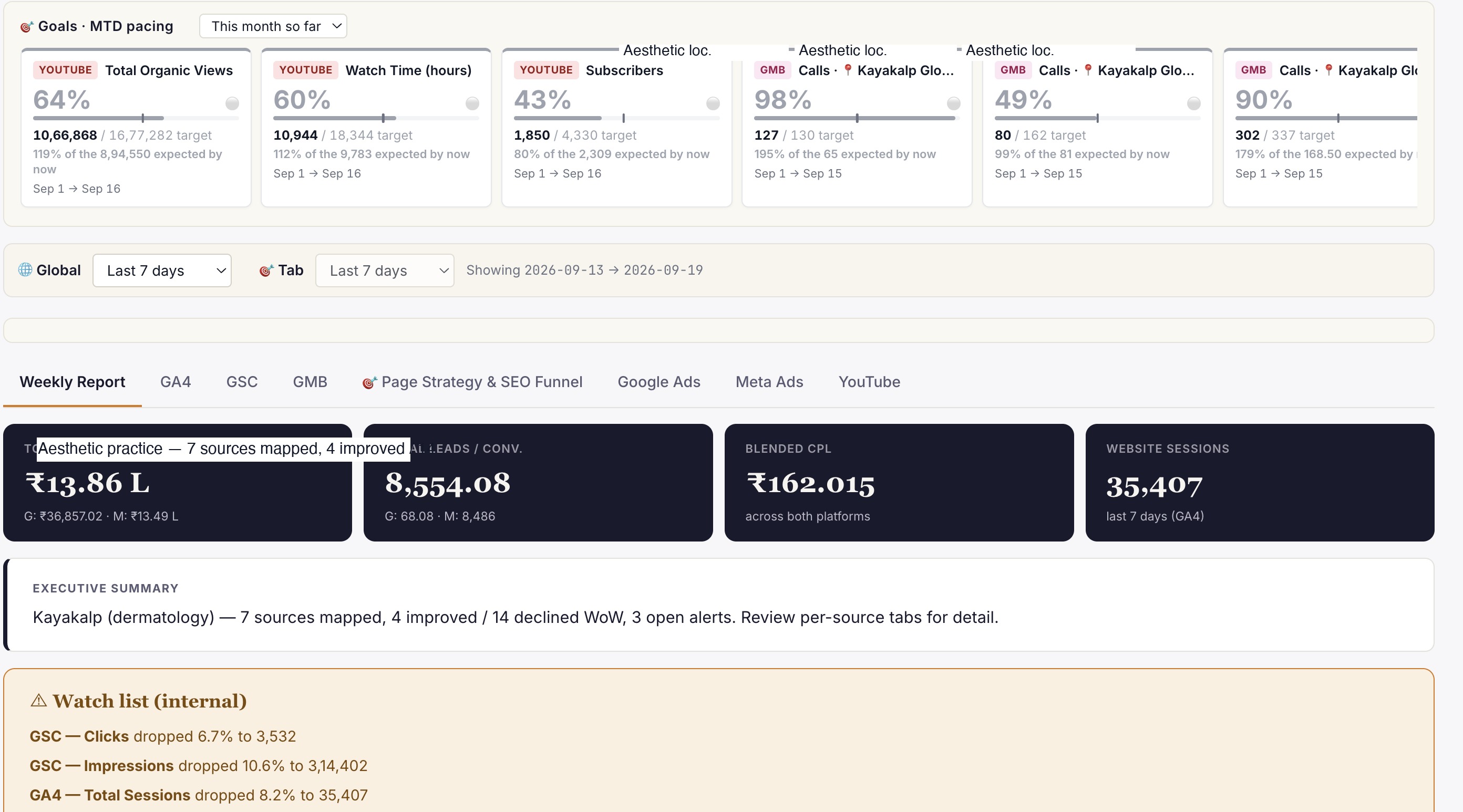
Live client dashboard. GSC, GA4, Google Ads, Meta Ads, IVR calls in one view. Login anytime, not monthly.
Phoenix
Clinic revenue intelligence over your PMS. Daily action queue: Prevent Loss, Maintain & Engage, Grow Revenue. Multi-centre rollout.
Or book a free 30-min audit to see all three in action on your account.
Healthcare brands
that already run on ICG.
A representative slice of the 150+ healthcare brands ICG has delivered for across India. Most engagements remain under NDA.


What ICG clients say · on video.
"Dental marketing in Delhi is brutally competitive. ICG's local SEO + Google Ads stack moved the needle steadily."
"Scale up of organic channels and business consulting. ICG has absolute domain authority in their field."
Need help operationalising this?
Every ICG service is healthcare-only, NMC + DPDP-aware, and built around the patient-research patterns that drive Indian healthcare growth in 2026.
Every practice welcome — packages from ₹20,000/mo.
Goals-Driven engagements · Performance-Linked Payout Models available
More from
ICG.
Five trends shaping Indian healthcare marketing through 2027: AI-first patient research, Conversions API adoption, ABDM discovery, the AEO w...
Healthcare AIO is the discipline of getting your clinic or hospital cited inside Google AI Overviews, ChatGPT and Perplexity answers — not j...
Conversational-search advertising places brand messages inside AI chat answers — ChatGPT, Perplexity, Copilot — rather than beside a results...
Stop guessing.
Book a Diagnostic.
30 minutes. Free. With the AI-powered healthcare-only marketing agency 150+ brands already run on. No slides, no pitch, no hard close.


