


Healthcare SEO agency in India, run on a diagnostic — not a guess.
ICG is a healthcare SEO agency built around SIE — the Search Intelligence Engine — our proprietary command centre for search visibility. Every healthcare account we run opens the same Rank OS 5-stage diagnostic, the same AI Share of Voice tracker, and the same cluster momentum table our strategists use every Monday. That means a hospital group, a diagnostic chain, or a single-location clinic gets a specific answer to "why aren't we ranking" — a broken stage, a decaying cluster, a missing AI Overview citation — instead of a vague monthly report that says "we're working on it."
TL;DR
- ICG's healthcare SEO retainers run on SIE, our proprietary Search Intelligence Engine — not a resold SEO tool.
- The Rank OS 5-stage diagnostic (Discoverability, Indexability, Authority, Engagement, Adoption) tells the team exactly which stage is capping growth before any content or link work starts.
- AI Share of Voice tracks whether a client is cited inside AI Overviews, ChatGPT, and Perplexity — a metric most healthcare SEO agencies in India don't measure at all.
- Cluster momentum and striking-distance flags target the specialty and query groups closest to breaking into page one, not a generic keyword list.
- Retainers from Rs 20,000/month · Custom-scoped per engagement — no fixed tier structure, scoped after the Rank OS baseline audit.
Search changed faster than most healthcare marketing teams noticed.
Three years ago, a healthcare SEO engagement in India meant one thing: rank a handful of pages for "best {specialty} in {city}" and watch a rank tracker for movement. That world doesn't exist anymore. A single query today can surface a classic ten-blue-links result, a local pack, a featured snippet, or an AI Overview citing three sources — and the mix shifts week to week depending on the searcher's device, location, and even the exact phrasing used. A hospital ranking #4 organically for "IVF centre near me" can still lose the click entirely if an AI Overview answers the question first and cites a competitor instead.
Most agencies still report on the world that existed three years ago — one rank number per keyword, pulled from a generic dashboard that has no column for "was this cited inside an AI Overview" because that question didn't exist when the dashboard was built. That gap is exactly what leaves healthcare marketing heads staring at a report that says rankings are "stable" while enquiry volume quietly drops, because stable blue-link rank and stable visibility have stopped meaning the same thing.
Healthcare also carries a compliance layer generic SEO tools have no concept of. Claim language has to sit inside NMC Section 6 and ASCI Chapter III boundaries. Pharma-adjacent content has a DCGI/UCPMP 2024 pass to clear. Reviewer and patient-adjacent data anywhere in the funnel needs DPDP 2023-compliant handling. A generalist SEO agency retrofits these rules onto a workflow built for e-commerce or SaaS clients. ICG built its process around them from day one, because healthcare has been the only client base since the agency started.
That's the gap this service exists to close: a healthcare SEO agency in India whose diagnostic platform was built after AI Overviews existed, not before — where AI-answer visibility, compliance, and cluster-level authority are load-bearing in the process from the first week of an engagement, not a bolt-on slide added to an old deck.
There's a quieter reason this matters too: consistency across a team. When five different strategists each run their own preferred rank tracker and their own mental model of "what good looks like," a client's monthly report becomes a matter of which strategist happened to write it that month. Running every account through SIE forces one shared vocabulary — Discoverability, Indexability, Authority, Engagement, Adoption — across every strategist and every report. A hospital group moving from one ICG account lead to another, whether from an internal reshuffle or simple team growth, sees the same dashboard, the same stage names, the same scoring logic. Nothing gets reinvented mid-engagement, and nothing gets lost in a handover.
The urgency isn't hypothetical either. GSC data across ICG's healthcare portfolio shows AI Overview appearance rates on commercial healthcare queries — "cost," "near me," "best" — climbing month over month through 2026, and the clinics that show up inside those panels are converting enquiries at a materially different rate than clinics that only show up in the ten blue links beneath them. A healthcare SEO agency that isn't actively measuring and working that surface is, functionally, managing half a client's search visibility and reporting on it as if it were the whole picture.
What "healthcare SEO agency in India" means in this service specifically: technical SEO, content and topical-authority building, structured-data and AI-citation readiness, and cluster-level strategy — delivered by a team that has never worked outside healthcare, running on a diagnostic platform built specifically for the compliance and search-behaviour patterns unique to hospitals, clinics, diagnostic chains, and specialty practices in India. It is not local-listing management (that's Angryturtle) and it is not video/YouTube SEO (that's YODA), though both cross-reference this service's data and are commonly bundled with it once the diagnostic shows where a second surface would move the needle faster than more organic SEO work alone.
SIE is the dashboard our strategists open before touching any account.
SIE — the Search Intelligence Engine — is ICG's proprietary command centre for search visibility. It's not a resold third-party SEO suite with our logo on it. Every healthcare account, whether the retainer is SEO-only or bundled with YouTube and GMB, feeds into the same SIE instance and gets scored on the same Rank OS framework, so a strategist opens one dashboard and immediately sees whether a client's problem is discoverability, authority, or AI-visibility — the diagnosis decides the sprint, not a gut feeling.
Read this the way an ICG strategist does: Discoverability and Indexability are healthy, so the crawl and index layer isn't the bottleneck. Authority at 58 and Adoption at 62 are dragging the composite down — so the next sprint is built around topical link building, content-cluster depth, and structured-data work that improves AI-citation eligibility, not more page-level tweaks that won't move the needle. Every healthcare SEO retainer starts by finding this exact bottleneck before a single blog is commissioned.
The gaps between these three columns are usually the most useful thing on the page. Queries where GSC average and true SERP diverge sharply point to a stability problem across devices and locations, not a ranking-power problem. Queries where an AI Overview fires but the client isn't cited are the highest-priority fixes, because ranking well on the traditional SERP no longer guarantees the click.
The true-SERP capture runs on a scheduled scrape from real device profiles — desktop and mobile, from Indian IPs mapped to the client's actual service cities where geo-targeting matters. A "best dermatologist" query in Koramangala and the same query in Whitefield can return meaningfully different local-pack and organic results even within the same city, and Search Console's averaged number hides that entirely. For healthcare specifically, where so much demand is hyper-local — "near me," a named neighbourhood, a named suburb — that gap between averaged and actual is often the difference between a client believing they're doing fine and a client understanding exactly why the phone isn't ringing from three of their five service areas.
Each stage score behind the Rank OS composite is built from a fixed set of sub-checks, not a single opaque number. Discoverability rolls up robots.txt correctness, XML sitemap coverage, internal-link depth, and crawl-budget efficiency. Indexability rolls up canonical-tag consistency, duplicate-content clustering, thin-content flags, and index-coverage anomalies pulled directly from Search Console. Authority rolls up referring-domain count and relevance, topical-cluster depth against competitor coverage, and E-E-A-T markers — author credentials, cited sources, reviewer sign-off where medical content requires it. Engagement rolls up click-through rate against the expected curve for that position, session duration, and conversion-path completion. Adoption — the newest and fastest-changing stage — rolls up AI Overview citation rate, structured-data validation pass rate, and answer-format readiness: does the page's structure make it easy for an AI system to extract a clean, quotable answer.
None of the diagnostic matters if the technical foundation underneath it is broken — an unindexed page can't have an Authority score worth discussing. SIE's technical layer runs continuous checks across crawl-budget efficiency, canonical and redirect-chain health, Core Web Vitals (LCP, INP, CLS), structured-data coverage and validation (MedicalOrganization, FAQPage, Article, and LocalBusiness schema as relevant per page type), XML sitemap accuracy, and mobile-usability flags. Every issue surfaces as a ticket in the Discoverability or Indexability stage score with severity and estimated impact attached, so a technical fix is never guesswork about whether it's worth prioritising. Multi-location healthcare sites carry a specific set of risks a single-site tool tends to under-weight — near-duplicate location pages differing only in city name and phone number, canonical confusion between a chain's main domain and its location subfolders, and internal-link structures that bury newer locations several clicks deep while established locations soak up most of the crawl budget. SIE's crawl-budget module specifically flags location pages that haven't been crawled in an unusually long window, often the earliest warning sign that a new city launch isn't getting indexed at the pace the business expansion needs.
AI Share of Voice and cluster momentum — the two capabilities generic SEO misses.
Ask most healthcare SEO agencies in India "are we cited in ChatGPT or AI Overviews" and you'll get silence, because their tooling has no way to check. SIE's AI Share of Voice module runs a fixed panel of specialty-and-city queries weekly against AI Overviews, ChatGPT, and Perplexity, and records two things for each: did an AI answer fire at all, and was the client cited inside it. The result rolls up into a single presence-rate percentage — the closest thing to a "rank #1" metric that exists for the AI-answer era, because there usually is no ranked list to check against.
Alongside AI Share of Voice sits the Authority module, which groups every ranking keyword into its topic cluster and tracks the cluster's average position and traffic trend month over month, flagging "striking distance" clusters at positions 4-15 where a focused push has the highest odds of unlocking page-one placement fast.
| Cluster | Keywords | Avg position | 90-day trend | Status |
|---|---|---|---|---|
| Hair transplant | 142 | 5.1 | +3.4 | Improving |
| PRP therapy | 58 | 9.7 | -2.1 | Decaying |
| Root canal treatment | 94 | 6.8 | +0.6 | Improving |
| Dental implants cost | 67 | 11.2 | +1.9 | Striking distance |
| IVF success rate | 81 | 13.4 | +0.2 | Striking distance |
| Skin whitening / brightening | 39 | 15.9 | -0.8 | Decaying |
Six clusters, six different sprint decisions. Hair transplant and root canal are improving on their own momentum — leave them running and reinvest attention elsewhere. Dental implants and IVF success rate sit in striking distance, the two highest-leverage sprints for the next 60 days. PRP therapy and skin whitening are decaying and need a diagnosis — usually a competitor authority push or a stale on-page target — before any content is added.
Clusters are built by grouping keywords on shared search intent and shared ranking pages, not just shared words — "hair transplant cost," "FUE vs FUT hair transplant," and "hair transplant recovery time" all sit in the same cluster because they typically serve the same buyer journey, even though none of the three phrases contain each other as substrings. This intent-based grouping is what makes the striking-distance flag genuinely actionable rather than a keyword list sorted by position — a client sees "this entire buyer-journey stage is one step from breaking through" instead of forty disconnected keyword rows that each look individually unremarkable. Momentum itself is calculated as a trailing 90-day slope on the cluster's traffic-weighted average position, not a simple this-month-vs-last-month snapshot, so a single volatile week around an algorithm update doesn't flip a cluster's status from improving to decaying and back.
Underneath both modules sit four signal groups SIE monitors continuously — Authority (referring domains, topical depth, E-E-A-T strength), Social (share and mention velocity across Instagram, LinkedIn, and YouTube), Brand (branded search volume and sentiment), and Technical (Core Web Vitals, crawl-error rate, structured-data coverage) — reported on their own tabs so a client sees exactly which lever moved when a stage score changes. Social and Brand signals matter more for healthcare than most industries because so much of the specialty-selection journey happens off the SERP entirely: a patient sees a reel, follows a doctor's Instagram for months, then finally searches the clinic's name directly once they're ready to book. That branded-search spike, weeks after the social content ran, is a signal a pure keyword-rank tool would completely miss, because the rank tracker only watches non-branded queries — SIE watches both and stitches the timeline together.
SIE doesn't work alone — SEO, GBP, and YouTube read off one query map.
Healthcare SEO rarely wins or loses in isolation. A patient researching a procedure watches a YouTube explainer, checks organic and AI Overview results, then confirms distance and reviews on a Google Business Profile before calling — one continuous journey across three surfaces in a single evening. ICG runs SIE alongside two sibling platforms so this service isn't optimising for a third of that journey while ignoring the rest.
Angryturtle
GBP and local-pack intelligence — 143 healthcare listings managed, 4.76★ portfolio average, 531 risk factors monitored, 0 suspensions. Local SEO and the Maps pack sit here, cross-referenced with SIE's cluster data so a striking-distance organic cluster and a decaying local rank on the same specialty get caught together.
See Angryturtle →YODA
YouTube and brand-search intelligence — AIO Engine, Search Demand Clusters, Brand Search Trend. YouTube SEO for healthcare explainer content sits here, tracking whether a video or its paired blog is cited in AI Overviews on the same query set SIE monitors for organic pages.
See YODA →Search Intelligence Trifecta
How SIE, Angryturtle, and YODA roll up into one account-level view. Most engagements start with SIE-powered SEO alone and add the other two once the diagnostic shows where the leak actually is.
See the Trifecta →This service can be bought standalone as SEO-only, or combined with Angryturtle for local SEO and YODA for YouTube SEO under one weekly cadence. Retainers from Rs 20,000/month cover the SEO-only scope; combined engagements are scoped after the Rank OS baseline shows which surfaces need the most attention.
The compounding effect between the three platforms shows up in concrete ways once they share a query map. Content reuse is the first: a YouTube explainer YODA produces for a specialty becomes a blog SIE can rank for the same query, which becomes a review-response talking point Angryturtle's team uses to answer patient questions on the Google Business Profile — one production effort, three surfaces covered. Signal cross-checking is the second: when SIE flags an authority cluster decaying, the team can check whether YODA's video library on that same topic has gone stale, and whether Angryturtle's review data shows patient sentiment shifting on that specialty — three independent signals converging on the same root cause is a stronger diagnostic than any one signal read alone. Defensive coverage is the third: a competitor gaining local pack share, visible to Angryturtle, often correlates with that competitor publishing more YouTube content, visible to YODA, or earning more AI Overview citations, visible to SIE, on the same query set — seeing all three lets a team respond to the actual competitive move rather than just the symptom that showed up on one dashboard.
None of this requires committing to all three platforms on day one. Most clients start with SIE-powered SEO because it addresses the widest surface — organic and AI-answer visibility across every query a specialty competes on — and add Angryturtle or YODA once the cluster map or the AI Share of Voice panel shows a gap that a second surface would close faster than more SEO work alone could.
Built for a regulated industry, not retrofitted for one.
Every piece of content and every claim this service produces runs through ICG's compliance overlay before it ships. NMC Section 6 governs what doctor and clinic promotion can claim. ASCI Chapter III governs the healthcare advertising wrapper around it — words like "best," "only," and "guaranteed" that regulators specifically flag. DCGI/UCPMP 2024 applies to any pharma-adjacent content. DPDP 2023 governs how reviewer- and patient-adjacent data captured anywhere in the SEO pipeline — forms, review widgets, chat capture — is handled and stored. AYUSH guideline checks apply for Ayurveda, yoga, and wellness-specialty clients, and NABH-related content routes through the same review layer used across ICG's NABH consulting work.
This isn't a checklist bolted on at the end. Structured-data validation inside SIE's technical layer specifically checks whether MedicalOrganization and FAQPage markup matches what a page visibly displays — a schema claiming a service the page text doesn't mention is treated as a mismatch risk, not a win, because in a regulated industry that mismatch carries reputational as well as ranking risk. FAQPage markup is checked for genuine eligibility under current guidelines too, rather than being stuffed with questions that don't appear as visible content — a shortcut that generic SEO tools happily allow and that ICG's compliance overlay specifically blocks.
Compliance review happens at the content-brief stage, not as a post-publish audit. A brief for a claim-heavy page — a procedure's success rate, a comparison against an alternative treatment, a doctor's specific credentials — is checked against the relevant standard before a writer starts, so a piece doesn't get built around a claim that has to be gutted at review. This is markedly slower than a generic content shop's turnaround, and deliberately so: a rewrite after publish costs both the client's time and, in a regulated category, real reputational exposure if the wrong claim went live even briefly.
What the first quarter of healthcare SEO with ICG actually looks like.
| Phase | Days | Focus |
|---|---|---|
| Baseline | 1-14 | Full Rank OS audit across all 5 stages · AI Share of Voice query panel built · cluster map drawn across every specialty and location · goal targets set and password-locked |
| Foundation | 15-30 | Discoverability and Indexability fixes (fastest wins) · technical SEO ticket queue cleared by priority · schema and structured-data corrections shipped |
| Authority build | 31-60 | Content and link work targeted at striking-distance clusters identified in the baseline · decaying clusters diagnosed and rewritten, not just padded with more words |
| Adoption push | 61-75 | AI-citation-readiness fixes — answer-first structure, FAQ schema, author credential markup — shipped across the highest-value AI Share of Voice gaps |
| Review & recalibrate | 76-90 | Forecast reviewed against the locked target · Rank OS composite re-scored · next-quarter sprint plan built from the new weakest stage |
Every engagement starts with an agreed ranking and traffic target for the period, entered into SIE and locked behind a password only the client and their ICG account lead hold — not editable by the strategist running the account. Every week, SIE recalculates a live forecast using current velocity across the 5 Rank OS stages and flags the account as on-track, ahead, or at-risk against that original number, not a revised one. It's easy for any agency to quietly redefine "success" partway through an engagement once the original target looks hard to hit; locking it removes that temptation structurally rather than relying on goodwill. The forecast model runs off current stage velocity rather than a flat straight-line projection, because ranking movement is rarely linear — Discoverability and Indexability fixes tend to produce a fast early lift, while Authority and Adoption gains compound more slowly and often show a delayed effect several weeks after the underlying work ships.
When an account does show at-risk, the forecast view attributes the shortfall to the specific Rank OS stage most responsible, because "we're behind" and "we're behind because Authority-stage link velocity slowed after our outreach contact left the client's PR agency" call for completely different conversations in a monthly review. That attribution is what turns the forecast into a working diagnostic the account team can act on before the next review, rather than a number that only confirms bad news a month after the fact.
Past day 90, the engagement doesn't reset to a new baseline sprint — it moves into a rolling cadence where the next quarter's plan is built directly from whichever stage the re-scored Rank OS composite shows as weakest. A client whose Discoverability and Indexability stayed strong through quarter one but whose Adoption score is still trailing enters quarter two with an Adoption-focused plan; a client whose Authority sprint worked well but whose Engagement metrics didn't move enters quarter two looking at conversion-path and on-page experience fixes instead of more content. This is what "custom-scoped per engagement" means in practice — the plan for month four looks nothing like a templated month-four plan, because it's built from that specific account's diagnostic, not a fixed playbook every client gets regardless of where they actually stand.
Healthcare SEO, custom-scoped after the diagnostic — not a fixed tier card.
Custom-scoped per engagement, based on tracked-query volume, number of topic clusters, city/location count, and the depth of technical SEO work the account needs. SIE, the diagnostic platform behind delivery, is not sold as a standalone SaaS subscription — it's bundled into every ICG healthcare SEO retainer, so the strategist assigned to an account is looking at the same dashboard the client sees.
There's no fixed package structure here — a single-location dermatology clinic and a five-city IVF chain end up with very different scopes because their query volume, cluster count, and location matrix are genuinely different. What stays constant is the starting point: a Rank OS baseline audit before any pricing conversation, so the retainer from Rs 20,000/month is scoped against a real diagnostic, not a guess at what a healthcare SEO agency in India should cost.
A quick way to think about where an account is likely to land: the entry point around Rs 20,000/month typically covers a single-location clinic with one or two specialties and a handful of tracked topic clusters. A multi-specialty hospital or a multi-city chain scales up from there in proportion to the number of clusters, locations, and the depth of technical work its site needs — a five-year-old website with years of accumulated canonical and duplicate-content issues costs more to fix in month one than a newer, cleaner site would, and that gets reflected honestly in the scope rather than hidden inside a flat number that doesn't match the actual work. Retainers from Rs 20,000/month remain the floor; the ceiling is set by the account's real footprint, not by an arbitrary package tier.
How the Rank OS diagnostic changed the sprint, in practice.
Multi-specialty hospital group, North India
Rank OS baseline showed a strong Discoverability score (91) but a weak Authority score (46) — the site was fully crawlable and indexed but had almost no topical depth per specialty. Instead of a generic "publish more blogs" plan, the cluster view showed exactly three specialties carrying 70% of search demand with the thinnest content. An Authority-focused sprint on those three clusters over 4 months moved the composite Rank OS score from 58 to 74, with two striking-distance clusters converting to page-one placements.
Single-specialty dermatology clinic, Bengaluru
AI Share of Voice showed a 12% presence rate at baseline despite decent traditional rankings — most target queries were triggering AI Overviews citing competitors exclusively. Adoption-stage work (structured FAQ schema, answer-first paragraph structure, author credential markup) lifted presence rate to 41% in 90 days, with AI-Overview-driven consult enquiries becoming a measurable channel for the first time.
IVF chain, metro cities
GSC average position looked stable at 4.2 for the core "IVF centre near me" cluster, masking a true-SERP reality of 9-14 across three of the five cities served. The Rank Tracker's GSC-vs-true-SERP gap flagged a local-relevance problem, not a content problem — city-specific landing depth and citation work closed the gap to 5.8 true SERP average within one quarter, without touching the core content that GSC's averaged number had suggested was already fine.
What ties these three scenarios together isn't the specific fix — a content sprint, a schema rewrite, a city-page rebuild — it's that each fix was chosen because a specific stage or module in the diagnostic pointed to it, not because it was the default next move on a generic SEO checklist. A hospital group with a weak Authority score doesn't get the same sprint as a clinic with a weak Adoption score, even though both might show up as "stuck at position 6" on a simple rank tracker. That's the difference a diagnostic-first healthcare SEO agency makes over one running on instinct and a monthly export.
Built for healthcare businesses with a real service footprint.
Good fit
- Hospitals and multi-specialty groups with several specialties competing for search visibility
- Diagnostic chains and single-specialty clinic groups with a defined city footprint
- IVF, dental, dermatology, and aesthetic chains competing on commercial, high-intent queries
- Healthcare businesses ready to commit at least one full 90-day cycle before judging results
Not a fit
- Individual doctors seeking personal-brand growth without a clinic entity behind them
- Non-healthcare businesses — this service and SIE are built specifically around healthcare compliance and search behaviour
- Anyone expecting a guaranteed page-one rank in a fixed timeframe — no ethical agency can promise that
- Accounts unwilling to have claim language reviewed against NMC/ASCI standards before publishing
The clearest signal a healthcare business is a strong fit: there's a real, measurable gap between how the business performs offline — patient volume, reputation, clinical outcomes — and how it shows up in search. That gap is exactly what the Rank OS baseline audit is built to find and quantify in the first two weeks, before any retainer commitment is made permanent. A business already ranking well across every stage of the diagnostic, with a healthy AI Share of Voice number and no striking-distance clusters left to close, is a rare case — and in that scenario ICG will say so directly rather than manufacture a sprint plan to justify a retainer that wouldn't move the needle.
Angryturtle + SIE + YODA — live product screens, not mockups.
Every healthcare SEO retainer above is delivered off the same Trifecta stack this whole page has referenced — SIE for organic and AI-answer diagnostics, Angryturtle for the Google Business Profile and local-pack side of a specialty's visibility, and YODA for the YouTube and video-search layer of the same patient journey. The screens below are pulled from the actual dashboards ICG's strategists work in day to day, not illustrative mockups, so a prospective client can see exactly what a monthly review looks like before signing anything.
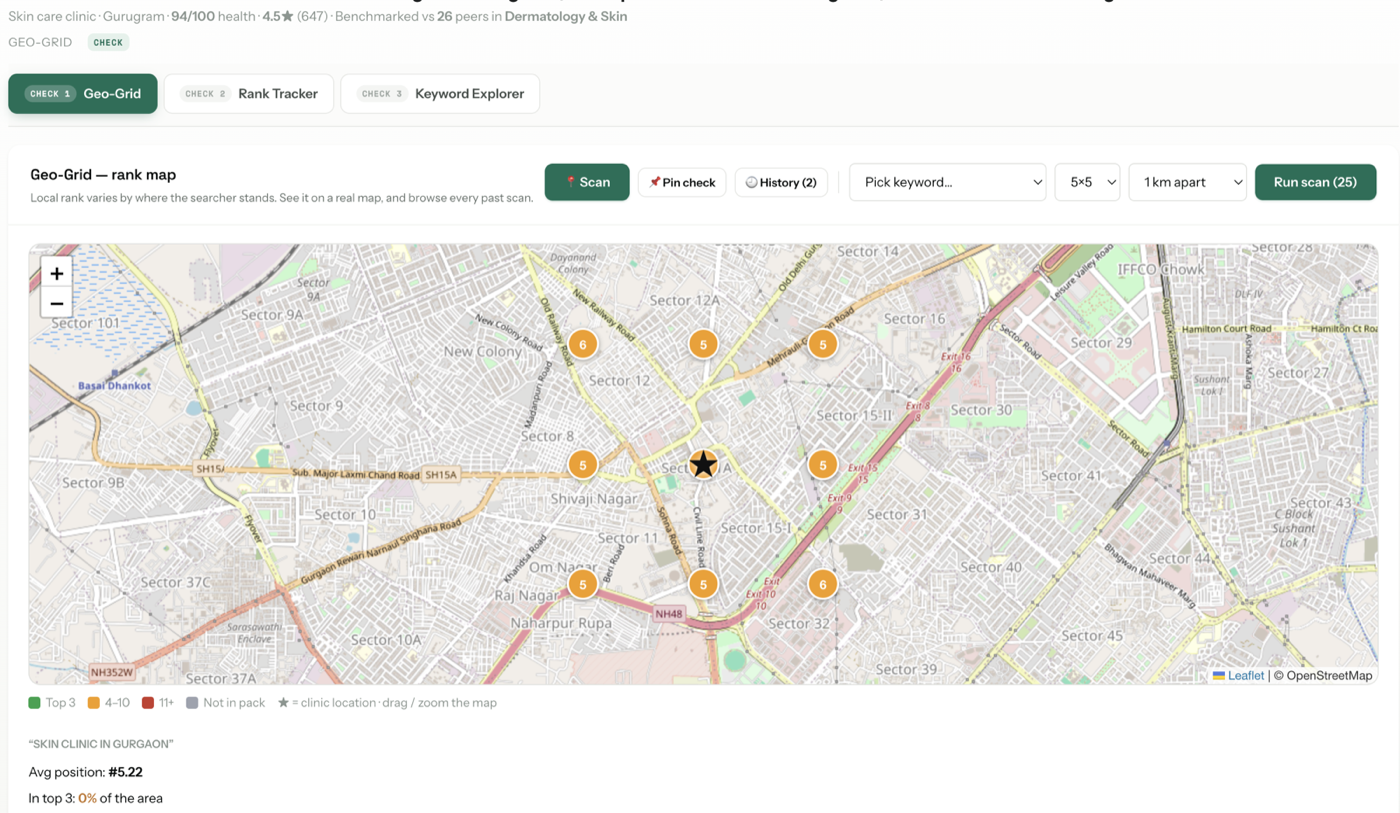
Angryturtle → Neighbourhood-level GMB rank tracking for a specialty clinic — the local-pack half of the search journey this SEO retainer doesn't cover on its own.
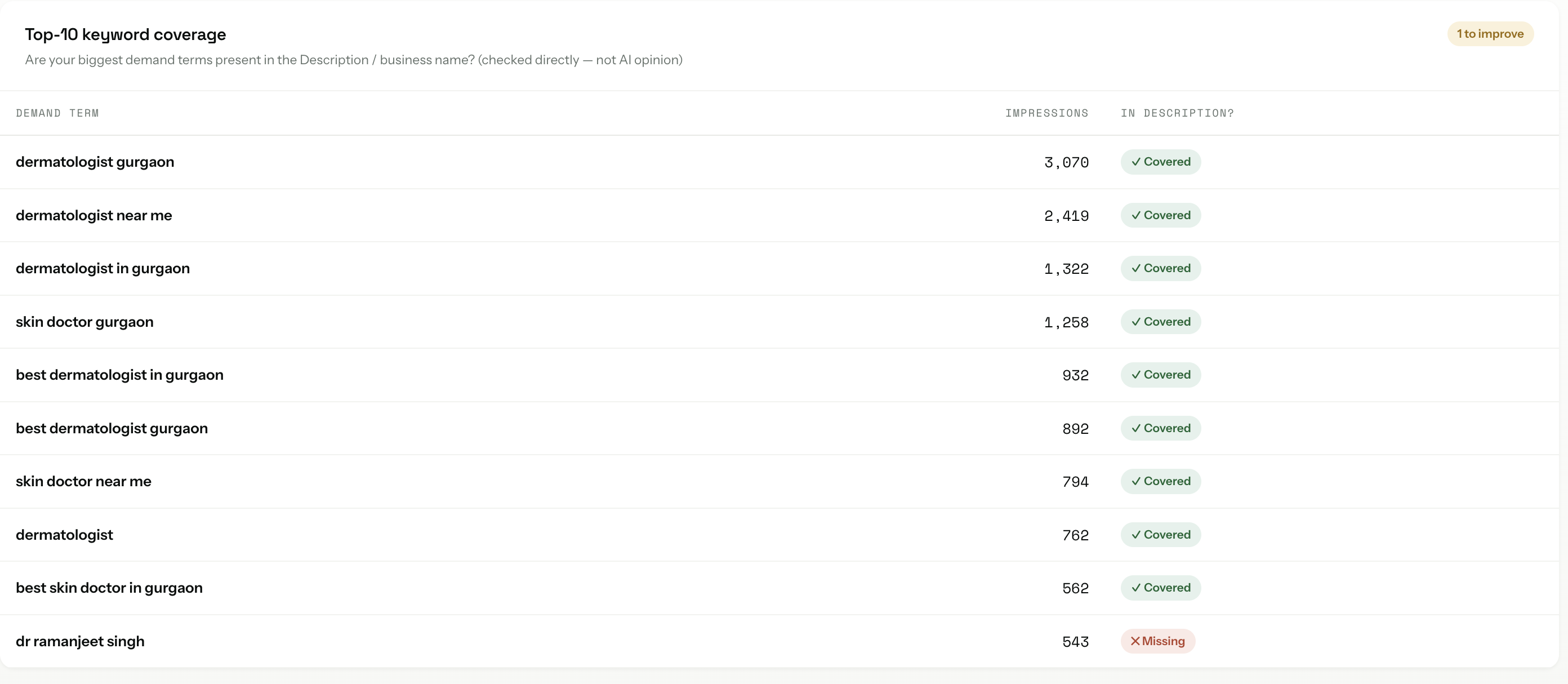
Angryturtle → The keyword set driving local discovery for a healthcare listing, cross-referenced against SIE's organic cluster map for the same specialty.
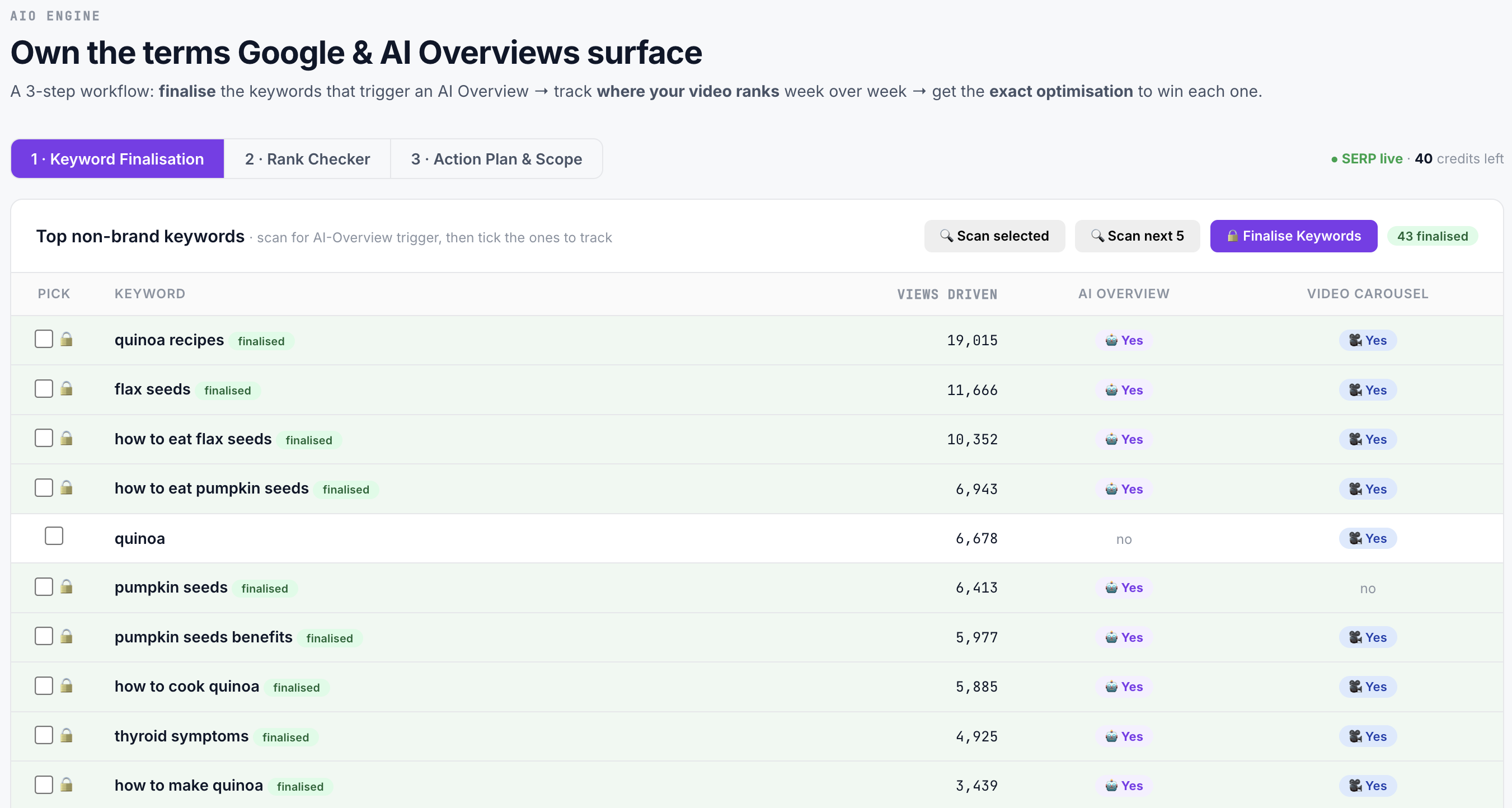
YODA → How YODA finalises the query set for a specialty's video content — the same AI Overview lens SIE applies to organic pages, run against YouTube search demand instead.

YODA → Video content grouped by topic cluster, the same intent-based logic behind SIE's cluster momentum table on this page — applied to a healthcare channel's video library.

Prism Spy → Competitor service and offer clustering from Prism Spy — useful when a decaying SIE cluster turns out to be a competitor-side ad push rather than an organic ranking problem.
Common questions about healthcare SEO with ICG.
What makes ICG different from other healthcare SEO agencies in India?
ICG runs every engagement on SIE, a proprietary diagnostic platform, instead of a generic rank tracker and a monthly PDF. SIE scores a domain across a 5-stage Rank OS framework, tracks AI Overview citations alongside traditional rank, and groups keywords into topic clusters so the team knows exactly which specialty and stage to fix first.
What is the Rank OS 5-stage diagnostic?
Discoverability, Indexability, Authority, Engagement, and Adoption — each scored 0-100 and rolled into a single composite. The stages are sequential in practice, so SIE always surfaces the earliest broken stage first.
How does ICG track AI Overview visibility?
SIE's AI Share of Voice module runs a weekly query panel against AI Overviews, ChatGPT, and Perplexity, recording whether an AI answer fires and whether the client is cited — rolled into a presence-rate percentage tracked over time.
What is cluster momentum and why does it matter?
Every ranking keyword grouped into its topic cluster, with average position and traffic trend tracked month over month, plus a flag for striking-distance clusters at positions 4-15.
Does ICG do healthcare SEO for hospitals, clinics, and diagnostic chains?
Yes — scope varies by size. Single-location clinics get a focused specialty and geo cluster plan; multi-location groups get a cluster and location matrix scored across every branch.
How does compliance work for medical content in SEO?
Every piece of content is checked against NMC Section 6, ASCI Chapter III, DPDP 2023, DCGI/UCPMP 2024 where pharma-adjacent, and AYUSH guidelines where relevant.
How much does healthcare SEO cost with ICG?
Retainers from Rs 20,000/month, custom-scoped per engagement based on query volume, cluster count, locations, and technical depth required. No fixed tier structure.
How long does it take to see ranking movement?
The first 90 days establish the baseline and fix Discoverability and Indexability issues. Authority and Adoption-stage movement typically shows in the 90-180 day window.
Does this service cover Google Business Profile and local SEO too?
Organic and AI-search SEO is what SIE and this service own. GBP and local-pack management sit with Angryturtle, run standalone or combined under the Search Intelligence Trifecta.
Does ICG handle YouTube SEO alongside healthcare SEO?
Yes — YouTube and brand-search intelligence sit with YODA, commonly paired with SIE-powered SEO under the Trifecta.
What technical SEO work is included?
Crawl-budget efficiency, canonical and redirect-chain health, Core Web Vitals, structured-data coverage and validation, XML sitemap accuracy, and mobile-usability checks.
Who is this healthcare SEO service not a fit for?
Individual doctors without a clinic entity, non-healthcare businesses, and anyone expecting a guaranteed page-one rank in a fixed timeframe.

SEO in the nine-stage patient journey
- 0Foundations
- 1Demand gen
- 2Capture
- 3Lead quality
- 4Lead mgmt
- 5Scheduling
- 6Show-up
- 7Conversion
- 8Retention
It works in demand capture, where patients are already searching for the treatment. Rankings only count when they turn into calls, forms and chats. Our own software runs the work, and every stage is reported against a monthly target on Ichelon Agency OS.
See all nine stages and the tool behind each one →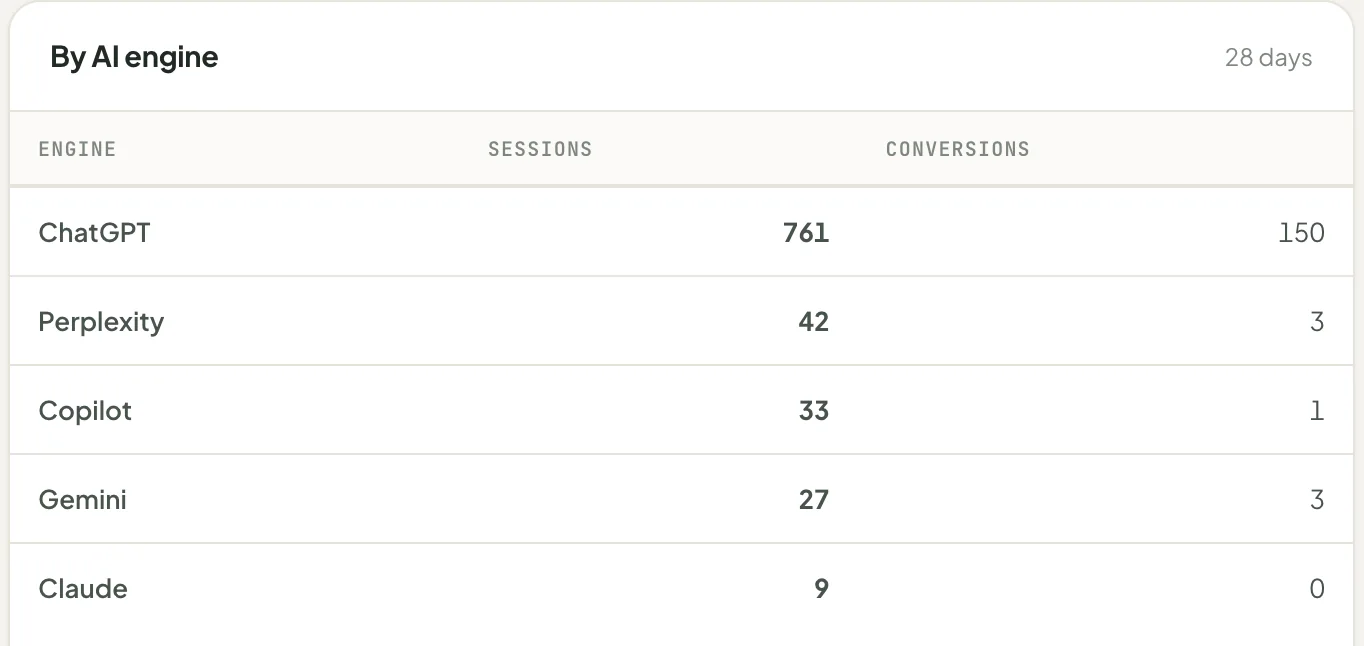
More questions answered
How does ICG report progress?
Through the same SIE dashboard the strategist works from — Rank OS composite and stage scores, the Rank Tracker (GSC average, true SERP, AI Overview presence), cluster momentum, and AI Share of Voice, reviewed monthly against goals locked behind a password on day one of the engagement.
