


Dental clinics ChatGPT Ads India — capture patient intent inside the conversational search that pre-consultation happens on
Implants, clear aligners and cosmetic dentistry are considered purchases — patients research them across multiple sittings before they ever call a clinic, and a growing share of that research now happens inside ChatGPT rather than on a search results page. ICG runs a healthcare-only ChatGPT Ads practice built specifically for dental clinic economics — high-ticket procedures, owner-operator decision-making, and a compliance overlay dental advertising in India cannot afford to get wrong.
Conversational-search behaviour specific to dental patients in 2026
Dental decisions don't get made the way a symptom-driven medical visit does. A patient with a toothache searches Google and calls the nearest clinic within the hour. A patient considering a dental implant, a full set of clear aligners, or a smile makeover behaves completely differently — they research for days or weeks, compare options they didn't know existed, and increasingly do that comparison inside a conversation with ChatGPT before they ever type a clinic-specific search. This is the single most important shift dental clinic owners need to understand about where their marketing budget should be going in 2026.
The pattern ICG sees across dental accounts is consistent: a patient starts with a broad, almost medical question — "is a dental implant better than a bridge long-term" — moves into option comparison — "which clear aligner brand is actually effective for crowding, not just marketing claims" — and only later types a location-specific search like "dental implant cost Bangalore." By the time that Google search happens, the patient has often already formed an opinion about what treatment they want and roughly what it should cost. A dental clinic with zero presence in the earlier ChatGPT conversation is fighting for a shortlist slot the patient has effectively already closed.
This matters more for dental than for most healthcare categories because dental procedures sit at an unusual intersection of medical necessity and elective, often cosmetic, decision-making. Implants and aligners in particular carry real sticker shock — a full-mouth implant case or a complete aligner course can run into lakhs — which means patients research price, provider credibility and treatment approach with the same diligence they'd apply to a large consumer purchase, not a routine medical visit. ChatGPT has become a natural first stop for that research because it can compare implant systems, explain aligner mechanics, and answer follow-up cost questions in a single continuous conversation, without the patient having to open ten separate browser tabs.
The owner-operator nature of most Indian dental clinics adds a second dynamic ICG builds campaigns around. Unlike a hospital where a marketing department manages the funnel, a dental clinic's decision-maker is usually the treating dentist themselves, evaluating every rupee of ad spend against a chair-time economics they understand intimately. That makes cost-per-appointment and case-acceptance-rate the two numbers that actually matter to a dental clinic owner — not impressions, not click-through rate — and ICG's reporting for dental accounts is built around exactly those two figures from month one.
Intent bucket map for dental clinics
ICG structures every dental account around five to six named intent buckets rather than one blended campaign, because implant, aligner and cosmetic queries behave very differently from each other in the auction and need separate bid strategies, separate ad copy and separate landing pages.
| Intent bucket | Example query | Typical CPC band (₹) |
|---|---|---|
| Symptom / early exploration | "is it normal for a tooth to feel loose after 30" | 15–40 |
| Implant research & comparison | "cost of dental implant vs bridge, which lasts longer" | 60–150 |
| Aligner research & comparison | "best clear aligners for gap closure, how do they compare" | 50–130 |
| Cosmetic dentistry exploration | "teeth whitening options that actually work vs home kits" | 35–90 |
| Provider shortlisting (local) | "good implantologist near [area] with real before-after cases" | 140–300 |
| Cost & booking-ready | "how much does a full set of aligners cost at a clinic near me" | 90–200 |
Implant and aligner buckets run consistently higher CPC than general dentistry or teeth-whitening buckets, because the auction prices conversation-stage first and category ticket-size second — a patient deep in implant-comparison mode is close to a high-value booking, and bids reflect that. Cosmetic dentistry queries such as "best clear aligners" or "teeth whitening that works" tend to sit mid-range because they mix genuine purchase intent with a meaningful share of casual research that never converts, so ICG bids these buckets more conservatively than implant or provider-shortlisting buckets.
ICG's default allocation for a general or multi-specialty dental clinic weights spend roughly 10% to early exploration, 30% to implant and aligner research combined, 15% to cosmetic exploration, 25% to provider shortlisting, and 20% to cost/booking-ready — rebalanced monthly once conversation-completion data shows which buckets are actually producing case-accepted leads rather than just enquiries. An implant-only or orthodontic-only practice runs a narrower three-to-four-bucket version of the same map, concentrated entirely on its one procedure category, which lets ICG bid more aggressively within that tighter set.
A structural advantage specific to dental: because implants and aligners are high-consideration purchases, patients frequently return to the same ChatGPT thread across several sessions to ask follow-up questions before booking. ICG's conversation-attribution setup is built to credit a clinic across that full multi-session thread where the platform's attribution window allows, rather than only crediting the single session in which a form was submitted — which materially changes how a dental clinic's true cost-per-lead looks once the full research arc is accounted for.
Compliance overlays for dental advertising
Dental advertising in India carries a specific compliance risk that ICG treats as non-negotiable: implant and aligner marketing is one of the categories most prone to outcome-guarantee language, precisely because "permanent," "lifetime," and "guaranteed straight teeth in six months" are the exact phrases that sell — and the exact phrases NMC Section 6 and ASCI Chapter III restrict. Every bucket's ad copy and every landing page ICG builds for a dental clinic is reviewed against four frameworks before a single rupee is spent.
NMC Section 6 prohibits guaranteed-outcome claims, comparative superiority language ("best implantologist in the city") and implied before/after results tied to a named dentist without proper disclaimers. Implant longevity claims specifically cannot promise a fixed lifespan without a documented clinical basis, and aligner treatment-time claims cannot promise a fixed number of months without a case-specific caveat. ICG's copy templates default to ranges and clinically-supported language rather than absolute promises.
ASCI Chapter III requires clear sponsored-content disclosure inside the conversational response and prohibits misleading efficacy claims — this applies directly to aligner-brand comparisons and whitening-treatment claims, where competitor products or methods cannot be disparaged and a clinic's own results cannot be overstated relative to typical outcomes. ICG pre-clears every ad-copy template against this chapter before launch, not after a complaint.
DPDP 2023 governs every dental landing page's lead form — explicit consent language, a stated purpose for collecting treatment-interest and contact data, and no pre-ticked marketing-consent boxes. Because implant and orthodontic enquiries often include health-adjacent detail (existing conditions, prior dental work), ICG treats this consent layer as clinically sensitive data handling, not generic marketing boilerplate. AYUSH advertising norms apply an additional overlay for any dental clinic offering ayurvedic or traditional oral-care adjacent services alongside standard dentistry, and ICG's compliance log is included in every monthly report so the clinic owner can see exactly what was checked.
Landing-page pattern that converts for dental clinics
A patient arriving from a ChatGPT Ads citation for a dental clinic has usually already compared implant systems or aligner brands inside the conversation itself — they don't need to be educated again, they need their specific question confirmed and answered. ICG builds dental landing pages short, factual and machine-scannable, both because that converts a patient who's already most of the way to a decision, and because ChatGPT's own citation mechanics favour pages it can parse and quote accurately when the patient asks a follow-up question later in the same thread.
The pattern keeps five elements above the fold: the specific procedure the page addresses (implant system, aligner brand, veneer type — never a generic "cosmetic dentistry" heading), the treating dentist's credentials and case-relevant experience, an honest cost range where compliance allows it, the clinic's exact location, and a single clear next action. Case-photo galleries, full team bios and broader service menus sit below the fold, available but not competing with the primary decision point.
For implant and aligner buckets specifically, ICG has found that including a defensible cost range — even a wide one, clearly caveated as depending on case complexity — outperforms landing pages that hide pricing entirely and force a call to "find out." Dental patients researching a high-ticket procedure treat pricing opacity as a red flag rather than a lead-generation tactic, and a page that answers the cost question honestly converts a materially higher share of the shortlisting and booking-ready buckets. The single next-action stays narrow — one consultation-booking form and one WhatsApp option, not a form, a phone number and a "download our brochure" link competing for the same click.
Because implant and aligner decisions often span multiple ChatGPT sessions, the landing page also needs to work as a standalone reference the patient might return to directly, not only as a one-time click destination. ICG writes each bucket's landing page to answer its bucket's specific question in the first two lines — cost for the cost bucket, credentials for the provider-shortlisting bucket — so a patient re-visiting the page days later from a bookmark or a repeated ChatGPT citation still gets an immediate, relevant answer rather than a generic clinic homepage.
Pricing
Retainers from ₹20,000/month · Custom-scoped per engagement.
The first 90 days for a dental clinic
Weeks one and two are compliance and setup — bucket definition against the clinic's actual procedure mix (implant, aligner, cosmetic, general), ad copy drafted and cleared against NMC Section 6 and ASCI Chapter III with particular attention to outcome-guarantee language, DPDP-compliant landing pages built per bucket with honest cost ranges, and the AI Assistant channel wired correctly in GA4 so conversation-completions are captured from day one.
Weeks three through six are where the first qualified, conversation-attributed leads typically start arriving. ICG holds bids deliberately conservative in the higher-CPC implant and provider-shortlisting buckets during this window while exploration and comparison buckets build recall, since cost-per-conversation is volatile early and shouldn't be judged against a steady-state number yet.
By week eight to twelve, bucket-level bid data has matured enough for ICG to rebalance spend toward whichever buckets are actually producing case-accepted leads at an acceptable cost, and the clinic gets its first full-cycle report showing cost-per-appointment and case-acceptance rate against each bucket — implant, aligner, cosmetic, general — not just against the campaign as a whole. This is also the point at which ICG makes a tier recommendation based on data rather than a renewal-date default.

Get your dental clinic into the ChatGPT Ads whitespace before it closes
No agency in India runs a dedicated, compliance-checked ChatGPT Ads practice for dental clinics yet. ICG does, and the 90–180 day first-mover window is already narrowing.
ICG's healthcare ChatGPT Ads practice operates within NMC Section 6, ASCI Chapter III, DPDP 2023 and AYUSH advertising norms. See the full ChatGPT Ads for Healthcare pillar, or the clinics variant for multi-specialty practices.
ChatGPT Ads and LLM marketing in the nine-stage patient journey
- 0Foundations
- 1Demand gen
- 2Capture
- 3Lead quality
- 4Lead mgmt
- 5Scheduling
- 6Show-up
- 7Conversion
- 8Retention
It works in demand generation, inside the AI assistants patients now ask before they search. SIE tracks the sessions and enquiries those AI engines send. Our own software runs the work, and every stage is reported against a monthly target on Ichelon Agency OS.
See all nine stages and the tool behind each one →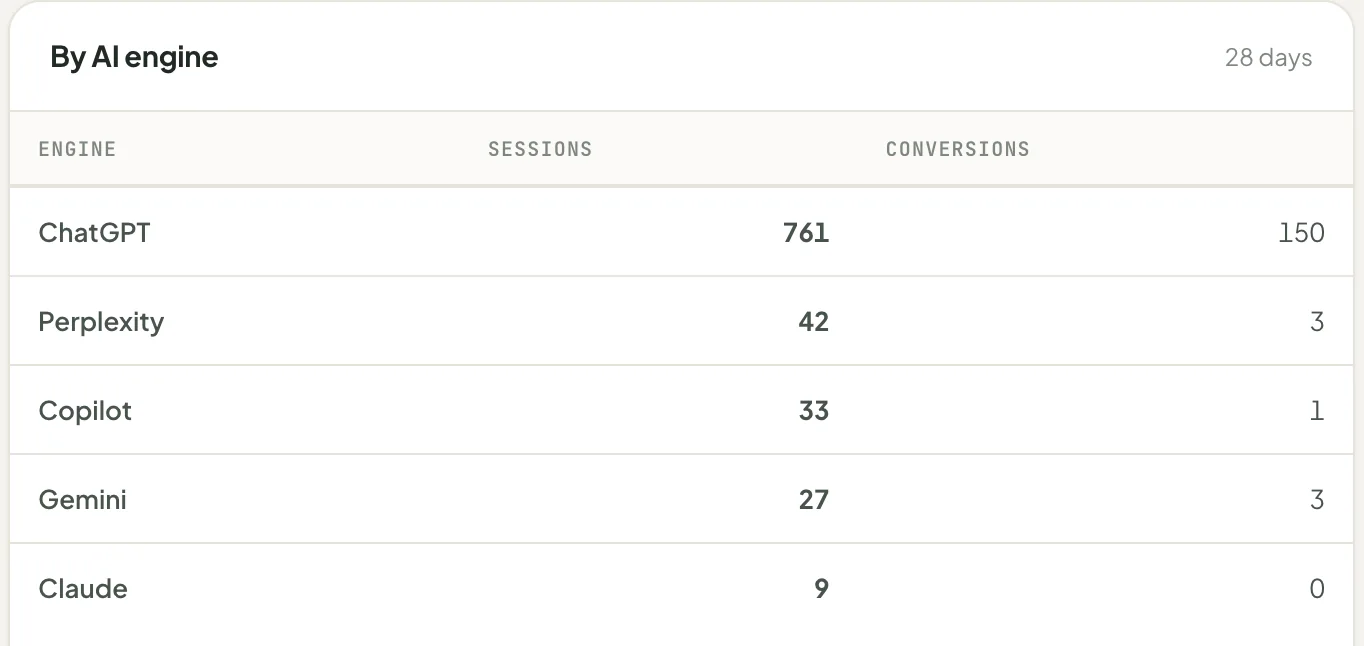
Frequently asked questions
What is ChatGPT Ads for dental clinics and how is it different from Google Ads?
ChatGPT Ads places a sponsored response or citation inside a live ChatGPT conversation when a user is actively researching a dental procedure, rather than matching a typed keyword on a results page. For dental clinics, this means the ad surfaces while someone is asking 'is a dental implant worth it compared to a bridge' or 'which clear aligner brand actually works for gap closure,' not as a link competing on a search page. Google Ads still owns high-volume keyword intent like 'dental implant cost near me'; ChatGPT Ads owns the earlier, multi-turn research conversation that increasingly precedes that Google search.
Is ChatGPT Ads available for dental clinics in India right now?
Yes. ChatGPT Ads rolled out to India in mid-2026 through OpenAI's ad partner network, and dental is one of the least-contested healthcare sub-verticals on the channel today. Almost no India-based agency runs a dedicated, compliance-checked dental ChatGPT Ads practice, which is the exact window ICG's dental practice is built to use.
How much does ChatGPT Ads management cost for a single dental clinic?
ICG's engagement for a single-location dental clinic begins at ₹20,000/month starting (inclusive of 18% GST), covering one to two intent buckets, compliance-reviewed ad copy, a conversational landing page and monthly conversation-attribution reporting. Ad spend is separate and is set based on city, procedure mix and existing case volume.
Which dental procedures perform best on ChatGPT Ads?
Implants, clear aligners and cosmetic dentistry (veneers, smile makeovers, whitening) consistently produce the highest-value conversation-attributed leads, because these are considered, higher-ticket purchases where a patient genuinely wants to compare options before committing — exactly the kind of multi-turn research conversation ChatGPT Ads is built to intercept. Routine procedures like fillings or scaling convert too, but at lower average order value and lower CPC.
How is a dental lead attributed and reported on ChatGPT Ads?
ChatGPT Ads attributes on conversation-completion events, not clicks — a lead is credited when a user completes an intent journey such as requesting a callback or submitting a consultation-booking form. In Google Analytics 4 this surfaces under the 'AI Assistant' channel; across ICG's healthcare accounts this channel shows a 10.49% key-event rate, roughly twice organic search and seventeen times direct traffic.
What compliance rules apply to dental ad copy on ChatGPT Ads?
Every line of ad copy and every landing page ICG builds for a dental clinic is checked against NMC Section 6 (no guaranteed-outcome claims, no comparative superiority, no implied before/after result tied to a named dentist without disclaimers), ASCI Chapter III (mandatory sponsored-content disclosure, no misleading efficacy claims for aligners or implants), and DPDP 2023 (explicit consent language on every lead form). Implant and aligner marketing specifically cannot claim guaranteed longevity or a fixed treatment timeline without a documented clinical basis.
How long before a dental clinic sees appointment leads from ChatGPT Ads?
Most dental clinics on ICG's Starter and engagements see qualified conversation-attributed leads within the first two to three weeks of a compliance-cleared campaign going live, with cost-per-conversation stabilising by week six once bucket-level bid data matures.
Can an orthodontic or implant-only practice run ChatGPT Ads separately from a general dental clinic?
Yes. ICG structures orthodontic-only and implant-only practices as narrower, deeper bucket sets — typically three to four buckets focused entirely on that procedure category — rather than the broader six-bucket spread a general or multi-specialty dental clinic runs. This concentrates spend on the exact conversational moments that matter for a single-procedure practice.
Do ChatGPT Ads replace Google Ads or Meta Ads for a dental clinic?
No. ICG runs ChatGPT Ads as an addition inside the paid stack alongside Google Ads and Meta Ads, not a replacement. Google Ads still captures high-volume, bottom-funnel keyword searches like 'dental implant cost'; Meta Ads still builds top-of-funnel smile-transformation awareness; ChatGPT Ads captures the growing share of research-stage conversational intent — comparing implants to bridges, comparing aligner brands — that the other two channels cannot reach.
What does a dental clinic landing page for ChatGPT Ads need to look like?
It needs to be machine-scannable — short, factual, clearly structured with the treating dentist's credentials, the specific procedure addressed (implant, aligner system, veneer type), an honest cost range where compliance allows, and a single obvious next step — because ChatGPT's own citation and follow-up mechanics favour pages it can parse and quote accurately rather than long marketing copy.
Who runs ICG's ChatGPT Ads practice for dental clinics?
ICG's dental and clinics paid-search practice, including ChatGPT Ads, is led on the growth and business side by Rohit Gupta. Every campaign for a dental clinic is compliance-reviewed before it goes live and reported monthly against conversation-attribution data, not just click volume.
