ChatGPT Ads for hospitals and clinics under the NMC advertising guidelines (2026)
An ad shown inside ChatGPT or another AI assistant is still an advertisement. The National Medical Commission's guidelines of 6 October 2026 say so in terms: platform-based, search-engine and AI-assisted promotional communication all count. This page sets out what a hospital or clinic may say in an AI-assistant ad, what para 7.2 means for AI-written copy, and the checks ICG runs before a campaign goes live.
Updated 8 October 2026 to the National Medical Commission's Guidelines on Ethical Advertising and Public Communication by Hospitals/Medical Institutions and Registered Medical Practitioners (public notice No. R-13014/01/2024-Ethics, dated 6 October 2026, in force immediately). Paragraph numbers in this article refer to those guidelines. General information, not legal advice.
This guide was first written around Chapter 6 of the 2002 Regulations; it now reflects the October 2026 guidelines. For the full rules, see the complete guide to the NMC advertising guidelines 2026. For AI-generated content outside paid ads (blogs, videos, social posts), see AI content in healthcare marketing and para 7.2.
What the October 2026 guidelines say about ads on AI platforms
The guidelines are titled "Guidelines on Ethical Advertising and Public Communication by Hospitals/Medical Institutions and Registered Medical Practitioners" (public notice No. R-13014/01/2024-Ethics). They are read with the IMC (Professional Conduct, Etiquette and Ethics) Regulations 2002, which remain the operative code of conduct, and with the NMC Act 2019 (paras 2.1(f) and 4.2). For hospitals, the Clinical Establishments Act or the relevant State Act prevails in an irreconcilable conflict (para 4.3).
Para 3.2 defines advertisement as any communication that directly or indirectly solicits or promotes. It lists digital, social-media, sponsored, targeted, influencer-led, search-engine, platform-based, audio-visual and AI-generated or AI-assisted promotional communication. Para 3.5 names AI-generated promotion and online healthcare platforms among the media of advertisement. A sponsored answer in an AI assistant sits squarely inside both definitions.
What an institution may say is set by para 8.3: factual, objective and verifiable information such as name, location, contact details, departments, facilities, equipment, services, emergency services, accreditation status and charges. It may not include solicitation, inducements, superiority claims, cure guarantees or promotional portrayal of an individual registered medical practitioner. Para 8.3 adds that the frequency or medium of publication must not turn factual information into solicitation, which matters for a channel that can repeat an ad across thousands of conversations.
Para 7.2: AI-generated campaigns, AI-assisted copy and source marks
Para 7.2 is the paragraph that deals with artificial intelligence. It prohibits AI-generated promotional campaigns for commercial interest. Where AI-generated content is permitted, it must carry a source mark stating that it is AI-generated. It then sets four conditions: (a) no misleading AI content; (b) no synthetic patients, testimonials or endorsements; (c) disclosure of AI use where it is material; and (d) any patient data fed to an AI tool must be handled under privacy law.
Two things are easy to confuse here. The first is where the ad appears. Buying a placement on an AI platform does not by itself make the campaign "AI-generated". It is still advertising, judged by paras 3.2, 8.1 and 8.3 like a search or social ad, so the content must be factual institutional information. The second is how the copy is made. A promotional campaign generated by AI for commercial interest is what para 7.2 prohibits. Our working rule, until the NMC issues clarifications under para 12:
- Promotional ad copy is written, or rewritten line by line, by a person on the hospital's or ICG's team. AI may help with research or first drafts; it does not produce the campaign.
- Every line is checked by a person against paras 8.1 and 8.3 before submission, and the reviewer is named in the campaign record.
- Where AI-generated content is published (for example an AI-generated illustration on an educational landing page), it carries a visible source mark, and AI use is disclosed where it is material.
- No synthetic patients, AI-voiced testimonials or AI-generated "doctor" personas, anywhere in the funnel.
- No patient data is pasted into AI tools to build audiences or copy, unless the processing meets the IT Act 2000 and the DPDP Act 2023 and Rules 2025 (paras 7.2(d) and 7.6).
Why conversational placements need a wider review
A search or feed ad is a fixed unit: a reviewer reads the headline, description and sitelinks once, and that exact text is what every viewer sees until the campaign is edited.
A sponsored response in an AI assistant behaves differently in three ways. The platform can rephrase, summarise or truncate the submitted copy. The ad often sits inside a multi-turn conversation, where a follow-up question ("is Dr. [Name] the best for this in Gurgaon?") pulls toward exactly the comparative framing the guidelines rule out. And any structured data the brand supplies (FAQ schema, Person schema, a knowledge-base feed) can be drawn into the follow-up answer.
Para 4.4 says publishing through an agency or platform does not absolve the institution of content it authorised, commissioned, sponsored, adopted or knowingly permitted. You cannot control a model's paraphrase, but you do control what it has to work with. So the review covers the ad unit, the landing page it routes to and the structured data on that page as one unit.
Common problems in AI-assistant ad drafts, and the fix
The same handful of patterns recur, usually introduced by a marketing team trying to differentiate a hospital or a doctor. The examples are illustrative and do not refer to a real client, doctor or hospital.
"Dr. [Name]'s IVF success rate of 68% is among the highest in North India. Book your consultation today."
An outcome figure tied to a named doctor, framed as comparatively superior: para 3.2 Explanation II (no guaranteed-outcome or comparative claims), para 8.1(ix) and para 8.3 (no promotional portrayal of an individual RMP). Fertility clinics should also check the ART Act 2021.
"[Brand] Fertility Centre, [Area]: reproductive medicine department with an on-site embryology lab. Consultation charges available on request. Learn more about the department."
"Consult Dr. [Name], Delhi's most experienced bariatric surgeon."
Para 8.1(ix) bars "best", "No.1", "leading", "most trusted", "top" or "unmatched" claims unless objectively verifiable with a disclosed methodology. A rank against peers in a paid ad is also promotional portrayal of an individual RMP (para 8.3).
"Bariatric surgery at [Hospital], [City]: pre-operative assessment, surgery and follow-up nutrition clinic. Learn about eligibility and risks."
"Free consultation this week only, plus 15% off your first scan."
Para 8.1(x) bars discounts, offers, coupons, cashback and free procedures used as inducements; it binds hospitals as well as doctors.
"Radiology department, [Hospital]: MRI, CT and ultrasound. Charges listed on our website."
Two further problems sit outside the visible ad. A landing page's FAQ schema that answers "Who is the best [specialty] doctor in [city]?" with a named doctor is a superiority claim in machine-readable form, and it is exactly what a follow-up answer may lift. And a patient quote praising a named doctor is a testimonial: Explanation V and para 8.1(xi) bar testimonials used for promotion, and para 6.2 says consent does not make a prohibited testimonial lawful. The fix for both is removal, not anonymisation to the institution.
What clean copy looks like inside an AI-assistant ad
A simple test: remove every claim that para 8.1 or para 8.3 would rule out, and what remains should still answer the user's question. Factual detail does that job better than a superlative. For the phrase-level swaps, see the glossary entry on NMC-clean ad copy.
"[Brand] Orthopaedics, Gurgaon: joint-replacement unit offering unilateral and bilateral knee replacement, physiotherapy on site, cashless with listed insurers. Learn what the procedure involves."
Services, facilities and insurance arrangements are factual and verifiable (para 8.3). No outcome claim, no comparison, no named doctor.
"[Brand] Fertility Centre, [Area]: reproductive medicine and embryology services. Consultation charges available on request. Read about the IVF process and its risks."
Charges are disclosed factually, with no offer attached (para 8.1(x)). The call to action informs rather than solicits.
Both examples leave out the doctor's personal success rate, "best in the city" framing and "guaranteed" language. They also use "Learn" rather than "Book now", so that the ad informs instead of soliciting.
ICG's checklist before every ChatGPT Ad push
Every healthcare ChatGPT Ads campaign ICG manages for a hospital or clinic passes the same documented checklist before submission. It is stored against the client account with a dated sign-off. ICG does not run promotional ChatGPT Ads for individual doctors: para 8.1(ii) bars an RMP from engaging a third party to market medical services.
Every ad variant and landing-page headline states only institutional facts: departments, services, facilities, equipment, accreditation status, charges, location and contact.
"Best", "No.1", "leading", "top", "most trusted", "100% success", "painless", "guaranteed" and comparative phrasing are removed wherever they appear.
No discounts, offers, coupons, cashback or free procedures. Charges, if stated, are stated plainly.
Where a doctor is named on the landing page, the name, qualifications, registration status and SMR/NMR number are shown, and nothing portrays the doctor promotionally.
Promotional copy is human-written and human-reviewed. Any published AI-generated content carries a source mark. No synthetic patients, testimonials or endorsements.
The destination page and its FAQ and Person schema are re-checked against the same rules, since either can feed a model's follow-up answer.
The ASCI code, the DPDP Act 2023, the ART Act 2021 (fertility), UCPMP 2024 (pharma-adjacent) and AYUSH rules are checked where relevant. The checklist, flagged items and amended language are logged and dated before submission.
What happens if an ad is challenged
For registered medical practitioners, para 10.1 sets out graded action that "may be contemplated" by the State Medical Council: a warning with mandatory ethics training for a first violation, censure with a monetary penalty for a second, suspension of three to six months for a third, suspension of six to twelve months for serious violations (including inducements and digital mass solicitation), and removal from the register for one to three years for repeated violations. A show-cause notice comes first, followed by a reasoned order and a right of appeal (paras 10.2, 10.3 and 11). Hospitals and medical institutions are dealt with under the Clinical Establishments Act or the relevant State Act (para 10.1, Explanation). A complaint can also be made to ASCI about the advertisement itself.
Documentation helps in every route. A dated record of what was submitted, what was removed before launch and who approved it lets an institution show what it authorised (para 4.4). That is why ICG keeps the checklist as a permanent campaign record.
ChatGPT Ads and the NMC guidelines: common questions
Is an ad shown inside ChatGPT or another AI assistant "advertising" under the NMC guidelines?
Yes. Para 3.2 of the NMC guidelines of 6 October 2026 defines advertisement as any communication that directly or indirectly solicits or promotes, and expressly includes sponsored, targeted, search-engine, platform-based and AI-generated or AI-assisted promotional communication. Para 3.5 lists AI-generated promotion and online platforms as media of advertisement. A sponsored placement in an AI assistant is therefore held to the same rules as any other ad.
Does para 7.2 ban hospitals from advertising on AI platforms?
Para 7.2 prohibits AI-generated promotional campaigns for commercial interest. It does not say that buying a placement on an AI platform is itself banned. What it means in practice: the ad must be factual institutional content of the kind para 8.3 permits, written by people rather than generated by AI, and any AI-generated content that is published must carry a source mark stating that it is AI-generated.
Can we use AI to help write ChatGPT Ad copy?
We treat AI as a drafting aid only. A person writes or rewrites the final promotional copy and checks every claim against paras 8.1 and 8.3, because para 7.2 prohibits AI-generated promotional campaigns for commercial interest and bars misleading AI content, synthetic patients and synthetic testimonials. Where AI-generated content is published, it carries a source mark, and AI use is disclosed where material (para 7.2(c)).
What may a hospital or clinic say in an AI-assistant ad?
Factual, objective and verifiable information: name, location, contact details, departments, facilities, equipment, services, emergency services, accreditation status and charges (para 8.3). It may not include solicitation, inducements, superiority claims, cure guarantees or promotional portrayal of an individual doctor. Para 8.3 also warns that frequency or medium must not turn facts into solicitation.
Can the ad name a doctor?
Only factually. Where a clinical establishment names an RMP, it must disclose the doctor's name, qualifications, registration status and SMR/NMR number (para 3.2, Explanation IV). The ad must not portray the doctor promotionally (para 8.3) or use 'best', 'No.1', 'leading', 'most trusted' or 'top' claims unless objectively verifiable with a disclosed methodology (para 8.1(ix)).
Can we offer a free consultation or a discount in a ChatGPT Ad?
No. Para 8.1(x) bars discounts, offers, coupons, cashback and free procedures used as inducements, and says price disclosure must be factual. Para 8.1(x) is one of the items that also binds hospitals. Stating a consultation charge factually is allowed; framing it as a limited-time offer is not.
Who is responsible if the AI platform rephrases our ad?
Para 4.4 says publishing through an agency or platform does not absolve the RMP or institution of content it authorised, commissioned, sponsored, adopted or knowingly permitted. You control the submitted copy, the landing page and the structured data the platform can draw on, so keep all three factual and free of claims. Keep a dated record of what you submitted and who approved it.

How ICG works within these guidelines
ICG is a healthcare marketing agency. Our clients are hospitals, clinics and medical institutions, which may publish factual, objective and verifiable information about themselves (paras 8.3 and 9.1). For individual doctors, ICG supports only genuinely educational content in the doctor's own name and designation (para 8.2(iii)). For doctors and their practices, we run patient-education-driven campaigns: awareness content that helps patients understand their condition and their options, published in the doctor's own name and designation (para 8.2(iii)) and kept free of the self-promotion that para 8.1(ii) bars.
The work is education-first and runs across six channels:
- Awareness content on YouTube. Doctor-led educational videos on public health and disease awareness, in the doctor's own name and designation, without promoting the employer organisation (para 8.2(iii)). See YODA and YouTube marketing for healthcare.
- Research articles and blogs that help patients understand their options: information shared in the normal course, not promotion (para 3.2, Explanation I). See healthcare content marketing, ICG research reports and healthcare SEO.
- Expert answers on Reddit and Quora from named, disclosed accounts. No anonymous or fake posts, no undisclosed commercial relationships and no manufactured engagement (paras 8.1(xi) and 8.1(xii)). See Reddit and Quora programmes.
- Awareness campaigns on Meta, run from the hospital's or clinic's own page, with no discounts, offers, free procedures or other inducements (paras 8.1(x) and 8.3). See Meta advertising for hospitals and clinics.
- NMC-compliant Google Ads landing pages: factual departments, services and facilities, with no "best", "No.1", "100% success", "painless" or "guaranteed" claims (paras 8.1(iii) and 8.1(ix)). See Google Ads for hospitals and clinics.
- "Learn More" instead of "Book Now" on patient-facing pages, so that a page informs rather than solicits (paras 8.1(ii) and 8.3(ii)).
All six rest on three kinds of content: scientific (evidence-based, checked by a qualified clinician), persona-based (written for the questions a specific patient group asks) and consumer-based (built from how people search, compare and decide). AI-assisted drafts go through human medical review, and AI-generated content that is published carries an AI source mark (para 7.2). We do not publish patient testimonials, before-and-after images or superiority claims, and we never buy, incentivise or gate reviews.
Free NMC compliance check. We review a hospital's or clinic's website, Google Business Profile and social channels against the October 2026 guidelines and send back a written list of fixes.
See what the check covers · Request the check · Book a 30-minute call
General information, not legal advice. Source: NMC public notice No. R-13014/01/2024-Ethics, 6 October 2026.
Get your ChatGPT Ads copy reviewed before it goes live
ICG's healthcare ChatGPT Ads practice writes campaigns for hospitals and clinics against the October 2026 NMC guidelines, the ASCI code, the DPDP Act 2023 and the relevant vertical overlay from the first draft.
ChatGPT Ads and LLM marketing in the nine-stage patient journey
- 0Foundations
- 1Demand gen
- 2Capture
- 3Lead quality
- 4Lead mgmt
- 5Scheduling
- 6Show-up
- 7Conversion
- 8Retention
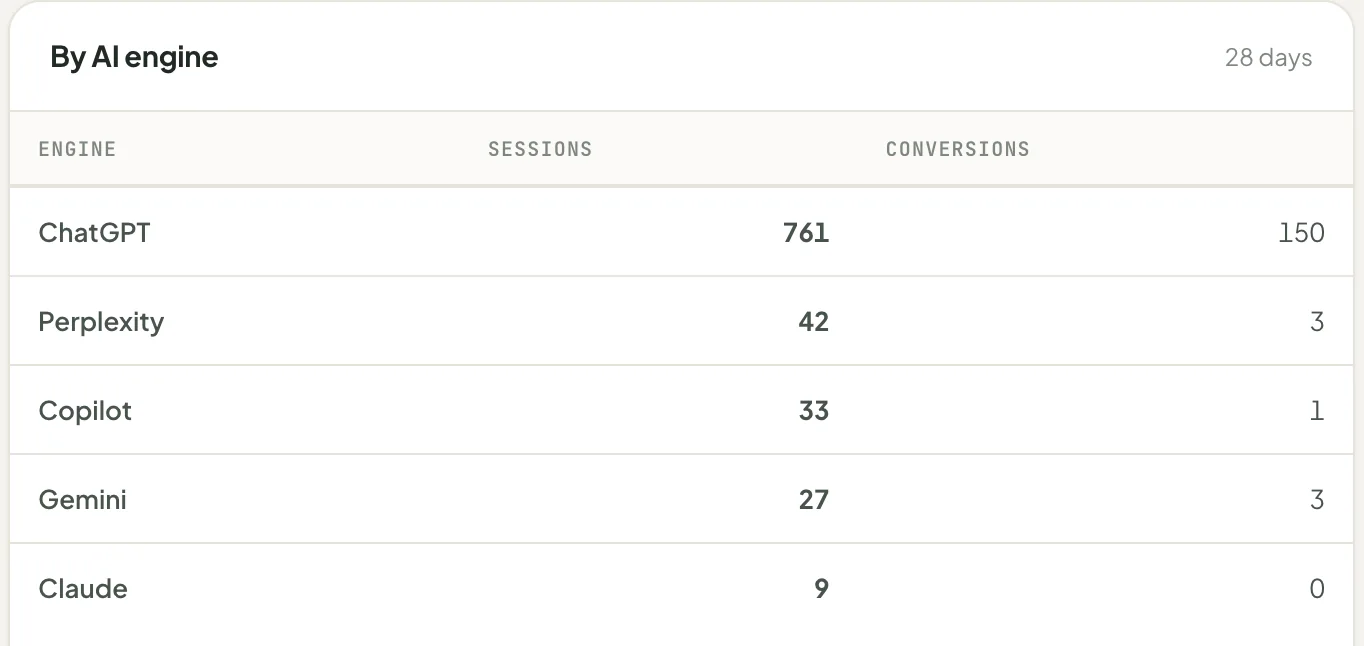
It works in demand generation, inside the AI assistants patients now ask before they search. SIE tracks the sessions and enquiries those AI engines send. Our own software runs the work, and every stage is reported against a monthly target on Ichelon Agency OS.
See all nine stages and the tool behind each one →