


Cardiology hospitals ChatGPT Ads India — capture patient intent inside the conversational search that pre-consultation happens on
Before a patient or their family calls your cardiology OPD, they have already asked ChatGPT about angioplasty cost, whether a parent is eligible for TAVI, or whether a bypass recommendation from another hospital needs a second opinion. ChatGPT Ads puts your cardiac programme inside that conversation — not after it, as a search result competing with ten other links.

Conversational-search behaviour specific to cardiology hospitals patients in 2026
Cardiac decisions are rarely made by the patient alone. An adult child researching a parent's angioplasty, a spouse trying to understand a stress-test report, or a patient who has just been told they need bypass surgery and wants to know if that recommendation is the only option — these are multi-turn, anxious, detail-seeking conversations, and ChatGPT has become the first place they happen. A single session might move from "what does 70% blockage mean" to "angioplasty cost in Delhi" to "is stent placement safer than bypass at 65" across ten or twelve exchanges, long before a hospital name enters the conversation.
This matters because the query pattern for cardiology is fundamentally different from a Google search. On Google, a patient types "TAVI cost Mumbai" once and scans results. On ChatGPT, the same patient arrives at the TAVI cost question only after several turns establishing context — age, comorbidities, prior consultations, family history — and by the time cost or hospital-selection intent surfaces, the conversation already carries rich signal about clinical urgency and decision-readiness. A sponsored response placed at that stage is answering a fully-contextualised question, not a cold keyword.
The volume is concentrated around a handful of high-anxiety moments: a new diagnosis after an angiography, a second cardiologist's differing recommendation, a family member abroad trying to arrange care for a parent in India, and pre-surgery eligibility questions for older or higher-risk patients where TAVI is being weighed against open surgery. Cardiology hospitals that are absent from this layer are absent from the exact moment intent crystallises — the family has already done the research and formed a shortlist before the phone ever rings.
Attribution for this behaviour sits under GA4's AI Assistant channel, and across ICG's healthcare portfolio that channel converts at a 10.49% key-event rate — roughly double organic search and seventeen times direct traffic. For cardiology specifically, where the decision cycle is short and financially and emotionally consequential, a conversation-stage presence converts disproportionately well once the creative and landing experience are built for how these conversations actually unfold.
Intent bucket map — stages, example queries and CPC bands
Cardiology intent does not arrive in one shape. Bidding it as a single undifferentiated pool wastes budget on early-stage exploration and underbids the late-stage, appointment-ready conversations that actually fill OPD slots. ICG splits cardiology conversation intent into six buckets, each bid and creative-managed differently.
| Stage | Example conversational query | Relative CPC band |
|---|---|---|
| Symptom exploration | "chest pain when climbing stairs, should I worry" | 1x (baseline, lowest cost) |
| Diagnostic understanding | "what does a 70% blockage on angiography mean" | 1.5x–2x |
| Procedure & cost research | "angioplasty cost in India with stent", "TAVI eligibility age limit" | 3x–5x |
| Comparison & second opinion | "heart bypass second opinion", "robotic CABG vs open bypass" | 4x–6x |
| Hospital & surgeon selection | "best interventional cardiologist near me for TAVI" | 6x–9x |
| Appointment-ready | "book cardiology consultation this week", "cardiac surgery pre-op checklist" | 6x–12x (highest cost) |
The economics only work when spend is weighted deliberately: heavier volume and lower bids at the symptom and diagnostic stages to build a retargetable conversation pool inside the platform's own attribution window, and disciplined, higher bids reserved for comparison, second-opinion and appointment-ready conversations where the completed-conversation rate justifies 6 to 12 times the baseline cost. A cardiology hospital that bids flat across all six buckets typically overpays for top-of-funnel symptom queries and underbids the second-opinion and appointment-ready conversations that actually produce a booked consultation.
Second-opinion intent deserves particular attention. A patient who has already been told by one hospital that bypass surgery is necessary and is now asking ChatGPT whether that's the only path is one of the highest-value conversations in the entire cardiology funnel — they are actively comparing, motivated, and have already absorbed the clinical seriousness of their situation. ICG treats this bucket as a distinct campaign line with its own compliance-reviewed creative, rather than folding it into general procedure-cost bidding.
Compliance overlays for cardiology ChatGPT Ads creative
Cardiac advertising sits at the intersection of India's strictest medical-advertising rules and some of the highest patient anxiety in healthcare marketing, which means compliance review is not a formality — it is what keeps a campaign live. Every sponsored response and every linked landing page for a cardiology hospital is reviewed against four layers before it goes live.
- NMC Section 6 — bars self-promotion by registered medical practitioners and prohibits claims that a doctor or hospital is the best or guarantees a specific surgical outcome. Cardiac creative cannot say a named cardiologist has the "highest TAVI success rate" or similar unverifiable superiority claims.
- ASCI Chapter III — prohibits misleading, absolute, or unsubstantiated claims in healthcare advertising. "Guaranteed successful bypass," "zero-risk angioplasty," or "safest TAVI in the city" are all non-compliant regardless of how the platform's creative-review tooling would technically pass them.
- DPDP Act 2023 — governs consent for any health-data capture on the landing page a conversation routes to. A cardiology lead form asking for prior angiography reports or medical history must carry explicit, specific consent language, not a buried general privacy checkbox.
- Cardiac-specific eligibility disclaimers — TAVI and bypass eligibility genuinely varies by age, comorbidity and anatomy, so creative referencing eligibility must carry a disclaimer that final suitability is determined only after clinical evaluation, never implied as guaranteed from the conversation alone.
ICG's compliance-clean creative library for cardiology is built once per client, mapped against these four layers, and reused across all six intent buckets with only the conversation-stage messaging changed — which is also what keeps campaign approval times short as new ad sets are added through the 90-day build-out.
The landing-page pattern that converts cardiology conversation traffic
A patient who has just finished a ten-turn conversation about TAVI eligibility does not want a cardiology department homepage with a rotating banner and a list of nine sub-specialities. They want the specific answer their conversation ended on, confirmed in writing, with an obvious next step. ICG builds a dedicated landing pattern for each of the six intent buckets rather than routing all ChatGPT Ads traffic to one generic page.
The pattern itself stays consistent: a short, factual, cited answer block that mirrors the exact question the conversation resolved on — angioplasty cost ranges by stent type, TAVI eligibility criteria by age band, or what a structured second-opinion review actually includes and how long it takes. This is followed by credibility signals scoped to cardiac care specifically — cath lab and hybrid OR capability, interventional cardiologist and cardiac surgeon credentials, procedure volumes where they can be stated factually — and then a single, low-friction next action.
That next action is deliberately narrow. For cost and eligibility queries, it's typically a callback-request form with two or three qualifying fields, not a lengthy intake form. For second-opinion intent, it's a secure report-upload path that lets a family submit an existing angiography or cardiology consultation for review, which measurably outperforms a generic "book appointment" button for this specific intent bucket because it matches what the patient actually asked for. For appointment-ready conversations, a direct scheduling widget with same-week availability converts best, since hesitation at this stage is about logistics, not persuasion.
Machine-scannability matters as much as human readability here: because ChatGPT Ads attribution runs on conversation-completion, the platform's own citation mechanism favours pages that answer clearly and factually in the first few hundred words, which is also simply better practice for an anxious family reading on a phone in a hospital corridor.
Pricing
Retainers from ₹20,000/month · Custom-scoped per engagement.
90-day expected outcomes
Days 1–30 focus on foundation: compliance-clean creative built and approved across the six intent buckets, landing-page patterns live for angioplasty cost, TAVI eligibility and second-opinion intent specifically, and conversation-attribution tracking wired into GA4's AI Assistant channel so every completed conversation is visible from week one.
Days 31–60 shift to tuning: bid weighting across the six buckets adjusted against real cost-per-completed-conversation data, underperforming creative variants replaced, and the second-opinion landing path optimised specifically, since it is typically the bucket with the widest early variance in conversion quality.
By day 90, ICG reports a stabilised cost-per-completed-conversation by intent bucket, a measurable AI Assistant channel contribution to booked cardiology consultations, and a documented compliance-clean creative library the hospital's own marketing or compliance team can review at any time — positioning the cardiac programme inside the 90–180 day first-mover window before more agencies build a healthcare-specific ChatGPT Ads practice.
ChatGPT Ads and LLM marketing in the nine-stage patient journey
- 0Foundations
- 1Demand gen
- 2Capture
- 3Lead quality
- 4Lead mgmt
- 5Scheduling
- 6Show-up
- 7Conversion
- 8Retention
It works in demand generation, inside the AI assistants patients now ask before they search. SIE tracks the sessions and enquiries those AI engines send. Our own software runs the work, and every stage is reported against a monthly target on Ichelon Agency OS.
See all nine stages and the tool behind each one →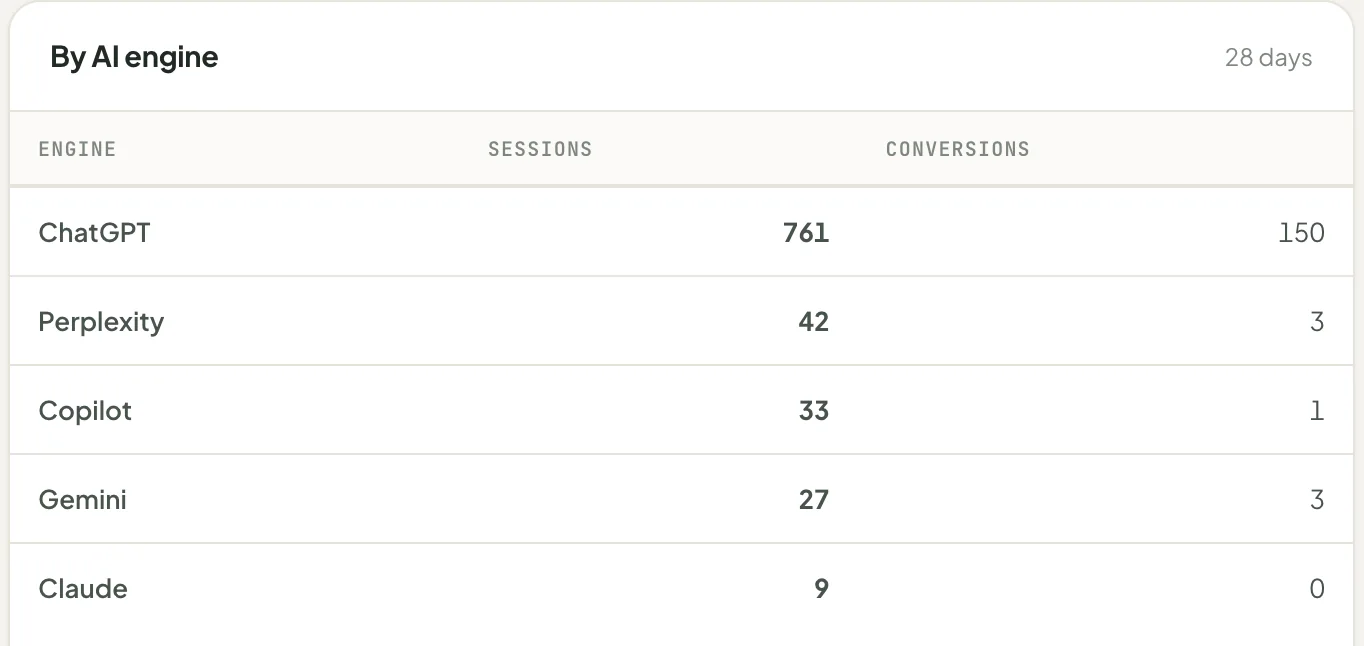
Frequently asked questions
What is ChatGPT Ads for cardiology hospitals and how is it different from Google Ads?
ChatGPT Ads places sponsored responses and follow-up citations directly inside a conversational answer, at the exact moment a patient or attendant is asking ChatGPT about angioplasty cost, TAVI eligibility, or a second opinion on bypass surgery. Google Ads bids on keywords typed into a search box; ChatGPT Ads bids on conversation-stage intent inside a multi-turn dialogue, so the same hospital can appear as the trusted answer rather than one blue link among ten.
Is ChatGPT Ads live in India for healthcare advertisers in 2026?
Yes. ChatGPT Ads rolled out to India in mid-2026 through OpenAI's ad partner network, and healthcare advertisers can now run compliant sponsored responses. Very few Indian agencies have a dedicated healthcare vertical practice for this channel yet, which is why the first-mover window for cardiology hospitals is realistically 90 to 180 days before category competition intensifies.
What patient queries does ChatGPT Ads for cardiology hospitals actually capture?
The highest-value queries fall into five buckets: early symptom exploration (chest pain, breathlessness), diagnostic understanding (angiography, stress test interpretation), cost and eligibility research (angioplasty cost, TAVI eligibility, stent pricing), second-opinion and comparison intent (bypass surgery second opinion, robotic versus open CABG), and appointment-ready intent (best cardiac surgeon near me, book cardiology consultation).
How much does ChatGPT Ads cost for a cardiology hospital in India?
Early-stage exploratory conversation bids for cardiology queries typically run several times cheaper than late-stage, appointment-ready bids, which can run 6 to 12 times costlier per completed conversation. ICG's managed retainers for cardiology hospitals start from Rs 20,000 per month, custom-scoped, with Goals-Driven engagements and Performance-Linked Payout Models available — larger engagements cover multi-centre cardiac groups running Enterprise-scale conversation volume.
How is a ChatGPT Ads lead attributed for a cardiology hospital?
Attribution runs on conversation-completion events rather than clicks. A lead is credited when a patient or attendant completes their intent journey inside the conversational thread — for example, resolving their angioplasty cost question and then engaging with the sponsored response's next step. ICG reports this inside GA4 under the AI Assistant channel, which across the healthcare portfolio shows a 10.49% key-event rate, roughly twice organic search and seventeen times direct traffic.
What compliance rules govern ChatGPT Ads creative for cardiac procedures?
Every sponsored response and landing page must respect NMC Section 6 restrictions on self-promotion and outcome claims, ASCI Chapter III's bar on misleading or absolute claims (no 'best', 'safest', 'guaranteed success' language for cardiac procedures), and DPDP Act 2023 consent requirements for any health-data capture on the landing page. Cardiac-specific overlays add mandatory disclaimers on procedure risk and eligibility variance, since TAVI and bypass suitability cannot be represented as guaranteed outcomes.
What does the landing page for a cardiology ChatGPT Ads campaign need to look like?
It needs to be machine-scannable: short, factual, cited sections that answer the exact question the conversation ended on — angioplasty cost ranges, TAVI eligibility criteria, or what a bypass second opinion review includes — followed by a single low-friction next step (callback request, teleconsultation booking, or second-opinion upload form), not a generic hospital homepage.
How long before a cardiology hospital sees results from ChatGPT Ads?
ICG's typical 90-day arc for cardiology hospitals shows conversation volume and compliance-clean creative stabilising in the first 30 days, cost-per-completed-conversation trending down as intent-bucket bidding is tuned in days 31 to 60, and a measurable AI Assistant channel contribution to booked consultations by day 90, reported monthly against GA4 conversation-attribution data.
