


Ophthalmology hospitals and clinics ChatGPT Ads India — capture patient intent inside the conversational search that pre-consultation happens on
LASIK, cataract and retina patients now research their decision in conversation with an AI assistant long before they call an eye hospital or search Google. ICG runs a healthcare-only ChatGPT Ads practice built specifically for ophthalmology — three distinct intent pockets, compliance-clean from the first ad, reported on conversation-completion, not click count.
Conversational-search behaviour specific to ophthalmology patients in 2026
Ophthalmology is unusual among specialties in that it carries three genuinely different patient journeys under one clinical roof, and each one now shows up differently inside a ChatGPT conversation. A LASIK enquiry usually starts as a cost-and-candidacy question from someone who has never had eye surgery and is nervous about permanence — "is LASIK safe," "how much does LASIK cost in India," "will I need glasses again after LASIK." A cataract enquiry usually starts from confusion, not fear — an older patient or their adult child trying to understand why a doctor recommended surgery and what a monofocal, multifocal or toric lens actually means for daily life afterward. A retina enquiry is the most urgent of the three, often triggered by a symptom — flashing lights, a sudden shadow in vision, blurred central vision — and the person asking is frequently searching for reassurance or urgency-triage as much as for a provider.
Because these three journeys carry such different emotional registers, they also carry different conversational patterns that ChatGPT Ads can be bid against separately. LASIK conversations tend to be long and comparison-heavy, with the patient asking follow-up questions about SMILE versus LASIK, recovery time, and financing before ever mentioning a specific hospital. Cataract conversations tend to be shorter but repeat across a household, since it's frequently an adult child researching on behalf of a parent — which means the device doing the searching and the device that eventually books the consultation are often different, a pattern ICG accounts for by keeping cataract landing pages family-readable rather than jargon-heavy. Retina conversations are the shortest and most action-oriented, and the highest-value ones convert fastest because urgency shortens the decision cycle to hours, not weeks.
A second behavioural shift specific to 2026 is that ophthalmology patients increasingly ask ChatGPT to interpret symptoms before they ask it to recommend a provider — "why do I see floaters suddenly," "is it normal for vision to blur after standing up quickly," "what does a scratched cornea feel like." These symptom-first conversations rarely convert on the first exchange, but they are where brand and hospital-name recall gets planted, and a hospital absent from that early exchange is starting the shortlisting conversation from zero rather than from recall.
The India-specific dimension is that ophthalmology in India runs on a wide price and quality spread — a metro LASIK centre and a tier-2 city eye hospital serve genuinely different price-sensitivity bands, and conversational queries reflect that split explicitly, with patients frequently naming a city or budget range in the same breath as the procedure. ICG's ophthalmology campaigns are built around this split from day one rather than applying one national bid strategy across cities with materially different economics.
Intent bucket map for ophthalmology on ChatGPT Ads
ICG structures every ophthalmology account around named intent buckets that map to where a patient sits in the LASIK, cataract or retina journey, rather than treating all eye-care conversation as one undifferentiated pool. Bid strategy, ad copy and landing-page variant are set per bucket, and bucket count typically runs five to six for a full-service eye hospital, narrower for a single-procedure LASIK or cataract-only centre.
| Intent bucket | Example query | Typical CPC band (₹) |
|---|---|---|
| Symptom exploration (retina/general) | "why am I suddenly seeing floaters and flashes" | 20–50 |
| LASIK cost and candidacy | "how much does LASIK cost in India and am I a candidate" | 60–140 |
| LASIK vs SMILE comparison | "is SMILE better than LASIK for thin corneas" | 55–120 |
| Cataract lens-option confusion | "what's the difference between monofocal and multifocal cataract lens" | 70–160 |
| Macular degeneration / retina diagnosis | "what does early stage macular degeneration mean for my vision" | 90–210 |
| Provider shortlisting (local) | "best eye hospital in [city] for cataract surgery" | 140–300 |
The spread within each bucket reflects city and procedure complexity, not a fixed rate card. A metro-based retina bucket routinely runs at the top of its band because the auction prices the urgency and specialist scarcity of retina care; a tier-2 city LASIK bucket runs near the bottom because the query volume is lower and competition thinner. ICG rebalances bucket-level bids monthly against actual conversation-completion data rather than leaving allocations static after launch.
Retina and macular-degeneration buckets carry the highest per-lead value but the lowest volume, so ICG typically caps their share of total budget even though their CPC band is high, protecting spend for the LASIK and cataract buckets that produce the bulk of monthly conversation-completions. A default allocation for a full-service ophthalmology account weights roughly 15% to symptom exploration, 30% to LASIK (cost, candidacy and comparison combined), 30% to cataract, 15% to retina/macular, and 10% to provider shortlisting — rebalanced after the first full reporting cycle.
This bucket structure sits inside the same governance framework ICG applies across its full healthcare ChatGPT Ads practice, whether the account is an eye hospital running a full ophthalmology department or a focused LASIK or cataract clinic running one or two procedures.
Compliance overlays for ophthalmology advertising
Ophthalmology carries a specific compliance risk that general healthcare advertising doesn't: vision outcomes are highly personal, emotionally loaded and easy to over-promise in conversational copy that's trying to sound reassuring. ICG reviews every bucket's ad copy and every follow-up-response guardrail against four frameworks before an ophthalmology campaign goes live, with one additional overlay specific to the specialty.
NMC Section 6 governs what an eye hospital can say about surgical outcomes and about the treating ophthalmologist. No campaign ICG runs implies a guaranteed vision result ("20/20 vision guaranteed"), a comparative "best surgeon in the city" claim, or a before/after outcome tied to a named doctor without the required disclaimers. This is enforced more strictly for LASIK and cataract copy than for almost any other procedure category ICG handles, because "will I need glasses again" is exactly the kind of question that tempts an overconfident answer.
ASCI Chapter III requires clear disclosure that a response is sponsored and prohibits misleading claims about efficacy, safety or comparative superiority. ICG's ad copy templates for ophthalmology are pre-cleared against this chapter before a single rupee is spent, and cost-range statements for LASIK or cataract are only used when they reflect a genuine, current price band rather than a promotional "starting from" figure designed to undercut.
DPDP 2023 shapes every landing page an ophthalmology campaign points to — explicit consent language on the lead form, a stated purpose for data collection, and no pre-ticked marketing-consent boxes. Retina and macular-degeneration landing pages, which often collect symptom descriptions that read as health data, get the strictest version of this consent language.
The specialty-specific overlay applies to retina and macular-degeneration content specifically: no ad copy or landing page may phrase symptom information in a way that could be read as a diagnosis delivered outside a clinical consultation. "You may have early macular degeneration" is not permitted; "these symptoms warrant a retina specialist consultation" is. ICG treats this line as strict, not stylistic, because retina content sits closest to genuine urgency and the highest risk of a patient delaying real care based on ad-copy reassurance or alarm. No ophthalmology campaign goes live without this full review, and ICG's monthly report includes a compliance log alongside the performance numbers.
Landing-page pattern that converts
A ChatGPT Ads click or citation for an ophthalmology account behaves differently from a Google Ads click because the patient arrives having already had part of the decision conversation with the AI. A LASIK-bucket landing page confirms candidacy and cost rather than re-selling the concept of LASIK; a cataract-bucket page explains lens options in plain language rather than assuming the patient already understands the terminology; a retina-bucket page moves fast to urgency and a next action rather than dwelling on general eye-health education. ICG builds a distinct landing-page variant per bucket for exactly this reason.
The pattern ICG uses keeps five elements above the fold: the specific procedure or condition addressed (LASIK, a named cataract lens type, or a retina condition — never a generic "eye care services" heading), the treating ophthalmologist's name and credentials, a cost range or cost-driver explanation where compliance permits, a single clear next action, and a compliance-cleared line about what outcomes can and cannot be promised. Full doctor bios, technology showcases and broader service menus sit below, available but not competing for attention at the point of decision.
For LASIK and cataract buckets specifically, the single clear next action is deliberately narrow — one consultation-booking form and one WhatsApp option, not a form, a phone number and a "calculate your savings" widget competing on the same screen. ICG has found that ophthalmology landing pages running multiple competing CTAs lose 20-30% of otherwise-qualified conversation-attributed traffic to indecision, a pattern consistent with what ICG sees across other high-consideration procedure categories.
Because attribution runs on conversation-completion, not just click-through, the landing page also needs to close the loop the AI conversation opened. If the original question was about multifocal versus monofocal lens cost, the page needs to answer that specific comparison in the first two lines rather than burying it under a general cataract-surgery introduction — this is the single biggest driver of conversation-completion rate ICG has measured across its ophthalmology accounts.
Pricing
Retainers from ₹20,000/month · Custom-scoped per engagement.
The first 90 days for an ophthalmology account
Weeks one and two are compliance and setup — bucket definition against the account's actual procedure mix (LASIK, cataract lens options, retina/macular), ad copy drafted and cleared against NMC Section 6 and ASCI Chapter III, DPDP-compliant landing pages built per bucket, and the AI Assistant channel wired correctly in GA4 so conversation-completions are captured from day one rather than discovered missing in month two.
Weeks three through six are where the first qualified, conversation-attributed leads typically start arriving. LASIK and cataract buckets usually produce completions faster than retina, since retina volume is lower even though per-lead value is higher; ICG holds bids conservative in the shortlisting bucket during this window while the LASIK and cataract buckets build the recall base that lowers cost-per-conversation over time.
By week eight to twelve, bucket-level bid data has matured enough for ICG to rebalance spend toward whichever buckets are actually producing conversation-completions at an acceptable cost per appointment, and the account gets its first full-cycle report broken out by LASIK, cataract and retina, not just a blended campaign number. This is also the point at which ICG makes a tier recommendation — up, sideways, or hold — based on data rather than a renewal-date default.

Get your eye hospital or clinic into the ChatGPT Ads whitespace before it closes
No agency in India runs a dedicated, compliance-checked ChatGPT Ads practice for ophthalmology yet. ICG does, split across LASIK, cataract and retina — and the 90–180 day first-mover window is already narrowing.
ICG's healthcare ChatGPT Ads practice operates within NMC Section 6, ASCI Chapter III and DPDP 2023. See the full ChatGPT Ads for Healthcare pillar for hospital, clinic, diagnostics and pharma variants.
ChatGPT Ads and LLM marketing in the nine-stage patient journey
- 0Foundations
- 1Demand gen
- 2Capture
- 3Lead quality
- 4Lead mgmt
- 5Scheduling
- 6Show-up
- 7Conversion
- 8Retention
It works in demand generation, inside the AI assistants patients now ask before they search. SIE tracks the sessions and enquiries those AI engines send. Our own software runs the work, and every stage is reported against a monthly target on Ichelon Agency OS.
See all nine stages and the tool behind each one →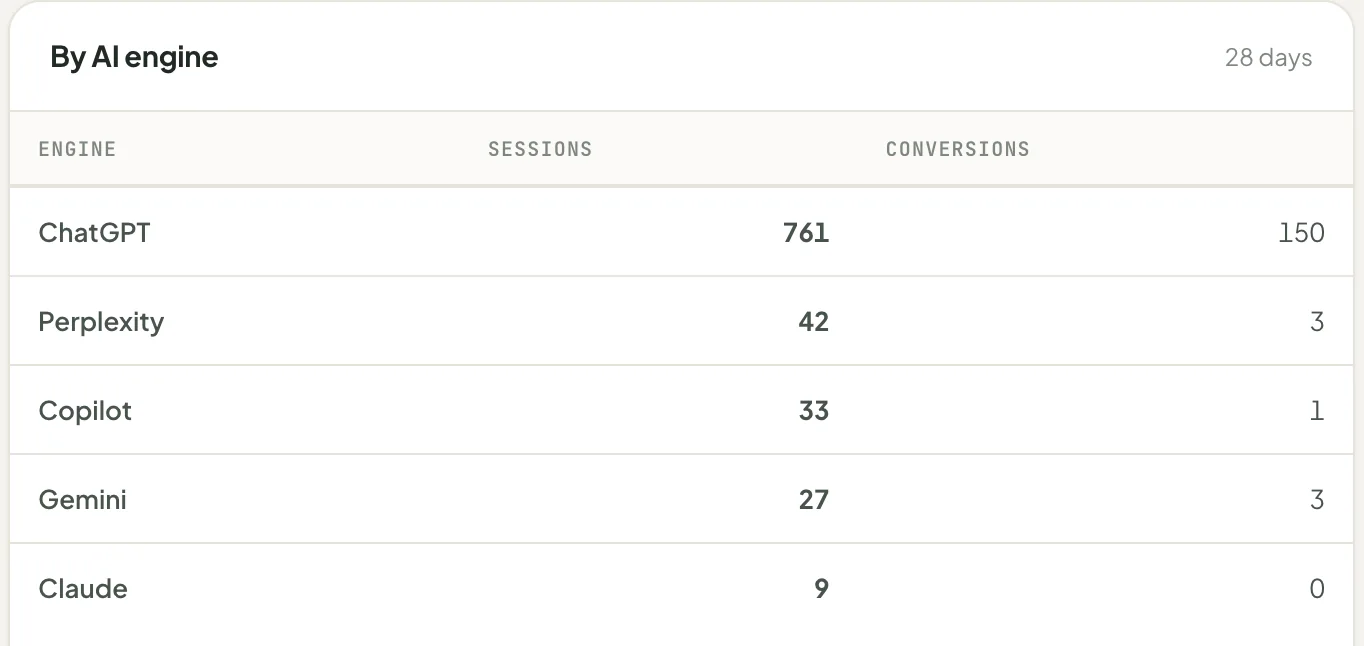
Frequently asked questions
What is ChatGPT Ads for ophthalmology hospitals and clinics?
ChatGPT Ads places a sponsored response or follow-up citation inside a live ChatGPT conversation when a patient is actively exploring an eye condition or treatment — asking about LASIK cost, comparing cataract lens options, or trying to understand a macular-degeneration diagnosis — rather than matching a typed search keyword. For ophthalmology, this means the eye hospital or clinic appears while the decision is still being formed, not only when a person finally searches Google for 'LASIK near me.'
Why does ophthalmology need a dedicated ChatGPT Ads approach rather than a generic healthcare one?
Ophthalmology has three distinct demand pockets — refractive surgery (LASIK/SMILE), cataract, and retina/medical-eye-disease — each with a different buyer, different price sensitivity and different urgency. LASIK patients are self-pay and price-conscious; cataract patients are often older, insurance-aware and lens-option-confused; retina patients are urgent and diagnosis-driven. A single undifferentiated campaign underperforms because the ad copy, bid strategy and landing page each need to match the specific pocket.
Is ChatGPT Ads available for eye hospitals in India right now?
Yes. ChatGPT Ads rolled out to India in mid-2026 through OpenAI's ad partner network, and healthcare inclusion is live but under-adopted. Almost no India-based agency runs a dedicated, compliance-checked ophthalmology practice on the channel today, which is the exact window ICG's ophthalmology practice is built to use.
How much does ChatGPT Ads management cost for an eye-care centre?
ICG's engagement for a single-location eye clinic or a focused LASIK/cataract centre begins at ₹20,000/month starting (inclusive of 18% GST), covering one to two intent buckets, compliance-reviewed ad copy, a conversational landing page and monthly conversation-attribution reporting. Ad spend is planned separately based on city, procedure mix and existing lead volume.
Can ChatGPT Ads generate LASIK leads specifically, not just general eye-care enquiries?
Yes — LASIK is one of ICG's strongest-performing intent buckets on this channel because the query pattern is unusually specific and cost-anchored ('how much does LASIK cost in India', 'am I a candidate for LASIK', 'LASIK vs SMILE which is better'). ICG builds a dedicated LASIK bucket with its own bid strategy and a landing page that answers cost and candidacy questions in the first two lines.
How does ChatGPT Ads handle cataract-surgery intent, where patients are confused about lens options?
Cataract queries are dominated by lens-option confusion — monofocal versus multifocal versus toric, and what each costs. ICG's cataract bucket ad copy and landing pages are built specifically to demystify lens choice in plain language, because a confused patient is far more likely to complete a conversation-attributed enquiry once the options are laid out clearly rather than left to a generic 'book a consultation' message.
What compliance rules apply to ophthalmology ad copy on ChatGPT Ads?
Every line of ad copy and every landing page ICG builds for an ophthalmology account is checked against NMC Section 6 (no guaranteed vision-outcome claims, no comparative 'best surgeon' language, no implied before/after result tied to a named doctor without disclaimers), ASCI Chapter III (mandatory sponsored-content disclosure, no misleading efficacy claims) and DPDP 2023 (explicit consent language on every lead form). Retina and macular-degeneration content additionally avoids any language that could be read as a diagnostic claim made outside a clinical consultation.
How is a lead attributed and reported for an ophthalmology ChatGPT Ads campaign?
ChatGPT Ads attributes on conversation-completion events, not clicks — a lead is credited when a patient completes an intent journey such as requesting a callback or submitting a consultation-booking form. In Google Analytics 4 this surfaces under the 'AI Assistant' channel; across ICG's healthcare accounts this channel shows a 10.49% key-event rate, roughly twice organic search and seventeen times direct traffic.
How long before an eye hospital sees appointment leads from ChatGPT Ads?
Most ophthalmology accounts on ICG's Starter and engagements see qualified conversation-attributed leads within two to three weeks of a compliance-cleared campaign going live, with cost-per-conversation stabilising by week six once bucket-level bid data across LASIK, cataract and retina has matured.
Does ChatGPT Ads replace Google Ads for an eye hospital's LASIK or cataract campaigns?
No. ICG runs ChatGPT Ads as an addition inside the paid stack alongside Google Ads and Meta Ads, not a replacement. Google Ads still captures high-volume, bottom-funnel keyword searches like 'LASIK surgery cost'; ChatGPT Ads captures the earlier, research-stage conversational intent — symptom questions, lens-option comparisons, candidacy questions — that shapes the shortlist before that Google search happens.
What does the landing page for an ophthalmology ChatGPT Ads campaign need to look like?
It needs to be machine-scannable — short, factual, clearly structured with the treating ophthalmologist's credentials, the specific procedure addressed (LASIK, cataract lens type, retina condition), a cost range where compliance permits, and a single obvious next step — because ChatGPT's own citation and follow-up mechanics favour pages it can parse and quote accurately rather than long marketing copy.
Who runs ICG's ChatGPT Ads practice for ophthalmology hospitals and clinics?
ICG's ophthalmology paid-search practice, including ChatGPT Ads, is led on the growth and business side by Rohit Gupta. Every campaign is compliance-reviewed before it goes live and reported monthly against conversation-attribution data across the LASIK, cataract and retina buckets, not just click volume.
