


Hospitals ChatGPT Ads India — paid conversational search built for hospitals that need real leads
Multi-specialty hospitals, hospital chains and super-specialty units are already being asked about, compared and recommended inside ChatGPT conversations every day — with or without a marketing budget attached. ICG runs the healthcare-only ChatGPT Ads practice that puts your hospital group inside those conversations on purpose, department by department, city by city, with compliance built in from the first campaign brief. This is the sub-service page for hospital groups; the full category view of ChatGPT Ads for Indian healthcare sits on the pillar page.
Why hospitals need ChatGPT Ads specifically
A multi-specialty hospital's demand doesn't arrive in one shape. A patient's family member researching a cardiac bypass asks different questions, in a different tone, with different urgency than someone comparing hospitals for a scheduled knee replacement, and both are entirely different from a corporate HR team scoping an empanelment for annual health checks. Search-engine keyword advertising forces all three into the same handful of keyword groups. ChatGPT Ads doesn't — it sits inside the actual multi-turn conversation each of these people has, where the assistant already knows whether the query is urgent, elective, insurance-linked or exploratory, and the ad or sponsored citation is placed against that specific stage of that specific conversation.
For a hospital group, that distinction compounds. A 400-bed multi-specialty campus in Gurgaon might run twelve or more active service lines at once — cardiology, oncology, orthopaedics, nephrology, mother and child, neurosciences, and more — each with its own patient volume patterns, its own seasonal demand, and its own competitive intensity in paid search. Group Marketing Directors who have tried to run all of that through generic keyword campaigns know the result: broad match terms cannibalise budget, department-level performance gets averaged into a meaningless blended CPL, and the CMO's monthly report says nothing about which specialty is actually driving admissions. ChatGPT Ads, structured correctly, gives each department its own intent bucket with its own reporting line from day one.
There is also a first-mover argument specific to India's hospital sector right now. ChatGPT Ads rolled out to India via OpenAI's ad partner network in mid-2026, and as of this writing no agency has built a dedicated hospital-vertical practice around it — the category is still being contested largely by keyword-advertising incumbents applying old playbooks to a new surface. ICG's view, based on the accounts we already run, is that this whitespace holds for another 90 to 180 days before hospital marketing budgets catch up and CPCs on the highest-intent conversation stages start climbing toward what late-intent search terms already cost on Google. Hospital groups that claim their department-level intent buckets now are effectively buying a reserved seat before the auction gets crowded.
Attribution is the third reason this matters specifically for hospitals. ChatGPT Ads doesn't credit a click — it credits a completed conversation, meaning the system already knows the person stated a symptom, named a city, and asked a follow-up question about admission process or insurance before the lead event ever fires. Across ICG's healthcare accounts, the GA4 "AI Assistant" channel shows a 10.49% key-event rate, roughly double what organic search delivers and about seventeen times a raw direct-traffic session. For a hospital call centre trying to triage enquiry quality at volume, that pre-qualification is the difference between a list of names and a list of people who are close to booking an appointment.
Intent stages a hospitals buyer moves through in conversational search
Hospital-related conversations inside ChatGPT rarely resolve in a single exchange, and the stage a person is at when your ad or citation appears determines both the CPC you'll pay and the copy that should be shown. ICG maps every hospital account against four stages before a single campaign is built.
Exploration. The earliest stage is symptom- or condition-led — someone asking what a certain chest discomfort could mean, or what recovery from a joint replacement typically looks like. These conversations are high-volume and cheap to appear in, but conversion to a genuine hospital enquiry is low. ICG treats this stage as brand-presence and citation-building budget rather than a lead-generation line — the goal is to be named accurately and neutrally when the assistant lists hospitals capable of treating the condition, not to push a hard offer.
Comparison. Once a condition is identified or suspected, the conversation shifts to comparing hospitals capable of treating it — "which hospitals in India are known for cardiac surgery," for instance. It's the stage where a hospital's NABH accreditation, department-level certifications, doctor bench credentials and empanelment list start to matter to the assistant's own answer-construction, which is why ICG's citation feeds for hospital clients foreground exactly those facts.
City and campus narrowing. Once a person has decided on a treatment path, the conversation typically narrows to a city or even a specific campus — "best hospital for spine surgery in Pune," for instance. This is the stage hospital chains benefit from most directly, because a multi-city group can appear consistently across every city it operates in, with campus-specific detail, while a single-city competitor cannot follow the conversation into a city it doesn't serve.
Late intent — admission-ready. The final stage is explicit: insurance verification questions, bed availability questions, "how do I book an appointment with Dr. [name]" questions, second-opinion requests with reports already in hand. CPCs here run six to twelve times the exploration-stage rate because the person is genuinely close to converting, but this is also where ICG concentrates the highest share of a hospital's budget, because the conversation-completion event at this stage correlates most directly with an actual admission enquiry reaching the call centre.
Group Marketing Directors managing several campuses should expect the mix across these four stages to differ by department — oncology conversations skew toward exploration and comparison for longer before narrowing, while orthopaedic and maternity conversations move to city-narrowing and late intent faster — and ICG's campaign structure is built to reflect that difference rather than apply one blended pacing model across the whole hospital.
Campaign structure ICG uses — named intent buckets with example queries and CPC bands
ICG does not run a single "hospital" campaign inside a hospital group's ChatGPT Ads account. Every account is built as a set of named intent buckets, each mapped to a department or unit, each with its own example queries, its own CPC band, and its own landing page. A representative structure for a mid-size multi-specialty hospital group looks like this:
| Bucket | Example conversational query | Stage | Indicative CPC band |
|---|---|---|---|
| Cardiac sciences — exploration | "what does angioplasty recovery look like" | Exploration | Rs 8–18 |
| Cardiac sciences — comparison | "best hospital for bypass surgery near [city]" | Comparison | Rs 35–70 |
| Orthopaedics — city-narrowed | "knee replacement hospital [city] cost and insurance" | Narrowing | Rs 45–90 |
| Oncology — late intent | "book second opinion oncologist [city] hospital" | Late intent | Rs 120–260 |
| Maternity and mother-child | "NICU hospital [city] insurance empanelled" | Narrowing to late intent | Rs 60–150 |
| Corporate health checks / empanelment | "hospital annual health check corporate tie-up [city]" | B2B late intent | Rs 90–200 |
Each bucket is deliberately narrow — a department, a stage, sometimes a single campus — because ChatGPT Ads' auction rewards specificity in a way keyword advertising never fully did. A bucket that tries to cover "cardiology" broadly across exploration through late intent dilutes the signal the auction uses to price and place the ad, and it makes department-level reporting meaningless to a CMO trying to judge which service line is earning its marketing spend. ICG typically launches a mid-size hospital group with four to six buckets in month one, expanding to eight or ten as data comes in and clearly under-served conversation patterns emerge.
For hospital chains running multiple campuses, ICG layers a city tag onto every bucket rather than duplicating the bucket structure per city, which keeps the account manageable while still surfacing city-by-city performance in reporting. A chain with campuses in Delhi NCR, Mumbai and Bengaluru will see, inside a single "orthopaedics — narrowing" bucket, three distinct CPQL numbers by city, which is exactly the granularity a Group Marketing Director needs to decide where to shift budget next quarter.
Doctor bench visibility deserves its own line here because it's a hospital-specific structural choice ICG makes that doesn't apply to standalone clinics. Where a hospital has named specialists with public reputations — a senior cardiac surgeon, a well-known oncologist — ICG builds a dedicated late-intent bucket around appointment-booking queries naming that doctor or department, because conversational assistants weight named-expert citations heavily when a user asks to be matched with a specific specialist, and a hospital that hasn't structured its citation feed to surface doctor credentials loses that placement to a competitor that has.
Compliance overlays specific to hospitals
Hospital advertising in India sits under tighter scrutiny than most other healthcare categories, and ChatGPT's answer-construction model amplifies rather than dilutes that scrutiny — an assistant citing a hospital in a health-related answer is, functionally, repeating a claim to someone in a moment of genuine medical concern, and both NMC and ASCI treat that repetition as advertising exposure. ICG runs every hospital account through a compliance layer built specifically for this before anything goes live.
NMC Section 6 governs how clinical outcomes and doctor credentials can be represented, and it rules out several things hospital marketing teams instinctively reach for — success-rate percentages framed as guarantees, "best in [city]" superiority claims, before-and-after outcome comparisons without full clinical context. ICG's copy review strips these before a single campaign brief is drafted, replacing outcome claims with verifiable, source-linked facts: accreditation status, years the department has operated, empanelment list, published NABH scores where available.
ASCI Chapter III adds a second layer specific to comparative and superlative claims in advertising generally, and it's the reason ICG's hospital campaigns never position one hospital against another by name or by implication — comparisons run against category benchmarks (accreditation tier, empanelment breadth, bed strength) rather than named-competitor comparisons, which keeps every campaign clean under both frameworks simultaneously without ICG needing to run two separate review passes.
DPDP 2023 governs the enquiry data itself. Because a ChatGPT Ads conversation often surfaces sensitive health information before a lead ever reaches the hospital's CRM — a stated diagnosis, a family medical history detail, an insurance policy number — ICG's intake and consent language is built to capture only what's needed for the conversation-completion event to fire, with explicit consent language for any data that flows into the hospital's own systems. For hospitals running AYUSH-integrated departments — a growing pattern in Indian multi-specialty groups — the AYUSH advertising guidelines apply as an additional overlay on that specific department's buckets, kept separate from the allopathic department buckets so the two compliance regimes never cross-contaminate a single ad.
Every hospital account gets a compliance sign-off log attached to the monthly report, so a Group Marketing Director or CMO facing an internal audit or a regulatory query has a documented trail showing which framework each live ad copy was checked against and when.
Landing-page pattern that converts
A ChatGPT Ads click or citation doesn't land on a generic hospital homepage in ICG's builds — it lands on a page built for the specific bucket that produced it, and built to be machine-scannable in the first place, because the same landing page that converts a human visitor is also what the assistant re-crawls when deciding whether to keep citing your hospital in future conversations for that same query.
The pattern ICG uses for hospital department and campus pages leads with the facts a conversational engine is checking for: NABH accreditation status and date, department-specific certifications, named specialists with credentials, bed strength for the relevant unit, insurance and empanelment list, and a clear, short answer to the exact question the bucket is built around — "does this hospital treat [condition] and is it accredited for it" answered in the first two sentences, not buried three sections down. Long narrative "About Our Hospital" copy that reads well to a human but takes an assistant several passes to extract a fact from actively works against citation performance.
Below that factual block, the page carries a single, low-friction conversion path — an enquiry form asking only for what the call centre actually needs to triage (condition or department, city, urgency, insurance status) rather than a long generic contact form, plus a phone number and a WhatsApp line for anyone who wants to skip the form entirely. ICG deliberately avoids stacking multiple competing calls to action on these pages; a hospital page trying to simultaneously sell an appointment, a health-check package and a newsletter signup dilutes the one action that actually matters for a late-intent ChatGPT Ads visitor.
For hospital chains, every campus gets its own version of this landing-page pattern rather than a single hospital-wide page with a city dropdown, because the assistant's citation logic treats a dedicated, city-specific page as a stronger signal of local relevance than a shared page with city selection buried in the interface. This is more landing-page work up front, but it's also exactly the structure the pillar page's broader ChatGPT Ads methodology recommends across every healthcare vertical ICG runs, hospitals included.
Pricing
Retainers from ₹20,000/month · Custom-scoped per engagement.
First 90 days for a hospital group
ICG runs every new hospital account through the same 90-day framework, adjusted for the group's department mix and campus count, so a Group Marketing Director always knows what to expect and when.
Days 1–21. Department and campus audit, NABH and certification documentation gathered for the citation feed, compliance review of existing ad copy and landing pages against NMC and ASCI, and the first four to six intent buckets built and launched. By the end of week three, campaigns are live and reporting on conversation-completion volume, even if CPQL is still stabilising.
Days 22–60. Department-level CPQL benchmarks start to firm up as enough conversation volume accumulates per bucket, underperforming buckets get restructured or paused, and city-tagged reporting begins showing early signal on which campuses are converting most efficiently for chains. This is also when ICG typically expands the bucket count into secondary departments once the primary set is validated.
Days 61–90. A full department-by-department and, for chains, city-by-city reallocation model is presented to the Group Marketing Director and CMO, with a recommendation on where to increase, hold or reduce budget for the next quarter. By day ninety, most hospital accounts have a clear read on which two or three departments are producing the strongest conversation-to-admission-enquiry rate, and that becomes the anchor for the following quarter's bucket expansion.
Book a 30-minute benchmarking call to walk through what a bucket structure would look like for your specific hospital group, or reach the team directly on WhatsApp. For the full category view of how ChatGPT Ads works across every part of Indian healthcare, the pillar page covers the methodology this hospital-specific page builds on.

ChatGPT Ads and LLM marketing in the nine-stage patient journey
- 0Foundations
- 1Demand gen
- 2Capture
- 3Lead quality
- 4Lead mgmt
- 5Scheduling
- 6Show-up
- 7Conversion
- 8Retention
It works in demand generation, inside the AI assistants patients now ask before they search. SIE tracks the sessions and enquiries those AI engines send. Our own software runs the work, and every stage is reported against a monthly target on Ichelon Agency OS.
See all nine stages and the tool behind each one →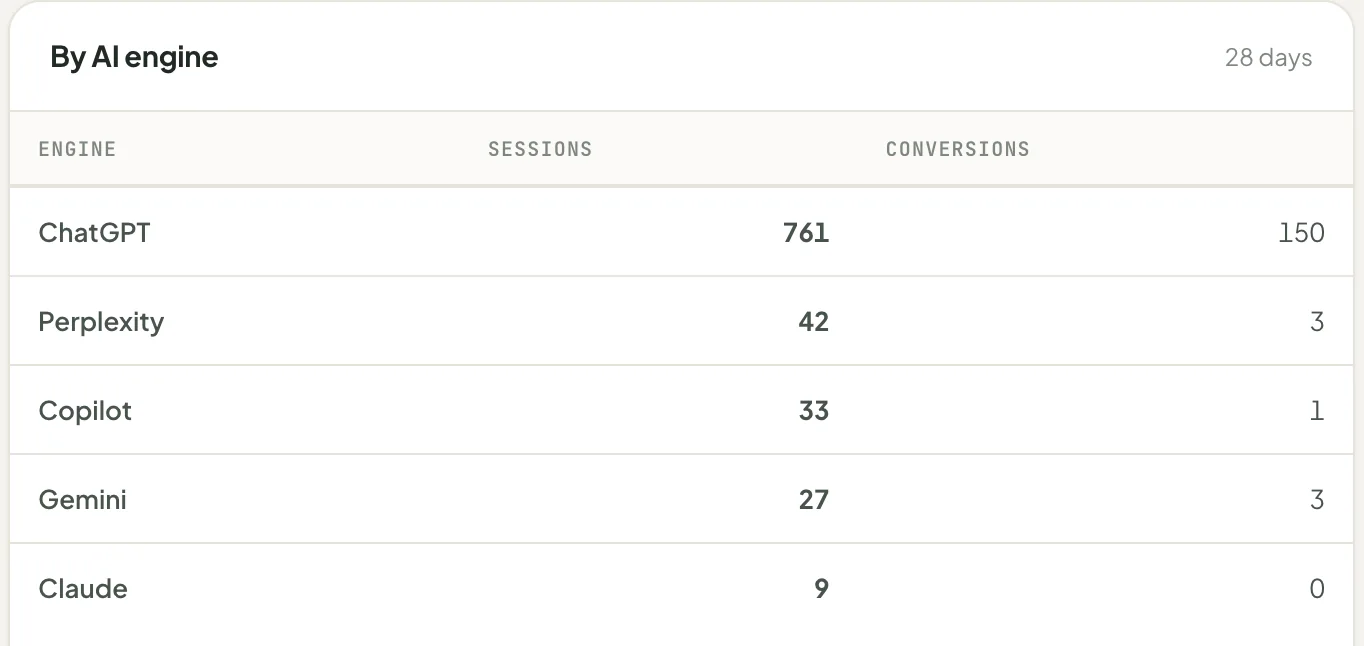
Frequently asked questions
Do ChatGPT Ads work for multi-specialty hospitals or only single-specialty chains?
Multi-specialty hospitals see the strongest results because a single conversational session often touches two or three departments — cardiology, orthopaedics, oncology — inside one enquiry journey. ICG structures campaigns around department-level intent buckets rather than one hospital-wide bucket, so a multi-specialty group captures more distinct conversation threads than a single-specialty chain of the same bed size.
How is a hospital ChatGPT Ads lead different from a Google Ads lead?
A ChatGPT Ads lead arrives after a multi-turn conversation where the person has already stated symptoms, city, insurance status and urgency to the assistant before your ad or citation ever appears. A Google Ads lead arrives off a single keyword click with none of that context. Hospital call centres report ChatGPT-Ads-sourced enquiries convert to admission enquiries at a noticeably higher rate because the qualification already happened inside the conversation.
Can we run ChatGPT Ads for a single super-specialty unit inside a larger hospital?
Yes. ICG regularly runs a unit-level campaign — for example a cardiac sciences institute or a bone and joint centre — as a standalone bucket inside the hospital's broader ChatGPT Ads account, with its own landing page, its own doctor citations and its own CPQL tracking, separate from the hospital's general enquiry bucket.
Does ChatGPT Ads help with multi-city hospital rollouts?
Yes, and this is where hospital chains see the fastest payback. A city-tagged intent bucket lets a chain running campuses in Delhi NCR, Mumbai and Bengaluru see, city by city, which conversational queries are converting into admission enquiries, so marketing budget can be reallocated toward the campus with the strongest conversation-completion rate within weeks rather than quarters.
Is NABH accreditation something ChatGPT surfaces in its answers?
Conversational assistants weight cited, verifiable credentials heavily when constructing an answer about hospital choice, and NABH accreditation is one of the strongest signals in that category for Indian hospitals. ICG's landing pages and citation feeds foreground NABH status, department-level certifications and empanelment details because these are exactly the facts a conversational engine looks to confirm before naming a hospital in a response.
How does ICG handle compliance for hospital ad copy under NMC and ASCI rules?
Every hospital ChatGPT Ads campaign runs through a compliance layer built against NMC Section 6 and ASCI Chapter III before it goes live — no outcome claims, no comparative superiority claims, no individual doctor endorsement copy, and every clinical statement traceable to a verifiable source. DPDP 2023 governs how enquiry data collected through the conversation is stored and consented.
What does a hospital pay for ChatGPT Ads management with ICG?
ICG retainers start from Rs 20,000 a month and are custom-scoped, with Goals-Driven engagements and Performance-Linked Payout Models available. Hospital groups typically need a larger scope, reflecting the higher bucket count and multi-department, multi-city structure compared to a single clinic or diagnostic lab; a lighter entry scope suits a single-campus hospital testing the channel before a group-wide rollout.
How fast can a hospital group expect results from ChatGPT Ads?
ICG's standard first-90-days framework has intent buckets live and reporting by week three, department-level CPQL benchmarks established by week six, and a validated city-by-city and department-by-department reallocation model by day ninety. Full payback timelines vary by department mix, but hospitals typically see their first admission-linked enquiry inside the first 30 days.
Does ChatGPT Ads replace a hospital's existing Google and Meta Ads spend?
No. ChatGPT Ads sits alongside Google Ads and Meta Ads as a third channel inside the paid stack, not a replacement. ICG typically recommends hospitals hold ChatGPT Ads at 15-25% of total digital acquisition spend in the first year while the conversation-completion attribution model matures, then rebalance based on measured CPQL.
How does ICG track which doctor or department a ChatGPT Ads lead is interested in?
Each intent bucket is tagged to a department and, where relevant, a named doctor bench, so the conversation-completion event that fires when a lead is qualified carries that department tag into the hospital's CRM. Group Marketing Directors get a monthly report broken down by department, city and campus rather than a single blended lead count.
