


Clinics ChatGPT Ads India — paid conversational search built for clinics that need real leads
Single-location clinics, small chains and specialty practices lose patients to whichever clinic answers first inside a conversation — not whichever one ranks first on a results page. ICG runs a healthcare-only ChatGPT Ads practice for clinics, built for local intent capture, appointment velocity and doctor-brand authority, compliance-clean from the first ad.
Why clinics need ChatGPT Ads specifically
A clinic's demand pattern is different from a hospital's or a diagnostic chain's. Patients rarely research a clinic the way they research a hospital admission — there's no insurance desk to call, no multi-department decision tree, no thirty-day consideration cycle. A clinic decision is usually made in a single sitting, often on a phone, often while the person is already mid-conversation with an AI assistant about a symptom, a cosmetic concern, or a specific procedure. That single-sitting decision window is exactly where ChatGPT Ads sits, and it's exactly where most clinics in India currently have zero paid presence.
Google Ads still captures the patient who has already decided to search "dermatology clinic near me." But a growing share of clinic-bound patients now start earlier — asking ChatGPT to explain a symptom, compare treatment options, or recommend what kind of specialist to see — and only search Google after that conversation has already shaped their shortlist. If a clinic's brand, doctor and offering aren't present inside that earlier conversation, the clinic loses the shortlist slot before the Google search ever happens. ChatGPT Ads is how ICG puts a clinic inside that earlier, higher-leverage moment.
The commercial case is stronger for clinics than for almost any other healthcare vertical because the sales cycle is short and the average order value per lead is knowable. A dermatology clinic knows its average revenue per new patient. A dental clinic knows its case acceptance rate. That means ChatGPT Ads spend for a clinic can be tied to a hard cost-per-appointment number within the first reporting cycle, not a six-month brand-lift argument. Clinics are, in ICG's experience, the fastest vertical to show a measurable payback on this channel.
There's also a straightforward local-intent advantage. Clinic-bound conversational queries are almost always geographically anchored — a neighbourhood, a landmark, a pin code, a commute corridor — which narrows the auction, lowers the effective cost-per-conversation, and means a well-built clinic campaign on ChatGPT Ads competes against a much smaller, much less sophisticated pool of bidders than a hospital or a national diagnostics brand does on the same channel. For clinics, that's the single biggest reason to move now rather than wait for the channel to mature.
Intent stages a clinics buyer moves through in conversational search
Clinic decisions inside a ChatGPT conversation move through four recognisable stages, and ICG structures every campaign around where a query sits in that sequence rather than treating all clinic-related conversation as one undifferentiated pool.
- Symptom or concern exploration — "why does my jaw click when I chew," "is it normal to have acne at 32," "what causes recurring UTIs." This stage is cheap to bid on and rarely converts directly, but it's where brand and doctor-authority mentions plant the first seed of consideration.
- Treatment-option comparison — "should I get braces or aligners," "is laser hair removal safe for oily skin," "what's the difference between a filling and a root canal." This is where a clinic's specific point of view, not just its existence, starts to matter — and where ICG's ad copy leans hardest on named doctor expertise.
- Provider shortlisting — "which clinic in [area] does [procedure] well," "good dermatologist near [landmark] for pigmentation." This is the highest-value stage for a clinic and the one where bids climb sharply, because the user is one or two exchanges away from booking.
- Booking-ready confirmation — "what should I ask before booking a [procedure] consultation," "how much does [procedure] cost at a clinic in [city]." At this stage the user typically wants a fast, factual answer and a clear next action — this is where landing-page speed and clarity decide whether the lead converts or drops.
Most clinics that try paid conversational search on their own bid only on the last stage, because it looks the most "sales-ready." ICG deliberately holds a small, low-cost presence in stages one and two as well, because a clinic that only shows up at the shortlisting moment is competing purely on price and proximity — a clinic that has already been present earlier in the conversation gets recalled by name, which changes the entire economics of the bid.
This staged approach also solves a specific India problem: in many tier-2 and tier-3 cities, the shortlisting stage has almost no organised paid competition yet, so a clinic that enters early captures a disproportionate share of conversation-completions for a modest spend. That whitespace closes as more clinics discover the channel, which is the underlying reason ICG frames the current window as 90 to 180 days rather than indefinite.
Campaign structure ICG uses for clinics
ICG does not run a single undifferentiated ChatGPT Ads campaign for a clinic. Every clinic account is built around three to six named intent buckets, each with its own bid strategy, its own compliance-reviewed ad copy, and its own landing-page variant. The bucket count depends on the clinic's specialty breadth and location count — a single-specialty, single-location dermatology clinic typically runs three buckets; a multi-specialty clinic or a small chain runs five to six.
| Intent bucket | Example query | Typical CPC band (₹) |
|---|---|---|
| Symptom exploration | "why does my scalp itch and flake constantly" | 18–45 |
| Treatment comparison | "chemical peel vs laser for acne scars, which is better" | 40–90 |
| Provider shortlisting (local) | "best skin clinic in HSR Layout for pigmentation treatment" | 120–260 |
| Doctor-specific / branded recall | "clinics with an experienced cosmetic dermatologist near [area]" | 150–320 |
| Cost and booking-ready | "how much does a dental root canal cost at a clinic near me" | 90–180 |
| Second-opinion / dissatisfaction | "my last clinic didn't fix my acne, who else should I see" | 100–220 |
The CPC spread within each bucket reflects specialty and city, not a fixed rate card — an aesthetic dermatology bucket in a metro runs materially higher than a general dentistry bucket in a tier-2 city, because the auction still prices on conversation-stage first and category economics second. ICG rebalances bucket-level bids monthly against actual conversation-completion data rather than leaving them static after launch.
Bucket-level structuring also protects a clinic's budget from a specific failure mode ICG has seen when clinics or generalist agencies self-serve this channel: spending the full budget on high-CPC shortlisting queries, running out of budget before the booking-ready stage, and losing the leads that were actually closest to converting. ICG's default allocation weights roughly 15% to exploration, 25% to comparison, 35% to shortlisting, and 25% to cost/booking-ready — adjusted per clinic after the first month of data.
Every bucket sits inside the same governance framework ICG applies across its full healthcare ChatGPT Ads practice, meaning a single-location clinic gets the same compliance rigour and reporting cadence as a large hospital account, just scaled to a smaller bucket count and a tighter local radius.
Compliance overlays specific to clinics
Clinic advertising in India sits under tighter, more literally enforced rules than most categories, and ChatGPT Ads doesn't relax any of them — if anything, conversational ad copy needs more discipline than a static banner, because a follow-up question inside the same conversation can push an AI-generated response toward a claim the clinic never actually made. ICG reviews every bucket's ad copy and every follow-up-response guardrail against four frameworks before a campaign goes live.
NMC Section 6 governs what a clinic can say about outcomes and about the treating doctor. No campaign ICG runs implies a guaranteed result, a comparative "best in the city" claim, or a before/after outcome tied to a named doctor without the required disclaimers. This matters more on ChatGPT Ads than on search, because the conversational format tempts advertisers to write reassuring, outcome-sounding language that reads naturally in a chat but crosses the same line a print ad would.
ASCI Chapter III requires clear disclosure that a response is sponsored and prohibits misleading claims about efficacy, safety or comparative superiority. ICG's ad copy templates for clinics are pre-cleared against this chapter before a single rupee is spent, and every new bucket added mid-campaign goes through the same check rather than being fast-tracked.
DPDP 2023 shapes every landing page a clinic campaign points to — explicit consent language on the lead form, a stated purpose for data collection, and no pre-ticked marketing-consent boxes. For clinics collecting health-adjacent information (symptom descriptions, procedure interest), ICG treats the consent language as non-negotiable rather than boilerplate.
ART Act 2021 applies additionally to fertility-adjacent clinics — gynaecology practices offering IUI or referring for IVF-adjacent services — where specific restrictions govern how success rates and treatment claims can be advertised. AYUSH-registered clinics running ayurveda, homeopathy or wellness-adjacent services get a fifth overlay checked against AYUSH advertising norms. No clinic campaign goes live without this review, and ICG's monthly report includes a compliance log alongside the performance numbers.
Landing-page pattern that converts
A ChatGPT Ads click or citation for a clinic behaves differently from a Google Ads click. The user arrives having already had part of the decision conversation with the AI — they don't need to be re-sold, they need to be confirmed. ICG's clinic landing pages are built short, factual and machine-scannable, both because that converts a human who's already 70% decided, and because ChatGPT's own citation mechanics favour pages it can parse and quote accurately when a user asks a follow-up question about the clinic later in the same session.
The pattern ICG uses for clinic landing pages keeps five elements above the fold: the specific procedure or condition the page addresses (not a generic "our services" heading), the treating doctor's name and credentials, the clinic's exact location with a distance-relevant landmark, a single clear next action, and a compliance-cleared line about what the clinic can and cannot promise. Everything else — full bios, photo galleries, broader service menus — sits below, available but not competing for attention.
The single clear next action is deliberately narrow. A clinic landing page built for a shortlisting-stage or booking-ready bucket offers one form and one WhatsApp option, not a phone number, a form, a chatbot and a "download our brochure" link competing on the same screen. ICG has found that clinics running multiple competing CTAs on the same landing page lose 20-30% of otherwise-qualified conversation-attributed traffic to indecision at the point of conversion.
Because attribution runs on conversation-completion, not just click-through, the landing page also needs to close the loop the AI conversation opened — if the user's original question was about pigmentation treatment cost, the page needs to answer that question in the first two lines, not bury it under a general clinic introduction. ICG writes a distinct landing-page variant per intent bucket for exactly this reason, rather than routing every bucket to one shared clinic homepage.
Pricing
Retainers from ₹20,000/month · Custom-scoped per engagement.
The first 90 days for a clinic
Weeks one and two are compliance and setup — bucket definition against the clinic's actual specialty mix, ad copy drafted and cleared against NMC Section 6 and ASCI Chapter III, DPDP-compliant landing pages built per bucket, and the AI Assistant channel wired correctly in GA4 so conversation-completions are captured from day one rather than discovered missing in month two.
Weeks three through six are where the first qualified, conversation-attributed leads typically start arriving, and where ICG holds bids deliberately conservative in the shortlisting and booking-ready buckets while exploration and comparison buckets build the recall base. Cost-per-conversation is volatile in this window and shouldn't be judged against a steady-state number yet.
By week eight to twelve, bucket-level bid data has matured enough for ICG to rebalance spend toward whichever buckets are actually producing conversation-completions at an acceptable cost, and the clinic gets its first full-cycle report showing cost-per-appointment against the buckets, not just against the campaign as a whole. This is also the point at which ICG makes a tier recommendation — up, sideways, or hold — based on data rather than a renewal-date default.

Get your clinic into the ChatGPT Ads whitespace before it closes
No agency in India runs a dedicated, compliance-checked ChatGPT Ads practice for clinics yet. ICG does, and the 90–180 day first-mover window is already narrowing.
ICG's healthcare ChatGPT Ads practice operates within NMC Section 6, ASCI Chapter III, DPDP 2023, ART Act 2021 and AYUSH advertising norms. See the full ChatGPT Ads for Healthcare pillar for hospital, diagnostics and pharma variants.
ChatGPT Ads and LLM marketing in the nine-stage patient journey
- 0Foundations
- 1Demand gen
- 2Capture
- 3Lead quality
- 4Lead mgmt
- 5Scheduling
- 6Show-up
- 7Conversion
- 8Retention
It works in demand generation, inside the AI assistants patients now ask before they search. SIE tracks the sessions and enquiries those AI engines send. Our own software runs the work, and every stage is reported against a monthly target on Ichelon Agency OS.
See all nine stages and the tool behind each one →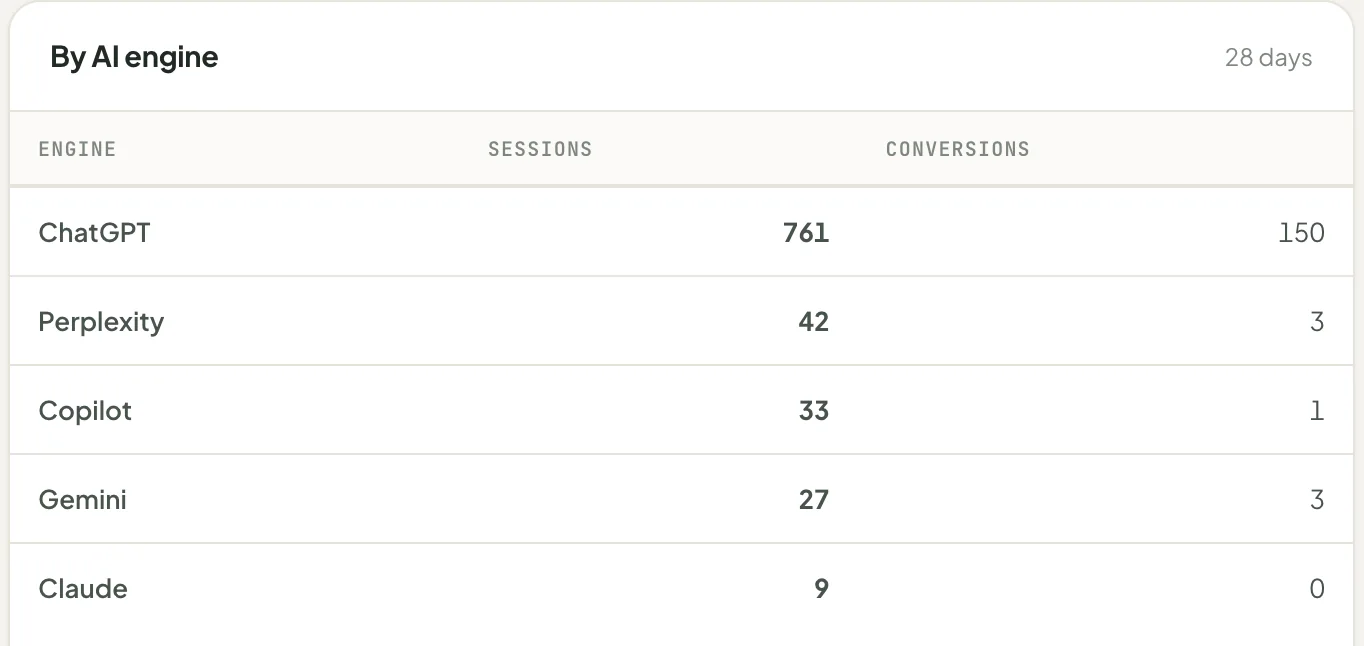
Frequently asked questions
What is ChatGPT Ads for clinics and how is it different from Google Ads?
ChatGPT Ads places a sponsored response or citation inside a live ChatGPT conversation when a user is actively exploring or deciding on a clinic visit, rather than matching a typed keyword. For clinics, this means the ad appears while someone is asking things like 'best dermatology clinic near me for acne scars' as a follow-up question, not as a search-results link. Google Ads still owns high-volume keyword intent; ChatGPT Ads owns the conversational, multi-turn intent that increasingly precedes a Google search or a direct call.
Is ChatGPT Ads available for clinics in India right now?
Yes. ChatGPT Ads rolled out to India in mid-2026 through OpenAI's ad partner network, and healthcare inclusion is live but under-adopted. Almost no India-based agency runs a dedicated, compliance-checked clinic practice on the channel today, which is the exact window ICG's clinics practice is built to use.
How much does ChatGPT Ads management cost for a single-location clinic?
ICG's engagement for a single-location clinic begins at ₹20,000/month starting (inclusive of 18% GST), covering one to two intent buckets, compliance-reviewed ad copy, a conversational landing page and monthly conversation-attribution reporting. Ad spend is separate and is set based on the clinic's city, specialty and existing lead volume.
Will ChatGPT Ads work for a specialty clinic with a narrow catchment area?
Specialty clinics — dermatology, dental, fertility-adjacent gynaecology, orthopaedics, aesthetics — tend to perform well because conversational queries are naturally specific ('which clinic in Indiranagar does laser hair removal safely for dark skin'), which lets ICG bid tightly on late-stage intent instead of paying for broad, low-fit traffic.
How is a lead attributed and reported on ChatGPT Ads?
ChatGPT Ads attributes on conversation-completion events, not clicks — a lead is credited when a user completes an intent journey inside or via the conversation, such as requesting a callback or reaching the booking page and submitting a form. In Google Analytics 4 this surfaces under the 'AI Assistant' channel; across ICG's healthcare accounts this channel shows a 10.49% key-event rate, roughly twice organic search and seventeen times direct traffic.
What compliance rules apply to clinic ad copy on ChatGPT Ads?
Every line of ad copy and every landing page ICG builds for a clinic is checked against NMC Section 6 (no result guarantees, no comparative superiority claims, no before/after implied outcomes for a named doctor), ASCI Chapter III (no misleading claims, mandatory disclosure of paid promotion), and DPDP 2023 (explicit consent language on every lead-capture form). ART Act 2021 clauses apply additionally for fertility-adjacent clinics.
How long before a clinic sees appointment leads from ChatGPT Ads?
Most clinics on ICG's Starter and engagements see qualified conversation-attributed leads within the first two to three weeks of a compliance-cleared campaign going live, with cost-per-conversation stabilising by week six as the bucket-level bid data matures.
Can a small clinic chain run one ChatGPT Ads campaign across multiple locations?
Yes, but ICG structures it as location-tagged intent buckets rather than one blended campaign, because conversational queries usually name a neighbourhood or landmark. A three-to-six-branch chain typically sits on the engagement, with each location getting its own landing-page variant and its own conversation-attribution line in the monthly report.
Do ChatGPT Ads replace Google Ads or Meta Ads for a clinic?
No. ICG runs ChatGPT Ads as an addition inside the paid stack alongside Google Ads and Meta Ads, not a replacement. Google Ads still captures high-volume, bottom-funnel keyword searches; Meta Ads still builds top-of-funnel awareness; ChatGPT Ads captures the growing share of research-stage and mid-funnel conversational intent that the other two channels cannot reach.
What does the landing page for a clinic ChatGPT Ads campaign need to look like?
It needs to be machine-scannable — short, factual, clearly structured with the doctor's credentials, the specific procedure or condition addressed, clinic location and a single obvious next step — because ChatGPT's own citation and follow-up mechanics favour pages it can parse and quote accurately rather than long marketing copy.
Who runs ICG's ChatGPT Ads practice for clinics?
ICG's clinics and hospitals paid-search practice, including ChatGPT Ads, is led on the growth and business side by Rohit Gupta. Every campaign for a clinic is compliance-reviewed before it goes live and reported monthly against conversation-attribution data, not just click volume.
