


Oncology centres ChatGPT Ads India — capture patient intent inside the conversational search that pre-consultation happens on
Cancer patients and caregivers no longer start with a Google search box. A biopsy report comes back, and within minutes they are asking a conversational assistant what the diagnosis means, what treatment options exist and what it might cost — long before they call a hospital. ICG runs a dedicated ChatGPT Ads practice for medical, radiation and surgical oncology centres across India, built around that behaviour shift, and kept compliance-clean under NMC, ASCI and DPDP throughout.
Conversational-search behaviour specific to oncology centres patients in 2026
The oncology patient journey is unusually well suited to conversational search because the entry point is almost always a moment of confusion rather than a moment of clarity. A patient receives a histopathology report full of terms they have never seen before, or a radiologist's staging note, or a first oncologist's proposed protocol, and their immediate instinct is not to type three keywords into a search bar — it is to paste the report or describe it in full sentences and ask an assistant to explain it. This is precisely the interaction pattern ChatGPT and similar tools are built for, and it is precisely the moment a hospital's paid search strategy has historically had no way to reach.
What follows that first explanatory exchange is a multi-turn conversation, not a single query. A caregiver researching a parent's lung cancer diagnosis will ask what stage 3 means, then ask what immunotherapy is and whether it applies to this case, then ask what the treatment typically costs in India, then ask how to find a good oncology team nearby. Each of those turns is a distinct intent signal, and a hospital that is only bidding on the keyword equivalent of the last turn is missing the four conversations that built the trust to get there. ChatGPT Ads bid across this entire arc, which is structurally different from a keyword auction that only fires at the moment of search.
Caregivers, not only patients, drive a large share of this volume. In our data across oncology-adjacent healthcare clients, a substantial portion of conversational research sessions around a cancer diagnosis are conducted by an adult child or spouse rather than the patient themselves — often at night, often across multiple sessions over several days, and often comparing what one hospital's assistant-cited page says against another's. A landing page that reads as generic marketing copy loses this comparison; one that reads as a clear, factual explanation of protocols, team credentials and next steps wins it.
The second-opinion pattern is the clearest evidence of this shift. Patients who already have a diagnosis and a proposed treatment plan increasingly use conversational search to sense-check it before committing — asking whether the proposed chemotherapy regimen is standard for their cancer type and stage, or whether a competing centre's immunotherapy protocol is worth exploring. This is a caregiver and patient population that has already accepted the need for treatment; the only decision left is which centre and which oncology team, and that is a decision a well-positioned conversational ad and a well-built landing page can genuinely influence.
Intent bucket map — stages, example queries and CPC bands
Oncology conversational search does not behave as a single funnel; it behaves as five distinct intent buckets, each with a different cost profile in the ChatGPT Ads auction, because the auction prices conversation-stage rather than keyword volume. Structuring an account around these buckets — rather than around a flat list of oncology keywords — is what separates a campaign that spends efficiently from one that burns budget on early-stage exploration traffic that was never going to convert this quarter.
| Stage | Example conversational query | Typical CPC band |
|---|---|---|
| 1. Diagnosis comprehension | "What does stage 2 invasive ductal carcinoma mean" / "Explain my biopsy report to me" | Rs 8–18 (early exploration, high volume) |
| 2. Treatment-option research | "What is immunotherapy and is it right for lung cancer" / "Chemotherapy vs targeted therapy for breast cancer" | Rs 20–45 |
| 3. Cost and package clarity | "Cancer treatment cost in India for colon cancer" / "How much does 6 cycles of chemotherapy cost" | Rs 35–70 |
| 4. Second opinion / provider comparison | "Second opinion for oncology treatment plan near me" / "Best hospital for radiation oncology in [city]" | Rs 90–160 |
| 5. Ready-to-consult | "Book consultation with oncologist for lung cancer" / "Oncology centre with immunotherapy near me, appointment" | Rs 140–260 |
The gap between stage 1 and stage 5 pricing — roughly fifteen to twenty times — is the single most important planning number for an oncology CMO evaluating this channel. It means a naive account structure that lets the auction find its own level, without deliberate budget allocation across stages, will drift the majority of spend toward stage 1 and 2 queries simply because they are cheaper and far more numerous. That volume matters for brand presence and long-term nurture, but it will not fill an oncology OPD calendar on its own. ICG's account structure deliberately reserves 55 to 65% of oncology budget for stage 3 through 5, with the remaining share funding stage 1 and 2 for pipeline building and remarketing eligibility.
Radiation oncology and surgical oncology queries cluster more heavily in stages 3 through 5 than medical oncology does, because a patient asking about stereotactic radiosurgery or tumour resection has typically already passed through the comprehension and options-research stages with their diagnosing physician. This means a radiation or surgical oncology campaign can often run a leaner, more expensive-per-click but higher-converting structure, while a medical oncology campaign — which owns the earliest and broadest part of the funnel, including chemotherapy and immunotherapy exploration — needs deeper stage 1 and 2 coverage to build the audience that later converts on stage 4 and 5 queries.
Compliance overlays for oncology conversational advertising
Oncology sits at the highest compliance-risk end of India's healthcare advertising spectrum, and every asset ICG builds for this vertical is checked against four overlays before it goes live. NMC Section 6 prohibits solicitation of patients and restricts advertising that implies guaranteed outcomes — a real risk in oncology copy, where the temptation to reference survival rates or treatment success percentages is strong and the regulatory line is unforgiving. ICG's copy discipline for oncology never states outcome statistics as a promise; it states protocol availability, team credentials and facility capability as facts, and leaves outcome discussion to the clinical consultation.
ASCI Chapter III governs substantiation of health claims, and oncology claims are scrutinised more closely than most categories because the stakes for a misled patient are severe. A claim that a centre offers "advanced immunotherapy" must be substantiable — the specific therapies, the specific approval status, the specific patient-eligibility criteria — rather than used as a generic marketing adjective. ICG's compliance review checks every therapy-name reference in oncology ad copy and landing pages against what the centre can actually document before publication.
DPDP Act 2023 governs how patient data collected through an oncology landing page's enquiry form is handled, and this carries particular weight in oncology because the data being submitted is not just contact information — it is often a description of a cancer diagnosis, a stage, a treatment history. ICG builds oncology landing pages with explicit consent language at the point of form submission and ensures the data-handling disclosure matches what the hospital's actual CRM and data-retention practice is, not a generic template.
The oncology-specific overlay beyond these three general rules is around cost and access framing. Because cancer treatment cost is one of the single highest-anxiety, highest-search-volume topics in this category, ad copy and landing pages that reference cost must do so as factual package information — inclusions, typical ranges, what varies by stage and protocol — never as a comparative claim against another named centre, and never framed in a way that could be read as steering a treatment decision toward a cheaper option regardless of clinical appropriateness. This is not only a compliance requirement; it is also what makes the landing page trustworthy enough for a frightened caregiver to act on.
The landing-page pattern that converts oncology ChatGPT Ads traffic
A conversational assistant does not send a click the way a search engine does — it cites a source and, when the user follows through, delivers them to a page that the assistant has already effectively summarised on the user's behalf. This means the landing page's job is not to persuade from a cold start; it is to confirm and extend what the assistant has already told the user, quickly and without friction. A dense, promotional hospital department page — built for a scrolling desktop visitor with time to browse — routinely underperforms here, because it forces the user to re-derive information the assistant already gave them.
ICG's oncology landing-page pattern opens with a short, factual answer block addressing the specific query cluster the ad was served against — for example, a cost-and-package page opens with a plain-language range and inclusion list for the relevant cancer type and treatment modality, stated in the first 100 words, before any hospital-credentialing content appears. This mirrors how the assistant itself would summarise the page if asked to cite it again, which matters because these pages are frequently re-cited in follow-up conversation turns after the first visit.
Below the answer block, the page carries oncology team credentials — named consultants, sub-speciality, years of oncology-specific experience, tumour board structure — because second-opinion and ready-to-consult traffic converts on team credibility more than on facility photography. A short, structured FAQ section addressing the two or three most common follow-up questions for that query cluster (does this apply to my stage, is a second opinion free, how soon can I get an appointment) closes the page, again in the short, scannable format that both human readers and conversational assistants parse well.
The conversion action itself is kept to a single low-friction step — a callback request form with three fields, not a multi-step patient-intake form — because oncology enquiries at this stage of the journey are emotionally loaded, and every additional form field is a point where a caregiver abandons rather than completes. ICG tracks conversation-completion and form-submission events separately in GA4 under the AI Assistant channel, which lets a hospital see not just how many people arrived from ChatGPT Ads but how many completed the intent journey the ad was built to serve.
Pricing
Retainers from ₹20,000/month · Custom-scoped per engagement.
90-day expected outcomes
The first 30 days are account-build: intent-bucket structuring, compliance-cleared ad copy across all five stages, and the machine-scannable landing pages described above, built or adapted for each query cluster the centre wants to compete in. This phase produces limited lead volume by design, because the auction needs conversation history to price stages correctly and the compliance review needs to run before anything scales.
Days 30 to 60 typically show rising engagement in stage 1 through 3 buckets first, since these have higher volume and lower CPCs, followed by the first meaningful cluster of stage 4 and 5 conversions as remarketing eligibility builds from the earlier-stage audience. This is also when the first clean read of the AI Assistant channel's conversion rate against a hospital's own baseline becomes available in GA4, letting budget be reallocated toward whichever oncology sub-speciality is producing the strongest cost-per-qualified-lead.
By day 90, a well-run oncology ChatGPT Ads account should show a stable, repeatable contribution to qualified enquiry volume, with cost-per-qualified-lead data solid enough to justify the next quarter's budget decision — whether that means holding tier, scaling up, or narrowing focus to the highest-performing sub-speciality. Given the 90 to 180-day whitespace window before more hospital groups enter this channel in India, centres that reach a stable 90-day baseline now are positioned to hold lower acquisition costs through the period when the auction is expected to tighten.

ChatGPT Ads and LLM marketing in the nine-stage patient journey
- 0Foundations
- 1Demand gen
- 2Capture
- 3Lead quality
- 4Lead mgmt
- 5Scheduling
- 6Show-up
- 7Conversion
- 8Retention
It works in demand generation, inside the AI assistants patients now ask before they search. SIE tracks the sessions and enquiries those AI engines send. Our own software runs the work, and every stage is reported against a monthly target on Ichelon Agency OS.
See all nine stages and the tool behind each one →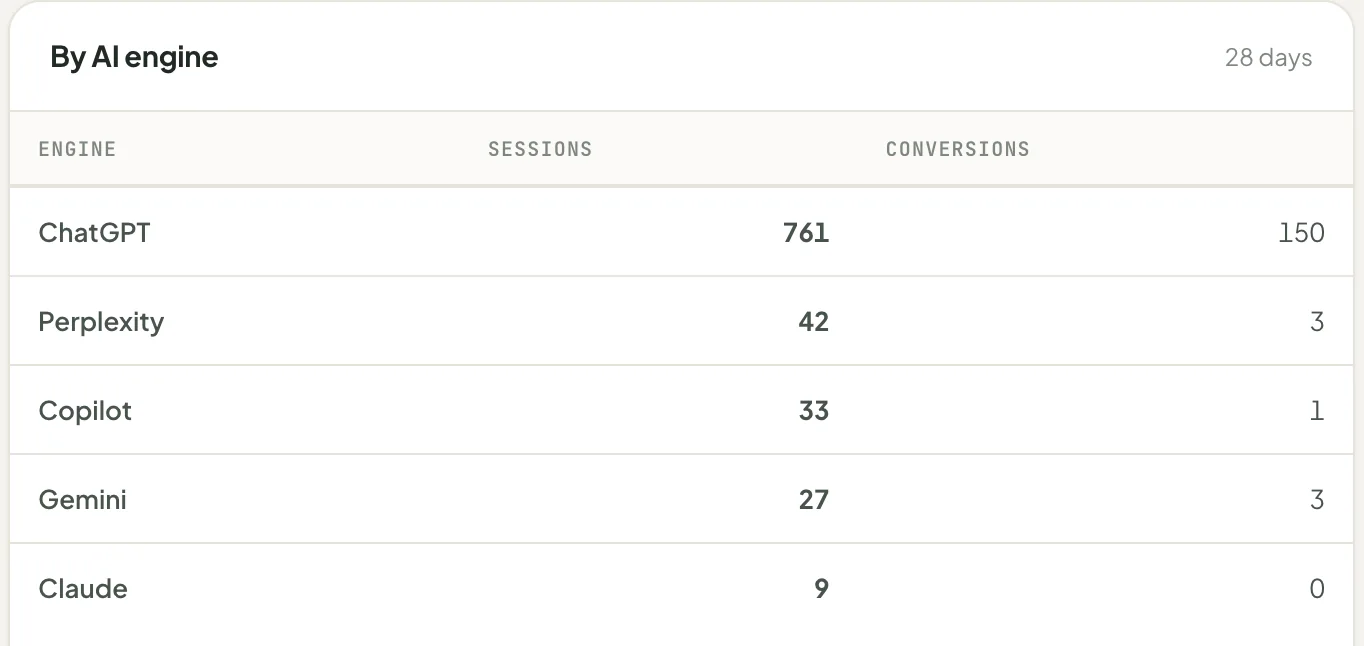
Frequently asked questions
Do oncology patients actually use ChatGPT to research cancer treatment in India?
Yes. Our GA4 data across healthcare clients shows the AI Assistant channel — traffic arriving via ChatGPT, Perplexity and similar conversational tools — converting at 10.49%, roughly double organic search and seventeen times direct traffic. For oncology specifically, patients and caregivers use conversational search heavily in the early diagnosis-shock phase, when they are processing a biopsy report or staging result and want a plain-language explanation before they are ready to call a hospital.
Is it legal and compliant to run ChatGPT Ads for a cancer hospital in India?
Yes, provided the ad copy and landing pages are built to the same regulatory bar as any other healthcare advertising in India — NMC Section 6 restrictions on outcome claims and doctor solicitation, ASCI Chapter III on health claims substantiation, and DPDP Act 2023 on how patient data submitted through forms is collected and stored. ICG's oncology ChatGPT Ads practice writes every asset against this compliance overlay before it goes live.
What is the difference between ChatGPT Ads and Google Ads for an oncology centre?
Google Ads bids on keywords typed into a search box. ChatGPT Ads bid on conversation stage — where the user is in a multi-turn dialogue about their diagnosis, options and next steps. A user asking 'what is immunotherapy' triggers a cheap early-exploration placement; the same user three turns later asking 'best oncology hospital near me for lung cancer second opinion' triggers a late-intent placement priced six to twelve times higher. The two channels run in parallel in the paid stack, not as substitutes.
How is a lead attributed on ChatGPT Ads for oncology?
ChatGPT Ads attribution runs on conversation-completion events rather than clicks. A lead is credited when a user completes their intent journey inside the assistant — for example, requesting a callback or clicking through to a landing page and submitting an enquiry — not simply when an ad impression is served. This means reporting looks different from a standard Google Ads dashboard and needs to be read alongside GA4's AI Assistant channel data.
Can ChatGPT Ads mention cancer treatment costs directly?
Ad copy and landing pages can reference cost ranges and package structures factually, the same way a hospital's own website can, but cannot make comparative cost claims against named competitors, cannot promise outcomes tied to price, and cannot use cost as a substitute for medical advice. ICG builds cost-transparency landing pages that state package inclusions clearly while keeping every claim inside NMC and ASCI limits.
Which oncology sub-specialities does this apply to?
Medical oncology (chemotherapy, immunotherapy, targeted therapy), radiation oncology (external beam, brachytherapy, stereotactic radiosurgery), and surgical oncology (tumour resection, reconstructive and minimally invasive cancer surgery) each have distinct query patterns and are mapped separately inside the intent-bucket framework, so a comprehensive cancer centre can run all three streams under one account structure.
What does the second-opinion query segment look like for oncology?
Second-opinion queries are a distinct, high-value bucket — patients who already have a diagnosis and treatment plan from one hospital and are using conversational search to sense-check it. These queries convert at some of the highest rates in oncology because the patient has already accepted they need treatment; the decision left is which centre and which oncologist team, which is precisely the decision a well-built landing page can settle.
How much does ChatGPT Ads management cost for an oncology centre in India?
ICG scopes each engagement individually. for oncology centres: Starter at ₹20,000/month starting for a single-speciality unit testing the channel, Growth at ₹20,000/month starting for a multi-modality cancer centre running medical, radiation and surgical streams together, Scale at ₹20,000/month starting for a comprehensive cancer hospital with multiple locations, and Enterprise at ₹20,000/month starting for a hospital group running oncology across several cities. All figures are inclusive of 18% GST and cover platform management, compliance review and monthly conversation-attribution reporting; ad spend is separate.
How long before an oncology centre sees results from ChatGPT Ads?
The first 30 days are spent on account structure, compliance-cleared creative and landing-page build. Conversation volume and early-stage engagement typically build through days 30 to 60. By day 90, a well-run account should show a stable AI Assistant channel contribution to qualified enquiries, measurable against the GA4 conversion-rate benchmark, with cost-per-qualified-lead data solid enough to plan the next quarter's spend allocation.
Do we need a dedicated landing page for ChatGPT Ads or can we use our existing oncology page?
A dedicated, machine-scannable landing page performs significantly better. ChatGPT and similar assistants cite and route to pages that are short, factually structured and easy to parse — a hospital's general oncology department page, built for a human scrolling on a desktop, is usually too dense and too promotional in tone to serve well as an ad destination. ICG builds a separate landing-page pattern specifically for this channel.
Is there a first-mover advantage for oncology centres on ChatGPT Ads in India?
Yes. As of late 2026, no agency in India has built a dedicated healthcare vertical practice for ChatGPT Ads, and very few oncology centres have claimed placement in this inventory. That whitespace is estimated to hold for roughly 90 to 180 days before the channel's CPCs normalise upward as more hospital groups enter. Early entrants lock in lower acquisition costs and stronger account history.
Does ICG work with both standalone oncology centres and hospital-group cancer departments?
Yes. The tier structure is built to fit both — a standalone comprehensive cancer centre typically sits at Growth or Scale, while a single oncology department inside a larger multi-speciality hospital group often starts at Starter or Growth and scales as the conversation-attribution data proves the channel's contribution to qualified enquiry volume.
