


IVF and fertility centres ChatGPT Ads India — capture patient intent inside the conversational search that pre-consultation happens on
Fertility patients research longer, harder and more privately than almost any other healthcare category, and increasingly that research happens inside a ChatGPT conversation before a single clinic name is typed into Google. ICG runs a healthcare-only ChatGPT Ads practice for IVF and fertility centres, built around success-rate research, cost-breakdown comparison and second-opinion intent, ART Act 2021 compliant from the first ad.
Conversational-search behaviour specific to IVF and fertility patients in 2026
No healthcare category researches the way a fertility patient does. A cardiac patient searches for a specialist once symptoms force the issue. An IVF patient often spends six to eighteen months in an unhurried, emotionally loaded research phase before ever booking a first consultation — reading about protocols, comparing success-rate claims across clinics, working out what a "package price" actually excludes, and increasingly, asking an AI assistant the questions they're too anxious or too embarrassed to type into Google where the results page feels public and clinical. ChatGPT's conversational format removes that friction, and ICG's account data shows fertility patients running noticeably longer, more detailed AI Assistant sessions than almost any other vertical it manages.
The specific pattern is a slow build rather than a single query. A patient typically starts with a diagnostic question — "why haven't we conceived after a year of trying," "what does a low AMH result mean" — moves into treatment-literacy territory over several follow-up turns, and only several sessions later starts asking centre-comparison and cost questions. A fertility centre that isn't present anywhere in that multi-week arc has no way to be recalled by name when the patient finally reaches the shortlisting stage, because the patient's mental map of "which clinics exist" was built entirely inside conversations the clinic had no visibility into and no presence in.
There's also a distinct second-opinion pattern that is larger in fertility than in almost any other category ICG has measured. A failed IVF cycle is one of the most searched-and-conversed-about moments in the entire patient journey — the patient is IVF-literate by this point, emotionally raw, and specifically evaluating whether to return to the same centre or switch. This single moment produces some of the highest-intent, highest-value conversational queries in the fertility funnel, and it happens almost entirely inside AI-assisted research rather than a cold Google search, because the patient is processing a mix of clinical questions and emotional ones that a chat format handles better than a results page.
Cost-breakdown questions follow a similar logic. Fertility package pricing in India is notoriously opaque — a headline "IVF package" price frequently excludes medication, ICSI, embryo freezing, and additional cycles — and patients have learned to distrust a single number on a clinic website. ChatGPT is increasingly where they go to build a realistic full-cost picture across multiple centres before ever calling one, which means a centre that shows up with a transparent, ART Act-compliant cost breakdown inside that research conversation earns a level of trust a generic landing page rarely achieves on its own.
Intent bucket map for IVF and fertility centres
ICG structures every fertility account around named intent buckets rather than treating all fertility-related conversation as one undifferentiated pool. The bucket count and bid strategy differ meaningfully by stage, and the auction consistently prices later-stage buckets six to twelve times higher than early-stage exploration.
| Intent bucket | Example query | Typical CPC band (₹) |
|---|---|---|
| Fertility literacy / early exploration | "what does a low AMH level mean for getting pregnant" | 20–50 |
| Treatment-pathway comparison | "IUI vs IVF, which one should we try first at our age" | 45–100 |
| IVF success-rate research | "what is a realistic IVF success rate after 38 with own eggs" | 80–180 |
| Cost-breakdown research | "full cost breakdown of one IVF cycle in India including medicines" | 90–200 |
| Provider shortlisting (local) | "best fertility centre in [city] for recurrent implantation failure" | 150–320 |
| Second-opinion / failed-cycle | "our first IVF cycle failed, should we get a second opinion elsewhere" | 160–350 |
The second-opinion bucket consistently sits at the top of the CPC band across ICG's fertility accounts, and for good reason — the patient arriving with this query has already been through one clinical relationship, understands the vocabulary, and is actively deciding whether to switch, which puts them one or two exchanges from booking a consultation. ICG's default budget allocation for a fertility centre weights roughly 10% to early literacy, 20% to treatment-pathway comparison, 25% to success-rate research, 20% to cost-breakdown research, 15% to local shortlisting and 10% to second-opinion — rebalanced monthly once conversation-completion data shows which buckets are actually converting for that specific centre's treatment mix and city.
Success-rate research and cost-breakdown research together typically account for the largest share of qualified volume in a fertility account, which is also why ICG treats the ad copy and landing-page content for these two buckets as the ones needing the most careful ART Act review — a fertility centre's biggest opportunity and its biggest compliance exposure sit in exactly the same two buckets.
Compliance overlays for fertility advertising
Fertility advertising in India carries a compliance overlay no other healthcare category matches, and ChatGPT Ads does not relax any part of it — a conversational format that invites reassuring, outcome-sounding language is precisely where a fertility centre is most likely to drift into a non-compliant claim without meaning to. ICG reviews every bucket's ad copy and every AI follow-up-response guardrail against four frameworks before a campaign goes live, with ART Act 2021 sitting above the rest for this category specifically.
ART Act 2021 is the governing framework. It restricts how a fertility centre can present success-rate figures — a bare percentage claim without the required age-band, diagnosis and cycle-count qualifiers is treated as non-compliant, regardless of how the clinic's own marketing team has historically phrased it. The Act also prohibits any language that could be read as sex-selection-adjacent, requires clinic registration-number disclosure in patient-facing materials, and shapes exactly how ICG can and cannot phrase a "why choose us" comparison against unnamed competitors. Every success-rate bucket and every landing page tied to it is checked against these clauses line by line, not template-approved once and reused.
NMC Section 6 layers on top for the treating clinician's credentials and any implied-outcome language tied to a named embryologist or fertility specialist — no guaranteed-pregnancy language, no comparative "highest success rate in the city" claim without the ART Act qualifiers attached, and no before/after framing implying a specific patient outcome.
ASCI Chapter III requires clear sponsored-content disclosure and prohibits misleading efficacy claims, which ICG's fertility ad templates are pre-cleared against before spend begins. DPDP 2023 governs every lead form a fertility campaign points to — fertility-adjacent health data (cycle history, diagnosis details, prior treatment outcomes) is treated as sensitive by ICG's consent language even where the Act's own categorisation is narrower, because the reputational cost of a data-handling misstep in this category is disproportionately high. No fertility campaign goes live without this four-framework review, and the compliance log sits alongside performance numbers in ICG's monthly report.
Landing-page pattern that converts
A patient arriving from a success-rate or cost-breakdown conversation has already invested real time forming a mental model — they don't want to be re-sold on why IVF matters, they want their exact question answered and confirmed by a credible source. ICG's fertility landing pages are built short, factual and machine-scannable, both because that converts a patient who's already deep into research, and because ChatGPT's own citation mechanics favour pages it can parse and quote accurately when the same patient asks a follow-up question about the centre later in the session.
The pattern keeps five elements above the fold: the specific question the page addresses in its exact phrasing (a success-rate breakdown by age band, or a full cost table, not a generic "our IVF programme" heading), the clinic's registration number and the treating embryologist or fertility specialist's credentials, an ART Act-compliant success-rate presentation carrying the full required qualifiers, and a single clear next action. Full team bios, patient-testimonial galleries and broader service menus sit below, available but not competing for the first-screen attention.
For the second-opinion bucket specifically, ICG writes a distinct landing-page variant that avoids any language implying criticism of the patient's previous centre while still speaking directly and specifically to a failed-cycle situation — acknowledging the experience, presenting a clear process for a second-opinion consultation, and keeping the tone clinical rather than persuasive. This bucket converts on trust and precision, not on urgency language, and ICG's copy deliberately avoids anything that reads as capitalising on a patient's distress.
Because attribution runs on conversation-completion rather than click-through, the landing page needs to close the loop the AI conversation opened. If the originating question was about cost breakdown, the page answers that exact breakdown in the first two lines with a compliant disclaimer, not a generic pricing page buried three clicks deep. ICG writes a distinct landing-page variant per intent bucket for this reason — a single shared fertility-centre homepage cannot answer six differently-shaped questions equally well.
Pricing
Retainers from ₹20,000/month · Custom-scoped per engagement.
The first 90 days for a fertility centre
Weeks one and two are compliance and setup — bucket definition against the centre's actual treatment mix, ad copy drafted and cleared against ART Act 2021, NMC Section 6 and ASCI Chapter III, DPDP-compliant landing pages built per bucket with the registration number and required success-rate qualifiers in place, and the AI Assistant channel wired correctly in GA4 so conversation-completions are captured from day one.
Weeks three through six are where the first qualified, conversation-attributed consultation requests typically start arriving, running slightly slower than the general clinic category because fertility research cycles are longer — ICG holds bids conservative in the higher-cost success-rate and shortlisting buckets during this window while the literacy and comparison buckets build recall. Cost-per-conversation is volatile here and shouldn't be judged against a steady-state number yet.
By week eight to twelve, bucket-level bid data has matured enough to rebalance spend toward whichever buckets are actually producing conversation-completions at an acceptable cost, and the centre gets its first full-cycle report showing cost-per-consultation against each bucket, including a clear read on how the second-opinion bucket is performing relative to the rest of the funnel. This is also the point at which ICG makes a tier recommendation based on data rather than a renewal-date default.

Get your fertility centre into the ChatGPT Ads whitespace before it closes
No agency in India runs a dedicated, ART Act-checked ChatGPT Ads practice for IVF and fertility centres yet. ICG does, and the 90–180 day first-mover window is already narrowing.
ICG's healthcare ChatGPT Ads practice operates within NMC Section 6, ASCI Chapter III, DPDP 2023 and ART Act 2021. See the full ChatGPT Ads for Healthcare pillar, or the clinics variant for gynaecology-adjacent practices, and the hospitals variant for hospital-affiliated fertility departments.
ChatGPT Ads and LLM marketing in the nine-stage patient journey
- 0Foundations
- 1Demand gen
- 2Capture
- 3Lead quality
- 4Lead mgmt
- 5Scheduling
- 6Show-up
- 7Conversion
- 8Retention
It works in demand generation, inside the AI assistants patients now ask before they search. SIE tracks the sessions and enquiries those AI engines send. Our own software runs the work, and every stage is reported against a monthly target on Ichelon Agency OS.
See all nine stages and the tool behind each one →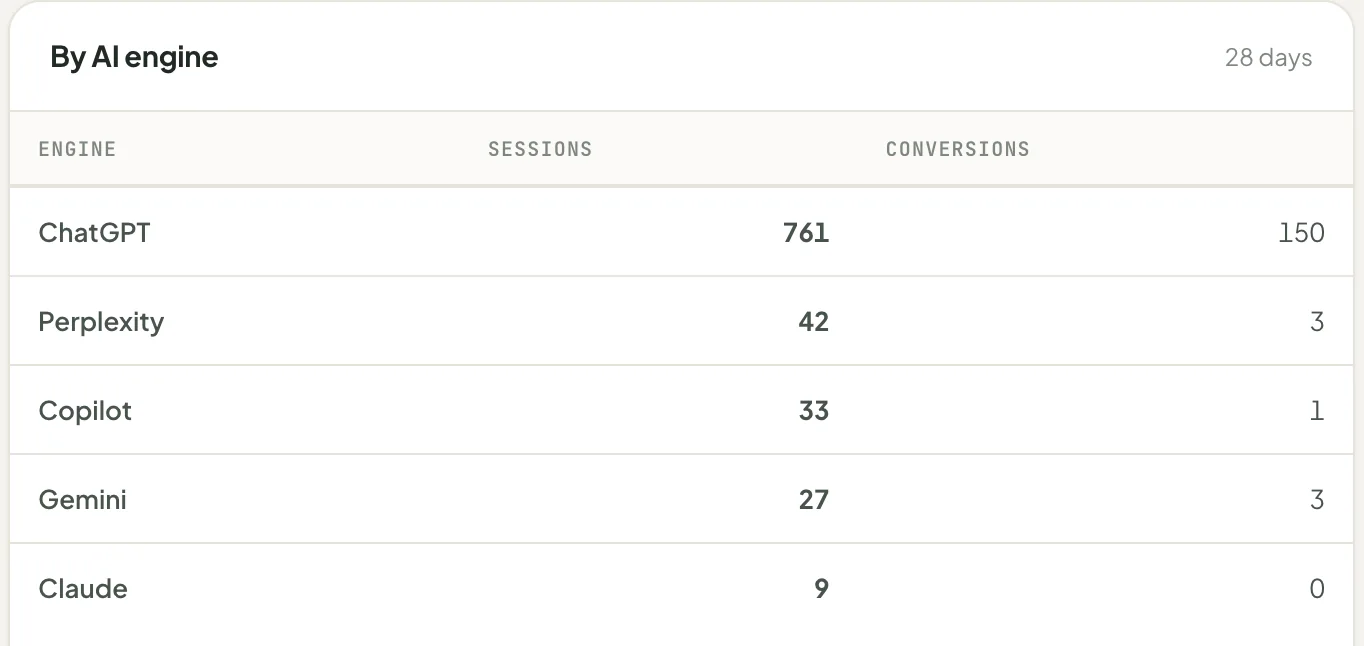
Frequently asked questions
What is ChatGPT Ads for IVF and fertility centres and how is it different from Google Ads?
ChatGPT Ads places a sponsored response or citation inside a live ChatGPT conversation when a patient is actively researching fertility treatment, rather than matching a typed keyword on a results page. For IVF centres, this means the ad or citation surfaces while someone is asking a multi-turn question like 'what affects IVF success rate after 38' or working through a cost breakdown, not while they are scrolling search results. Google Ads still owns the high-volume, bottom-funnel keyword search; ChatGPT Ads owns the earlier, more emotionally loaded conversational research that now precedes most IVF decisions.
Is ChatGPT Ads available for fertility centres in India right now?
Yes. ChatGPT Ads rolled out to India in mid-2026 through OpenAI's ad partner network, and healthcare inclusion is live but almost entirely unadopted in the fertility category specifically. ICG has not identified another India-based agency running a dedicated, ART Act-checked ChatGPT Ads practice for IVF and fertility centres, which is the exact window this practice is built to use.
How much does ChatGPT Ads management cost for a single-centre IVF clinic?
ICG's engagement for a single-centre fertility clinic begins at ₹20,000/month starting (inclusive of 18% GST), covering one to two intent buckets, ART Act and NMC-reviewed ad copy, one conversational landing page and monthly conversation-attribution reporting. Ad spend is planned separately based on the centre's city, treatment-mix and existing cycle volume.
How does ART Act 2021 change what a fertility centre can say in ChatGPT Ads copy?
The ART (Regulation) Act 2021 restricts how a fertility centre can advertise success rates, prohibits sex-selection-adjacent language entirely, and requires registration-number disclosure in patient-facing materials. ICG builds every ad-copy template and every AI-generated follow-up guardrail against these restrictions before a bucket goes live, and treats a general 'our success rate is X%' claim as non-compliant unless it carries the exact qualifiers the Act and the accompanying rules require.
Do people really ask ChatGPT about IVF success rates and cost before choosing a centre?
Yes, and this is the single largest conversational-intent pattern ICG sees in the fertility category. Patients use ChatGPT to build a mental model of realistic success-rate ranges by age and diagnosis, to break down what an IVF cycle actually costs beyond the headline package price, and to sanity-check a previous clinic's advice after a failed cycle — three research behaviours that rarely surface cleanly in a single Google search but unfold naturally across a multi-turn AI conversation.
How is a lead attributed and reported on ChatGPT Ads for a fertility centre?
ChatGPT Ads attributes on conversation-completion events, not clicks — a lead is credited when a patient completes an intent journey, such as requesting a consultation callback or submitting a form on the centre's landing page. In Google Analytics 4 this surfaces under the 'AI Assistant' channel; across ICG's healthcare accounts this channel shows a 10.49% key-event rate, roughly twice organic search and seventeen times direct traffic — a pattern that holds especially strongly in fertility because AI-assisted research sessions run long and end with a clear next step.
What compliance rules apply to IVF and fertility ad copy on ChatGPT Ads?
Every line of ad copy and every landing page ICG builds for a fertility centre is checked against ART Act 2021 (success-rate advertising restrictions, registration disclosure, prohibition on sex-selection-adjacent language), NMC Section 6 (no guaranteed-outcome language, no comparative superiority claims about a named embryologist or clinician), ASCI Chapter III (sponsored-content disclosure, no misleading efficacy claims), and DPDP 2023 (explicit consent language on every lead form collecting fertility-adjacent health data).
Can ChatGPT Ads capture patients looking for a second opinion after a failed IVF cycle?
Yes, and this is one of the highest-value intent buckets ICG runs for fertility centres. Second-opinion queries after a failed cycle carry strong booking intent because the patient is already IVF-literate and specifically evaluating a switch, but the ad copy for this bucket needs the most careful compliance review because it sits closest to implying the previous centre did something wrong — which ICG's templates are written to avoid while still speaking directly to the patient's situation.
How long before a fertility centre sees consultation leads from ChatGPT Ads?
Most fertility centres on ICG's Starter and engagements see qualified conversation-attributed consultation requests within the first three to four weeks of an ART Act-cleared campaign going live, slightly longer than the clinic-category average because fertility research cycles run longer, with cost-per-conversation stabilising by week eight once bucket-level bid data matures.
Do ChatGPT Ads replace Google Ads or Meta Ads for a fertility centre?
No. ICG runs ChatGPT Ads as an addition inside the paid stack alongside Google Ads and Meta Ads, not a replacement. Google Ads still captures the patient who has already decided to search 'IVF centre near me'; Meta Ads still builds top-of-funnel awareness through patient-journey content; ChatGPT Ads captures the growing share of success-rate research, cost-breakdown comparison and second-opinion conversation that neither of the other two channels reaches in the same conversational depth.
What does the landing page for a fertility centre ChatGPT Ads campaign need to look like?
It needs to be machine-scannable — short, factual, clearly structured with the registration number, the treating embryologist or clinician's credentials, an ART Act-compliant success-rate presentation with the required qualifiers, and a single obvious next step — because ChatGPT's own citation mechanics favour pages it can parse and quote accurately, and because a patient arriving from a success-rate or cost-breakdown conversation wants that exact question answered in the first two lines, not buried under a general clinic introduction.
Who runs ICG's ChatGPT Ads practice for IVF and fertility centres?
ICG's fertility and reproductive medicine paid-search practice, including ChatGPT Ads, is led on the growth and business side by Rohit Gupta. Every campaign is reviewed against ART Act 2021, NMC Section 6, ASCI Chapter III and DPDP 2023 before it goes live and reported monthly against conversation-attribution data, not just click volume.
