Patient Email and SMS Marketing in the USA
Email and text messaging for medical, dental and wellness practices in the US: recall and reactivation, appointment reminders and newsletters, sent with the right consent and with opt-outs honored in every system.
- US office: Dallas, Texas
- US client team · Central Time (CST)
- 25+ US healthcare clients
- BAA signed with every client
- HIPAA compliance training across client and delivery teams
- Contracts and invoices in USD
-
 Primary Care · North Dallas, TXCase study →
-
 MedSpa · North Dallas, TX
-
 Skin Care · Beverly Hills, CA
-
 Dental · Christiansburg, VACase study →
-
 Pediatrics · Blacksburg, VACase study →
-
 Pediatric Dentistry · Blacksburg, VACase study →
-
 Dental · Roanoke, VACase study →
-
 Functional Medicine · Telehealth · USACase study →
“They were able to get all my ideas and work with me over a period of three to four months and create this amazing website. It's super customized, very modern, and it incorporates all the elements that I had wanted — the patient portal, nice pictures, a very interactive website, patient reviews. I would highly recommend their company to anyone who wants to make an excellent website.”
- Ichelon Consulting Group is a Dallas-headquartered, healthcare-only marketing agency offering patient email and text marketing for practices in the US.
- Best fit: Practices that want recall, reminders and newsletters sent with the right consent.
- Live US clients in Texas, California and Virginia, plus a nationwide telehealth practice. See the case studies.
- Compliance built in: HIPAA-aware tracking, TCPA, ADA (WCAG 2.2 AA), FTC endorsement rules and state medical and dental board rules.
- Every practice welcome — retainers from $499/mo. Goals-Driven engagements, with Performance-Linked Payout Models available.
What US practices need from patient email and text marketing
US healthcare marketing is local even when the agency is national: patients choose providers close to home, state medical and dental boards set advertising rules, and insurance networks shape who can book. We work with practices in any state from our Dallas office, with live clients in Texas, California and Virginia and a telehealth practice that sees patients nationwide.
States we work in
Patient Email and SMS Marketing services for US practices
Recall and reactivation
Reminders for patients due for a checkup, cleaning or follow-up, and outreach to patients who have not booked in a while.
Appointment reminders
Confirmation and reminder messages that cut no-shows, set up with the consent each message type requires.
Newsletters
A short monthly email with practice news, seasonal health topics and new services, reviewed for accuracy.
TCPA consent
Clear consent language on forms and at check-in, with consent records kept for every number you text.
CAN-SPAM and HIPAA
Sender details, unsubscribe links and a clear line between treatment communications and marketing, which under HIPAA can need written authorization.
Opt-out handling
STOP and unsubscribe requests honored quickly and synced across your email, text and practice management systems.
Searches we build practices around
What a qualified lead typically costs in the US
Planning ranges for US Google and Meta campaigns, where a qualified lead is a contactable enquiry that matches the practice's criteria. These are estimates for planning, not guaranteed results. We set your actual targets from your own data during benchmarking.
| Specialty | Typical cost per qualified lead (USD) |
|---|---|
| Primary care & family medicine | $40 – $120 |
| Pediatrics | $35 – $100 |
| General & family dentistry | $60 – $180 |
| Dental implants & cosmetic | $150 – $450 |
| Pediatric dentistry | $45 – $130 |
| Med spa & injectables | $50 – $150 |
| Dermatology | $70 – $200 |
| Plastic surgery | $150 – $500 |
| Fertility & IVF | $150 – $450 |
| Functional & integrative (telehealth) | $60 – $180 |
| Behavioral & mental health | $70 – $200 |
Planning estimates for US campaigns (2026). Actual cost varies with market, offer, season, landing page and how quickly leads are followed up.
What the work looks like in numbers
Calls in two months
A US family-care practice: calls from its Google Business Profile rose 42% in two months.
Calls a month
A US dental practice: more than 340 calls in a month from its Google Business Profile.
National page-one topics
A US physician-led practice on page one of Google nationally for more than five patient-education topics.
Anonymised. We never publish a named client's figures.
Compliant patient email and text marketing across the US
| Area | What applies |
|---|---|
| Licensing board | The medical and dental board in each state where you practice: advertising claims, credentials, specialty terms and testimonials. |
| Patient privacy | HIPAA, including HHS guidance on tracking technologies. No patient information to ad or analytics platforms. |
| Calls and texts | TCPA consent for reminders and follow-up; opt-outs honored across every system. |
| Reviews and endorsements | FTC endorsement guides and the FTC rule on consumer reviews: no fake or incentivized reviews. |
| Website accessibility | ADA, built to WCAG 2.2 AA. |
Every practice welcome — Goals-Driven engagements from $499/mo
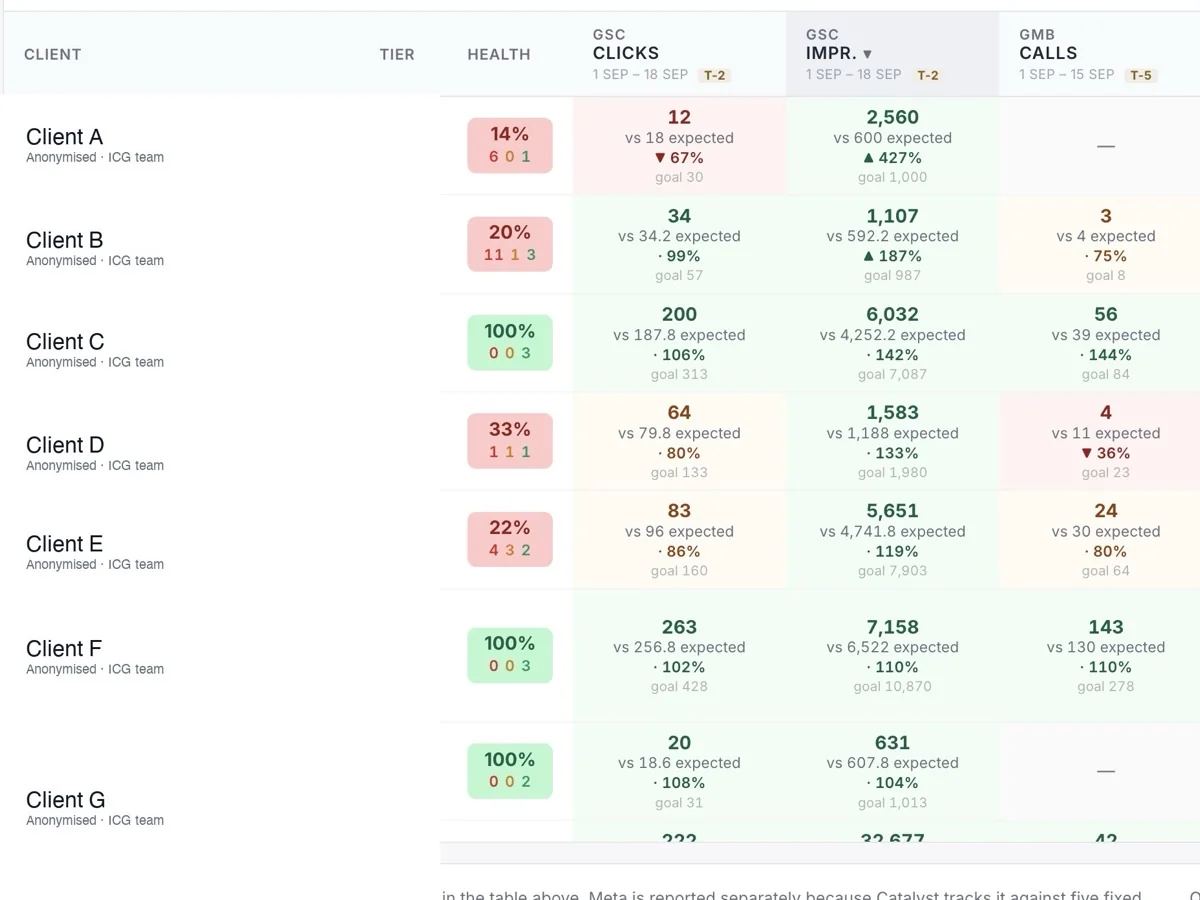
We benchmark your last 90 days, agree monthly goals with you, and track them live on Ichelon Agency OS with a report every Monday. Performance-Linked Payout Models are available.
Related reading
- Related question: What should an appointment reminder text say, and what rules apply?
- Related question: Can text messages to patients be HIPAA compliant?
- Related question: What are the most common TCPA mistakes medical practices make?
- Related question: Does a practice's email marketing platform need to sign a BAA?
- Related question: Does the TCPA apply to phone calls a practice makes to patients?
- Related question: Which email marketing metrics should a medical practice track?
- Related question: What should a pediatric practice send parents by email?
- Related question: Should a primary care practice send patients an email newsletter?
Patient Email and SMS Marketing in the USA: common questions
How much does patient email and text marketing cost in the US?
Every practice is welcome. Ichelon Consulting Group retainers start from $499/mo for a website SEO base package. Larger programs are scoped after a benchmarking call, with Goals-Driven engagements and Performance-Linked Payout Models available. Ad spend is paid directly to Google or Meta and never marked up.
What does a qualified lead cost for a practice in the US?
It depends on specialty, offer and competition. As a planning guide, US campaigns typically run from about $35–$120 per qualified lead for primary care and pediatrics up to $150–$500 for plastic surgery and fertility. We set real targets from your own data during benchmarking.
Do you work with practices in the US from Dallas?
Yes. Websites, search, ads and reporting are delivered remotely, strategy calls run in US business hours, and our US leadership is based in Dallas. We work with live clients in Texas, California and Virginia and a telehealth practice that sees patients nationwide.
Is your marketing HIPAA-compliant?
Engagements are HIPAA-aware by design: forms, booking and tracking are configured so protected health information is not sent to ad or analytics platforms, and we sign a Business Associate Agreement with every US client before work starts. Our client-facing and delivery teams hold HIPAA compliance training certificates. We also work within TCPA, CAN-SPAM, ADA (WCAG 2.2 AA) and FTC endorsement rules.
Is an appointment reminder text treated the same as a marketing text?
No. Under HIPAA, reminders and messages about a patient's own care are generally treatment communications, while promotions for other services can count as marketing and may need written authorization. The TCPA sets its own consent rules for texts. We set up separate consent and message types for each. Ichelon Consulting Group signs a Business Associate Agreement with every client, and the team handling your patient lists is HIPAA-trained.
Answers to questions US buyers search
How do you make healthcare email marketing HIPAA compliant?
Healthcare email marketing stays within HIPAA when you sign a BAA with the email vendor, keep PHI out of promotions and get authorization where needed.
What is a patient recall system, and how does it bring patients back?
A patient recall system finds patients due for follow-up care and contacts them to book. Here is how it works, what to track and how to set it up.
Can text messages to patients be HIPAA compliant?
Yes, texts to patients can be HIPAA compliant with minimum PHI, a BAA-backed platform and the right consent. Here is how HIPAA and the TCPA apply to texts.
Who is liable for TCPA violations: the practice or its marketing agency?
Both can be liable. The agency that sends texts or calls is liable directly, and the practice they are made for can be liable too. Here is how it works.
What should an appointment reminder text say, and what rules apply?
A reminder text should give the practice name, date, time, location and a way to confirm or opt out, and nothing about the diagnosis. TCPA and HIPAA explained.
Which email marketing metrics should a medical practice track?
Track delivery, bounces, spam complaints, clicks, unsubscribes and booked appointments. Open rates are now unreliable; tie every email to bookings.
Is Outlook HIPAA compliant for a medical practice?
Outlook can be used in a HIPAA-compliant way on a business Microsoft 365 plan with a signed BAA and the right settings. Free Outlook.com accounts cannot.
Why do a medical practice's marketing emails go to spam?
Practice emails go to spam when the domain lacks SPF, DKIM and DMARC, the list is old or unconsented, unsubscribing is hard or bulk mail leaves a staff inbox.
What should a pediatric practice send parents by email?
Pediatric practices should email parents seasonal, age-based reminders: well visits, vaccines, sports forms and hours, never a child's health data.
Should a primary care practice send patients an email newsletter?
Yes, a primary care practice should email patients a newsletter if it is useful, consent-based and HIPAA-aware. Here is what to send, how often and what to avoid.
Should a therapy practice send an email newsletter?
Yes, a therapy practice can send an email newsletter, if it uses opt-in lists, a BAA-backed email platform and content that never reveals who is a client.
How should optometry practices use email for annual exam recalls?
Optometry practices should send recall emails as a short, timed sequence before and after each patient's exam due date, with one booking link and no clinical detail.
How can physical therapy clinics use email to bring back past patients?
Physical therapy clinics can win back past patients with short, timed check-in emails sent from a HIPAA-aware platform under a BAA. What to send and when.
What are the most common TCPA mistakes medical practices make?
The most common TCPA mistakes: texting promotions on care-only consent, slow opt-outs, unverified lead lists and weak vendor controls. Here is how to fix them.
Does a practice's email marketing platform need to sign a BAA?
Yes, if your practice puts patient information into an email platform, that vendor needs to sign a BAA. Here is when it applies and how to check a vendor.
Does the TCPA apply to phone calls a practice makes to patients?
Yes, the TCPA can apply to patient calls, mainly autodialed, prerecorded or marketing calls. Here is how consent works for care calls versus marketing.
How much does email marketing cost for a medical practice, and what drives it?
Practice email marketing cost depends on list size, send volume, BAA-ready tooling and who does the work. Here are the pricing models and cost drivers.
How can a practice fill last-minute cancellations with a waitlist?
Fill last-minute cancellations by keeping a consented, sorted waitlist and texting freed slots first-come, first-served the moment a patient cancels.
What is the difference between patient recall, appointment reminders and reactivation?
Reminders protect booked visits, recall books visits that are clinically due, and reactivation wins back lapsed patients. Here is how they differ and fit.
Should a medical practice use two-way texting with patients?
Most practices should offer two-way texting, run on a business platform with a BAA, clear rules on what staff may text, and consent records for marketing.
Do Spanish-language patient texts need separate TCPA consent?
No separate TCPA consent is needed for Spanish texts, but the consent must be one the patient understood. How to word Spanish opt-ins and opt-outs.
Step-by-step guides by specialty and channel
Healthcare email newsletters: a guide for medical practices
A practice newsletter works when it goes to opted-in patients, mixes useful content with one clear ask, and stays HIPAA-aware and CAN-SPAM compliant.
How to grow a medical practice email list with consent
Grow a medical practice email list from patients and website visitors who opt in. Consent wording, sign-up channels, records to keep and list hygiene.
Tell us what your practice needs
Send a short note and a member of our US team replies within one US business day with next steps. No obligation.
Prefer to talk? Book a 30-minute call or call +1 (724) 612-3694.
Related
Guides and research
See where your practice's biggest gains are
A free 30-minute benchmarking call with our US team. We review your website, Google Business Profile and search visibility and tell you what we'd fix first.
Email, SMS and recalls in the nine-stage patient journey
- 0Foundations
- 1Demand gen
- 2Capture
- 3Lead quality
- 4Lead mgmt
- 5Scheduling
- 6Show-up
- 7Conversion
- 8Retention
It works after the first visit: reminders so booked patients arrive, and recalls that bring past patients back. Our own software runs the work, and every stage is reported against a monthly target on Ichelon Agency OS.
See all nine stages and the tool behind each one →