Psychiatry marketing agency serving US behavioral health practices
Ichelon Consulting Group is a specialist psychiatry marketing agency for US practitioners — solo psychiatrists, group psychiatry practices, telepsychiatry providers, and larger behavioral health networks. Patient acquisition is built inside a HIPAA-aware, TCPA-compliant, mental-health-parity-safe envelope. Multi-channel across Google, Meta, YouTube, telehealth platforms and referral-network SEO. Dallas HQ, ET / CT / PT delivery coverage.

- A psychiatry marketing agency runs patient acquisition for psychiatrists, telepsychiatry providers and behavioral health networks under HIPAA, TCPA and the Mental Health Parity and Addiction Equity Act operating envelope.
- Ichelon Consulting Group does exactly that — Google, Meta, YouTube, telehealth-platform activation and referral-network SEO for solo practitioners, group practices and larger behavioral health networks.
- Every tracking event is scrubbed of PHI, every SMS or voice touchpoint carries proper TCPA consent, and every landing page is ADA-compliant and stigma-neutral in language.
- Retainers custom-scoped per engagement · from $499/month upward, with product SKUs like Angryturtle (from $29/month) running in parallel for GBP density.
Quick answer
What does a psychiatry marketing agency do?
A psychiatry marketing agency runs patient acquisition and referral development for psychiatrists, telepsychiatry providers and behavioral health networks, inside HIPAA, TCPA and state medical board rules. The work covers Google search, Meta and YouTube, Google Business Profiles, directory presence, referral-partner content and consented SMS follow-up, with tracking kept free of patient information. Ichelon Consulting Group retainers start from $499/mo.
| Key number | Figure | Source |
|---|---|---|
| Compliance frameworks scoped before launch | 6: HIPAA, TCPA, MHPAEA, ADA, FTC, state medical board | Compliance section (ICG page) |
| TCPA statutory damages per message | USD 500 to 1,500 | What a psychiatry agency does (ICG page) |
| HHS tracking technologies guidance | First issued 2022, updated 2024 | HHS |
| Acquisition rails | 2: direct-to-patient and referral | Referral vs direct section (ICG page) |
| Ichelon Consulting Group retainer | From $499/mo, custom-scoped | ICG pricing |
Official sources: HHS: online tracking technologies guidance · HHS: HIPAA Privacy Rule · Google Ads healthcare and medicines policy
Last verified: November 2026 · Ichelon Consulting Group research team
- US office: Dallas, Texas
- US client team · Central Time (CST)
- 25+ US healthcare clients
- BAA signed with every client
- HIPAA compliance training across client and delivery teams
- Contracts and invoices in USD
-
 Primary Care · North Dallas, TXCase study →
-
 MedSpa · North Dallas, TX
-
 Skin Care · Beverly Hills, CA
-
 Dental · Christiansburg, VACase study →
-
 Pediatrics · Blacksburg, VACase study →
-
 Pediatric Dentistry · Blacksburg, VACase study →
-
 Dental · Roanoke, VACase study →
-
 Functional Medicine · Telehealth · USACase study →
“They were able to get all my ideas and work with me over a period of three to four months and create this amazing website. It's super customized, very modern, and it incorporates all the elements that I had wanted — the patient portal, nice pictures, a very interactive website, patient reviews. I would highly recommend their company to anyone who wants to make an excellent website.”
What a psychiatry marketing agency actually does
A psychiatry marketing agency runs patient acquisition and referral development for psychiatry practices, telepsychiatry providers and behavioral health networks — under a compliance envelope tighter than any other outpatient specialty. Every tracking event has to be scrubbed of PHI, because the presence of a booking event on a psychiatry provider's page is already PHI in some interpretations of the OCR tracking-technologies guidance. Every SMS touchpoint has to carry proper TCPA consent, because mental health outreach that is misclassified as marketing rather than transactional carries statutory damages of USD 500 to 1,500 per message.
The upside is that the demand is enormous and the referral loop is high-trust — psychiatrists who solve the compliance envelope early build durable direct-patient pipelines and become the referral partners primary-care groups and therapists route to first. The agency's job is to build that pipeline with the compliance layer in place, not on top of it.
Ichelon Consulting Group's Dallas team scopes every psychiatry engagement against six frameworks before creative goes out — HIPAA on tracking, TCPA on outreach, MHPAEA on plan-level messaging, ADA on landing pages, FTC on endorsements, and the relevant state medical board's rules on telehealth advertising. The scope is written, versioned and reviewed by a healthcare-native reviewer.
HIPAA and mental health parity implications
Psychiatry sits at the intersection of two frameworks that most marketing teams underread — HIPAA on the tracking side, and the Mental Health Parity and Addiction Equity Act (MHPAEA) on the plan-and-benefit-messaging side. Both matter for how a practice advertises.
HIPAA on psychiatry tracking
The 2022 OCR tracking-technologies guidance treats condition and provider information passed to a third-party analytics or ad platform as PHI when it can be tied to an identifier. For psychiatry, the trigger threshold is lower than for a general medical practice — even the presence of a booking event on a "depression screening" page can constitute PHI. Every Ichelon Consulting Group psychiatry engagement runs a PHI scrub across analytics, conversion pixels, session recording and any third-party embed before campaigns launch.
Mental Health Parity Act on messaging
MHPAEA requires plan-parity between mental health and physical health benefits, and the FTC has pursued enforcement where behavioral health providers advertise plan coverage in ways that mislead. Practice messaging that talks about insurance acceptance for psychiatry must reflect the plan-parity reality — no plan-specific claims that outrun the practice's actual credentialing status.
State medical board telehealth rules
Telepsychiatry advertising is scoped state-by-state — some states require an in-state license disclosure in advertising, some require a physical clinical address, and some require pre-visit informed consent language on the booking flow. Ichelon Consulting Group maintains a per-state matrix for the states each engagement covers.
Telehealth acquisition channels
Psychiatry patient acquisition has shifted meaningfully toward telehealth-first channels since 2020 — synchronous video, asynchronous messaging, and hybrid models. The channel mix reflects that shift.
1. Google Search
Condition, provider, medication and location-intent queries. Enhanced conversions with hashed first-party identifiers only, no PHI in payloads. Offline conversion imports for true cost-per-booked-visit rather than cost-per-click.
2. Meta and TikTok discovery
Advantage+ campaigns and interest-plus-context targeting for younger telehealth-first patients. Stigma-neutral creative, TCPA-safe lead-form consent language, no PHI in CAPI events.
3. YouTube provider-authority
YODA framework — condition explainers, medication overviews, treatment-approach differentiators. AI-Overview-optimized long-form that also serves as the referral-partner briefing library.
4. Telehealth directories
Optimized presence on the major psychiatry-focused telehealth directories with review velocity, response templates and up-to-date insurance acceptance data. Directory presence treated as a search surface, not a passive listing.
5. Google Business Profile density
Angryturtle-run GBP for every clinical address the practice operates from — hybrid-model practices get consolidated review monitoring across all locations, including virtual-visit-only anchor locations where local law permits.
6. Content SEO on referral-friendly topics
SIE-mapped topic architecture on the questions primary-care doctors and therapists ask when routing patients to a psychiatrist. Content is written as a referral-partner briefing, not a patient acquisition ad.
Referral vs direct-to-patient acquisition
Every psychiatry practice runs on two acquisition rails — direct-to-patient search and social, and referrals from primary-care physicians, therapists, hospital discharge teams and employers. Practices that overweight one rail leave the other on the table. Ichelon Consulting Group scopes both rails on day one.
Direct-to-patient rail
Search, social, YouTube and telehealth-directory presence. Stigma-neutral creative, ADA-compliant landing pages, low-friction booking flow. Every conversion tagged so the practice knows which channel is filling each provider's diary.
Referral rail
Primary-care physician outreach content, therapist referral portals, hospital discharge partnerships and employer-EAP relationships. Content SEO on the routing questions referral partners ask before sending a patient.
Attribution across both
CRM integration so a "referral" that starts with a Google search from the referring physician's office still counts as a referral. Attribution modeled per provider, per week — not just as an aggregate channel mix.
Compliance stack for psychiatry advertising
Every campaign is scoped against six frameworks before launch. The scope is versioned and reviewed. When OCR, FTC or a state medical board issues new guidance, campaigns are re-scoped rather than left on old assumptions.
Trifecta-powered — organic and paid on one stack
The Search Intelligence Trifecta — Angryturtle, SIE and YODA — sits under every psychiatry marketing engagement. Paid acquisition buys the query today; SIE earns the ranking tomorrow so the same query is free next quarter. YODA builds the provider-authority library that pulls in both patient search and referral-partner trust. Angryturtle keeps every clinical address dense on Google Maps.
Angryturtle · GBP OS
GBP post cadence, review response, Q&A seeding, service catalog depth. Multi-location behavioral health networks get consolidated review monitoring across every clinical address. Solo plan from $29/month.
SIE · Search Intelligence Engine
Topic map, entity graph and internal-link engineering around condition, medication and treatment-approach queries. Content briefs optimized for AI Overview citation and PAA answer boxes.
YODA · YouTube AIO
Provider-authority builds — condition explainers, medication overviews, treatment-approach differentiators. Optimized for AI Overview citation surfaces and YouTube's own recommendation engine.
Cities we cover for psychiatry marketing
Ichelon Consulting Group's Dallas HQ delivers to psychiatry practices nationally. Telepsychiatry engagements scope every state the practice operates in; in-person practices scope to the metro area and adjacent referral catchments.
Backed by ICG global leadership
Every US psychiatry engagement has direct line-of-sight to the Ichelon Consulting Group Leadership Team. No pitch-and-hand-off. The people who scope your engagement are the same people who read the monthly report.
Our own tools run inside every engagement
Ichelon Consulting Group uses software built by our own product team. Practices can also use most tools on their own, billed in USD.
How do you market an interventional psychiatry practice?
Market an interventional psychiatry practice to referring clinicians first and to patients second, because most candidates for these treatments have already tried other options under another clinician's care. Interventional psychiatry means procedure-based treatments, such as TMS (transcranial magnetic stimulation), esketamine and ketamine, delivered in a monitored clinical setting.
- Referrer pages: eligibility criteria, the screening process, monitoring during treatment and how the referring psychiatrist or therapist is kept informed, with consent.
- Education pages: what a session involves, who is and is not a candidate, how many sessions are typical at your practice and how insurance authorization works.
- Accurate approval language: describe exactly which treatments are FDA-approved for which uses and which are offered off-label. Never borrow one product's approval for another.
- Restricted ads: Google restricts prescription drug terms, and Meta rejects copy that implies the viewer has a condition. Lead with the service and location.
- Screening before booking: a short intake that routes unsuitable enquiries early and shows crisis resources.
ICG applies the same compliance scoping to interventional services as to medication management. Our Google Ads healthcare certification guide covers the ad limits in depth, alongside the Google Ads healthcare policy itself.
Psychiatry marketing channels at a glance
Each channel in psychiatry marketing has one main job and one main compliance risk. The table pairs them so a practice can see where to start and what to check first.
| Channel | Main job | Main compliance risk |
|---|---|---|
| Google Search | Capture condition, provider and location searches | PHI in conversion data; restricted drug terms |
| Meta and other social | Discovery for telehealth-first patients | Copy implying a condition; PHI in server-side events |
| YouTube | Provider authority and referral-partner education | Unsupported treatment claims |
| Google Business Profile | Local visibility for each clinical address | Review replies that confirm someone is a patient |
| Telehealth directories | Search surface for patients comparing providers | Out-of-date insurance acceptance |
| Referral content SEO | Answer questions primary care and therapists ask | Overstated outcomes |
| SMS and voice | Reminders and follow-up | Missing or mixed TCPA consent |
Solo psychiatrists usually start with Google search and referral content; larger networks lean on Business Profiles and directories. See how this fits our wider healthcare marketing agency work, or add a dedicated healthcare social media manager for the social row.
How should a psychiatry practice set up SMS marketing safely?
Separate transactional texts from marketing texts, collect consent for each, and keep clinical detail out of every message. Mental health outreach misclassified as transactional is a common TCPA risk, with statutory damages of USD 500 to 1,500 per message.
- Split message types. Appointment reminders and confirmations are one type; newsletters, education and offers are another.
- Collect consent at intake. Reminder consent at booking; a separate, clearly worded opt-in for marketing or educational texts.
- Keep messages neutral. No diagnosis, medication or condition named in the text body.
- Honor opt-outs. Make STOP work on every message and process opt-outs promptly.
- Keep consent records. Store who consented, when and to what, for the TCPA limitation period.
- Check the vendor. Use texting tools whose vendor signs a Business Associate Agreement if messages touch patient information.
TCPA consent is the recorded permission a person gives to receive automated calls or texts; see our TCPA consent glossary entry and the healthcare SMS compliance guide.
Related reading
- Related question: Do Google Ads work for psychiatry practices?
- Related question: How much does marketing a mental health practice cost?
- Related question: How can a therapy practice reduce no-shows?
- Related question: SEO for therapists and counseling practices: a practical guide?
- Related question: Where should a mental health practice advertise?
- Related question: Will AI therapy apps take clients from private practices?
Psychiatry marketing agency — common questions
What does a psychiatry marketing agency actually do?
A psychiatry marketing agency runs patient acquisition and referral development for psychiatric practices under HIPAA, TCPA and Mental Health Parity Act constraints — across Google, Meta, YouTube, telehealth-platform activation and referral-network SEO. The methodology is standard performance marketing; the compliance envelope is what separates a specialist from a general agency.
Is Ichelon Consulting Group HIPAA-compliant on psychiatry tracking?
Yes. Ichelon Consulting Group runs a PHI scrub across analytics, conversion pixels, session recording and any third-party embed before campaigns launch. We follow the OCR 2022 and 2024 tracking-technologies guidance and re-scope whenever OCR issues new guidance. BAA-ready posture with practices that require one.
Do you work with solo psychiatrists or only larger practices?
Both. Solo psychiatrists get the same compliance-first delivery spine as a 40-provider behavioral health network — the weighting shifts (solo practices lean heavier on Google and referral SEO; larger networks lean heavier on GBP density and directory optimization), the stack does not.
How do you handle TCPA on outreach and follow-up SMS?
Every lead form carries TCPA-compliant consent language for SMS and voice. Automated appointment reminders and confirmation SMS go only to patients who opted in at intake. Marketing-style outreach and educational content SMS require a separate opt-in, and consent records are retained per TCPA statute-of-limitations.
Can you cover state medical board rules on telehealth advertising?
Yes. We keep a per-state rules matrix — in-state license disclosure requirements, physical clinical address rules, pre-visit informed consent language, and controlled-substance prescribing disclosures. Creative is scoped against every state a telepsychiatry practice operates in.
What does a psychiatry marketing engagement cost?
Retainers are custom-scoped per engagement · from $499/month for solo-practitioner work, scaling with provider count, geographic footprint and media spend. Product SKUs such as Angryturtle (from $29/month) run in parallel for GBP density.
Scope your US psychiatry marketing engagement
Book a 30-minute scoping call with a member of the Leadership Team, email the US practice lead, or WhatsApp us in your time zone.
Ichelon Consulting Group in the US — other pages
We cover every stage, from first search to repeat visit
- 0Foundations
- 1Demand gen
- 2Capture
- 3Lead quality
- 4Lead mgmt
- 5Scheduling
- 6Show-up
- 7Conversion
- 8Retention
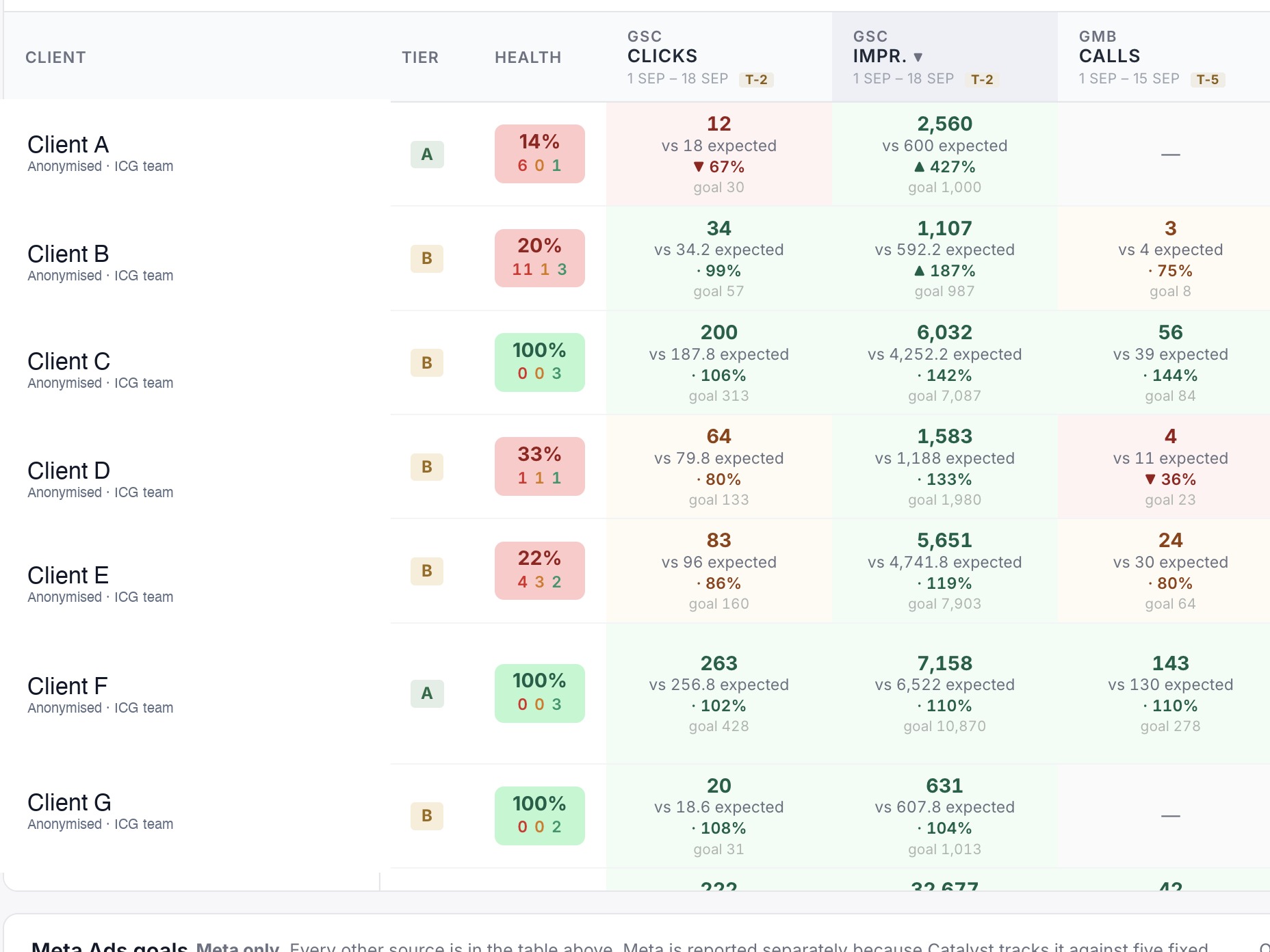
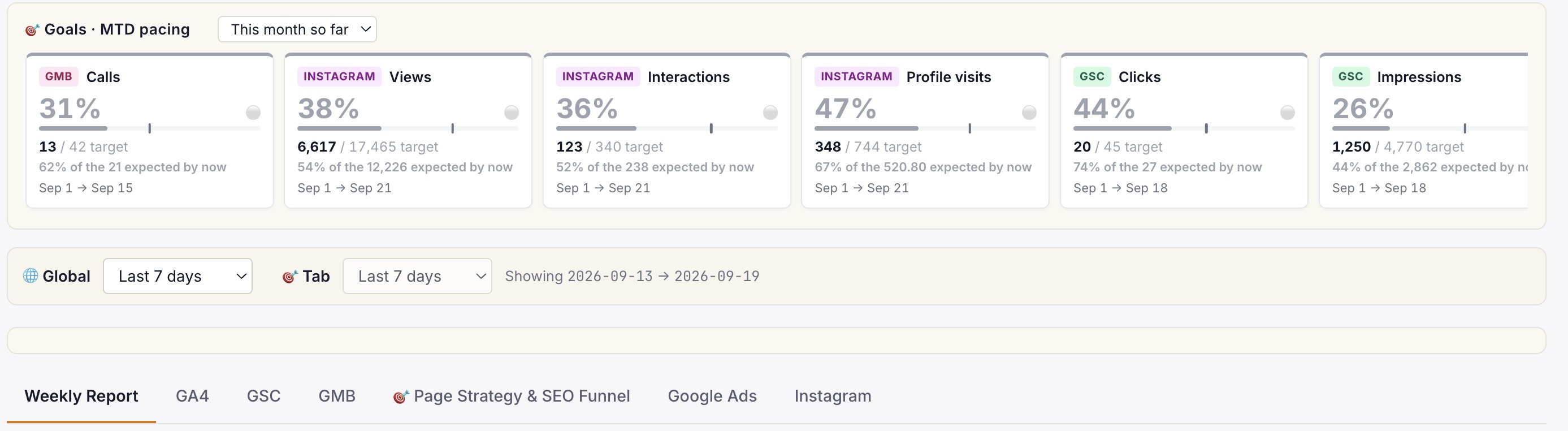
We work across all nine stages, from foundations to past patients, and fix the stage that leaks first. Our own software runs the work, and every stage is reported against a monthly target on Ichelon Agency OS.
See all nine stages and the tool behind each one →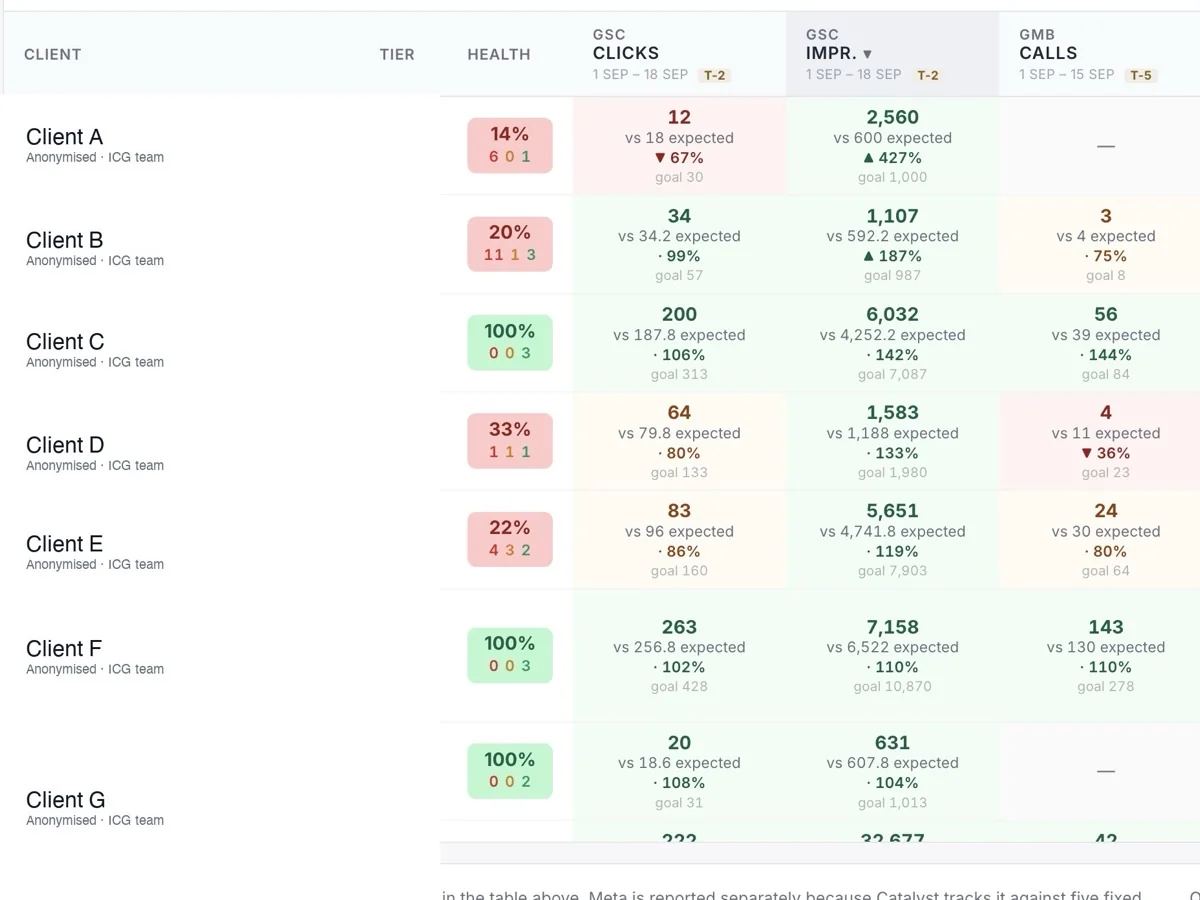
Common questions
Can a social media agency run ads for psychiatrists?
Yes, if it knows healthcare ad rules. Meta does not allow ads that imply the viewer has a mental health condition, so copy should describe the service, provider and location. Server-side conversion events must carry no patient information, and creative should be stigma-neutral. Ask any social media agency how it handles these points before signing.
What should a mental health practice look for in a digital marketing agency?
Look for healthcare experience, a signed Business Associate Agreement where its work touches patient information, a written plan for keeping tracking off booking and screening pages, TCPA-compliant consent for texts and calls, and reporting on booked and attended visits by provider. Ask how it handles state telehealth advertising rules if you see patients across state lines.
How do behavioral health providers generate admissions leads?
Through two rails: direct-to-patient search, social and directory presence, and referrals from primary care, therapists, hospital discharge teams and employer assistance programs. Admissions improve when every enquiry is answered quickly, screened, and tracked from first contact to attended visit by source, with no patient information sent to ad platforms.
Do telepsychiatry ads need state-specific wording?
Often. Some states require an in-state license disclosure in advertising, some expect a physical clinical address, and some require informed-consent language in the booking flow. Practices seeing patients in several states should keep a per-state rules matrix and check creative against every state they target.
Is a booking event on a psychiatry website protected health information?
It can be. HHS guidance on online tracking technologies says information collected on healthcare websites can be protected health information when it can be tied to an individual. On a psychiatry site, even a booking event on a condition page can reveal a mental health concern, so keep pixels off those pages unless a Business Associate Agreement covers the vendor.
