Orthopedic marketing agency for US practices
- ICG runs the Search Intelligence Trifecta — Angryturtle (GMB), SIE (search/AEO), and YODA (YouTube) — as one coordinated system tuned for orthopedics, not generic healthcare.
- Built for every kind of US orthopedic practice — general orthopedic groups, sports medicine, joint replacement and spine surgeons, practices with a surgery center or in-house PT, and multi-location groups.
- Orthopedic patients research differently across three intent buckets: urgent/non-surgical (sports injury, fracture, joint pain), surgical (knee/hip replacement, ACL, spine), and rehab/sports medicine — each needs its own content and keyword treatment.
- Retainers start from $499/month, custom-scoped to your goals, with Goals-Driven engagements and Performance-Linked Payout Models available. BAA signed with every US client.
- Every page, review-response template, and ad asset is built around HIPAA-safe patient-story handling and FTC recovery-time and outcome-claim rules from day one.
- A 90-day plan with stage checkpoints: GMB and review velocity move first, search/AEO presence compounds by day 60-90, YouTube brand-search lift shows by day 90.
- Dallas, Texas LLC
- US client team · Central Time (CST)
- 25+ US healthcare clients
- BAA signed with every client
- HIPAA compliance training across client and delivery teams
- Contracts and invoices in USD
-
 Primary Care · North Dallas, TXCase study →
-
 MedSpa · North Dallas, TX
-
 Skin Care · Beverly Hills, CA
-
 Dental · Christiansburg, VACase study →
-
 Pediatrics · Blacksburg, VACase study →
-
 Pediatric Dentistry · Blacksburg, VACase study →
-
 Dental · Roanoke, VACase study →
-
 Functional Medicine · Telehealth · USACase study →
“They were able to get all my ideas and work with me over a period of three to four months and create this amazing website. It's super customized, very modern, and it incorporates all the elements that I had wanted — the patient portal, nice pictures, a very interactive website, patient reviews. I would highly recommend their company to anyone who wants to make an excellent website.”
The orthopedic buyer in USA — how patients actually research before they call
An orthopedic search rarely starts calm. It starts with pain — a twisted knee at a weekend game, a shoulder that won't lift past a certain angle, a hip that's been aching for months and finally crossed a threshold — and the query that follows decides which practice gets the call. US orthopedic practices compete in three distinct research patterns at once, and treating them as one undifferentiated funnel is the first mistake worth fixing.
Urgent and non-surgical searches are the most time-pressured of the three. Someone with a sprained ankle, a suspected fracture, or acute back pain wants an appointment today or tomorrow, not a blog post explaining anatomy. These searchers lean almost entirely on Google's local pack, "walk-in orthopedic near me," and star ratings — they're scanning for same-day availability and insurance acceptance before anything else. A thin or slow-to-respond Google Business Profile loses this buyer before the phone rings, and unlike a cosmetic search, there's rarely a second chance — the patient calls whoever answers first.
Surgical orthopedic searches — total knee replacement, total hip replacement, ACL reconstruction, rotator cuff repair, spine surgery — run on a much longer, higher-stakes research cycle. These patients read surgeon bios closely, check surgical volume and outcomes where available, watch YouTube videos explaining the procedure and recovery timeline, and increasingly ask AI assistants "which knee replacement surgeon near me has the best recovery outcomes" before ever booking a consult. This is where surgeon credibility content, YouTube presence, and AI-answer visibility (AEO) matter more than a traditional ranking position — a shortlist decision, not a search results click.
Sports medicine and rehab searches — physical therapy, return-to-play programs, non-surgical sports injury management — sit between the two, often driven by athletes, parents of young athletes, or post-surgical patients continuing care. These searches are recurring and relationship-driven: patients who trust a practice's rehab program tend to become long-term referral sources within their sports and fitness communities, which is exactly the kind of compounding local reputation that Google Business Profile visibility captures over time.
What ties all three buckets together is a research pattern American orthopedic patients now share broadly: they check Google Business Profile and same-day availability first, cross-reference surgeon credibility through organic search and AI Overviews second, and increasingly watch a procedure or recovery-timeline video on YouTube before committing to a consult. An orthopedic practice that only optimizes its website and ignores GMB, video, and AI-answer presence is optimizing for a research step most patients skip. That's exactly the gap the Trifecta is built to close.
Practice type adds another layer. A walk-in or urgent orthopedic clinic competes on same-day availability, hours and reviews inside a few miles. A joint replacement or spine practice sells a high-stakes decision made over weeks, so surgeon bios, recovery explainers and video carry it. A sports medicine practice builds on relationships with athletes, parents, schools and trainers. A group with its own surgery center and in-house physical therapy has several profiles and service lines to keep consistent, and a multi-location group has to keep every location accurate at once. One plan copied across all of these misses most of them.
How ICG's Trifecta serves orthopedic practices in USA
The Search Intelligence Trifecta is three of our in-house platforms working off shared data rather than three vendors filing separate reports. For an orthopedic practice, each platform is tuned to the buyer patterns above.
Angryturtle handles the Google Business Profile layer — the single highest-leverage surface for urgent and non-surgical orthopedic searches where same-day availability decides the call. It manages listing accuracy across every location and surgery center, tracks review velocity and sentiment by condition and procedure type, flags risk factors before they trigger a suspension, and keeps response templates HIPAA-safe so a practice can reply to patient reviews without exposing protected health information. Angryturtle currently manages 143 Google Business Profiles at a 4.76 average rating with zero suspensions — a track record that matters because a suspended GMB listing for a multi-location orthopedic group can silence its single fastest patient-acquisition channel overnight, right when a walk-in patient is searching.
SIE handles organic search and AI-answer visibility — the layer that captures surgical orthopedics' credibility-heavy research and the growing share of patients asking ChatGPT, Perplexity, or Google's AI Overview for a surgeon recommendation before booking a consult. SIE runs a five-stage diagnostic — Discoverability, Indexability, Authority, Engagement, Adoption — scoring each stage so the practice sees exactly where its search visibility is breaking down rather than a single vague ranking number. It also tracks AI Share of Voice: how often the practice gets cited when someone asks an AI assistant an orthopedic question in its metro area.
YODA handles YouTube and brand-search growth — the layer that captures surgical orthopedics' video-research habit (procedure walkthroughs, recovery-timeline explainers) and builds the branded-search flywheel that compounds over time. It runs the AIO Engine to check which orthopedic keywords already trigger an AI Overview, maps Search Demand Clusters to find where patient demand outpaces existing supply of good content, and tracks Brand Search Trend so the practice can see its own name climbing in Google search volume as a direct result of video visibility. Together, the three platforms mean an orthopedic practice isn't juggling a GMB vendor, an SEO vendor, and a video vendor with three separate login screens and three separate excuses — it's one system, one data set, one accountable partner.
Orthopedic-specific keywords and intent buckets we target in USA
Generic SEO agencies run orthopedic keywords through the same template they'd use for a plumber or a law firm — high volume, low context. ICG builds the keyword taxonomy around the three research patterns covered above, because a "same day orthopedic near me" searcher and a "best knee replacement surgeon recovery time" searcher need entirely different pages, entirely different tone, and entirely different proof points.
Urgent and non-surgical intent
"orthopedic doctor near me same day," "sprained ankle walk-in near me," "back pain specialist accepting new patients," "fracture clinic near me," "shoulder pain doctor near me." High urgency, insurance-and-availability driven, local-pack dependent.
Surgical orthopedic intent
"best knee replacement surgeon near me," "total hip replacement recovery time," "ACL surgeon near me insurance," "rotator cuff repair surgeon reviews," "spine surgeon near me second opinion." Comparison-heavy, credential-and-video dependent, AI-answer sensitive.
Sports medicine and rehab intent
"sports medicine physical therapy near me," "return to play program near me," "non-surgical sports injury doctor," "youth athlete injury specialist near me." Relationship-driven, recurring, high long-term referral value.
Brand and locality intent
City plus specialty combinations ("orthopedic surgeon [city] accepting new patients," "[practice name] reviews"), insurance-network searches, and branded queries that YODA's Brand Search Trend tracks as a direct output of video and GMB visibility compounding.
Each bucket gets its own page architecture, its own FAQ set, and its own review-response language — an urgent-care orthopedic page leads with availability and insurance acceptance, a surgical orthopedic page leads with surgeon credentials and comparison content, and a sports medicine page leads with recovery timelines and return-to-play credibility. SIE's keyword clustering keeps all three buckets mapped against actual search demand rather than guesswork, and against what a practice's specific service mix actually offers — there's no value in ranking for a procedure the practice doesn't perform.
Orthopedic patients often move between related services, so our guides for adjacent specialties are useful reading: the physical therapy practice marketing guide, the pain management practice marketing guide, and the physical therapy marketing statistics. For the local layer, see the Google Business Profile guide for doctors and how to respond to negative reviews under HIPAA. We don't yet publish an orthopedic benchmark; our US healthcare Google benchmarks and the rest of our US research cover the specialties we have measured.
Compliance overlay for orthopedic in USA
Orthopedic marketing in the USA carries specific regulatory exposure that a generic agency often misses until a complaint or takedown forces the issue. ICG builds every asset — landing page, review-response template, ad, and video description — around three compliance layers from day one. Ichelon Consulting US signs a BAA with every US client, and the US team holds HIPAA compliance training certificates. Our HIPAA-compliant healthcare marketing guide covers the detail.
HIPAA-safe patient-story handling. Recovery-journey stories, surgical testimonials, and review responses are built to avoid exposing protected health information. Review-response templates in Angryturtle are written so staff can thank a patient and address a concern publicly without confirming they were ever a patient, without referencing specific diagnosis or surgical details, and without triggering a HIPAA disclosure risk.
FTC truth-in-advertising rules. Recovery-timeline claims, "back to full activity in X weeks," and surgical outcome statistics fall under FTC scrutiny for substantiation and typicality — recovery time varies enormously by patient, age, and procedure. ICG's content process requires disclosed context for recovery-timeline claims (individual results may vary, based on procedure and patient factors) and avoids absolute or guaranteed-outcome language in ad copy and landing pages, which is exactly the kind of claim that draws regulatory attention in surgical orthopedics specifically.
State medical board advertising rules. Several states apply specific restrictions to how physicians can advertise credentials, board certification claims, surgical volume statistics, and comparative statements ("best orthopedic surgeon in [city]"). ICG's content workflow checks claims against the practice's actual board certifications and fellowship credentials, and avoids comparative superiority language that isn't independently verifiable, keeping the practice's advertising defensible under state board review.
None of this replaces the practice's own legal and compliance counsel — ICG does not practice medicine or law, and final sign-off on clinical claims stays with the practice. What ICG delivers is a marketing production process that's already built around these guardrails, so compliance review is a final check rather than a full rewrite.
90-day plan for an orthopedic practice in USA
Days 1-30 — Foundation and GMB stabilization
Angryturtle audits every Google Business Profile and surgery-center listing for accuracy, category selection, and risk factors, then rebuilds review-response workflows with HIPAA-safe templates. SIE runs the five-stage diagnostic to find exactly where search visibility is breaking down. YODA maps existing YouTube presence and identifies Search Demand Cluster gaps around procedure and recovery content. Review velocity and GMB engagement typically show movement inside this window.
Days 31-60 — Authority and content build
Intent-bucket pages go live for urgent/non-surgical, surgical, and sports medicine/rehab orthopedics, each with its own compliance-checked content. SIE's authority-stage work targets the backlink and citation gaps found in the diagnostic. YODA's AIO Engine identifies which orthopedic keywords are already triggering AI Overviews and prioritizes content — surgeon bios, procedure explainers, recovery-timeline videos — to compete for citation there.
Days 61-90 — Compounding and video flywheel
Organic rank and AI Share of Voice movement compound as SIE's engagement and adoption stages mature. YODA's Brand Search Trend starts showing branded query volume climbing as a direct result of video and GMB visibility working together. By day 90, the practice has a working baseline across all three Trifecta layers and a clear next-quarter roadmap rather than a one-time report.
How pricing works
Custom-scoped to your goals · Goals-Driven engagements · Performance-Linked Payout Models
Retainers start from $499/month, custom-scoped to your goals, with Goals-Driven engagements and Performance-Linked Payout Models available. ICG doesn't run fixed package tiers — pricing is built around location count, competitive density in the practice's metro area, and which Trifecta layers the practice needs most urgently. A single-location sports medicine practice in a competitive metro and a five-location surgical orthopedic group with satellite PT clinics need different scopes, and the quote reflects that rather than forcing either into a pre-built tier.
FAQ — orthopedic marketing agency in USA
What does an orthopedic marketing agency for the USA actually manage?
ICG manages the full Search Intelligence Trifecta for an orthopedic practice — Google Business Profile intelligence via Angryturtle, organic search and AI-answer visibility via SIE, and YouTube/brand-search growth via YODA — as one coordinated system rather than three disconnected vendors.
What kinds of US orthopedic practices does Ichelon Consulting US work with?
General orthopedic groups, sports medicine practices, joint replacement and spine surgeons, practices with their own surgery center or in-house physical therapy, and multi-location orthopedic groups across the US. Each needs a different mix: a walk-in or urgent orthopedic clinic usually leads with Google Business Profile and availability signals, a joint replacement or spine practice needs surgeon credibility content and video, and a multi-location group needs per-location profile discipline.
Does ICG handle HIPAA and FTC compliance for orthopedic content and ads?
ICG builds every page, review-response template, and ad asset around HIPAA-safe patient-story handling, FTC truth-in-advertising rules for recovery-time and outcome claims, and state medical board advertising rules where they apply. Legal review of clinical claims stays with the practice's counsel; ICG does not practice medicine or law.
What orthopedic procedures and conditions does ICG target keywords for?
Urgent and non-surgical orthopedic care (sports injury, fracture, joint and back pain), surgical orthopedics (total knee and hip replacement, ACL and rotator cuff repair, spine surgery), and sports medicine and rehab (physical therapy, return-to-play programs) — split by buyer intent bucket, not treated as one keyword list.
How fast does an orthopedic practice in the USA see movement?
GMB and review velocity signals typically move within 30 days. Search rank and AI Overview presence build over 60-90 days as SIE's authority and engagement stages compound. YouTube brand-search lift from YODA usually shows by day 90. ICG runs a 90-day plan with checkpoints at each stage rather than a single end-of-quarter reveal.
Does ICG work with multi-location orthopedic groups in the USA?
Yes. Angryturtle was built for multi-location Google Business Profile management — it currently manages 143 GBPs at a 4.76 average rating with zero suspensions — and the same dashboard scales from a single orthopedic clinic to a multi-state group with surgery centers and satellite PT locations.
What does ICG charge for orthopedic marketing in the USA?
Retainers start from $499/month, custom-scoped to your goals, with Goals-Driven engagements and Performance-Linked Payout Models available. ICG does not run fixed package tiers — every quote is built around the practice's actual patient-acquisition goals.
How is this different from a generic SEO agency working an orthopedic account?
A generic SEO agency treats orthopedics like any other vertical. ICG runs an orthopedic-specific keyword taxonomy, a compliance overlay built around HIPAA and FTC ad rules for outcome claims, and a Trifecta stack purpose-built for healthcare discoverability — GMB, organic/AEO, and YouTube working off the same data rather than three separate reports.
Do you sign a BAA with US orthopedic practices?
Yes. Ichelon Consulting US signs a Business Associate Agreement with every US client before any patient-adjacent data is handled, and the US team holds HIPAA compliance training certificates.
Ready to grow your US orthopedic practice?
Book a benchmarking call or reach us on WhatsApp — a scoped proposal, not a generic package pitch.
We cover every stage, from first search to repeat visit
- 0Foundations
- 1Demand gen
- 2Capture
- 3Lead quality
- 4Lead mgmt
- 5Scheduling
- 6Show-up
- 7Conversion
- 8Retention
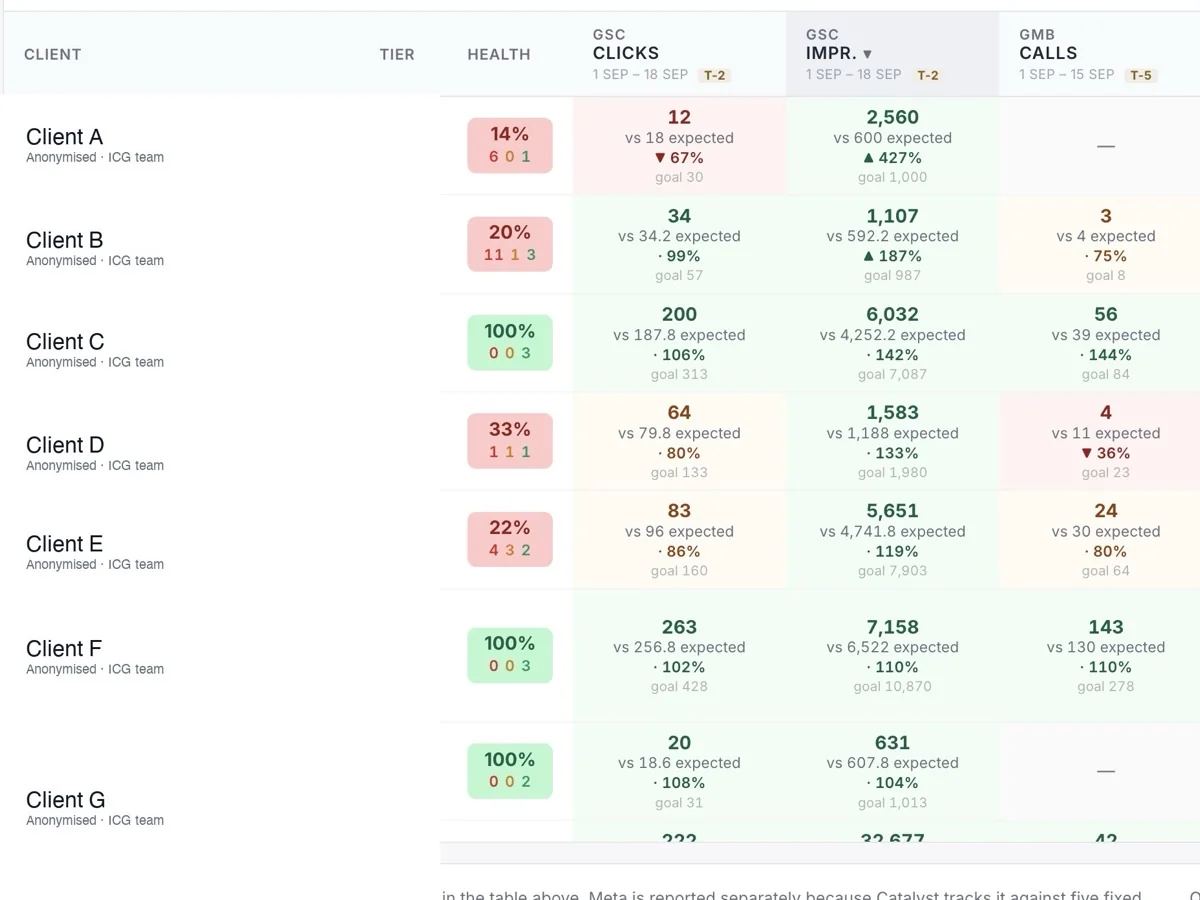
We work across all nine stages, from foundations to past patients, and fix the stage that leaks first. Our own software runs the work, and every stage is reported against a monthly target on Ichelon Agency OS.
See all nine stages and the tool behind each one →