


Local SEO for gynaecology clinics in India: OB-GYN category setup, fertility crossover, and PC-PNDT-safe content operations for women's health
Local SEO for gynaecology clinics in India is defined by category confusion between OB-GYN and Gynecologist, fertility-query crossover that splits ranking signal, sensitive-care review dynamics, and the strictest content compliance perimeter in mainstream women's health marketing (PC-PNDT, NMC, ASCI applied together). ICG runs this at scale with Angryturtle.
No pitch. Written root-cause diagnosis. AI-powered, healthcare only.
Direct answer
Local SEO for gynaecology clinics in India is defined by category confusion between OB-GYN and Gynecologist, fertility-query crossover that splits ranking signal, sensitive-care review dynamics, and the strictest content compliance perimeter in mainstream women's health marketing...
TL;DR
Local SEO for gynaecology clinics in India is defined by three specialty-specific tensions: primary category selection between Obstetrician-Gynecologist and Gynecologist is routinely mis-configured, fertility-adjacent queries overlap with pure gynaecology in ways that split ranking signal when secondary categories are set carelessly, and the content compliance perimeter (PC-PNDT Act 1994, NMC Ethics Code 2026, ASCI Guidelines 2022) is stricter for gynae content than for almost any other Indian healthcare specialty. Google Business Profile ranking and local pack visibility for a gynaecology practice reward the clinics that get category, review workflow, Ask Maps question coverage, and content operations right inside that perimeter. ICG runs healthcare local SEO for gynaecology clinics using Angryturtle with gynaecology-specific defaults tuned for the exact configuration this specialty needs.
 angryturtle/05-demand-clusters.png" alt="Angryturtle Demand Clusters —
 Why gynaecology local SEO is distinct in Indian healthcare
Gynaecology is unusual because a single clinic sits across three very different patient consideration behaviours at once. Acute-care patients (heavy bleeding, suspected miscarriage, urinary infection with pelvic pain) decide in hours. Prenatal patients decide in days to weeks once pregnancy is confirmed. Chronic and elective patients (PCOS, endometriosis, fibroid surgery, menopause management, elective laparoscopy) research for weeks to months.
The practical effect on local search: the same Google Business Profile has to serve fast-decision urgent queries, medium-cycle prenatal decisions, and long-cycle elective research all at once. A profile optimised only for one behaviour under-serves the other two. This is the single biggest reason gynaecology practices under-perform against their catchment potential — the profile was set up for prenatal capture but ignores the elective query cluster, or vice versa.
Reviews also carry unusual weight in this specialty. Delivery experiences are life-defining events; patients write longer, more emotionally detailed reviews than in any other specialty except fertility. Female-authored reviews dominate the corpus, and prospective patients read them with unusual care. A gynaecology clinic with 4.7 stars across 350 reviews out-converts one with 4.6 stars across 90 reviews by a wider margin than the same delta would produce in most other specialties.
GBP category configuration: Obstetrician-Gynecologist vs Gynecologist
Google's category tree carries "Obstetrician-Gynecologist" and "Gynecologist" as two distinct entries. The choice is not cosmetic. It changes which queries the profile is eligible to rank for.
Obstetrician-Gynecologist should be the primary for any practice that provides prenatal care and deliveries. It captures the obstetric query cluster (prenatal, delivery, C-section, high-risk pregnancy, postnatal) plus the gynaecological queries. This is the correct default for OB-GYN specialists in clinical practice and for maternity hospitals with dedicated OB-GYN departments.
Gynecologist should be the primary for OPD-only or surgery-focused practices that do not handle deliveries. Using Obstetrician-Gynecologist here mismatches the intent of prenatal searchers who click through expecting delivery services and creates negative feedback on the profile.
The single most common mis-configuration we correct on new engagements: solo gynaecologists listed under the generic "Doctor" category, sometimes with "Hospital" or "Medical Clinic" as the primary. The specialty ranking signal is completely lost in that state. Angryturtle's sie" style="color:inherit;text-decoration:underline;text-decoration-color:rgba(42,126,200,.5);text-underline-offset:2px">Rank OS flags this as a top-priority Relevance-dimension action the moment the profile is connected.

Secondary categories worth adding depending on scope: Women's Health Clinic, Obstetrician (if you also list OB-GYN as primary the extra Obstetrician surfaces some incremental delivery queries), Maternity Hospital (only if the practice is genuinely a birth centre), Reproductive Health Center, Menopause Clinic where the profile is active in that sub-specialty.
The fertility crossover and secondary category strategy
Most Indian gynaecologists handle a baseline of fertility services: ovulation induction, IUI, basic fertility workup, occasionally IVF referral coordination. This creates real overlap with the fertility query surface but does not automatically mean the profile should be configured as a fertility clinic.
The rule we apply on engagements: add "Fertility Clinic" or "Fertility Physician" as a secondary category only if the practice actively delivers and markets fertility services beyond basic ovulation induction. If the clinic does IUI cycles, has a documented fertility protocol, and would accept a patient specifically seeking fertility treatment, the secondary makes sense. If fertility is a peripheral service the specialist mentions occasionally, adding the secondary splits Relevance signal without picking up meaningful fertility ranking.
When the secondary is added, the corresponding services must be listed too. A profile with "Fertility Clinic" as a secondary but no fertility services in the services list reads as noise to Google's relevance model. Angryturtle's Rank OS surfaces the mismatch as a Relevance-dimension action and blocks the profile from clean scoring until the categories and services agree.
Practices that are heavily fertility-focused belong in the dedicated fertility configuration described in our local SEO for IVF centres guide — different citation set, different Ask Maps question bank, different compliance overlay.
Review dynamics for sensitive women's health care
Gynaecology reviews concentrate around a small number of high-emotion moments: the delivery, a surgery, a diagnosis conversation, a bill dispute at discharge. Positive reviews often describe the delivery experience in vivid detail. Negative reviews often centre on C-section decisions the patient later questioned, wait times during prenatal follow-up, or billing surprises.
The review request framing has to avoid soliciting treatment-specific mentions. NMC Ethics Code 2026 restricts presenting patient stories as clinical evidence, and detailed treatment testimonials cross that line. The framing we use inside Angryturtle for gynaecology profiles asks about the visit experience rather than the treatment outcome: "We would appreciate your feedback on your visit experience with our team." No mention of delivery, surgery, or treatment specifics.
Reply patterns for negative reviews follow a specific structure: acknowledge the patient's experience without confirming or denying clinical facts, offer to continue the conversation offline, avoid discussing the specific clinical event in the public reply. Public replies that argue with the patient's account or defend clinical decisions escalate rather than resolve.
Volume target for competitive metros: 200-400 reviews for a solo OB-GYN, 500-1,000 for a maternity hospital. Recency matters more than absolute volume — a profile with 300 reviews accumulated over three years but only two in the last quarter reads as stale.
The PC-PNDT and NMC compliance perimeter for gynaecology content
Gynaecology content sits under the strictest compliance stack in Indian women's health marketing.
PC-PNDT Act 1994 — the Pre-Conception and Pre-Natal Diagnostic Techniques Act — prohibits any advertising, direct or indirect, that relates to fetal sex determination. Any gynaecology practice performing obstetric ultrasound must be registered under PC-PNDT. Marketing content that references "gender reveal," "family balancing," "know your baby," or that implies sex-determination availability is a direct violation with penal consequences for the clinic. This restriction applies to Google Posts, website content, Meta Ads creative, and any patient-facing communication.
NMC Ethics Code 2026 restricts named-patient testimonials with treatment specifics, comparative claims about individual specialists, and any presentation of individual outcomes as evidence.
ASCI Guidelines 2022 on comparative advertising restrict claims like "best gynaecologist in the city" or "highest normal delivery rate" without robust substantiation. The clinic cannot cite unverified statistics or make superiority claims without an evidence trail Google, ASCI, or a competitor could scrutinise.
Generic agencies routinely publish gynaecology content that violates one or more of these frameworks — birth-day photos identifying baby gender, patient testimonials naming the delivery method, "best in the city" headlines. Angryturtle's Content Studio drafts within all three frameworks by default; every draft passes clinic compliance-reviewer approval before it publishes.
Ask Maps question patterns for gynaecology patients
 Meta Catalyst IQ 2-day comparative snapshot showing yesterday vs day-before performance with delta pills for a Meta Ads campaign" width="1200" height="675" loading="lazy" decoding="async" style="width:100%;height:auto;display:block;">
Prospective patients ask AI systems (Google AI Overviews, ChatGPT, Perplexity) specific gynaecology questions that classic keyword tools do not surface cleanly. Ask Maps evaluates whether each Google Business Profile is answerable for the patterns that matter in the specialty:
- "Is there a female gynaecologist available at this clinic?"
- "Which gynaecologist near me does laparoscopic hysterectomy?"
- "Does this clinic offer painless delivery with epidural?"
- "Does this hospital have NICU for high-risk pregnancy?"
- "Is PCOS management available at this clinic?"
- "Does this gynaecologist accept my insurance for delivery?"
- "What is the doctor's experience with endometriosis surgery?"
- "Does this clinic offer cervical cancer screening and HPV vaccination?"
- "Is menopause hormone therapy available here?"
Note the questions Ask Maps deliberately does not push profiles to answer directly: anything approaching a comparative outcome claim ("what is the C-section rate?") or a sex-determination adjacency. The question bank is calibrated for the compliance perimeter, not just for query volume.
Content operations within PC-PNDT-safe boundaries
Google Posts, website content, and social operations for a gynaecology profile need to build freshness and topical relevance without stepping across the compliance line.
Post patterns that work: educational content on PCOS, endometriosis, menopause management; team introductions and sub-specialty credentials; NABH accreditation updates and quality-signal facility upgrades; awareness-week content (Cervical Cancer Awareness Month, PCOS Awareness Month, World Menopause Day); factual coverage of new services (HPV vaccination, minimally invasive surgery options); patient-education explainers on when to see a gynaecologist.
Post patterns to avoid: birth photos of newborns with parents (privacy plus PC-PNDT-adjacent risk if gender is identifiable), any content referencing baby gender, named-patient testimonials with treatment specifics, "best in the city" headlines, comparative success-rate claims. The generic agency default of a monthly newborn photo post is precisely the pattern that gets clinics into trouble.
Angryturtle's Content Studio for gynaecology profiles drafts within these constraints and includes a PC-PNDT / NMC / ASCI checklist that runs before any draft is published.
Citation targets: FOGSI, Indian Menopause Society, and the ISAR overlap
Beyond the general Indian healthcare directory set, gynaecology profiles benefit from a specialty-specific citation stack:
- Federation of Obstetric and Gynaecological Societies of India (FOGSI) member directory — the flagship citation for the specialty
- State and city FOGSI chapter directories where the clinic's specialist is a member
- Indian Menopause Society directory for practices active in menopause management
- ISAR (Indian Society for Assisted Reproduction) directory — only if the practice offers documented ART services; adding this citation without the corresponding service coverage misleads Google's relevance model
- Insurance panel directories carrying maternity coverage — Star Health, HDFC ERGO, Bajaj Allianz, Care Health maternity panels
- Doctor-directory platforms under the correct Obstetrician-Gynecologist or Gynecologist sub-category
- Empanelment listings with corporate group health insurance TPAs where the clinic is on the panel
Angryturtle's citation engine includes the gynaecology directory list as a specialty default and tracks NAP (name, address, phone) consistency across the set.
Geographic catchment for gynaecology practices
Prenatal patients travel less than elective gynae surgery patients. A woman in the second or third trimester wants a clinic within 5-10 km of home for weekly visits, and the delivery hospital is usually decided in the same catchment. Elective surgery patients travel much farther — a laparoscopic hysterectomy or endometriosis surgery patient will cross the city for a specific surgeon's reputation.
Geo-Grid tracking should be sized to catchment. A pure OPD gynae practice runs on a 7-10 km grid. A delivery-heavy maternity centre runs on a 12-15 km grid because delivery decisions extend the catchment. A surgery-focused practice with a named surgeon runs on a 20+ km grid, and in metros the catchment can span multiple neighbourhoods.
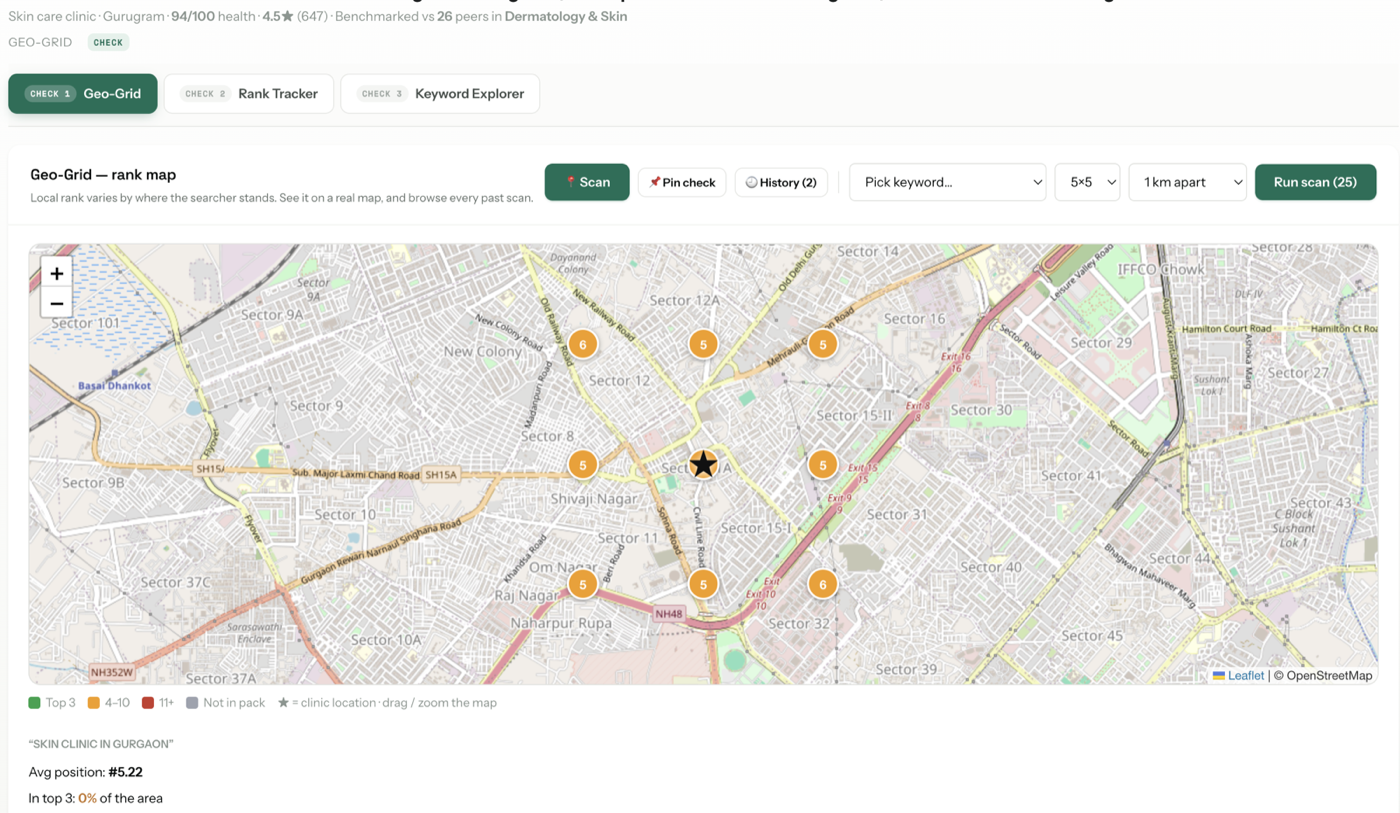
Multi-location gynaecology chains need per-location Geo-Grid tracking with catchment overlap analysis. Two locations 6 km apart cannibalise each other in the local pack unless the profiles are differentiated by primary service focus.
Pricing tier for gynaecology practices
Different scale bands fit different retainer tiers. Every band is available in two shapes — self-serve Angryturtle for owner-operated profiles, or ICG-managed inside the same platform.
Solo OB-GYN OPD or surgery practice: Boutique tier at ₹25,000/- to ₹75,000/- per month covers profile management, review operations with compliance-safe framing, weekly Post cadence, monthly Geo-Grid, quarterly citation build. Fits a solo specialist with one or two profiles.
Multi-doctor gynaecology clinic with delivery: Chain tier at ₹75,000/- to ₹1.5L/- per month covers per-doctor plus per-location profile management, higher Post cadence, weekly Geo-Grid, monthly citation build, Ask Maps AIO scoring.
Hospital OB-GYN department or maternity chain: Hospital tier at ₹1.5L/- to ₹4L/- per month covers hospital-level plus department-level plus per-doctor profile management, daily Post cadence, review operations with escalation workflow, weekly Geo-Grid per location, custom AIO audit.
Solo owner with 1-2 profiles running it themselves: Angryturtle self-serve at ₹999/- per month covers Rank OS scoring, Ask Maps, review draft assistance, and Content Studio inside the same platform ICG's managed team uses.
The 30/60/90 day playbook
Days 1-30: primary category correction (OB-GYN vs Gynecologist), secondary category discipline (fertility crossover decision), full services build-out with PC-PNDT-safe descriptions, business description rewrite, first citation batch across the gynaecology-specific directory list, review-request campaign initiated with compliance-safe framing, Rank OS baseline captured, Ask Maps baseline captured.
Days 31-60: weekly Google Posts live with educational content in the compliance perimeter, Geo-Grid baseline captured across the practice's catchment, FOGSI plus state-chapter citations built and NAP-verified, first Ask Maps gap-closure pass targeting the highest-volume patient query patterns, review velocity beginning to compound, negative-review reply pattern established for delivery-related complaints.

Days 61-90: Rank OS score improvement of 15-25 points typical for a profile that started under-configured, first measurable ranking improvement on primary "gynaecologist in [city]" queries, insurance-panel citation set completed, AIO Readiness score materially improved as Ask Maps question coverage closes, first monthly compliance audit signed off. Compound gains from months 4-6 onward.
The tool ICG uses to run this at scale: Angryturtle

ICG runs local SEO and GBP intelligence for 150+ Indian healthcare brands using Angryturtle — our own AI-native GBP intelligence and management OS. The platform scores every profile 0-100 via a proprietary Rank OS model with five weighted dimensions (Relevance, Review Health, Freshness, Entity Authority, AIO Readiness), publishes edits, Posts, media, and review replies directly to Google, and includes Ask Maps AIO Readiness scoring for Google AI Overviews and ChatGPT visibility.
Available in two shapes: self-serve at ₹999/- per month for solo owners with 1-2 profiles, and ICG's managed service from ₹25,000/- per month where our healthcare specialists execute inside the same platform. Both are anchored in the Healthcare Local SEO Agency India pillar page which has full scope, methodology and pricing.
Book a demo on WhatsApp → or start a free trial at angryturtle.ai →
Related reading
- Healthcare local SEO agency India — the pillar service page
- Local SEO for IVF centres in India — for practices that are heavily fertility-focused
- Angryturtle Rank OS explained — the five-dimension scoring model
- Angryturtle Ask Maps AIO Readiness — how AI-answer visibility is measured
- Healthcare local SEO agency India — pillar page with full pricing
FAQ
Should a solo OB-GYN pick Obstetrician-Gynecologist or Gynecologist as primary category? Obstetrician-Gynecologist if the practice provides prenatal care and deliveries. Gynecologist if the practice is OPD or surgery only without deliveries. The wrong choice loses eligibility for the ranking cluster that matches actual services.
Can a gynaecology profile add "Fertility Clinic" as a secondary category? Only if the practice actively delivers and markets fertility services beyond basic ovulation induction, and only if the corresponding fertility services are listed in the services list. Adding the secondary without service backing splits Relevance signal.
What compliance frameworks affect gynaecology content in India? PC-PNDT Act 1994 (sex-determination restrictions on all obstetric-adjacent content), NMC Ethics Code 2026 (named-patient testimonials, comparative claims), ASCI Guidelines 2022 (advertising claims substantiation). Meta and Google platform healthcare policies add further restrictions.
Can we publish baby photos or delivery photos as Google Posts? Not with identifiable gender or as part of a named-patient testimonial. Even without explicit gender identification the pattern sits close to the PC-PNDT line and reads as risky for a clinic that is meant to be signalling compliance. Use facility photos, team photos, and educational content instead.
How many Google reviews does a competitive gynaecology practice need? 200-400 reviews for a solo OB-GYN in a metro catchment. 500-1,000 for a maternity hospital. Recency matters as much as volume — a stale review profile reads as inactive even at high absolute counts.
Which gynaecology-specific citations should the profile be listed on? FOGSI member directory (flagship), state and city FOGSI chapter directories, Indian Menopause Society directory, ISAR only if the practice offers documented ART services, insurance-panel maternity directories, doctor-directory platforms under the correct sub-category.
How does Ask Maps handle sensitive queries like C-section rate? Ask Maps deliberately does not push profiles to publish comparative outcome claims or PC-PNDT-adjacent answers. The question bank is calibrated for the compliance perimeter, not just query volume.
Can a gynaecology practice buy Angryturtle self-serve instead of the ICG managed retainer? Yes. Solo-owner practices with 1-2 profiles can run Angryturtle self-serve at ₹999/- per month and execute the workflow themselves. Multi-doctor and hospital practices typically prefer ICG's managed tier starting at ₹25,000/- per month where our specialists execute inside the same platform.
How long before a gynaecology profile shows ranking improvement? First measurable movement in 4-6 weeks after category correction and initial citation build. Substantive ranking improvement in 3-4 months. Compound effect visible from month 6 onward with consistent execution.
Book a free SEO diagnostic.
Hanuman Sihag's team runs a live crawl, checks technical health, cannibalisation, schema coverage and content gaps. 60 minutes, prioritised fix list.
The three platforms
behind every ICG engagement.
Beacon
CAPI middleware that fixes Event Match Quality, translates CRM statuses to Meta-standard events, dedups across channels.
Agency OS
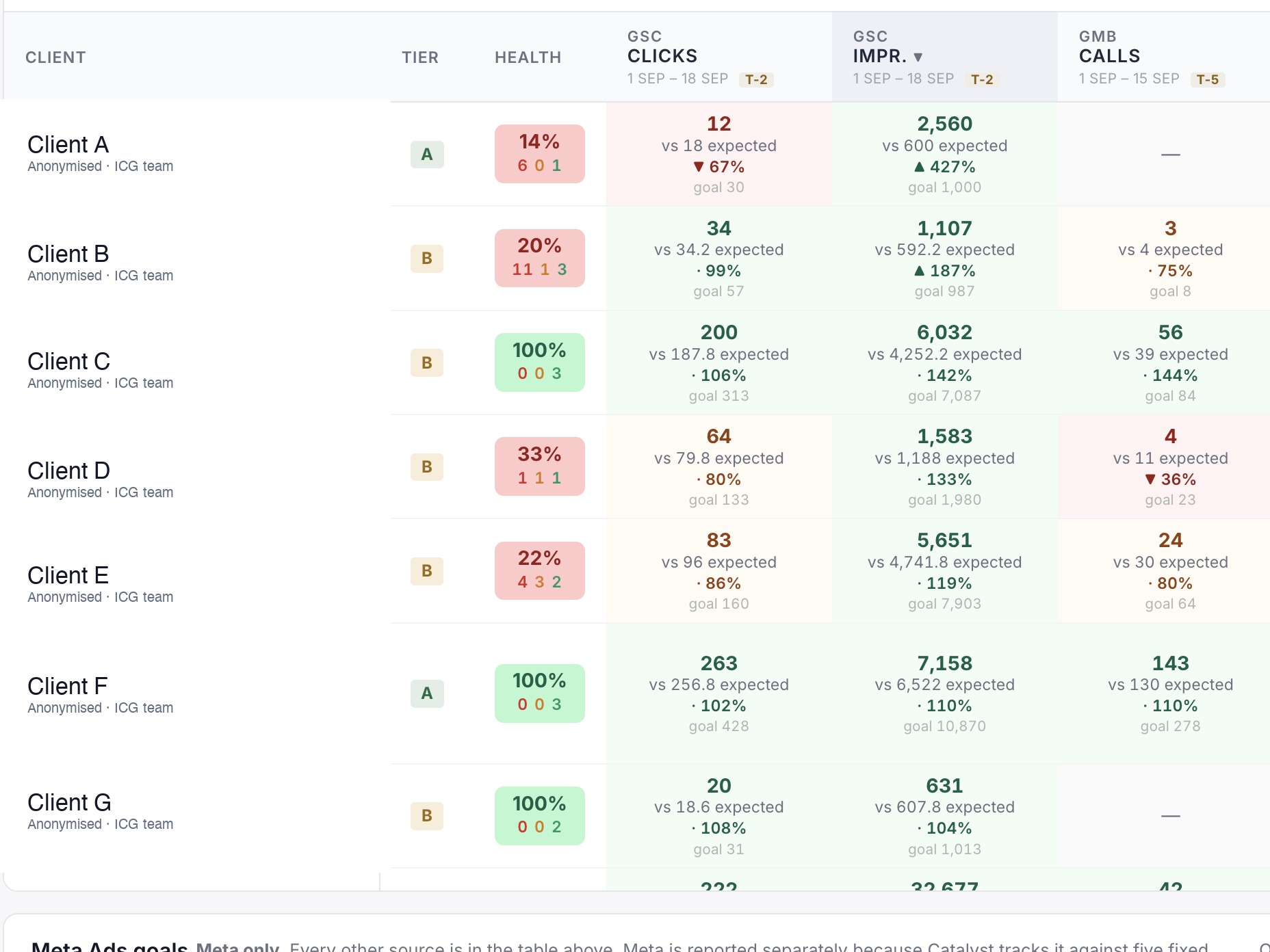
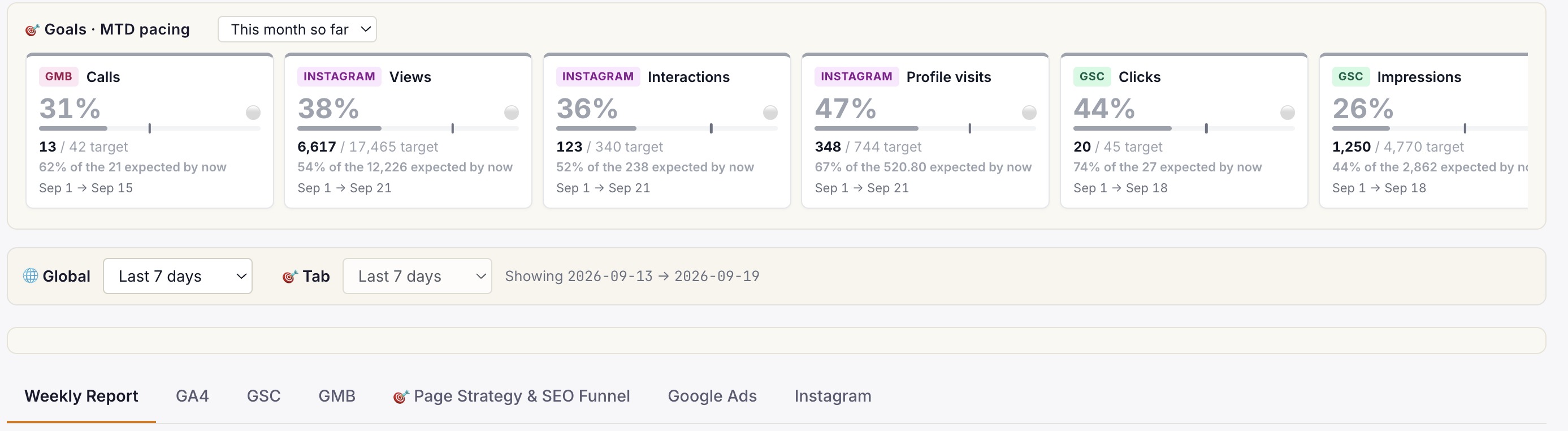
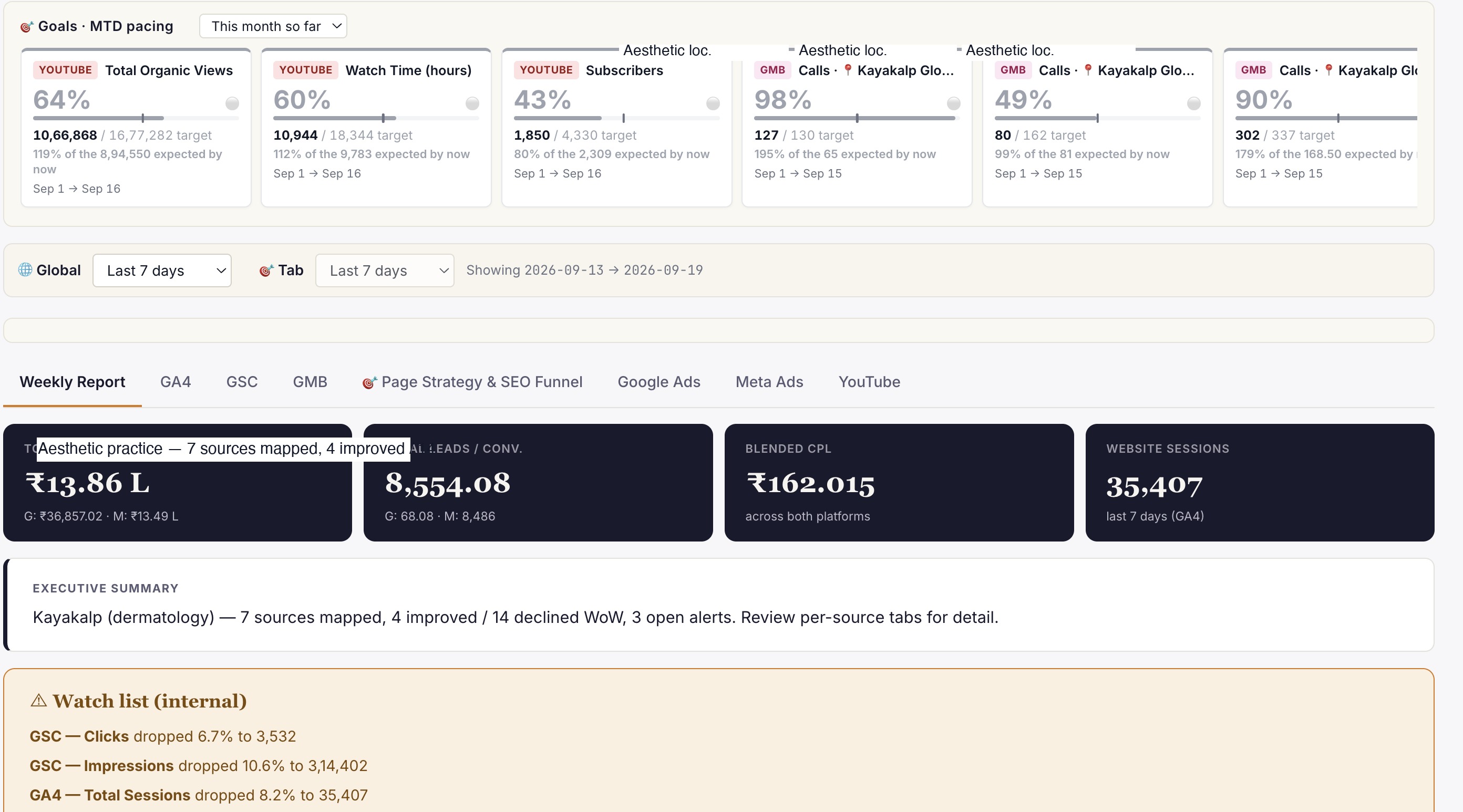
Live client dashboard. GSC, GA4, Google Ads, Meta Ads, IVR calls in one view. Login anytime, not monthly.
Phoenix
Clinic revenue intelligence over your PMS. Daily action queue: Prevent Loss, Maintain & Engage, Grow Revenue. Multi-centre rollout.
Or book a free 30-min audit to see all three in action on your account.
Healthcare brands
that already run on ICG.
A representative slice of the 150+ healthcare brands ICG has delivered for across India. Most engagements remain under NDA.


What ICG clients say · on video.
"Scale up of organic channels and business consulting. ICG has absolute domain authority in their field."
"Working with ICG transformed how we acquire IVF patients in Gurgaon. They understand the fertility journey from inquiry to consult..."
"What Ichelon accomplished — they got all my ideas and worked over 3-4 months to create an amazing, super-customised website."
The intelligence stack behind this playbook.
Every ICG engagement runs on the Search Intelligence Trifecta — Angryturtle for GMB, SIE for search and AI Overview, YODA for YouTube. Live product screens below.
Need help operationalising this?
Every ICG service is healthcare-only, NMC + DPDP-aware, and built around the patient-research patterns that drive Indian healthcare growth in 2026.
Every practice welcome — packages from ₹20,000/mo.
Goals-Driven engagements · Performance-Linked Payout Models available
More from
ICG.
Five trends shaping Indian healthcare marketing through 2027: AI-first patient research, Conversions API adoption, ABDM discovery, the AEO w...
Healthcare AIO is the discipline of getting your clinic or hospital cited inside Google AI Overviews, ChatGPT and Perplexity answers — not j...
Conversational-search advertising places brand messages inside AI chat answers — ChatGPT, Perplexity, Copilot — rather than beside a results...
Stop guessing.
Book a Diagnostic.
30 minutes. Free. With the AI-powered healthcare-only marketing agency 150+ brands already run on. No slides, no pitch, no hard close.


