


Local SEO for cardiology clinics in Delhi (2026): the Escorts-Medanta-Max-Apollo cardiac-chain footprint, NCR-wide spread, CGHS/ECHS panels, and the November-to-February AMI spike that reshapes the whole calendar
Cardiology local SEO in Delhi is a different animal from Mumbai or Bangalore — cardiac-chain hospitals dominate, the catchment stretches across Delhi, Gurugram, Noida, Ghaziabad and Faridabad, government insurance panels drive massive referral volume, and the winter AMI spike from November through February bends the entire content calendar.
No pitch. Written root-cause diagnosis. AI-powered, healthcare only.
Direct answer
Cardiology local SEO in Delhi is a different animal from Mumbai or Bangalore — cardiac-chain hospitals dominate, the catchment stretches across Delhi, Gurugram, Noida, Ghaziabad and Faridabad, government insurance panels drive massive referral volume, and the winter AMI spike fro...
TL;DR
Cardiology local SEO in Delhi is not the same game as Mumbai or Bangalore, and it is easy to lose money running a national playbook against the NCR grid. The catchment does not sit inside city limits. Delhi cardiac patients live across Delhi proper, Gurugram, Noida, Ghaziabad, and Faridabad, and their choice set spans hospitals across three state medical councils (Delhi, Haryana, Uttar Pradesh). The category is cardiac-chain heavy — a set of large heart-focused hospital brands with multi-city footprints dominates search intent, with multi-specialty tier-1 hospitals holding the rest.
Then there is the seasonal reality. Delhi has a genuine winter AMI (acute myocardial infarction) spike from November through February, driven by pollution and cold together. Cardiologist consultations peak in October-November as patients prepare, emergency admissions peak December-January, and elective procedure demand runs strong through Q1. No other Indian metro shows this pattern in the same way. Any GBP Posts calendar that treats winter identically to any other quarter is leaving demand on the table.
This piece extends the national cardiology local SEO guide into Delhi's specific structure, and sits under ICG's healthcare local SEO service line. If you are running local SEO for a cardiac unit anywhere from Sarita Vihar to Sushant Lok, the operating rules below are the ones we apply in client work.
Why Delhi's cardiology local SEO is distinctive
Cardiac chains define the market. The Delhi cardiac footprint is unusually chain-heavy compared to any other metro — several large cardiac-specialty hospital brands run multiple NCR locations each, and the tier-1 multi-specialty hospital chains carry strong cardiac units at most of their addresses. That means the search rankings for cardiology queries in Delhi are a competition between chain brands with distributed profiles rather than between independent hospitals. A cardiac unit in Vasant Kunj is not really competing against just its Vasant Kunj neighbours; it is competing against the chain's Saket location and its Gurugram location for the same intent cluster when a searcher's query is broad rather than proximity-tight.
Categories that shape the field: tier-1 multi-specialty hospital cardiac units spread across South Delhi, West Delhi, East Delhi, and Central Delhi; cardiac-chain-hospital footprints across DLF Phase-3, Sushant Lok, Sohna Road, MG Road, and Golf Course Road in Gurugram; the Sector 128 to Sector 62 corridor in Noida; large government tertiary-care cardiac units at AIIMS, RML, and Safdarjung; and the Faridabad-Ghaziabad chain footprints that catch the outer catchment. Each of these categories has a distinct search behaviour attached to it.
NABH accreditation is the accreditation signal patients look for. Beyond NABH, JCI accreditation matters more in Delhi than in the other metros because Delhi cardiac hospitals carry meaningful Middle East and Bangladesh medical tourism volume, and JCI is the credentialing patients from those markets check for. Practitioner credentialing (DM Cardiology, DNB Cardiology, FACC, FRCP, FSCAI for interventional) belongs on the practitioner profile and in the consultant list on the hospital profile.
GBP configuration for a cardiology clinic in Delhi
Category selection for a Delhi cardiac unit tracks the same primary-and-secondary logic as any cardiology profile, but the emphasis shifts. If the profile is a standalone cardiac-specialty hospital (rather than a cardiac unit within a multi-specialty), Heart Hospital works as primary with Cardiologist and Cardiovascular and Thoracic Surgeon as secondaries. If the profile is a multi-specialty hospital with a strong cardiac unit, primary stays Multi-specialty Hospital and Cardiologist sits high in the secondaries.
Emergency Room as a secondary is worth flagging specifically in Delhi. The winter AMI spike drives ER-first cardiac admissions in a way that other metros do not see. A cardiac unit without Emergency Room as a secondary category loses visibility on the queries that spike in December-January — searches like "cardiac ER open now Vasant Kunj cashless".
Attributes that matter for a Delhi cardiac unit: 24/7 emergency, wheelchair accessible entrance and restroom, accepts insurance (with specific panel names), online appointments where the flow exists, LGBTQ+ friendly where the hospital has an inclusive-care policy, and appointment required. Cardiology-specific attributes: on-site cath lab, 24/7 STEMI service, dedicated cardiac ICU (CCU), primary PCI capability, in-house electrophysiology lab where relevant, and structural heart programme where offered.
Description-writing patterns for Delhi need to work harder on the NCR-spread question. If your hospital is in Gurugram, the description has to make clear which Gurugram — DLF Phase-3, Sushant Lok, Sohna Road, MG Road, Golf Course Extension — because each of these is a distinct catchment in local search. A working opener: "Cardiac unit at [Hospital Name] Sector 44 Gurugram, providing 24/7 primary PCI, coronary intervention, electrophysiology, structural heart interventions including TAVR, and dedicated cardiac ICU. NABH and JCI accredited. Consultant cardiologists include [names] (DM Cardiology, FSCAI). Cashless with [named panels] including CGHS empanelled." That last phrase — CGHS empanelled — earns its own line because it converts.
The consultant-versus-hospital profile split works differently in Delhi than in Mumbai. Delhi has a bigger population of well-known cardiologist names with genuine standalone brand pull — several senior interventional cardiologists have personal referral flows that justify individual profiles. But the maintenance discipline still applies: an individual practitioner profile without weekly Posts, monthly photos, and a live review flow becomes a drag on the associated hospital profile. Chain hospitals in Delhi need a clear internal rule on which consultants get individual profiles and which do not.
Review dynamics for cardiology in Delhi
Delhi cardiology reviews carry two features that Mumbai and Bangalore do not share to the same degree. First, the winter emergency admission spike produces a review peak in December through February that is unmistakable in the data. Family-written reviews describing a father or spouse arriving in respiratory distress or with chest pain during the cold wave season dominate that window. Second, the government insurance patient population — CGHS, ECHS, retired defence — generates a review tone that is warmer, more formal, more grateful, and often mentions the specific insurance panel by name in the review text itself. That specificity gives search engines strong intent signals but exposes review-reply drafters to compliance risk if they echo the panel name back with a service-level claim.
Review velocity benchmarks for a competitive South Delhi cardiac chain unit sit around 12-20 reviews per month at steady state, higher at the well-known cardiac-specialty flagships (25-40 per month). Gurugram flagships sit similar. Noida and Ghaziabad cardiac units run lower, at 6-12 per month for the tier-1 units. A cardiac unit at 2-3 reviews per month in this market is operationally silent.
 angryturtle/17-auto-review-uploader.png" alt="Angryturtle Auto Review Uploader — NMC-compliant review acquisition + response workflow at scale" loading="lazy" decoding="async" style="width:100%;height:auto;display:block;">
NMC-safe review generation in Delhi has the same rules as any Indian cardiology practice — neutral request framing, post-discharge timing, no bedside solicitation — but the emergency-context volume in winter makes the timing question sharper. Emergency admissions in December-January produce discharge conversations that are family-heavy and emotionally intense; requesting a review inside 48 hours of discharge in that context reads as poor form. The right window is 2-4 weeks post-discharge, once the family has processed the event and the insurance settlement has closed.
Review replies for Delhi cardiology reviews carry the DPDP consent and ASCI risk everywhere. A review that mentions "AIIMS-trained doctors" or "the CGHS panel we used" gives you specific facts to acknowledge, but confirming a specific patient's cardiac event details in a public reply without documented consent creates a DPDP exposure. Safe pattern: "Thank you for taking the time to share your family's experience. We are grateful for your trust in our cardiac team." Never confirm the specific procedure, the response time, or the outcome. Keep the specifics for a private thank-you.
Ask Maps AI Overview queries for cardiology in Delhi
AI Overview and ChatGPT-driven cardiology discovery in Delhi produces a distinct query pattern that reflects the NCR spread, the winter emergency reality, and the government insurance overlay. Representative queries we see in client work:
- "24 hour cardiac emergency near Vasant Kunj insurance cashless CGHS"
- "best interventional cardiologist South Delhi angioplasty primary PCI"
- "cardiac hospital Gurugram Sector 44 to Sector 51 with cath lab"
- "heart attack emergency Noida Sector 128 cashless Star Health"
- "NABH JCI accredited heart hospital Delhi NCR TAVR programme"
- "CGHS empanelled cardiologist Rajinder Nagar Karol Bagh area"
- "ECHS cardiac hospital Faridabad Ballabgarh retired defence"
- "electrophysiology arrhythmia specialist Delhi ablation experienced"
- "structural heart TAVR TAVI hospital NCR Medanta or equivalent"
- "winter chest pain cardiologist consultation Gurugram DLF corporate"
What these have in common: proximity anchors combined with specific attribute constraints (CGHS panel, JCI accreditation, primary PCI, TAVR programme). AI Overview compresses two or three hospital cardiac units into a summarised response only when the profiles actually carry the specific attributes in verifiable form. A hospital that offers CGHS empanelment but does not surface it in the profile description or attributes will not get pulled into the panel.
The Angryturtle Ask Maps AIO Readiness score is built for this — measuring whether each profile answers the attribute constraint at the level of specificity AI Overview extraction needs. In Delhi cardiology the readiness score is driven by four factors: insurance panel specificity (CGHS, ECHS, corporate panels named), procedure specificity in the description, NCR-locality anchoring (which Gurugram, which Noida), and NABH/JCI accreditation display.
Citation targets specific to Delhi + cardiology
Delhi cardiac unit citations sit across the multi-jurisdictional NCR reality. The statutory foundation: Municipal Corporation of Delhi (MCD) or New Delhi Municipal Council (NDMC) clinical establishment registration for Delhi addresses; Directorate General of Health Services (DGHS) registration; Clinical Establishments Act 2010 compliance where applicable; Delhi Medical Council (DMC) registration for consultants at Delhi addresses; Haryana Medical Council for Gurugram consultants; Uttar Pradesh Medical Council for Noida and Ghaziabad. A cardiologist consulting across three NCR states needs registration in all three, and citations should reflect that where applicable.
General medical directories with strong Delhi footprint: the national doctor-listing platform's NCR profile (dominant channel), doctor Q&A platform profiles (the largest one is headquartered in Delhi and has particularly strong NCR density), general business directory listings, and corporate-health and health-portal listings. Each with its own maintenance flow. NAP consistency across these is non-negotiable — the exact address string, phone, and business name identical everywhere.
Cardiac-specific and accreditation-linked citations: Cardiological Society of India (CSI) Delhi Chapter membership; Association of Physicians of India (API) Delhi chapter; AIIMS-associated cardiology directory (where consultants are AIIMS-affiliated or trained); NABH-accredited hospital directory; JCI-accredited hospital directory where relevant. Government insurance panels are the citation set that matters most in Delhi: CGHS empanelled hospital list published by the Ministry of Health, ECHS empanelled hospital list for the Ex-Servicemen Contributory Health Scheme, and Ayushman Bharat empanelment lists where the hospital participates. These government empanelment listings drive material referral volume — being on the list is a citation and a lead source both.
Corporate cashless empanelment listings inside insurance TPA networks (Medi Assist, Health India TPA, Vidal Health, Paramount, MDIndia) matter for the Gurugram DLF and Noida corporate corridor volume. Middle East and Bangladesh medical tourism referral aggregators are worth a listing where the hospital has an international patient office, because that catchment is genuine and citations there feed a distinct lead pipeline.
The tool ICG uses to run this at scale: Angryturtle
ICG runs local SEO and GBP intelligence for 150+ Indian healthcare brands using Angryturtle — our own AI-native GBP intelligence and management OS. The platform scores every profile 0-100 via a proprietary Rank OS model with five weighted dimensions (Relevance, Review Health, Freshness, Entity Authority, AIO Readiness), publishes edits, Posts, media, and review replies directly to Google, and includes Ask Maps AIO Readiness scoring for Google AI Overviews and ChatGPT visibility.
For cardiology clinics in Delhi specifically, the platform tracks the cardiac-chain footprint across Delhi proper, Gurugram, Noida, Ghaziabad and Faridabad; schedules the winter Posts calendar for the November-through-February AMI spike so cardiac-emergency and preventive-cardiology content lands when demand peaks; surfaces CGHS, ECHS and Ayushman Bharat empanelment as first-class profile signals rather than description-buried text; and drafts DMC-safe review replies for winter emergency-admission reviews without confirming patient-specific clinical event details.
Available in two shapes: self-serve at ₹999/- per month for solo owners with 1-2 profiles, and ICG's managed service from ₹25,000/- per month where our healthcare specialists execute inside the same platform. Both are anchored in the Healthcare Local SEO Agency India pillar page which has full scope, methodology and pricing.
Book a demo on WhatsApp → or start a free trial at angryturtle.ai →
Related reading
- Local SEO for cardiology clinics in India — the parent specialty guide
- Local SEO for doctors and clinics in Delhi 2026 — the citywide fundamentals
- Angryturtle Rank OS scoring methodology explained
- Angryturtle Ask Maps AIO Readiness explained
- Healthcare Local SEO Agency India
FAQ
Should a Delhi cardiologist have an individual GBP profile or run everything under the hospital's profile? Delhi has more room for individual practitioner profiles than Mumbai because several senior interventional and electrophysiology cardiologists in the city have genuine standalone name recall. The test is the same: does the consultant have an independent referral flow that would justify weekly maintenance of a separate profile, and will that maintenance actually happen. If yes, individual profile. If no, credentials live inside the hospital profile.
How many reviews does a competitive South Delhi hospital cardiac unit need to compete for cardiology queries? Steady-state 12-20 reviews per month is the working range for a South Delhi tier-1 cardiac unit; well-known cardiac-specialty flagships clear 25-40 monthly. What matters more than absolute count is the December-February spike being captured — a hospital that goes silent through winter loses velocity signal at the exact moment cardiac search intent peaks.
What is the CPQL for local SEO for cardiology in Delhi? CPQL for Delhi cardiology sits in a directional range of ₹400-1,600 per qualified lead when GBP is running well, with meaningful variance by NCR location. Gurugram and South Delhi run at the higher end because competitive intensity is higher; Noida and outer NCR run lower. CGHS/ECHS panel leads convert cheaper because the qualification is baked into the search intent.
How does Delhi's winter AMI spike affect our GBP Posts calendar? Meaningfully. October is the pre-winter awareness window (cold-weather cardiac risk education, preventive check-up push). November-February is the emergency-service positioning window (24/7 cath lab, primary PCI capability, ER availability). March is the post-winter recovery and elective procedure window. Content that treats these months identically leaves demand on the table because search intent shifts hard between them.
Can we publish emergency-response-time claims on GBP under ASCI? Only as service-availability statements, never as outcome guarantees. "24/7 primary PCI available with in-house cath lab" is permissible. "Door-to-balloon time under 90 minutes across every case" is not — it is an outcome claim ASCI treats as risky. Delhi specifically sees more scrutiny of emergency-response claims because the cardiac-chain marketing arms race has pushed some competitors close to the line.
What Delhi Medical Council rules apply to cardiac procedure content? DMC applies the NMC Ethics Code 2026 to practitioner advertising with particular attention to comparative claims (no "best cardiologist" framing that ranks against peers) and to procedural superiority claims. For consultants who split practice across DMC and Haryana or UP councils, the strictest applicable interpretation governs — treat the tightest state as the compliance floor for chain-wide content.
How do we handle a review that describes a specific cardiac emergency and outcome? Reply with gratitude in general terms without confirming the specific clinical facts. Especially in Delhi where winter reviews are heavy on emergency detail, the temptation is to echo back the specifics — "we are glad the primary PCI within 45 minutes went well". Resist it. That echo confirms clinical facts publicly and, without a documented DPDP consent form for that patient, creates exposure. Save the specifics for private communication.
What Angryturtle configuration works for a cardiology-focused hospital chain across Escorts-Medanta-Max-Apollo type NCR footprints? Multi-hospital chain scoping with per-location tone capture (a Sushant Lok profile should not read identical to a Saket profile), consultant lifecycle rules that manage individual practitioner profiles without proliferation, the winter Posts calendar automation for the November-February AMI window, CGHS/ECHS/Ayushman Bharat empanelment surfaced as structured signals, and DMC/Haryana-council-aware compliance gating on review replies. The chain marketing lead approves compliance-sensitive replies; the platform handles the operational execution.
Book a free SEO diagnostic.
Hanuman Sihag's team runs a live crawl, checks technical health, cannibalisation, schema coverage and content gaps. 60 minutes, prioritised fix list.
The three platforms
behind every ICG engagement.
Beacon
CAPI middleware that fixes Event Match Quality, translates CRM statuses to Meta-standard events, dedups across channels.
Agency OS
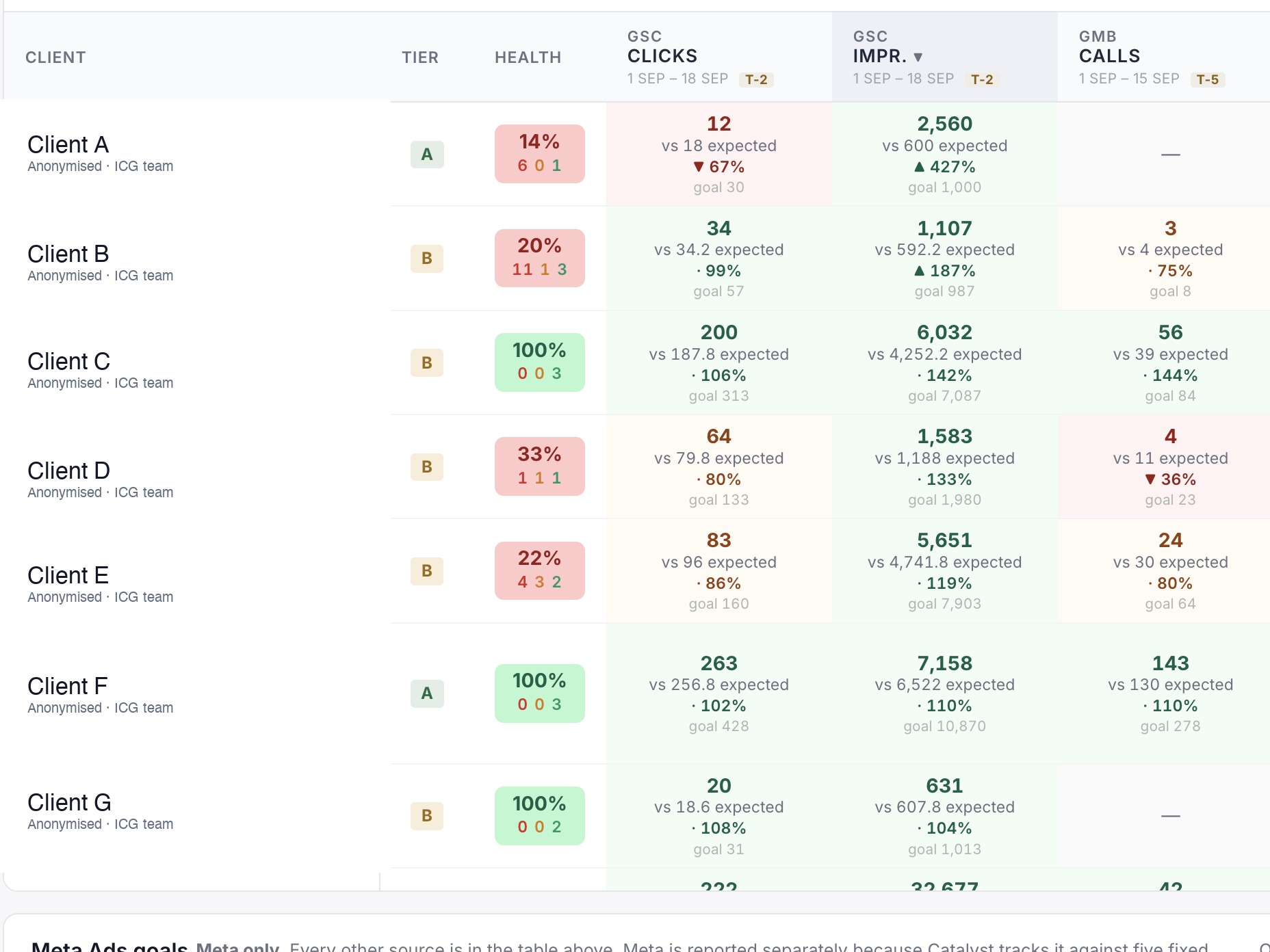
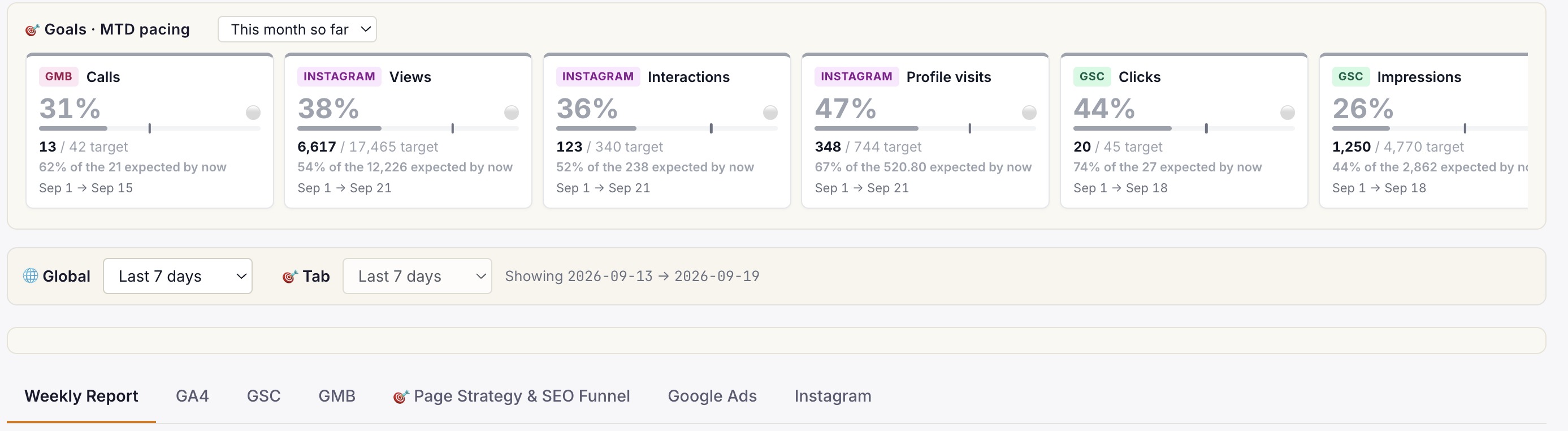
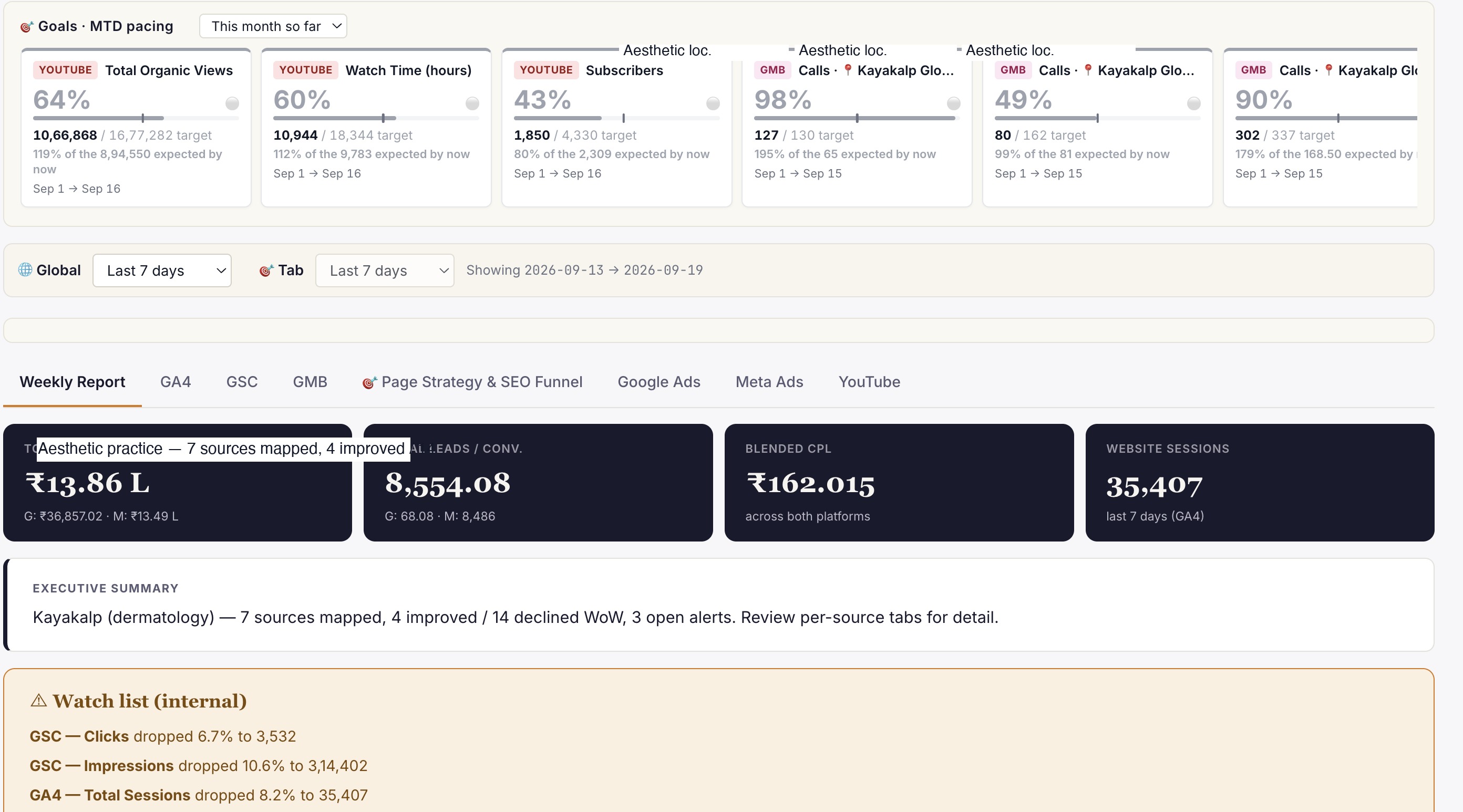
Live client dashboard. GSC, GA4, Google Ads, Meta Ads, IVR calls in one view. Login anytime, not monthly.
Phoenix
Clinic revenue intelligence over your PMS. Daily action queue: Prevent Loss, Maintain & Engage, Grow Revenue. Multi-centre rollout.
Or book a free 30-min audit to see all three in action on your account.
Healthcare brands
that already run on ICG.
A representative slice of the 150+ healthcare brands ICG has delivered for across India. Most engagements remain under NDA.


What ICG clients say · on video.
"Scale up of organic channels and business consulting. ICG has absolute domain authority in their field."
"Working with ICG transformed how we acquire IVF patients in Gurgaon. They understand the fertility journey from inquiry to consult..."
"What Ichelon accomplished — they got all my ideas and worked over 3-4 months to create an amazing, super-customised website."
The intelligence stack behind this playbook.
Every ICG engagement runs on the Search Intelligence Trifecta — Angryturtle for GMB, SIE for search and AI Overview, YODA for YouTube. Live product screens below.
Need help operationalising this?
Every ICG service is healthcare-only, NMC + DPDP-aware, and built around the patient-research patterns that drive Indian healthcare growth in 2026.
Every practice welcome — packages from ₹20,000/mo.
Goals-Driven engagements · Performance-Linked Payout Models available
More from
ICG.
Five trends shaping Indian healthcare marketing through 2027: AI-first patient research, Conversions API adoption, ABDM discovery, the AEO w...
Healthcare AIO is the discipline of getting your clinic or hospital cited inside Google AI Overviews, ChatGPT and Perplexity answers — not j...
Conversational-search advertising places brand messages inside AI chat answers — ChatGPT, Perplexity, Copilot — rather than beside a results...
Stop guessing.
Book a Diagnostic.
30 minutes. Free. With the AI-powered healthcare-only marketing agency 150+ brands already run on. No slides, no pitch, no hard close.


