


Healthcare Local SEO Agency India — GMB + Map Pack Dominance | ICG
Author: Hanuman Sihag · Head of Innovation Chamber (SEO), ICG · July 2026 Google Maps is where most patients make their first healthcare decision. Not the website, not Instagram, not a paid ad. When a patient in Koramangala searches "dermat...
No pitch. Written root-cause diagnosis. AI-powered, healthcare only.
Direct answer
Author: Hanuman Sihag · Head of Innovation Chamber (SEO), ICG · July 2026 Google Maps is where most patients make their first healthcare decision. Not the website, not Instagram, not a paid ad. When a patient in Koramangala searches "dermat...
TL;DR
Author: Hanuman Sihag · Head of Innovation Chamber (SEO), ICG · July 2026
Google Maps is where most patients make their first healthcare decision. Not the website, not Instagram, not a paid ad. When a patient in Koramangala searches "dermatologist near me" on their phone at 8pm, the first thing they see is the Google Maps local pack — 3 clinic listings, their ratings, their distance, and their opening hours. The clinic in position 1 gets 4-6× more clicks than position 4.
Healthcare local SEO is the discipline of earning and holding those position 1-3 slots. ICG manages it for 150+ healthcare clients across India.
Local pack ranking factors in 2026
Google's local pack algorithm weights three primary factor categories: relevance, distance, and prominence.
Relevance is determined by: how specifically your GBP listing matches the search query (a GBP listed as "Dental Clinic" ranks worse for "dental implants" than one listed with Implant Dentistry as a service category), how completely your GBP is filled out (name, address, phone, website, hours, photos, services, attributes), and whether your website content matches the services you list on GBP.
Distance is the only factor ICG cannot engineer — it is fixed by the clinic's physical location. The implication: if a clinic is 4km from the search origin, it cannot beat a 1km competitor on distance alone. It must outrank on relevance and prominence.
Prominence is determined by: review count and rating (the most actionable factor), citations (NAP consistency across directories — doctor-directory platforms, local business listings, NMC provider directories), website authority (organic SEO backlinks improve Maps prominence), and GBP engagement signals (GBP posts, Q&A responses, photo uploads).
ICG's GBP optimisation protocol
Step 1: Complete GBP build Every service listed individually (not just "dermatology" but: laser hair removal, chemical peels, botulinum toxin, dermal fillers, acne treatment, skin brightening — each as a separate service with 150-200 word service description). All attributes selected (appointment required/not required, accepts insurance, wheelchair accessible, languages spoken). 25+ high-quality photos (interior, exterior, equipment, team — no patient imagery). 500+ character business description with primary keyword in the first sentence.
Step 2: Structured review generation programme ICG's Beacon-powered review request sends a WhatsApp message at day 3-7 after a consultation with a direct Google review link. Target: 15-25 new reviews per month per location. The review request message does not mention the rating requested (inducement to a specific rating violates Google's review policy and NMC ethics provisions). ICG's clinic review portfolio: average rating 4.7+ across active review generation programmes.
Step 3: Weekly GBP post cadence Google uses GBP post activity as a freshness and engagement signal. ICG posts 1-2 GBP posts per week for each client location — seasonal health tips, new service announcements, doctor credential updates. All posts are NMC-compliant (educational carve-out, no outcome claims, no before-and-after).
Step 4: Q&A section management Google Maps allows any user to post a question on a business's GBP listing. Most clinics don't monitor these — resulting in unanswered patient questions that reduce conversion rate. ICG monitors Q&A sections across all client GBPs and responds to all questions within 24 hours.
Step 5: Citation audit and clean-up Inconsistent NAP (name, address, phone) across doctor-directory platforms, local business listings, Bing Places, Apple Maps, and other directories depresses Maps prominence. ICG runs a citation audit at engagement start, corrects all inconsistencies, and ensures ongoing consistency as address or phone changes occur.
 angryturtle/08-nap-citation-audit.png" alt="Angryturtle NAP Intelligence — us-vs-competitor citation audit across 40+ Indian healthcare directories" loading="lazy" decoding="async" style="width:100%;height:auto;display:block;">
Multi-location healthcare LOM (Location Operations Management)
Clinics with 2-10 locations need a different local SEO architecture from single-location practices.
The multi-location challenge: Each location needs its own GBP, its own citation network, its own review generation programme, and its own location-specific landing page on the website. Running these as a single unified effort — one GBP, one review request system, one location page — causes Google to consolidate signals in a way that benefits no individual location.
ICG's multi-location local SEO protocol:
- Separate GBP for every location (even within the same city)
- Separate location landing page for every clinic (with location-specific content: catchment area description, nearest landmarks, unique services available at that location)
- Location-specific review generation tracking in Agency OS (dashboard shows review count and rating per location)
- Regular GBP audit across all locations (any location that falls below 4.3 stars triggers a review recovery programme)
The Bing Places gap
Most healthcare local SEO programmes focus exclusively on Google Maps. Bing Places (Microsoft's local search product) is a missed opportunity.

Bing powers Cortana and Microsoft Edge search — and as of 2025, Bing's AI-powered search (via Microsoft Copilot) is one of the growing AI answer platforms citing healthcare provider data. An unmanaged or incomplete Bing Places listing means missed citations in Microsoft Copilot's local healthcare answers.
ICG creates and optimises Bing Places listings for all healthcare clients as part of the local SEO programme — a 2-3 hour one-time setup that captures Bing/Copilot local citations with no ongoing cost.
FAQ
Q1: How long before local SEO improvements generate patient enquiries? Google Maps ranking improvements are typically visible within 4-8 weeks of GBP optimisation and first review generation. Patient enquiry volume increase: 6-12 weeks. The fastest results come from review generation (direct impact on prominence and CTR from Maps results) and GBP category/service optimisation (direct impact on relevance). Full local SEO compound: 3-6 months.
Q2: What Google rating do I need to rank in the Maps local pack? In most urban Indian healthcare markets: 4.3+ is the minimum for consistent local pack appearance. 4.6+ is the target for dominant, consistent position 1-2. Below 4.0, Google Maps visibility drops sharply regardless of other optimisation signals. ICG's review generation programme targets 4.7+ within 90 days for practices starting below this threshold.
Q3: Can ICG manage GBP for multi-location clinic chains? Yes. ICG manages multi-location GBP portfolios across chains from 2 to 50+ locations. The Agency OS dashboard provides a single view of all location GBPs — showing position, review count, rating, and monthly enquiry volume per location. Underperforming locations are identified and prioritised automatically.
Q4: Does GBP management include responding to negative reviews? Yes. ICG monitors and responds to all Google reviews — positive and negative — within 24 hours. For negative reviews, the ICG response protocol: acknowledge without admitting liability, do not disclose any clinical information about the reviewer (DPDP Act 2023), and redirect to a private channel for resolution. ICG's response framework is calibrated to NMC ethics provisions (patient privacy) and Google's review policy (no incentivised review modification).
Compliance note: Reviewed against NMC Section 6, DPDP Act 2023, Google Business Profile policies.
Book a free SEO diagnostic.
Hanuman Sihag's team runs a live crawl, checks technical health, cannibalisation, schema coverage and content gaps. 60 minutes, prioritised fix list.
The three platforms
behind every ICG engagement.
Beacon
CAPI middleware that fixes Event Match Quality, translates CRM statuses to Meta-standard events, dedups across channels.
Agency OS
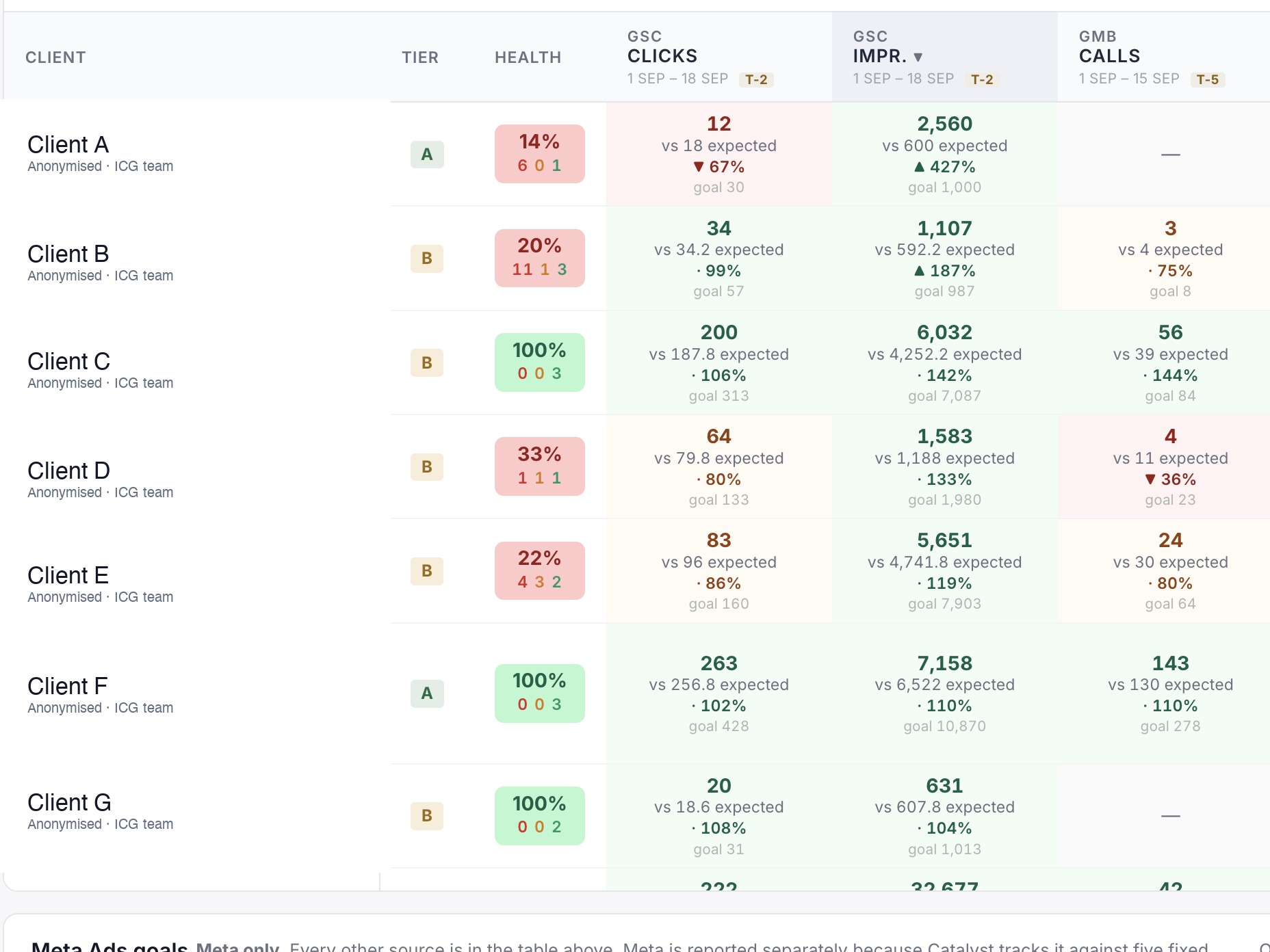
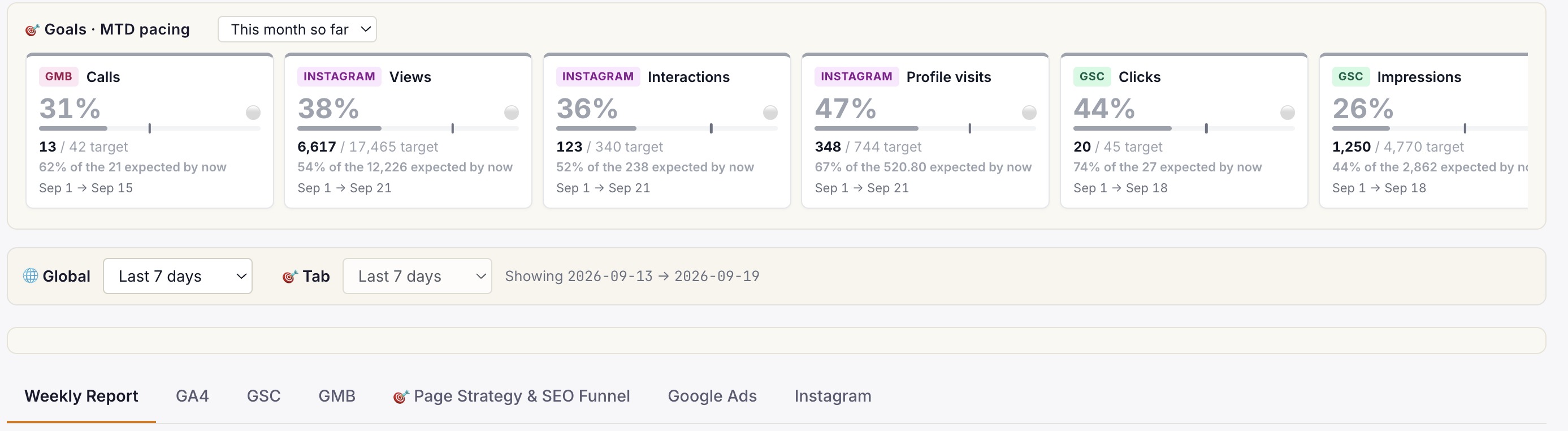
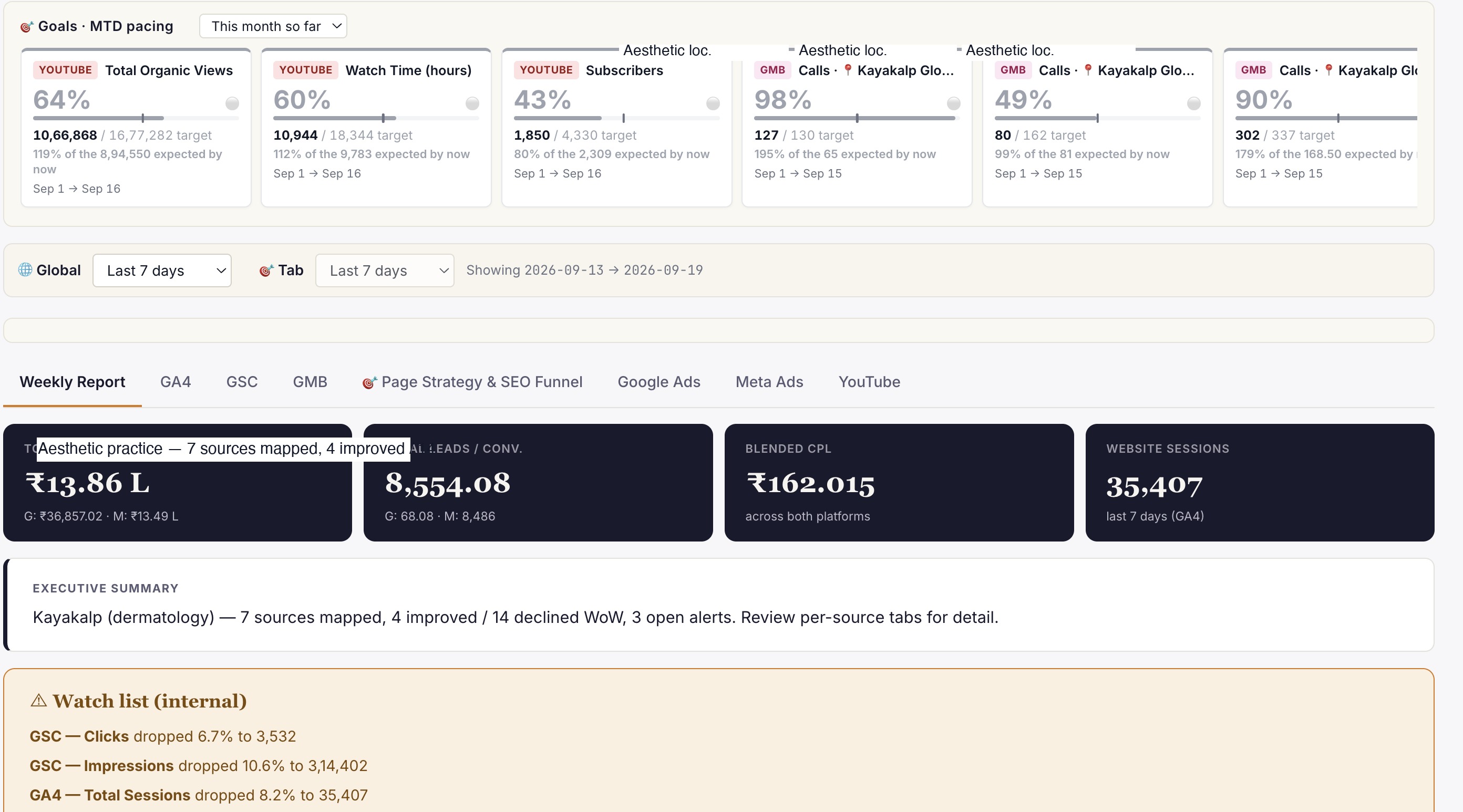
Live client dashboard. GSC, GA4, Google Ads, Meta Ads, IVR calls in one view. Login anytime, not monthly.
Phoenix
Clinic revenue intelligence over your PMS. Daily action queue: Prevent Loss, Maintain & Engage, Grow Revenue. Multi-centre rollout.
Or book a free 30-min audit to see all three in action on your account.
Healthcare brands
that already run on ICG.
A representative slice of the 150+ healthcare brands ICG has delivered for across India. Most engagements remain under NDA.


What ICG clients say · on video.
"Scale up of organic channels and business consulting. ICG has absolute domain authority in their field."
"Working with ICG transformed how we acquire IVF patients in Gurgaon. They understand the fertility journey from inquiry to consult..."
"What Ichelon accomplished — they got all my ideas and worked over 3-4 months to create an amazing, super-customised website."
The intelligence stack behind this playbook.
Every ICG engagement runs on the Search Intelligence Trifecta — Angryturtle for GMB, SIE for search and AI Overview, YODA for YouTube. Live product screens below.
Need help operationalising this?
Every ICG service is healthcare-only, NMC + DPDP-aware, and built around the patient-research patterns that drive Indian healthcare growth in 2026.
Every practice welcome — packages from ₹20,000/mo.
Goals-Driven engagements · Performance-Linked Payout Models available
More from
ICG.
Five trends shaping Indian healthcare marketing through 2027: AI-first patient research, Conversions API adoption, ABDM discovery, the AEO w...
Healthcare AIO is the discipline of getting your clinic or hospital cited inside Google AI Overviews, ChatGPT and Perplexity answers — not j...
Conversational-search advertising places brand messages inside AI chat answers — ChatGPT, Perplexity, Copilot — rather than beside a results...
Stop guessing.
Book a Diagnostic.
30 minutes. Free. With the AI-powered healthcare-only marketing agency 150+ brands already run on. No slides, no pitch, no hard close.


