


Local Citations Still Matter: How to Build Entity Authority and Close Citation Gaps
Every few years someone declares that local citations are dead. Then a competitor with a nearly identical Google Business Profile quietly outranks you in the map pack, and you start wondering what the
No pitch. Written root-cause diagnosis. AI-powered, healthcare only.
Direct answer
Every few years someone declares that local citations are dead. Then a competitor with a nearly identical Google Business Profile quietly outranks you in the map pack, and you start wondering what the
TL;DR
TL;DR
- Detailed guidance on local citations — the specific mechanics, benchmarks, and Turtle-enabled tactics
- Backed by ICG's managed healthcare Google Business Profile portfolio data
- NMC + NABH + ART Act + DPDP compliance built into every recommendation
- Applicable to solo clinics, multi-location chains, and enterprise hospital groups across India + global markets
Every few years someone declares that local citations are dead. Then a competitor with a nearly identical Google Business Profile quietly outranks you in the map pack, and you start wondering what they know that you don't. Often, the answer is unglamorous: they are listed consistently across the directories that matter for your industry and location, and you are not.
Citations are not a growth hack. They are infrastructure. And like most infrastructure, they only get noticed when they are missing.
What a Local Citation Actually Is
A local citation is any online mention of your business's core identity details, most importantly your Name, Address, and Phone number, or NAP. That mention might live on a large directory, a local chamber of commerce page, an industry association, or a data aggregator that feeds dozens of other sites.
Citations come in two forms:
- Structured citations are entries in dedicated business directories, where your details sit in defined fields, name here, phone there, category selected from a list. Think Google Business Profile, Bing Places, Apple Business Connect, and in India, national local-business directories, plus vertical directories such as doctor-listing platforms for healthcare.
- Unstructured citations are organic mentions in the flow of content, a local news article, a blog roundup, a sponsor list on an event page. There are no tidy fields; your NAP simply appears in prose.
Both matter. Search engines cross-reference these mentions to confirm that your business is real, established, and located where you say it is.
Why Consistency Beats Volume
Here is the mechanism that makes citations worth the effort. Search engines assemble an understanding of your business by reconciling signals from across the web. When your name, address, and phone number match everywhere, each citation reinforces the same fact and strengthens confidence. When they conflict, "Suite 4" on one listing, "Unit 4" on another, an old phone number lingering on a third, that confidence erodes.
This is where the idea of entity authority comes in. Google increasingly treats your business as an entity, a distinct thing in its knowledge graph with attributes it trusts to varying degrees. Consistent, corroborated citations across reputable sources raise that trust. Inconsistent or thin citations leave the entity ambiguous, and ambiguity rarely wins local visibility.
This is also why chasing raw volume backfires. Two hundred listings scattered with mismatched details do more harm than thirty accurate ones on directories that genuinely serve your market. Quality and consistency are not tie-breakers here; they are the whole game.
Quick self-check: Search your business name in quotes alongside your city. Do the phone number and address match on the first two pages of results? If you spot even one stale entry, that is a trust leak worth fixing.
The Citation Gap Your Competitors Exploit
Most businesses build a handful of citations at launch and never revisit them. Meanwhile, competitors who take local SEO seriously keep appearing in places you have never checked, a regional directory, a niche vertical listing, an aggregator that quietly syndicates to a dozen sites.
That difference is a citation gap: the set of relevant, authoritative directories where your competitors are listed and you are absent. Every one of those listings is a corroborating signal they earn and you forgo. Close the gap and you level a field that has been tilted without your knowledge.
Finding it manually is punishing. You would have to identify your true local competitors, audit each of their listings across dozens of directories, cross-check your own presence, and flag every NAP inconsistency by hand, then repeat it as listings drift over time. Almost nobody sustains that.
How Automated Discovery Changes the Work
This is the problem our platform, Turtle by Ichelon, was built to solve. Instead of guessing, Turtle automatically discovers where your business already appears across the web, audits every one of those listings for NAP consistency, and flags the mismatches that quietly drain your entity authority.
It then does the part that matters most for rankings: it maps your citation gap. By analyzing where comparable local businesses are listed, Turtle surfaces the specific directories, general and industry-specific, where you should appear but currently don't. You stop working from a generic checklist and start working from evidence tied to your market and category.
The output is a clear, prioritized picture: where you're listed, where your details conflict, and where the opportunities sit. That turns citation building from a vague chore into a defined project with a finish line.
If you have never audited your listings, start there. Even a single afternoon of correcting inconsistent NAP details across your existing citations can tighten the signals Google uses to place you.
Building and Maintaining, Not Just Fixing
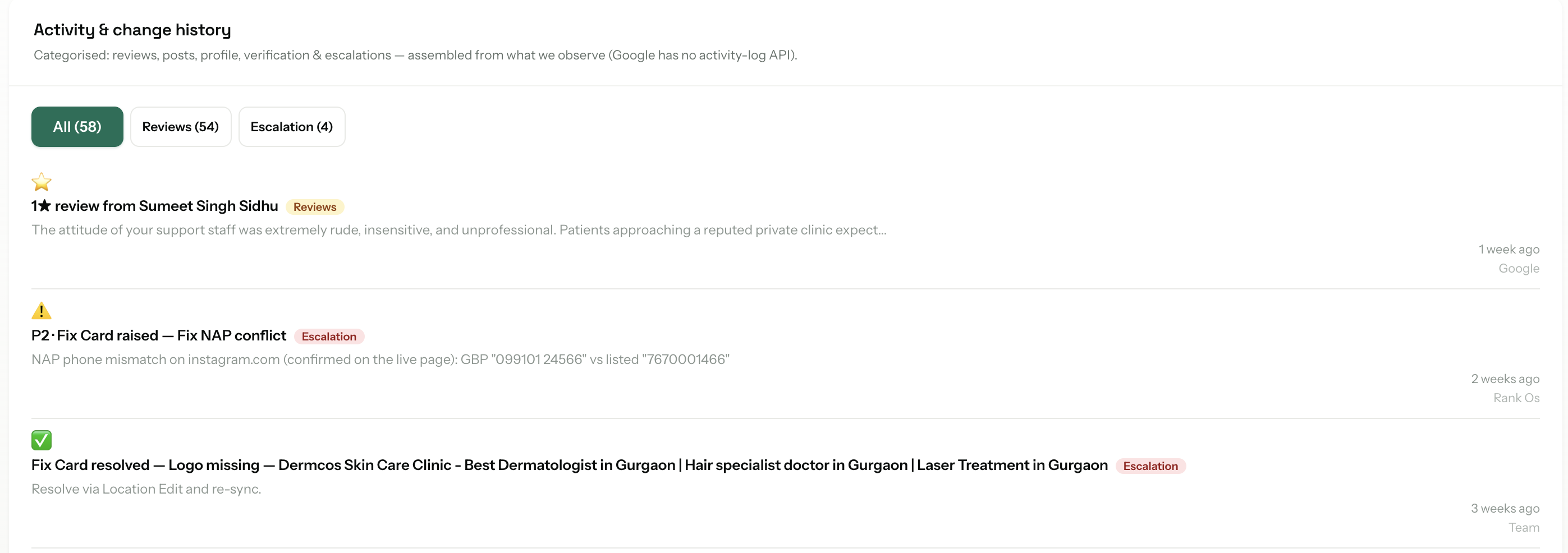
Discovery is step one. Entity authority is earned through accurate building and ongoing maintenance, because directories change, businesses relocate, phone numbers get updated, and new platforms emerge. A listing that was perfect last year can quietly go stale.
Ichelon Consulting handles both sides. We build citations on the right directories with consistent, correct details, then monitor them so your NAP stays aligned as things shift. The goal is not a one-time cleanup; it is a durable, corroborated presence that keeps reinforcing who you are and where you operate.
For businesses that manage this alongside their Google Business Profile, citations and profile signals work best in concert. You can read more on our Google Business Profile Management service page to see how the two fit together.
Frequently Asked Questions
How many local citations does a business need? There is no magic number. A focused set of accurate, relevant citations on the directories that serve your industry and location outperforms hundreds of inconsistent ones. Prioritize fit and accuracy over a raw count.
Do citations still matter if I already rank well? Yes. Citations are a maintenance signal as much as a growth one. Inconsistencies that creep in over time can weaken the trust that helped you rank, and competitors closing their own citation gaps can gradually catch up.
What is a citation gap? It is the set of relevant, authoritative directories where your competitors are listed and you are not. Each missing listing is a corroborating signal you're leaving on the table, and closing the gap strengthens your entity authority.
Stop guessing where your business should be listed. Let Ichelon Consulting run a citation and NAP audit, find the gaps your competitors are exploiting, and build the consistent presence that strengthens your entity authority. Get started with Ichelon Consulting.
Book a free 30-minute Brand & Growth Diagnostic.
It's a working session, not a sales pitch — you leave with a written root-cause analysis you can act on, whether or not you engage ICG.
The three platforms
behind every ICG engagement.
Beacon
CAPI middleware that fixes Event Match Quality, translates CRM statuses to Meta-standard events, dedups across channels.
Agency OS
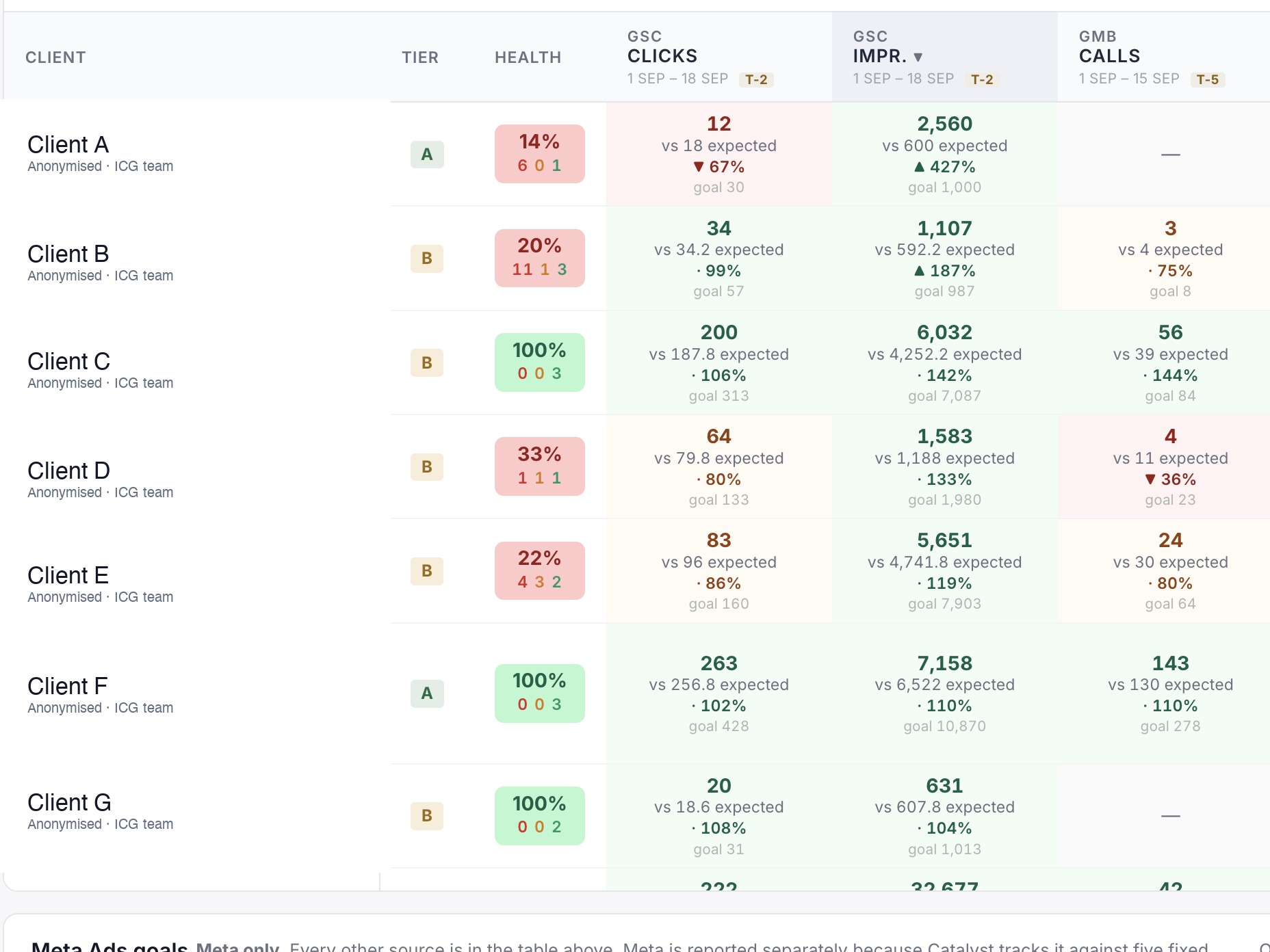
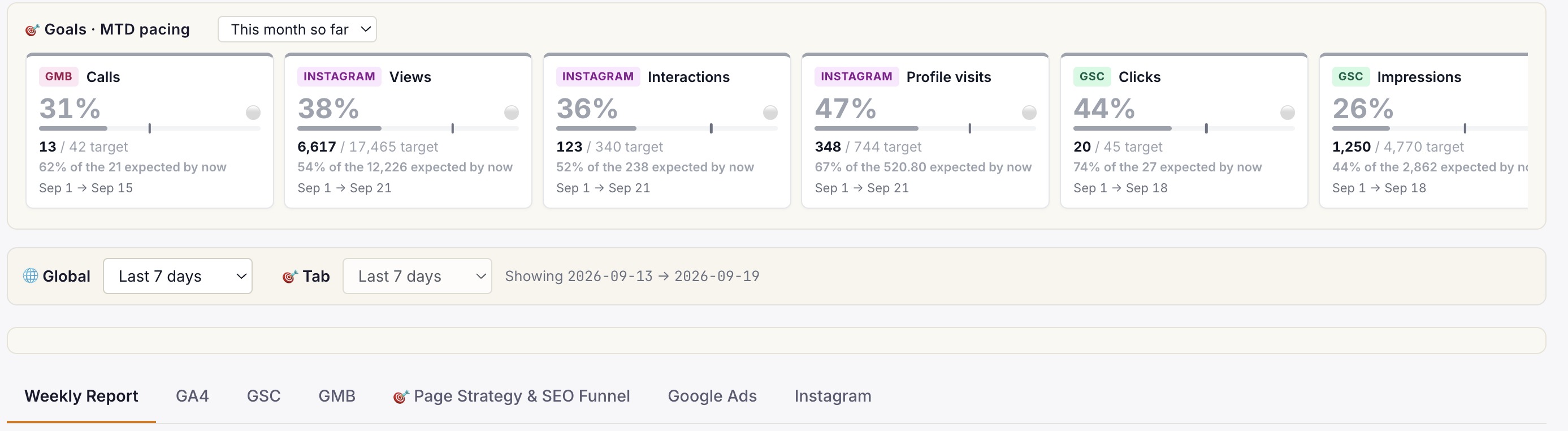
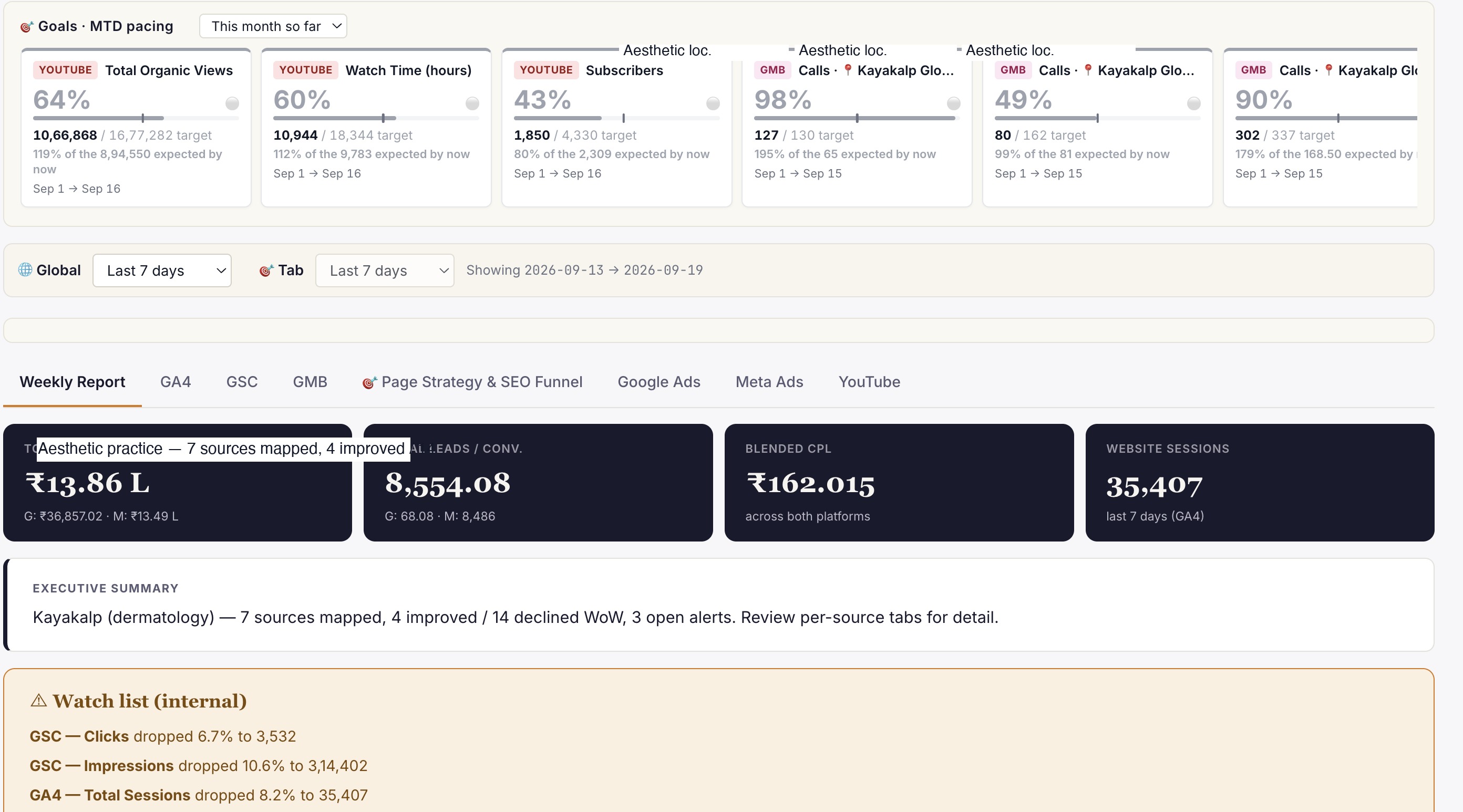
Live client dashboard. GSC, GA4, Google Ads, Meta Ads, IVR calls in one view. Login anytime, not monthly.
Phoenix
Clinic revenue intelligence over your PMS. Daily action queue: Prevent Loss, Maintain & Engage, Grow Revenue. Multi-centre rollout.
Or book a free 30-min audit to see all three in action on your account.
Healthcare brands
that already run on ICG.
A representative slice of the 150+ healthcare brands ICG has delivered for across India. Most engagements remain under NDA.


What ICG clients say · on video.
"Scale up of organic channels and business consulting. ICG has absolute domain authority in their field."
"Working with ICG transformed how we acquire IVF patients in Gurgaon. They understand the fertility journey from inquiry to consult..."
"What Ichelon accomplished — they got all my ideas and worked over 3-4 months to create an amazing, super-customised website."
The intelligence stack behind this playbook.
Every ICG engagement runs on the Search Intelligence Trifecta — Angryturtle for GMB, SIE for search and AI Overview, YODA for YouTube. Live product screens below.
Need help operationalising this?
Every ICG service is healthcare-only, NMC + DPDP-aware, and built around the patient-research patterns that drive Indian healthcare growth in 2026.
Every practice welcome — packages from ₹20,000/mo.
Goals-Driven engagements · Performance-Linked Payout Models available
More from
ICG.
Five trends shaping Indian healthcare marketing through 2027: AI-first patient research, Conversions API adoption, ABDM discovery, the AEO w...
Healthcare AIO is the discipline of getting your clinic or hospital cited inside Google AI Overviews, ChatGPT and Perplexity answers — not j...
Conversational-search advertising places brand messages inside AI chat answers — ChatGPT, Perplexity, Copilot — rather than beside a results...
Stop guessing.
Book a Diagnostic.
30 minutes. Free. With the AI-powered healthcare-only marketing agency 150+ brands already run on. No slides, no pitch, no hard close.


