


Doctor Personal Brand Website + Schema India 2026 — AEO-Ready | ICG
Author: Deep Das · Co-Founder, ICG · IIT BHU · July 2026 A doctor's personal brand website is the credential anchor for everything else: Google Ads link to it, Instagram bio links to it, YouTube description links to it, and — most important...
No pitch. Written root-cause diagnosis. AI-powered, healthcare only.
Direct answer
Author: Deep Das · Co-Founder, ICG · IIT BHU · July 2026 A doctor's personal brand website is the credential anchor for everything else: Google Ads link to it, Instagram bio links to it, YouTube description links to it, and — most important...
TL;DR
Author: Deep Das · Co-Founder, ICG · IIT BHU · July 2026
A doctor's personal brand website is the credential anchor for everything else: Google Ads link to it, Instagram bio links to it, YouTube description links to it, and — most importantly in 2026 — AI systems cite it when a patient asks which specialist they should consider for their condition.
The website architecture ICG builds for doctor personal brand sites is AEO-first — structured so that every page is eligible for AI Overview extraction, ChatGPT citation, and Perplexity reference. This is the blueprint.
 yoda/02-aio-lab-rank-checker.png" alt="YODA AIO Lab Rank Checker — daily monitoring of AI Overview citation status for every tracked healthcare query" loading="lazy" decoding="async" style="width:100%;height:auto;display:block;">
The doctor personal brand website structure
Page 1: Homepage / Doctor Profile (the anchor page)
Content: 1,500-2,500 words. Structured as:
- Hero: doctor name + specialty + hospital affiliation + 2-3 credential differentiators
- Credentials section: MBBS, PG, DM/MCh/fellowship (with institution names and years), additional certifications, professional society memberships
- Clinical focus: specific sub-specialties and procedures (more specific = more AEO-citable)
- Case volume: "2,500+ [procedure] performed" where disclosable — specific volumes are highly LLM-cited
- Publications: PubMed-linked publication list (even 2-3 publications significantly improve citation probability)
- Patient testimonials: journey-format, DPDP-compliant, face visible
- Consultation information: fee, availability, hospital location, WhatsApp CTA
- FAQPage schema: 8-10 Q&As covering the most-asked patient questions about the specialty
Person schema on this page:
The `sameAs` array is the credential verification chain. Google and LLMs browse these URLs to verify the credential claims in the schema. Each linked profile must be genuinely accessible and consistent with the schema claims — inconsistency between the schema and the linked profiles reduces trust rather than building it.
Page 2: Procedure pages (one per major procedure)
Structure for each procedure page: 1,000-1,800 words.
- What the procedure is (mechanism, indication) — educational carve-out
- Who is a good candidate — candidacy criteria (not outcome promises)
- What happens during the procedure — step-by-step process
- Recovery and aftercare — specific, practical, patient-useful
- What to expect in terms of outcomes — published population-level data, individual variability acknowledged, no guarantees
- Frequently asked questions: 8-10 Q&As with FAQPage schema
- Consultation CTA with WhatsApp link
MedicalProcedure schema on each procedure page:
Page 3: Patient information / FAQ hub
A comprehensive FAQ hub — 20-30 frequently asked patient questions organised by topic (before the procedure, during the procedure, recovery, costs, candidacy). Each Q&A structured with the 40-60 word direct answer at the top (for AIO extraction), followed by a full explanation.
This page is typically the highest-AIO-citation page on the entire doctor website. ICG's AIO Intel Tool data shows FAQ hub pages have 38-44% AIO citation rate within 3 months for doctors with established website authority.
FAQPage schema on this page with all Q&As in the `mainEntity` array.
Page 4: Blog / Insights
Monthly publication of 2 educational articles authored by the doctor (ICG ghost-writes in the doctor's voice, doctor reviews and approves). Article format:
- Named-author byline with full credential display
- Article schema with reviewedBy pointing to the doctor
- FAQPage schema with the article's Q&A sections
- Internal links to relevant procedure pages
- External citations to published research (ICH, NMC, PubMed sources)
The sameAs verification chain — why it matters
ICG's AEO testing data shows a clear pattern: doctor website pages where the Person schema `sameAs` array connects to 4+ verifiable external profiles (LinkedIn, hospital, PubMed/ResearchGate, NMC register) achieve 2.8× higher AIO citation rates than equivalent pages where `sameAs` is empty or contains only 1-2 references.
The mechanism: Google and LLMs verify credential claims by browsing the linked URLs. A doctor whose Person schema claims "MCh, Hepatobiliary Surgery, AIIMS fellowship" but whose LinkedIn lists different credentials creates a trust conflict — and the citation probability drops.
ICG's credential verification process: before implementing Person schema, ICG audits all credential claims against the linked profiles and resolves any inconsistencies. The schema must be accurate — not aspirational.
The AEO-optimised doctor website: 6 mandatory elements
| Element | Implementation | AEO impact |
|---|---|---|
| Person schema with complete sameAs chain | On homepage + all authored pages | 2.8× citation uplift |
| FAQPage schema | On every page with Q&A sections | 3-5× AIO eligibility uplift |
| reviewedBy schema | On all clinical content pages | 2-3× AIO eligibility uplift |
| 40-60 word direct-answer blocks | At top of every FAQ response | Primary AIO extraction format |
| Named-author byline with credential display | On every blog/article page | E-E-A-T signal |
| External citation to published research | In every clinical content page | Trust/authority signal |
FAQ
Q1: Should a doctor's personal website be separate from the clinic's website? For surgeons and specialist consultants who want to build a named personal brand: yes, a separate personal website (drname.com or drname.in) provides a cleaner credential-signalling architecture. The personal website is the professional CV and educational content anchor; the clinic website is the service and appointment landing page. ICG builds both simultaneously with appropriate internal linking between them.
For GPs, general physicians, and specialists whose personal brand is fully embedded in the clinic brand: a doctor profile page on the clinic website (with complete Person schema) is sufficient without a separate personal website.
Q2: How long does it take to get a new doctor website AIO-cited? For a new doctor website on a new domain: 8-16 weeks before first AIO citation (domain authority needs to build from zero). For a new doctor page on an established clinic website (established domain authority): 3-6 weeks before first AIO citation after schema implementation. Beacon CAPI and YODA are not involved in this process — it's purely schema, content, and domain authority.
Q3: Can ICG build a doctor personal brand website? Yes. ICG's doctor personal brand programme includes: website architecture and content production, Person schema implementation with full sameAs credential verification, procedure pages with MedicalProcedure schema, FAQ hub with FAQPage schema, blog programme, and AIO Intel Tool monitoring for citation tracking. Contact /book for a free doctor brand diagnostic.
Compliance note: NMC Section 6, DPDP Act 2023.
Book a free SEO diagnostic.
Hanuman Sihag's team runs a live crawl, checks technical health, cannibalisation, schema coverage and content gaps. 60 minutes, prioritised fix list.
The three platforms
behind every ICG engagement.
Beacon
CAPI middleware that fixes Event Match Quality, translates CRM statuses to Meta-standard events, dedups across channels.
Agency OS
Live client dashboard. GSC, GA4, Google Ads, Meta Ads, IVR calls in one view. Login anytime, not monthly.
Phoenix
Clinic revenue intelligence over your PMS. Daily action queue: Prevent Loss, Maintain & Engage, Grow Revenue. Multi-centre rollout.
Or book a free 30-min audit to see all three in action on your account.
Healthcare brands
that already run on ICG.
A representative slice of the 150+ healthcare brands ICG has delivered for across India. Most engagements remain under NDA.


What ICG clients say · on video.
"Scale up of organic channels and business consulting. ICG has absolute domain authority in their field."
"Working with ICG transformed how we acquire IVF patients in Gurgaon. They understand the fertility journey from inquiry to consult..."
"What Ichelon accomplished — they got all my ideas and worked over 3-4 months to create an amazing, super-customised website."
The intelligence stack behind this playbook.
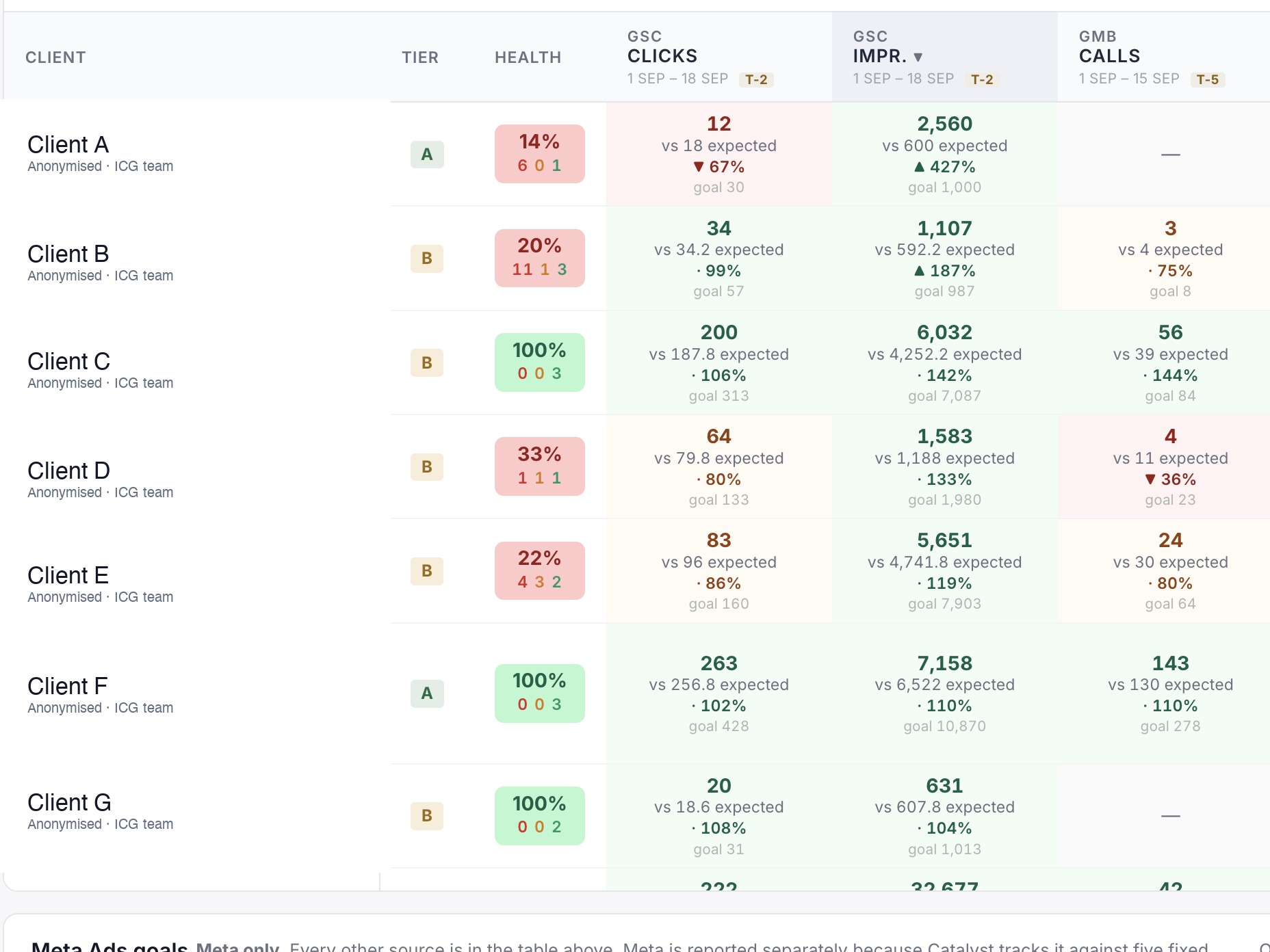
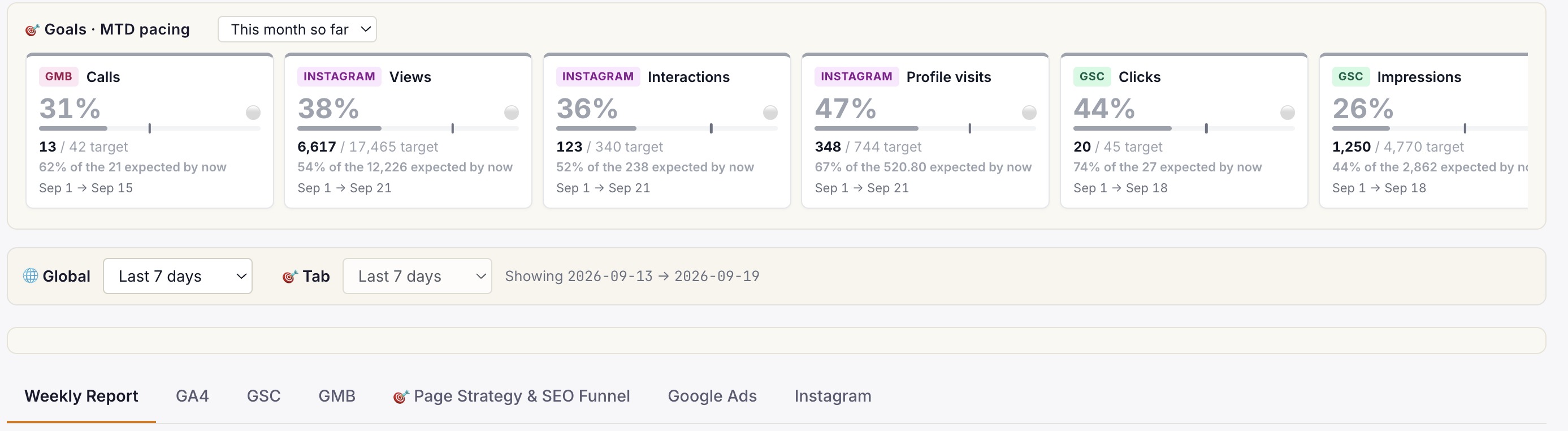
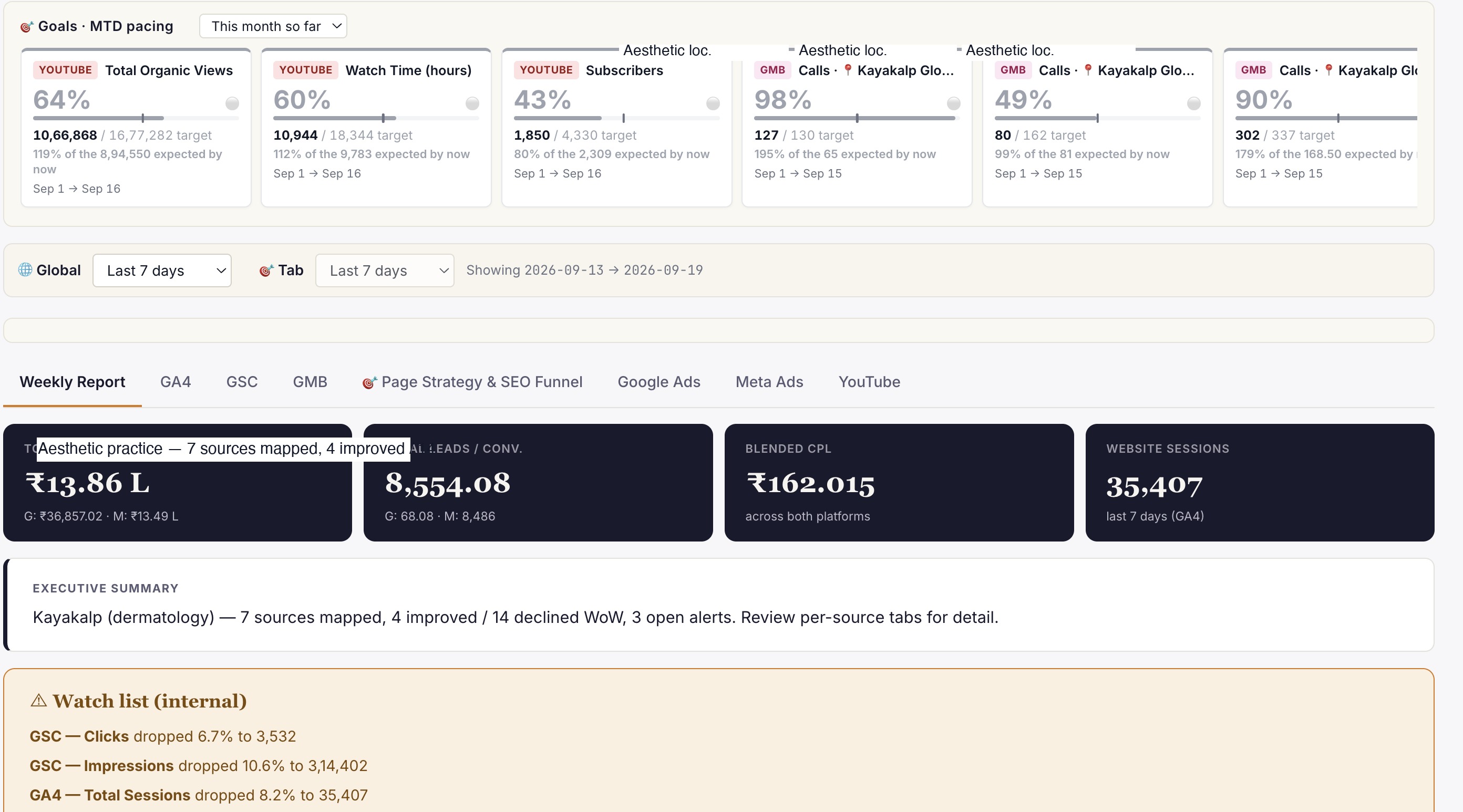
Every ICG engagement runs on the Search Intelligence Trifecta — Angryturtle for GMB, SIE for search and AI Overview, YODA for YouTube. Live product screens below.
Need help operationalising this?
Every ICG service is healthcare-only, NMC + DPDP-aware, and built around the patient-research patterns that drive Indian healthcare growth in 2026.
Every practice welcome — packages from ₹20,000/mo.
Goals-Driven engagements · Performance-Linked Payout Models available
More from
ICG.
Five trends shaping Indian healthcare marketing through 2027: AI-first patient research, Conversions API adoption, ABDM discovery, the AEO w...
Healthcare AIO is the discipline of getting your clinic or hospital cited inside Google AI Overviews, ChatGPT and Perplexity answers — not j...
Conversational-search advertising places brand messages inside AI chat answers — ChatGPT, Perplexity, Copilot — rather than beside a results...
Stop guessing.
Book a Diagnostic.
30 minutes. Free. With the AI-powered healthcare-only marketing agency 150+ brands already run on. No slides, no pitch, no hard close.


