How should plastic surgeons use "board-certified" in their marketing?
Plastic surgeons should use "board-certified" only for a current certification from a board their state recognizes, name that board in full, and attach the claim to the specific surgeon who holds it. State laws restrict the term because patients read it as proof of training and testing. Most problems come from shortcuts: an unnamed board, a practice-wide claim, or ad copy that implies every provider is certified.

- Name the board: "board-certified by the American Board of Plastic Surgery" is clearer and safer than "board-certified" alone.
- Attach it to a person: certification belongs to an individual surgeon, not to a practice, a med spa or a team.
- States define the term: California and Florida, for example, limit who may advertise as board-certified.
- Implied claims count: the FTC judges ads by what a reasonable reader takes away, not by the literal words.
- Every practice welcome — retainers from $499/mo, Goals-Driven engagements, Performance-Linked Payout Models available.
- Dallas, Texas LLC
- US client team · Central Time (CST)
- 25+ US healthcare clients
- BAA signed with every client
- HIPAA compliance training across client and delivery teams
- Contracts and invoices in USD
-
 Primary Care · North Dallas, TXCase study →
-
 MedSpa · North Dallas, TX
-
 Skin Care · Beverly Hills, CA
-
 Dental · Christiansburg, VACase study →
-
 Pediatrics · Blacksburg, VACase study →
-
 Pediatric Dentistry · Blacksburg, VACase study →
-
 Dental · Roanoke, VACase study →
-
 Functional Medicine · Telehealth · USACase study →
“They were able to get all my ideas and work with me over a period of three to four months and create this amazing website. It's super customized, very modern, and it incorporates all the elements that I had wanted — the patient portal, nice pictures, a very interactive website, patient reviews. I would highly recommend their company to anyone who wants to make an excellent website.”
What does "board-certified" mean legally in plastic surgery advertising?
Legally, the term is restricted by state law and board rules, not left to marketing judgment. Many states allow a physician to advertise as board-certified only if the certifying body meets the state's standard, most often membership of the American Board of Medical Specialties (ABMS). Other certifications may exist, but the phrase itself is controlled.
ABMS lists 24 member boards, and the American Board of Plastic Surgery is one of them. Two state examples show how the term is limited:
- California: a Medical Board of California staff report explains that Business and Professions Code section 651 lets a physician advertise as board-certified only if certified by an ABMS member board, a board with an ACGME-approved postgraduate training program in that specialty, or a board the Medical Board approved as equivalent. The same report notes that the law does not stop a physician from advertising a specialty; it stops the use of "board certified" for certifications that do not qualify.
- Florida: under section 458.3312 of the Florida Statutes, a physician may not hold out as a board-certified specialist without recognition from an ABMS specialty board or another recognizing agency approved by the Florida Board of Medicine. A physician may still describe the services offered when that accurately reflects their scope of practice.
Rules differ by state and change over time. Our board certification advertising guide covers state detail. Confirm your own wording with counsel before you publish.
How should a board-certified claim be worded?
Write the claim so a patient cannot misread who holds it or which board issued it. The safest form is the surgeon's name, then "board-certified by", then the full name of the board. Avoid abbreviations patients cannot decode, and avoid wording that stretches one surgeon's certification over a whole practice.
Wording that holds up
- "Dr. [Name] is board-certified by the American Board of Plastic Surgery."
- "Our practice is led by Dr. [Name], certified by the American Board of Plastic Surgery."
- "Dr. [Name] practices cosmetic surgery", when the surgeon's certification does not qualify for the term.
Wording that causes trouble
- "A board-certified practice" or "our board-certified team", when not every provider holds a qualifying certification.
- "Board-certified cosmetic surgeon" without naming the board, which leaves patients to assume a board the surgeon may not hold.
- "Board eligible" or "board certification pending" without checking the certifying board's own policy on those phrases.
- A claim left on old pages after a certification lapses. Certification is maintained over time, so the claim must reflect current status.
Keep one approved sentence per surgeon and reuse it everywhere. Rewriting the claim for each channel is how inconsistent and inaccurate versions creep in.
Where do board-certified claims go wrong across channels?
Claims usually go wrong in places nobody reviews: short ad headlines, social bios, profile descriptions and old blog posts. Space limits push writers to drop the board's name or the surgeon's name. Treat every surface as advertising, because state boards and the FTC do, and audit them together at least once a year.
| Surface | Common mistake | Safer approach |
|---|---|---|
| Website surgeon bio | Lists "board-certified" with no board name | Full board name, with links to the board's public verification search |
| Homepage and hero banners | "Board-certified care" for a practice with several provider types | Name the certified surgeon; describe other providers by license |
| Google Ads headlines | Character limits lead to a bare "Board-Certified" | Use the surgeon's name in the headline and the full board in a description or asset |
| Google Business Profile | Practice description implies all clinicians are certified | Mention the named surgeon and board in the description |
| Social media bios and captions | Injectors or associates tagged near a certification claim | Keep claims on the surgeon's own account; label each provider's role |
| Before-and-after galleries | Results shown without naming who performed them | State the treating surgeon for each case |
Paid ads have their own review layer. Our Google Ads guide for plastic surgeons covers policy and copy for search campaigns.
How do implied claims and mixed teams create risk?
Risk grows when a practice employs surgeons, nurse injectors and aestheticians but markets them under one banner. A reasonable patient may read a practice-wide certification claim as covering whoever treats them. The FTC looks at the net impression of an ad, so literally true words can still mislead.
The FTC Health Products Compliance Guidance states that marketers are equally responsible for claims that are suggested or reasonably implied, and that ads are judged by how reasonable consumers understand them. For a mixed team, that means:
- List each provider with their license or role, such as physician, physician assistant, nurse practitioner or registered nurse.
- Keep certification claims next to the certified surgeon's name, never in generic team headings.
- Do not let a non-surgeon's booking page borrow the surgeon's credentials.
- Review med spa or wellness offshoots separately, since they often reuse surgeon copy.
State boards also have general advertising rules on misleading claims. Our state medical board advertising guide explains how they differ.
How does Ichelon Consulting US handle credential claims?
We keep an approved credential sentence for each surgeon, checked against the board's public records, and use it across the website, ads, profiles and social channels. New pages and campaigns go through a claims check before launch, and we audit old content for outdated wording. Your counsel has the final say on legal questions.
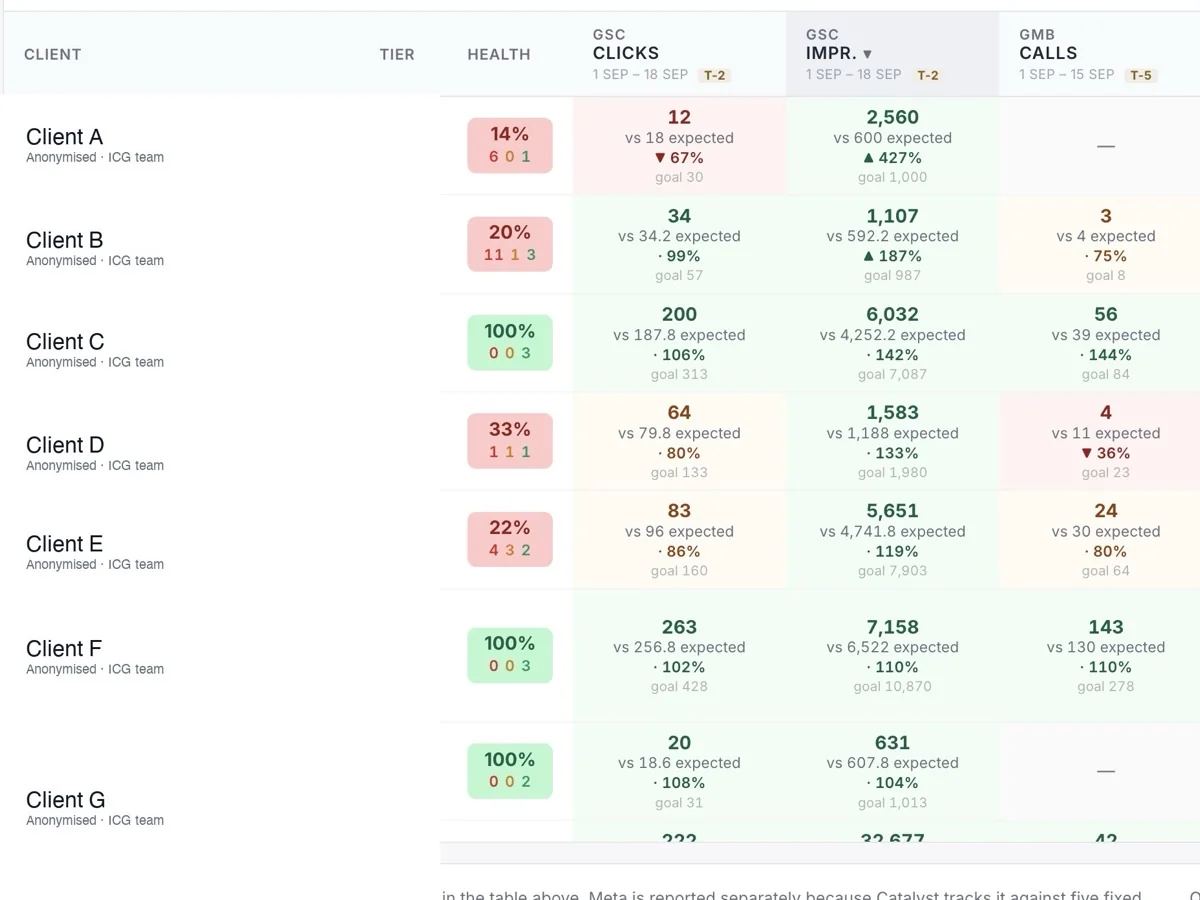
Our plastic surgery marketing service builds this review into SEO, ads and social work. We sign a BAA with every US client and report every Monday from Ichelon Agency OS. Retainers start from $499/month, custom-scoped. Book a call with the US team for a credential-claims review of your site and ads.
Related pages from the US team
Plastic surgery marketing USA
How Ichelon Consulting US markets plastic surgery practices.
Board certification advertising guide
State-by-state detail on certification claims.
Plastic surgery reviews and reputation
Building trust without overstated claims.
Consultation conversion guide
Turning inquiries into booked consultations.
Every practice welcome — Goals-Driven engagements from $499/mo
We benchmark your last 90 days, agree monthly goals with you, and track them live on Ichelon Agency OS with a report every Monday. Performance-Linked Payout Models are available. Our US leadership is based in Dallas, and strategy calls run in US business hours.
Common questions
Can a plastic surgeon say "board-certified" without naming the board?
Some states require the board to be named, and naming it is safer everywhere. A bare "board-certified" leaves patients to guess which board, and they usually assume the most recognized one. Write the surgeon's name and the board's full name, such as the American Board of Plastic Surgery, in the same sentence.
Can a med spa advertise that it is board-certified?
Not accurately. Board certification belongs to an individual physician, not to a business. A med spa can say that a named physician who supervises or treats there is board-certified by a named board. It should describe other providers by their own license or role, so patients know who will treat them.
What if a surgeon's certification does not qualify under state law?
In states such as California, the surgeon may still advertise the specialty they practice but may not use the term "board certified" for a certification that does not meet the statute. Describe the training, procedures and experience accurately instead. Ask counsel to confirm the rule in each state where you advertise.
Do board-certified claims in Google Ads follow different rules?
The same state and FTC rules apply to ads as to your website, and Google adds its own ad policies. The usual problem is space. Short headlines tempt writers to drop the board name. Use the surgeon's name in the headline and the full board name in the description.
How often should a practice audit its credential claims?
At least once a year, and whenever a surgeon joins, leaves or renews certification. Check the website, ads, Google Business Profile, social bios and older blog posts together. Old pages are where outdated claims tend to survive, because nobody edits them after launch.
A note on this guide: it explains marketing practice, not legal advice. Rules on privacy, advertising and insurance change and vary by state, so confirm anything compliance-related with your own counsel.
Want your credential claims checked before the next campaign?
A 30-minute call with the US team. We'll review how your site, ads and profiles describe each surgeon and flag anything to fix.
We cover every stage, from first search to repeat visit
- 0Foundations
- 1Demand gen
- 2Capture
- 3Lead quality
- 4Lead mgmt
- 5Scheduling
- 6Show-up
- 7Conversion
- 8Retention
We work across all nine stages, from foundations to past patients, and fix the stage that leaks first. Our own software runs the work, and every stage is reported against a monthly target on Ichelon Agency OS.
See all nine stages and the tool behind each one →