Plastic surgery marketing agency for Houston's Texas Medical Center corridor
Ichelon Consulting US builds surgical-consultation acquisition, international-patient inflow, and long-window ascension systems for Houston plastic surgery practices — Texas Medical Center-adjacent boutique surgeons, River Oaks and Memorial partner groups, and multi-location Houston-metro platforms — inside a Texas Medical Board Rule 165.5 before/after audit trail and a HIPAA-scoped analytics stack. Dallas HQ, Houston-fluent, run by a healthcare-only team that understands why TMC is the reason so many surgical buyers arrive in Houston already searching.
- Houston has a plastic surgery market structurally different from Dallas — the Texas Medical Center concentration, the international patient inflow from Latin America and the Middle East, and the River Oaks–Memorial–Uptown high-end pocket combine to create a demand profile that rewards depth of technical authority more than aesthetic-lifestyle branding alone.
- Ichelon Consulting US scopes every Houston engagement against HIPAA, Texas Medical Board Rule 165.5 (before/after + testimonials), Rule 165.1 (superiority claims and guarantees), FTC guidance on board-certification advertising (ABPS scope), FDA on implant and device claims, TCPA, and additional international-marketing framing where the practice takes international consult inquiries.
- Retainers start from $499/month, custom-scoped to your goals, with Goals-Driven engagements and Performance-Linked Payout Models available. Media spend pass-through. Houston CPQL for plastic-surgery consult leads typically lands $120 to $450 depending on procedure mix and submarket, with the international-consult funnel priced separately.
- Delivery: SEO, Google Ads, Meta Ads, GBP density, provider-authority YouTube, financing-integrated funnels (CareCredit, Alphaeon Credit, PatientFi, Cherry), reputation and cross-listing hygiene, and international-inflow lead nurture — every layer HIPAA and Rule 165.5 scoped.


- Dallas, Texas LLC
- 10-person US client team · Central Time (CST)
- 25+ US healthcare clients
- BAA signed with every client
- HIPAA compliance training across client and delivery teams
- Contracts and invoices in USD
-
 Primary Care · North Dallas, TXCase study →
-
 MedSpa · North Dallas, TX
-
 Skin Care · Beverly Hills, CA
-
 Dental · Christiansburg, VACase study →
-
 Pediatrics · Blacksburg, VACase study →
-
 Pediatric Dentistry · Blacksburg, VACase study →
-
 Dental · Roanoke, VACase study →
-
 Functional Medicine · Telehealth · USACase study →
“They were able to get all my ideas and work with me over a period of three to four months and create this amazing website. It's super customized, very modern, and it incorporates all the elements that I had wanted — the patient portal, nice pictures, a very interactive website, patient reviews. I would highly recommend their company to anyone who wants to make an excellent website.”
The Texas Medical Center effect on Houston plastic surgery demand
Houston does not compete for plastic surgery buyers the way most US metros do. The Texas Medical Center — the largest medical complex in the world by employment and by patient volume — sits inside the city limits and reshapes the plastic surgery market in three ways that no other Texas city experiences at the same scale.
First, physician density. TMC's presence anchors an unusually high concentration of surgeons across every subspecialty, which means Houston has one of the deepest ABPS-certified plastic surgeon populations in the American South. Comparison intensity is higher than in most metros. A Houston buyer who searches "rhinoplasty near me" sees a longer list, more specialized sub-mentions, and more academic-adjacent credentialing than a buyer in most cities.
Second, international inflow. Houston sees a materially larger share of international plastic surgery consult inquiries than Dallas, Austin, San Antonio, or Fort Worth combined — primarily from Latin America (Mexico, Colombia, Venezuela, Brazil), the Middle East (Saudi, UAE, Qatar), and West Africa (Nigeria). International patient nurture is a distinct funnel with its own consult-cycle length, its own financing questions, its own hotel-partnership logistics, and its own compliance framing on cross-border medical advertising.
Third, the geographic sprawl. Houston is the largest US city by land area outside of a handful of Alaskan municipalities. River Oaks, Memorial, Uptown Houston, The Woodlands, Sugar Land, Katy, and Pearland do not function as one auction — the CPC, the intent language, and the buyer income profile all shift meaningfully across submarkets. A campaign that treats "Houston" as a single geo underprices some submarkets and overspends on others.
ABPS board-certification advertising envelope for Houston plastic surgery practices
The single most common compliance violation we see when we audit a Houston plastic surgery practice's inherited marketing is misuse or ambiguous use of "board-certified" language. In a market with TMC-adjacent surgeon density, the temptation to differentiate on credentials is high — which makes the rule set even more important to respect precisely.
The rule: to advertise as a "board-certified plastic surgeon" in the United States, the surgeon must be certified by the American Board of Plastic Surgery (ABPS) or an equivalent Royal College board recognized under ABMS reciprocity. A cosmetic surgery board, an aesthetic surgery board, or a body-contouring board — none of which are ABMS-member boards — does not qualify a surgeon to use the phrase "board-certified plastic surgeon" without qualification.
American Society of Plastic Surgeons (ASPS) membership requires ABPS certification. The Aesthetic Society membership requires ABPS certification plus aesthetic-surgery training criteria. Both are legitimate advertising signals when they apply — and both are unusually prevalent among Houston surgeons because of the TMC academic-adjacent training pathway. What is not legitimate is implying either credential when it does not apply.
Ichelon Consulting US's Houston engagement onboarding opens with a written board-certification audit for every surgeon on the practice. We document ABPS status, ASPS membership, Aesthetic Society membership, and additional fellowship credentials (craniofacial, microsurgery, breast, hand). We rewrite the website, ad copy, GBP profile, and social bios inside the documented envelope. Where a practice runs adjacent aesthetic services under non-ABMS-credentialed practitioners, we scope their marketing exposure separately inside Rule 165.1-safe language.
International plastic surgery inflow — Houston's structural advantage
Houston's international patient inflow is the single most under-marketed asset in most Houston plastic surgery practices. We frequently see practices that receive 15 to 30 percent of their surgical volume from international patients — Mexico especially, but also Colombia, Venezuela, Brazil, Saudi, UAE, and Nigeria — and market that volume with the same funnel they use for a Katy soccer mom. That is a missed 15 to 30 percent of case value.
Latin America — Mexico as the primary corridor
Mexican patients traveling into Houston for plastic surgery cluster around three profiles: rhinoplasty and facial rejuvenation buyers from Monterrey, Mexico City, and Guadalajara; body-contouring and mommy-makeover buyers from northern Mexico; and revision-surgery buyers who had a primary procedure in Mexico or Colombia. Spanish-language creative, Spanish-language landing pages, Mexico-hosted lead-form endpoints, WhatsApp-first inquiry handling, and Monterrey and Mexico City-based media buys are the operating levers.
Middle East — Saudi, UAE, Qatar
Middle East plastic surgery buyers arriving in Houston cluster around rhinoplasty (particularly ethnic-specific rhinoplasty), facial rejuvenation, and complex revision. Arabic-language landing page depth, medical-tourism concierge partnerships (hotel, transport, translator), and long-cycle nurture (Middle East plastic surgery decisions run 12 to 24 weeks) are the operating levers.
West Africa — Nigeria primarily
Nigerian plastic surgery patients traveling to Houston cluster around ethnic-specific rhinoplasty, complex revision, and mommy-makeover volume. The buyer is often already inside the Nigerian diaspora inside Houston, with family in Alief, Sugar Land, or Missouri City. Marketing here overlaps between "international inflow" and "diaspora targeting."
Compliance framing on international marketing
International plastic surgery marketing carries an additional compliance layer. Cross-border medical-tourism advertising claims, price-in-USD versus price-in-local-currency disclosures, visa and travel disclaimers, and legal-jurisdiction language on the consent forms all matter. We scope international-inflow campaigns with a separate compliance review inside the standard HIPAA plus Rule 165.5 plus Rule 165.1 envelope.
The Houston plastic surgery compliance envelope, in operating detail
Every campaign scoped against seven frameworks before launch. Scope is written, versioned, and reviewed by a healthcare-native reviewer separate from the delivery lead. When any of these frameworks issues new guidance, campaigns are re-scoped.
HIPAA and OCR tracking-tech guidance
The 2022 OCR Bulletin and its March 2024 update treat any identifiable event data tied to condition or provider information as PHI when passed to a third-party analytics or ad platform. Ichelon Consulting US's PHI scrub covers GA4, Google Ads enhanced conversions, Meta CAPI, TikTok Events API, session-recording tools, LiveChat, financing-application embeds (CareCredit, Alphaeon Credit, PatientFi), and any HIPAA-exposing embed on the practice website. Houston's international inflow adds a specific concern: cross-border data transfer for international consult inquiries needs its own privacy-notice language and its own analytics segregation.
Rule 165.5 — the per-photo audit trail
Rule 165.5 requires written patient consent for every image or testimonial used in advertising, results-not-typical disclosure when applicable, disclosure of compensation for endorsements, honest representation of actual outcomes, and content current enough to reflect the surgeon's present standard of care. Ichelon Consulting US maintains a per-photo audit trail linking every image to its signed consent, the photo date, the disclosure state, the procedure performed, and the operating surgeon on record.
Rule 165.1 — language safety
Rule 165.1 prohibits false, deceptive or misleading communication — including superiority claims without objective evidence, implied guarantees of results, unverifiable "top-rated" or "leading" framing, and misuse of "board-certified" language. In Houston's high-density surgeon market, the temptation to lean on TMC-adjacent language ("world-class," "leading center") is common. We rewrite for compliance without losing conversion power.
FDA on implants and devices
Silicone and saline breast implants remain a Class III device with FDA-required patient labeling and, for silicone, a formal boxed warning on BIA-ALCL and BII risks. Non-invasive body contouring devices each have FDA-cleared indications. We flag off-label positioning and reframe.
FTC Endorsement Guides
Every Houston influencer collaboration, staff-referred patient story, or incentivized Google review triggers the FTC Endorsement Guides. Material connection disclosure, honest depiction of results, and truthful endorser representation are all in scope.
TCPA on consultation-lead outreach
Consultation-form language, appointment-reminder SMS, and reactivation outreach all scoped against the TCPA rule set including the FCC's 2024 revocation-of-consent updates. International consult phone numbers add a jurisdiction dimension — we do not blanket-apply TCPA framing where a Mexican or Saudi consult lead has different jurisdictional rules.
BBL post-2022 safety framing
BBL marketing in Houston respects the ASPS/ISAPS multi-society task-force position, references subcutaneous-only fat placement, discloses the historical mortality-signal context, and leans into surgeon-experience framing. BBL creative is scoped separately from other body-contouring creative.
What each layer of the Houston delivery stack looks like
SEO — TMC-adjacent authority + neighborhood + international
Topic map organized across procedure (rhinoplasty, breast augmentation, mommy makeover, liposuction, tummy tuck, facelift, BBL, gynecomastia, body contouring), Houston neighborhood (TMC, River Oaks, Memorial, Uptown Houston, The Woodlands, Sugar Land, Katy), per-surgeon Person schema depth, and international-inflow content (Spanish-language pages, Arabic-language pages where scoped).
Google Ads — English + Spanish, TMC geo-boost
Branded and non-branded surgical-consult intent tightly geo-fenced to each surgeon's operating footprint, with a TMC-corridor geo overlay for physician-referred inflow. Spanish-language ad groups for Mexican inflow. Enhanced conversions with hashed first-party identifiers only. Offline conversion imports for true cost-per-booked-surgery reporting.
Meta Ads — long-window nurture across languages
Meta Advantage+ for cold awareness. Custom-audience nurture across English and Spanish for the six to twelve-week rhinoplasty or facelift comparison window. HIPAA-scoped audience construction, Rule 165.5-safe before/after creative with disclosure. Instagram Reels and Stories per language segment.
International inflow nurture
WhatsApp-first inquiry handling for Mexico, Colombia, Saudi, UAE. Concierge-partnership integrations (hotel, transport, translator). Spanish and Arabic language nurture cadences. Multi-currency price framing where compliance allows. Long-cycle (12 to 24 weeks) email + WhatsApp drip.
Financing-integrated funnel
CareCredit, Alphaeon Credit, PatientFi, and Cherry pre-qualification embedded in the consultation booking flow. Financing-first messaging on high-ticket procedures. HIPAA-scoped financing-application handoff. International-buyer financing scoped separately — most international patients pay cash or use foreign-issued cards.
Provider-authority YouTube (YODA)
Per-surgeon YouTube channel build. Procedure explanation, recovery expectation, consultation preview content. Rule 165.5-safe patient-journey videos. AI Overview and Google Search citation optimization. TMC-academic-adjacent authority framing where appropriate.
Reputation + cross-listing hygiene
Cross-listing reputation monitoring (Google, Healthgrades, RealSelf, Vitals, ASPS profile, Aesthetic Society profile). Review-request cadence tied to satisfied post-op triggers, with international-patient review requests handled in language of origin. Monthly reporting tied to booked consults, booked surgeries, and cash-pay revenue.
The nine plastic surgery procedure verticals in a Houston funnel
Each vertical carries a distinct CPC, a distinct consultation-to-book conversion curve, and a distinct compliance risk profile. Houston layers an additional international-inflow dimension on top of the standard vertical breakdown.
Rhinoplasty (including ethnic-specific)
Rhinoplasty is Houston's highest-inflow procedure. Latin, Middle Eastern, African, and East Asian ethnic-specific rhinoplasty each carry their own aesthetic vocabulary, their own before/after photo library requirements, and their own referral-network sources. Per-technique educational content (open versus closed, preservation, dorsal preservation, ethnic-specific) drives comparison conversion. Longest comparison window (8 to 16 weeks domestic, 12 to 24 weeks international).
Breast augmentation
Highest-volume plastic surgery procedure in most Houston practices. Implant-choice educational content drives conversion. FDA implant-labeling and BIA-ALCL disclosure must appear inside the educational funnel. Houston CPQL typically $130 to $320 for a booked consult depending on submarket.
Mommy makeover
Combines abdominoplasty, breast (augmentation, lift, or reduction), and often liposuction. Katy, Sugar Land, and The Woodlands demand runs disproportionately mommy-makeover-heavy relative to the citywide average. Financing (CareCredit, Alphaeon, PatientFi) is a primary conversion lever on $18K to $34K case values in Houston.
Liposuction and body contouring
Post-GLP-1 body-contouring demand is now a distinct funnel. Marketing that treats liposuction, RF-assisted lipo, and non-invasive contouring as one topic underserves buyers ready to convert. Separate procedure pages, separate ad groups.
Tummy tuck (abdominoplasty)
Post-weight-loss and post-GLP-1 buyer volume in Houston is high. Recovery-window education is the single largest conversion lever.
Facelift, deep-plane and neck rejuvenation
River Oaks and Memorial index disproportionately high on facelift demand. Deep-plane and neck-lift technical differentiation drives conversion. Longest domestic comparison window (12 to 24 weeks). Middle East international inflow overlaps this vertical heavily.
BBL — post-2022 safety framing
Houston has historically been a high-BBL market. Post-2022 framing is non-negotiable. Marketing respects the ASPS/ISAPS safety task-force position, references subcutaneous-only fat placement, discloses mortality-signal context, and leans into surgeon-experience framing.
Gynecomastia
Younger, more privacy-sensitive buyer. Educational content and search-intent depth matter more than paid social. Financing-first messaging is a heavy lever. Houston has a materially larger gynecomastia funnel than the Texas average — TMC medical-adjacent search patterns overweight this vertical.
Revision surgery and secondary correction
Houston sees a distinct revision-surgery funnel driven by Mexican and Colombian primary-procedure inflow — patients who had a primary rhinoplasty, BBL, or breast surgery abroad and now seek revision. Marketing scope: surgeon-authority content, revision-outcome depth, and international-inflow language framing.
Houston submarkets and neighborhoods we serve for plastic surgery
Retainer scope and CPQL benchmarks for Houston plastic surgery engagements
Retainers start from $499/month, custom-scoped to your goals, with Goals-Driven engagements and Performance-Linked Payout Models available. Media spend runs pass-through.
- Solo ABPS surgeon boutique practice. SEO + GBP + Meta or Google Ads, monthly reporting, quarterly strategy review. Typical CPQL $150 to $380 for a booked consult depending on procedure mix.
- Two-to-four surgeon partner group. Full SEO stack, per-surgeon Person schema depth, GBP density per location, Google + Meta paid, reputation cross-monitoring, per-surgeon YouTube pilot. Typical CPQL $130 to $320.
- Multi-location Houston-metro platform with international inflow. Full stack + international-inflow funnel + Spanish-language pages + per-surgeon P&L attribution + CRM + financing partner integration reporting. Typical domestic CPQL $120 to $290; international CPQL priced separately.
CPQL benchmark context: Houston prices in the middle to lower half of the US $120 to $500 plastic-surgery consult-lead range for domestic funnels — driven by high organic supply, TMC-adjacent authority signals, and multi-language efficiency. The international-inflow funnel prices separately and can materially outperform the domestic funnel on case value per lead.
Houston plastic surgery marketing — common questions
Retainers start from $499/month, custom-scoped to your goals, with Goals-Driven engagements and Performance-Linked Payout Models available.
How do we market rhinoplasty to Houston's international inflow compliantly?
International rhinoplasty marketing in Houston layers three compliance frames: Rule 165.5 and 165.1 for US-side advertising, cross-border medical-tourism disclosure on price and visa framing, and jurisdiction-specific consent-form language. Ethnic-specific rhinoplasty before/after libraries need per-ethnicity representation. Spanish and Arabic landing-page depth is a heavy lever. WhatsApp-first inquiry handling and long-cycle nurture (12 to 24 weeks for international) are operating essentials.
What is a typical CPQL for Houston breast augmentation consultations?
Houston breast augmentation CPQL for a booked consult typically lands $130 to $320 depending on submarket and funnel maturity. River Oaks and Memorial price at the upper end; Katy, Sugar Land, and Pearland at the lower end. Financing pre-qualification (CareCredit, Alphaeon, PatientFi) inside the funnel lifts conversion 20 to 40 percent.
Can we advertise BBL in Houston after the 2022 safety tightening?
Yes, but with a specific, distinct treatment. Marketing must respect the ASPS/ISAPS multi-society task-force position on gluteal fat grafting safety, reference subcutaneous-only fat placement guidance, disclose the mortality-signal historical context, and lean into surgeon-experience framing. Houston has historically been a high-BBL market; the safety framing is non-negotiable now.
How do you handle international patient inflow from Mexico, the Middle East, and West Africa?
Separate funnel with its own compliance framing, its own language layers (Spanish, Arabic), its own consult-cycle length (12 to 24 weeks), its own concierge-partnership integrations (hotel, transport, translator), and its own reporting. WhatsApp-first inquiry handling. Spanish and Arabic-language nurture. Multi-currency price framing where compliance allows.
How does board-certified advertising language work for plastic surgery in Texas?
To advertise as a "board-certified plastic surgeon" a surgeon must be ABPS-certified or ABMS-recognized equivalent. Non-ABMS boards do not qualify. Our onboarding opens with a written board-certification audit for every surgeon on the practice, and we rewrite website, ads, GBP profile, and social bios inside the documented envelope. Rule 165.1 and FTC guidance both apply.
Do you work with Houston multi-location groups and PE-backed platforms?
Yes. Multi-location scope includes per-location P&L attribution, per-surgeon content publishing, CRM integration, financing partner integration reporting, and international-inflow scope where applicable. We are BAA-ready and versioned on scope changes.
Scope your Houston plastic surgery marketing engagement
Book a 30-minute scoping call with a member of the Leadership Team, email Santosh directly, or WhatsApp us — CT hours, same day where we can.
Adjacent Houston and US marketing hubs
-
Primary Care · North Dallas, TXCase study →
-
MedSpa · North Dallas, TX
-
Skin Care · Beverly Hills, CA
-
Dental · Christiansburg, VACase study →
-
Pediatrics · Blacksburg, VACase study →
-
Pediatric Dentistry · Blacksburg, VACase study →
-
Dental · Roanoke, VACase study →
-
Functional Medicine · Telehealth · USACase study →
“They were able to get all my ideas and work with me over a period of three to four months and create this amazing website. It's super customized, very modern, and it incorporates all the elements that I had wanted — the patient portal, nice pictures, a very interactive website, patient reviews. I would highly recommend their company to anyone who wants to make an excellent website.”
We cover every stage, from first search to repeat visit
- 0Foundations
- 1Demand gen
- 2Capture
- 3Lead quality
- 4Lead mgmt
- 5Scheduling
- 6Show-up
- 7Conversion
- 8Retention
We work across all nine stages, from foundations to past patients, and fix the stage that leaks first. Our own software runs the work, and every stage is reported against a monthly target on Ichelon Agency OS.
See all nine stages and the tool behind each one →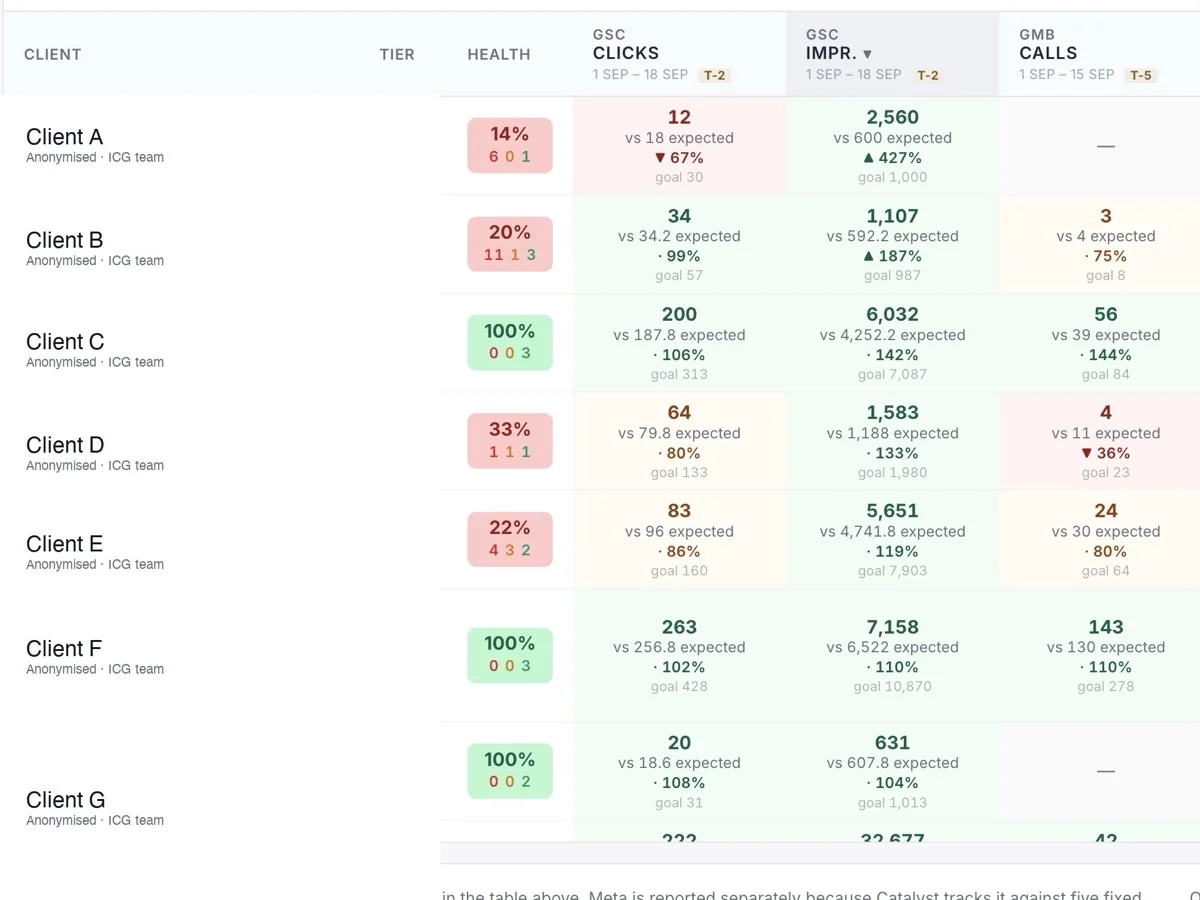
More questions answered
How do we market rhinoplasty to Houston international inflow compliantly?
International rhinoplasty marketing layers Rule 165.5/165.1 for US-side advertising, cross-border medical-tourism disclosure, and jurisdiction-specific consent language. Ethnic-specific before/after libraries, Spanish and Arabic landing pages, WhatsApp-first inquiry, and 12 to 24 week nurture are essentials.